Sage green is one of those colors that can completely change personality depending on what you put around it.
Pair it with pale wood and simple linen, and it feels relaxed and natural. Add wall molding, curved mirrors, warm walnut, brass lighting, or an iron bed, and suddenly it becomes much more elegant.
That is what I love about these bedrooms.
They still feel calm enough for everyday life, but the architectural details and furniture shapes give them a little more character than a simple green-and-neutral room.
These six spaces all use sage differently—from softly traditional to more contemporary—but each one has a refined, timeless quality that feels warm rather than formal.
1. Soften Sage Green With Curves and Warm Wood
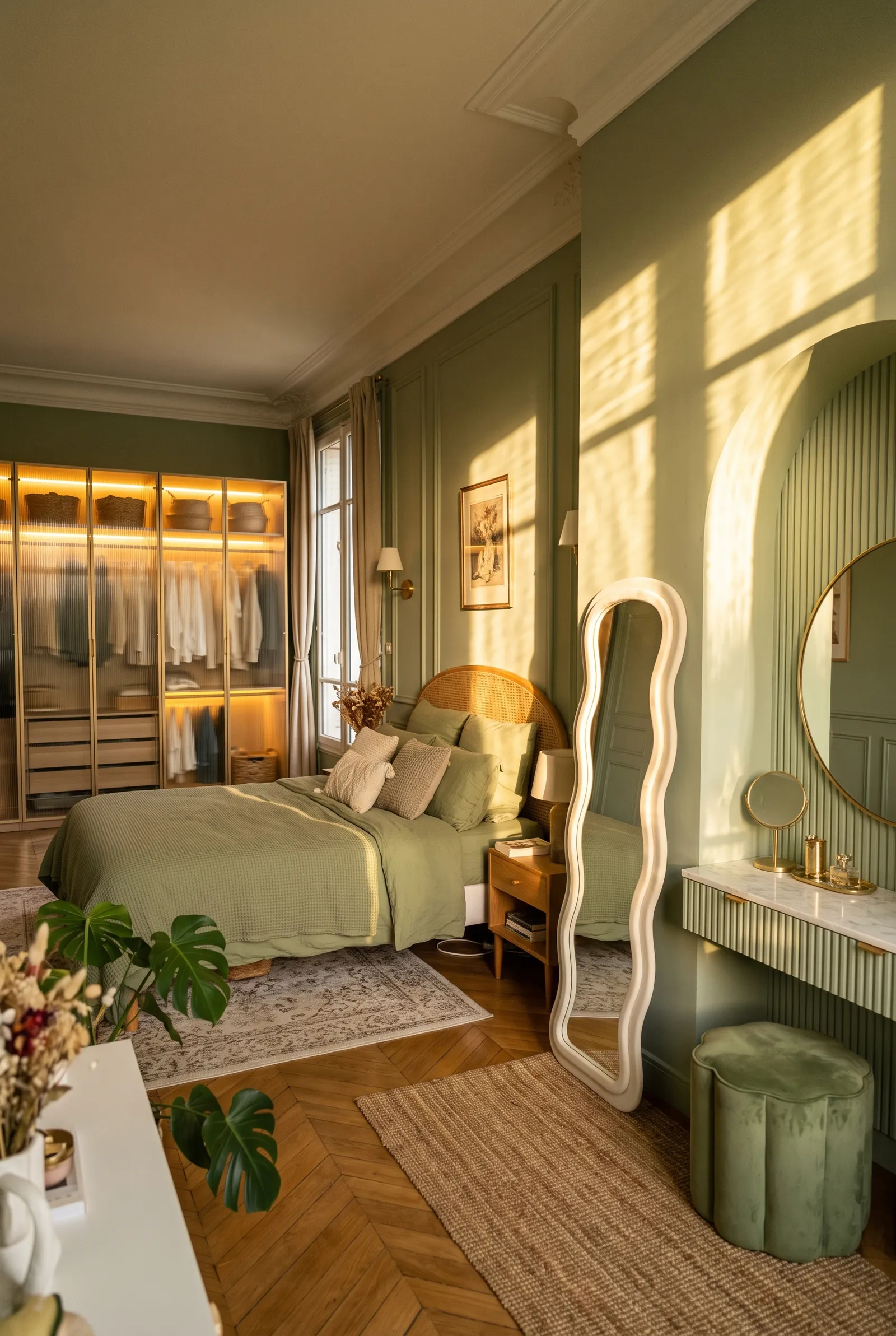
One of the easiest ways to make a sage green bedroom feel elegant is to introduce softer, curved shapes.
In this room, the rounded wood-and-cane headboard, wavy floor mirror, arched wall detail, and small dressing area soften all the straight architectural lines around them.
The illuminated glass wardrobe adds a more polished touch, but the warm wood flooring and muted bedding keep the room from feeling overly luxurious.
What I especially like here is the balance.
There are several statement elements in the room, but none of them feel too loud.
Why This Works
The sage wall color creates a quiet backdrop, while the curved furniture adds personality.
Warm walnut tones stop the green from feeling cold, and the amber lighting inside the wardrobe makes the whole room feel softer in the evening.
2. Pair an Iron Bed With Classic French Wall Molding
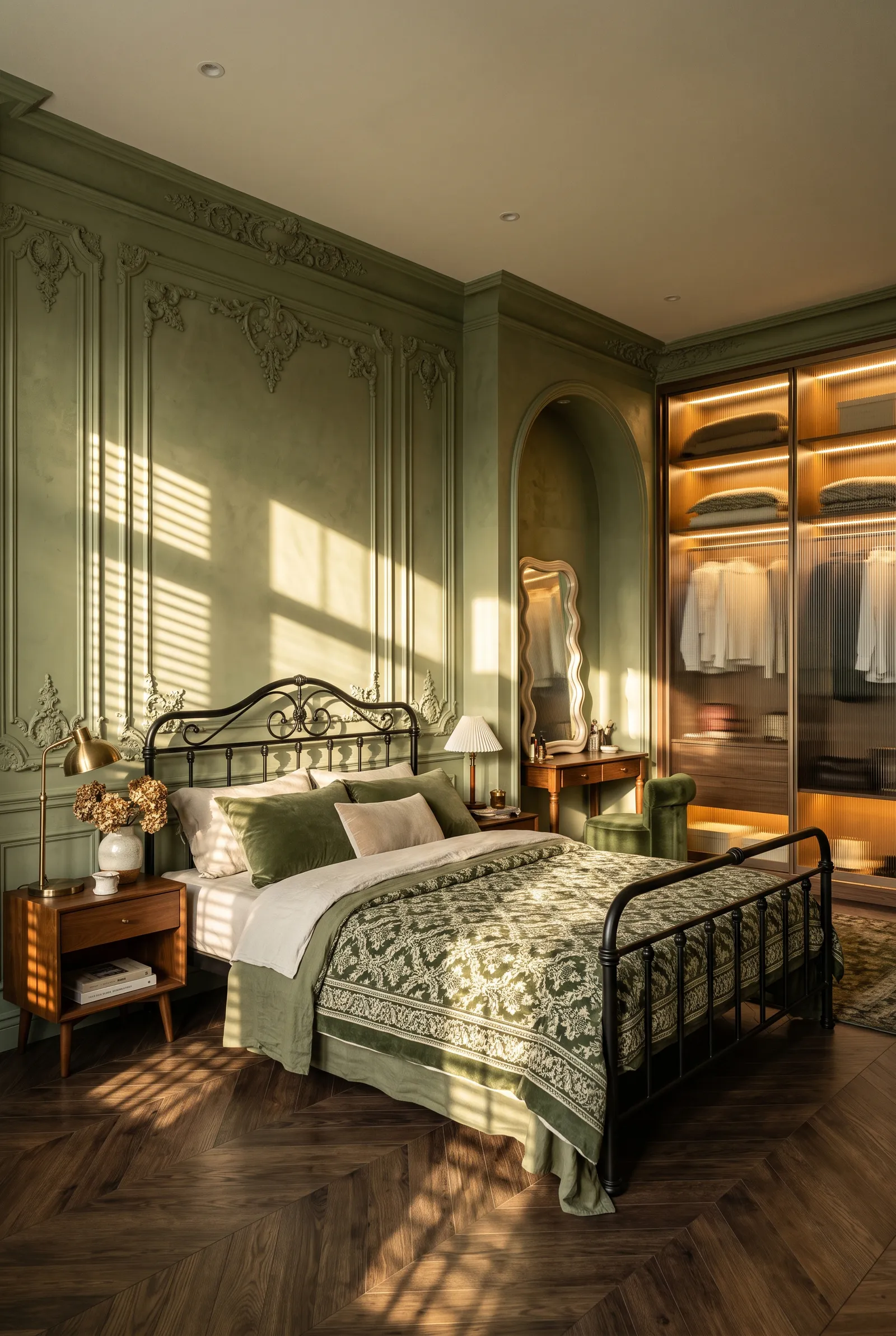
This room leans much more traditional.
The black iron bed immediately introduces a vintage feeling, while the detailed wall molding gives the room a distinctly French-inspired backdrop.
What keeps the room from feeling old-fashioned is the color palette.
Instead of white or cream walls, the molding is painted in the same muted sage tone. That makes all the ornate details feel softer and more modern.
The warm wood nightstands and dark herringbone floor also add enough contrast to give the room depth.
A Detail Worth Borrowing
If your room already has molding—or you plan to add it—you do not necessarily have to paint it white.
Using one color across the wall and molding creates a much calmer, more immersive effect.
3. Let Sage Green Cover the Architectural Details
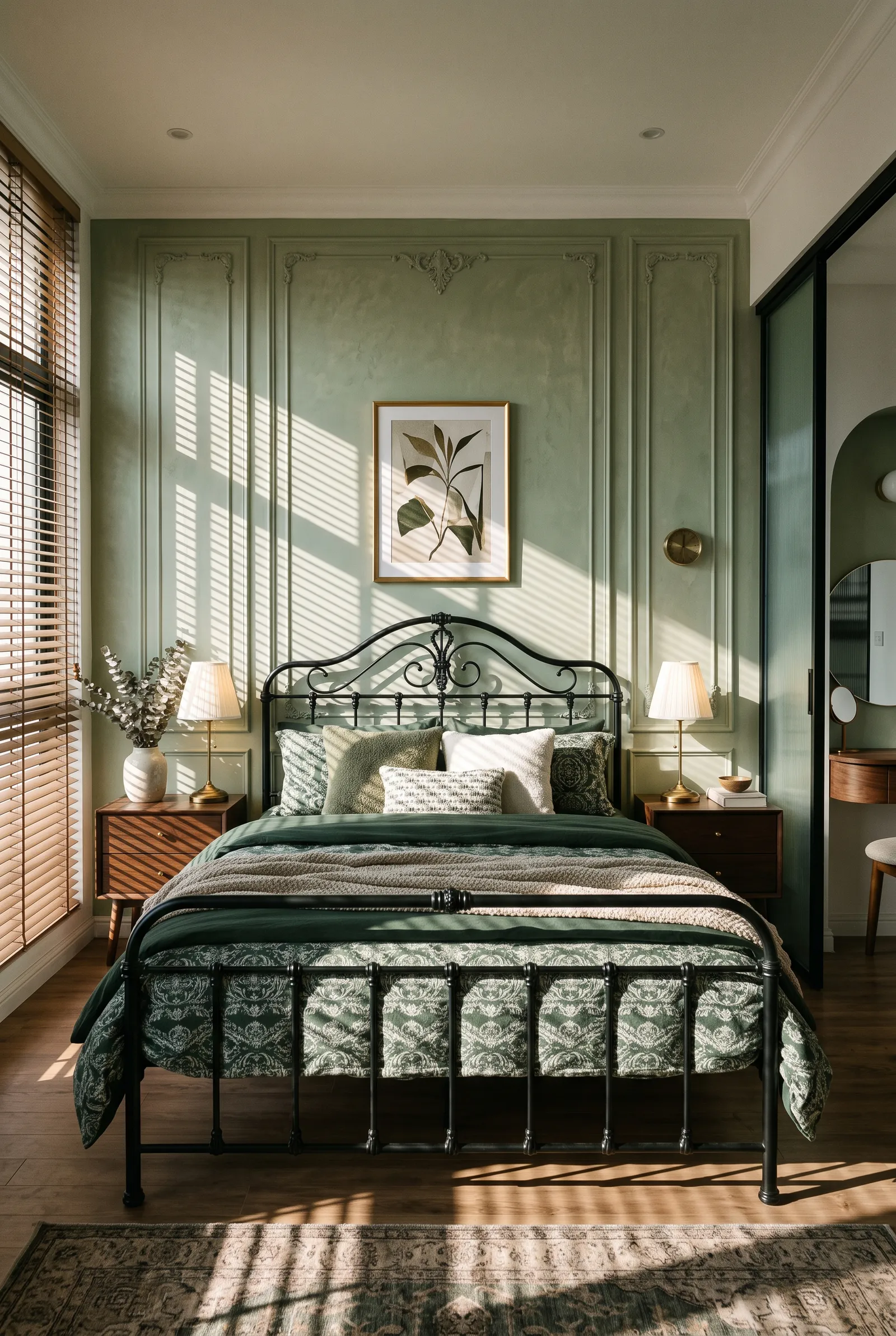
This bedroom uses sage almost tone-on-tone.
The wall, molding, and surrounding architectural details all sit within the same green family, which gives the room a surprisingly peaceful feeling despite the amount of detail.
The iron bed creates a strong focal point in the center, while the darker green bedding makes the palette feel richer without introducing another major color.
I also like how simple the bedside setup is.
Two warm wood nightstands and matching lamps are enough. The architecture is already doing most of the visual work.
Keep the Palette Tight
When your walls have decorative molding, you often do not need much additional wall decor.
A simple botanical print above the bed works because it supports the green palette rather than competing with the molding.
4. Use Pale Sage for a Lighter French-Inspired Bedroom
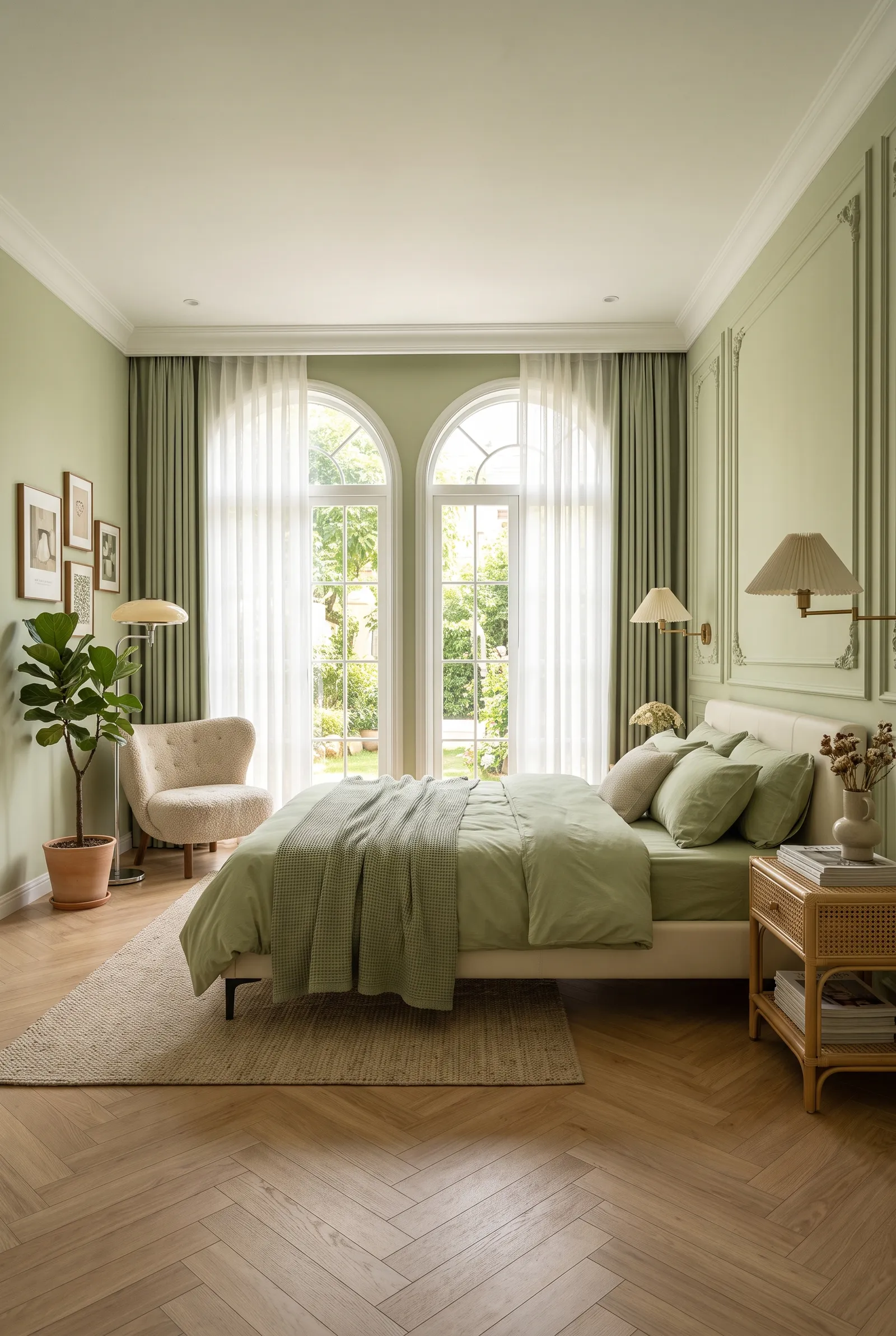
Sage does not have to be dark or moody.
In this room, the color is so soft that it almost behaves like a neutral.
The tall arched windows, sheer curtains, wall molding, pale flooring, and soft green bedding make the room feel bright and graceful.
There are classic details here, but nothing feels heavy.
The cane nightstand and warm wood tones also stop the space from becoming too formal.
Why I Like This Version
It feels elegant without looking like you are trying to recreate a historic French bedroom.
The architecture brings in just enough traditional character, while the furniture and textiles stay simple.
If you love French-inspired interiors but prefer brighter spaces, this is probably the easiest version to live with.
5. Use Sage Through Bedding Instead of the Walls
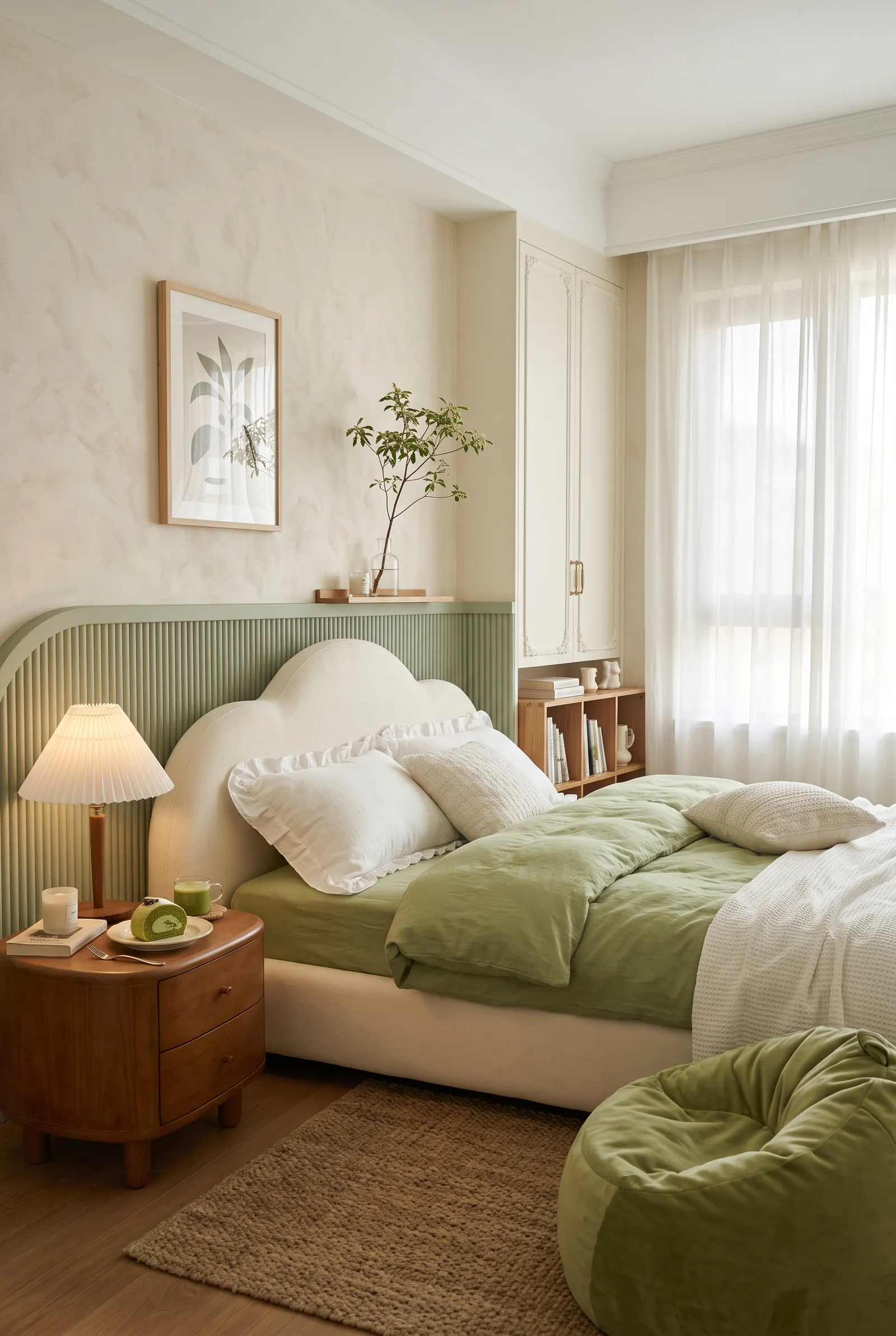
You do not need to paint the whole bedroom sage green to get the look.
Here, the color mainly comes through the bedding and one upholstered accent chair.
The room itself stays creamy and light, which makes the green feel especially soft.
The sculptural headboard is also important.
Its curved silhouette adds interest without relying on pattern, while the rounded wood nightstand continues that softer shape language.
A Simple Way to Try Sage
If you are not ready to repaint your bedroom, start with textiles.
A sage duvet, a few pillow covers, or one green chair can completely change the mood of a neutral space—and they are much easier to swap later.
6. Combine Sage Green With Cream Built-In Storage
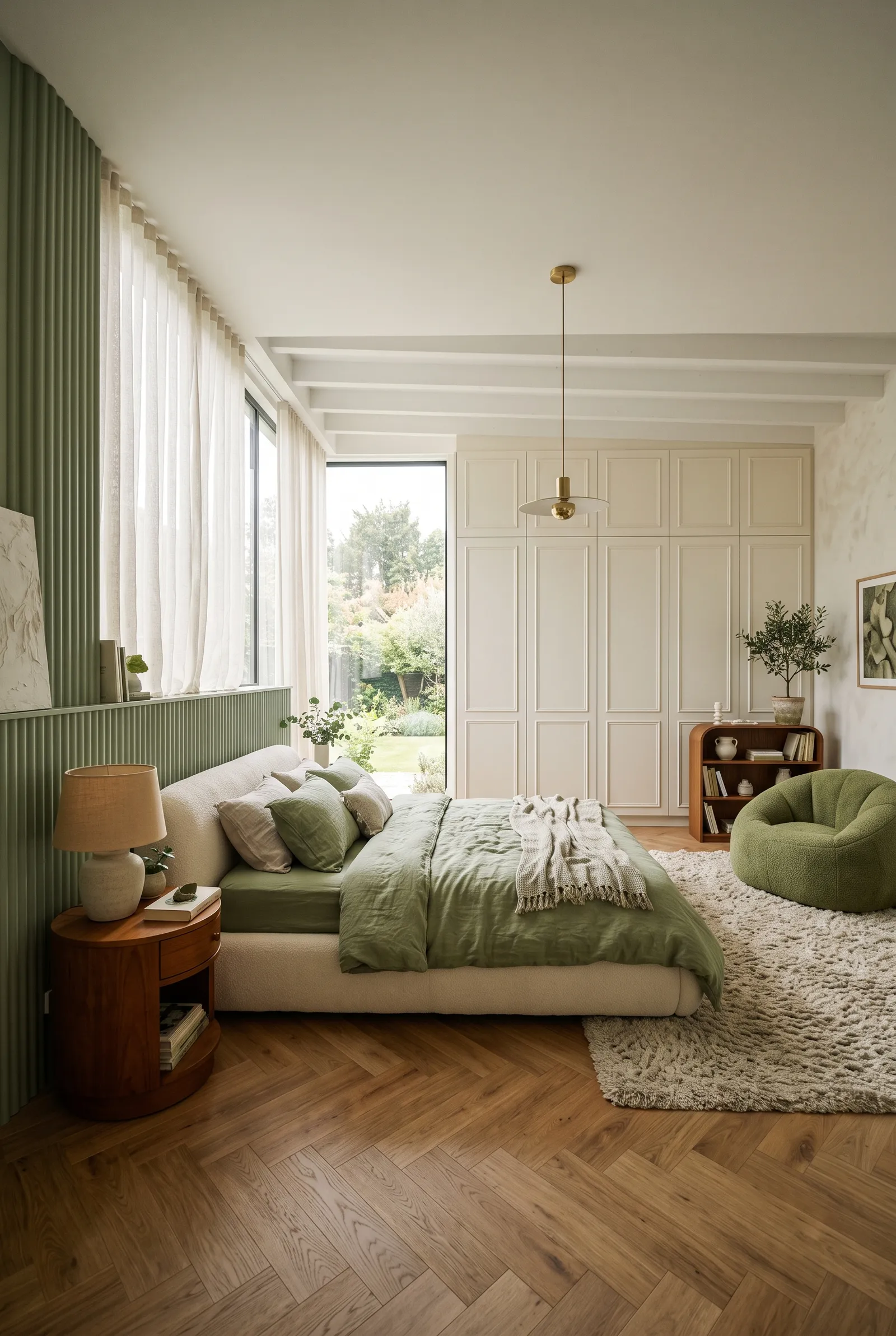
This room feels the most contemporary of the six.
The sage bedding and green architectural paneling add softness, while the tall cream built-ins keep the space clean and structured.
What makes it interesting is the contrast between straight architectural lines and round furniture.
The curved green chair, rounded bedside table, and small wood bookcase make the room feel more relaxed.
The herringbone wood floor adds warmth without introducing another strong color.
Why This Combination Works
Sage and cream are close enough in tone to feel calm together, but they still create enough contrast to give the room definition.
If you want an elegant green bedroom without leaning too traditional, this palette is a really good middle ground.
How to Make a Sage Green Bedroom Feel More Elegant
The difference between a casual sage bedroom and a more elegant one usually has less to do with the actual shade of green and more to do with what surrounds it.
Add Architectural Detail
Wall molding, paneling, arches, built-in cabinetry, and taller window treatments can completely change the way a simple color feels.
You do not need to add all of them.
Even one paneled wall behind the bed can give the room much more structure.
Mix Sage With Warm Wood
Sage can sometimes lean slightly cool.
Walnut, oak, medium brown wood, and herringbone flooring immediately warm it up.
This is especially effective in bedrooms because wood also makes the space feel less formal.
Use Curves to Soften the Room
Curved headboards, rounded nightstands, arched mirrors, and sculptural chairs help balance more traditional architectural details.
This mix of straight and curved shapes is one reason several of these bedrooms feel refined without becoming stiff.
Keep the Color Palette Simple
You really do not need many colors.
A combination like:
sage green + cream + walnut + black or brass
is already enough.
You can then add small variations through bedding, plants, artwork, and natural textures.
Choose Warm Lighting
Lighting makes a huge difference with sage green.
Warm lamps bring out its softer, earthier side, while very cool lighting can make it feel more gray.
Bedside lamps, wall sconces, wardrobe lighting, and warm bulbs all help make the room feel more inviting after sunset.
Frequently Asked Questions
Is sage green good for an elegant bedroom?
Yes. Sage green works especially well in elegant bedrooms because it feels softer than dark green while still adding more depth than a neutral wall.
It pairs beautifully with wall molding, brass, walnut, cream upholstery, and traditional furniture shapes.
What colors make sage green look more sophisticated?
Cream, warm white, walnut, dark wood, black, muted brass, beige, and soft taupe all work beautifully with sage green.
Keeping the palette relatively limited usually makes the room feel more refined.
Does sage green work with French-style decor?
Very well.
French-inspired interiors often use soft, slightly muted colors, so sage pairs naturally with molding, curved furniture, iron beds, antique-style mirrors, pleated lamps, and warm wood.
Should I paint the molding sage green too?
You can.
Painting the molding the same color as the wall creates a softer, more modern effect. Keeping the molding white creates more contrast and feels slightly more traditional.
Both can work—the choice depends on how dramatic you want the architecture to feel.
What wood tone looks best with sage green?
Medium and warm woods such as walnut and oak are especially easy to use.
Light oak creates a softer, more modern look, while walnut makes sage green feel richer and more sophisticated.
Final Thoughts
Sage green is easy to live with because it can be both calming and elegant at the same time.
You can take it in a very traditional direction with an iron bed and detailed wall molding, or keep it lighter with curved furniture, cream textiles, and warm wood.
What ties all of these rooms together is restraint.
The green does not have to appear everywhere. A few well-chosen materials, softer shapes, warm lighting, and one or two architectural details are often enough.
If I were recreating this look at home, I would start with the sage element first—whether that is the wall or the bedding—then add warm wood and cream around it before deciding what else the room actually needs.