Green has become one of my favorite colors for a home office.
It feels calm without being boring, colorful without being distracting, and it works beautifully with the materials I naturally gravitate toward—warm wood, brass, plants, books, and textured rugs.
You also don’t need to paint the entire room dark green to get the effect.
Sage, olive, moss, and muted earthy greens can all create very different moods.
Here are six green home office ideas that show just how versatile the color can be.
1. Go All In on Green and Plants
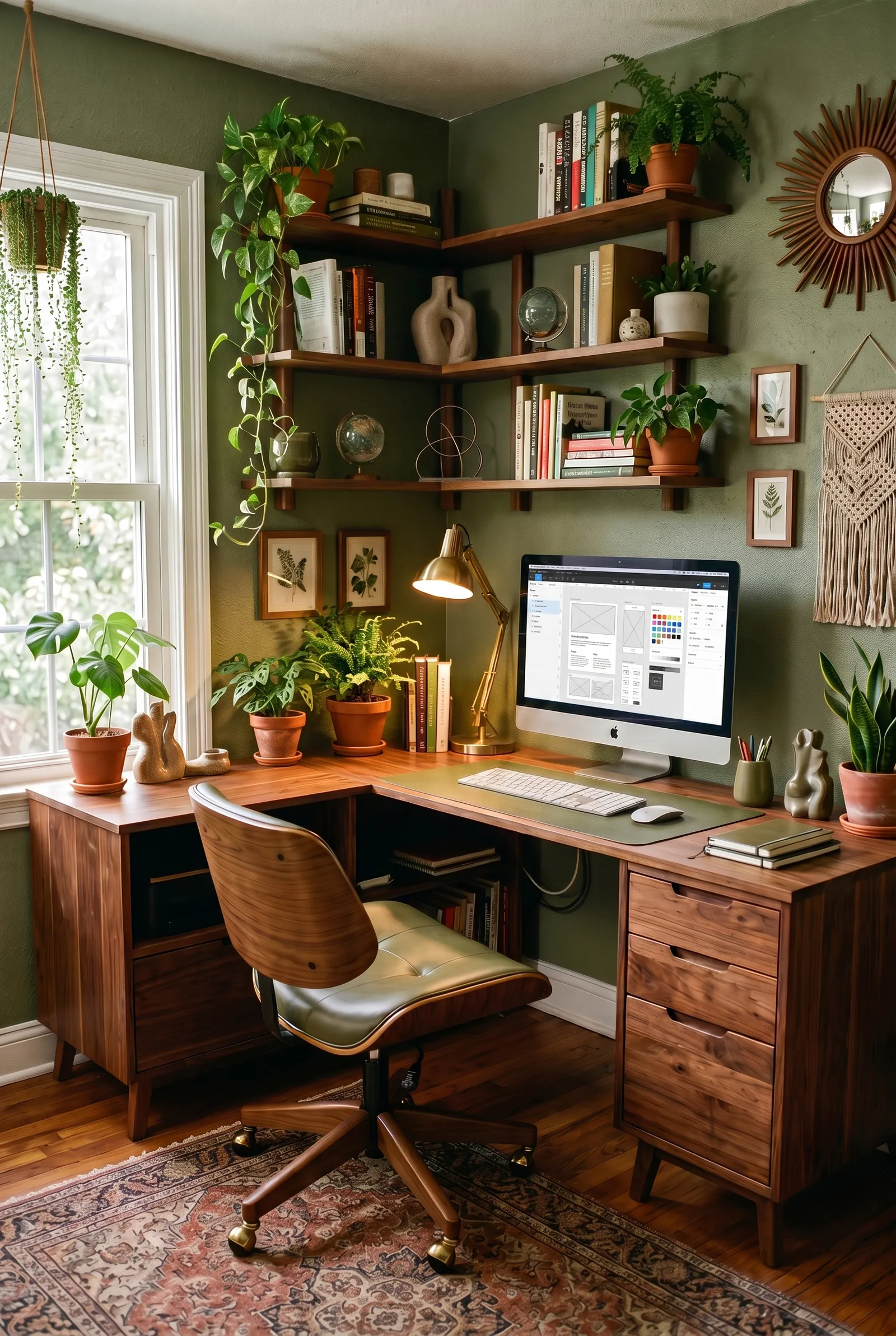
This workspace leans fully into the natural palette.
Olive green walls create the backdrop, while warm walnut furniture and lots of plants make the room feel rich and layered.
The L-shaped desk also gives the plants room to spread across the workspace without taking over the main computer area.
What keeps the room from becoming overwhelming is the repeated material palette.
Almost everything comes back to green, walnut, terracotta, and warm neutral tones.
Designer Tip
When using lots of plants, vary their shapes.
Large split leaves, trailing vines, ferns, and upright plants create much more natural visual rhythm than repeating the same type of plant everywhere.
2. Balance an Olive Wall With Light Upholstery
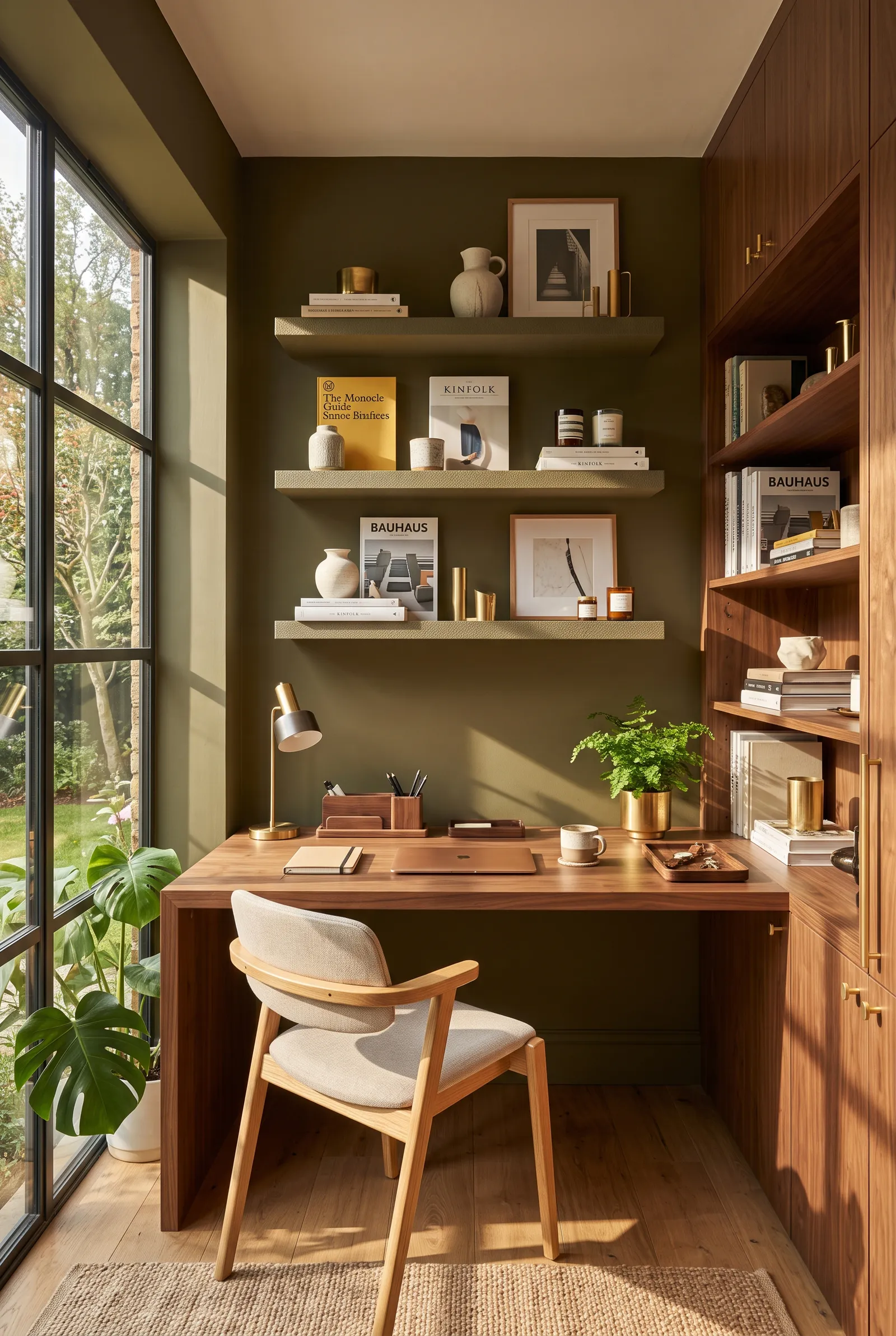
A darker green wall doesn’t automatically make an office feel dark.
Here, the large window brings in plenty of natural light while the cream chair, pale rug, and warm wood desk keep the palette balanced.
The built-in storage adds depth without introducing another strong color.
This is a great example of using green as a backdrop rather than the main event.
3. Use Sage Green for a More Playful Workspace
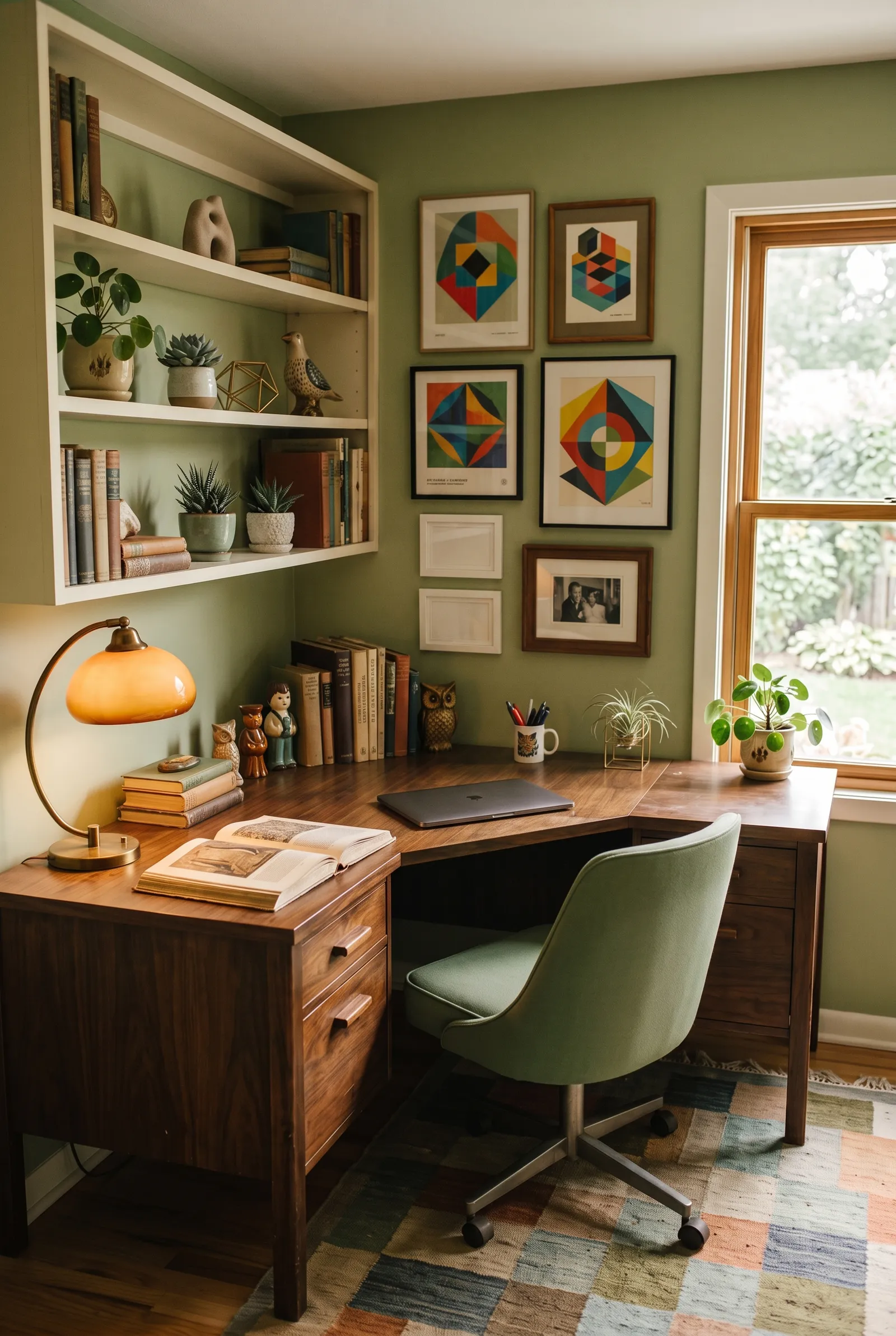
Sage green can feel softer and more casual than deep olive.
This workspace adds colorful geometric art, a green desk chair, books, and an amber lamp, giving the room a more creative personality.
The walnut desk keeps the brighter details grounded.
Why It Works
The wall color is muted enough that the artwork can introduce stronger colors without making the room feel chaotic.
It’s a useful approach if you want a home office to feel creative but still calming.
4. Mix Greenery With Books and Vintage Details
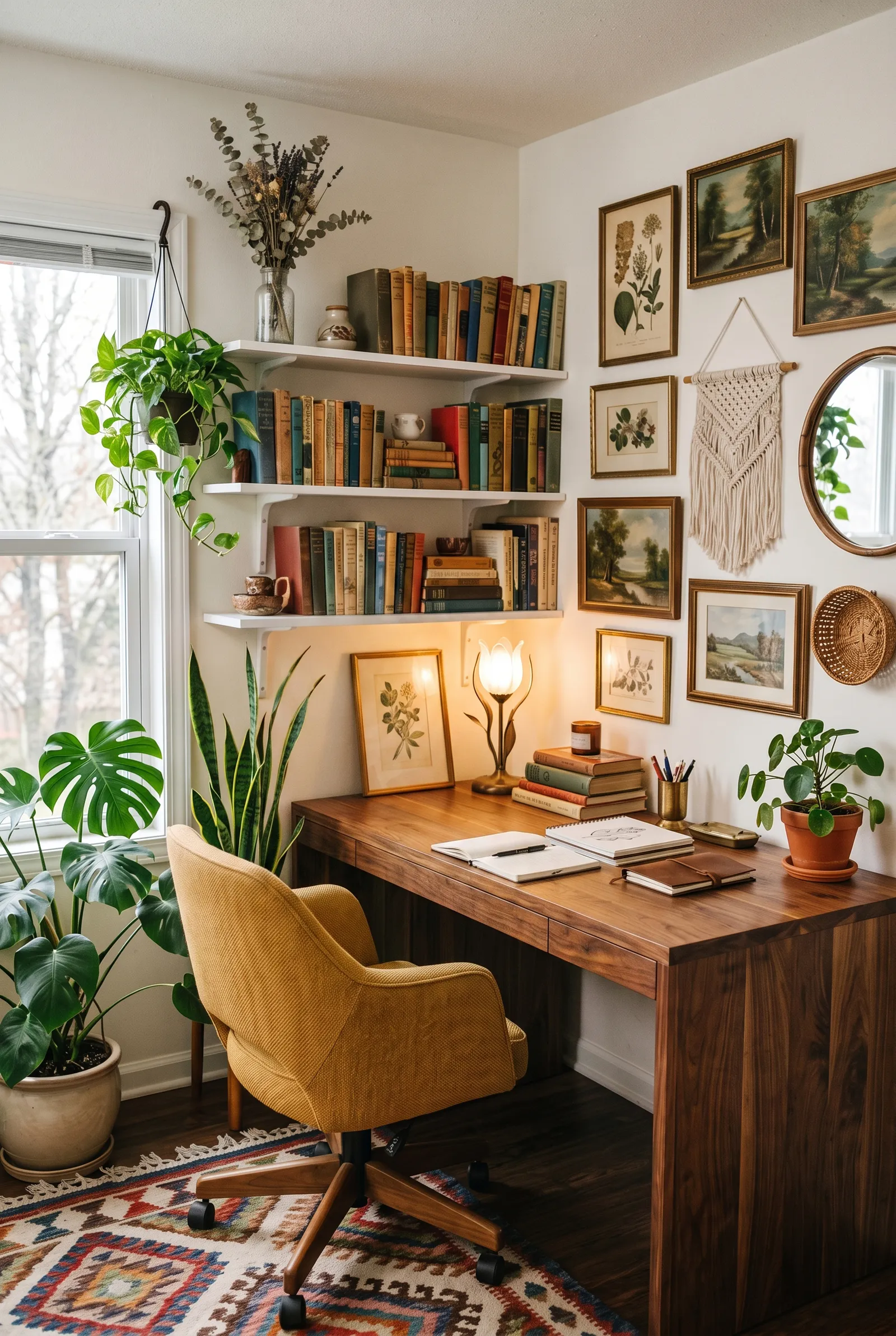
You don’t necessarily need green walls to create a green home office.
In this room, the plants do most of the work.
Large leafy plants, smaller tabletop greenery, and trailing vines surround the walnut desk while books and vintage-inspired artwork give the room a collected feel.
The mustard chair introduces another earthy color without fighting the greenery.
Designer Tip
Plants look particularly good next to books because the organic leaf shapes soften the straight lines created by shelves.
5. Combine Muted Green With Vintage Rugs
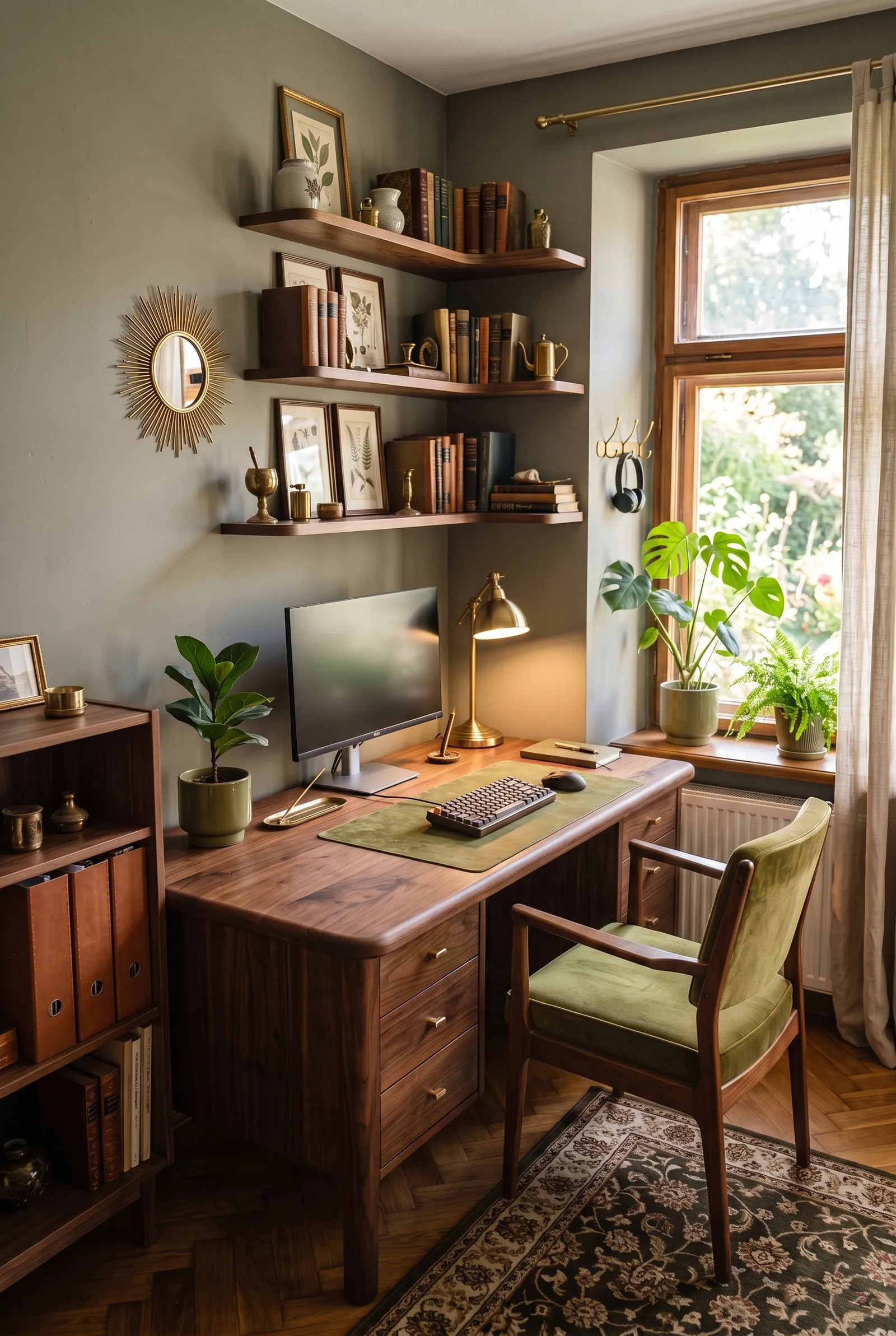
This workspace feels slightly more traditional.
The muted green wall, walnut furniture, brass lighting, framed botanical artwork, and patterned rug create a cozy study-like atmosphere.
The key is that none of the individual colors are very bright.
Everything sits in a slightly softened, earthy range.
That allows the room to contain plenty of detail without feeling busy.
6. Use Green as an Accent in a Warm Wood Office
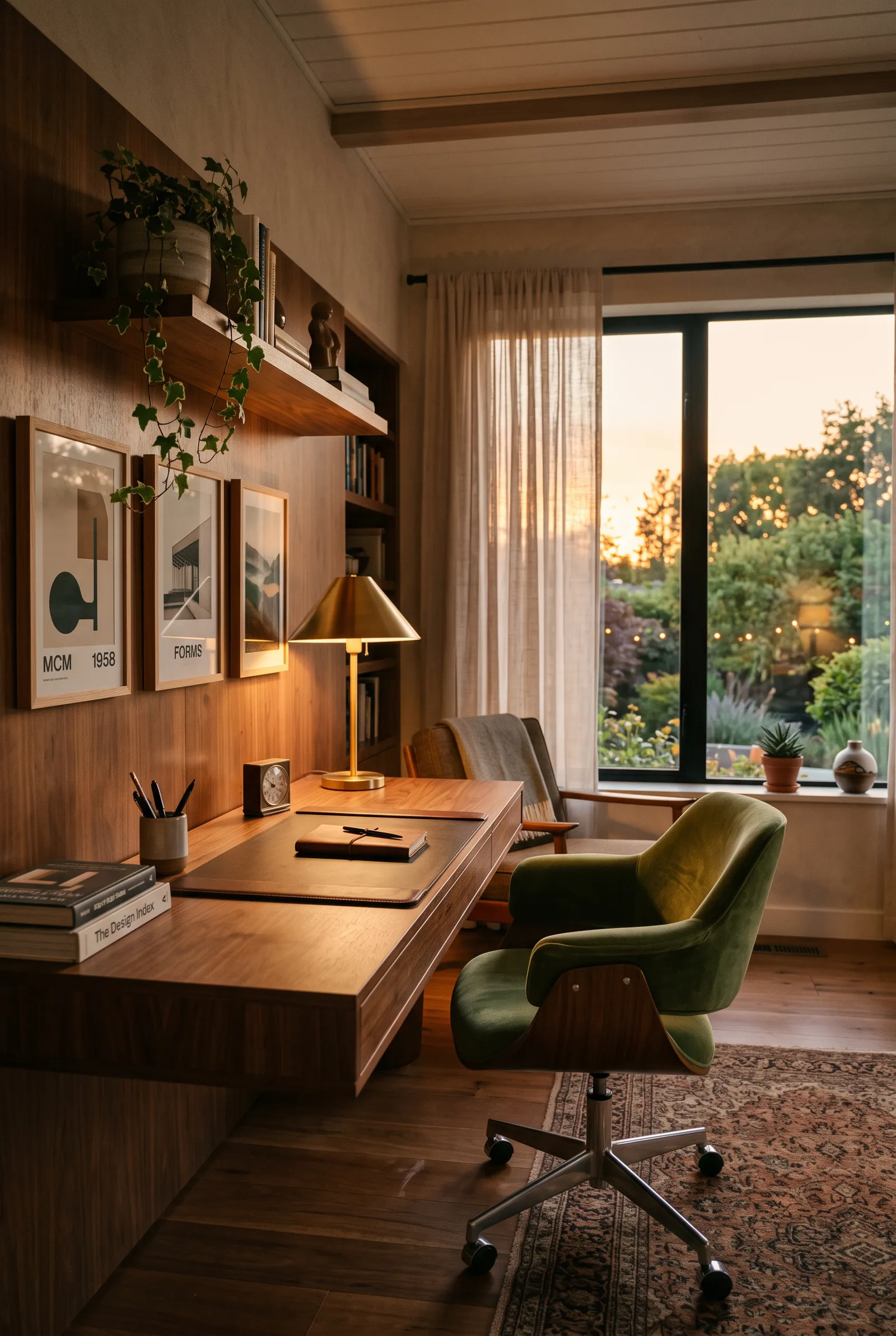
If you’re not ready to paint a wall green, furniture can introduce the color instead.
The olive office chair becomes the main accent against walnut paneling and a warm wood desk.
Because the rest of the palette stays restrained, the chair feels intentional rather than random.
The large window and evening light make the whole workspace especially warm and relaxing.
What Colors Work With a Green Home Office?
Green works particularly well with:
Walnut
Probably my favorite pairing. Deep brown wood makes olive and sage feel warmer and more sophisticated.
Cream
Useful for curtains, rugs, chairs, and walls when you want to lighten the palette.
Brass
A small amount of warm metal works beautifully with both green and walnut.
Terracotta
Especially good when your workspace includes lots of plants.
Muted Rust and Mustard
Both can add warmth without making the palette feel too colorful.
How Many Plants Should You Add?
There isn’t a magic number.
Instead of counting plants, think about scale and placement.
One large floor plant can sometimes do more for a room than six tiny pots.
A simple mix might be:
- one floor plant
- one desk plant
- one trailing plant on a shelf
If you want a more plant-filled look, add gradually and stop before every flat surface becomes occupied.
Final Thoughts
Green works so well in home offices because it sits somewhere between a neutral and a statement color.
It can disappear quietly into the background or become the personality of the entire room.
Pair it with warm wood and natural materials, and the result rarely feels overly trendy.
Whether you choose one olive chair, a sage wall, or an entire plant-filled workspace, the goal is the same:
create a room that feels calm enough to focus in and warm enough that you actually want to spend time there.