You don’t need a spare room to create a good home office.
Sometimes all you really need is one wall.
A desk, a few shelves, some thoughtful storage, and good lighting can turn an overlooked corner into a workspace that feels surprisingly complete.
The trick is to think vertically instead of trying to spread everything across the floor.
These six home office ideas show different ways to make one wall work harder without making a small room feel crowded.
1. Pair a Slim Desk With Vertical Shelving
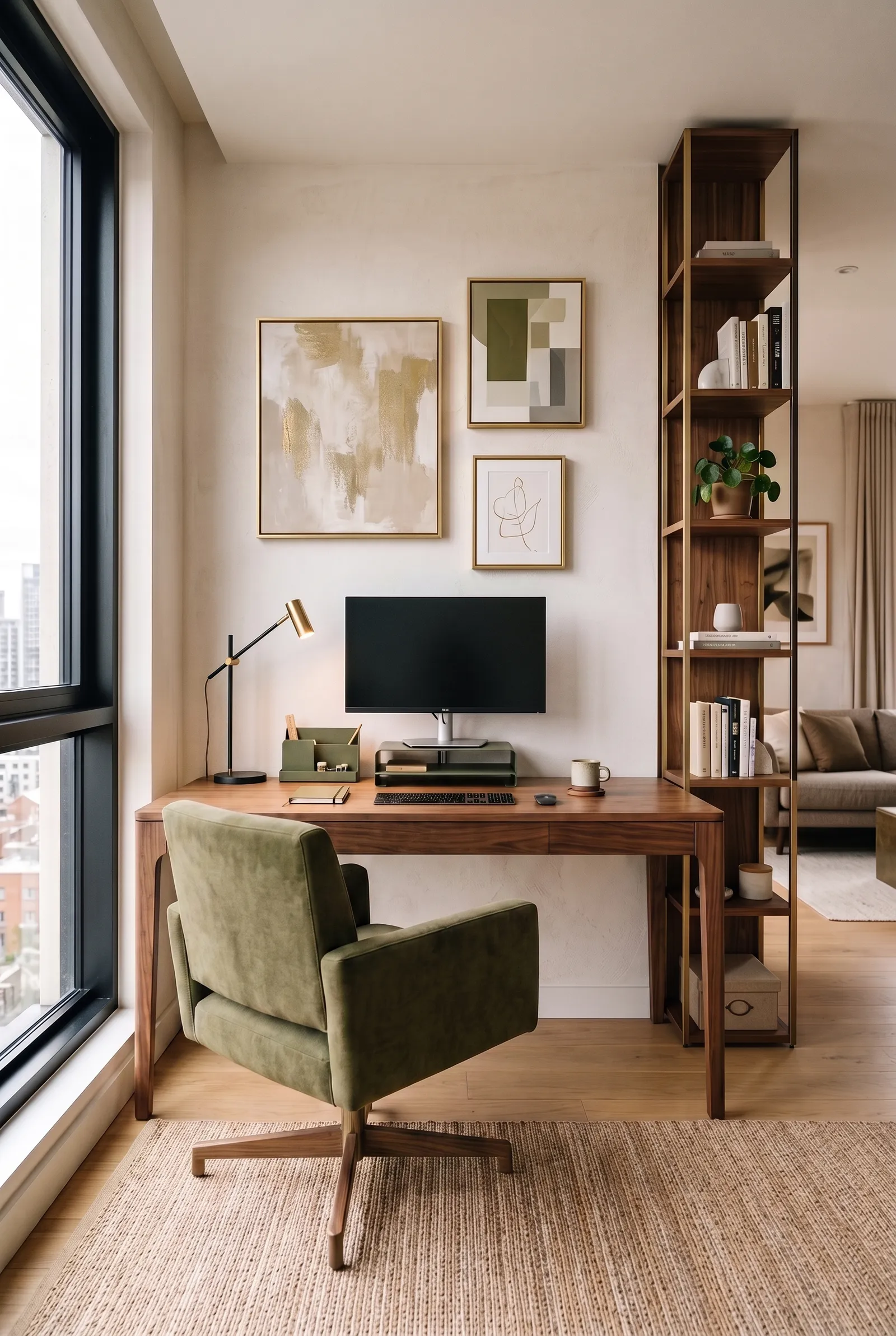
This setup uses very little floor space but still feels complete.
The desk sits neatly against the wall while a tall, narrow shelving unit uses the vertical space beside it.
That combination works especially well in apartments because the shelving adds storage without requiring another wide cabinet.
The large window also keeps the workspace bright and prevents the darker walnut furniture from feeling heavy.
2. Float the Desk to Keep the Floor Visually Open
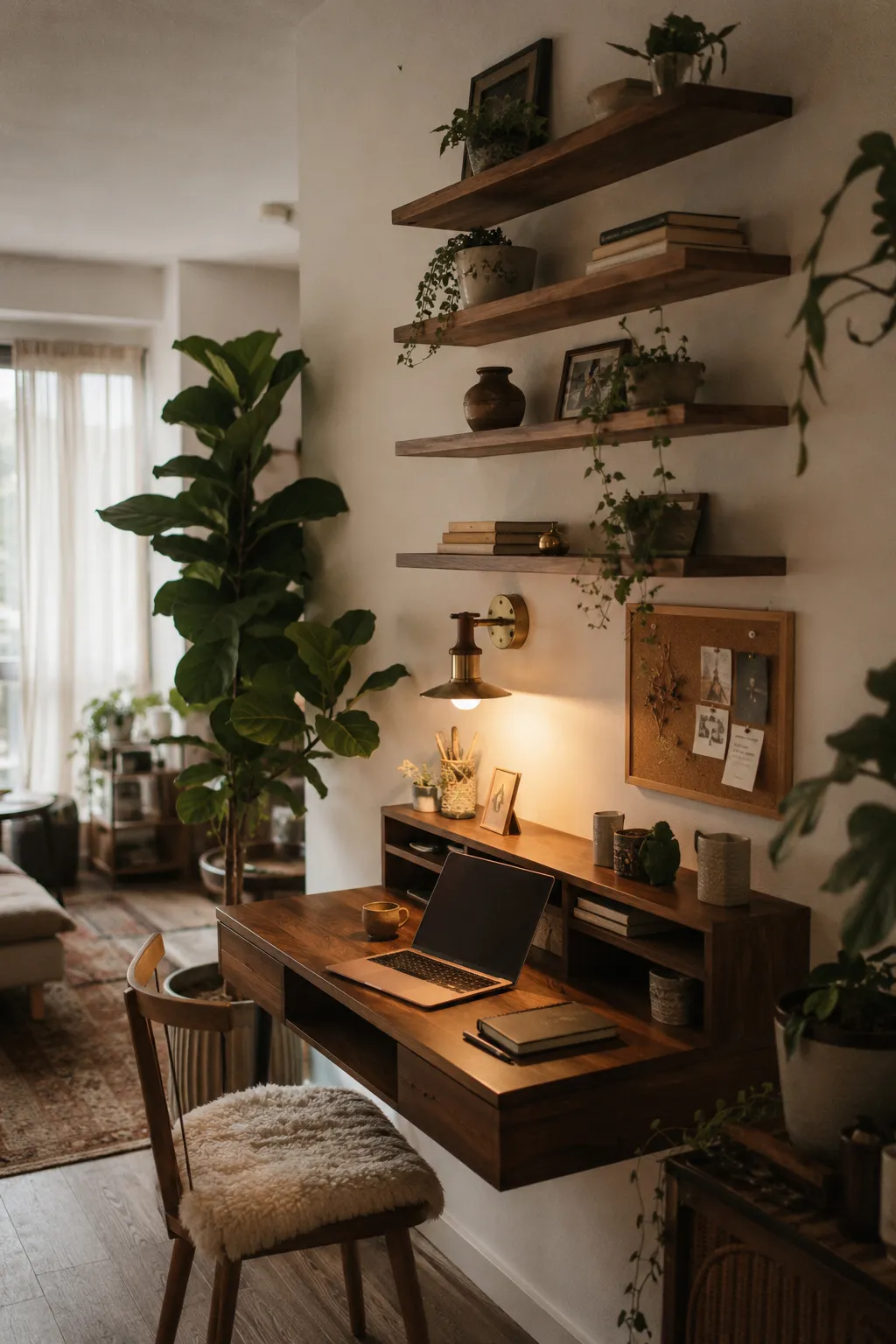
A wall-mounted desk can make a compact workspace feel noticeably lighter.
Without bulky desk legs or cabinets underneath, more of the floor remains visible.
Here, floating shelves continue the same idea above the desk and provide space for books, plants, ceramics, and small personal objects.
The result feels integrated into the wall rather than like another large piece of furniture squeezed into the room.
Small-Space Tip
If the desk is shallow, keep the everyday essentials closest to you and move decorative storage upward onto shelves.
3. Add a Pegboard Above the Desk
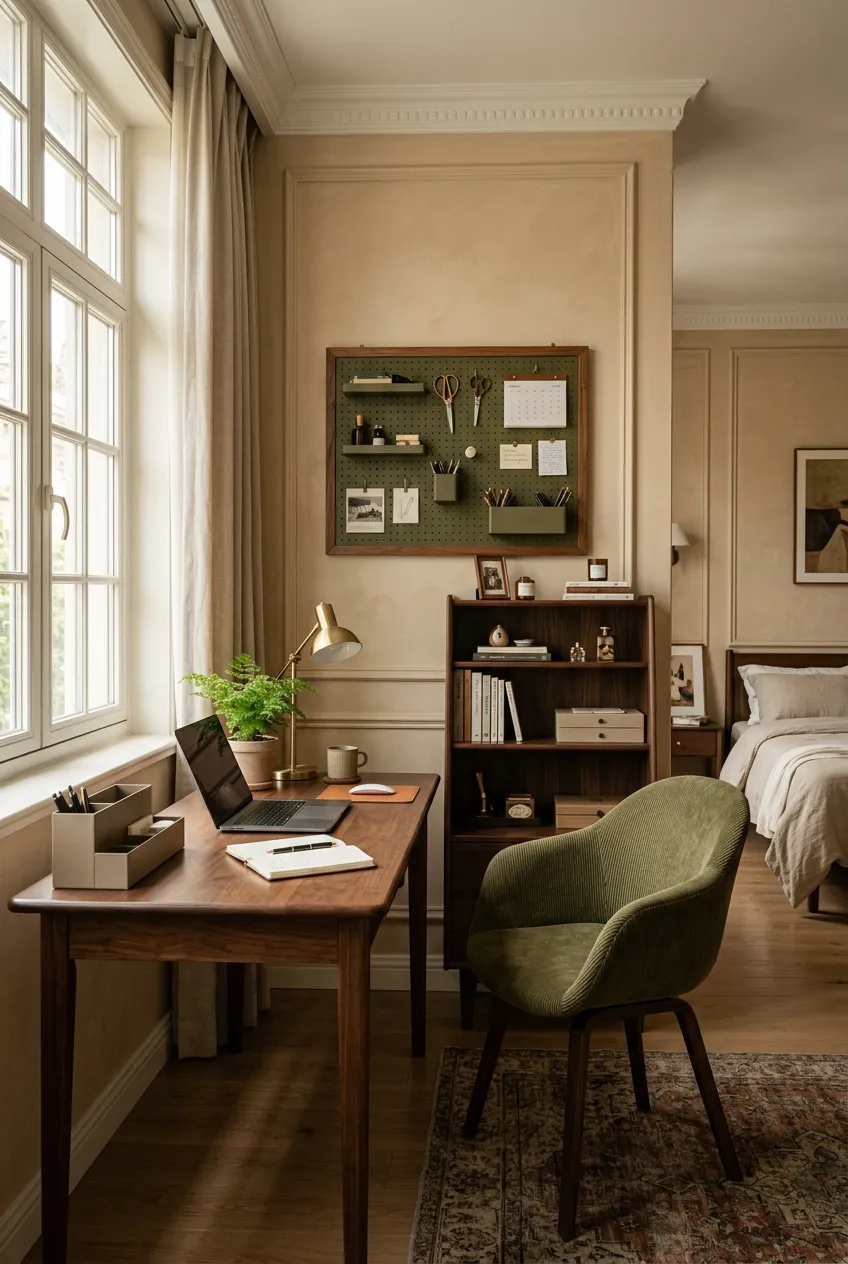
Pegboards are useful when you want flexible storage.
Instead of committing to fixed shelves for every small item, hooks and containers can move as your needs change.
This workspace combines a compact desk with a pegboard and bookcase, giving papers, stationery, books, and small supplies their own places.
It’s especially useful in a bedroom or studio apartment where the office has to share the room with other functions.
4. Use Tall Storage Beside a Narrow Desk
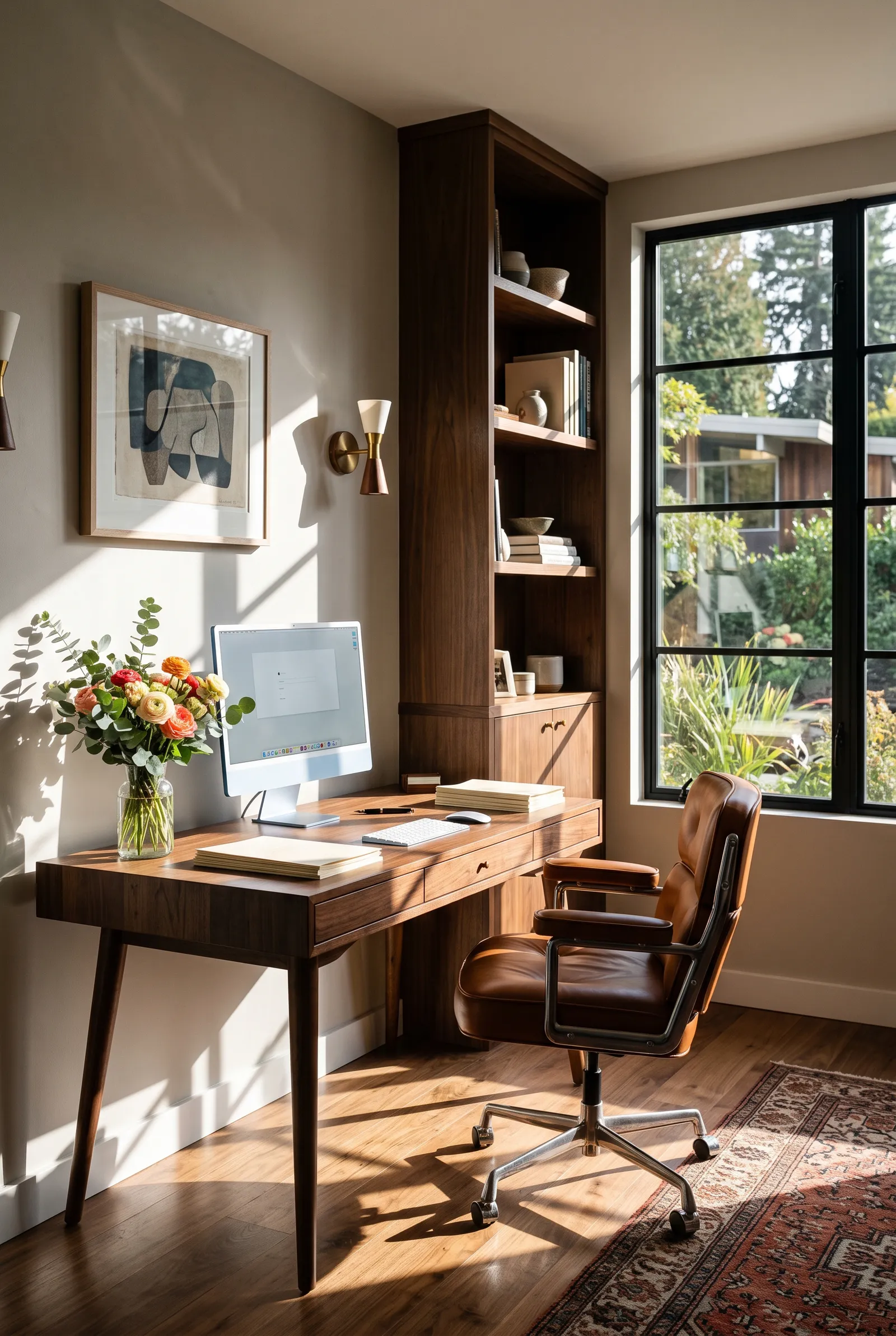
Sometimes the best solution isn’t adding shelves directly above the monitor.
A tall storage tower beside the desk can give you plenty of room for books and supplies while keeping the wall above the workspace visually quiet.
This is also helpful if you like larger artwork over your desk.
The combination of a narrow writing desk and tall shelving uses both horizontal and vertical space efficiently.
5. Add Lighting Directly Into the Shelves
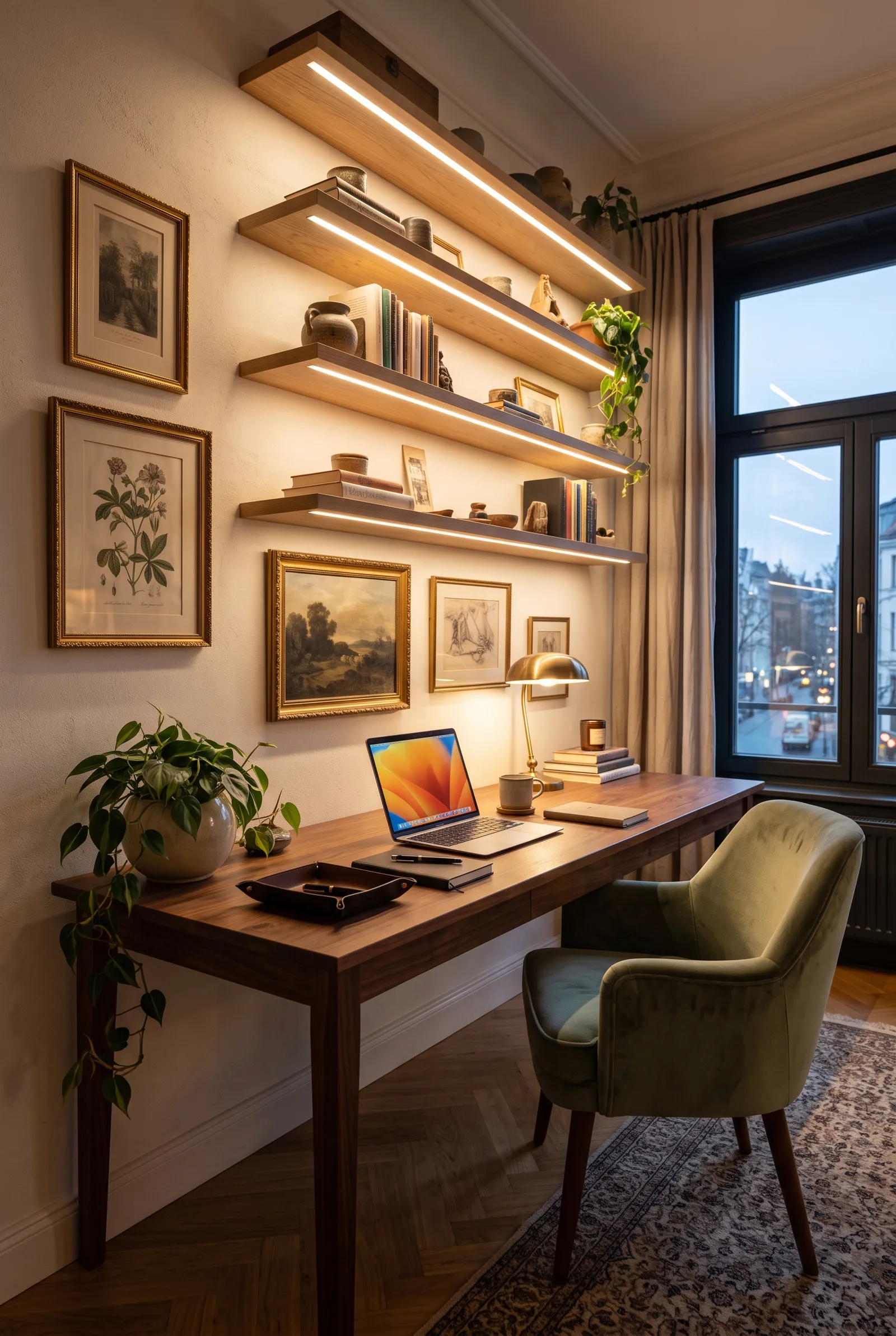
This setup shows how useful shelf lighting can be in a small office.
Integrated warm light underneath the floating shelves illuminates the wall and desk without requiring several separate lamps.
It also makes the workspace feel especially cozy in the evening.
The shelves provide storage during the day and become part of the room’s ambient lighting after dark.
Designer Tip
Use warm rather than cool LED lighting if the office contains a lot of wood.
It usually brings out the richness of the material much better.
6. Tuck a Workspace Into Built-In Storage
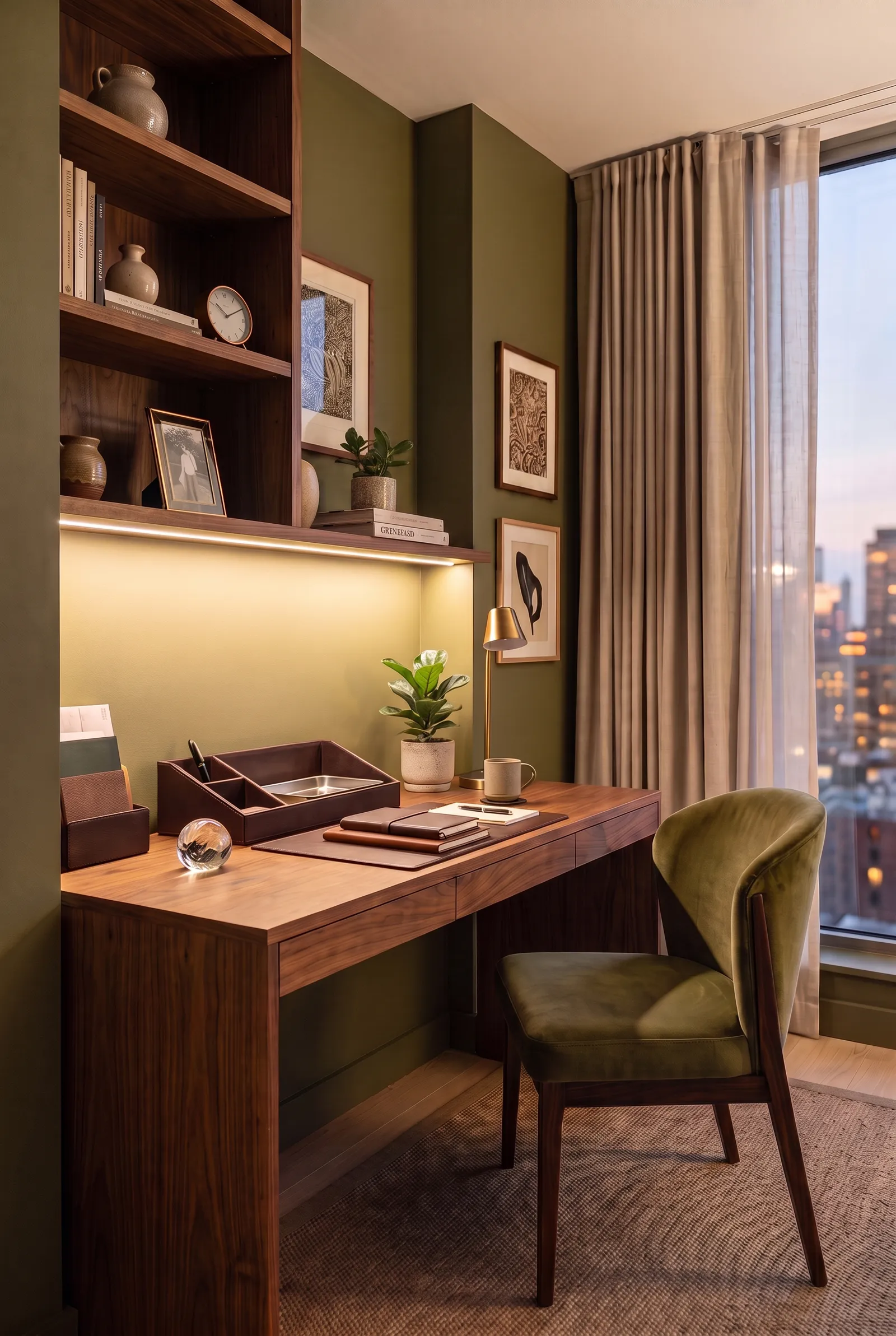
If a room already has built-in shelves or cabinetry, a desk can sometimes fit directly into that architecture.
This keeps the workspace visually contained and prevents it from spreading across the room.
The olive wall and warm walnut make this small desk nook feel intentional rather than leftover.
It’s a particularly good strategy for living rooms, bedrooms, and apartments where the office needs to disappear into the rest of the interior.
How to Make a Small Home Office Feel Less Crowded
A small office doesn’t necessarily need tiny furniture.
What matters more is keeping the layout visually organized.
Try to:
- use vertical storage
- keep one clear working surface
- move less-used objects higher
- hide cables
- leave some shelves partially empty
- avoid placing storage on every available wall
The goal is not to maximize every inch.
It’s to create enough storage while still giving your eyes somewhere to rest.
Final Thoughts
One wall can be enough for a surprisingly functional office.
Start with the desk, then ask what actually needs to stay within reach.
Everything else can move upward into shelves, pegboards, bookcases, or closed storage.
The best small workspaces don’t feel like every inch has been optimized.
They simply feel easy to use.