There’s something about walnut that instantly makes a workspace feel warmer.
It has enough depth to give a room character, but it’s still easy to pair with soft neutrals, olive green, brass, plants, vintage rugs, and simple artwork.
That’s probably why I keep coming back to it for home offices.
You don’t need an entire room full of matching walnut furniture either. Sometimes one beautiful desk is enough to anchor the space.
Here are six different ways to use warm walnut tones to create a home office that feels comfortable, collected, and timeless.
1. Keep the Desk Simple and Let the Details Do the Work
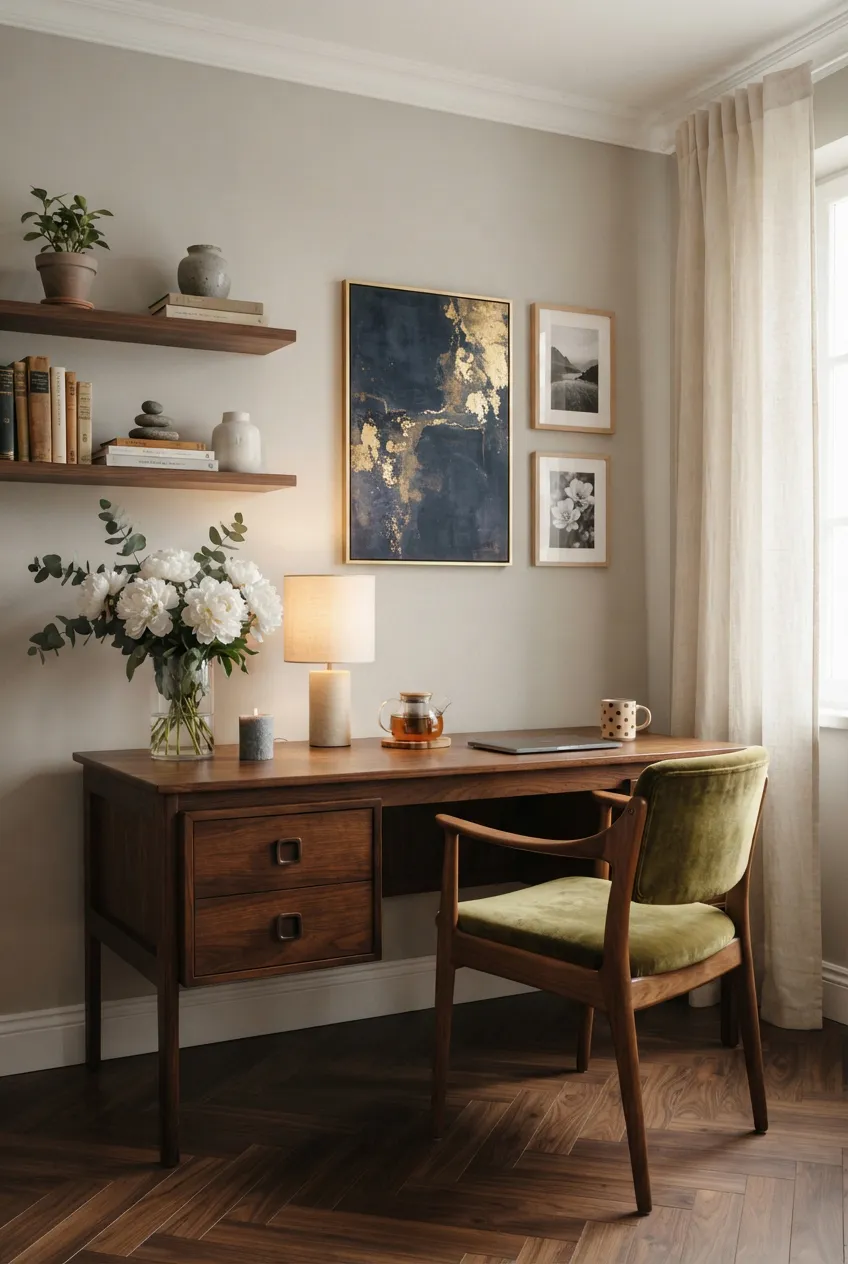
This setup is quiet, but that’s exactly what makes it work.
The walnut desk provides a warm foundation while the olive upholstered chair introduces a soft earthy color. Instead of covering the wall with lots of small objects, a few carefully chosen pieces—artwork, floating shelves, flowers, and a table lamp—give the workspace personality.
The balance is especially nice here.
There’s enough styling to make the desk feel finished, but plenty of empty space remains.
2. Pair Walnut With Art for a More Collected Feel
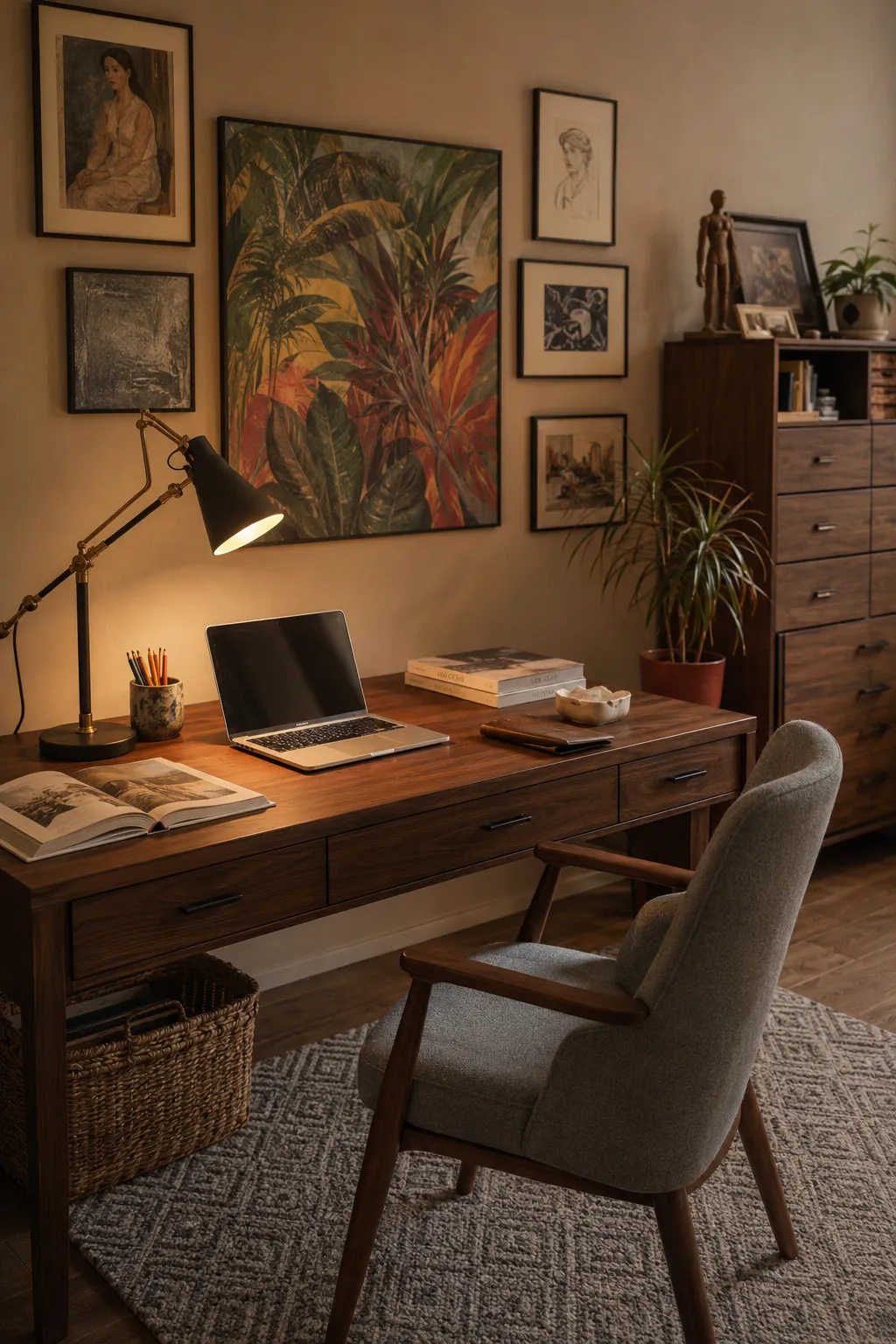
If you prefer a workspace with more personality, artwork can completely change the mood.
Here, the large botanical print creates a strong focal point while the smaller framed pieces surrounding it make the wall feel collected over time.
The walnut desk keeps all those visual details grounded.
A grey upholstered chair is also a smart choice because it gives the artwork room to stand out instead of adding another strong color.
Designer Tip
If you’re building a gallery wall above a desk, start with one larger piece first.
Then arrange smaller artwork around it rather than trying to make every frame the same size.
3. Use Open Shelving to Extend the Desk Upward
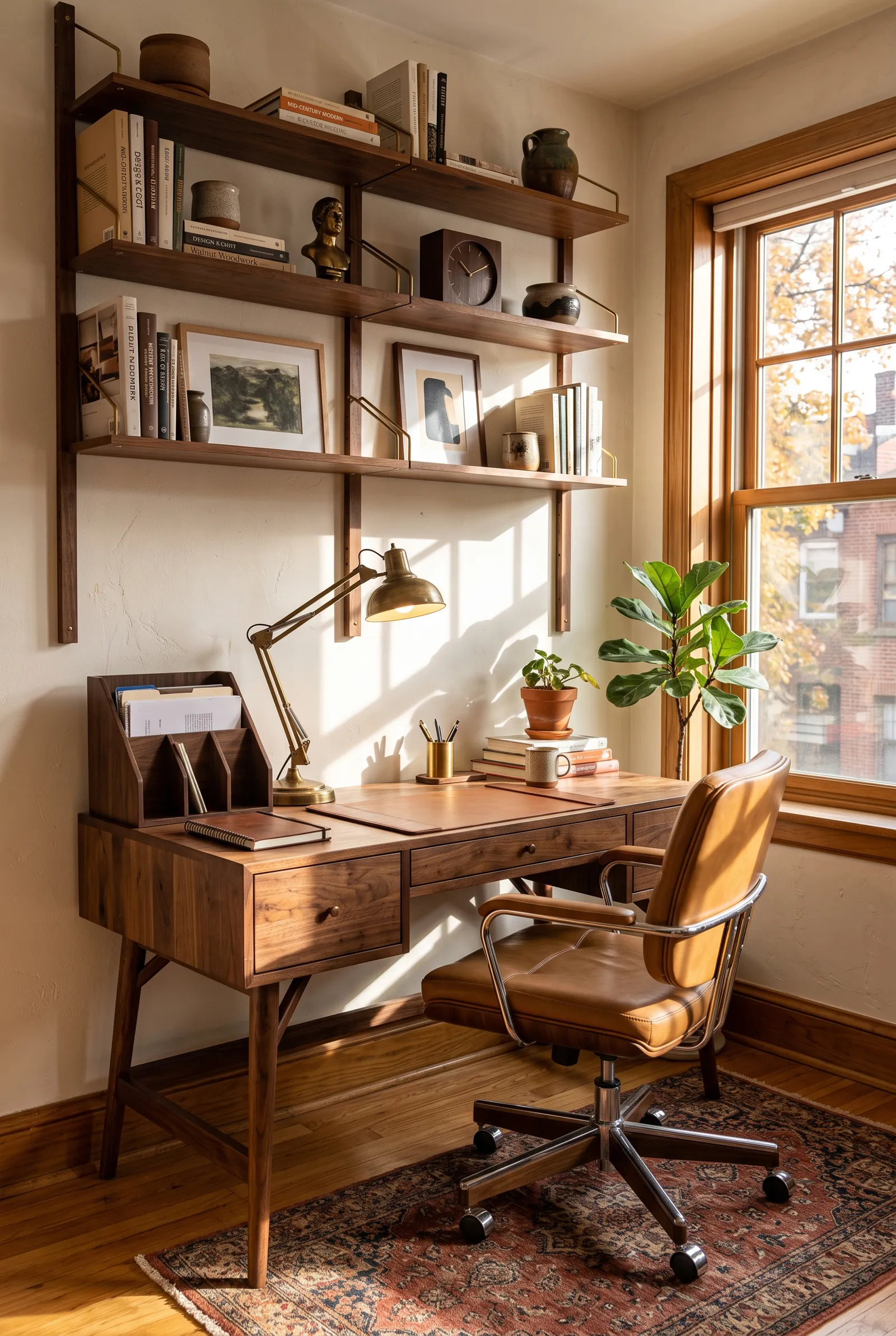
A beautiful desk doesn’t need to stop at the desktop.
Wall-mounted shelving turns the area above it into useful vertical storage while keeping the floor clear.
This setup feels especially warm because the shelves and desk share similar wood tones. Books, small ceramics, framed art, and a few plants add interest without turning the wall into visual clutter.
The leather office chair brings in another warm material that works naturally with walnut.
Small-Space Tip
Leave some empty areas on open shelves.
If every inch is filled with books and decor, the shelving can start to feel heavy—especially directly above a workspace.
4. Turn an Entire Wall Into a Built-In Workspace
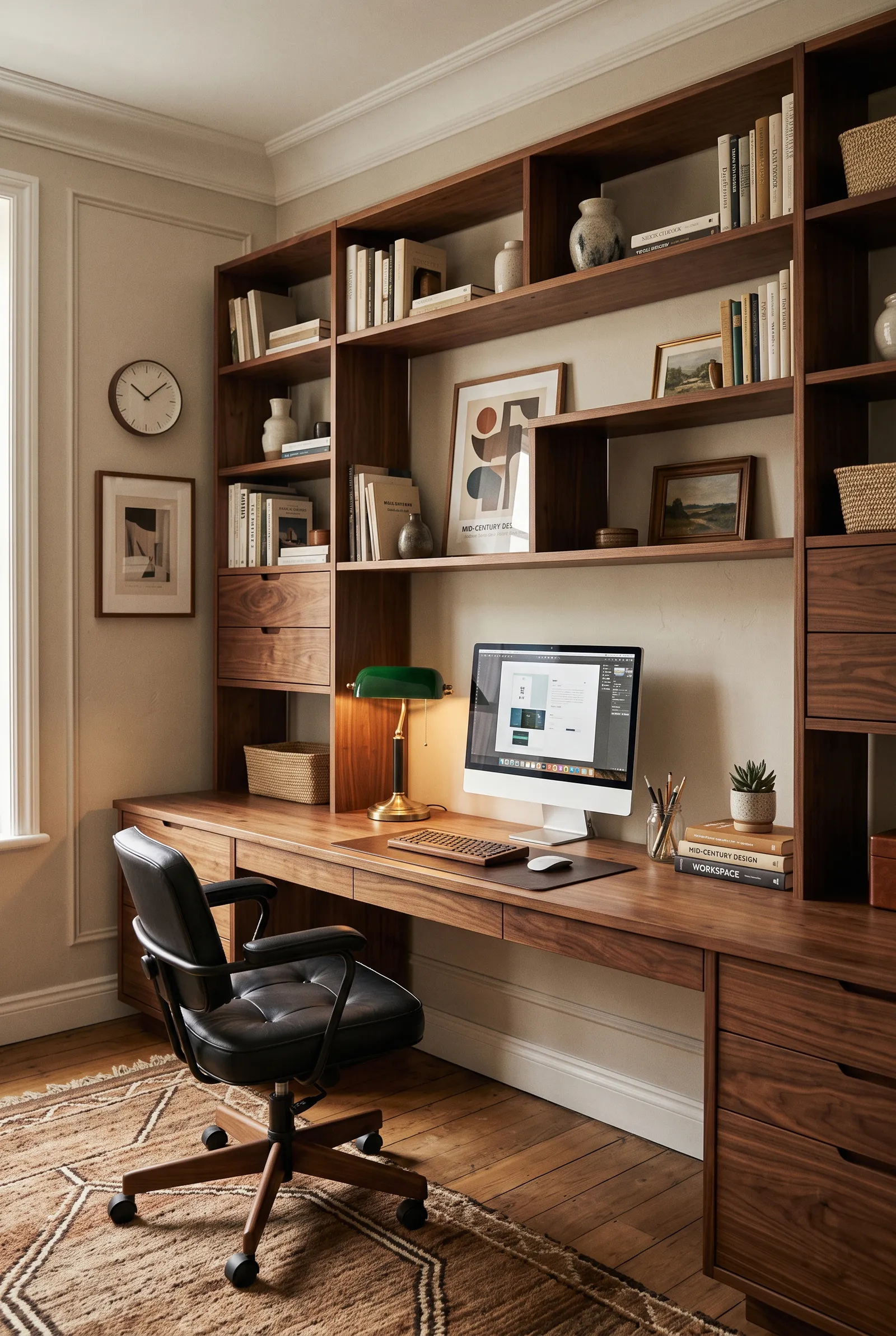
For anyone who needs serious storage, this is one of the most practical approaches.
Instead of treating the desk and bookcases as separate furniture, the whole wall becomes one coordinated workspace.
Open shelves keep books and decorative objects visible, while drawers and cabinets hide the less attractive parts of everyday work.
The walnut finish makes such a large amount of storage feel warmer and more furniture-like instead of looking like office cabinetry.
Why It Works
The desk stays relatively clear because everything has somewhere else to go.
That’s especially helpful if your work involves paperwork, equipment, books, or supplies that would otherwise collect on the desktop.
5. Let a Freestanding Desk Become the Centerpiece
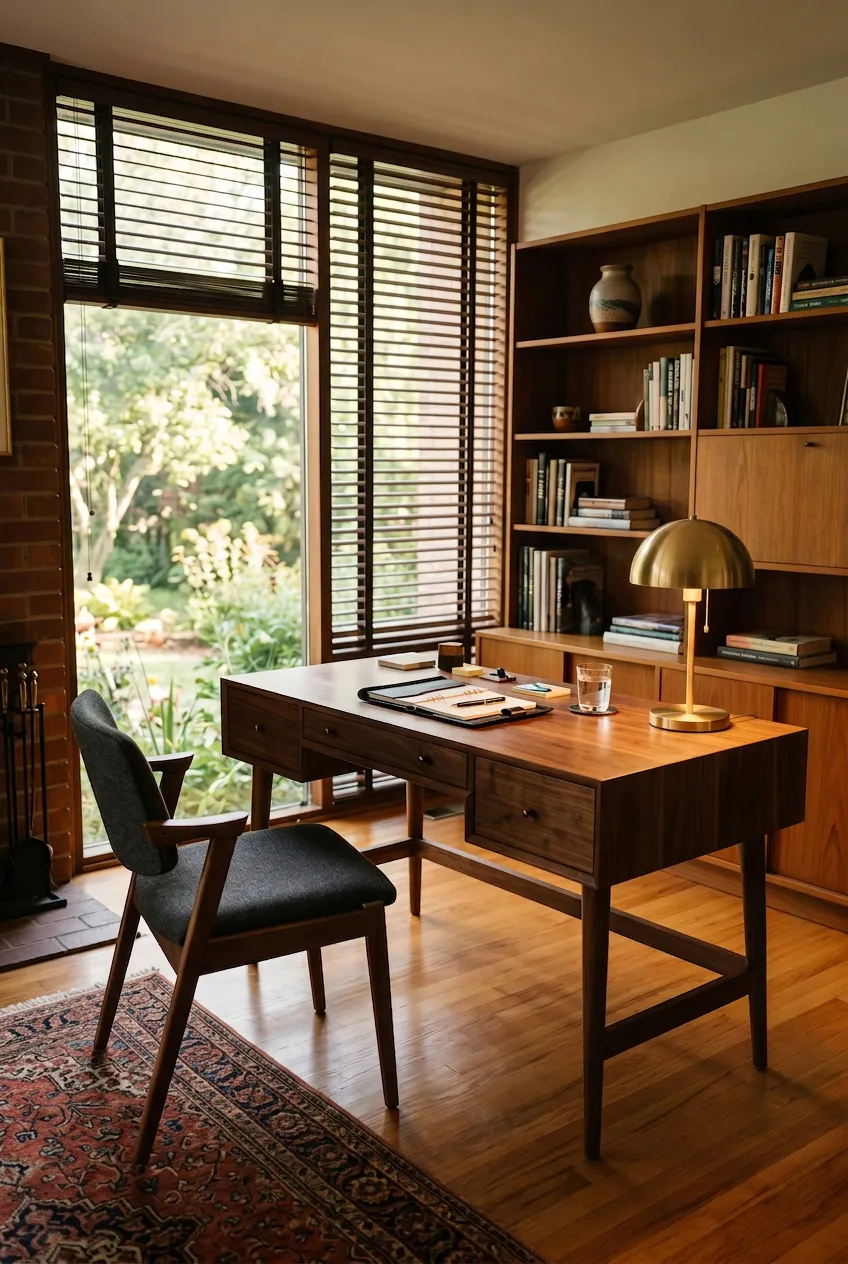
Not every home office desk needs to face a wall.
If you have enough room, turning the desk into the center of the workspace can make it feel much more intentional.
This setup uses a freestanding walnut desk in front of a large bookcase, with a beautiful garden view bringing natural light into the room.
The layout feels more like a traditional study than a typical computer station.
Designer Tip
A freestanding desk works best when the back of the desk looks as good as the front.
Avoid pieces with unfinished backing, visible cable chaos, or storage designed to sit strictly against a wall.
6. Keep a Modern Setup Warm With Wood
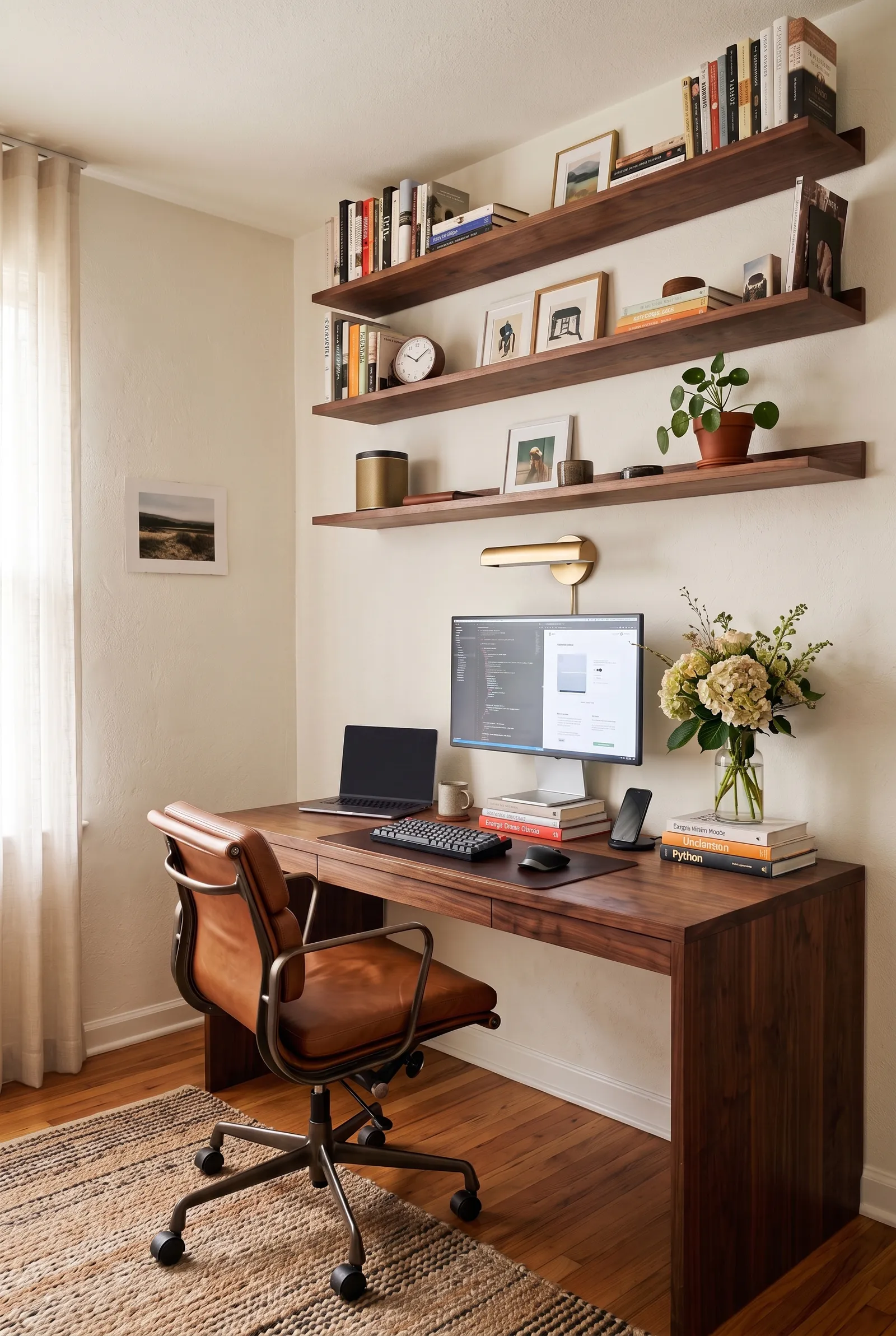
A monitor, keyboard, laptop, and other technology can easily make a home office feel cold.
Warm wood helps balance that.
The walnut desk gives this modern computer setup a softer residential feel, while floating shelves add books and decorative pieces above the screen.
The leather chair works particularly well because its warm caramel tone sits naturally beside the wood.
How to Style a Walnut Home Office
You don’t need every piece of furniture to match exactly.
Instead, try repeating a few materials:
- walnut or warm wood
- brass or aged metal
- leather
- linen
- wool
- ceramics
For color, walnut works especially well with olive green, cream, warm grey, rust, navy, and muted beige.
The result usually feels more natural when the room looks coordinated rather than perfectly matched.
Final Thoughts
A walnut home office can feel modern, vintage, minimal, or traditional depending on what you place around it.
That versatility is what makes the wood so useful.
Start with one strong piece—usually the desk—then build around it with lighting, storage, artwork, and texture.
You don’t need much.
When the materials already have warmth and character, fewer pieces often create a better workspace.