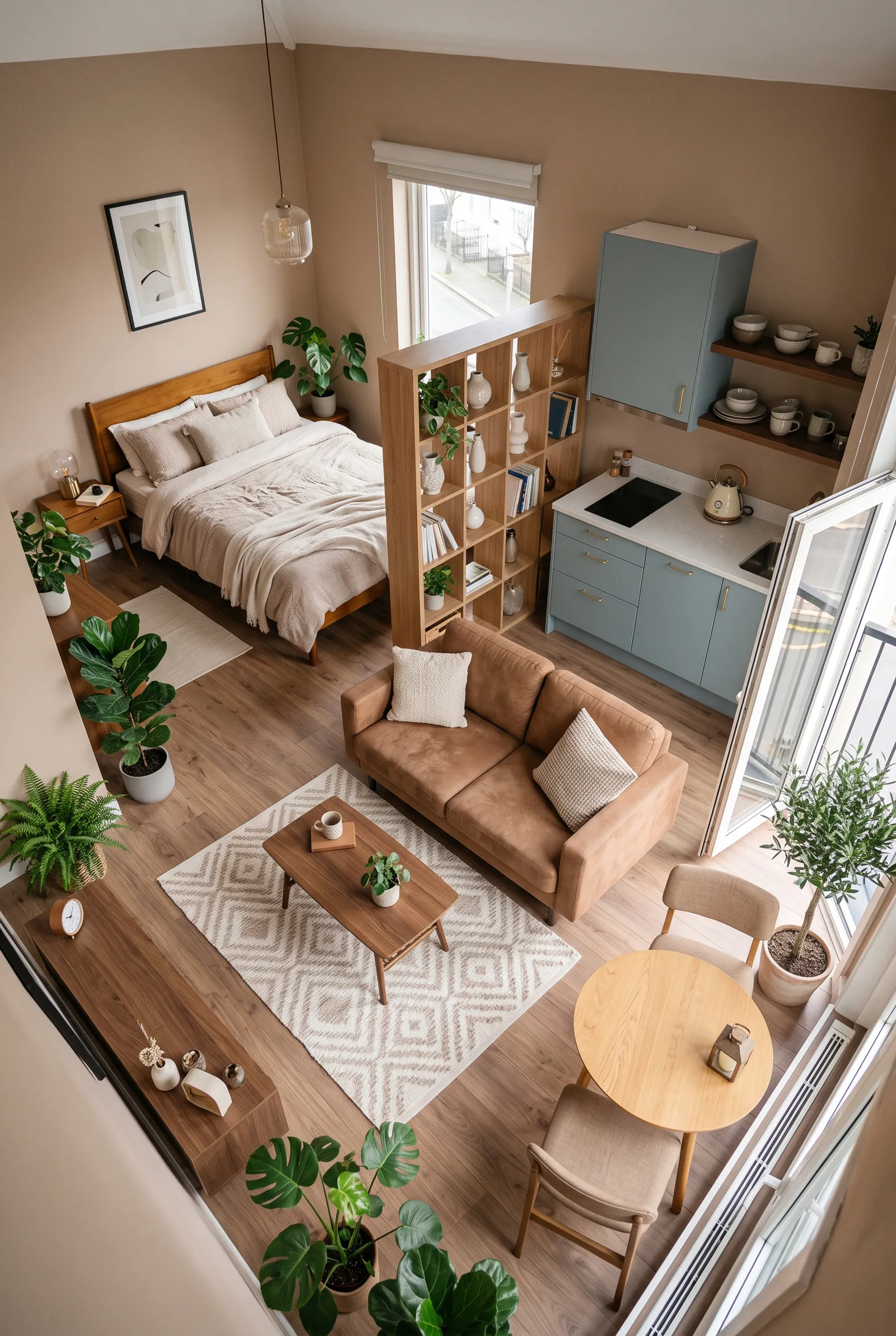
One of the hardest things about living in a studio apartment is figuring out where one space should end and another should begin.
Your bed, sofa, kitchen, dining table, and storage may all share the same room, but that doesn’t mean everything has to feel like it’s floating together without any structure.
The trick is to create just enough separation.
A good room divider should help the sleeping area feel more private, define the living space, or add storage—without blocking all the light or making a small apartment feel even smaller.
I especially love dividers that can do more than one job. An open bookshelf can separate the bed and living area while storing books. A wardrobe can hide clothes and create privacy. Even plants or curtains can completely change how a studio apartment feels.
Here are 10 studio apartment room divider ideas that create clearer zones while keeping the space open, bright, and comfortable.
1. Use an Open Bookshelf Between the Bed and Living Area
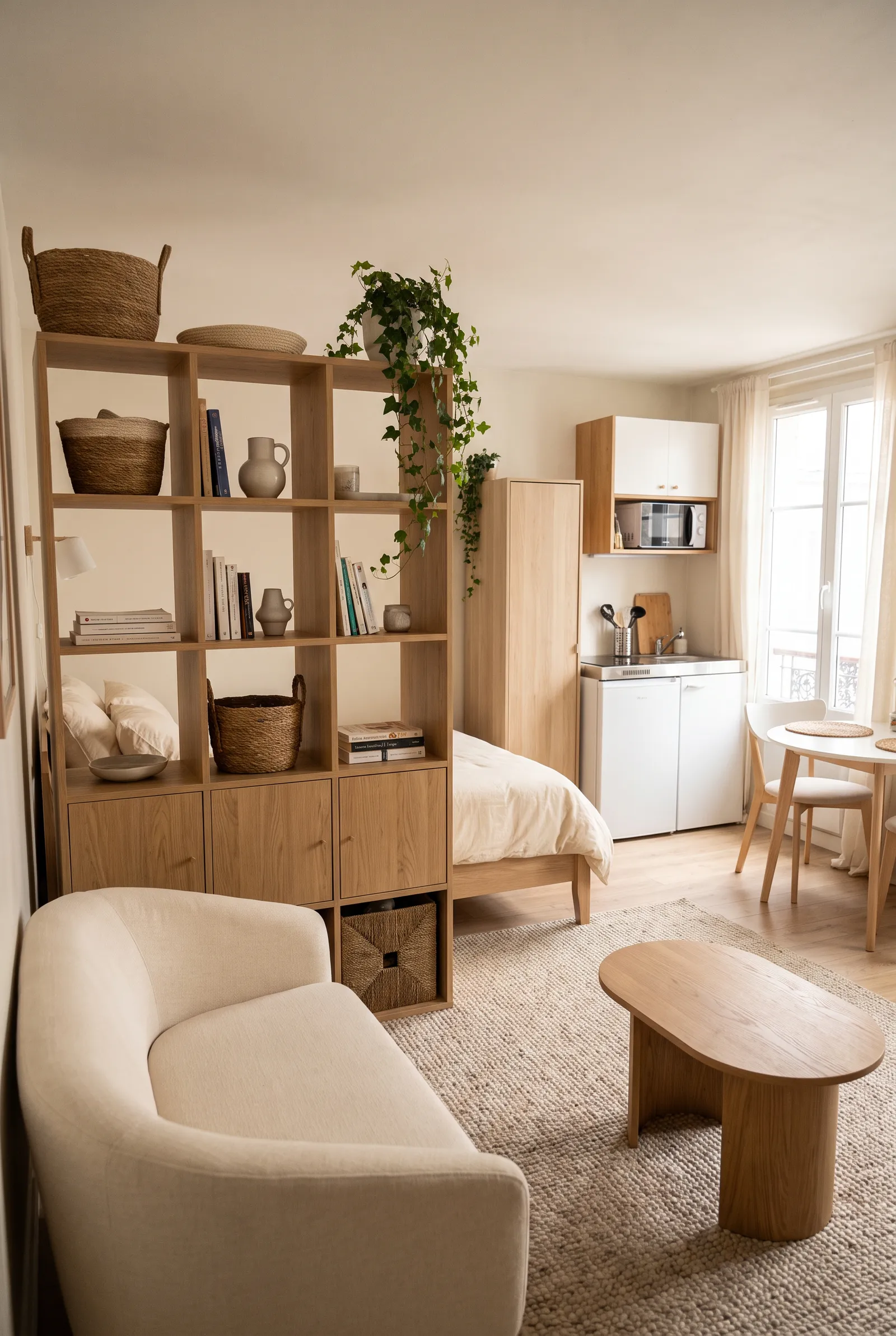
An open bookshelf is probably my favorite studio apartment divider because it gives you separation without making the room feel closed off.
Place it between the bed and sofa so the sleeping area feels a little more private while light can still travel through the shelves.
It also solves another small-apartment problem at the same time: storage.
Books, baskets, ceramics, plants, and small everyday objects can all live here instead of taking up space somewhere else.
The key is not to fill every single shelf.
Leaving some open space lets you see through the unit, which keeps the divider feeling light rather than turning it into another wall.
Small-Space Tip
Use baskets or a few closed boxes on the lower shelves for things you don’t want on display, and keep the upper shelves more open.
2. Try a Half-Height Bookcase for Softer Separation
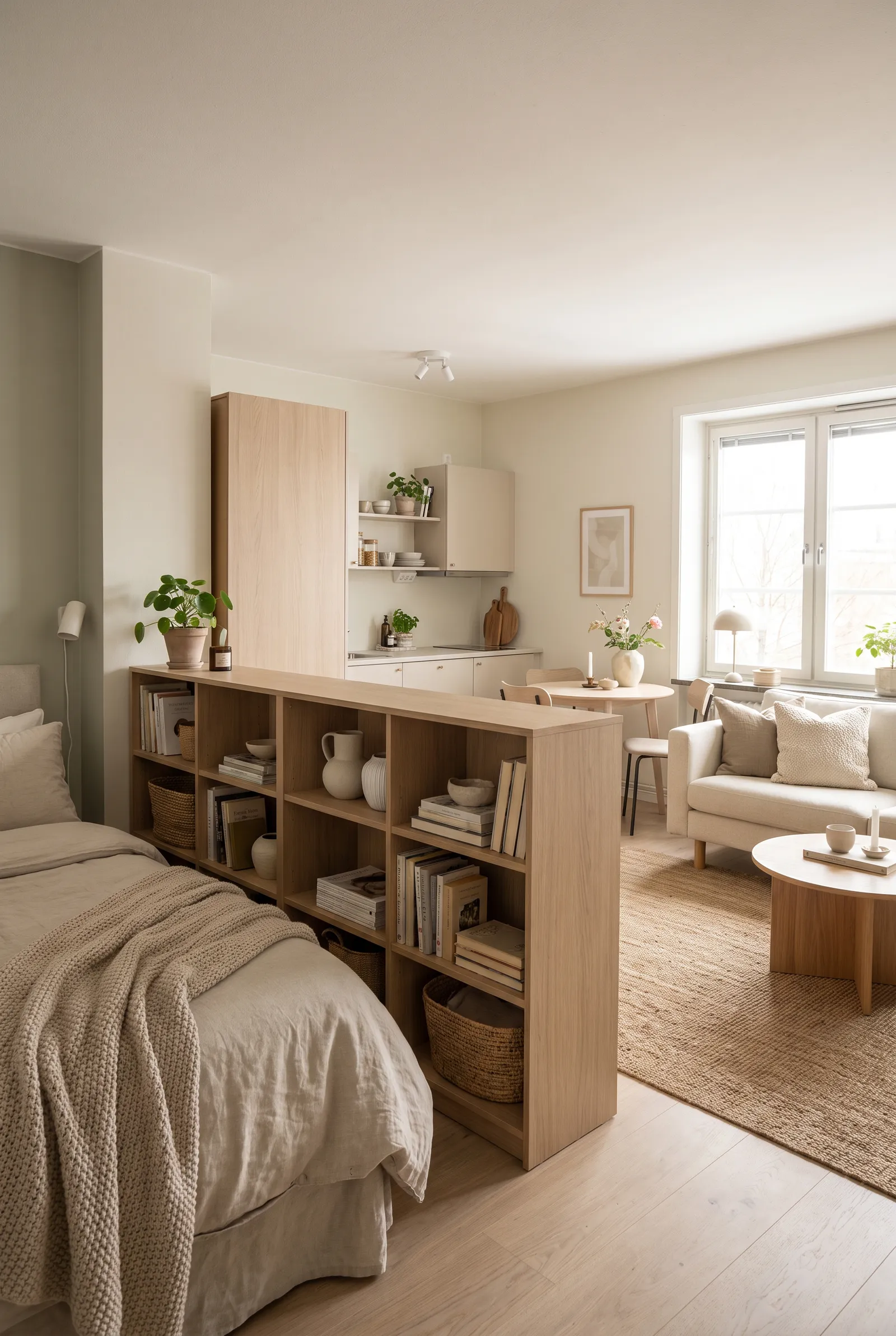
If a full-height shelf feels too large for your apartment, a lower bookcase can still create a surprisingly clear boundary.
A half-height divider works especially well at the foot or side of the bed.
It gives the sleeping area a sense of enclosure while keeping the upper half of the room completely open.
That means you still get long sightlines across the apartment, which can make a compact space feel larger.
The top surface also becomes useful.
You can style it with a lamp, a few books, a plant, or a small tray without adding another table.
This is a good option for apartments where privacy is helpful, but natural light is more important than complete separation.
3. Use Vertical Wood Slats Instead of a Solid Wall
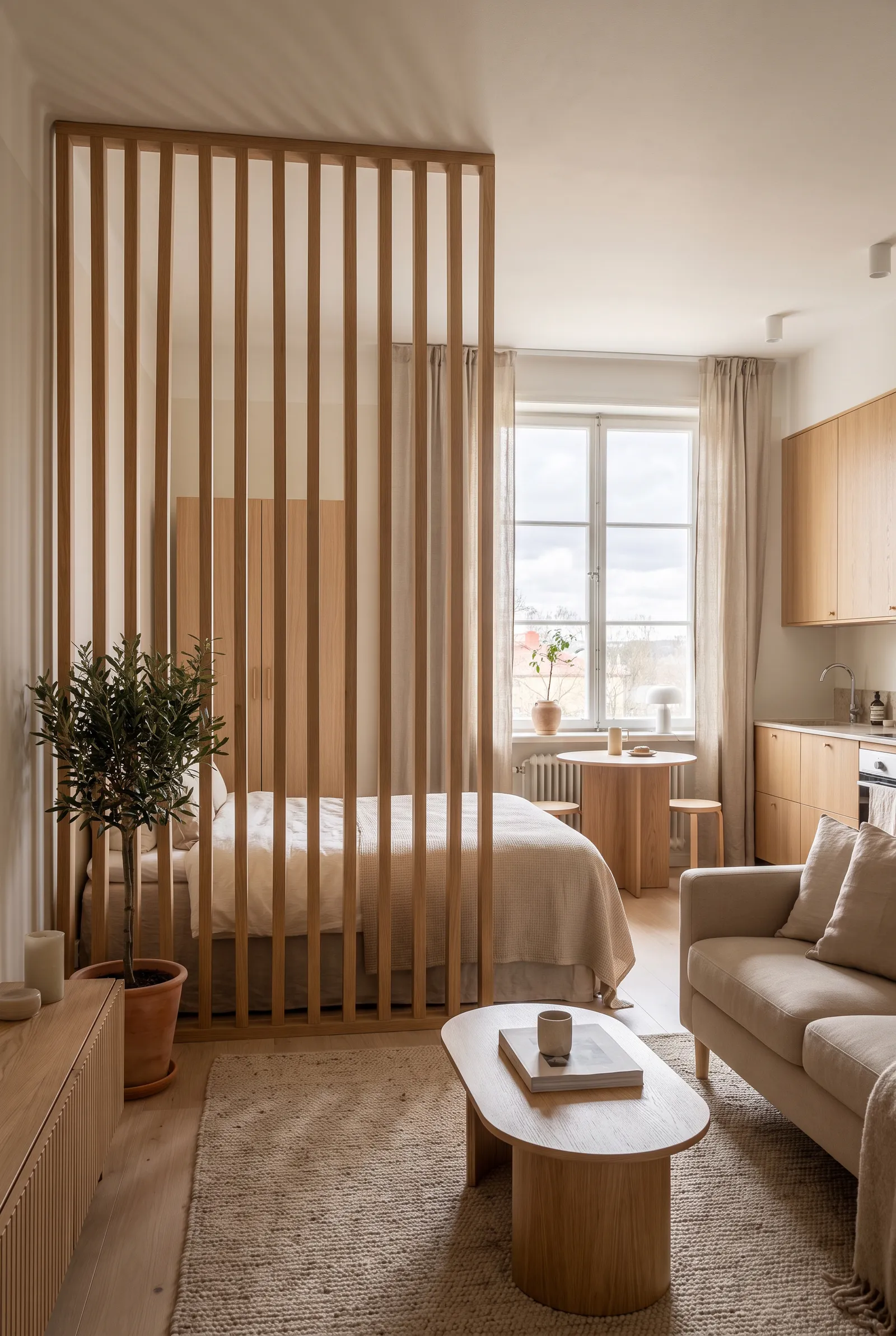
Wood slat dividers create a stronger architectural feeling while still allowing light and visual connection between different zones.
The vertical lines can make a studio feel taller, and the warm wood adds texture without requiring much decoration.
This type of divider works beautifully between a bed and living area because it creates privacy without completely hiding either side.
It can also feel much lighter than a full partition wall.
I especially like this approach in warm neutral apartments where there are already light wood floors, simple furniture, and soft cream textiles.
Repeating a similar wood tone helps the divider feel like part of the room rather than something added later.
Designer Tip
Keep the spacing between the slats generous enough to let light through.
The goal is to suggest a boundary, not build another wall.
4. Hang a Curtain Around the Sleeping Area
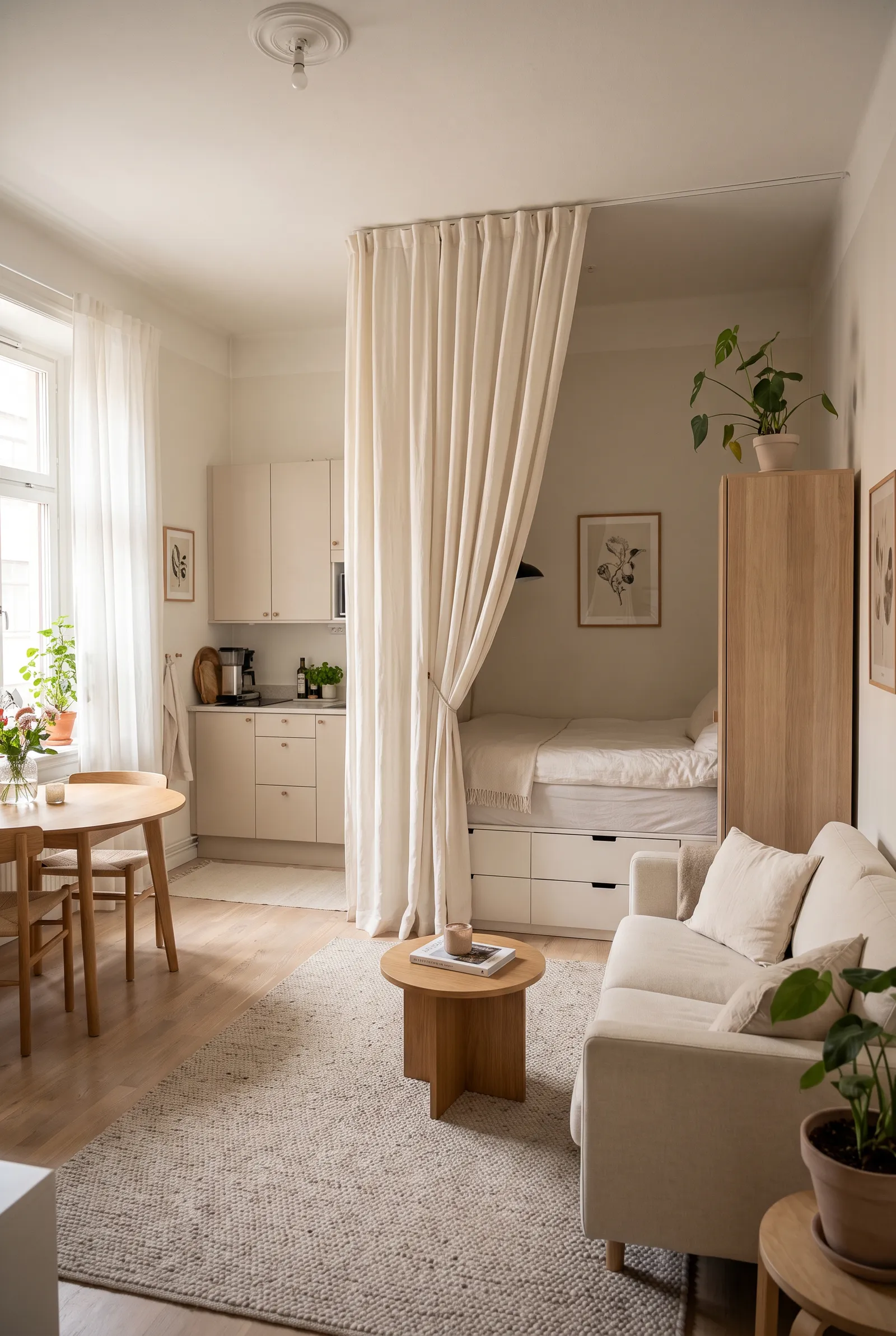
Curtains are one of the simplest room dividers, but they’re also one of the most flexible.
During the day, you can pull the curtain completely open and keep the apartment feeling like one large room.
At night, close it to make the bed feel more private and cozy.
Soft linen-look curtains work especially well because they add texture without feeling heavy.
For a lighter look, choose cream, oatmeal, warm white, or pale beige rather than very dark fabric.
This idea is also useful for renters because it doesn’t require building a permanent partition.
A ceiling-mounted track can make the curtain look much more intentional than a temporary tension rod.
Small-Space Tip
Let the curtain fall all the way from ceiling to floor.
Long vertical fabric makes the room feel taller and usually looks cleaner than a short curtain.
5. Choose a Glass Divider When You Want More Privacy Without Losing Light
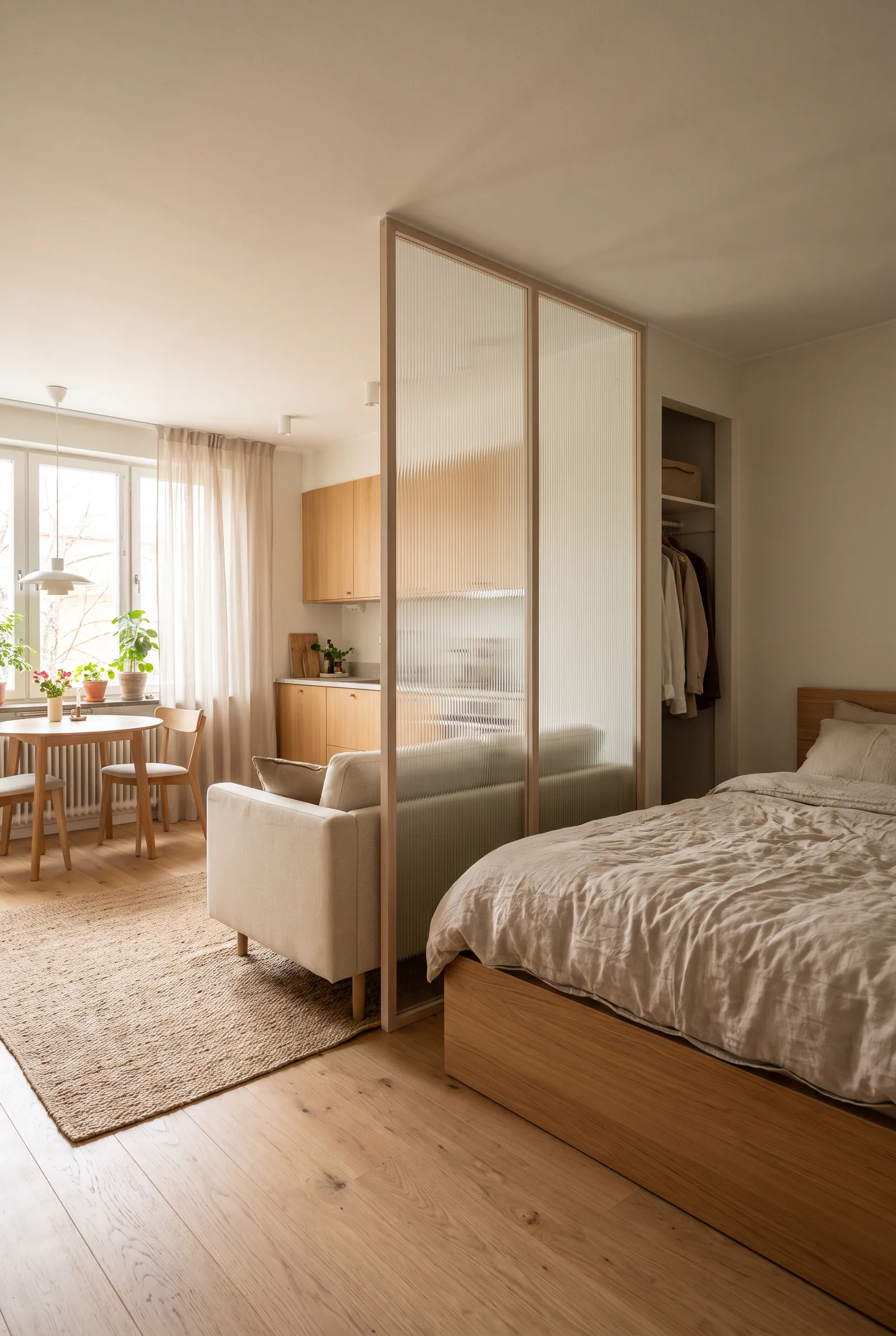
For a more architectural solution, a glass partition can create a real bedroom zone while still keeping the apartment visually open.
Clear glass allows daylight to move through the entire room, which is especially useful if the studio has windows on only one side.
Black-framed glass creates a slightly more industrial look, while frameless or pale-frame glass feels softer and more minimal.
You don’t necessarily need to enclose the whole bed area.
Even one partial glass panel can be enough to define the sleeping zone.
If clear glass feels too exposed, fluted or lightly frosted glass gives you a little more privacy while still letting light pass through.
6. Let the Headboard Become the Divider
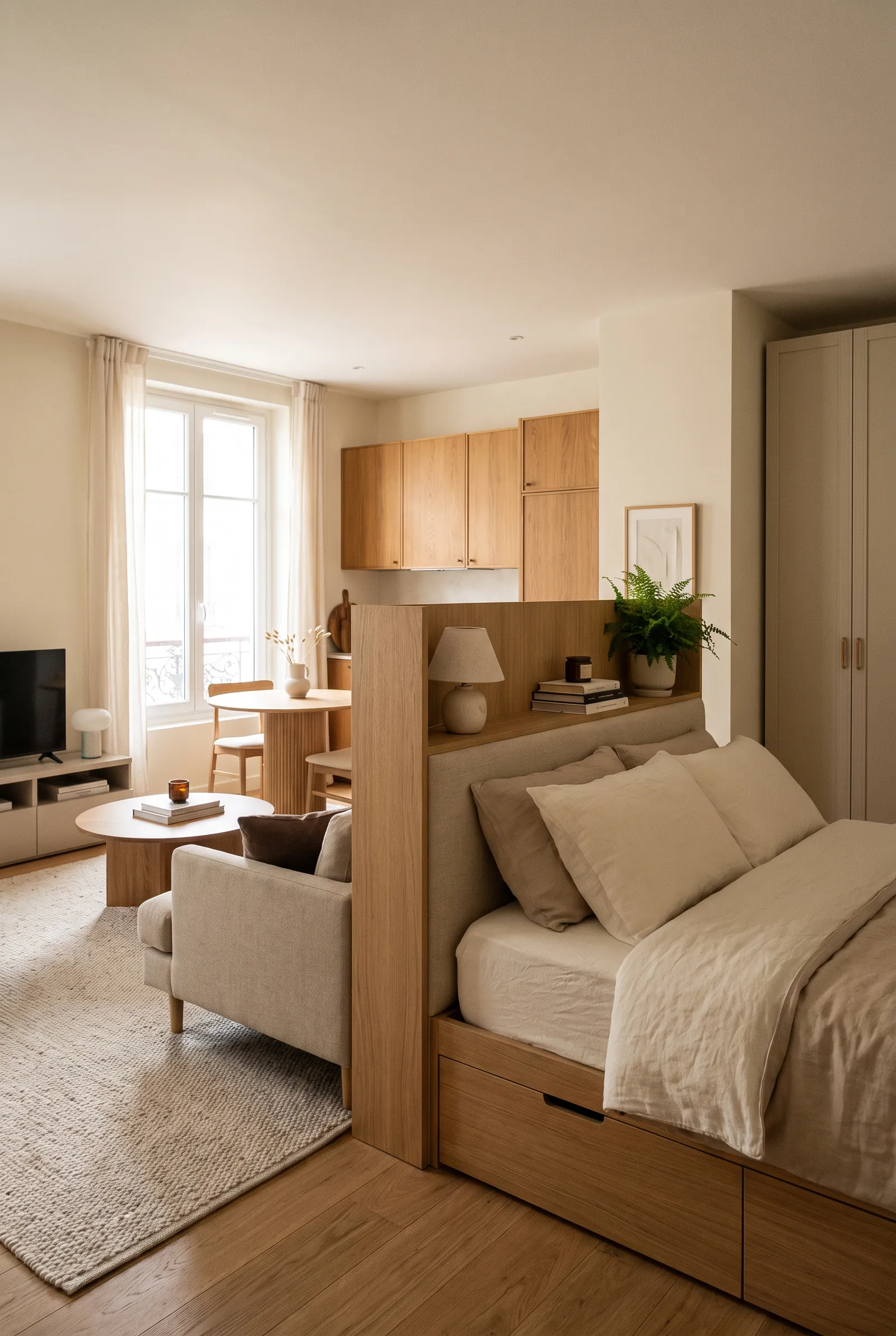
Sometimes the bed itself can help divide the room.
Instead of pushing the headboard against a wall, place the bed so the headboard faces the living or dining area.
A taller headboard, narrow shelf, or slim storage unit behind it can then act as a subtle partition.
This works particularly well in more square-shaped studio apartments where placing everything along the walls leaves the center feeling empty.
The advantage is that you’re not adding a completely separate divider.
You’re simply asking one piece of furniture to do more than one job.
A narrow ledge behind the headboard can also hold a small lamp, books, or decorative objects.
Small-Space Tip
Keep the divider behind the bed relatively shallow so it doesn’t create an awkward dead zone in the middle of the apartment.
7. Combine a Wardrobe With Open Shelving
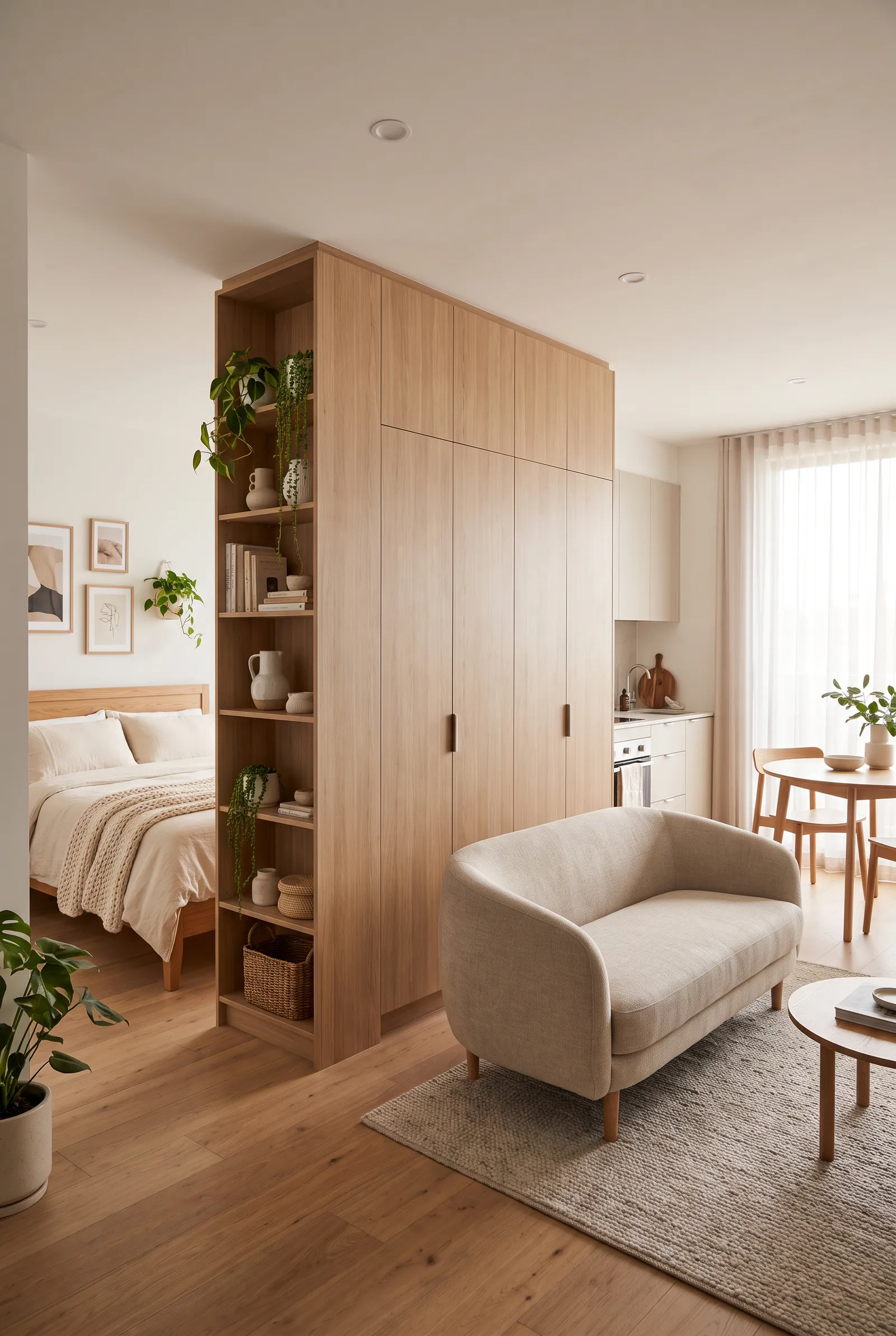
This is one of the most practical options for a studio apartment because it solves two problems at once:
privacy and clothing storage.
Instead of placing a large wardrobe randomly against a wall, use it as part of the divider between the sleeping area and living space.
I like designs that combine closed wardrobe doors with a section of open shelving.
The closed part gives you somewhere to store clothes, bags, and everyday clutter, while the open section allows light to pass through and keeps the whole unit from feeling too heavy.
This is especially useful in a studio where the first question after looking at a beautiful layout is often:
“But where do the clothes go?”
Planning wardrobe storage as part of the layout from the beginning makes the apartment feel much more realistic and livable.
8. Build a Green Divider With Plants
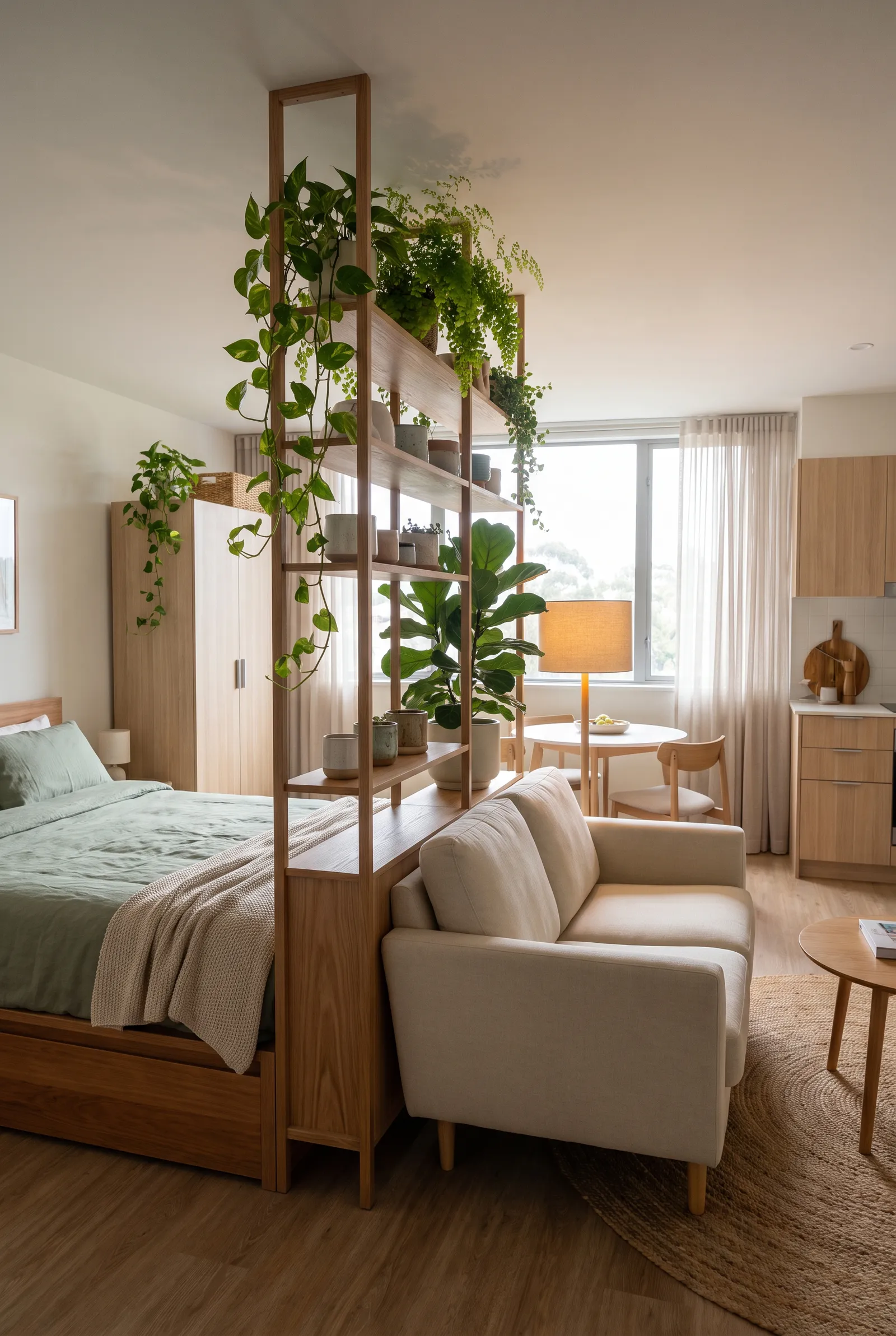
A divider doesn’t always have to look like furniture.
A row of taller plants, a narrow plant stand, or an open shelf filled with greenery can create a softer boundary between the bed and living space.
This works particularly well in apartments with lots of warm wood and neutral colors.
Plants introduce texture and movement without visually blocking the room.
Try mixing one or two larger floor plants with smaller trailing plants rather than using ten small pots at the same height.
The result feels more natural and less like a plant shop.
Designer Tip
Don’t create such a dense plant wall that light can’t travel through it.
The greenery should soften the view between zones, not completely hide one side.
9. Use a Cane or Woven Screen for a Lighter, More Decorative Look
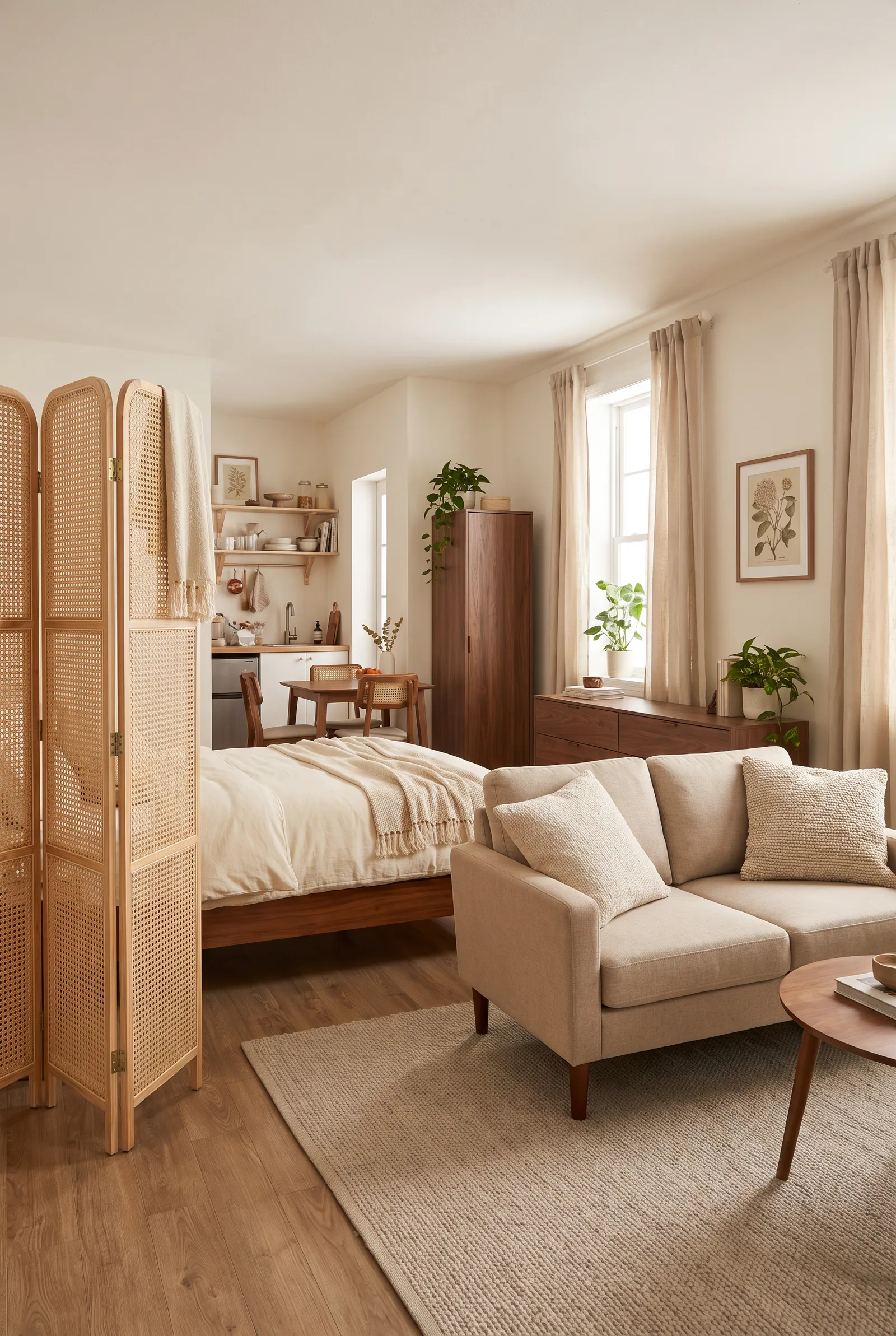
A folding screen can be a great option when you want flexibility.
Unlike a permanent partition, you can move it when your layout changes or fold it away when you want the apartment completely open.
Cane, rattan, or other woven materials work especially well in small spaces because the texture feels warm but visually light.
They also pair naturally with cream upholstery, warm wood, linen curtains, and neutral rugs.
Place the screen beside the bed rather than wrapping the entire sleeping zone.
Often, hiding just part of the bed is enough to make the area feel more private.
10. Use Furniture Placement as the Divider
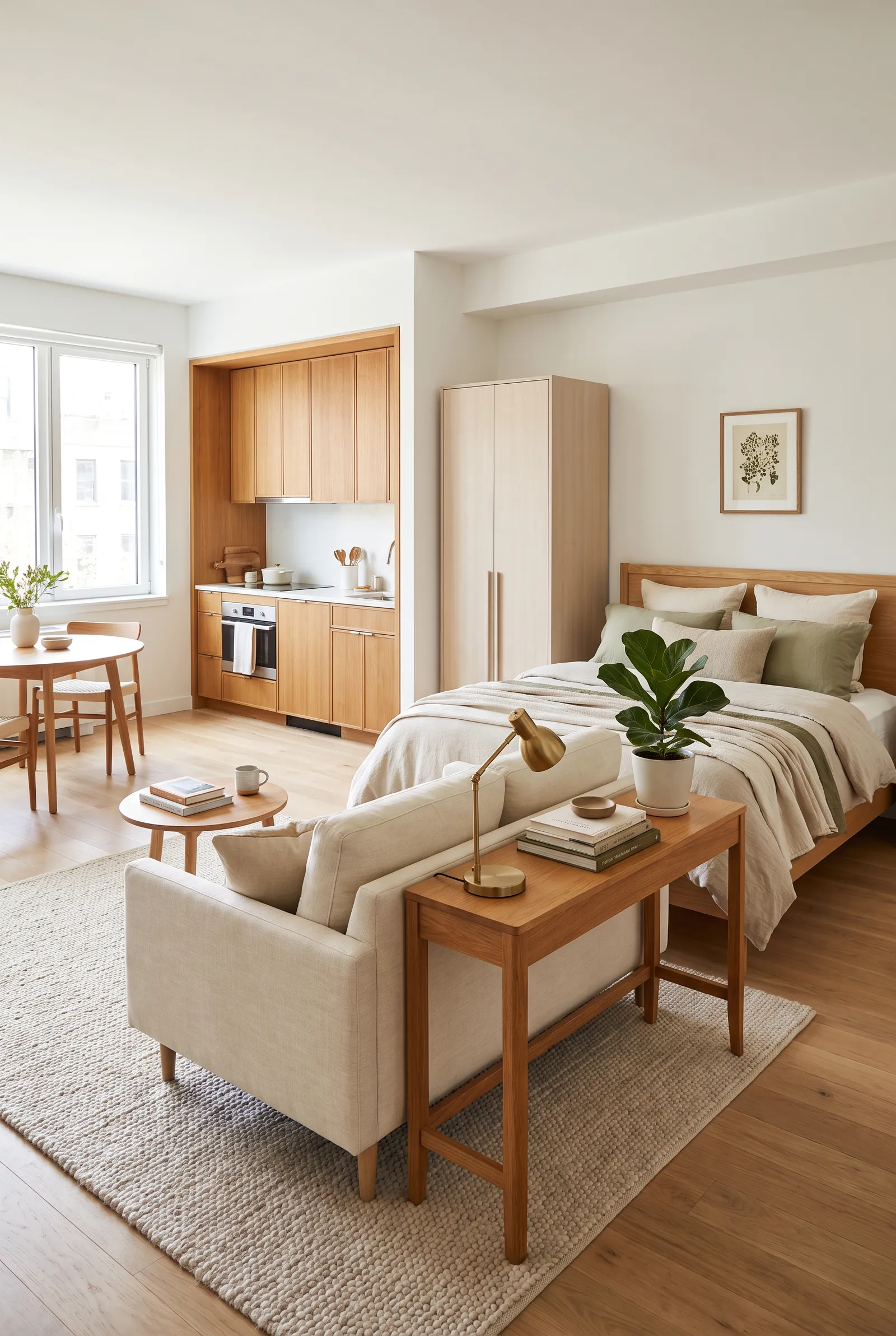
Sometimes the best room divider is no divider at all.
A carefully positioned sofa, rug, desk, or dining table can create surprisingly clear zones without adding another object to the apartment.
For example, placing the sofa with its back toward the bed immediately creates a living room boundary.
Add a rug underneath the sofa and coffee table, and the zone becomes even easier to read.
A narrow console behind the sofa can reinforce that separation while providing a place for books, a lamp, or extra storage.
This approach works particularly well in very small studios where every extra piece of furniture needs to earn its place.
Small-Space Tip
Before buying a divider, try rearranging the furniture you already have.
You may only need to change the direction of the sofa or move the rug to make the layout feel completely different.
How to Choose the Right Room Divider for a Studio Apartment
The best divider depends on what problem you’re actually trying to solve.
If you mainly want visual separation, an open bookshelf, rug, sofa, or plant divider may be enough.
If you want more privacy, curtains, glass, wood slats, or a folding screen can work better.
If your biggest problem is storage, prioritize a divider that includes shelves, drawers, or a wardrobe.
And if the apartment already feels tight, avoid adding a divider simply because the room “should” have one.
Sometimes keeping more open floor space is the better choice.
Keep Natural Light Moving Through the Apartment
This is probably the most important rule.
A small studio usually feels much better when you can see light traveling from one side of the room to the other.
That’s why open shelves, slats, glass, curtains, and partial-height dividers work so well.
They create a boundary without completely breaking the room into smaller boxes.
Before adding a divider, ask yourself:
Will this make the layout clearer, or will it simply block the light?
If the answer is the second one, try a lighter option.
Don’t Forget About Walking Space
Room dividers look beautiful in inspiration images, but the apartment still needs to function.
Make sure there’s enough space to comfortably move between:
the bed, sofa, kitchen, wardrobe, dining table, and entrance.
A beautiful divider isn’t useful if you have to squeeze sideways around it every day.
In very small studios, a slimmer divider placed slightly off-center often works better than a wide unit placed directly across the room.
Open Storage and Closed Storage Should Work Together
Open shelves are wonderful for books, plants, and decorative pieces.
They are less wonderful for everything else you own.
Real apartments also need somewhere to put:
clothes, cleaning supplies, extra bedding, chargers, bags, paperwork, and things you simply don’t want to look at every day.
That’s why my favorite studio dividers usually combine both kinds of storage.
Use open sections for the things you enjoy seeing and closed storage for the practical parts of life.
The space will feel calmer—and much easier to maintain.
Frequently Asked Questions
What is the best room divider for a studio apartment?
An open bookshelf is one of the most flexible choices because it creates separation, provides storage, and still lets light pass through. The best option ultimately depends on whether you need privacy, storage, flexibility, or simply visual zoning.
How do you separate a bedroom in a studio apartment?
You can use open shelving, curtains, glass partitions, wood slats, folding screens, wardrobes, plants, or furniture placement to make the sleeping area feel more private.
How can I divide a studio apartment without making it look smaller?
Choose dividers that allow light and sightlines to continue through the room. Open shelves, clear glass, slatted wood, light curtains, and lower storage units generally feel less heavy than solid walls.
Can a wardrobe be used as a room divider?
Yes. A wardrobe can be especially useful because it provides clothing storage and privacy at the same time. Just make sure the cabinet does not block important windows or walking paths.
Are curtains a good studio apartment divider?
Yes, especially if you want an inexpensive and flexible solution. Curtains can stay open during the day and close when you want more privacy around the bed.
Final Thoughts
A room divider in a studio apartment doesn’t need to hide half the room.
In fact, the best dividers often do the opposite.
They help you understand the space more clearly while still allowing light, movement, and visual connection between different areas.
An open bookshelf can become storage. A wardrobe can become a bedroom wall. A curtain can disappear when you don’t need it. Even the back of a sofa can quietly tell you where the living room begins.
The goal isn’t to turn one small room into several tiny rooms.
It’s to make one room feel like it has different places for different parts of your life—without losing the openness that makes a studio apartment comfortable in the first place.
More Studio Apartment Ideas
 | 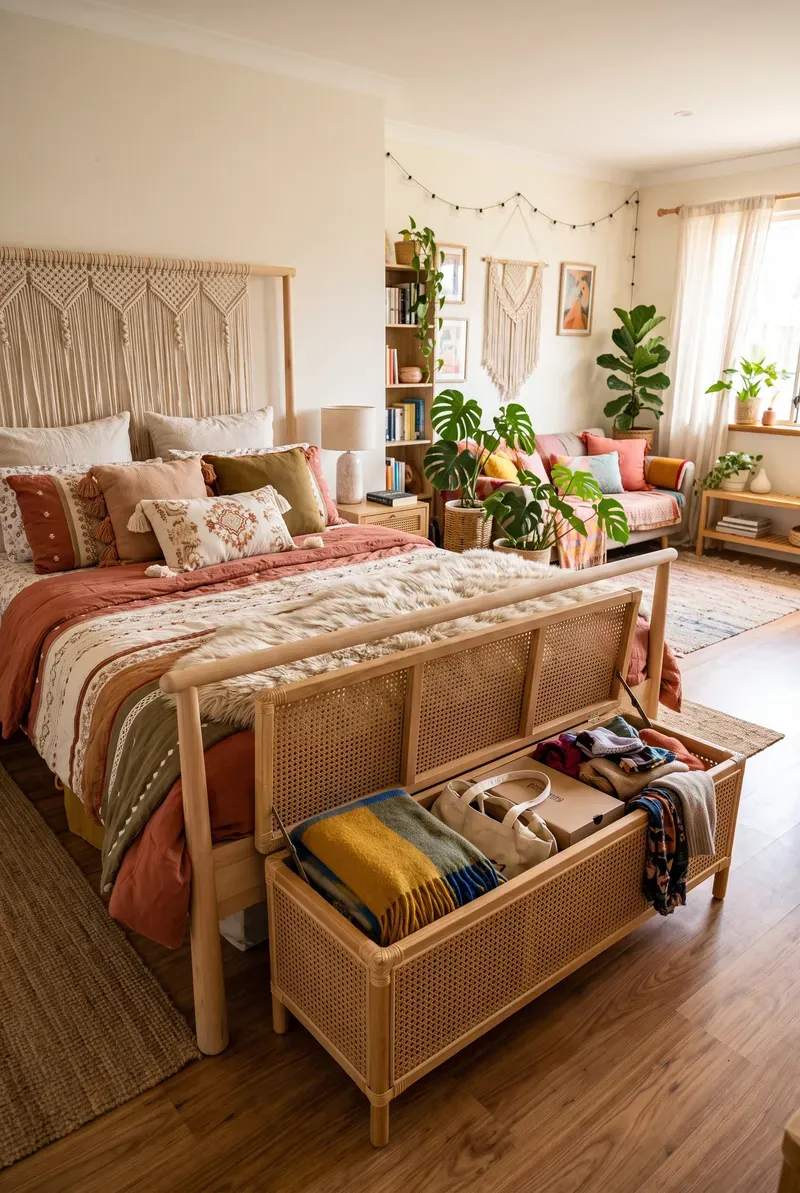 | 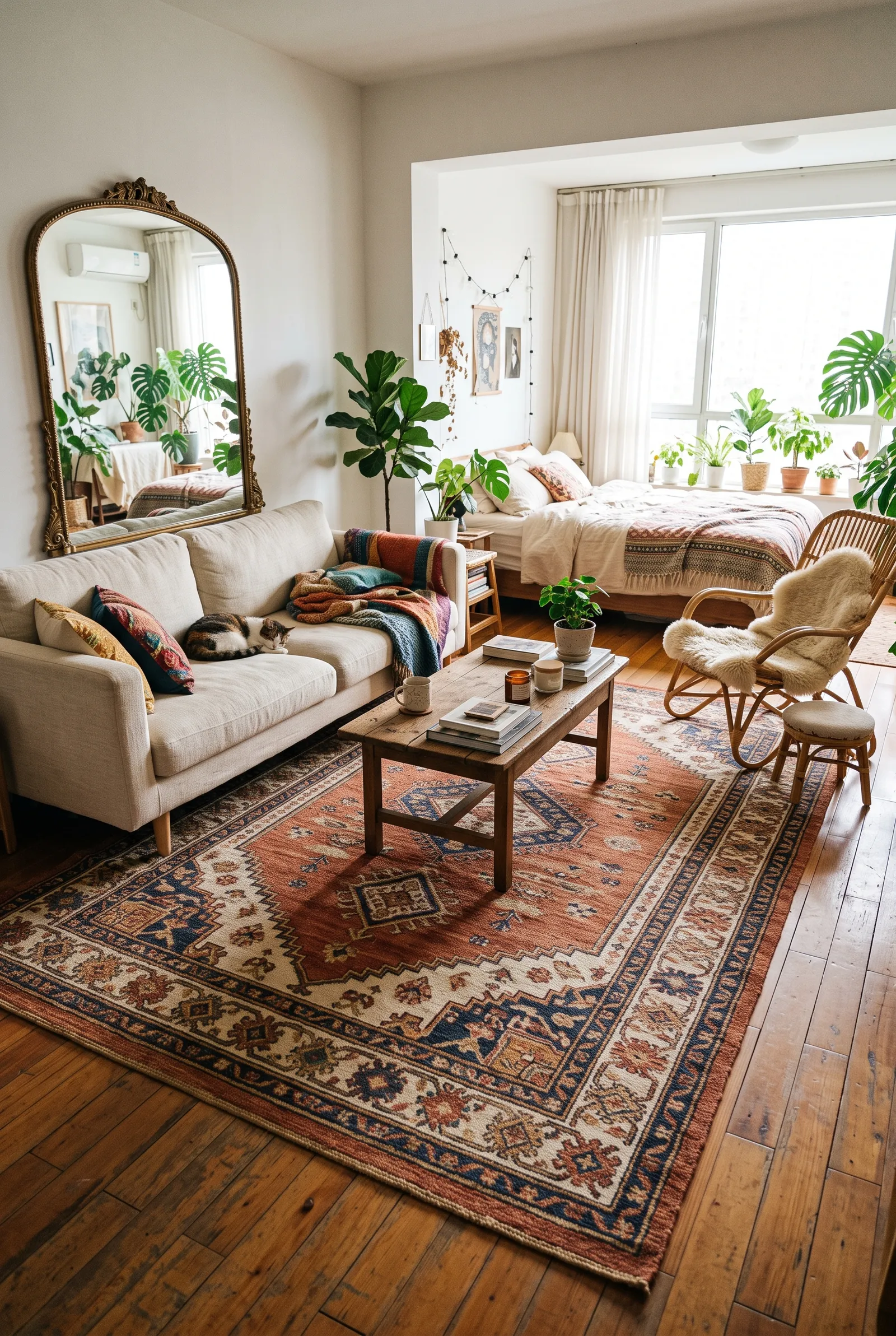 |
|---|---|---|
Studio Layouts  | Storage Ideas | Spacious Studio |