In a studio apartment, one pile of spare bedding or a few cables can be visible from almost everywhere. Hidden storage helps, but a compartment is only useful if you can open it, reach its contents, and close it again without moving half the room.
Start by listing what needs to disappear from view and how often you use it. Keep daily items near the place you use them; reserve awkward compartments for seasonal things. Measure furniture in its open position, including drawers, lifting lids, and the space you need to stand or kneel. If you need a broader plan for where storage belongs, start with these studio apartment storage ideas. The ideas below focus specifically on concealed compartments and how to make them usable.
1. Choose a Lift-Up Bed for Bulky, Infrequent Items
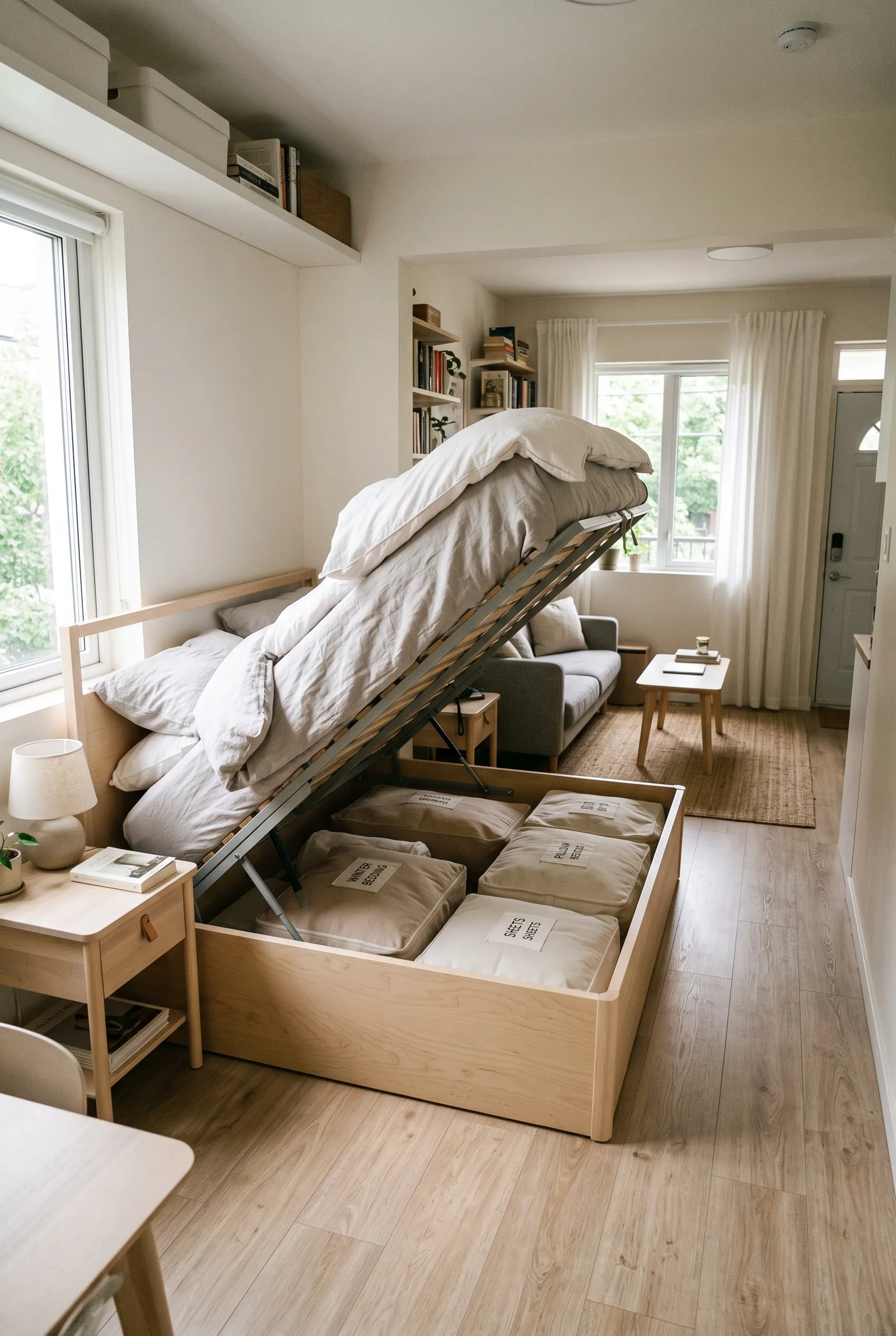
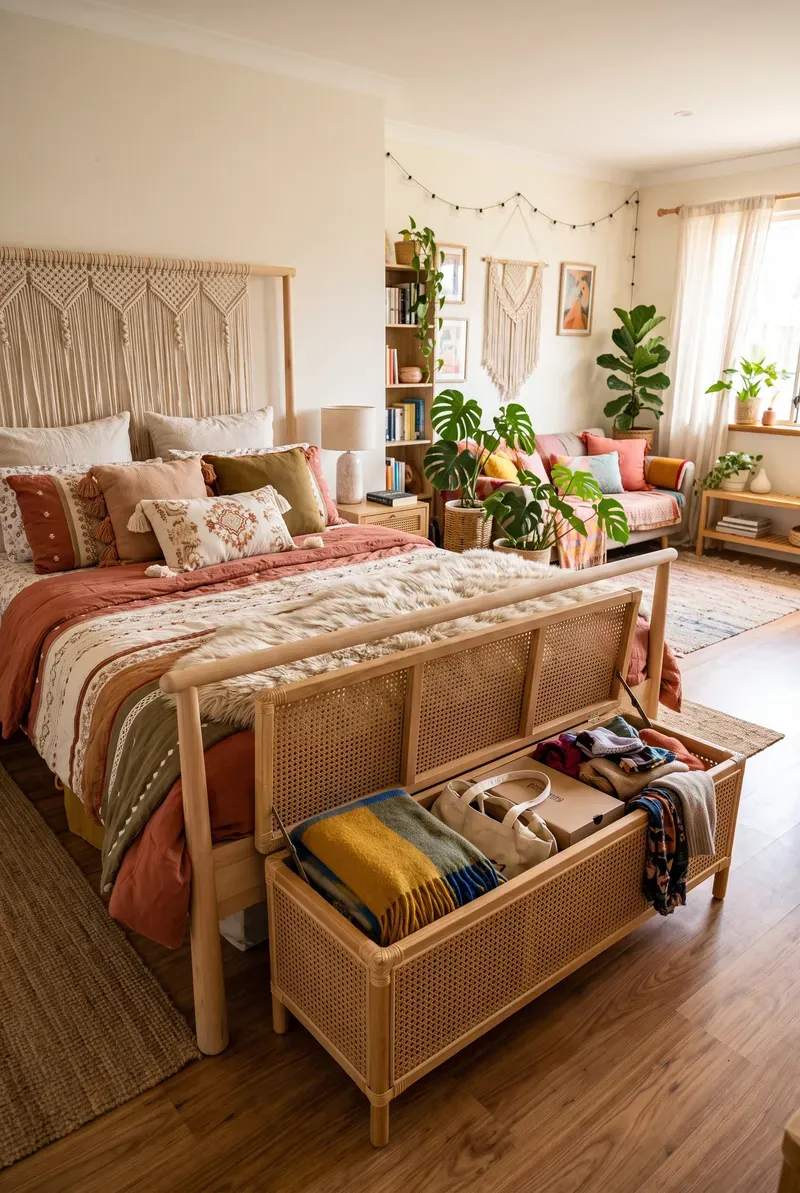
A lift-up bed base can hide spare bedding, off-season textiles, or luggage beneath the mattress without another cabinet in the room. Choose one with a supported lifting mechanism, then use light, labeled bags inside so items do not become a single hard-to-search pile. Follow the bed maker’s load and ventilation guidance.
Test the full lift before buying. The raised mattress must clear a sloped ceiling, window, or shelf, and you need room at the accessible side to stand and lift safely. Avoid storing everyday essentials here if you would have to move a nightstand or chair each time.
2. Put Blankets Inside a Sofa Chaise
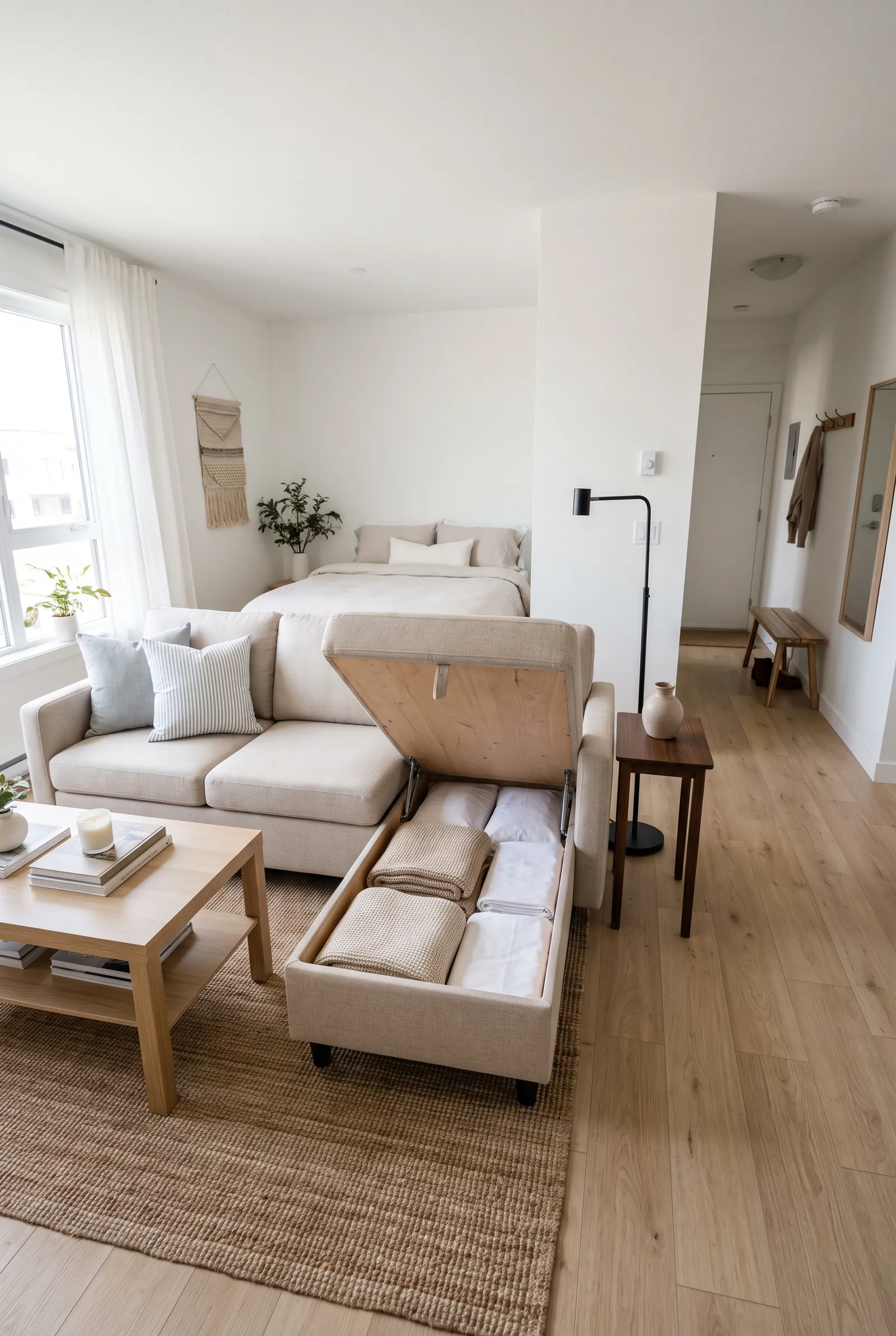
If a sofa is already part of the layout, a chaise with a lift-up compartment can keep throws and guest bedding close to where they are used. This works best for soft items that tolerate the compartment’s shape; do not overload the lid or hinge.
Check which direction the chaise lid opens and how far it rises. A coffee table, lamp, or nearby wall must not prevent it from opening fully. Leave the main walking route clear when the compartment is open, and measure the sofa itself before assuming a larger model will fit. For the relationship between large furniture pieces, see the studio apartment layout guide.
3. Use a Drawer Coffee Table for Small Living-Room Clutter
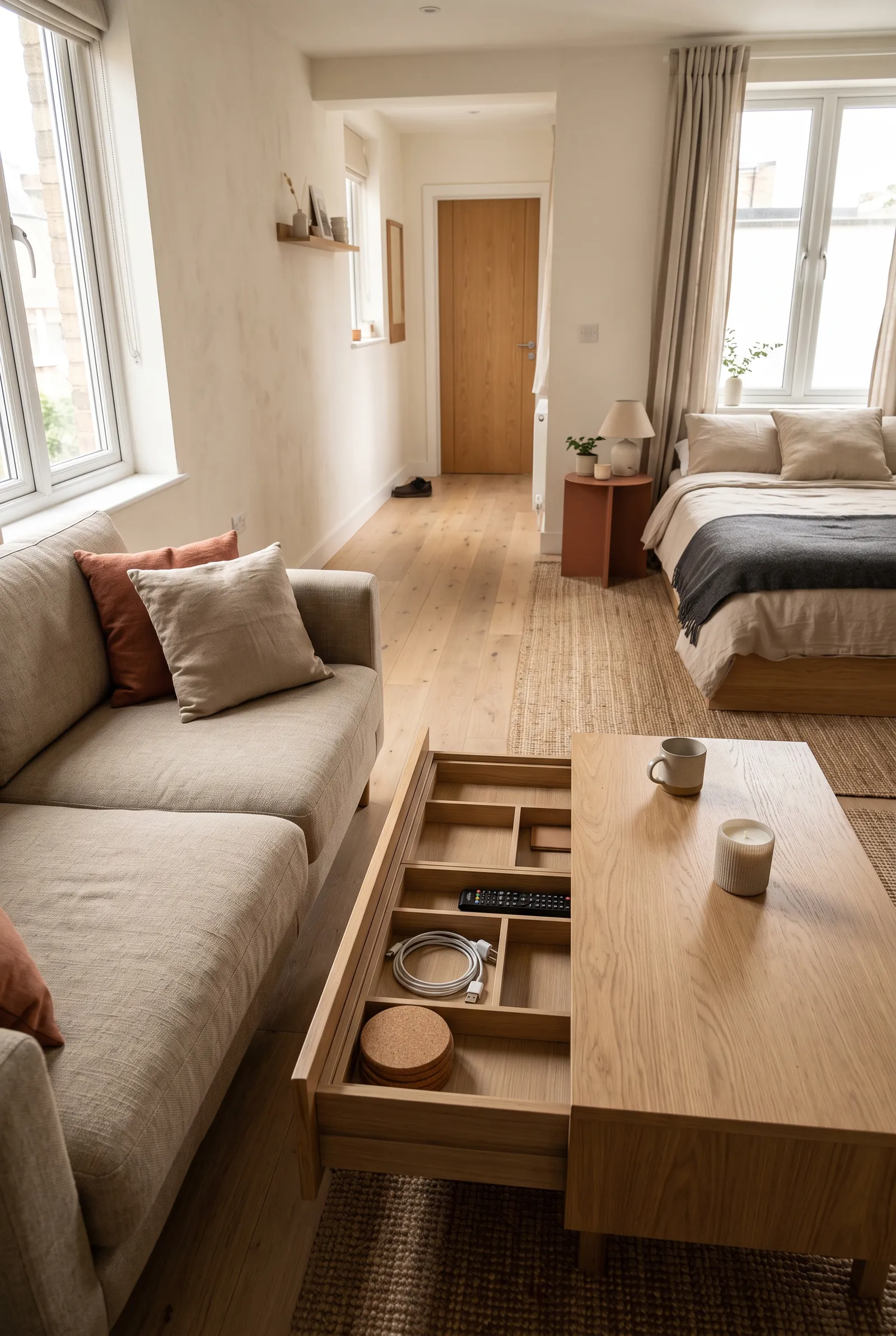
A coffee table with drawers can hide remotes, chargers, coasters, and a few games exactly where they tend to collect. Shallow dividers keep the small things visible once the drawer opens. Choose drawers that open toward the seat you actually use rather than toward a tight wall.
Pull each drawer all the way out and walk around it. A table that fits between sofa and bed when closed may be frustrating if its drawer hits a rug edge or blocks the only path. Keep the tabletop mostly free so the room looks calmer even when the storage is full.
4. Hide Media Supplies in a Closed Cabinet Behind the Sofa
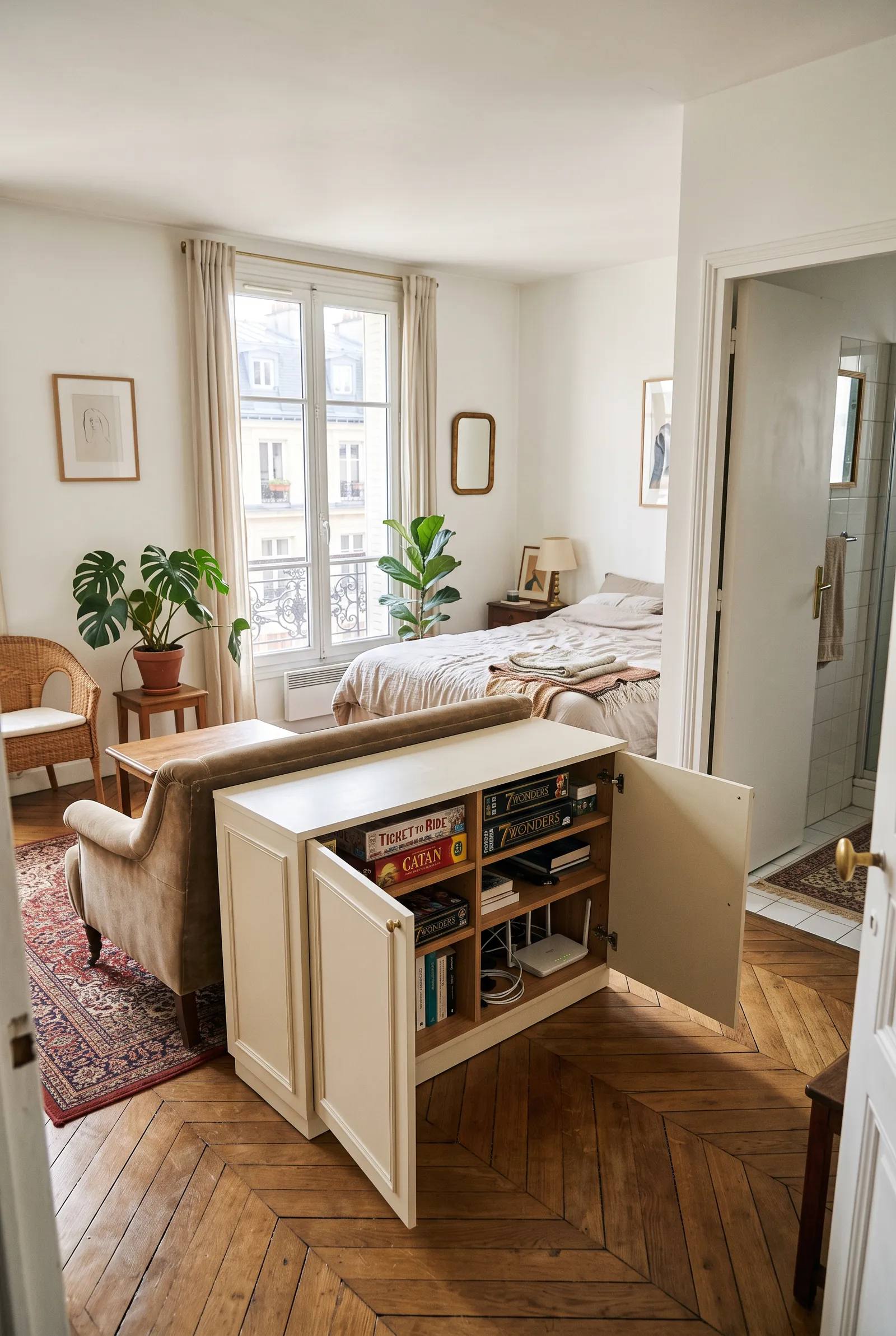
Where the sofa floats in the room, a low, shallow cabinet behind it can conceal cables, games, books, or a small collection of work supplies. Doors or drawers facing the open side make contents reachable without shifting the sofa. Use cable openings only if the furniture is designed for them, and keep ventilation around electronics.
Measure the space with the cabinet doors completely open. The cabinet must not narrow the route to the entry or bathroom, and it should stay below the sofa back if you want to preserve sightlines across the studio. If the room cannot spare the access space, skip this piece.
5. Turn an Entry Bench Into a Bag Compartment
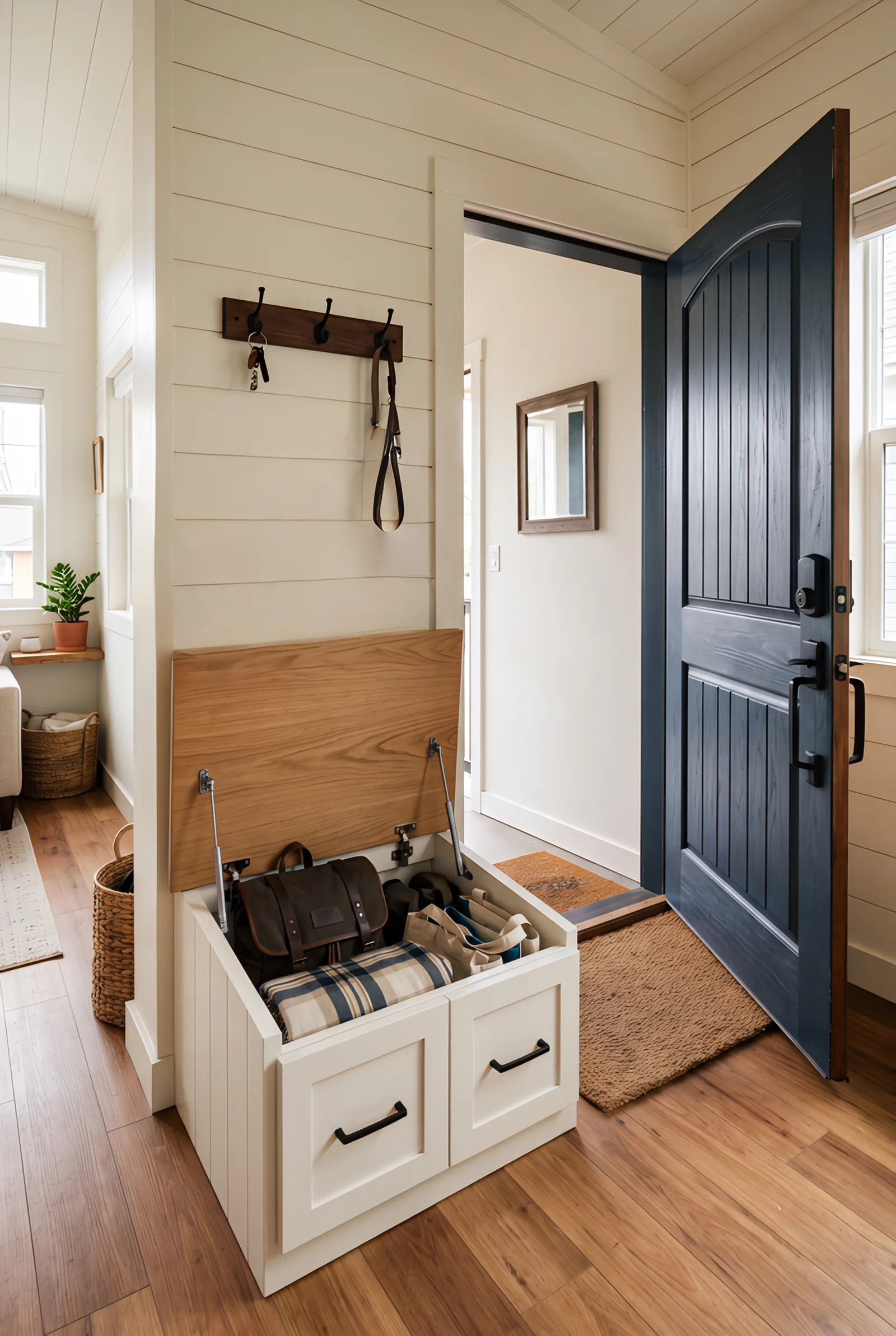
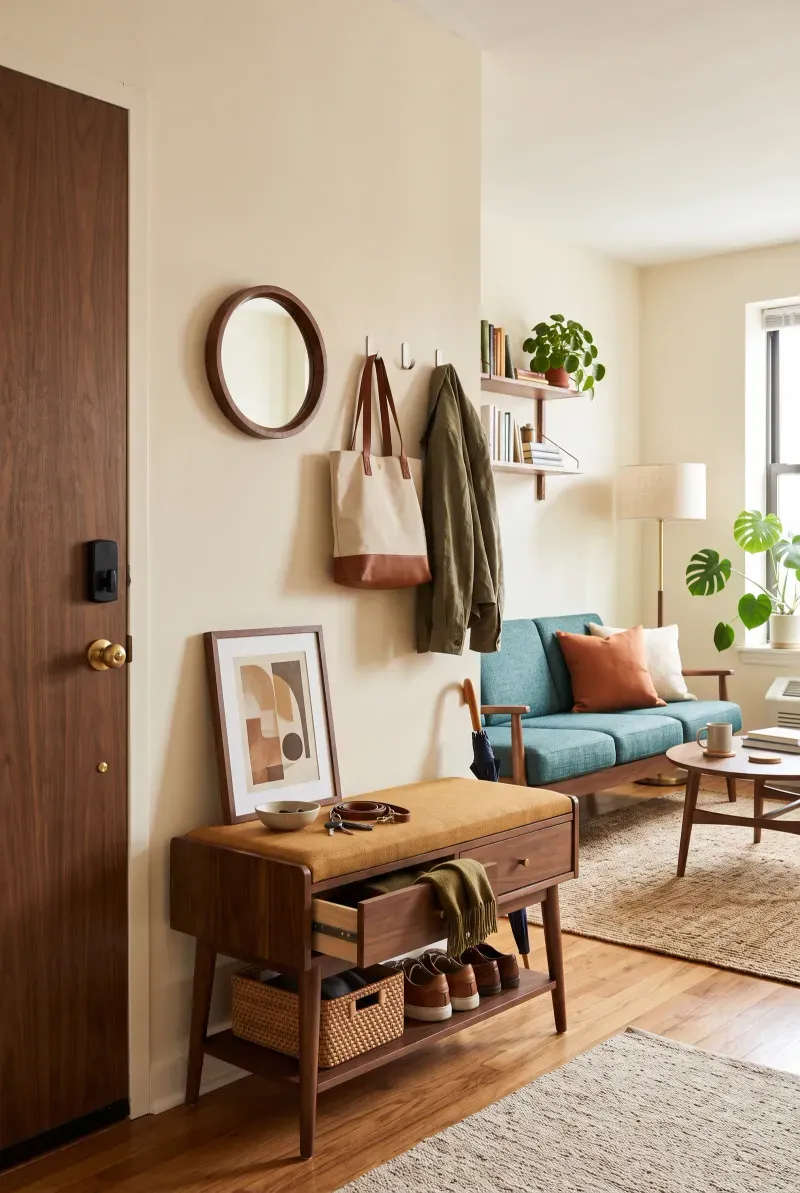
A small bench with a lift-up seat can give bags, scarves, or reusable shopping totes a hidden landing place immediately inside the door. Put frequently used items at the top rather than stacking them under seasonal gear. A soft-close or supported lid is helpful if you open it every day.
Open the front door fully and raise the bench lid fully during your floor-plan test. Neither movement should block the other, and you still need a clear route into the room. A bench is useful only if there is space to sit and access it without stepping over shoes. For more on shaping an entry zone, see these studio apartment entryway ideas.
6. Conceal Shoes in a Shallow Tilt-Out Cabinet
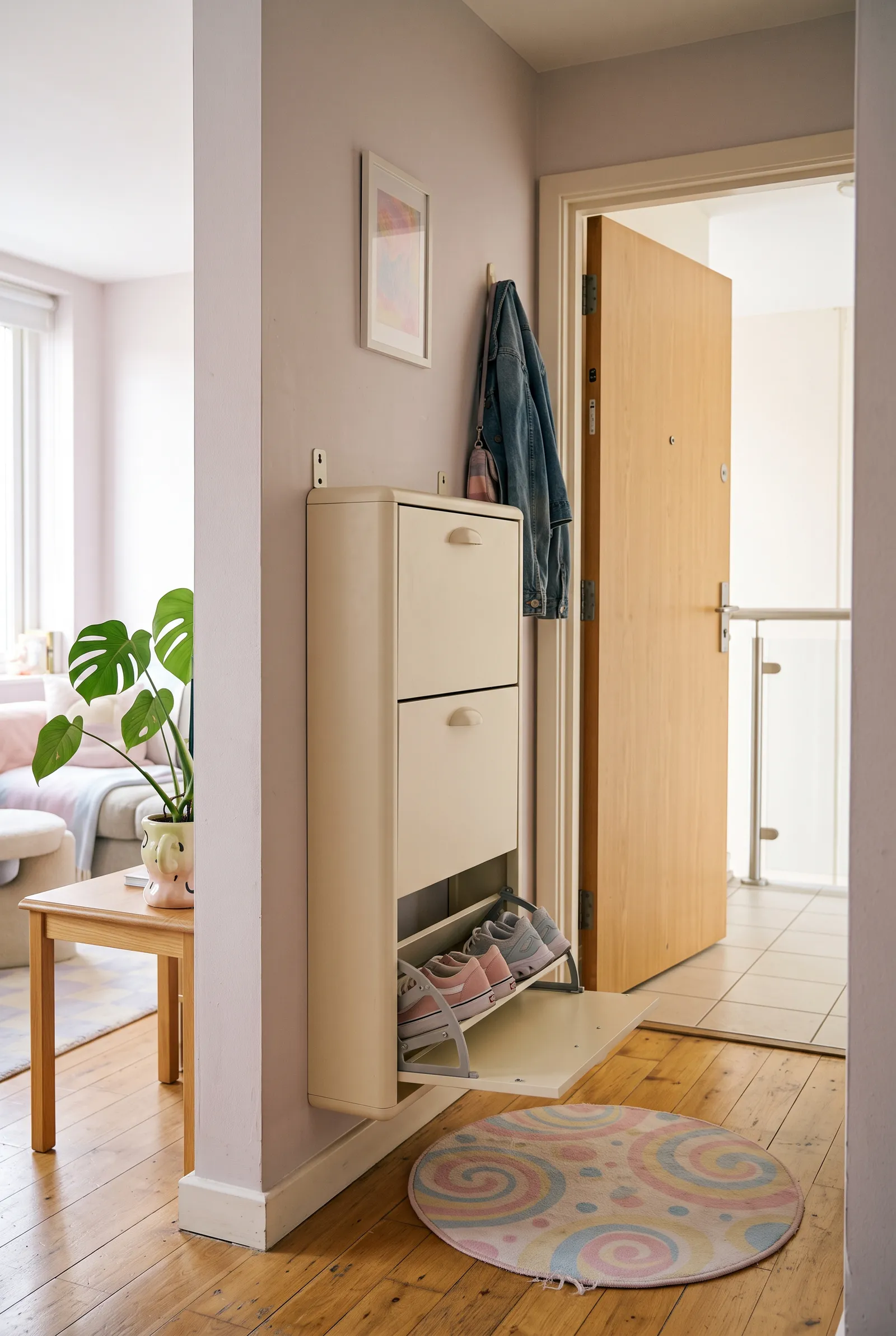
A slim tilt-out shoe cabinet can use a narrow stretch of entry wall while hiding pairs that would otherwise line the floor. Check the cabinet’s actual internal capacity against your shoes, especially larger pairs; some styles fit only low-profile footwear. Keep wet shoes out until they dry.
The tilt fronts need room to open fully while someone stands in front of them. Place the cabinet outside the front door’s swing and away from a hallway pinch point. Secure a tall or top-heavy unit as its manufacturer specifies, using fixings suitable for the wall and your tenancy.
7. Add Drawers to a Dining Bench
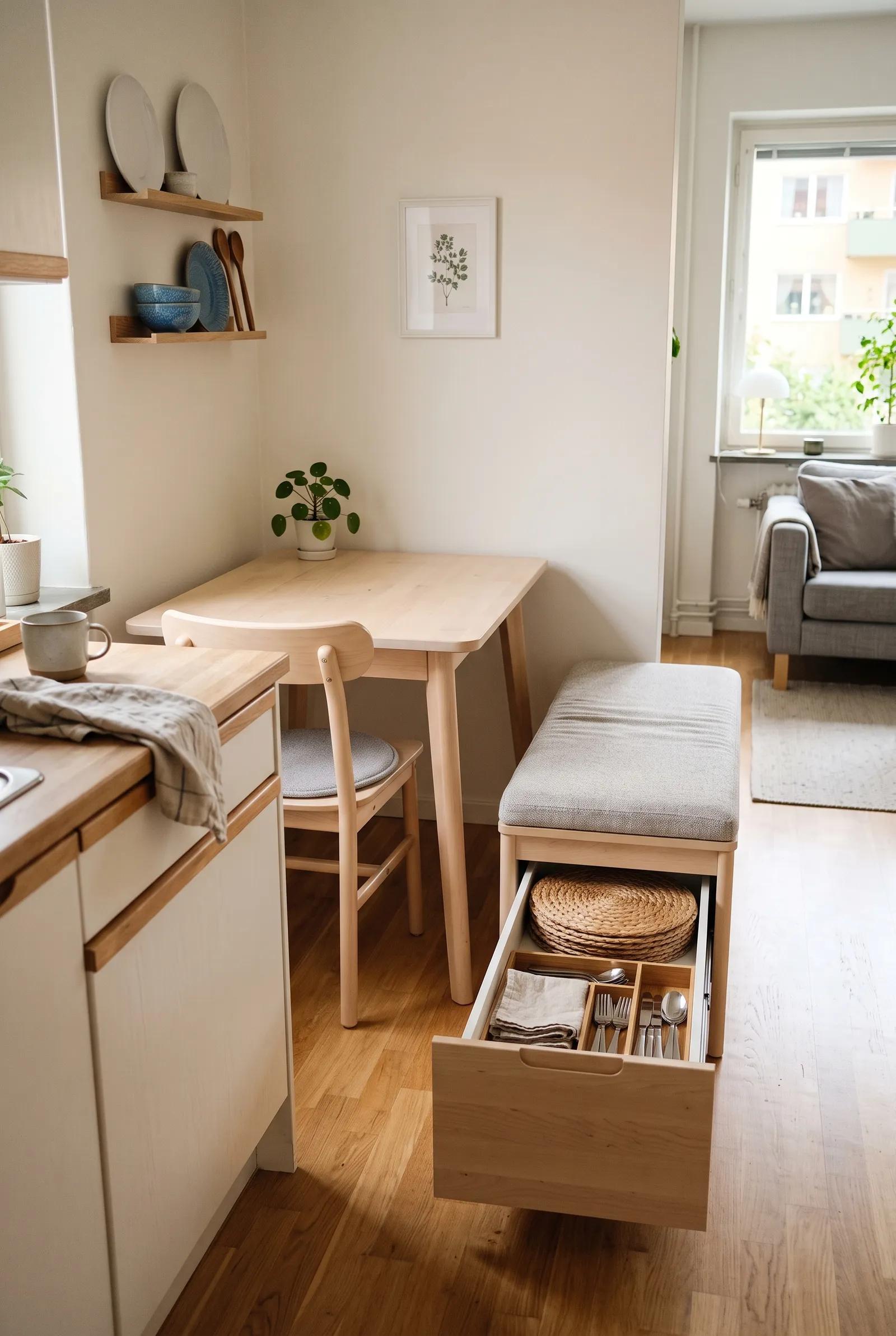
A dining bench with drawers can store placemats, spare napkins, or occasional serving pieces where meals happen. Side-opening drawers are easier to use if the table stays in place; a lift-up seat may require moving cushions and people every time. Choose the mechanism that fits your routine.
Pull a drawer fully out with the dining chairs in their normal positions. It should not collide with the table legs or close the route from kitchen to living area. Keep food in proper kitchen storage; the bench is for dry, clean dining supplies.
8. Let a Fold-Down Desk Close Over Work Supplies
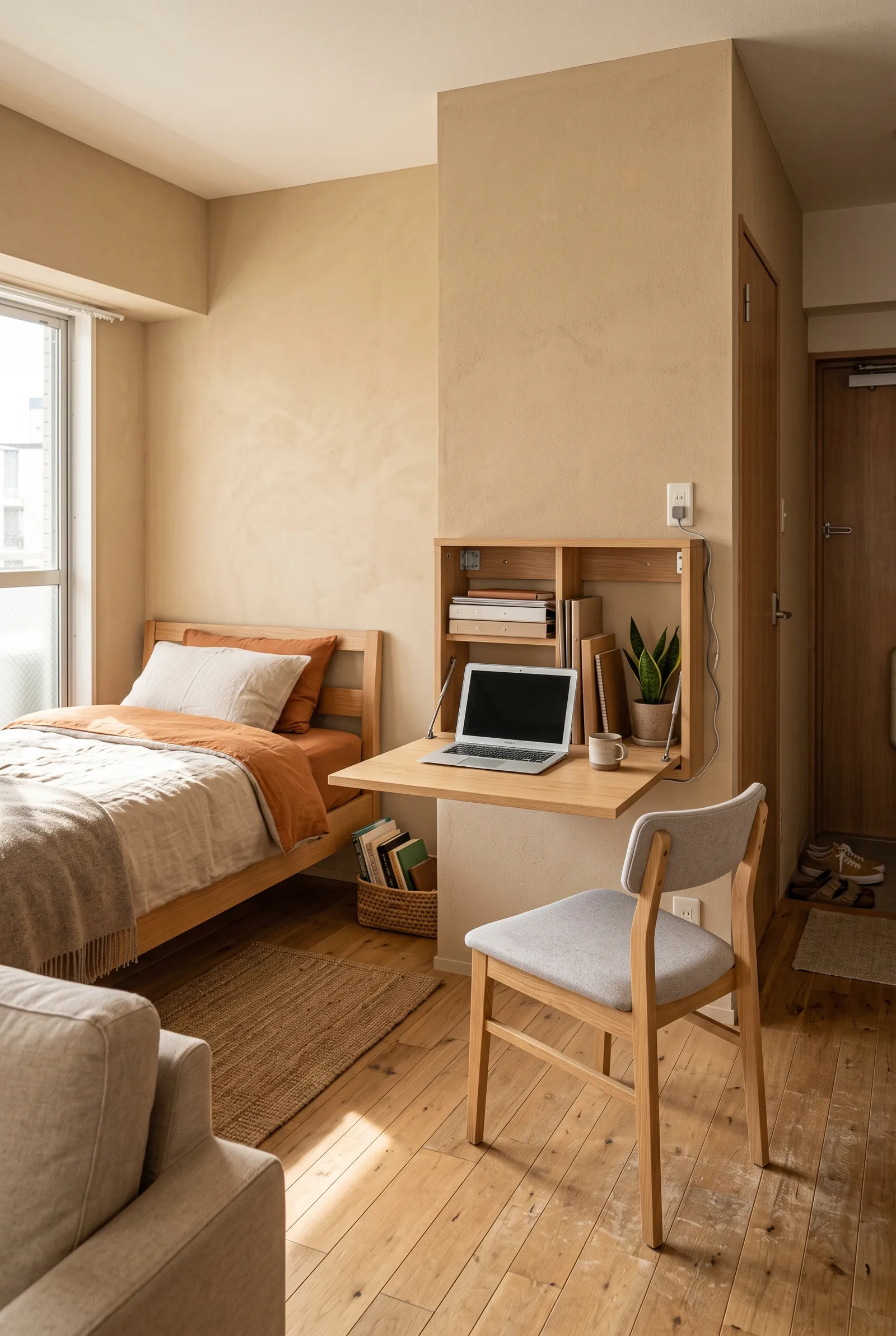
A wall-mounted fold-down desk with a shallow enclosed compartment can hide papers, a notebook, and a laptop when work ends. Check the manufacturer’s mounting requirements and weight limits; use a suitable wall and obtain any permission your tenancy requires. Route any power cord so it cannot be pinched by the folding top.
Show both states in your plan: the desk fully open with a chair pulled out, and the front closed with the chair stored away. The open desk must leave a usable path to the bed and exit. Avoid a model so deep that its open surface turns the only walkway into a work zone.
9. Use a Mirrored Cabinet for Small Daily Items
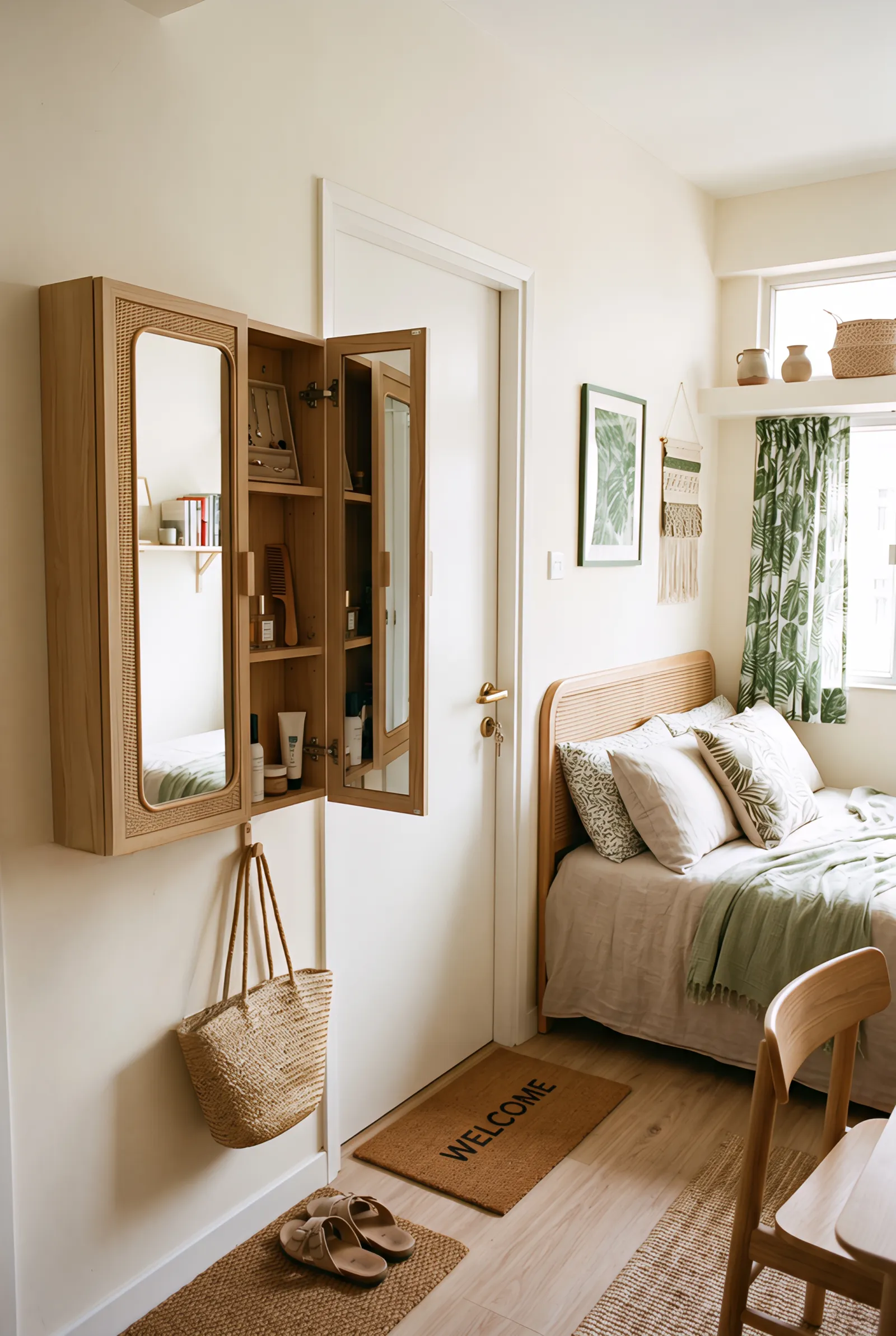
A shallow mirrored cabinet can conceal keys, glasses, medication kept according to its label, or grooming items while giving the room a useful mirror. Put it where you already pause, such as near the entry or dressing area, and keep the contents in small trays so the cabinet stays easy to close.
Check the door’s swing against nearby shelves, lights, and the front door. A wall-mounted cabinet needs appropriate fixings for its weight and wall type; a freestanding mirrored cabinet needs a stable base and any required anti-tip restraint. The mirror should reflect the room, not require standing in the main path to use it.
10. Put Closed Boxes Above an Existing Wardrobe
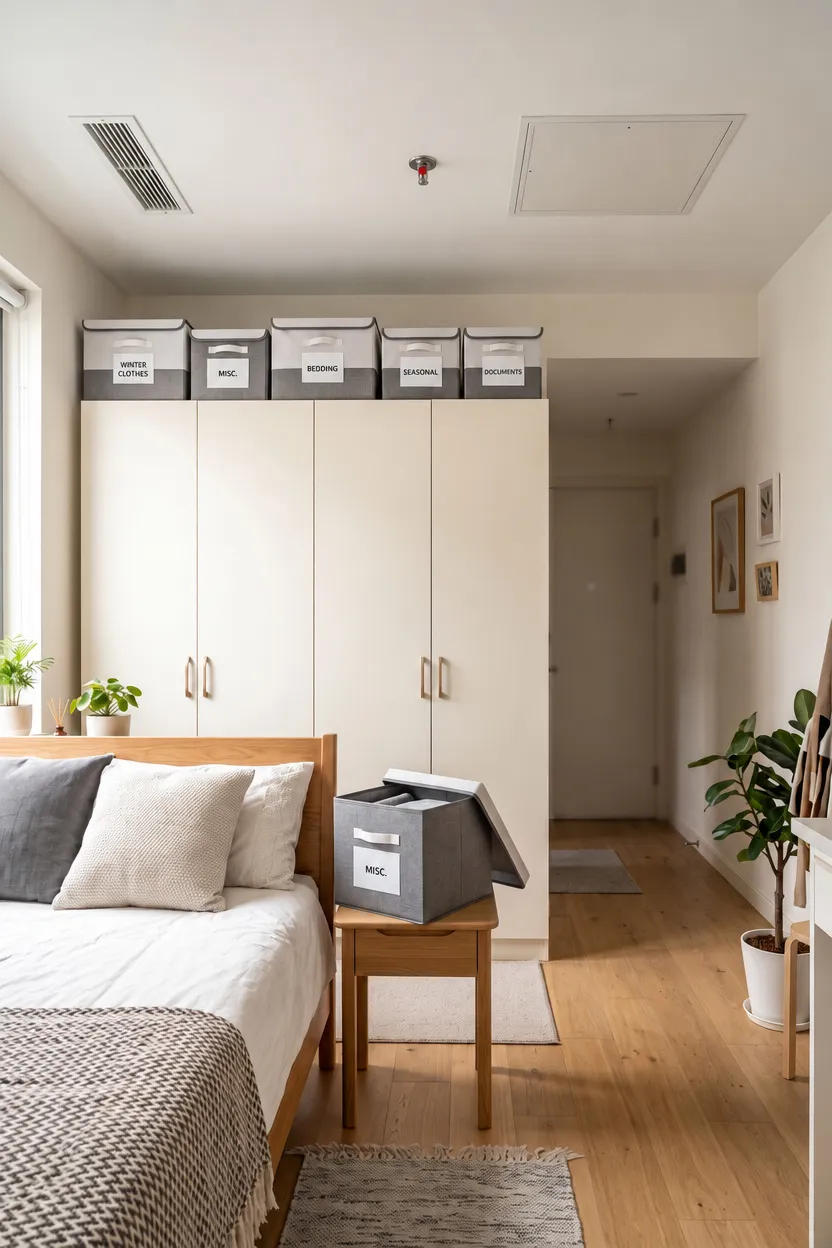
If there is safe, reachable space above an existing wardrobe, matching lidded boxes can hide out-of-season items without adding floor furniture. Pick light contents, label the box ends, and leave clearance from the ceiling so each box can be lifted down without scraping or tilting it dangerously.
Do not stack boxes where they could fall onto the bed or block a sprinkler, vent, or access panel. Check the wardrobe maker’s top-load guidance and anchor a tall unit as required. The most-used things belong lower down; high storage is for items you can retrieve occasionally with a stable step stool.
11. Use Existing Kitchen Toe-Kick Drawers Only Where They Fit
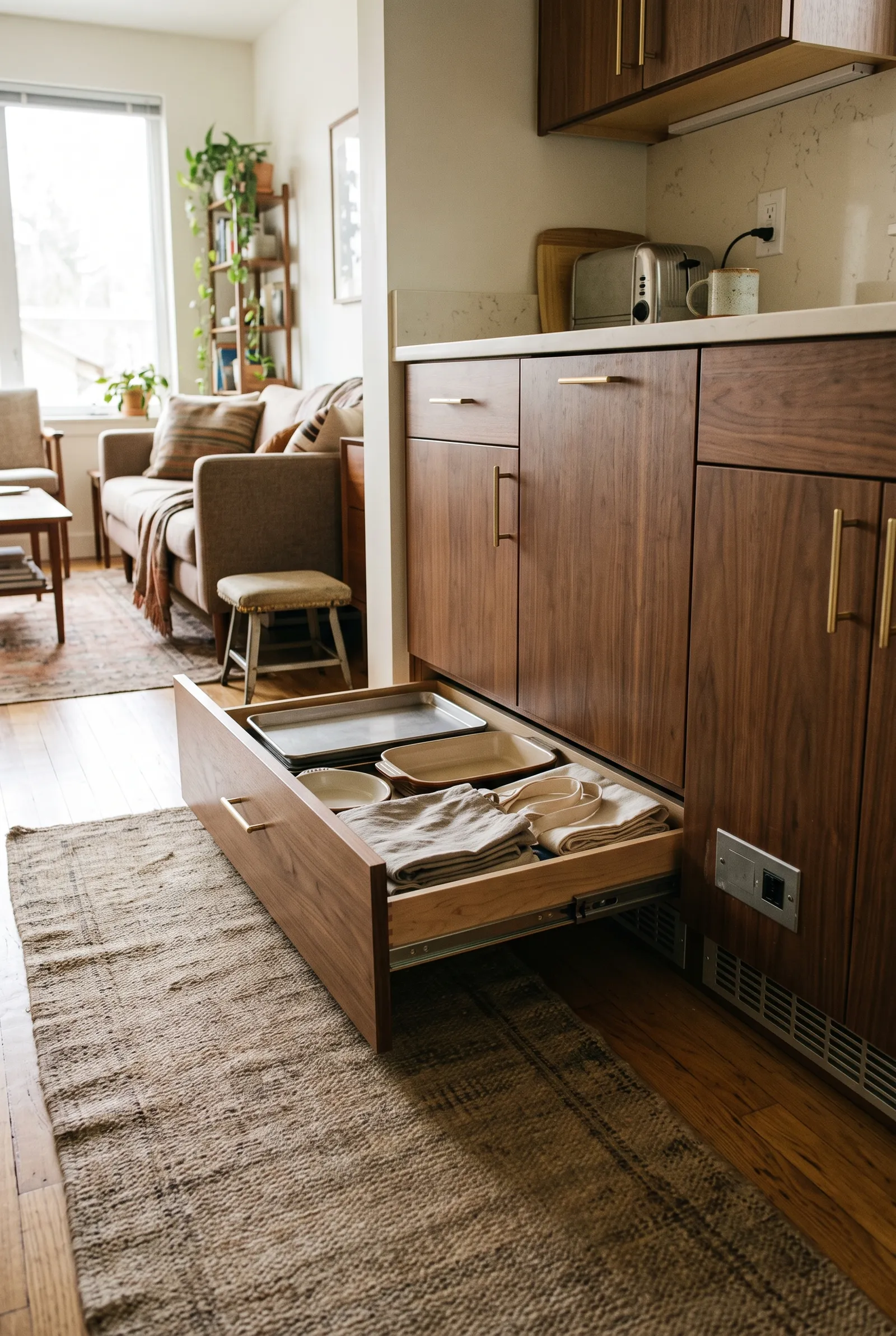
The recessed base below some kitchen cabinets can take purpose-made toe-kick drawers for flat items such as baking sheets or reusable bags. This is a renovation option, not a casual add-on: the cabinet construction, clearances, and lease must permit it. Never cover a ventilation grille or appliance access point.
Confirm the drawer can extend fully without hitting a rug, stool, or opposite cabinet, and that you can crouch to reach it. A shallow drawer that works with the existing base is more useful than forcing storage into a space the kitchen needs for airflow or maintenance.
12. Organize the Closed Space Under the Bathroom Sink
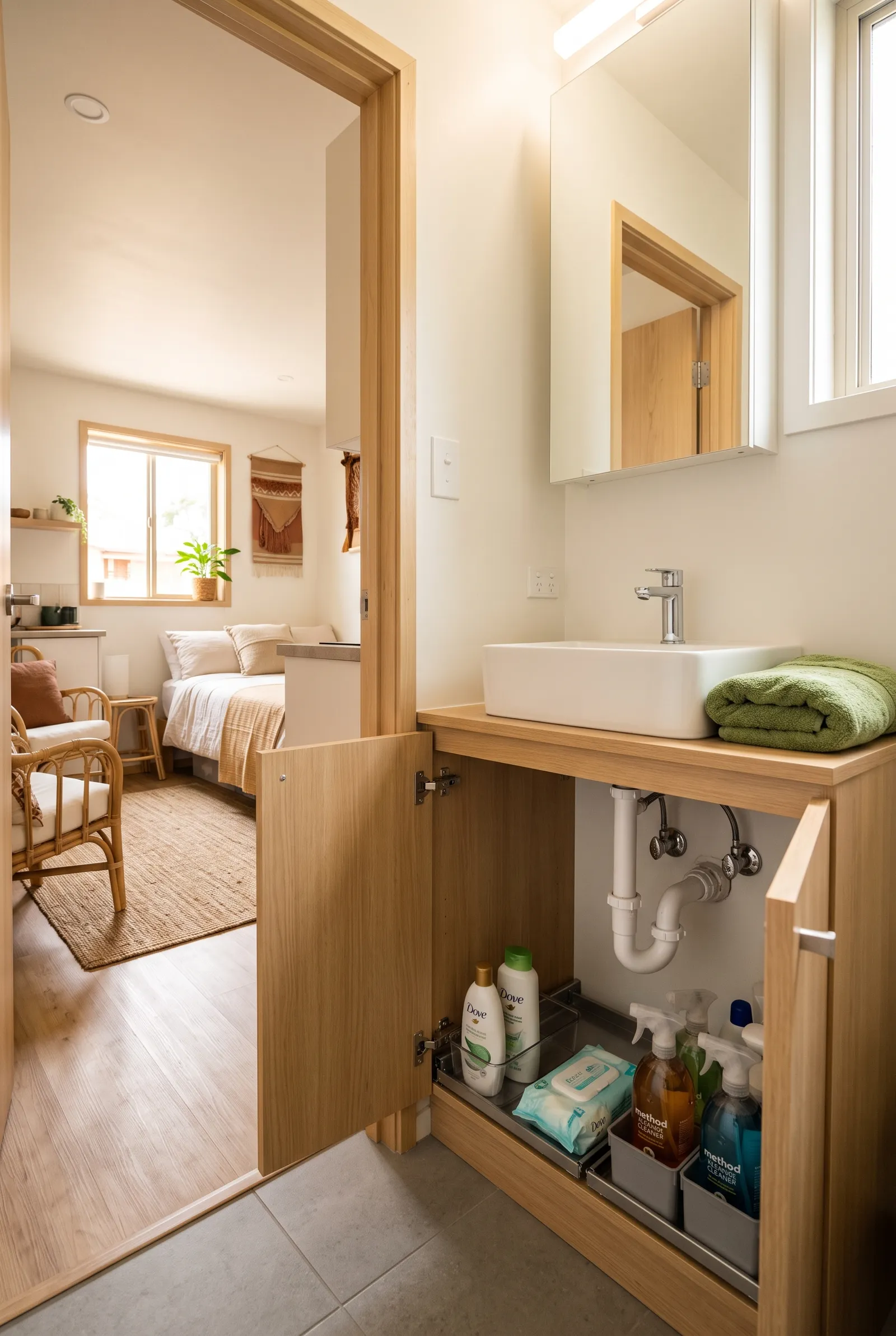
An existing bathroom vanity can hide spare toiletries and cleaning supplies without another shelf in the room. Fit small pull-out trays or bins around the plumbing, rather than packing one deep cabinet from front to back. Keep cleaners separated and stored according to their labels, especially around children or pets.
Open the vanity doors fully and make sure the trays can slide past the pipes. Do not block shutoff valves or leak detection, and avoid placing moisture-sensitive supplies against a damp cabinet wall. The goal is a closed surface with contents you can still see and reach.
Final Thoughts
Hidden storage works when the compartment matches the item and the way you use it. Before adding a storage bed, bench, cabinet, or drawer, test its full opening arc and the route around it. Give daily objects the easiest compartments and keep occasional items in the less convenient spaces. A studio feels calmer when storage closes neatly and remains simple to use.
More Studio Apartment Ideas
 |  |  |
|---|---|---|
Storage Ideas  | Studio Entryways | Studio Layouts |