A studio with one small window, a shaded outlook, or a long floor plan can stay dim even at midday. Because the bed, kitchen, and living area share one room, a dark corner affects more than the way the apartment looks. It can make preparing food, reading, or simply finding something in a cabinet harder than it needs to be.
Start by observing where daylight reaches at the times you use the room. Then look at the tasks that still need light after the sun moves. The goal is a workable mix of the daylight you already have and well-placed artificial light. For more general ways to change how spacious the room feels, see 12 Ways to Make a Studio Apartment Feel Bigger.
1. Uncover the Window’s Usable Glass
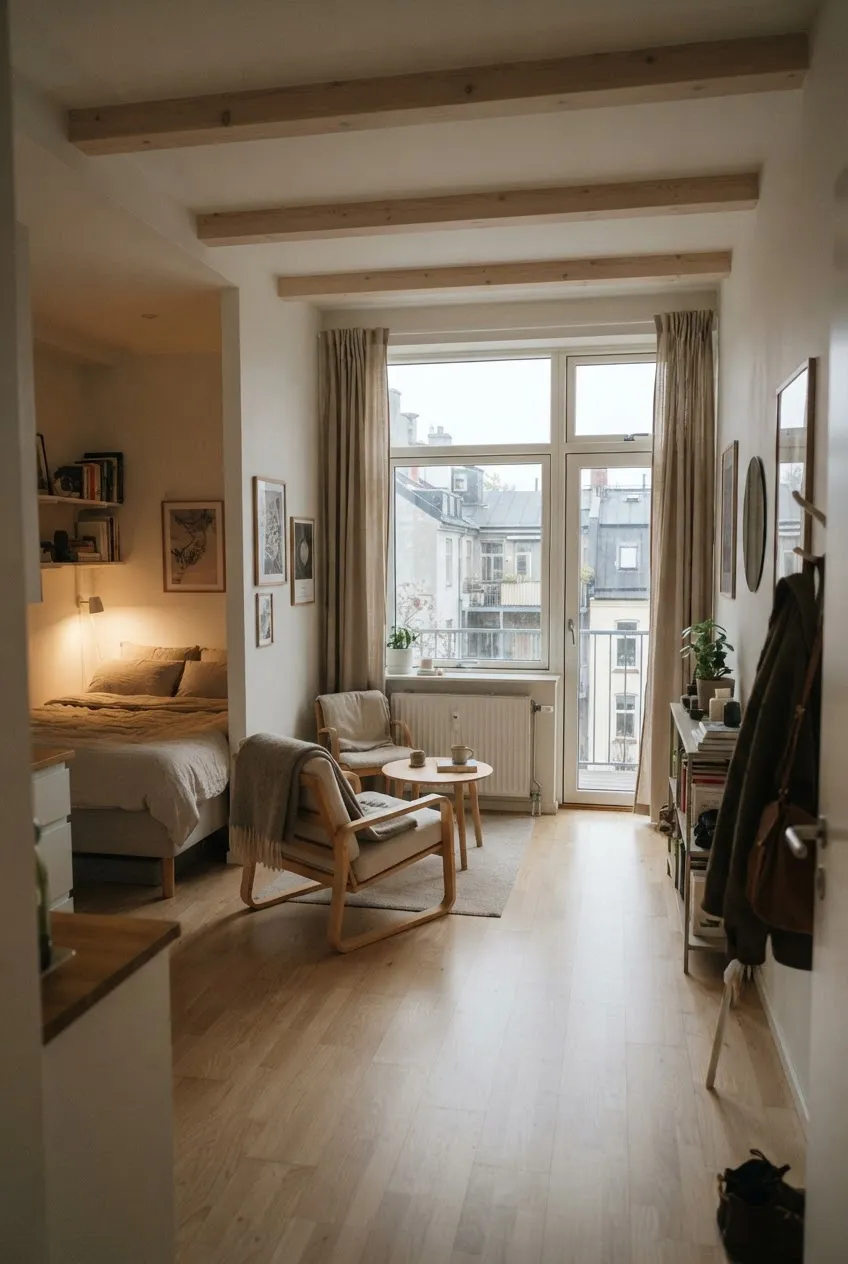
In a dim studio, even a partly covered window matters. During the day, draw curtains completely past the glass if the rod allows it. Move a tall plant, shelf, or stacked boxes away from the opening. Keep a low piece nearby only if you can still reach the handle and open the window fully.
Look at the room from the back wall to find what is actually blocking the light path. A clear window does not guarantee a bright apartment, but it gives every later lighting change a better starting point. Do not block a heater or balcony door while rearranging the window area.
2. Choose Privacy Coverings That Still Admit Daylight
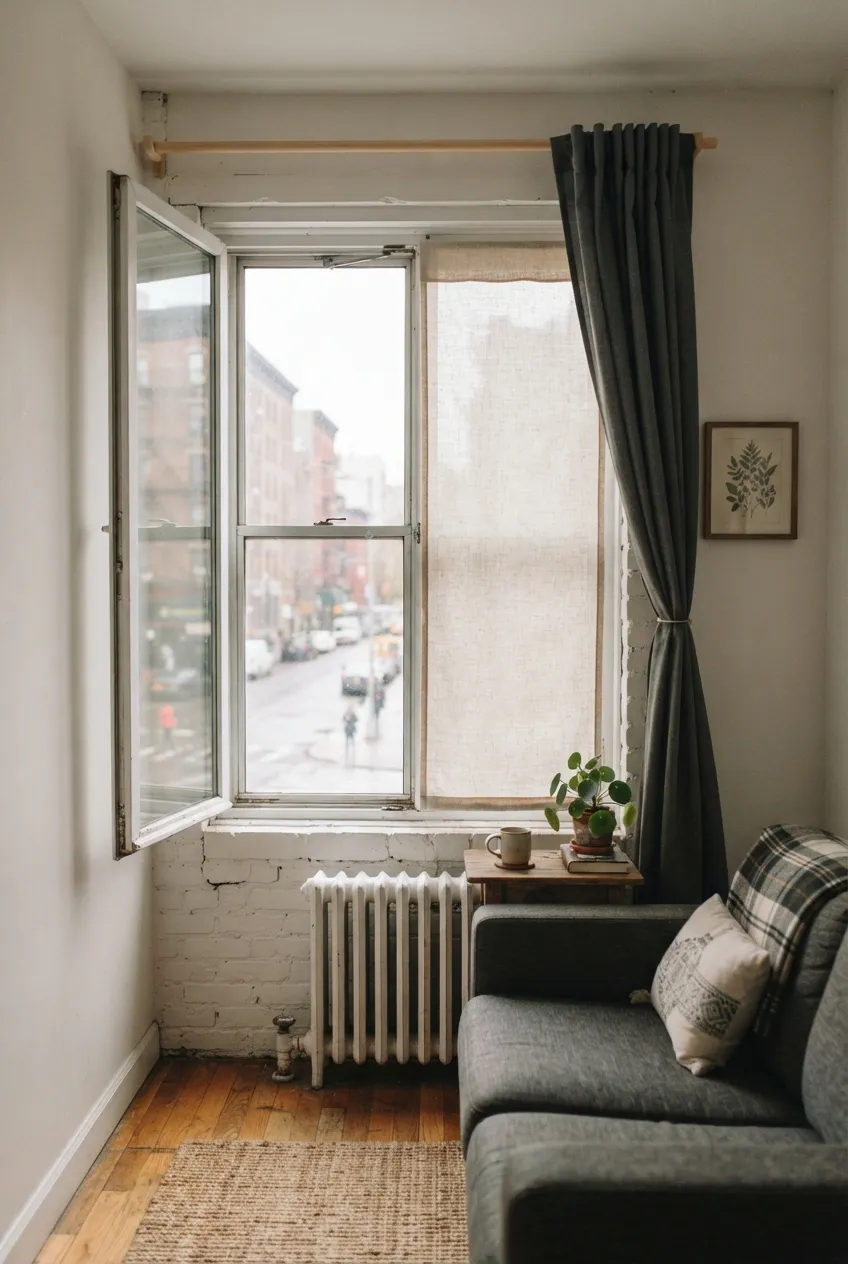
If the window faces neighbors or a street, leaving it bare may not be practical. A light-filtering shade, a sheer layer, or an adjustable covering can soften the view into the room while admitting some daytime light. Choose based on the privacy you need at eye level, not only on how the fabric looks in a product photo.
Test the covering in both daylight and after dark. A sheer layer may stop a clear daytime view but provide little privacy when the interior lights are on; use an opaque layer at night if needed. The covering must not catch on an inward-opening window or rest against a heater.
3. Aim a Mirror Toward the Bright Part of the Room
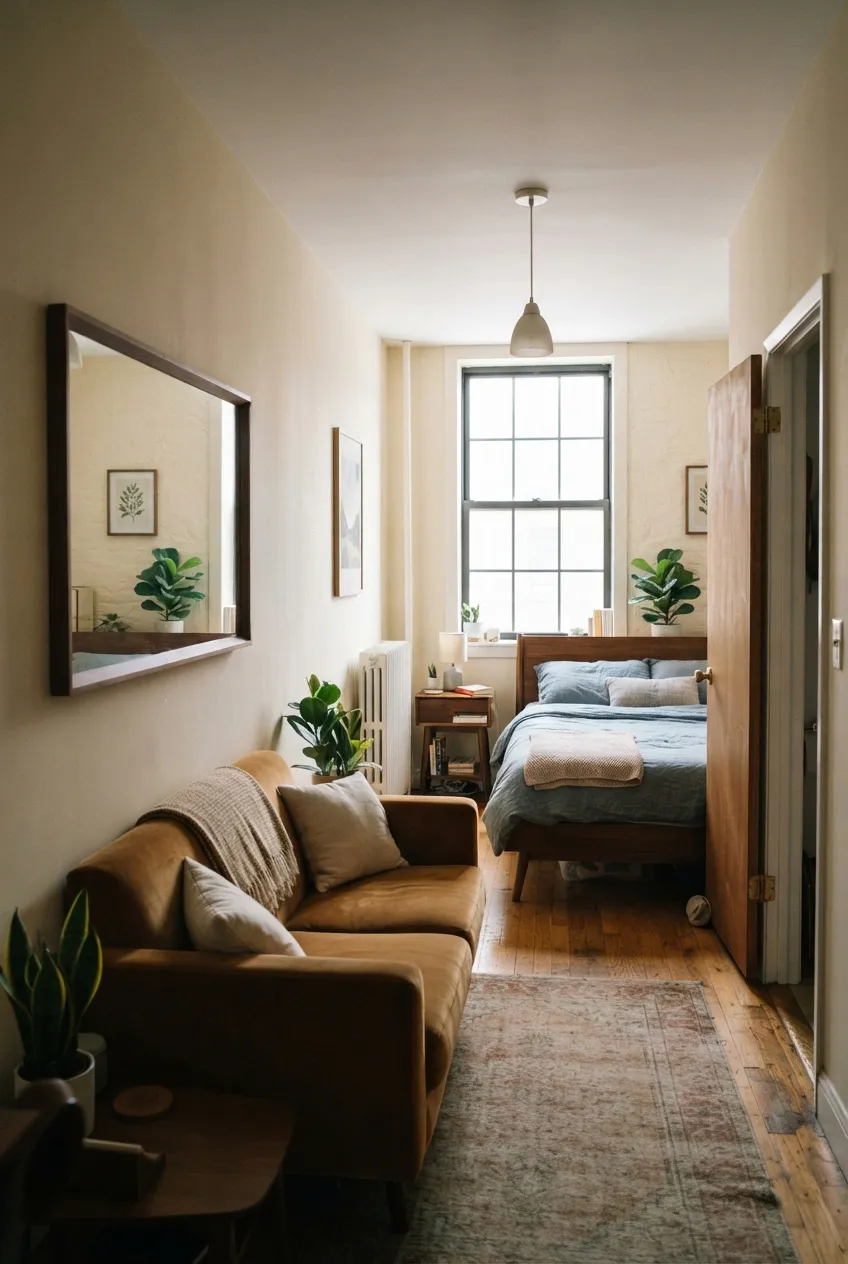
A mirror can return some window light toward the darker side of a studio when it is placed on a side wall or another useful angle. Stand where you need the improvement and check what the mirror actually reflects before fixing it. If it shows only a dark wardrobe or creates glare at the sofa, move it.
Use a secure mount or a stable freestanding mirror of a realistic size. Keep it out of door swings and the only walkway. A mirror cannot replace a lamp for cooking or reading, but it may make the available daylight travel farther.
4. Give Daylight a Light, Matte Surface to Hit
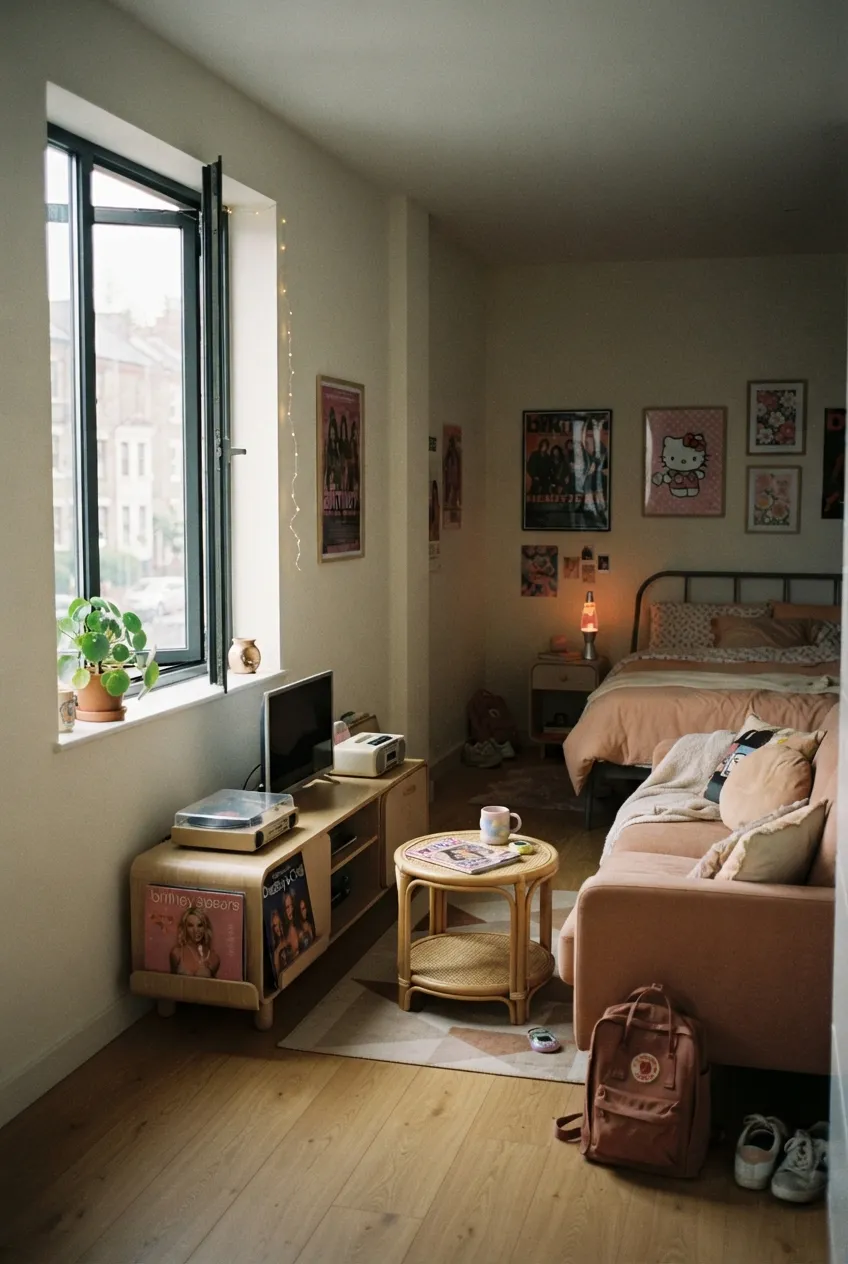
A wall that receives window light can help it spread through the room. If you can repaint, try a light, low-sheen finish on that wall and view a sample at different times of day. The useful surface need not be stark white; choose a light tone that still looks pleasant under your evening lamps.
If painting is not an option, a light-colored curtain, cabinet front, or large textile already in the room can serve a similar visual role. Avoid assuming that glossy paint will solve a dark room; strong reflections may create uncomfortable glare without lighting the places where you work.
5. Move Tall Storage Out of the Daylight Route
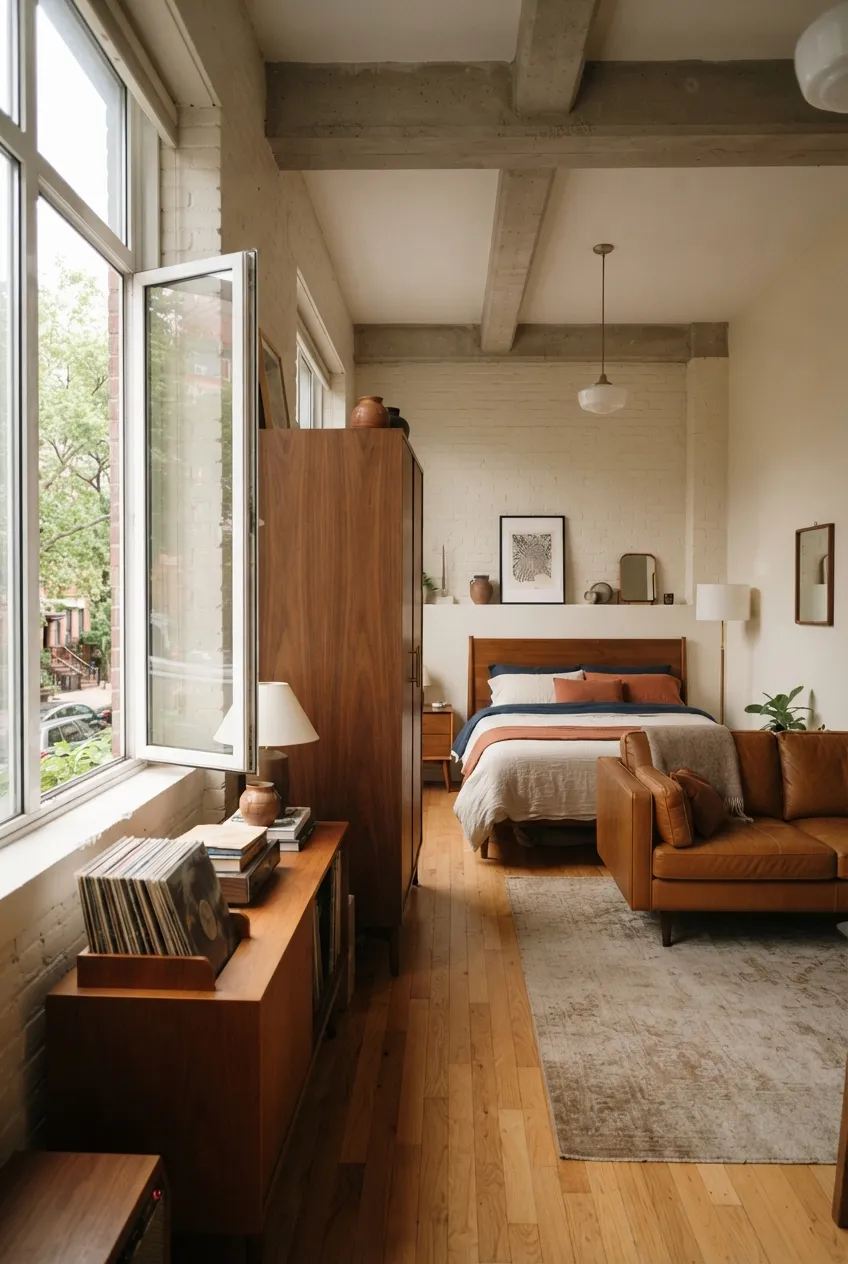
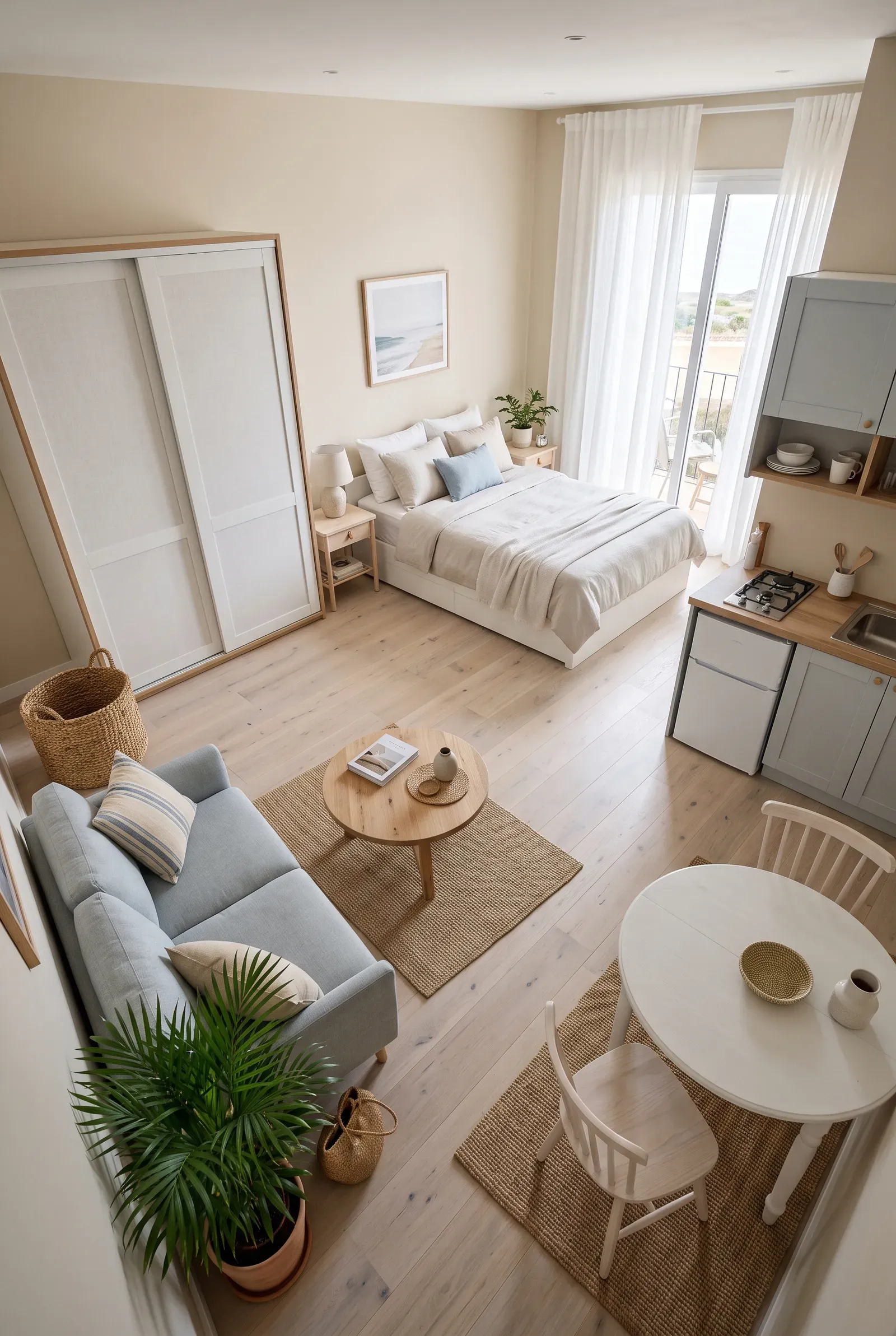
A tall wardrobe between the only window and the room’s deeper half can cast a large shadow. If the layout allows, put tall storage against a side or interior wall and leave the window-facing route more open. Lower furniture near the glass can let light pass over it toward the bed or sitting area.
Check the new position with every door and drawer fully open. Storage should remain usable, and the main path must stay clear. If the tall piece cannot move, focus on lighting the area behind it rather than buying another reflective accessory. For help with the whole-room arrangement, see the studio apartment layout guide.
6. Add a Soft Base Layer of Light
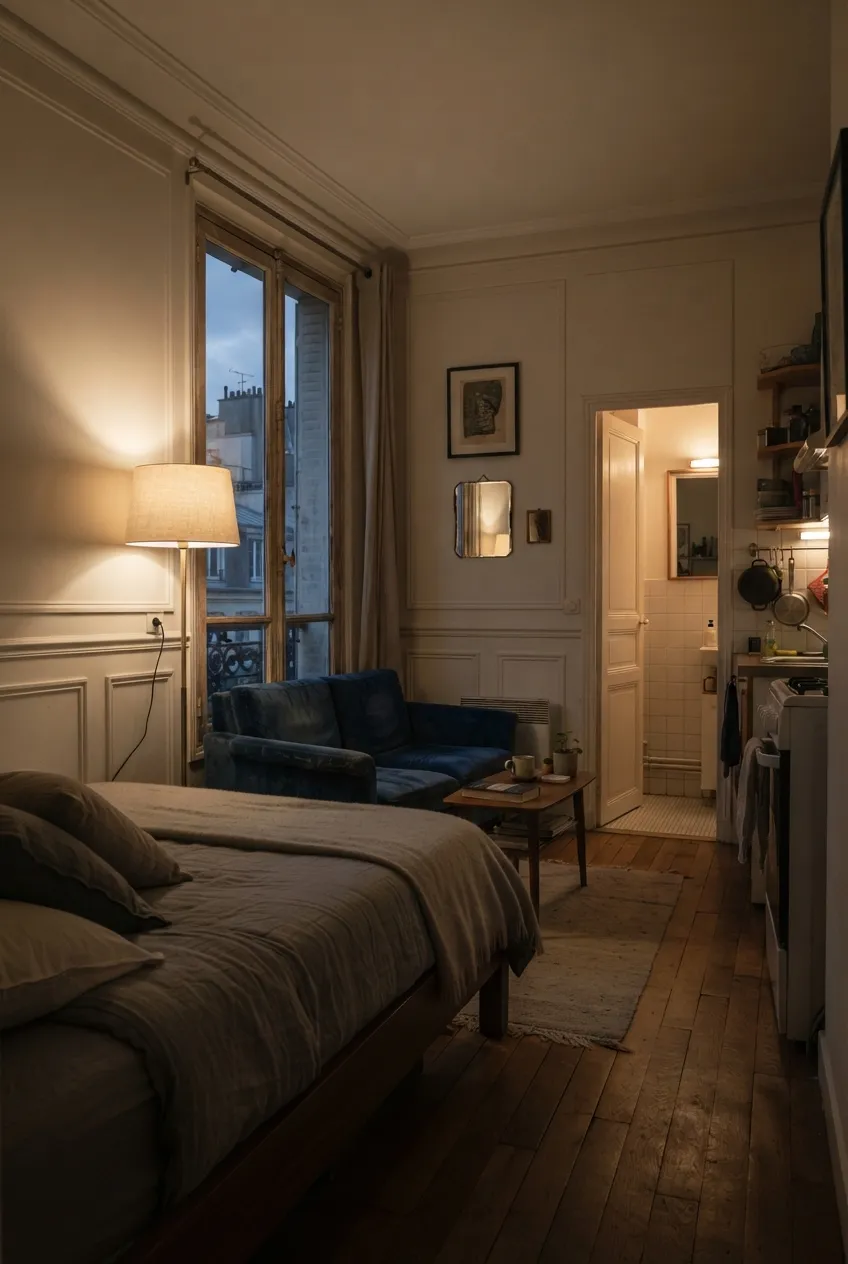
One bare ceiling bulb can leave the walls and corners dark while shining harshly in your eyes. A shaded ceiling fixture, a suitable plug-in pendant, or a floor lamp with a diffused shade can provide a more even base of light. Choose a position that reaches the central living area without shining straight into the bed.
Use the fixture and bulbs as their instructions specify, and keep cords away from the walking route. The base light is for moving around and seeing the whole room; it does not need to do every detailed task by itself. Add focused light where those tasks happen.
7. Put an Adjustable Lamp Where You Read or Work
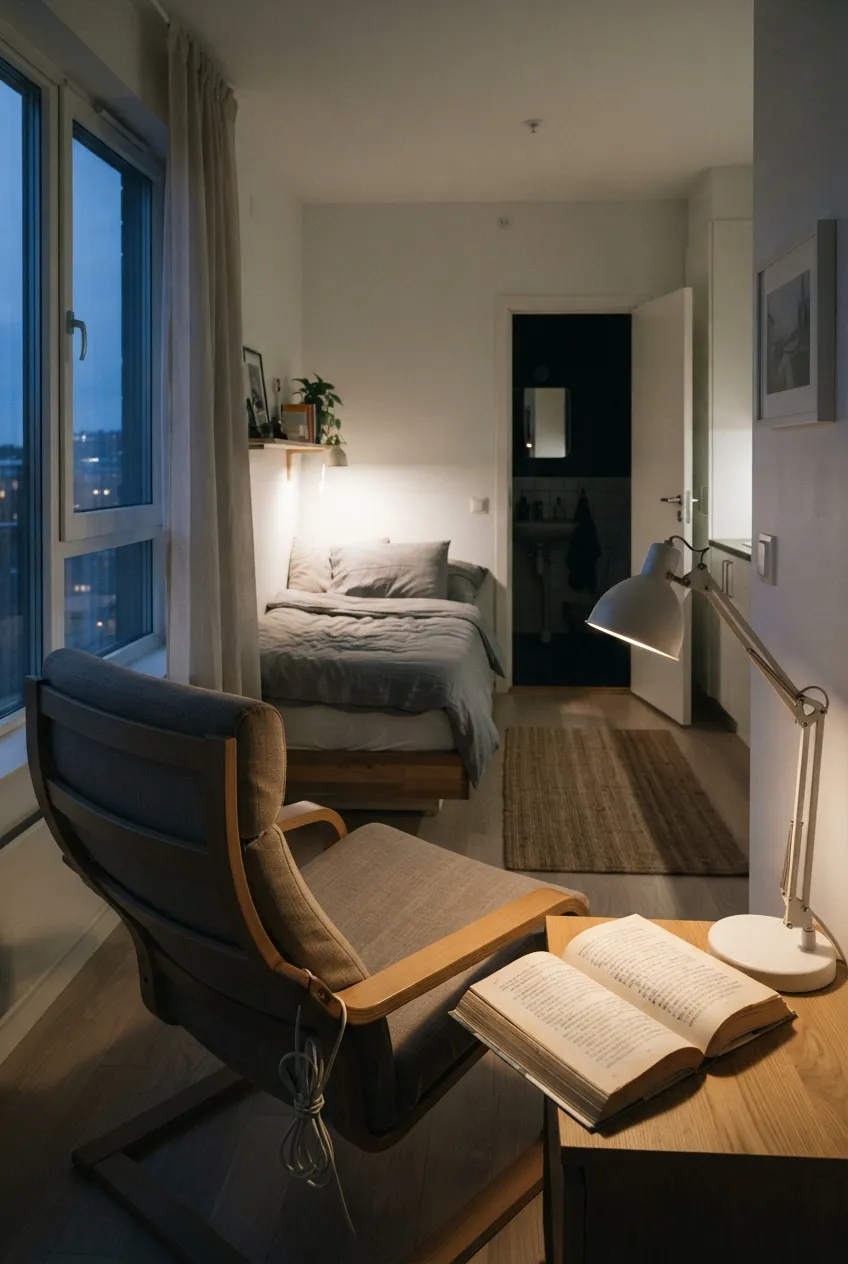
In a dark studio, a sofa or desk can be close to the window and still feel dim at the time you actually use it. Place a movable reading or work lamp beside that seat so light falls on the book, keyboard, or paper rather than into your eyes or onto a screen.
Test the lamp from your normal seated position. Keep the shade clear of bedding and curtains, and route the cord behind furniture without crossing the only path. If a desk is the main problem, the studio apartment workspace ideas explain how to position it in the room.
8. Light the Kitchen Counter Directly
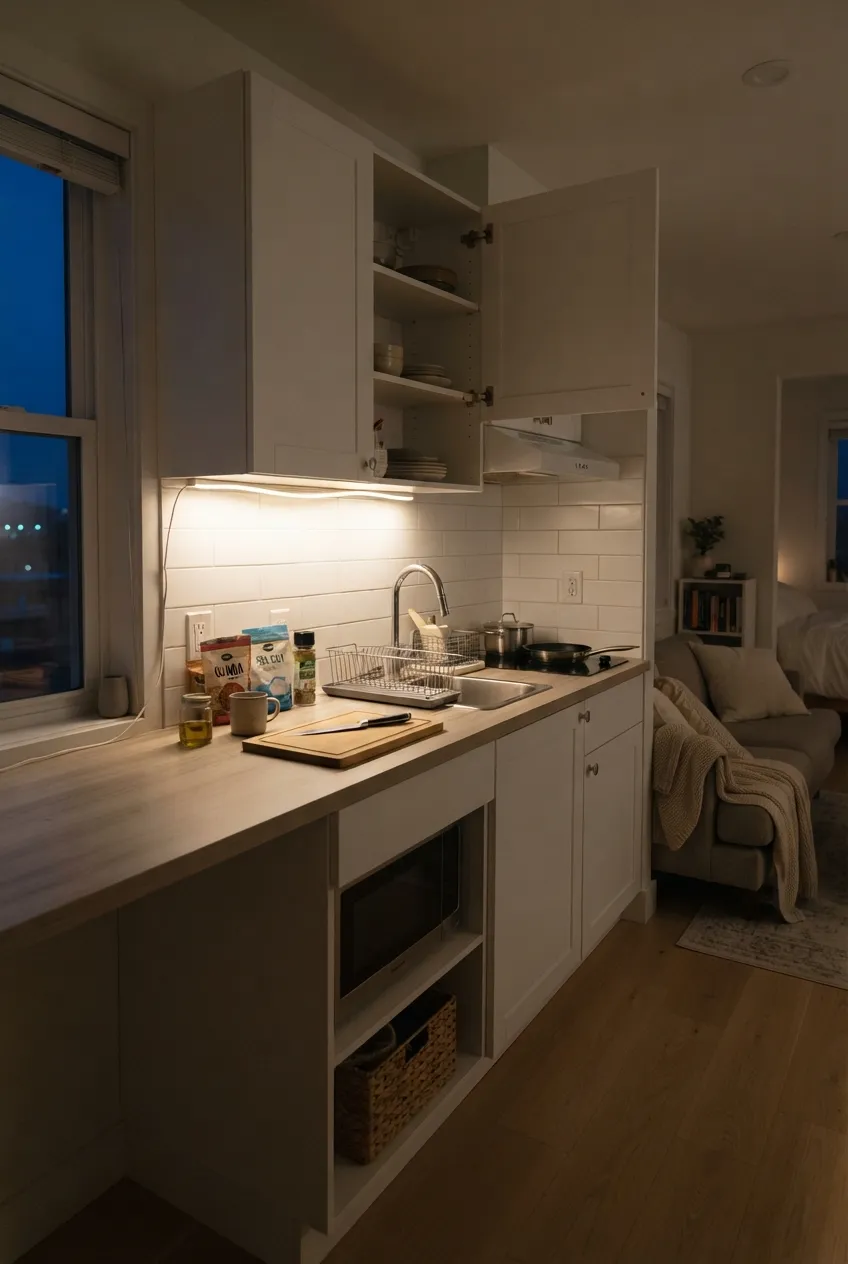
Ceiling light often falls behind you when you stand at a kitchen counter. A suitable under-cabinet light or a small task fixture can illuminate the preparation surface without filling it with another lamp. Put the light where chopping and reading labels actually happen, not only where it looks symmetrical.
Follow the fixture’s installation and electrical instructions, especially near a sink or stove. Leave cabinet doors, outlets, and ventilation usable. A brighter counter helps cooking even if the rest of the studio remains softly lit.
9. Brighten the Deepest Corner With a Shaded Lamp
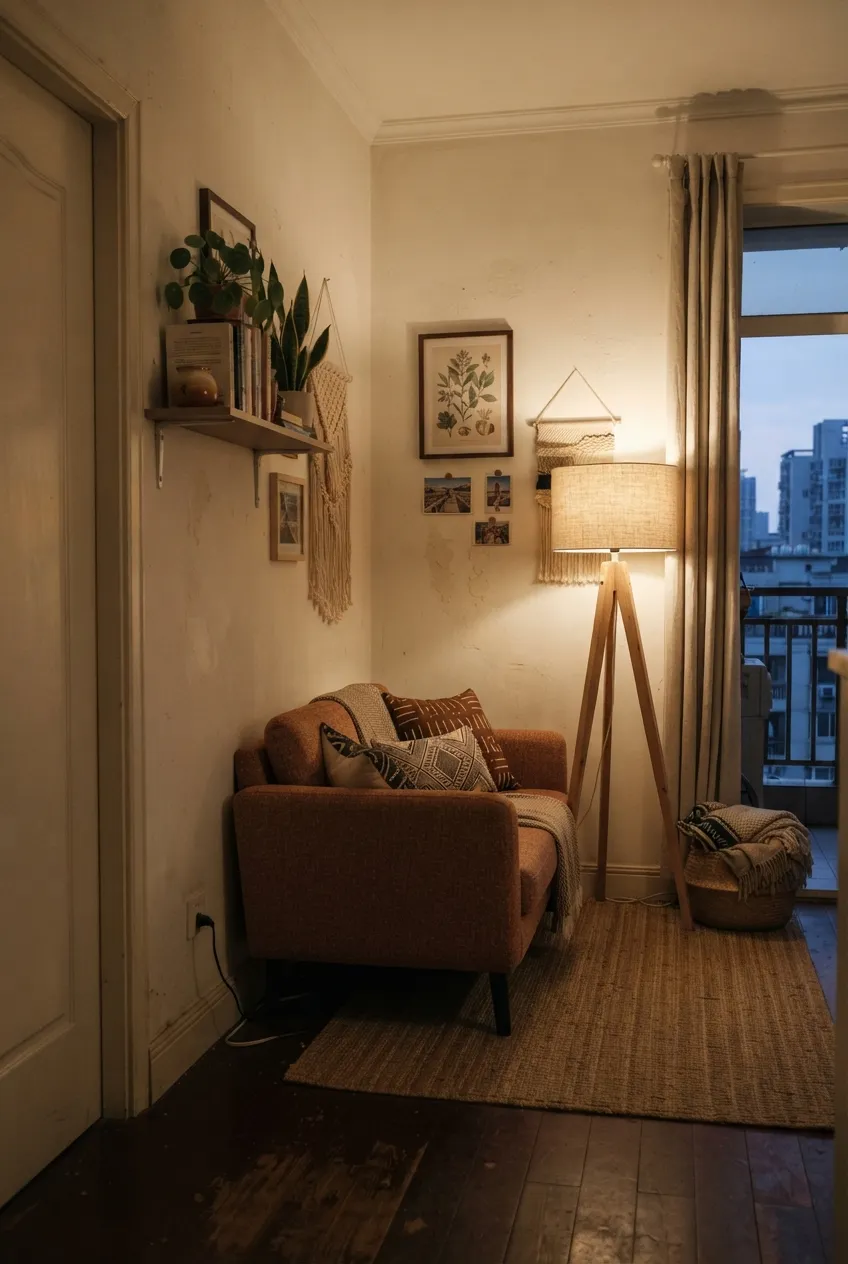
The far corner of a long studio may receive almost no daylight. A shaded floor lamp or a small lamp on existing furniture can light that corner and the wall beside it. This makes the far end useful for sitting or getting dressed without adding another overhead fitting.
Choose a lamp that fits the available floor or surface area. Keep it stable, clear of fabrics and door swings, and do not trail a cord across the route to the bathroom. Aim for a comfortable glow rather than a bright point facing the bed.
10. Give the Window End and the Far End Separate Controls
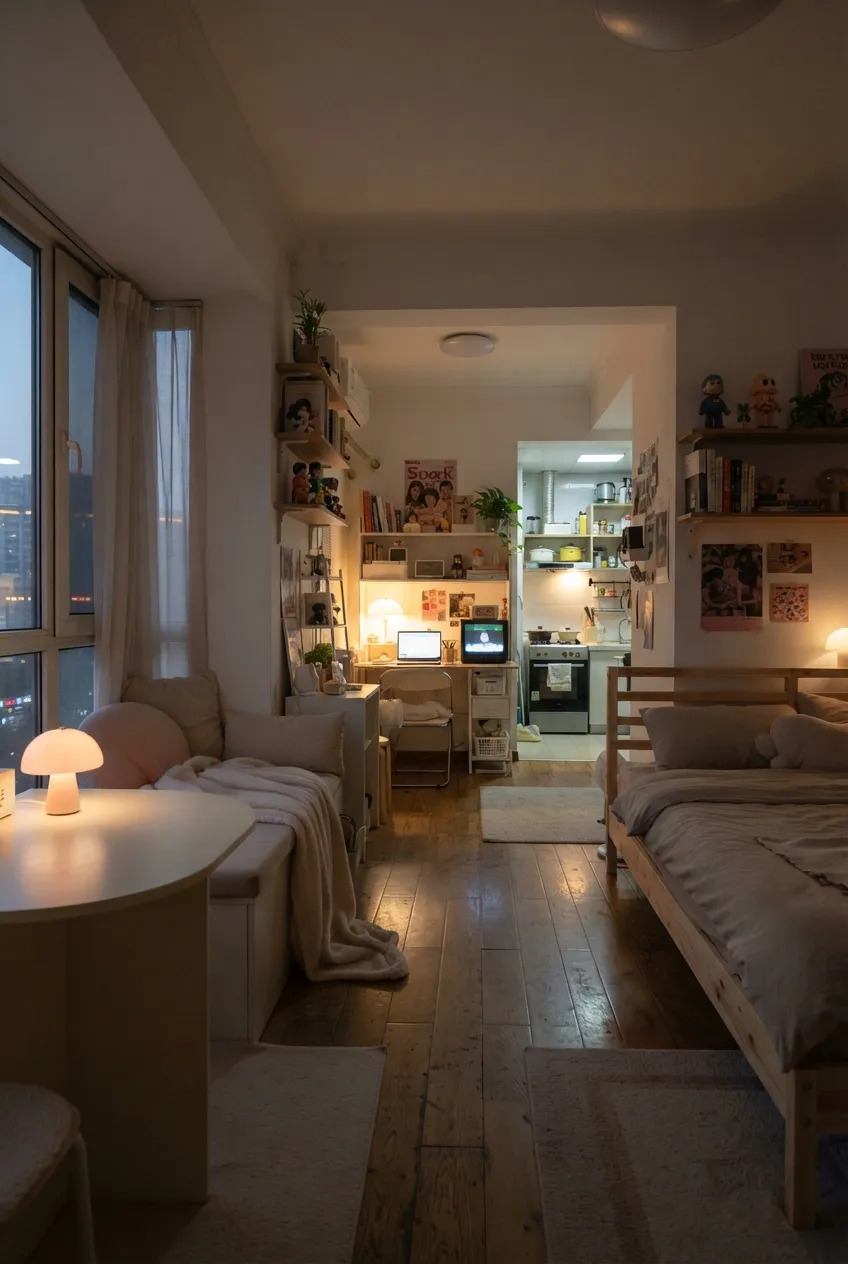
At dusk, the window side may still have some daylight while the back of the room is already dark. Put the living and sleeping or far-wall lights on separate switches or safely used plug-in controls so you can light the area you are using. You can keep a work lamp on for a task without making the bed area equally bright.
Try the setup at the dimmest hour of your normal day, then move a lamp if the route, kitchen, or bedside remains hard to see. Use fixtures and controls as directed by their makers; avoid improvised wiring. A useful lighting plan responds to the room through the day rather than turning every light on at once.
Final Thoughts
A dark studio is easier to live in when light reaches the places where you actually do things. Free the window, make sensible use of reflected daylight, then give the room a soft base light and focused light at the counter, seat, and darker end. Check the setup in the real hours you cook, work, and relax, with doors and walking routes still usable.
More Studio Apartment Ideas
 |  |  |
|---|---|---|
Maximize Space | Compact Workspaces | Studio Layouts |