A desk can look perfectly compact with its chair pushed in, then block the route to the bathroom the moment you sit down. In a studio apartment, work also shares one room with sleep, meals, and relaxing. The best workspace starts with where the chair goes, what equipment you actually use, and how the rest of the room functions during a workday.
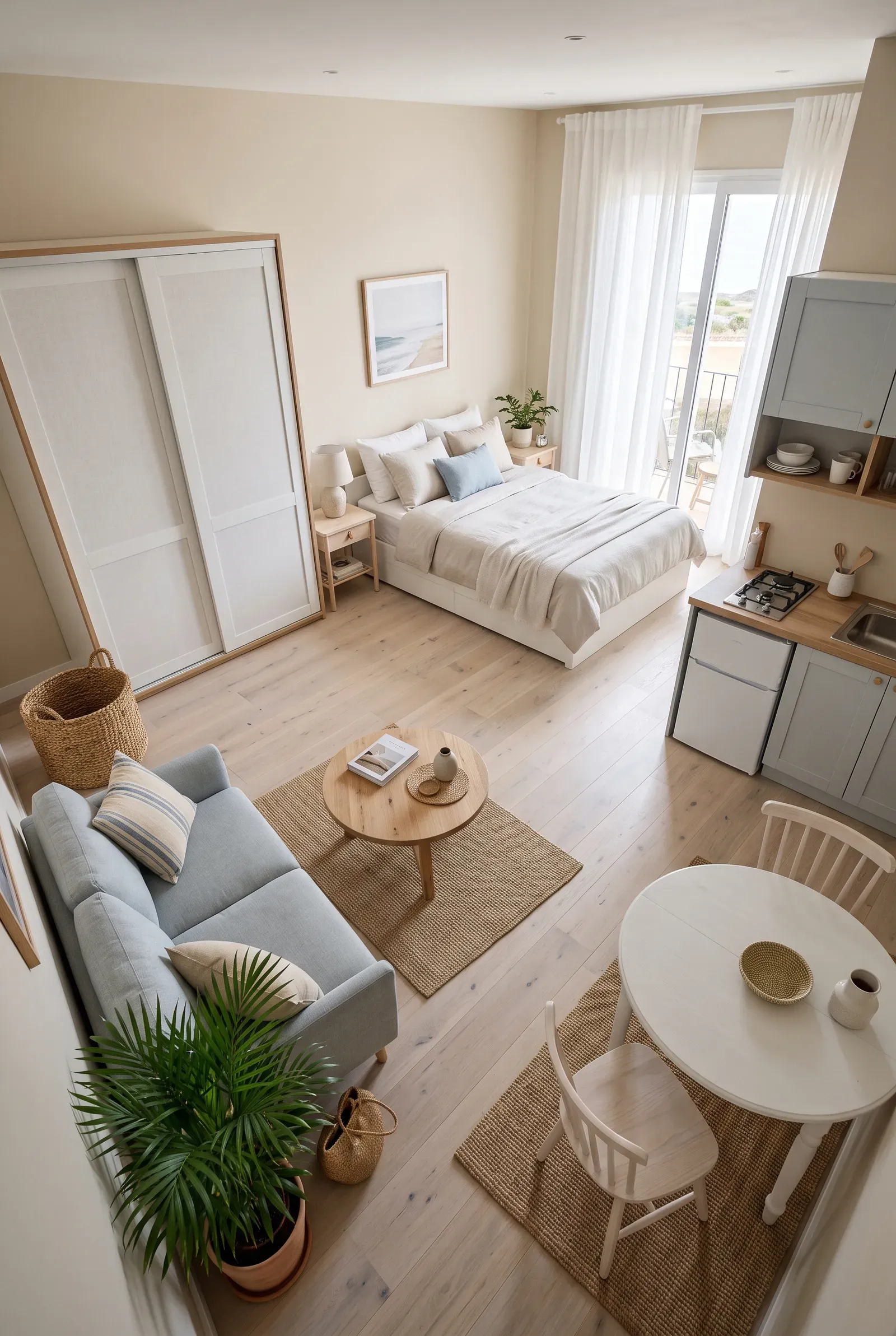
Before choosing a desk, mark its depth on the floor. Pull out a chair, sit, stand, open nearby doors, and walk between the bed, kitchen, and exit. Check the position of a usable outlet and the direction of daylight. These ideas focus on a practical work spot rather than a decorating style; for the wider arrangement of bed and sofa, see the studio apartment layout guide.
1. Reserve a Clear Wall for Full-Time Work
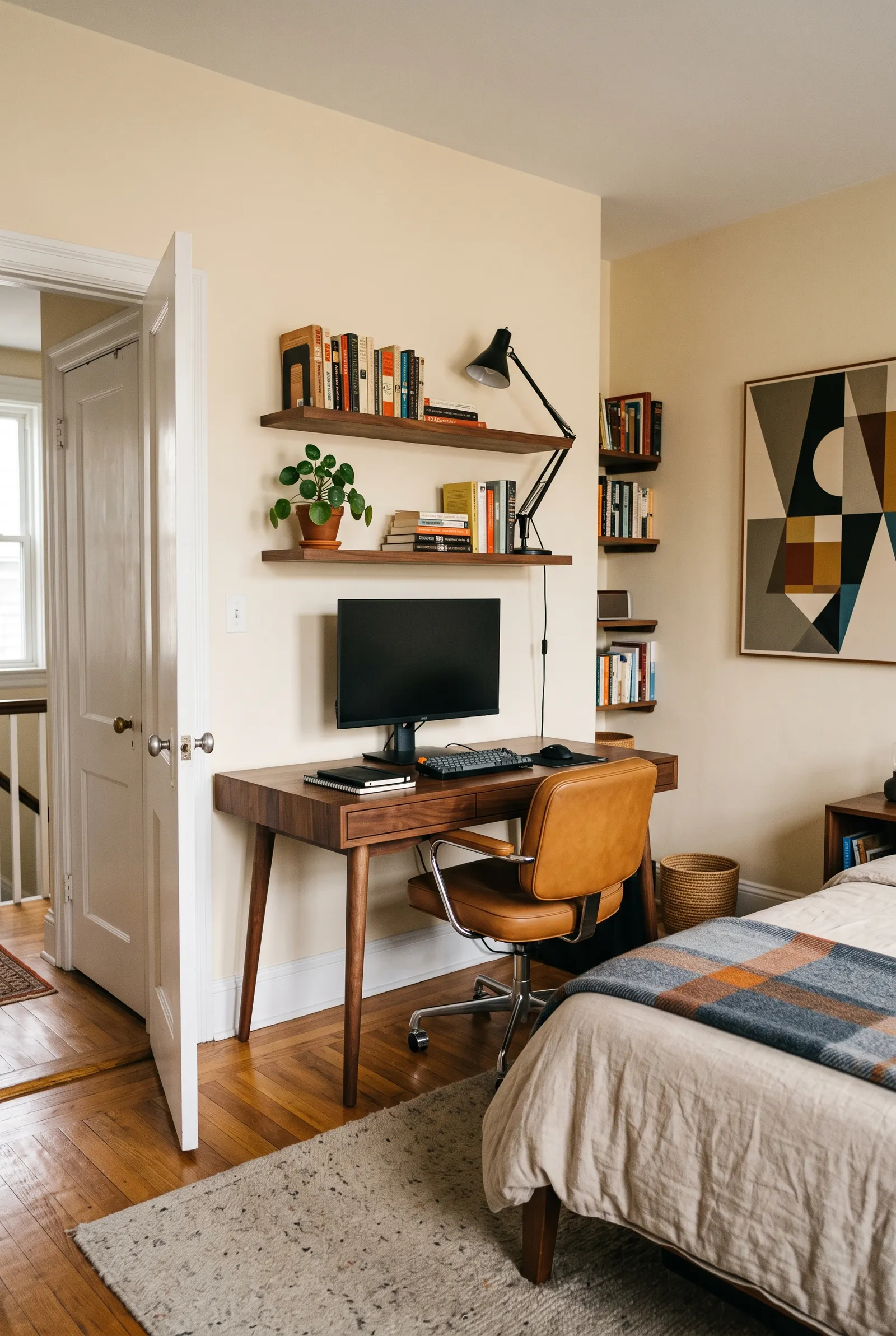
If you work from home most days, a continuous wall can support a desk wide enough for your actual equipment without spreading work across the dining table. Place it away from doors that swing into the desk, and leave the room’s main route on the other side of the chair. A wall-facing desk can also keep a monitor out of the sightline from the bed.
Measure the setup with the chair pulled back, not only tucked in. If you use a monitor and keyboard, allow enough depth for a comfortable viewing distance and forearm support; do not choose a very shallow console just because it fits the wall. Keep shelves or cabinets clear of headroom and the desk lamp.
2. Put a Laptop Desk on a Short, Unused Wall
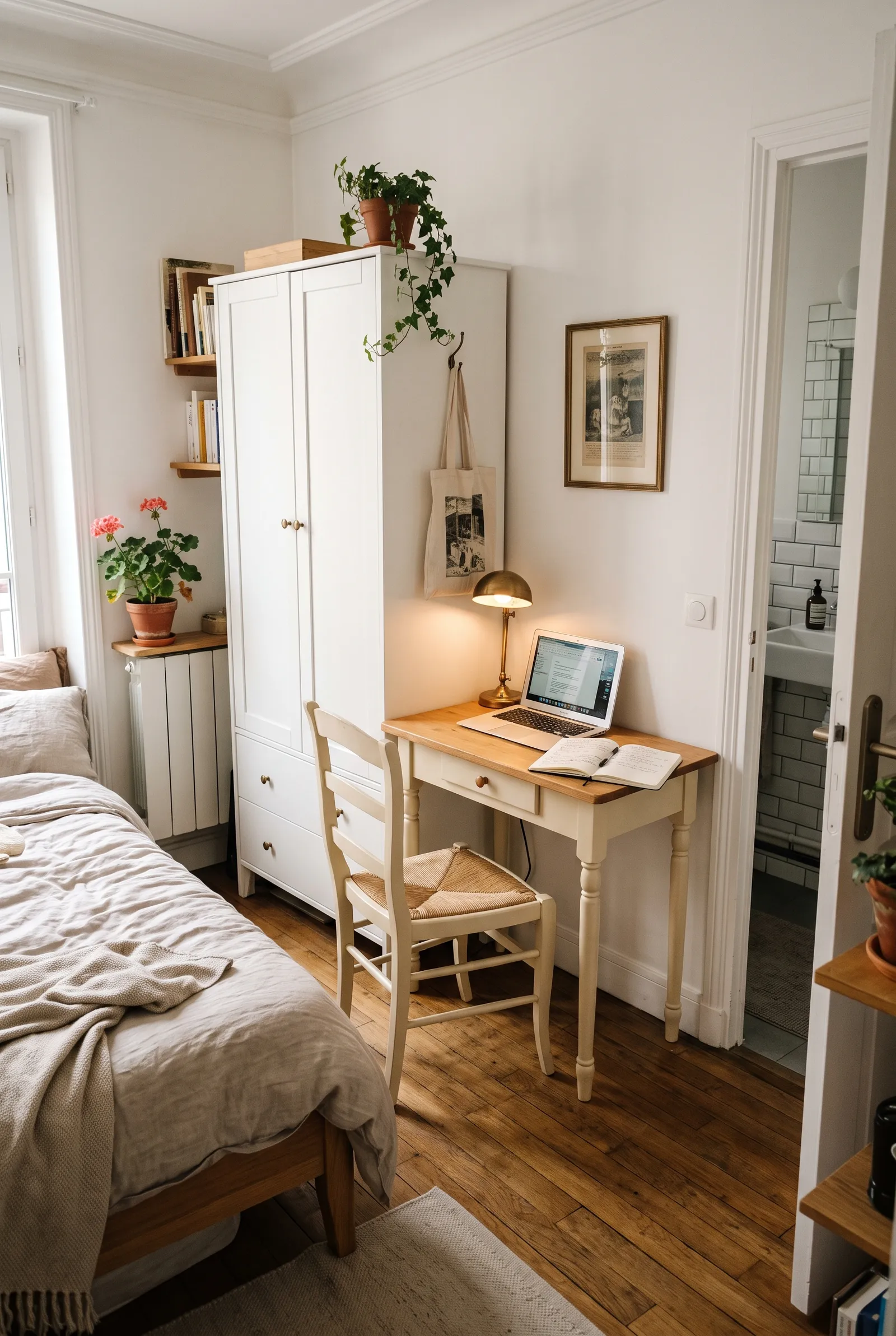
A short wall beside a wardrobe or at the edge of the living area may be enough for a laptop, notebook, and lamp. A modest writing desk avoids taking a longer wall needed for a sofa or storage. This is a good fit for occasional computer work, not automatically for a large monitor or multiple screens.
Use the chair in its working position to check that wardrobe doors and drawers still open fully. Do not place the desk in front of the only route to the bed or bathroom. If the surface cannot hold both the laptop and what you need to write on, it is too small for that task.
3. Turn the Desk Perpendicular to a Window
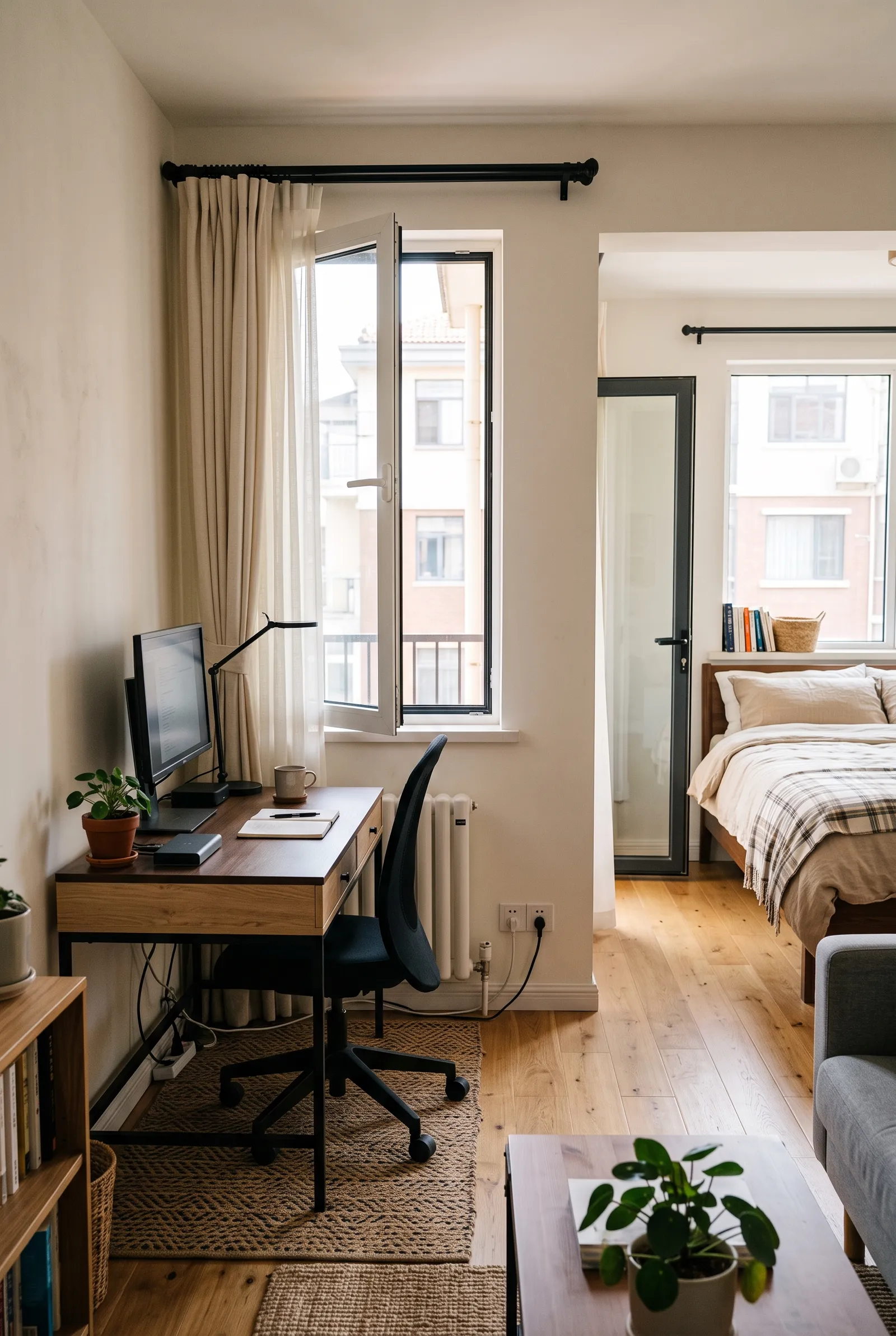
Side light from a window can brighten the work surface without putting the window directly behind a screen or in your eyes. Set one end of the desk near the window wall and orient the screen at a right angle to the glass. This often gives you daylight and a usable view while reducing glare.
Keep the desk and cords away from radiators and any window that opens inward. You must still be able to reach the handle and curtains, and the chair must not block a balcony door or the route across the studio. Test the light at the time of day you normally work; a shade may still be useful.
4. Work Beneath a Window Only If It Stays Accessible
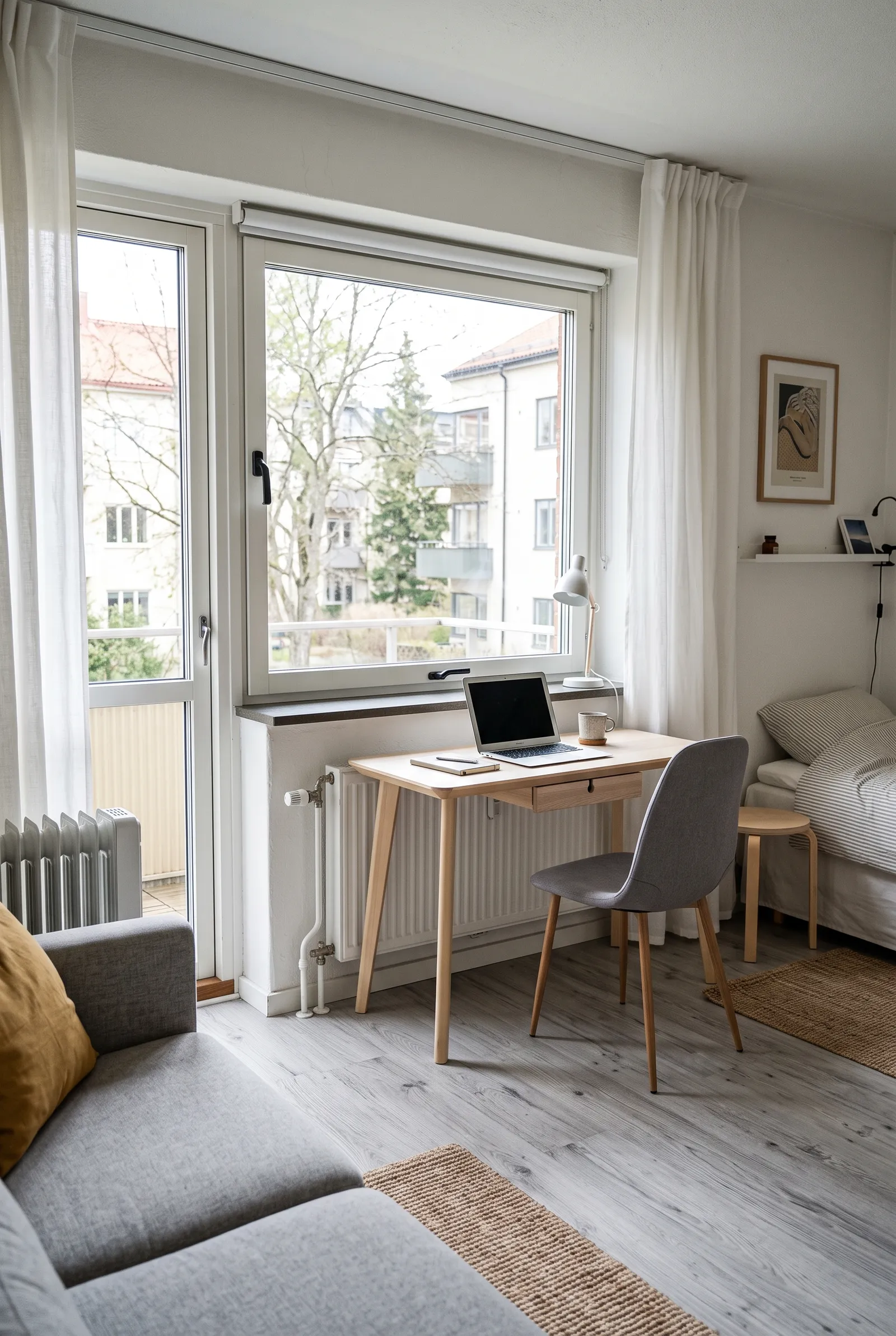
In some studios, the space below a window is the only wall section that can take a desk. A low desk may fit there if the sill, window handle, and heater remain clear. The desk can give daytime work a view and leave another wall available for the bed or sofa.
Open the window fully and adjust the curtains with the chair pulled out. Do not cover a radiator, block a balcony door, or set electronics where condensation or direct heat could reach them. If access requires climbing over the desk, use a different position.
5. Use an Alcove Only When the Chair Can Leave It
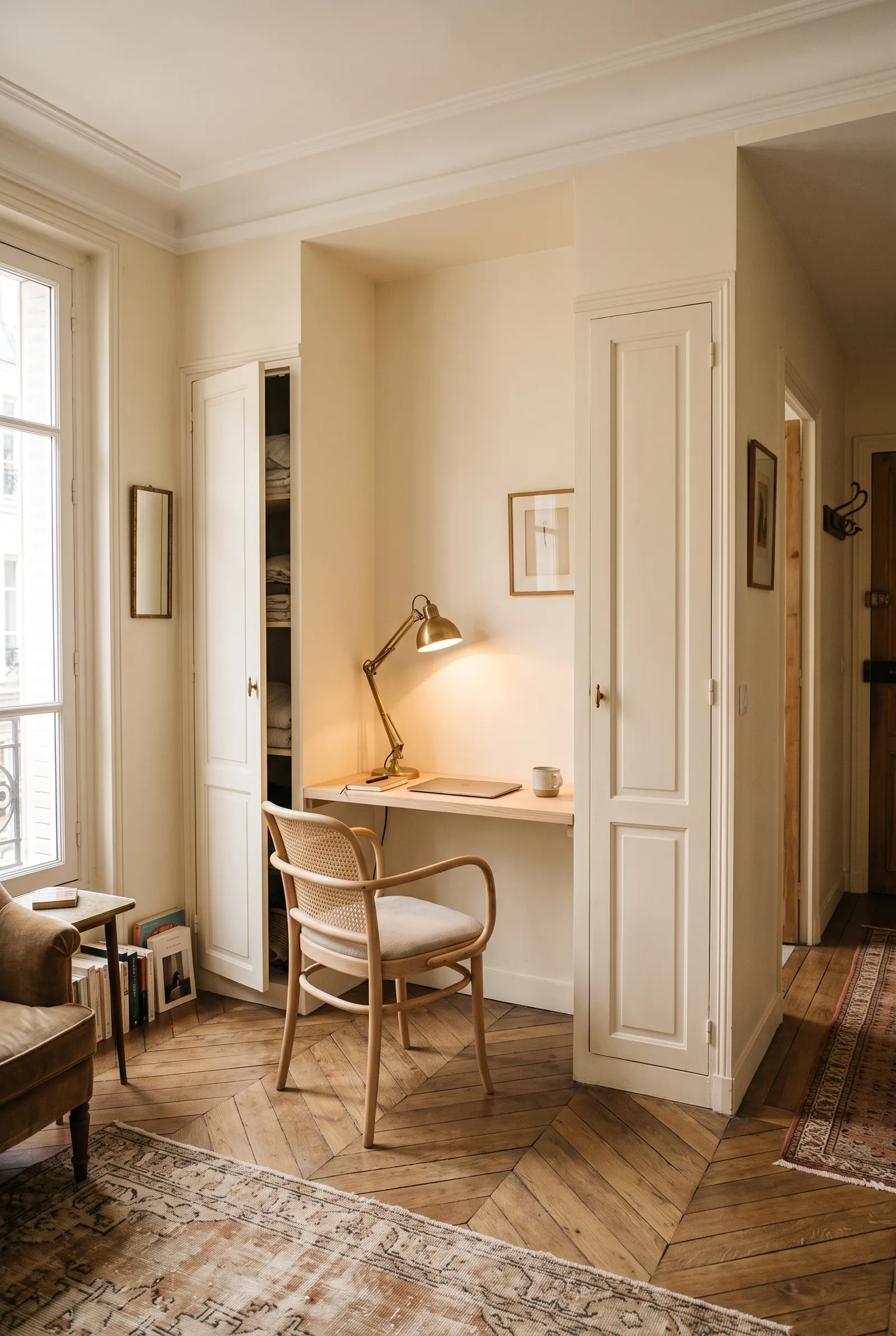
A shallow recess can keep a work surface from projecting into the room. A narrow desk or a top supported by suitable existing cabinetry can work if the recess is wide enough for your arms and the chair can roll or slide back into clear floor space. The alcove’s apparent width is not the whole working footprint.
Check any closet or cabinet doors on either side. They should open fully with the desk in place, and the chair should not become a plug in the only walkway. Provide task lighting if the recess is dim, and keep ventilation around computers and other equipment.
6. Place a Slim Desk Behind a Floating Sofa
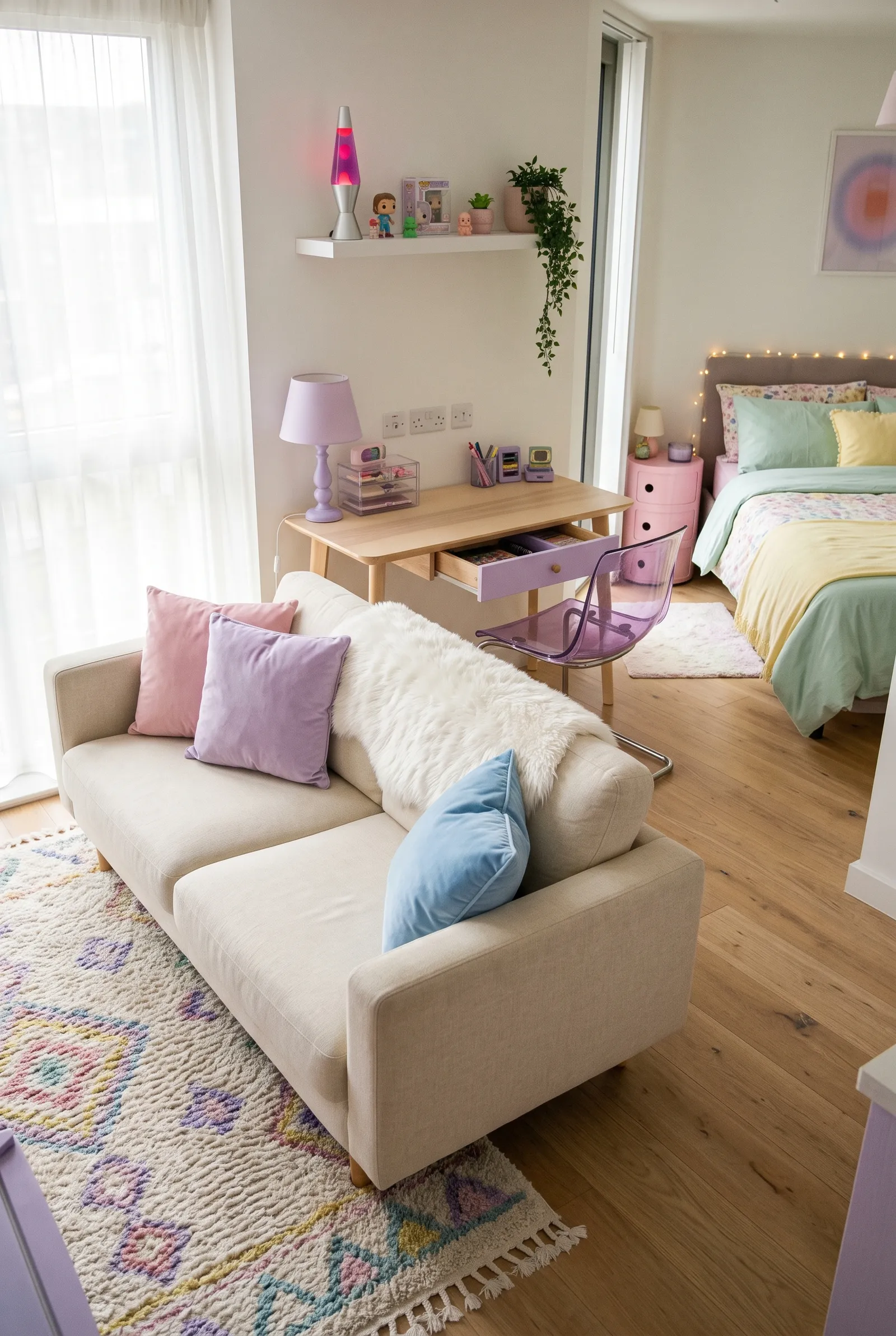
If the sofa already floats between the living and sleeping zones, a slim desk behind it can use an existing boundary. Face the desk toward the open side so the chair has a usable pullback area. The sofa back can visually contain the workspace without a new divider.
This works only when the sofa has enough distance from the bed and main path. Test the desk with someone seated; the chair must not block circulation, and you should not have to move the sofa to reach a drawer or outlet. A desk that makes the walkway too narrow is the wrong fit, however neat it looks from the sofa.
7. Choose a Small Corner Desk for a Corner That Is Actually Open
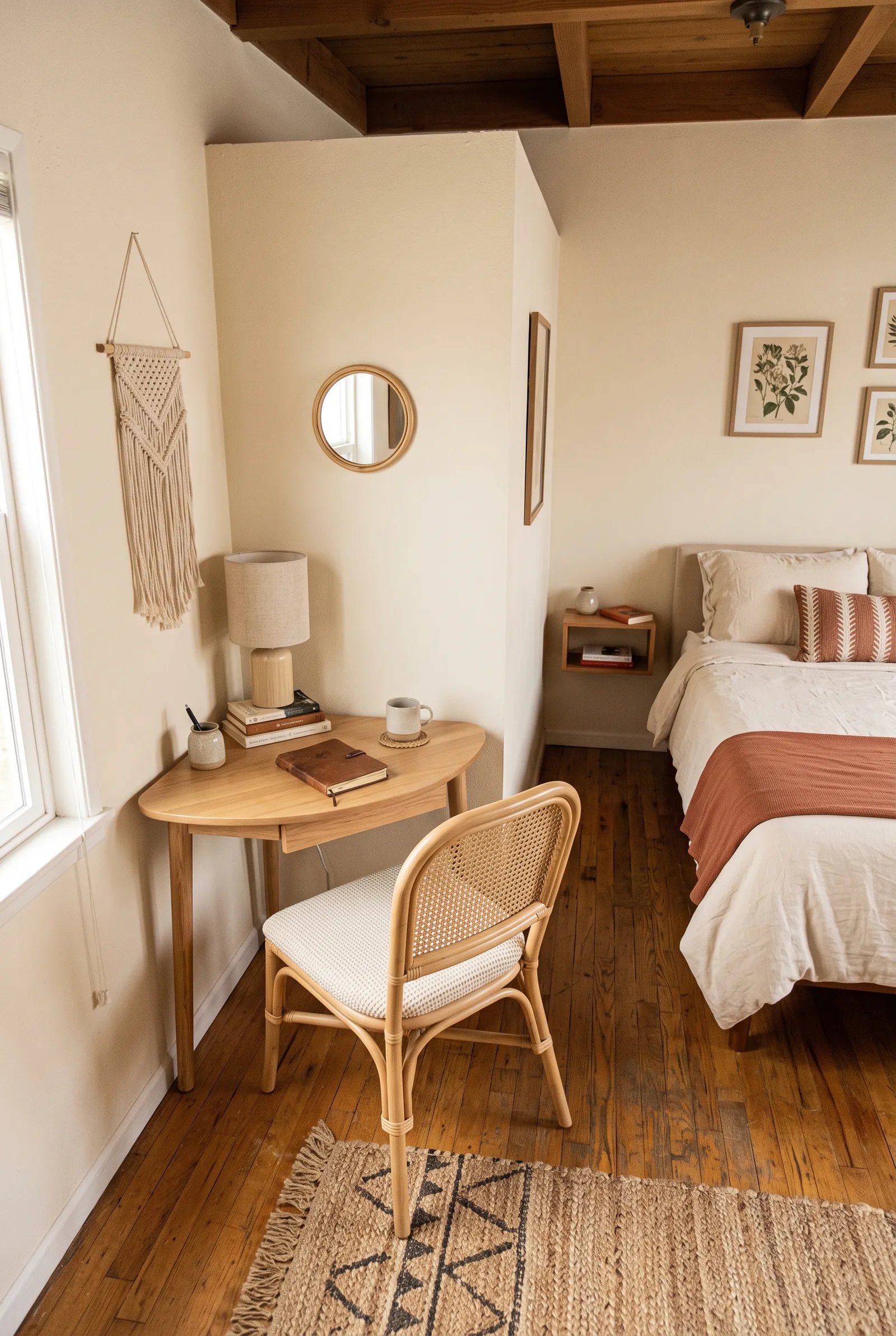
A corner desk can make use of two short walls, but only if neither wall contains a door, cabinet, or window you need to open. Pick a compact corner top rather than assuming a large L-shaped desk will save space. The usable work area is the part you can reach while seated, not the far corner that collects things.
Pull the chair straight back and turn to stand. Check that the chair does not collide with the bed or shut down the main route. Leave access to the outlet and avoid a deep corner setup that forces the screen too close to your face.
8. Share the Dining Table for Occasional Work
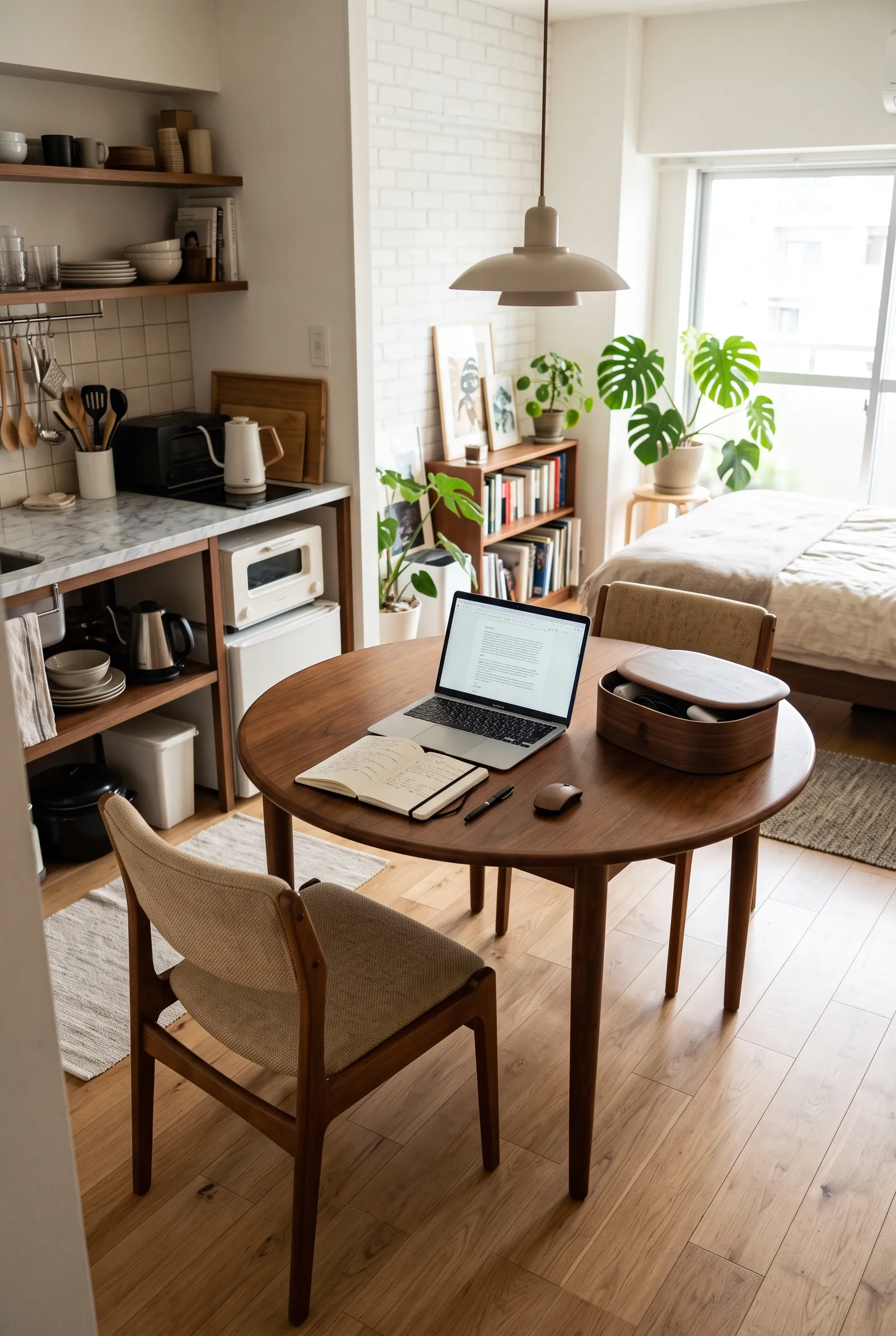
If work happens a few hours a week, one comfortable-height table can serve both meals and a laptop. Keep a closed box or small caddy nearby for the charger, notes, and mouse. Clearing the surface at mealtime should take one quick move, not a full reorganization of the apartment.
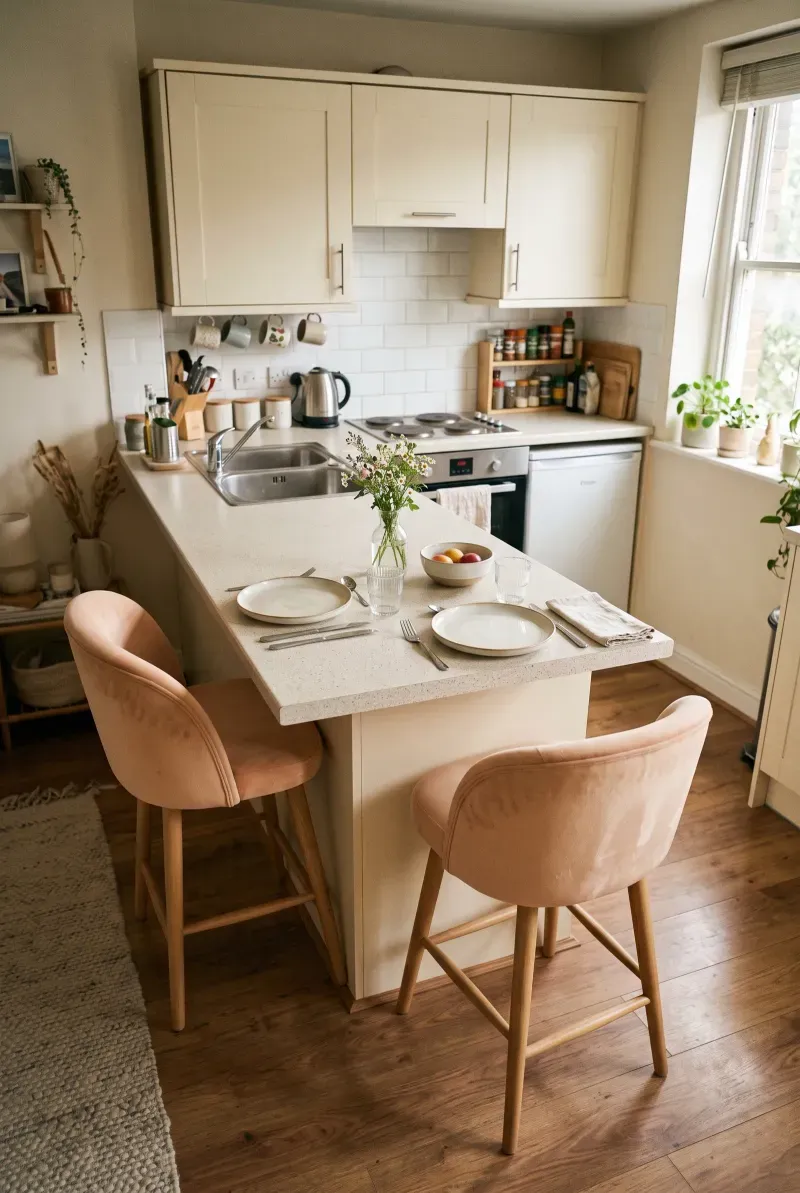
Choose a supportive chair and test it during a real work session. Route cords away from food and feet, and ensure the table remains usable for eating. If you work full time with several screens, a dedicated desk may be easier to live with. For placement and seating, see the studio apartment dining area ideas.
9. Fold a Wall Desk Away After Part-Time Work
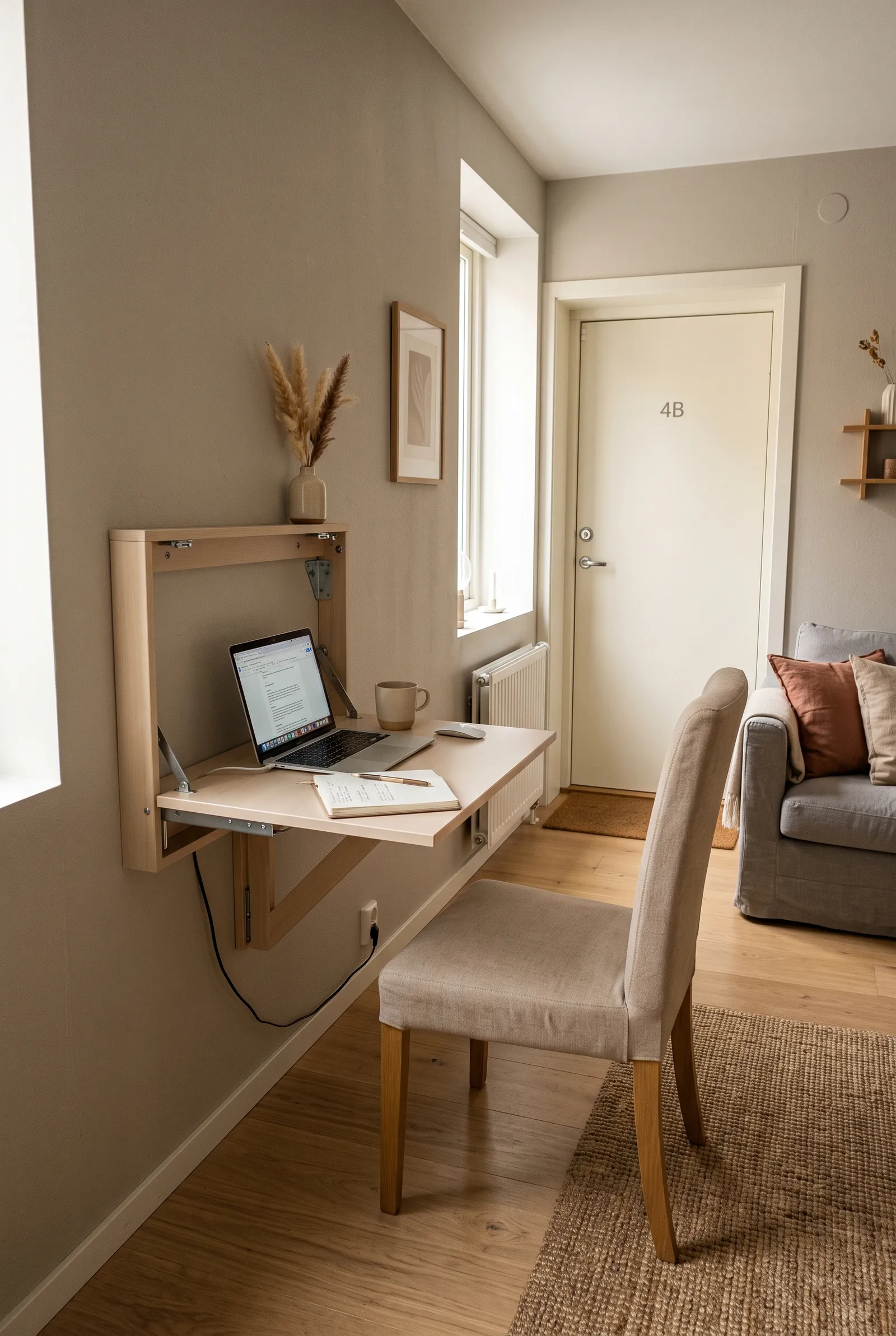
A fold-down desk can return floor space to circulation when work ends. Put it on a wall suited to the product’s fixings and load, and check your tenancy before drilling. Choose a chair that can move to another useful position or store without blocking the room.
Measure the desk fully open with the chair pulled out. It cannot cover a door, heater, or the only path to the exit. Keep cords clear of the hinge and do not close the top over equipment the desk is not designed to hold. If you use it all day, check whether its depth and stability are genuinely comfortable.
10. Use an Existing Built-In Bay as a Work Nook
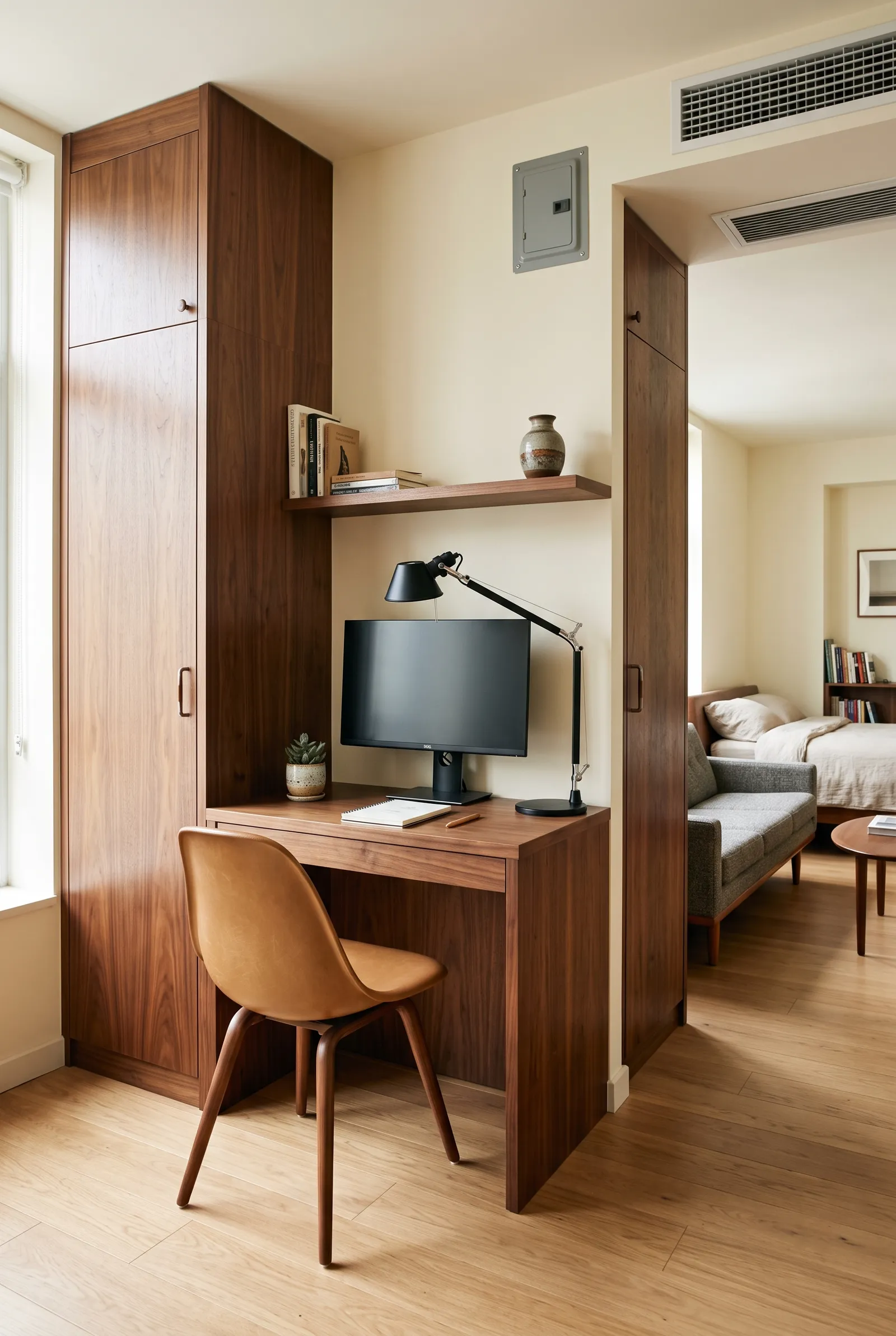
Some studios already have an open bay between storage units or shelves. A desk fitted to that available width can keep the workstation within an existing furniture line, without adding another freestanding cabinet. Use the bay only if it provides enough knee room and lets the chair move backward.
Do not block electrical panels, vents, or cabinet doors to make the desk fit. Confirm that the shelf above leaves headroom and that a monitor has space to breathe. If you add a top, use fixings and support suitable for the structure and the intended load; the nook should be a working desk, not a decorative shelf with a laptop perched on it.
11. Let the Outlet and Cable Route Influence Placement
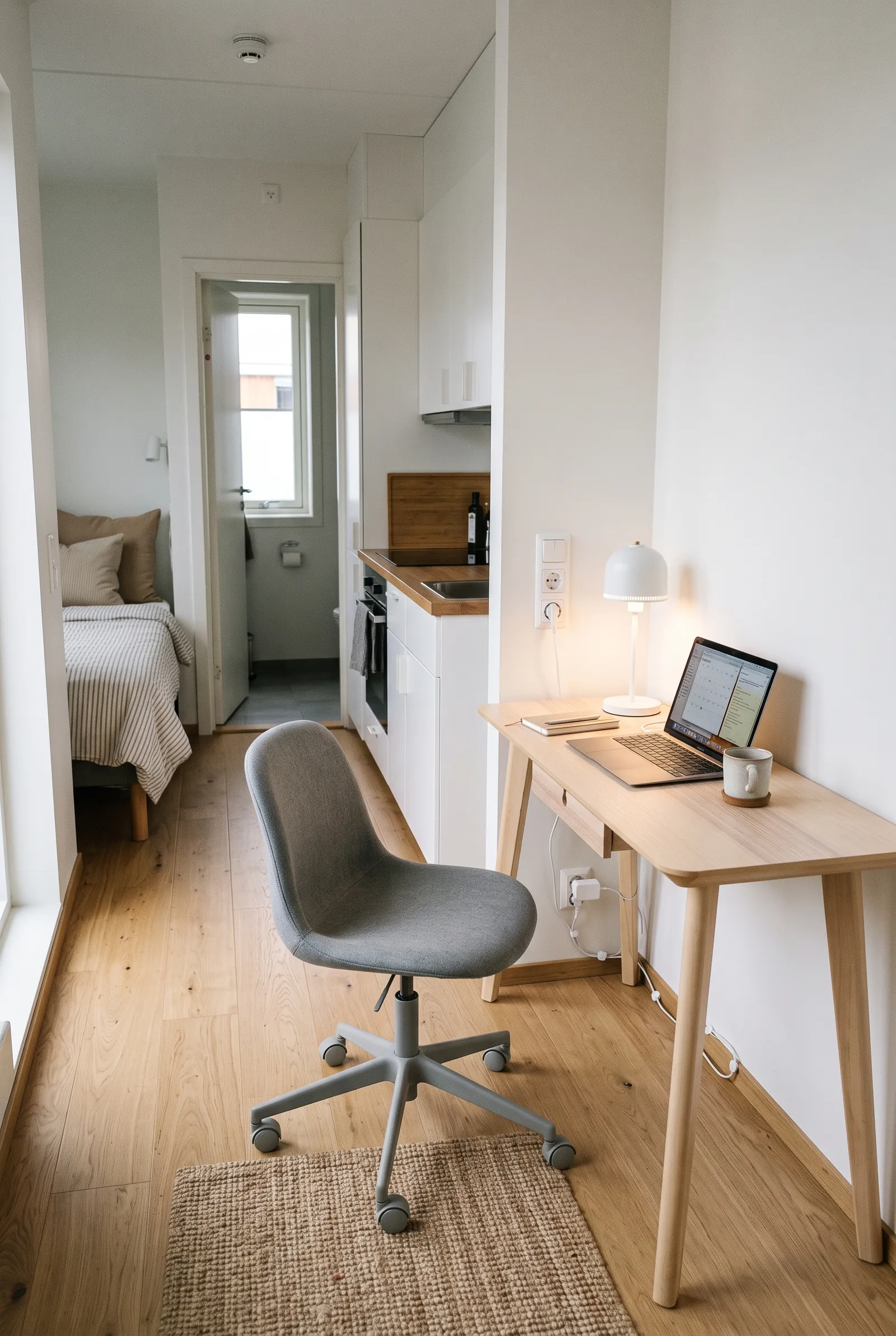
A desk near a usable outlet can keep power cords off the floor and away from the room’s walking line. Position it so the outlet remains accessible without moving the desk. Use the desk’s own cable tray or clips to keep wires behind the top, away from chair wheels and feet.
Do not run a loose extension cord across the only route to the kitchen, bed, or bathroom. Check the power needs and safety instructions of your equipment and any power strip. A slightly different desk position may be better than an otherwise attractive spot that requires a cable stretched across the apartment.
12. Face a Simple Wall for Calls and an Easier Shutdown
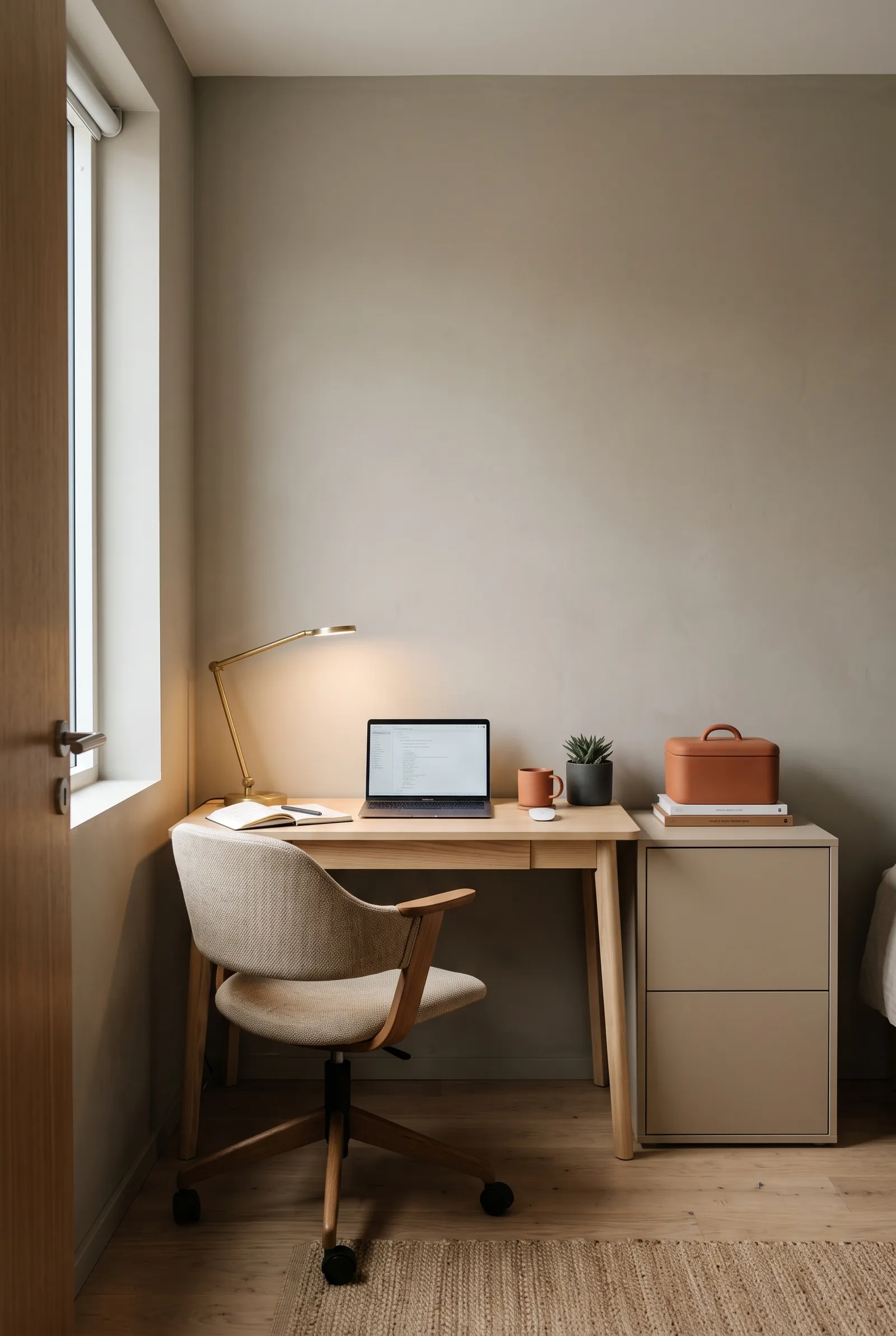
If you take video calls in the same room where you sleep, orient the desk so the camera faces a calm, existing wall rather than directly toward the bed or an open entry. That reduces the need to rearrange furniture before every call. Keep the screen out of the direct window glare and add a task lamp that lights the work surface without shining into the camera.
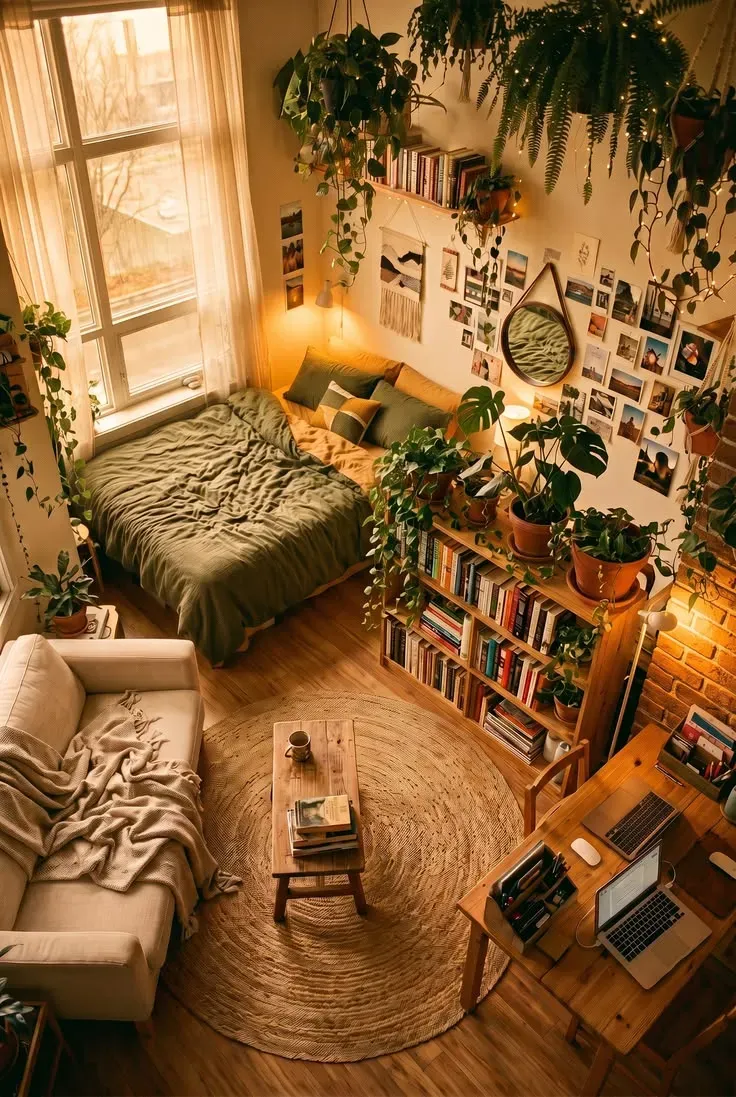
At the end of the day, put the laptop and papers into one reachable closed box or drawer and switch off the task light. This is a small boundary in a room without walls, but it works only if the desk, chair, doors, and main path remain usable in both work and evening positions. For ideas centered on atmosphere, the cozy studio apartment home office article explores that side of the space.
Final Thoughts
A studio workspace should be designed around a seated person and a working day, not just an empty corner. Decide how often you work, what must fit on the desk, and whether the chair and cords leave the room easy to cross. Then choose a wall, window edge, alcove, shared table, or fold-down surface that makes that routine realistic.
More Studio Apartment Ideas
 |  |  |
|---|---|---|
Studio Offices | Studio Dining | Studio Layouts |