In a studio apartment, the sleeping area shares air, light, and sound with the kitchen, desk, sofa, and entrance. A bright monitor may face the bed; a streetlight may shine through the one window; the only route to the bathroom may pass the bedside. Making the room easier to rest in calls for small changes to the whole evening environment.
This guide focuses on light, sound, airflow, and the transition from daytime use to sleep. It does not require moving the bed behind a divider. If the main issue is where the bed physically fits, start with the studio apartment bed placement ideas Persistent sleep problems deserve a conversation with a health professional.
1. Check the Room From the Bed at Your Actual Bedtime
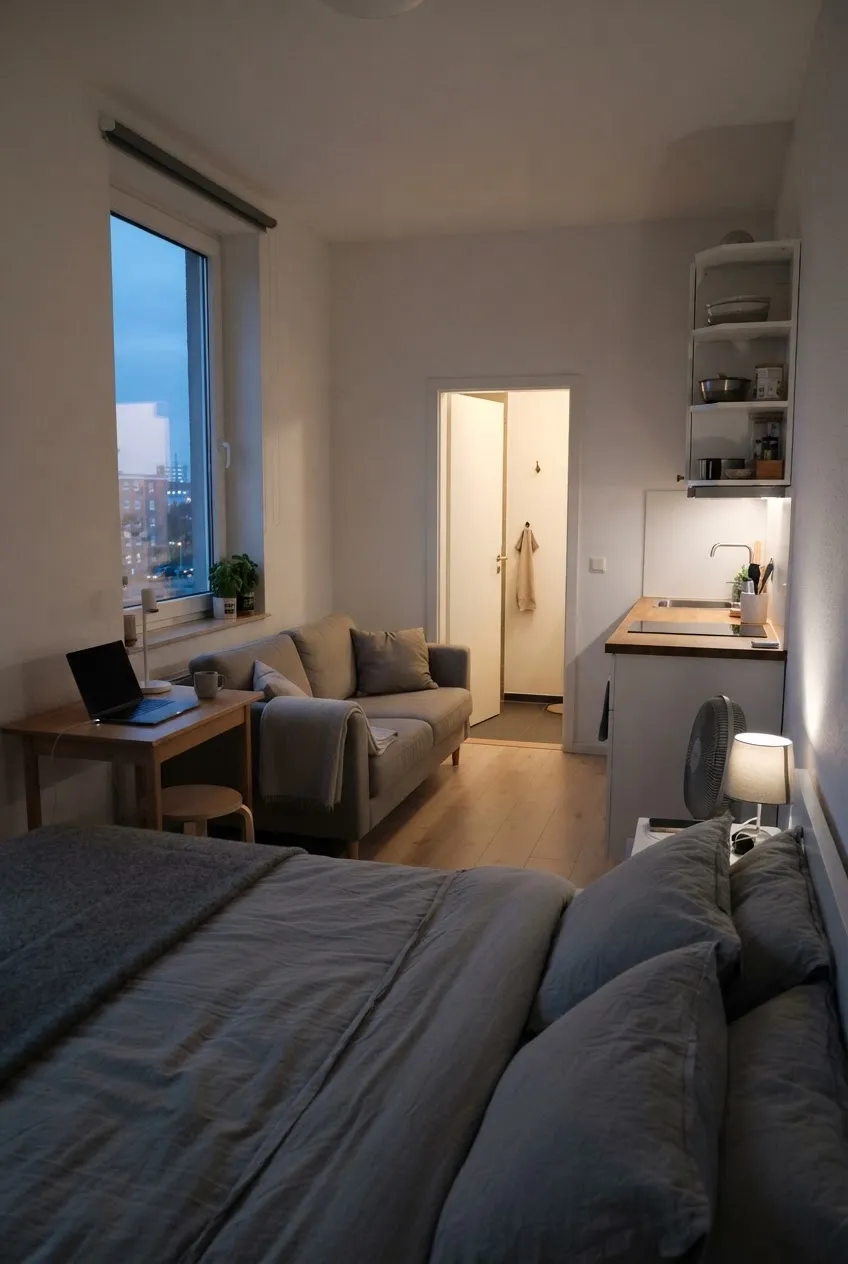
Lie down at the time you usually try to sleep and notice what reaches your eyes and ears. Look for the window, a charging light, the desk screen, the kitchen appliance display, traffic sound, and a fan that blows directly at the pillow. Then walk the route to the bathroom with the main light off.
Fix the disturbance you notice most often first. A lamp can be moved, a curtain adjusted, or an alert silenced without redesigning the apartment. Recheck the room after each change so you know what actually helped and what merely looked good during the day.
2. Block Window Light Without Blocking the Window
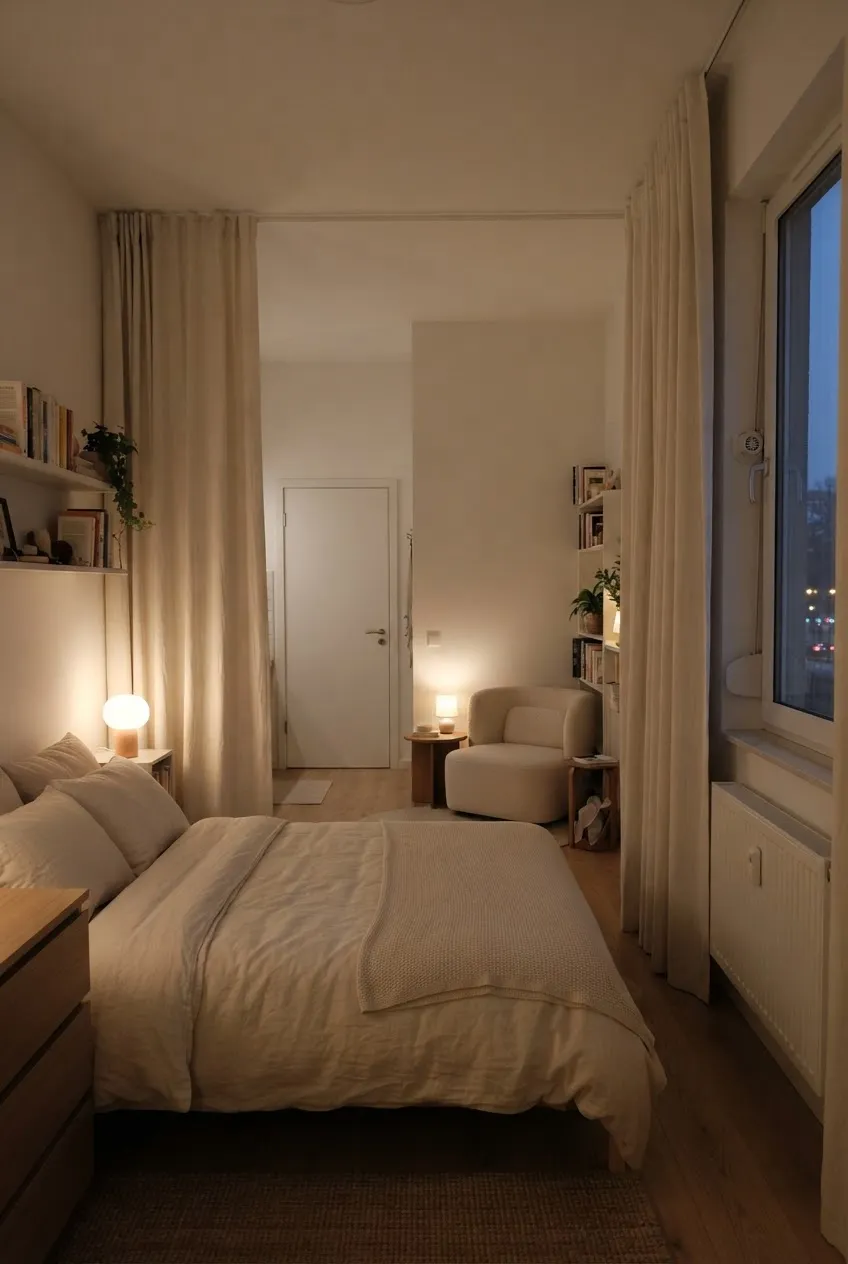
If streetlights or early sunlight reach the pillow, use a window covering that closes fully enough for the bed’s sightline. Measure the glass, frame, and available rod or track, then check for gaps at the sides and top. A curtain may need enough width to cover the window when closed, not just to look full when open.
Keep the window handle, ventilation, and any heater beneath it usable; follow the curtain and mounting hardware instructions. If a suitable rod or track is already available, browse blackout curtains on Amazon and compare panel width, length, fabric care, and how the panels meet in the middle. The dark studio apartment guide covers daylight problems; this choice addresses unwanted light while resting.
3. Remove Small Glows at Eye Level
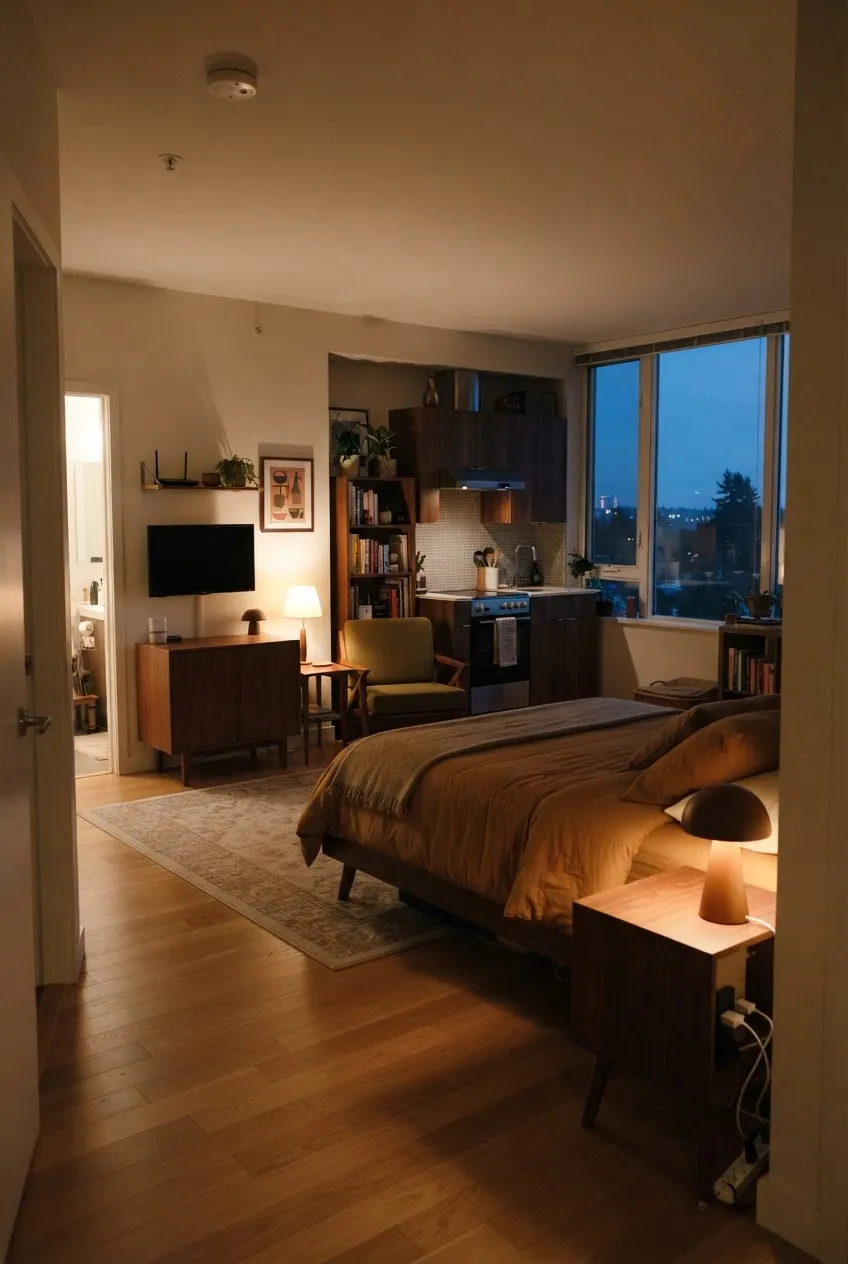
A bright clock, charger, router, or appliance display can stand out once the room is dark. Use a device’s dimming or display-off setting where available, or turn a movable device so its light does not face the bed. Shut down screens you are finished using instead of leaving them lit across the room.
Do not cover smoke or carbon-monoxide alarms, required warning indicators, vents, or hot electronics. Keep equipment accessible for normal use. The goal is to remove avoidable points of light from the pillow view, not to hide every device in an unsafe way.
4. Use an Eye Mask When the Window Cannot Be Changed
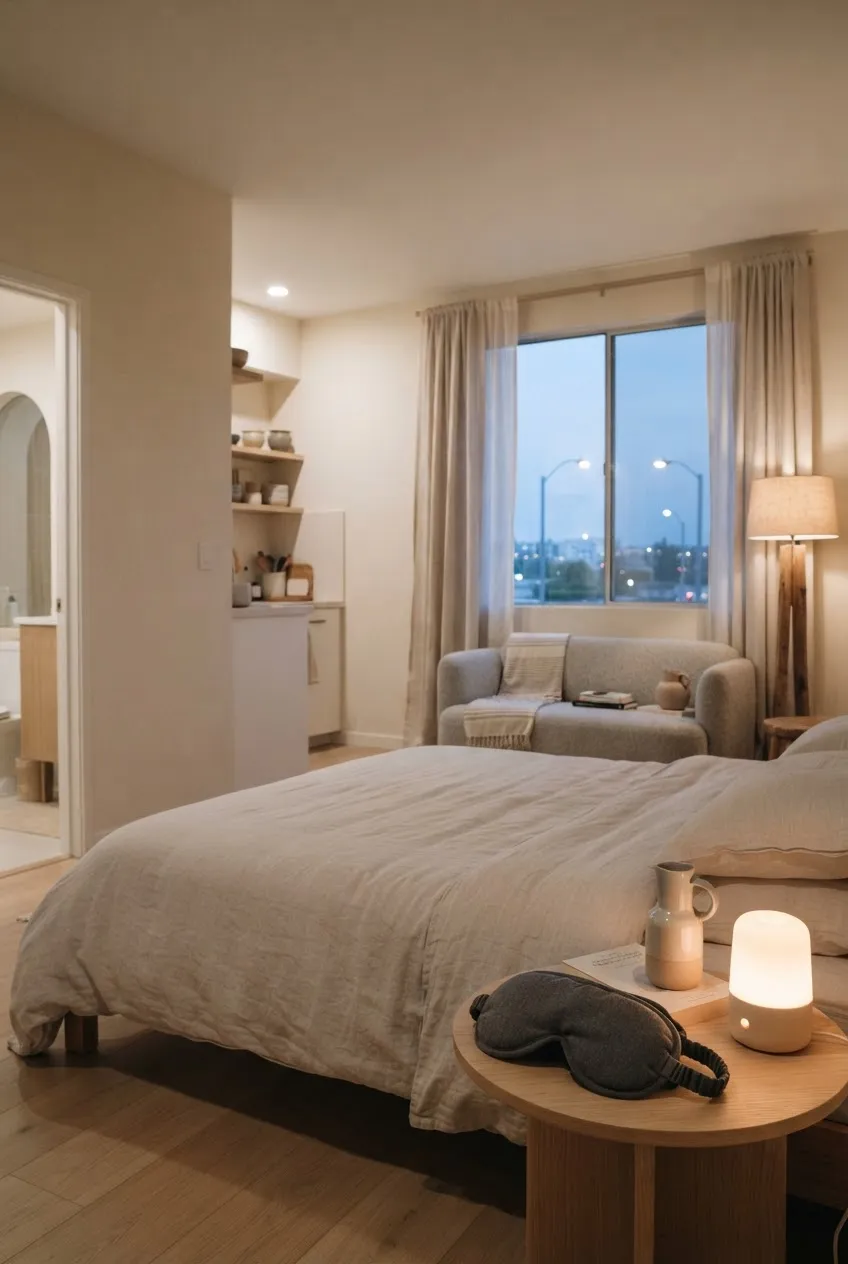
Some renters cannot replace existing window coverings, and one window may serve both the bed and the living area. A comfortable eye mask is a portable option when a curtain cannot solve the remaining glow. Try the fit while lying in your normal position; it should block light without pressing uncomfortably on your eyes or shifting when you turn.
Choose washable material and a strap you can adjust. If you need this portable layer, browse sleep eye masks on Amazon and compare fit, light leakage around the nose, fabric care, and strap design. An eye mask is a personal preference, so keep the room’s safe walking route and necessary night light in mind.
5. Keep a Low Light for the Bathroom Route
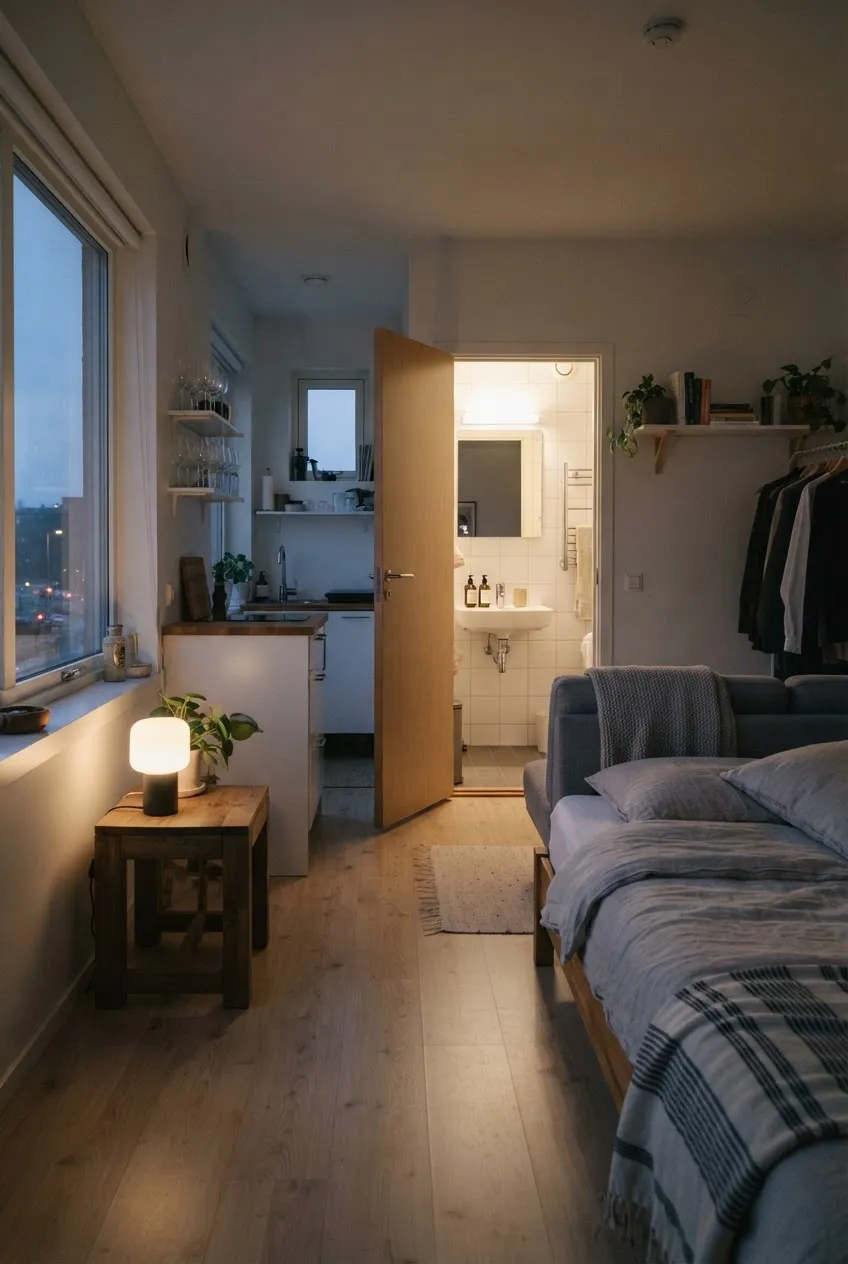
A very dark bed area can still have a safely visible path to the bathroom. Put a small, low-level light on an existing stable surface or use a suitable existing fixture with a separate switch. Aim it toward the floor or route, away from the pillow.
Test the walk with the main lamp off and the bed made as usual. You should see the edges of furniture and the door handle without switching on a bright overhead light. Cords must stay off the floor path, and the bathroom door must still open fully.
6. Reduce Outdoor Noise Where It Enters
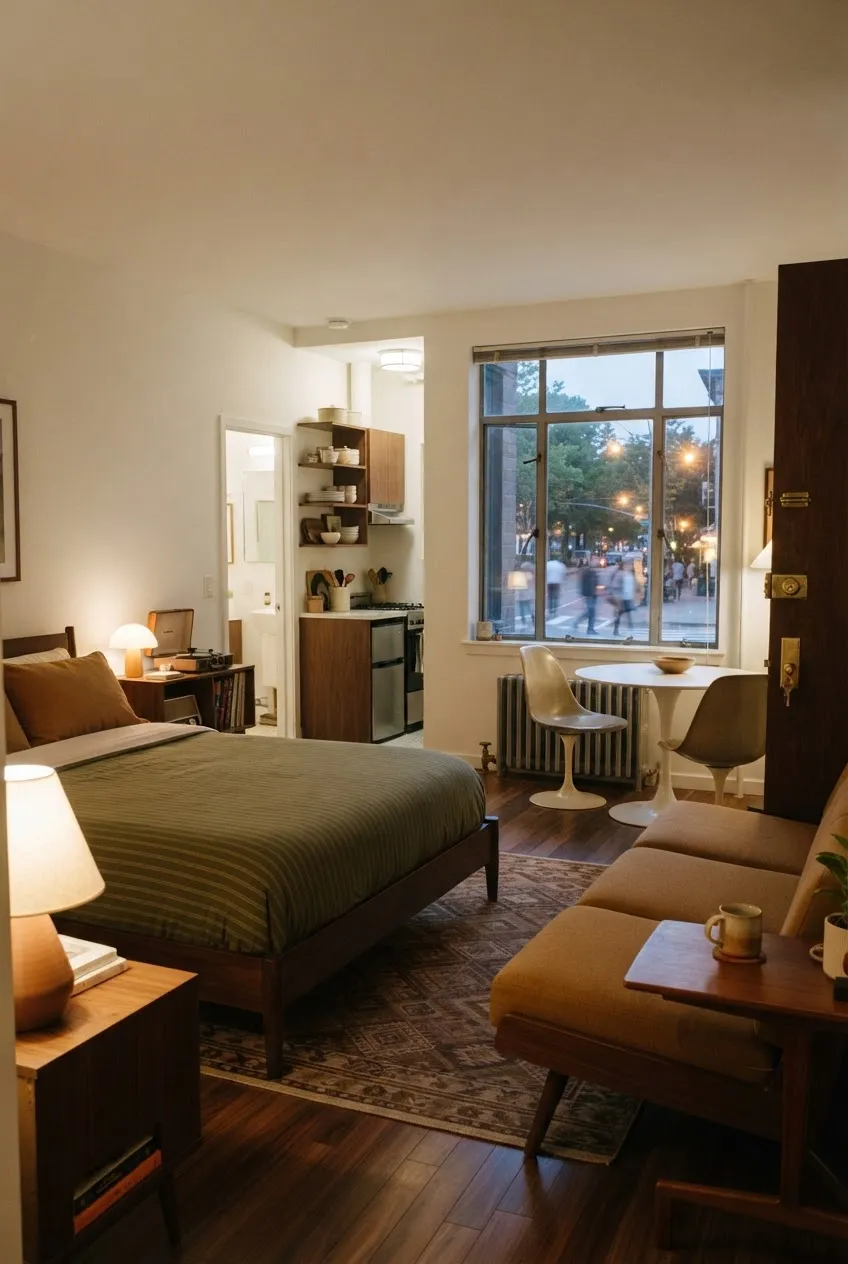
Stand by the window and entry door while typical evening noise is present. Check whether a window is fully latched and whether an existing curtain or permitted seal sits correctly. A loose sash or a gap around a door can make intermittent street or hallway sounds more noticeable.
Use only adjustments allowed by your lease and the product maker. Never seal required ventilation, obstruct an exit, or cover a heater. The aim is to reduce a specific leak, not to pretend a small apartment can be made soundproof with one strip of material.
7. Consider Earplugs for Noise You Cannot Control
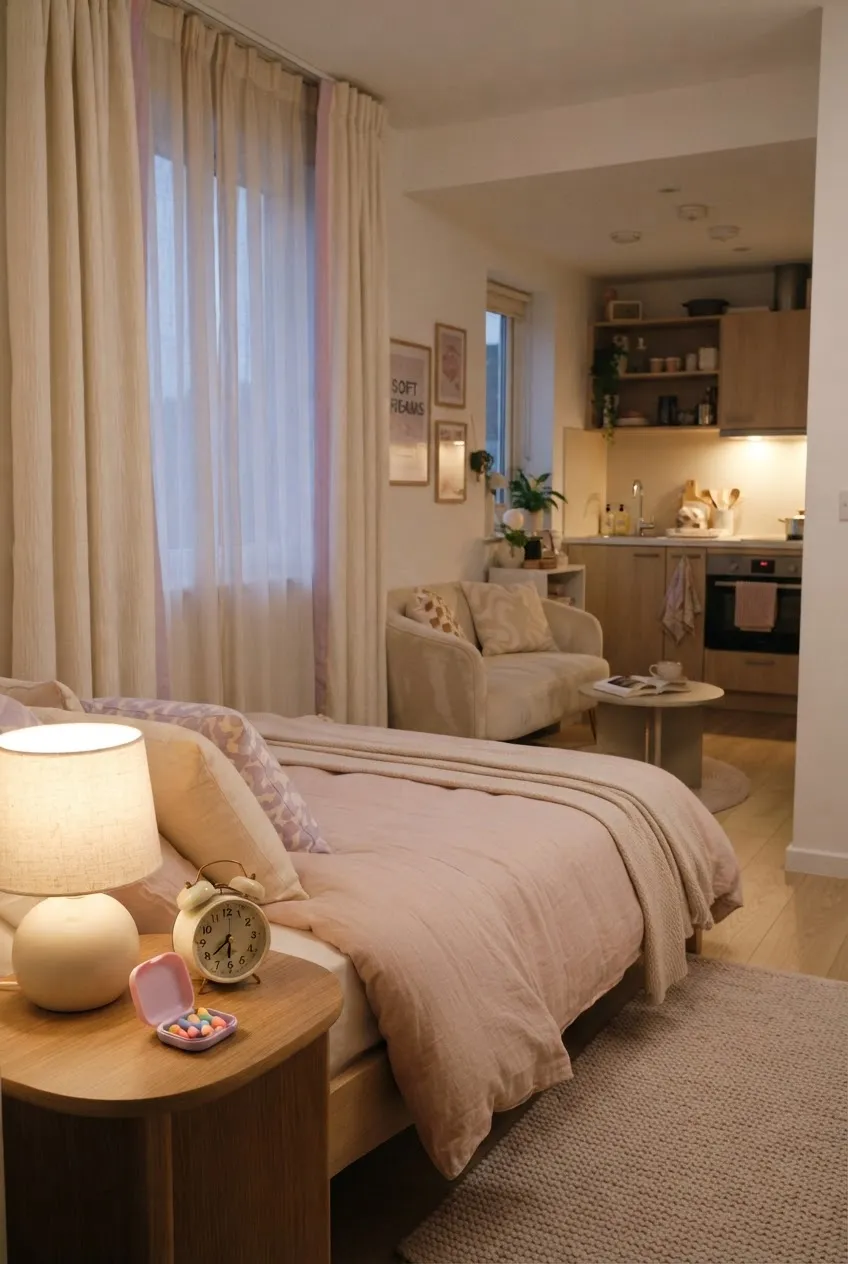
If exterior or neighbor noise remains, some people prefer soft earplugs to another device making sound. Try them during a short rest first; fit and comfort matter more than a package’s biggest noise-reduction claim. Follow the maker’s hygiene, insertion, and replacement directions.
If this approach suits you, browse earplugs for sleeping on Amazon and compare size, material, care, and comfort while lying on your side. Make sure you can still respond to alarms or other sounds you need to hear. Earplugs are an option, not a substitute for addressing a serious noise or safety problem.
8. Soften Hard Reflections With Furnishings Already Needed
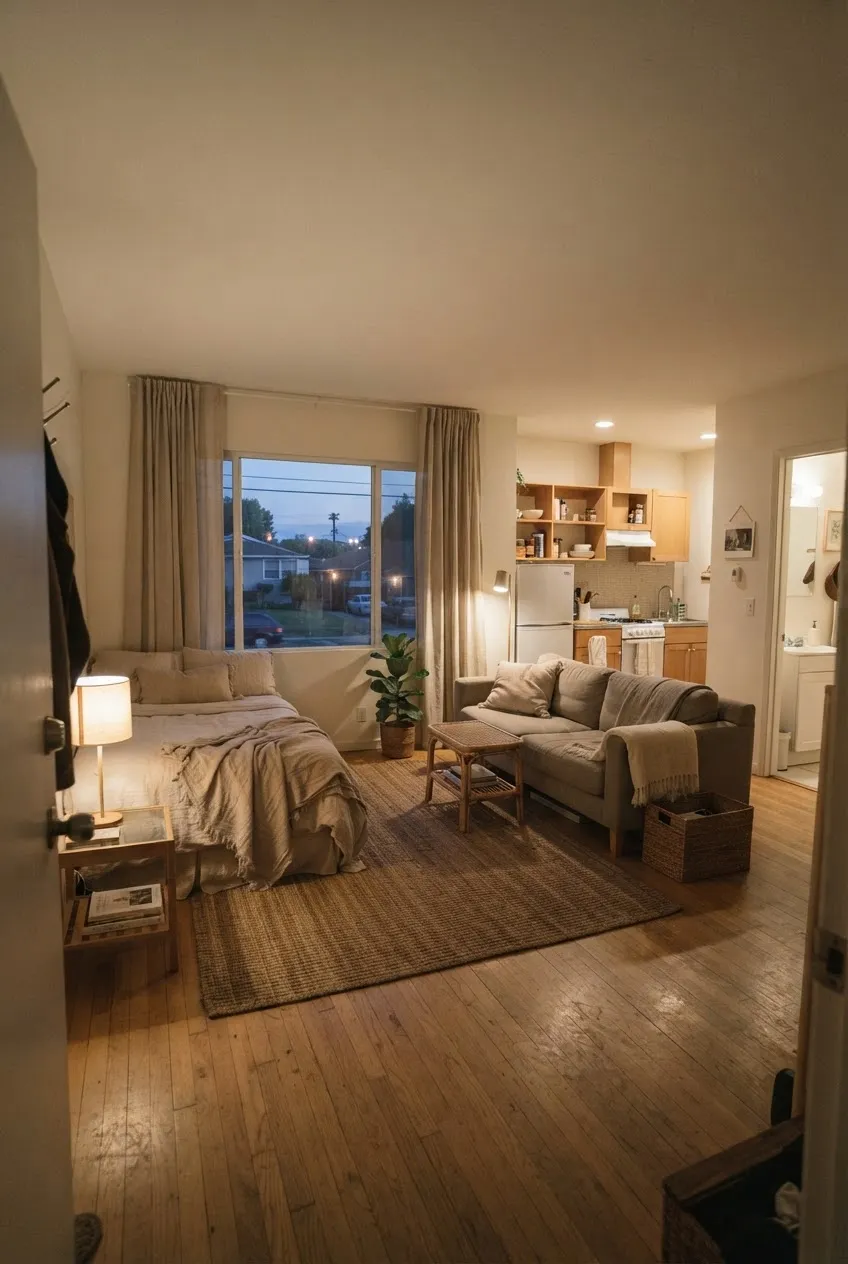
Hard floors and bare windows can make everyday indoor sound feel sharper. A properly sized rug near the bed or living area and fabric already needed at the window may make the room feel less echoey. These pieces should also serve a real use, rather than becoming another layer of clutter.
Keep rug edges flat and clear of the only route to the bathroom. Do not drape thick fabric over vents, radiators, or electrical equipment. Soft furnishings can change how sound behaves inside the room; they do not block all sound from neighbors.
9. Agree on a Quieter Shared Evening Zone
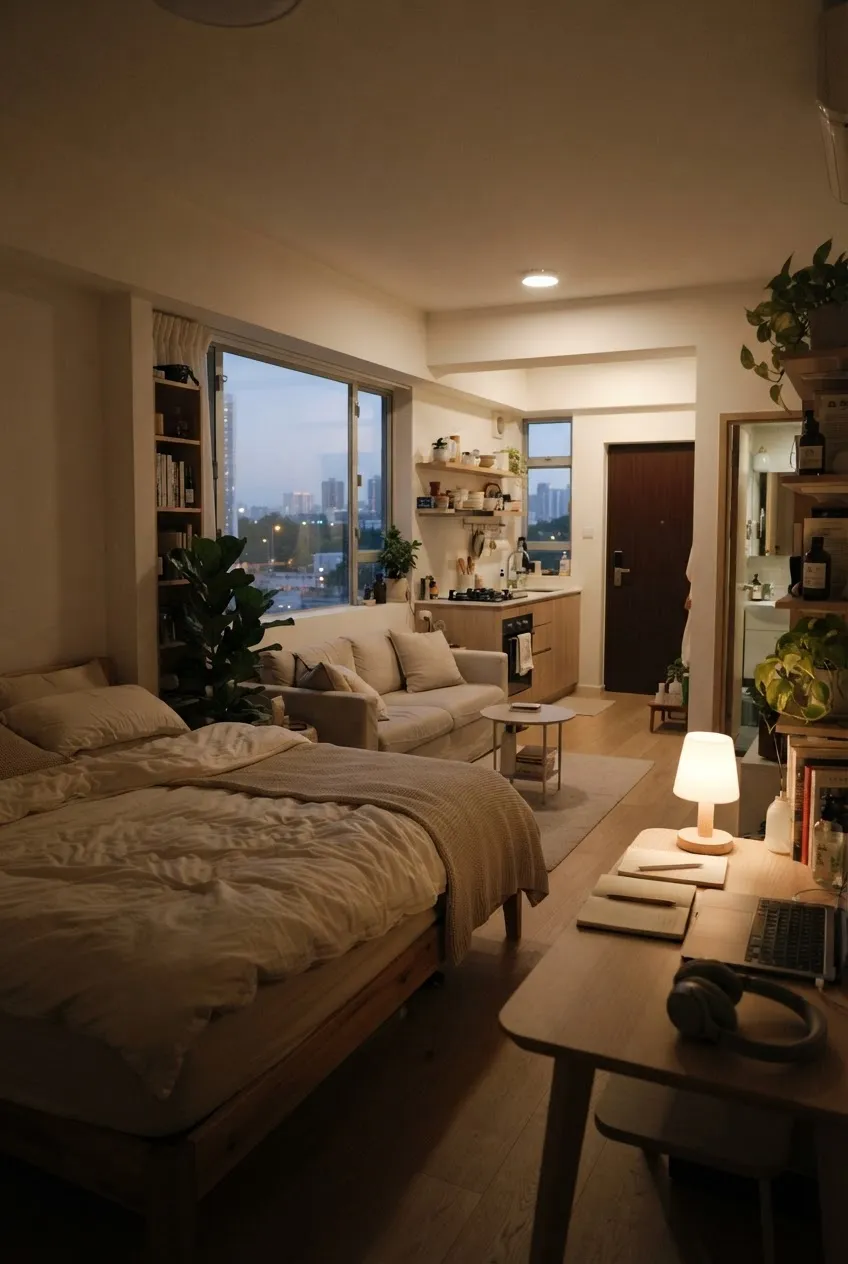
If two people use the same studio on different schedules, the bed will be affected by cooking, video calls, or media sound even when it is on the opposite wall. Agree on which lights and activities remain in use after one person goes to bed. Headphones and a desk lamp aimed at the work surface may be more practical than trying to divide the room physically.
Keep the other person’s route to the kitchen and bathroom open. Avoid a setup that requires them to climb around the bed or move furniture in the dark. The studio privacy ideas address visual separation; this step is about nighttime behavior in a shared open room.
10. Manage Airflow Without a Draft on the Pillow
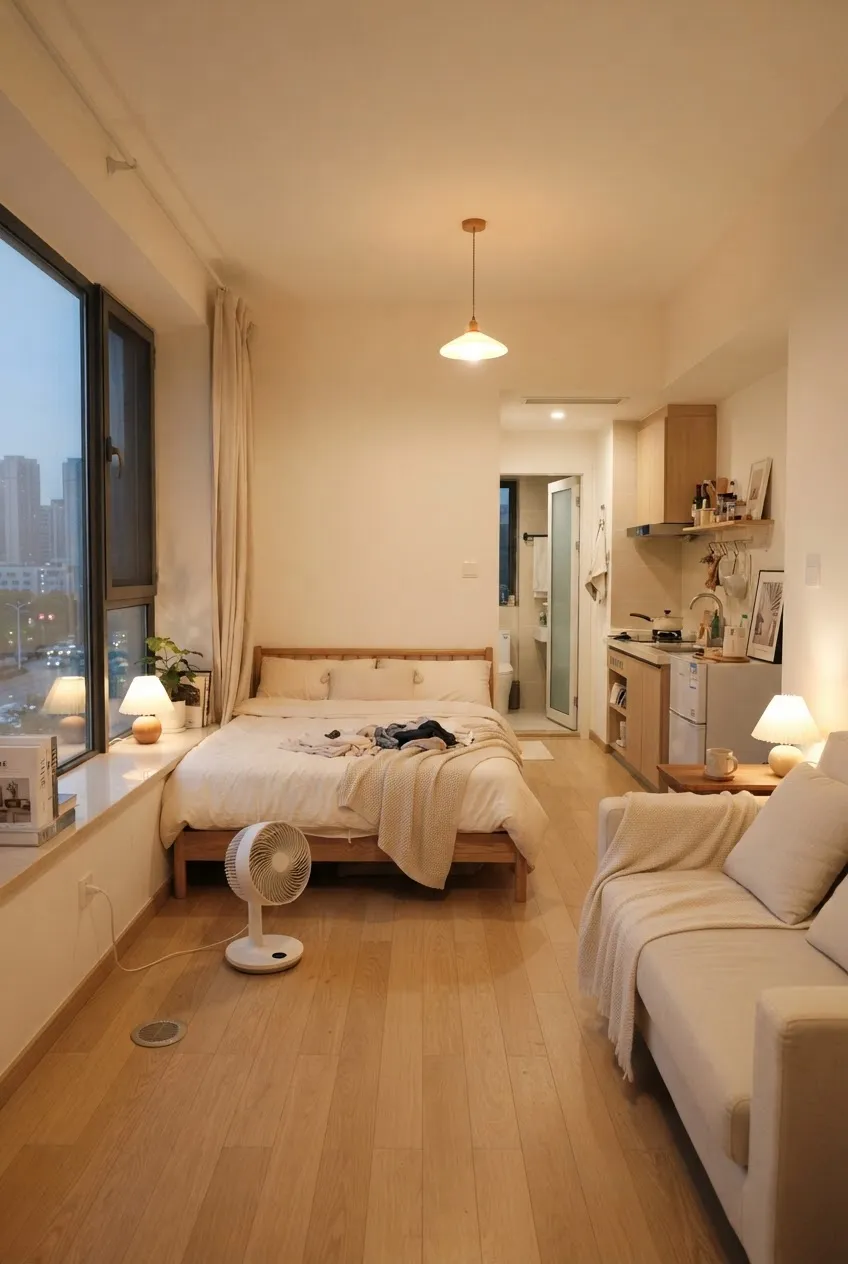
Notice whether the bed is directly in the path of a vent, window draft, or fan. Adjust a movable fan’s direction or the bedding before moving large furniture. Use the home’s ventilation as intended, and keep vents and heaters clear so air can circulate.
Check the room while the equipment is actually running, not only on a still afternoon. A cooler-feeling room should still be comfortable for the people sleeping there. Follow the manufacturer’s clearance and electrical guidance for fans or portable equipment; never run a cord across the walking route.
11. Layer Bedding So You Can Adjust Through the Night
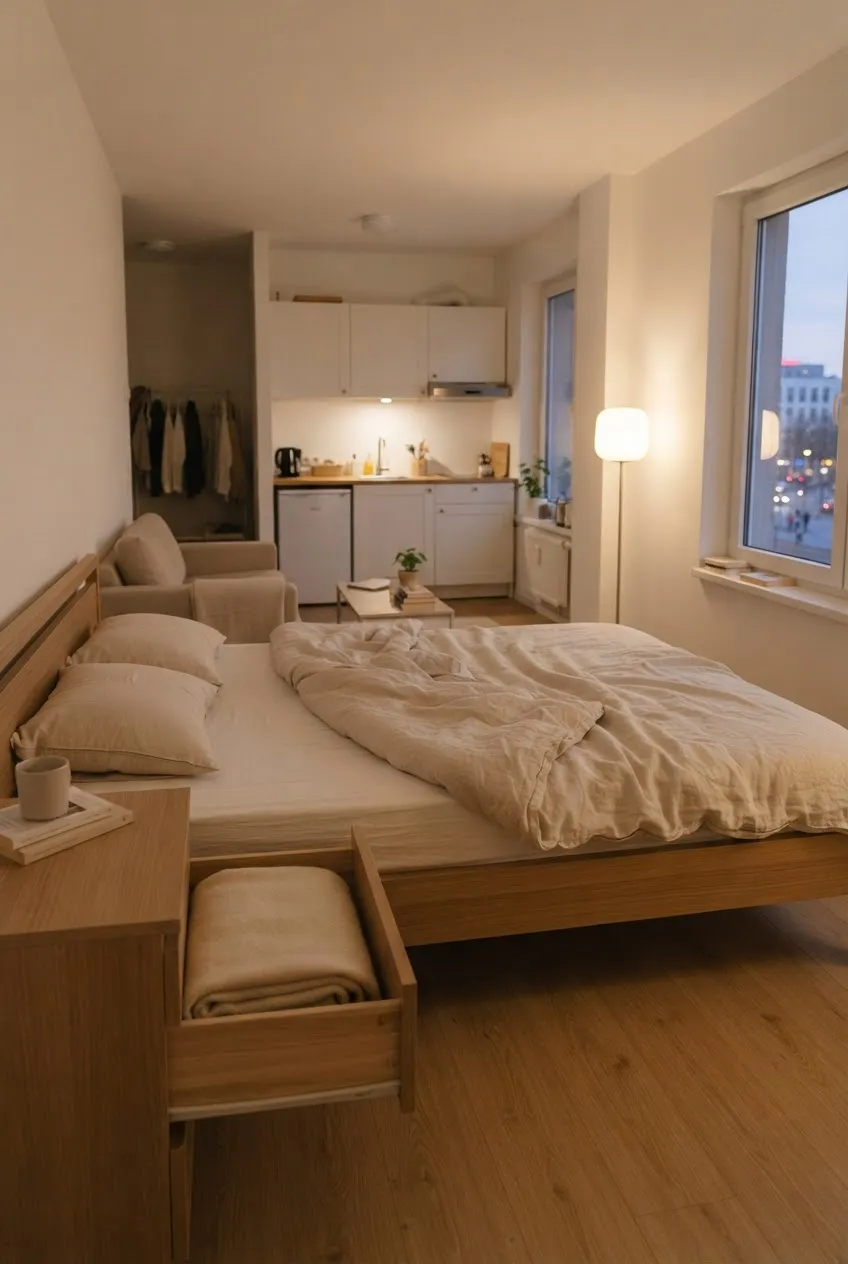
One thick blanket may be too warm at the start of the night and too cold after a window is opened. A sheet and an easy-to-move blanket or duvet layer let you adjust without changing the whole room. Choose fabrics you can clean and that feel comfortable against your skin.
Keep spare layers within reach in a bedside drawer or nearby closed bin, rather than piling them onto the bed. Leave the bed edge, under-bed storage, and bathroom route easy to use. The goal is flexible comfort, not a decorative stack that must be moved every night.
12. Give Daytime Work a Closing Routine
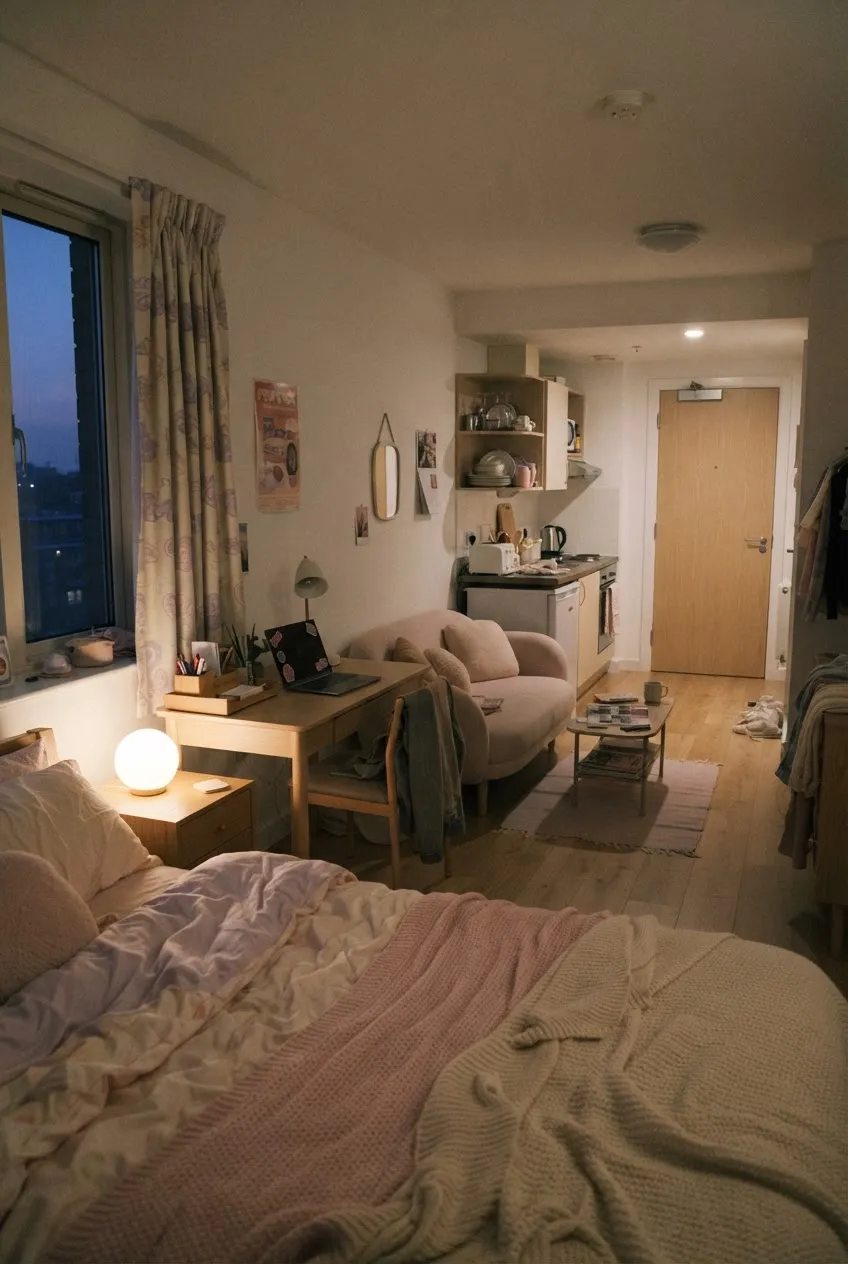
When the desk, dining table, and bed share one view, unfinished work can remain visible from the pillow. At the end of the day, close the laptop, put papers into a drawer or tray, and switch off task lighting. Leave the table ready for tomorrow rather than moving the entire workstation.
Take a final short walk: the route to the bathroom is clear, the night light is reachable, the window covering works, and devices are set for the night. A repeatable reset makes the bed area feel distinct even though no wall separates it from the rest of the studio.
Final Thoughts
A sleep-friendly studio is an open room that changes mode at night. Check the view from the pillow, control avoidable light, respond to the noise you actually hear, and keep the air and bedding comfortable. Preserve a safe route to the bathroom and keep shared activities considerate. Small, testable changes are more useful than building a sleeping nook that looks private but still feels bright, noisy, or stuffy.
More Studio Apartment Ideas
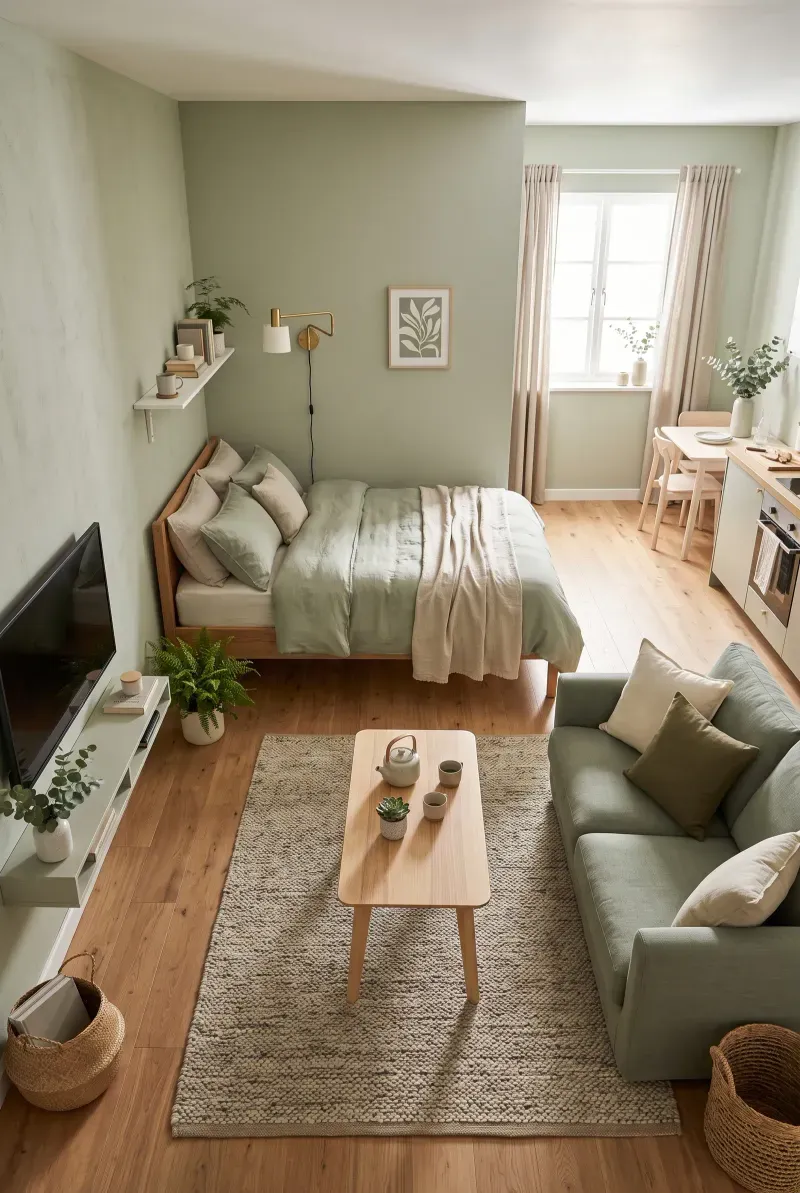 | 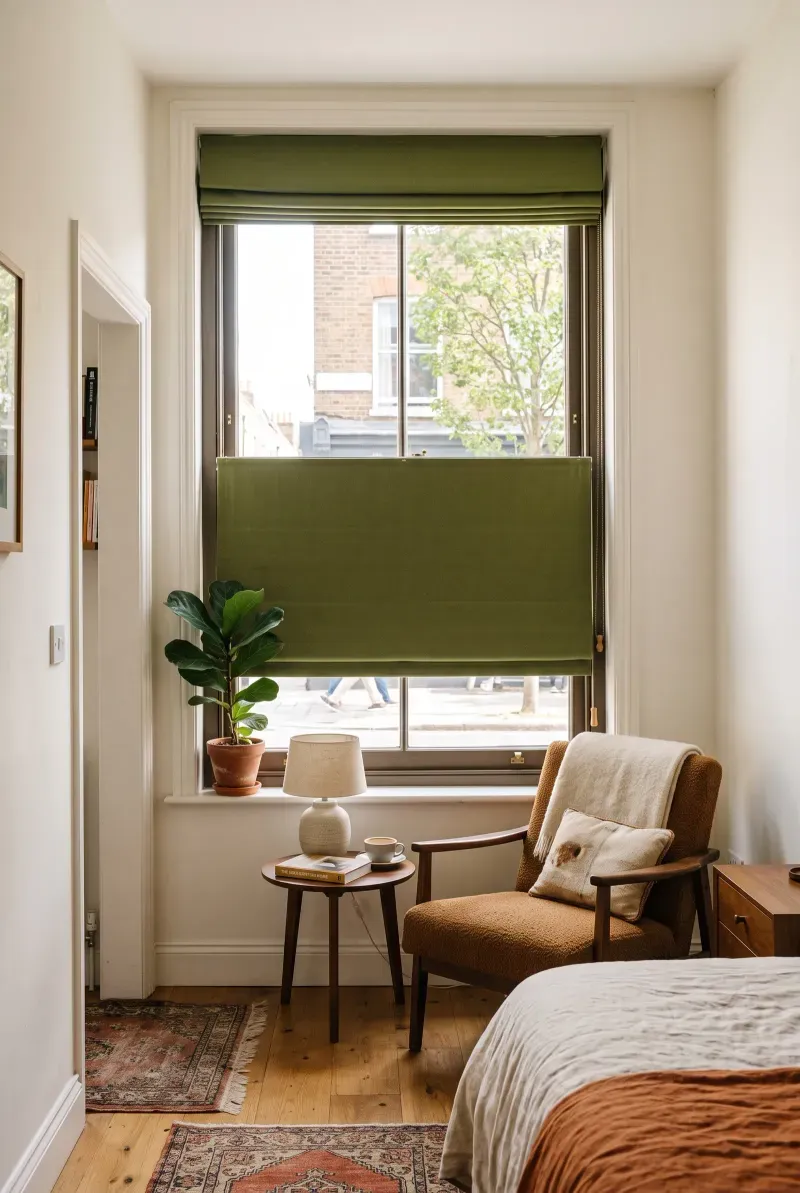 | 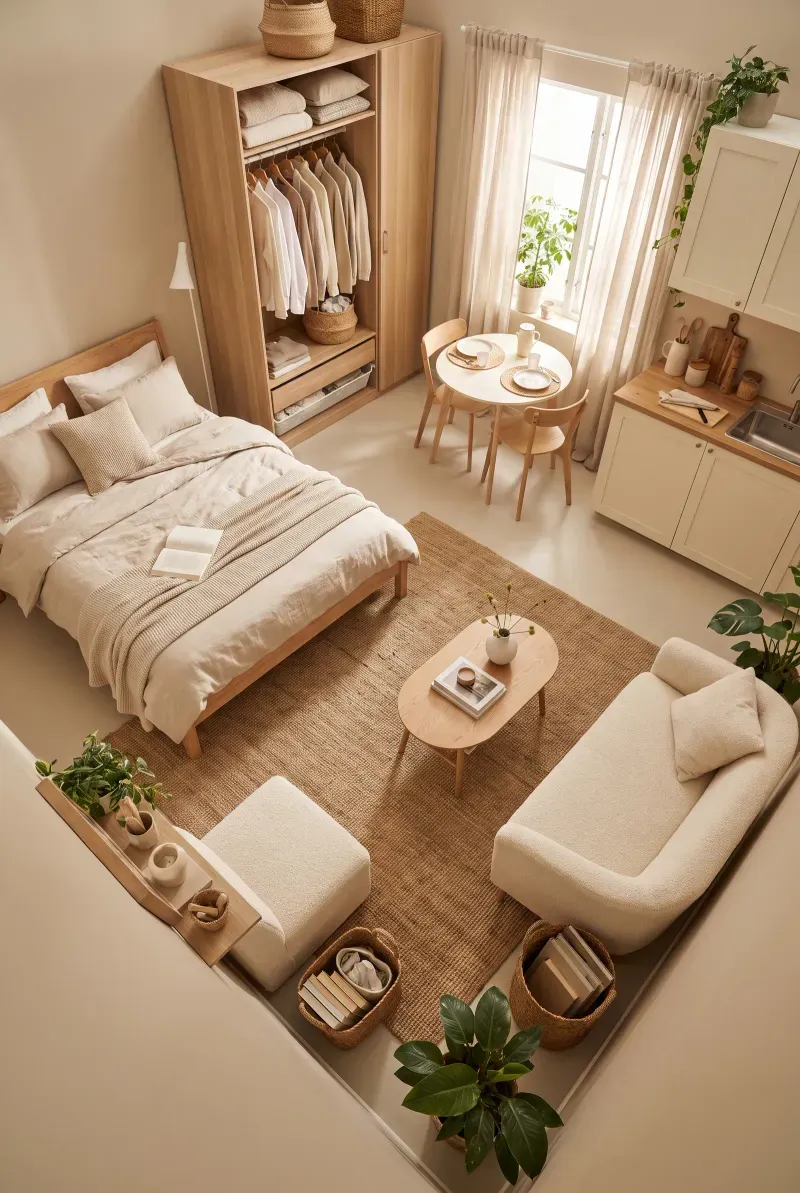 |
|---|---|---|
Studio Beds  | Studio Privacy | Cozy Studios |