In a studio apartment, privacy is rarely an all-or-nothing question. You may be comfortable seeing your bed from the sofa but dislike seeing it the instant you open the front door. You might need daylight during the day, yet want to keep people outside from looking in at night. Guests, video calls, getting dressed, and conversation all create different privacy needs.
Start by standing at the entrance, sitting where a visitor would sit, and looking toward each window. Notice what each viewpoint reveals. Then solve the view or activity that bothers you most. These ideas focus on sightlines and daily habits; if you want a comparison of physical barriers, see the studio apartment room divider ideas.
1. Move the Bed Out of the Front Door’s Direct View
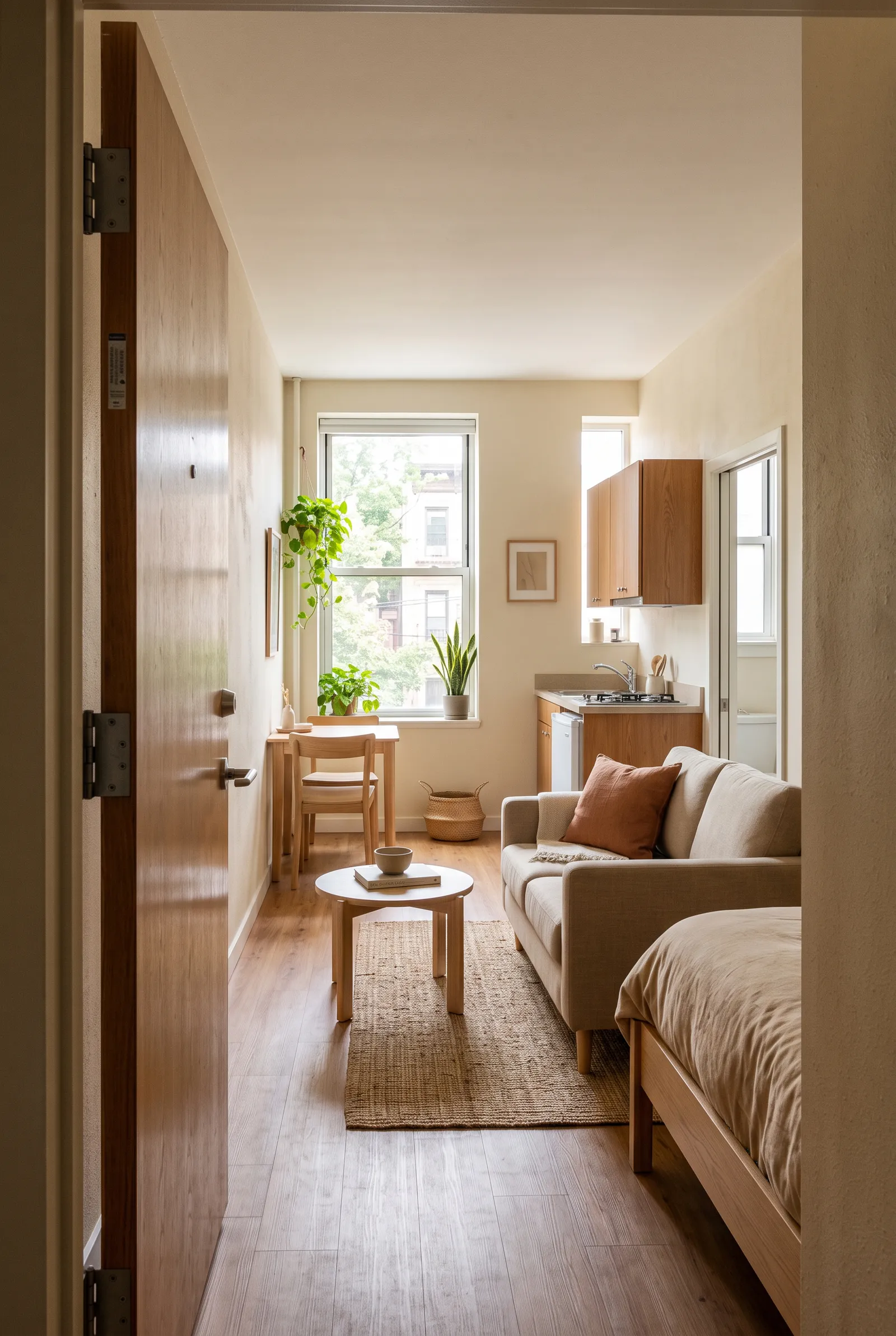
Stand in the open doorway and look straight ahead. If the first thing you see is your pillow, try shifting the bed along the same wall or turning it so the head of the bed is farther from that sightline. A modest change in orientation can make the entrance feel less like a bedroom without taking floor space for a new partition.
Keep the bathroom, kitchen, and main window accessible. Check that the front door can open fully and that the new bed position leaves a comfortable route through the room. For more options on where a bed can actually fit, see these studio apartment bed placement ideas.
2. Put the Pillow Side Away From the Guest Area
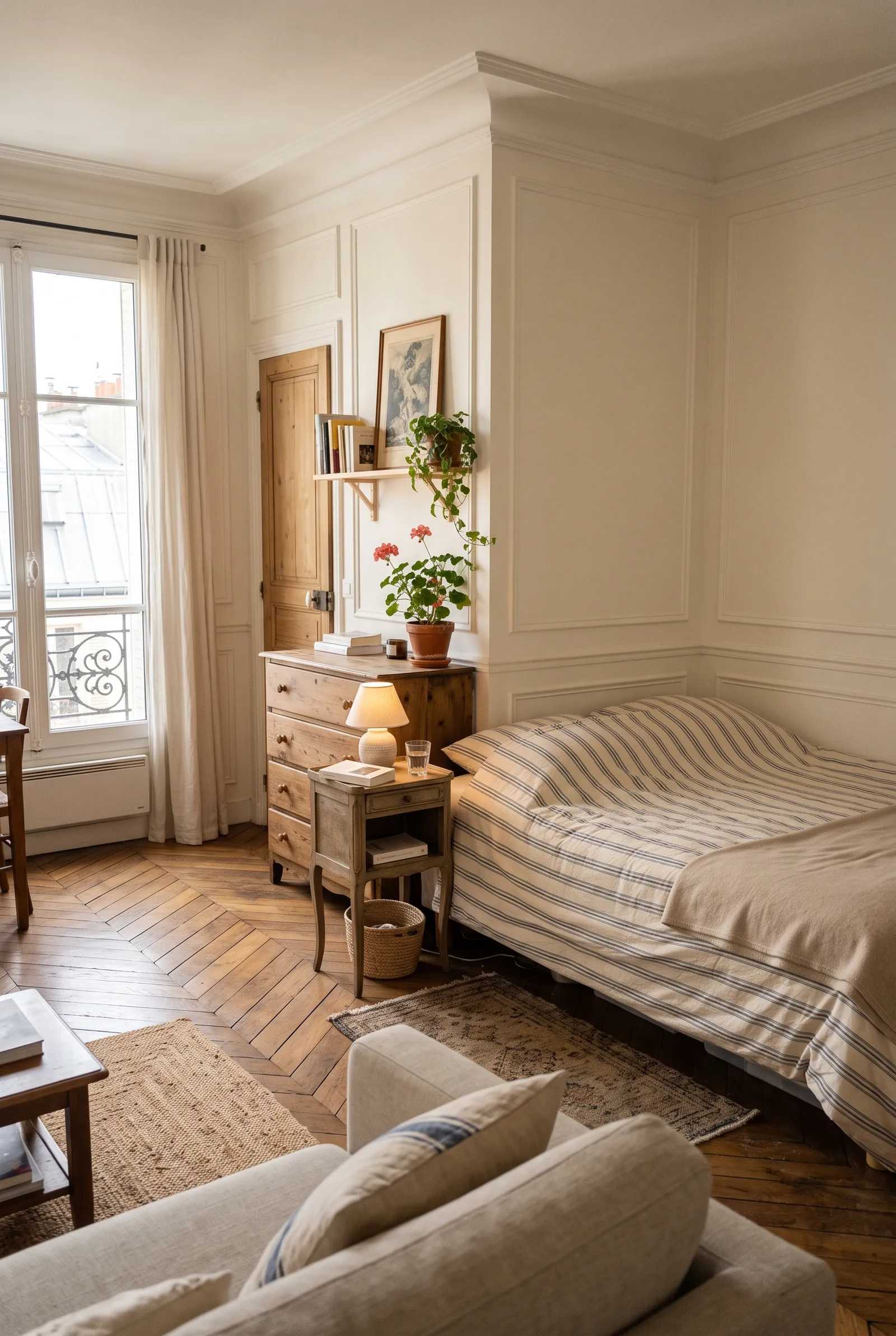
Sometimes the bed cannot move far, but you can change which side feels exposed. Place the headboard or pillow side toward a wall or quiet corner, with the foot of the bed nearer the shared living area. Visitors may still know the bed is there, but the most personal part of it is less prominent from the sofa.
Make sure the arrangement still lets you get in and out of bed easily. If two people sleep there, do not trade away necessary access on both sides solely for a tidier view.
3. Give Guests a Route That Skips the Bedside
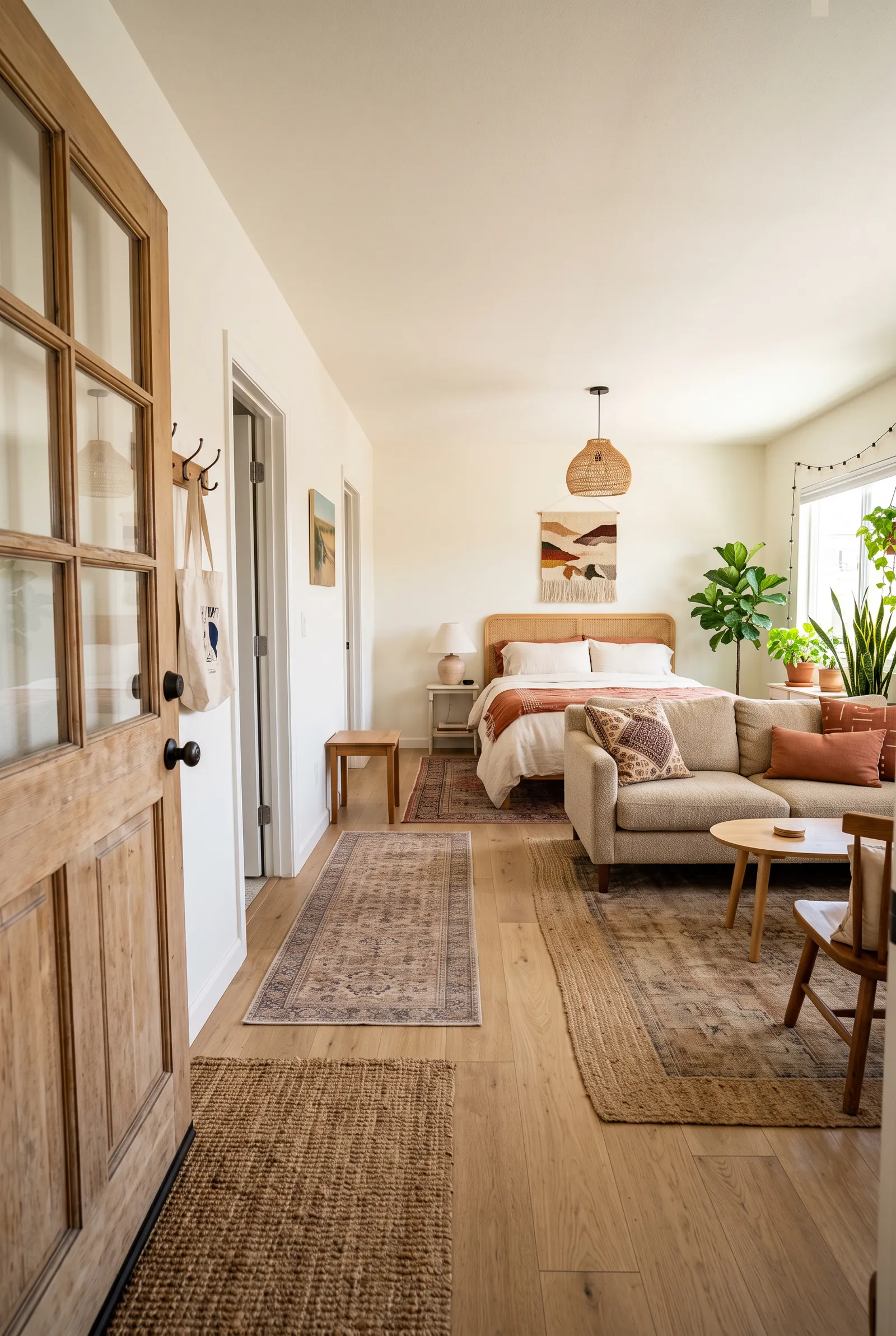
Privacy often disappears when a guest has to walk past the pillow to reach the only seat. Draw a simple route from the front door to the sofa or dining chair and keep that route on the living side of the room. Move a small table or chair before moving the bed if that is all it takes.
This also makes the apartment feel more welcoming: visitors immediately understand where to go. Leave the route free of baskets, trailing cords, and furniture corners, and preserve access to every door.
4. Aim the Main Seat Toward the Living Area
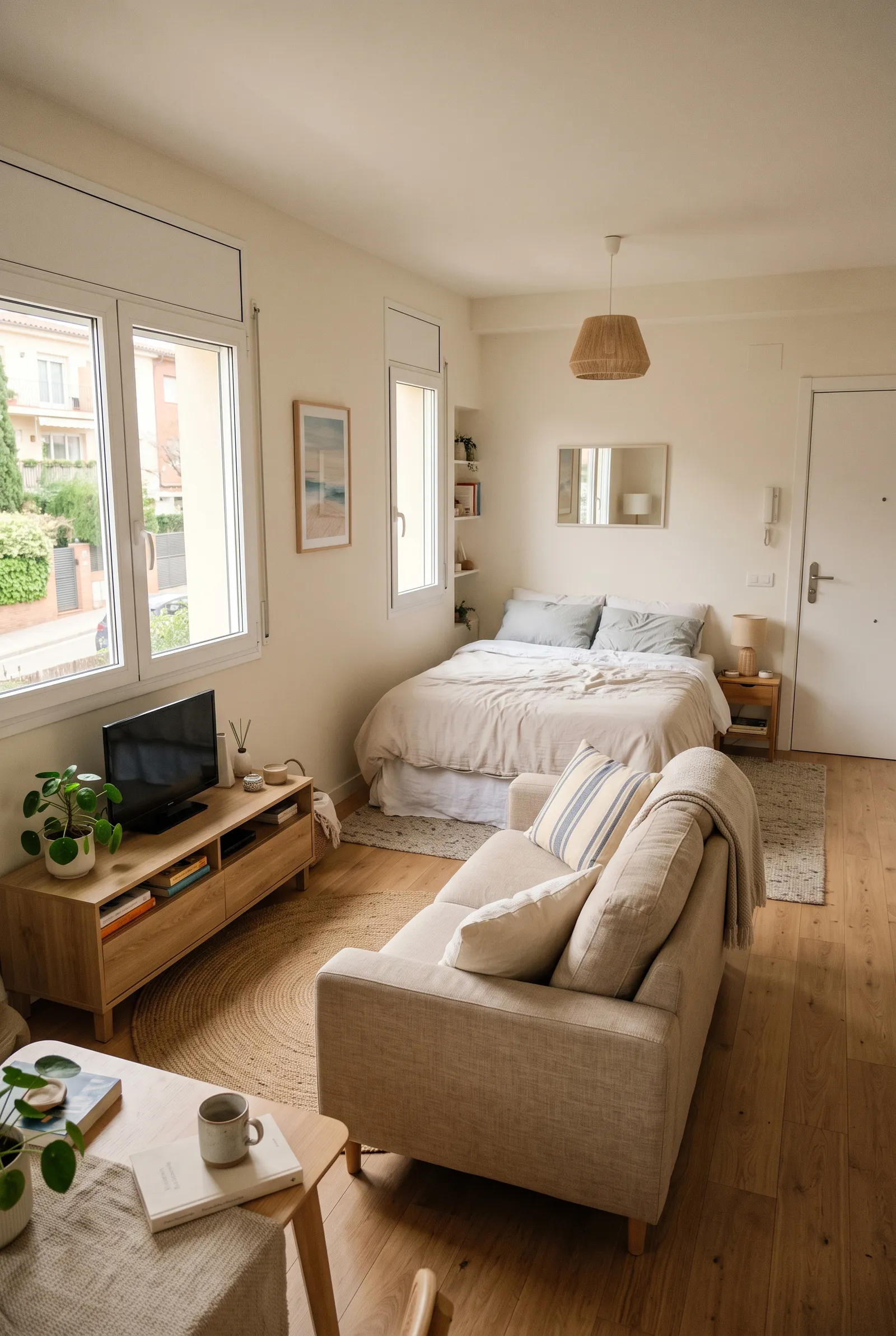
What people see while seated matters as much as what they see at the entrance. Angle the sofa or armchair toward a window, a low media unit, or a small conversation area instead of aiming it directly at the bed. A slight turn can make the bed peripheral rather than the backdrop to every visit.
Check the result from the actual seat, not just from above on a floor plan. Avoid blocking the route to the window or leaving a sofa so far from the wall that it squeezes the room’s only walkway.
5. Use Existing Closed Furniture to Interrupt One View
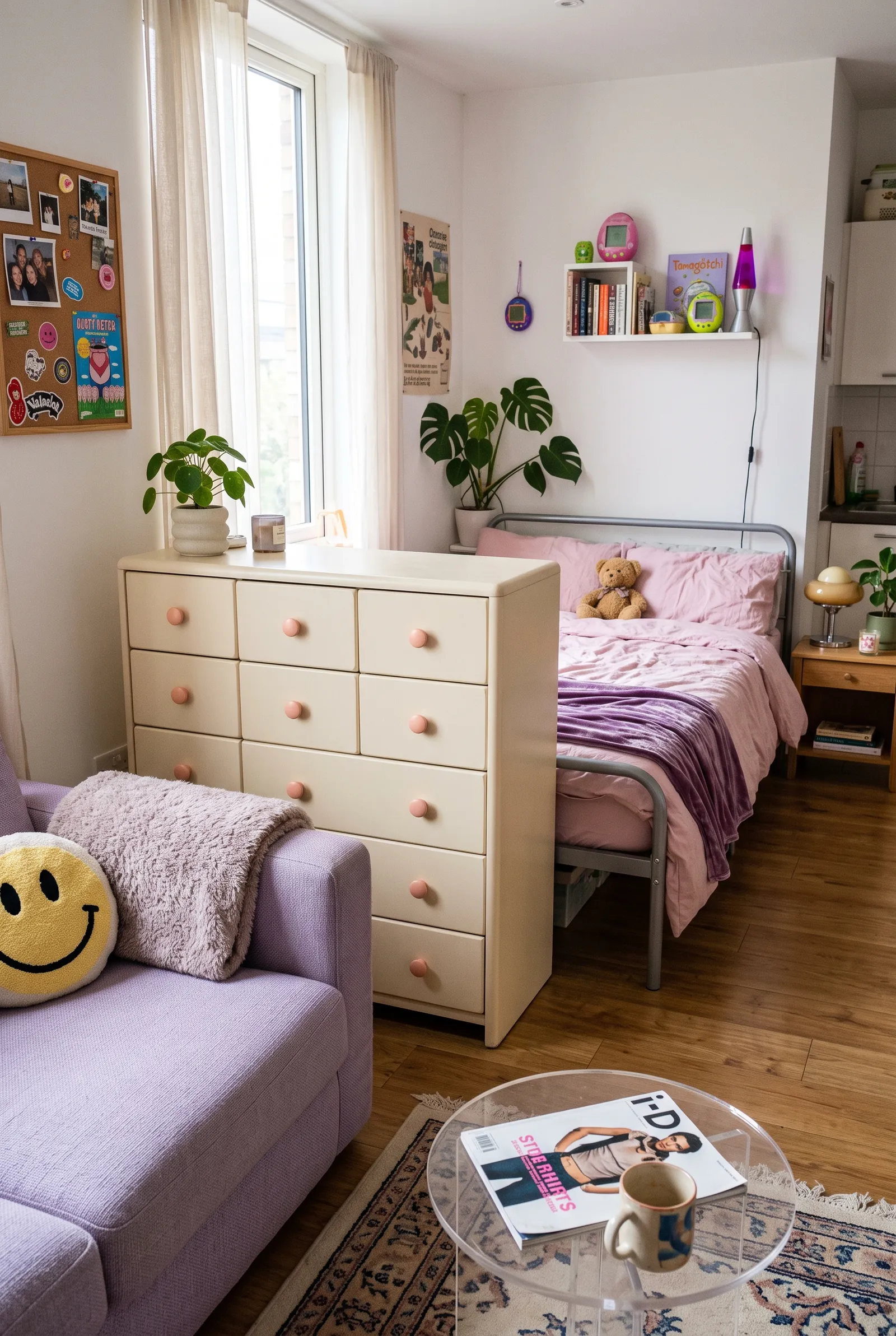
Before buying a divider, test whether a dresser or wardrobe you already need can sit between the guest seat and part of the bed. The goal is to interrupt one uncomfortable sightline, not hide the entire sleeping area. A medium-height piece may be enough when viewed from a seated position.
Keep drawers and wardrobe doors fully usable, and secure tall furniture as its manufacturer requires. Do not place a large cabinet where it blocks the apartment’s only source of daylight. If you are choosing among dedicated dividers, the room divider guide covers those options in more detail.
6. Screen the Street View Without Losing Daylight
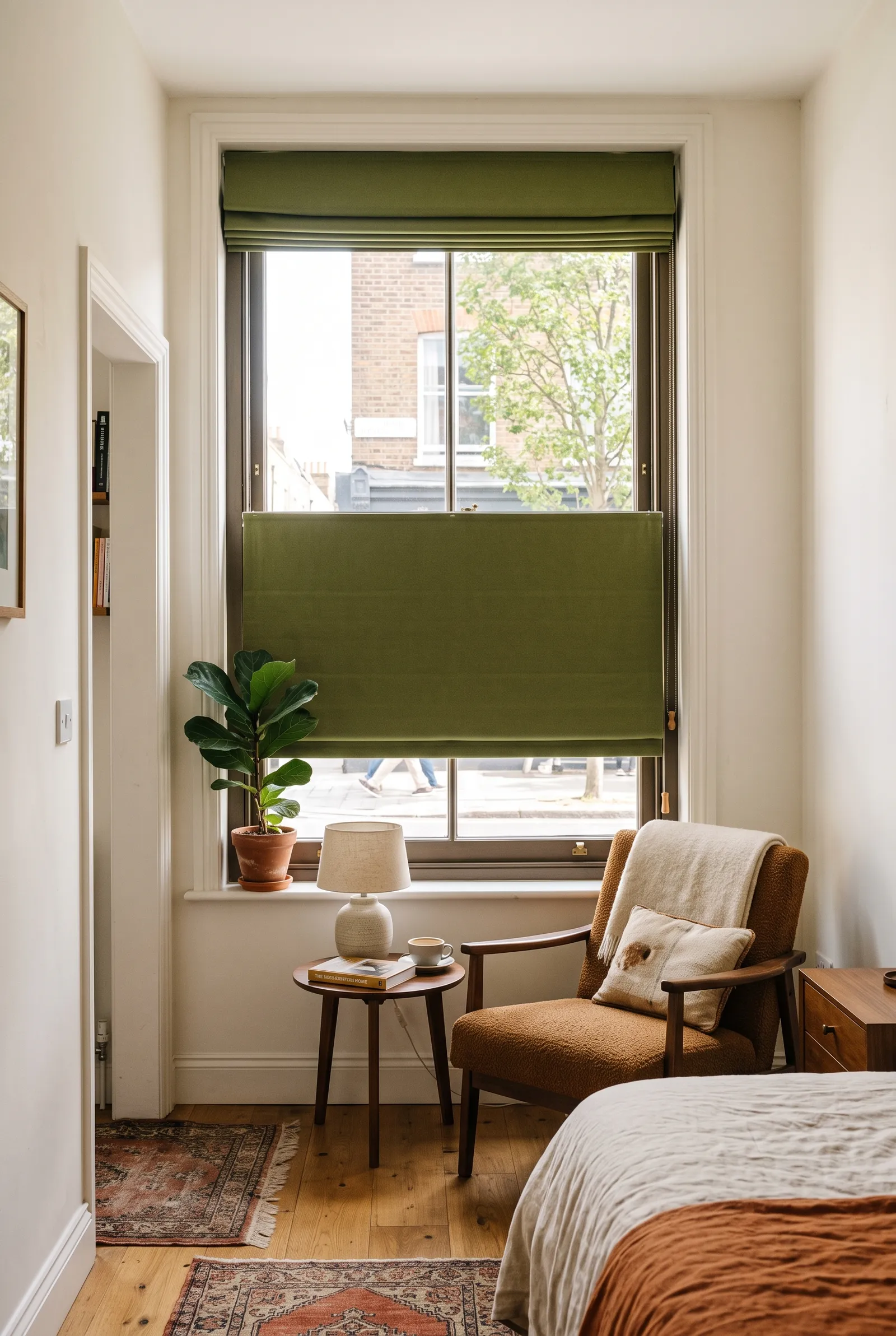
A street-facing window can expose the whole studio even when the bed is well placed. An adjustable shade that covers the lower part of the window can screen a passerby’s view while leaving the upper glass open to daylight. Where that format does not suit the window, a light-filtering shade can soften the view during the day.
Test the view from outside if you can do so safely, or ask someone you trust to check. Light-filtering fabric is not reliable nighttime privacy once the interior is brighter than outdoors, so plan a separate opaque option for evening.
7. Close Opaque Window Coverings Before Turning On Lamps
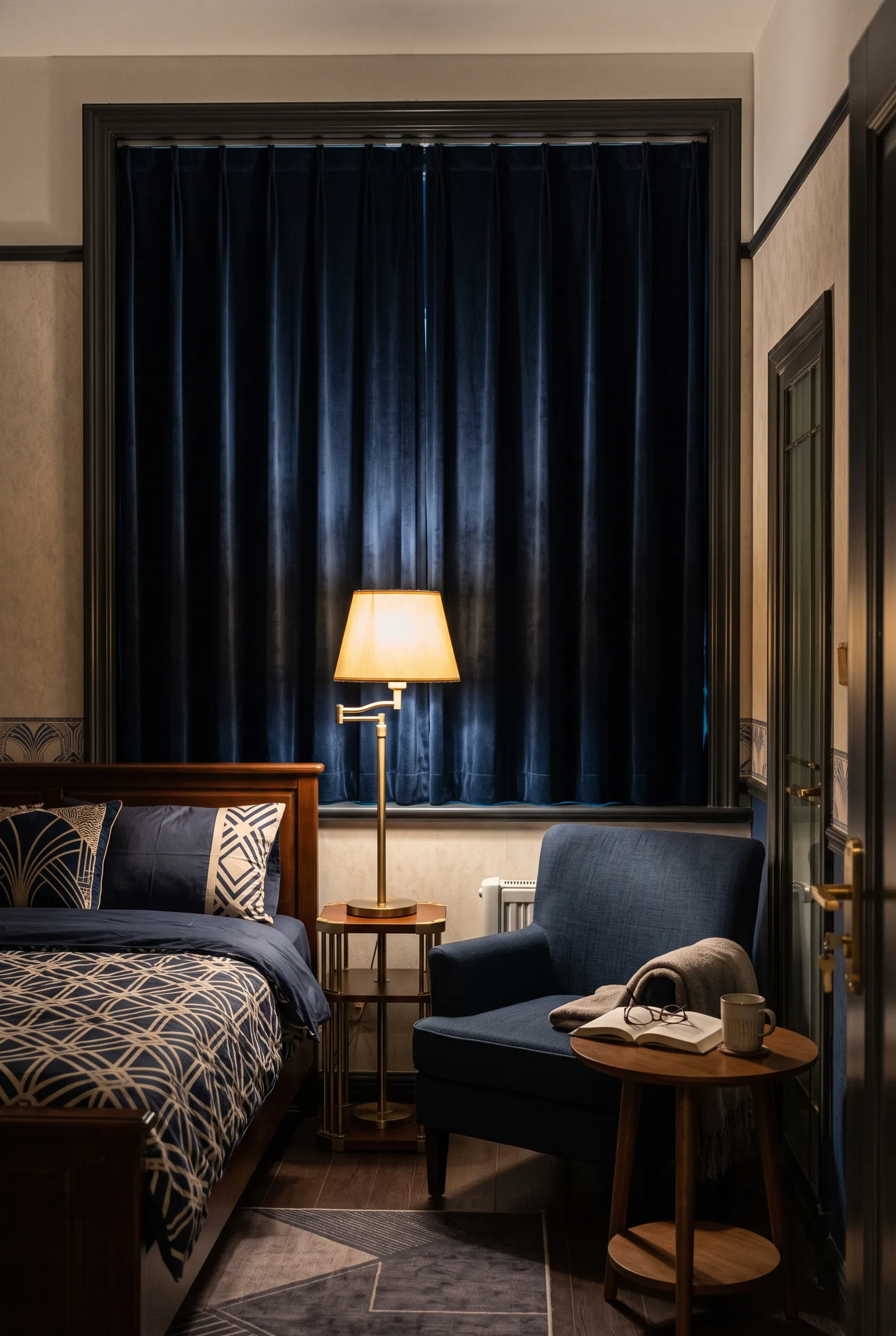
After dark, a brightly lit studio can look like a display window. Close opaque curtains or an opaque shade before switching on the main lamps, especially if the bed and changing area face the glass. Keep the fabric clear of heaters and allow windows and doors to operate normally.
Use a small lamp aimed toward your reading or dining surface rather than washing the entire room and window with bright light. This improves comfort, but lighting alone does not replace an opaque covering when people can look in.
8. Check What Mirrors Reveal From the Door and Window
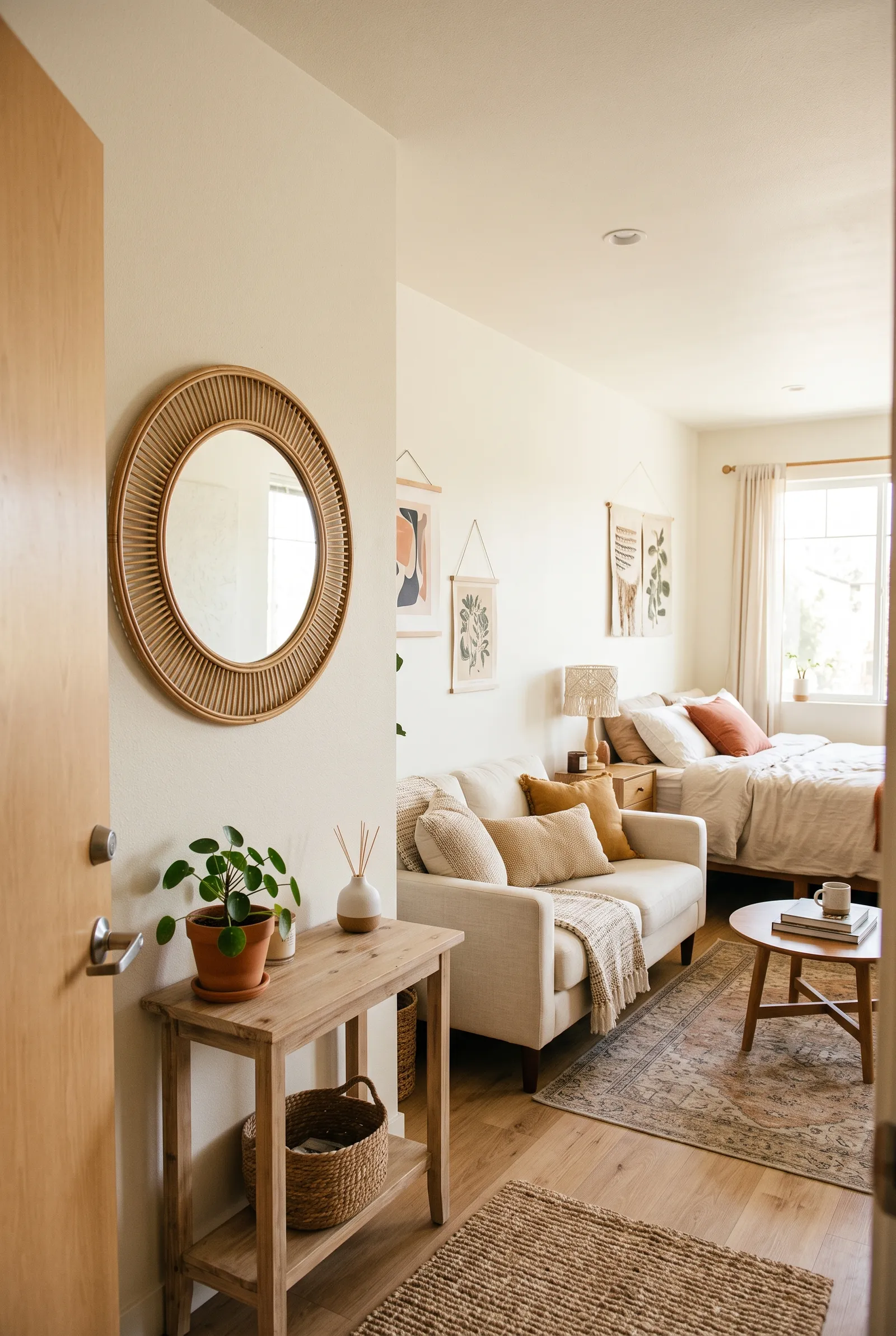
A mirror may make the studio feel brighter while accidentally reflecting the bed, bathroom doorway, or dressing area toward the entrance. Stand at the front door and the main seat to check what a wall mirror actually shows. Turn or relocate it so it reflects a window, a light wall, or the living area instead.
Also check the reflection at night if the mirror faces street-facing glass. Keep floor mirrors stable and out of the path of doors and foot traffic.
9. Keep a Small Getting-Dressed Route Near Storage
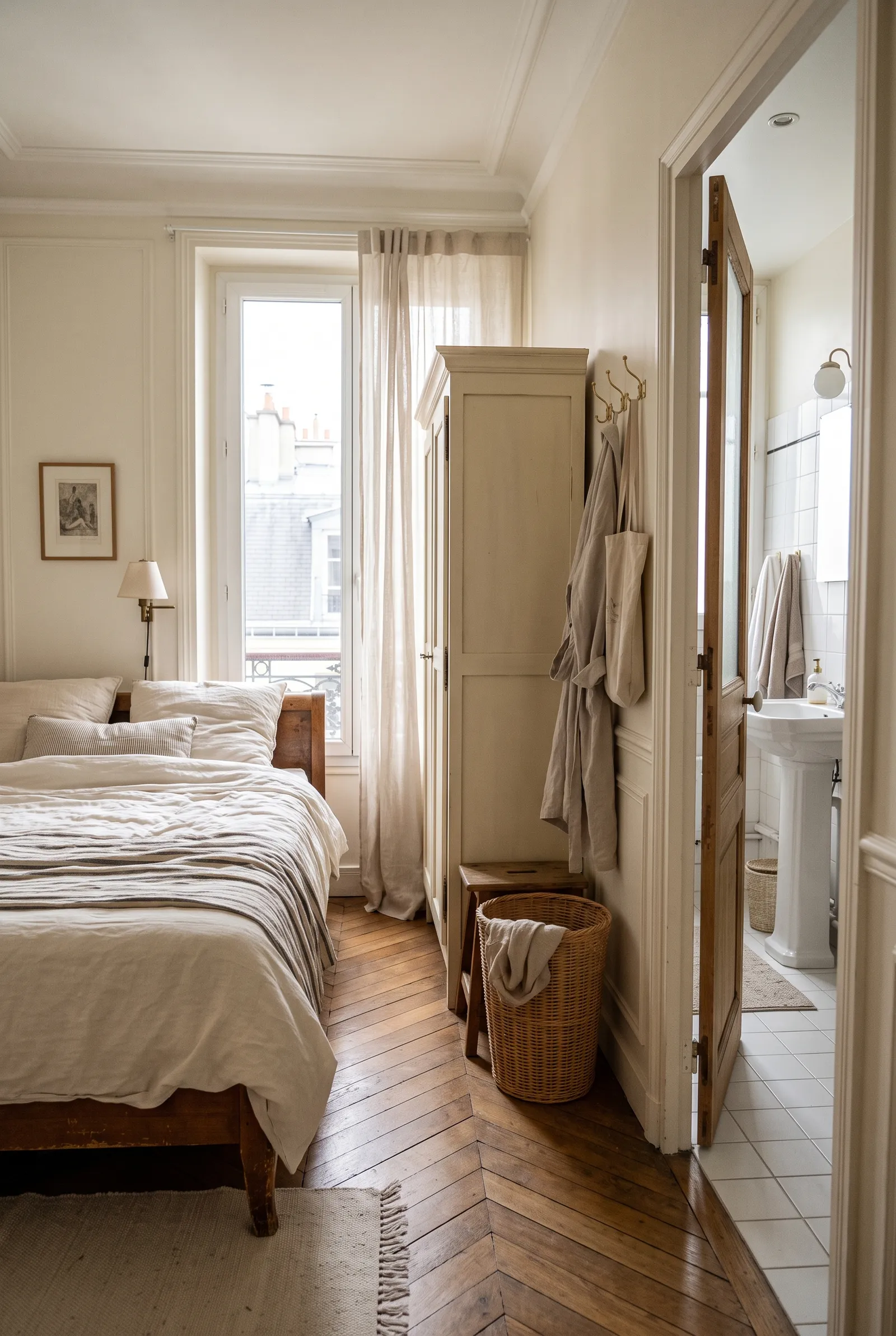
If clothes are stored on one side of the studio and the bathroom is on the other, getting dressed may mean crossing the open room. Place the everyday clothing storage and a compact hook or hamper near the bathroom or bed, wherever you can change without passing the guest area or a street-facing window.
This is about the order of activities as much as furniture. Keep the bathroom door able to open fully, and avoid creating a pile of clothes in the walkway. For broader clothing organization, see these studio apartment clothing storage ideas.
10. Frame Video Calls Away From the Bed
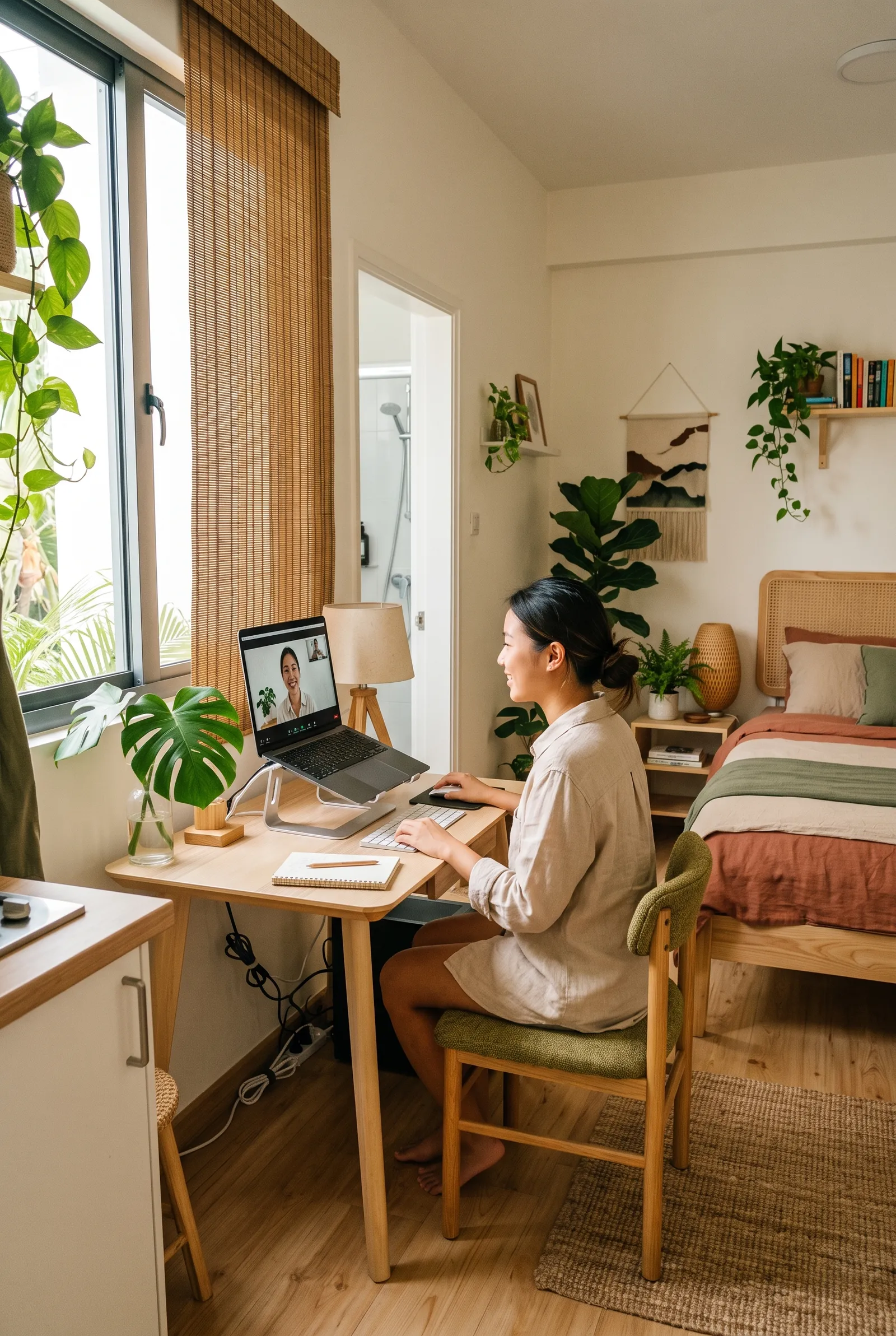
If your desk shares the room with the bed, set the camera so it faces a plain wall, shelving with closed boxes, or another intentional background. You may only need to rotate the desk or use a compact laptop stand; there is no need to hide the whole apartment.
Make a short test call to check what the camera sees and how daylight falls on your face. Keep power cords away from the walking route and avoid placing the desk where it blocks a window, door, or kitchen work area.
11. Put Personal Items Behind Doors on the Guest-Facing Side
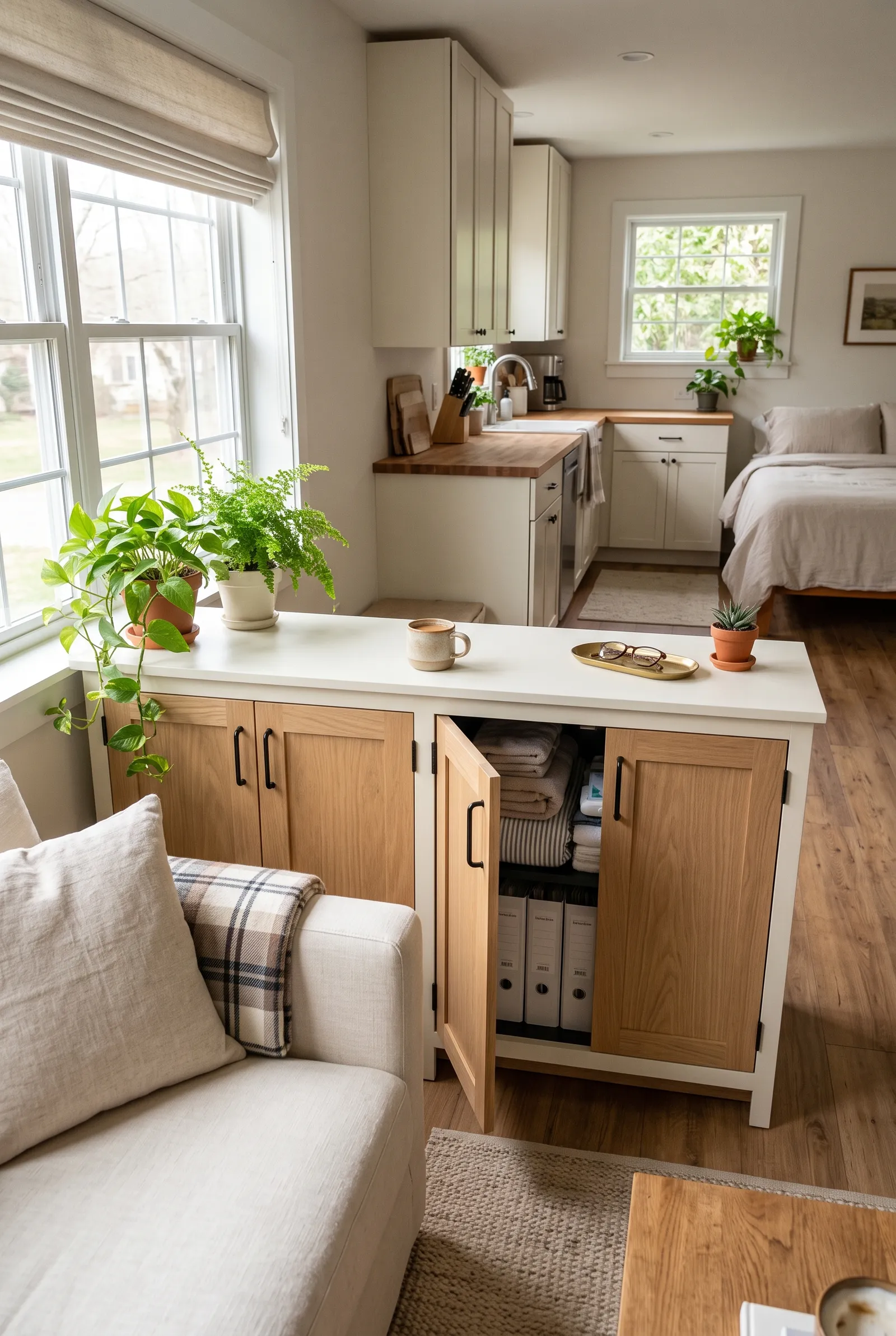
Open shelves near the sofa can turn ordinary toiletries, paperwork, laundry, and bedding into a public display. Keep these categories in drawers, lidded boxes, or a cabinet with doors close to where you use them. Leave a small open surface for things you intentionally want guests to see.
This creates visual privacy without adding another barrier in the room. Choose storage you can open fully, and do not cram it into the only clear path. For more general capacity ideas, see the studio apartment storage guide.
12. Place Conversations Away From the Shared Hallway
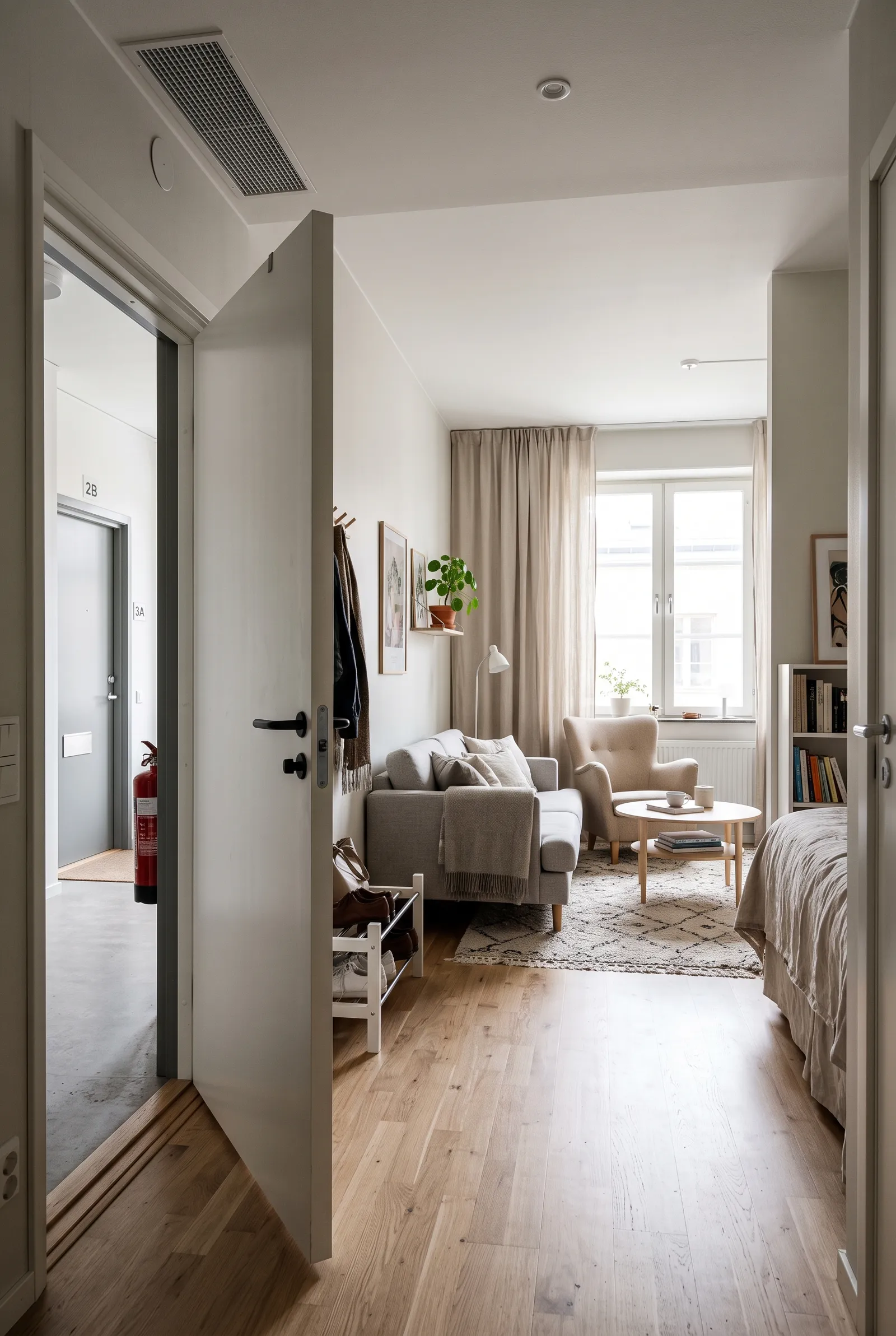
Visual privacy does not solve every privacy concern. If voices carry toward a thin entry door or shared hallway, move the conversation seat farther into the room when the layout permits. A rug, upholstered seat, and curtains may reduce echo within the studio, making normal conversation more comfortable.
Soft furnishings cannot soundproof an apartment. Keep your expectations realistic, avoid blocking ventilation or exits, and use headphones for especially private calls. The practical goal is to choose the quietest usable spot, not promise complete acoustic separation.
Final Thoughts
The most useful studio apartment privacy ideas start with a specific viewer and a specific activity. Check the view from the door, guest seat, window, and camera; then adjust the bed, seating, storage, and window coverings to solve those exact exposures. Preserve daylight, usable furniture, and clear paths as you go. A studio can feel personal without being closed off by a new wall.
More Studio Apartment Ideas
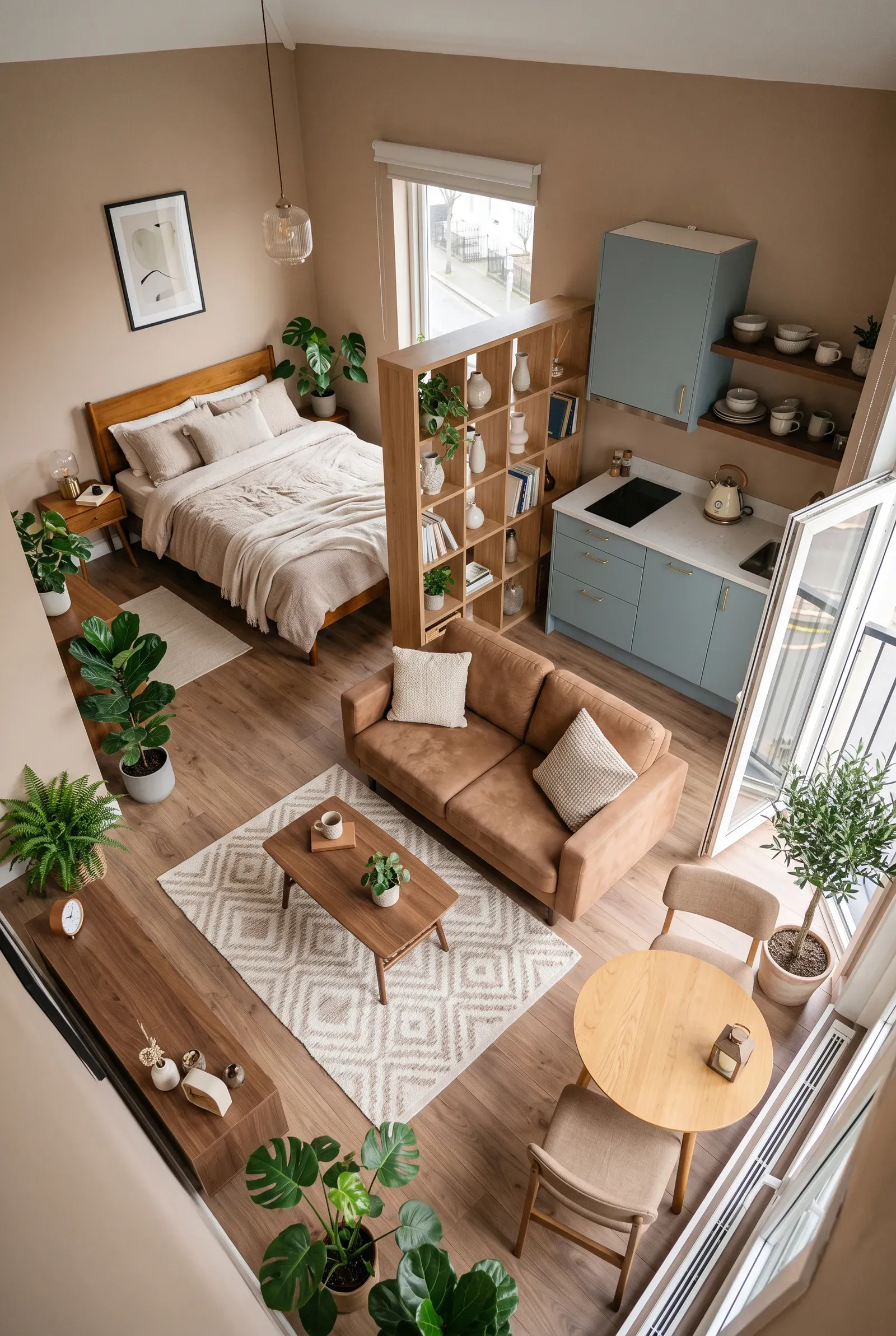 | 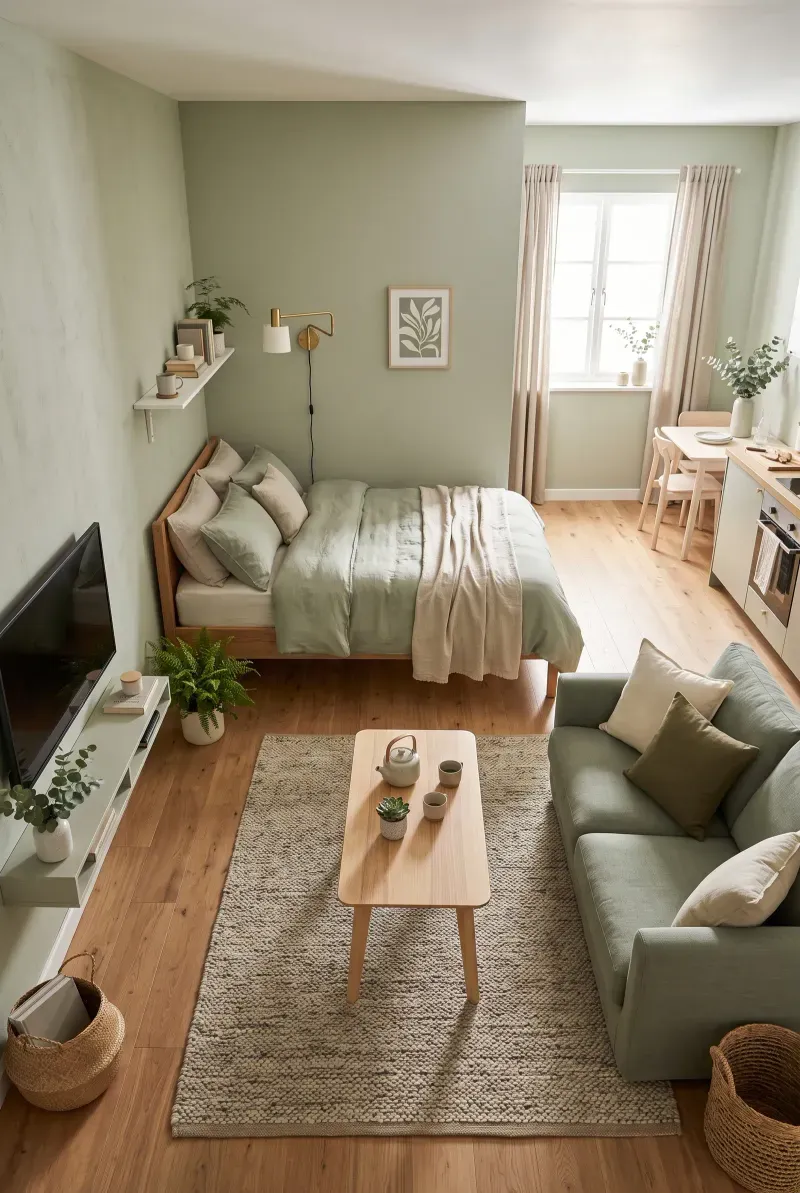 | 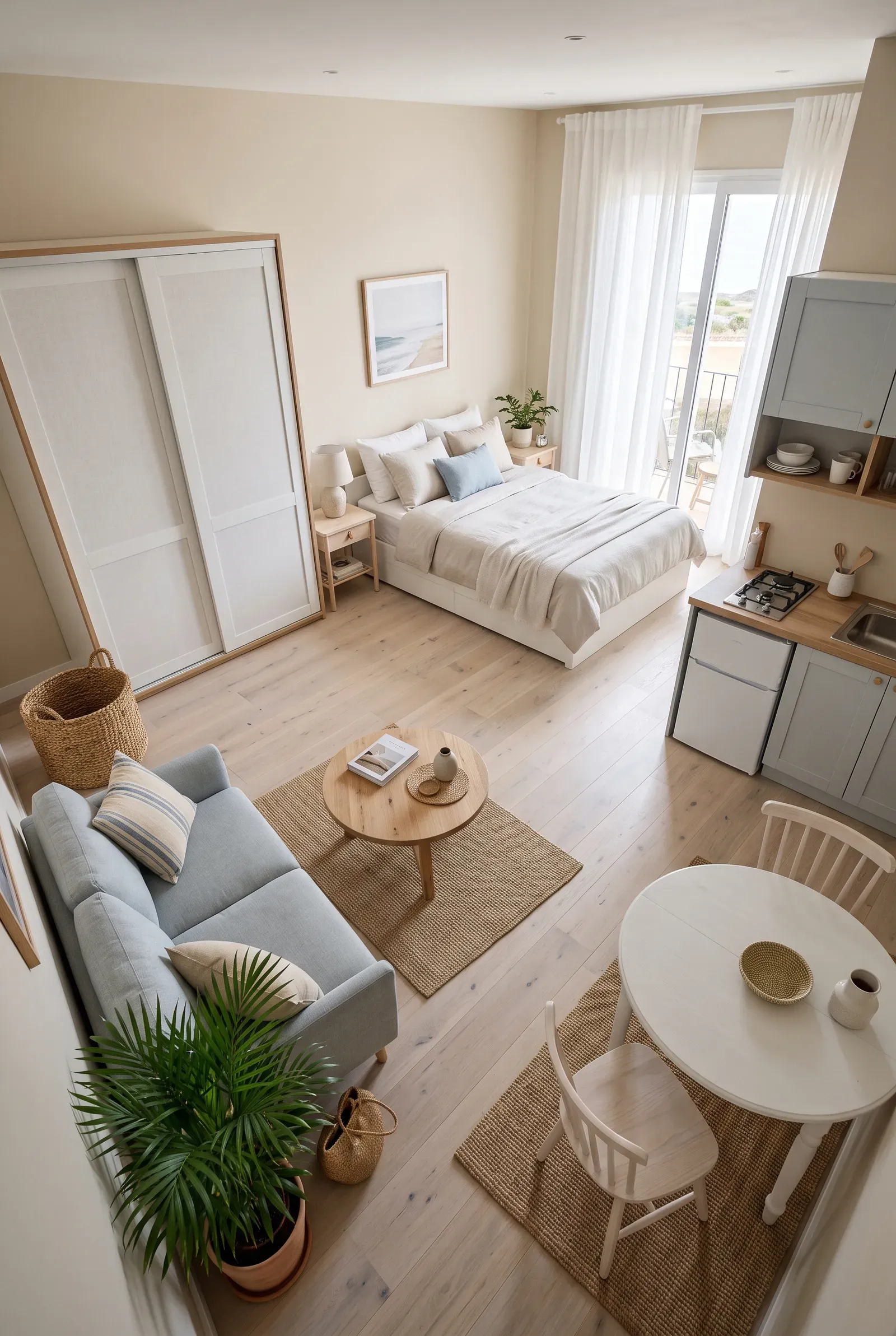 |
|---|---|---|
Open Dividers | Studio Beds | Studio Layouts |