Closet space is often one of the biggest challenges in a studio apartment.
Some studios come with a tiny built-in closet. Others have no closet at all. And because the bedroom, living room, and storage areas all share one open room, clothing storage can quickly become one of the most visible parts of the apartment.
The solution does not have to be a large custom wardrobe.
A freestanding closet, open hanging system, curtain-covered storage area, or well-planned dressing corner can work surprisingly well in a small space.
The key is to create enough storage without making the apartment feel like it is surrounded by cabinets.
Here are 12 studio apartment closet ideas that can help you create a practical place for clothes while keeping the room open and comfortable.
1. Use a Freestanding Wardrobe
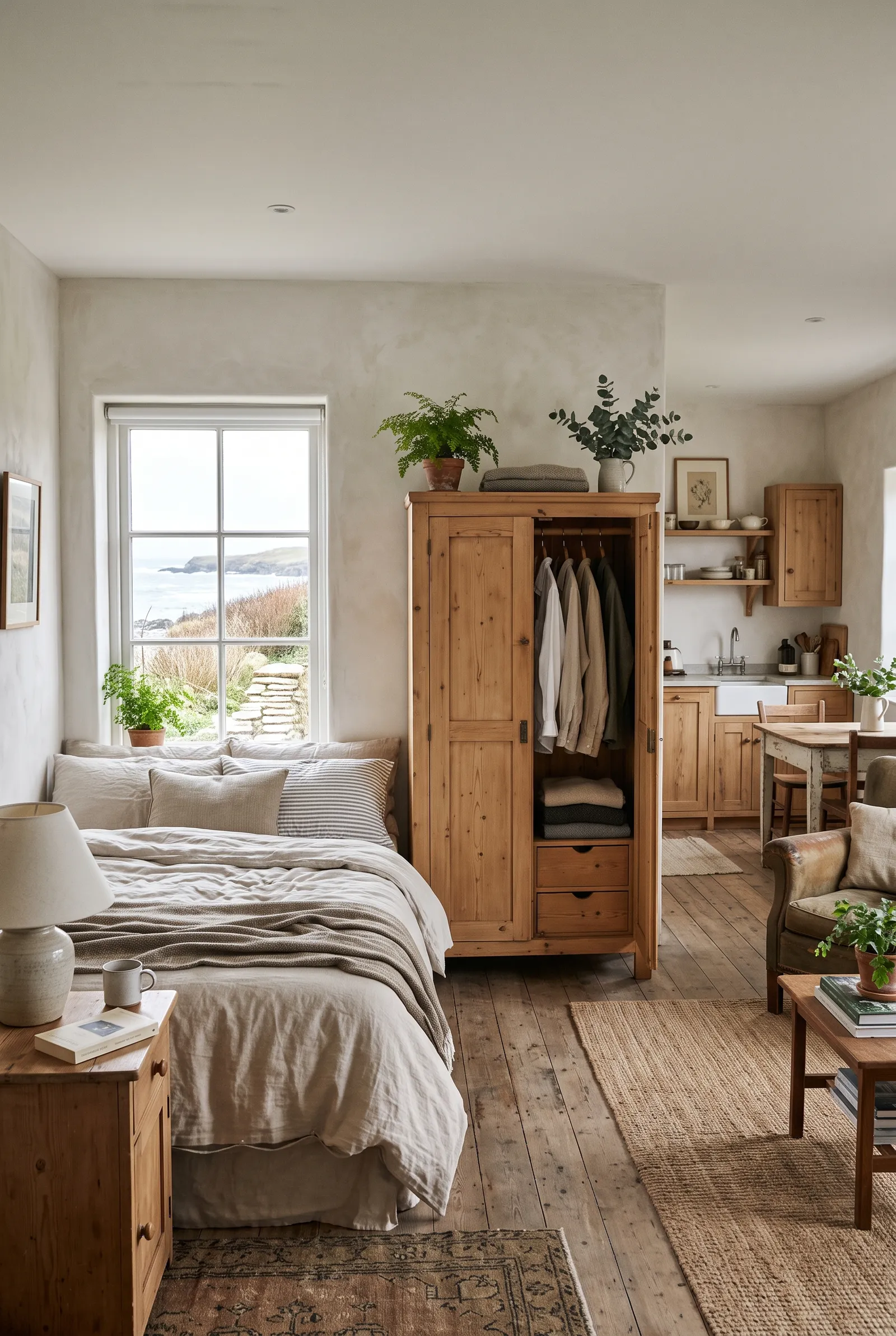
A freestanding wardrobe is one of the easiest ways to create a closet where none exists.
It does not require construction, and it can move with you if you rent.
Look for a wardrobe that combines hanging space with shelves or drawers so you can store more than just clothes on hangers.
Tall wardrobes make good use of vertical space, but avoid choosing one that is much deeper or wider than you actually need.
Place it near the bed if possible so clothing storage feels connected to the sleeping area rather than scattered through the living room.
If you want more general clothing storage ideas, see these studio apartment clothing storage ideas.
2. Create an Open Closet System
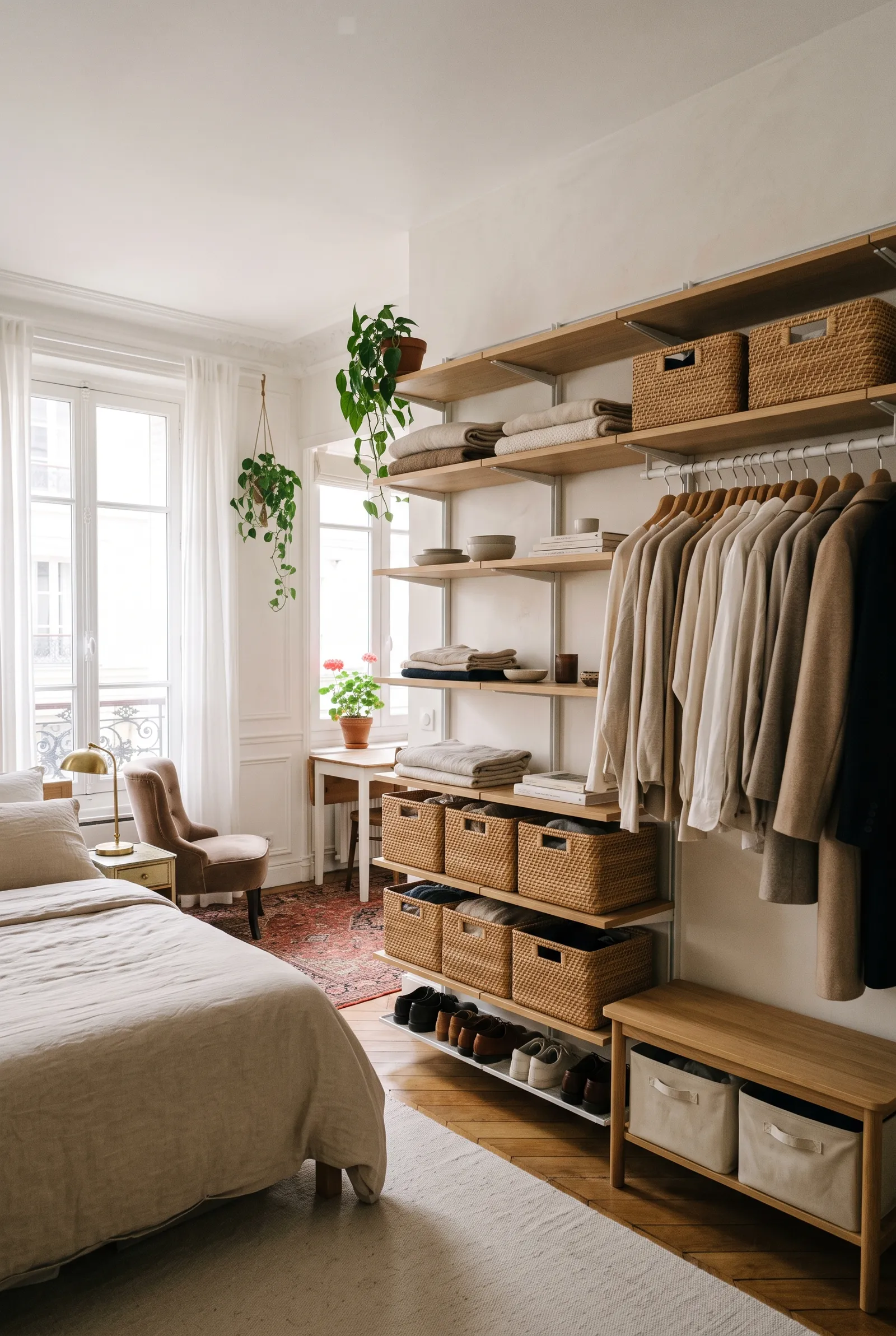
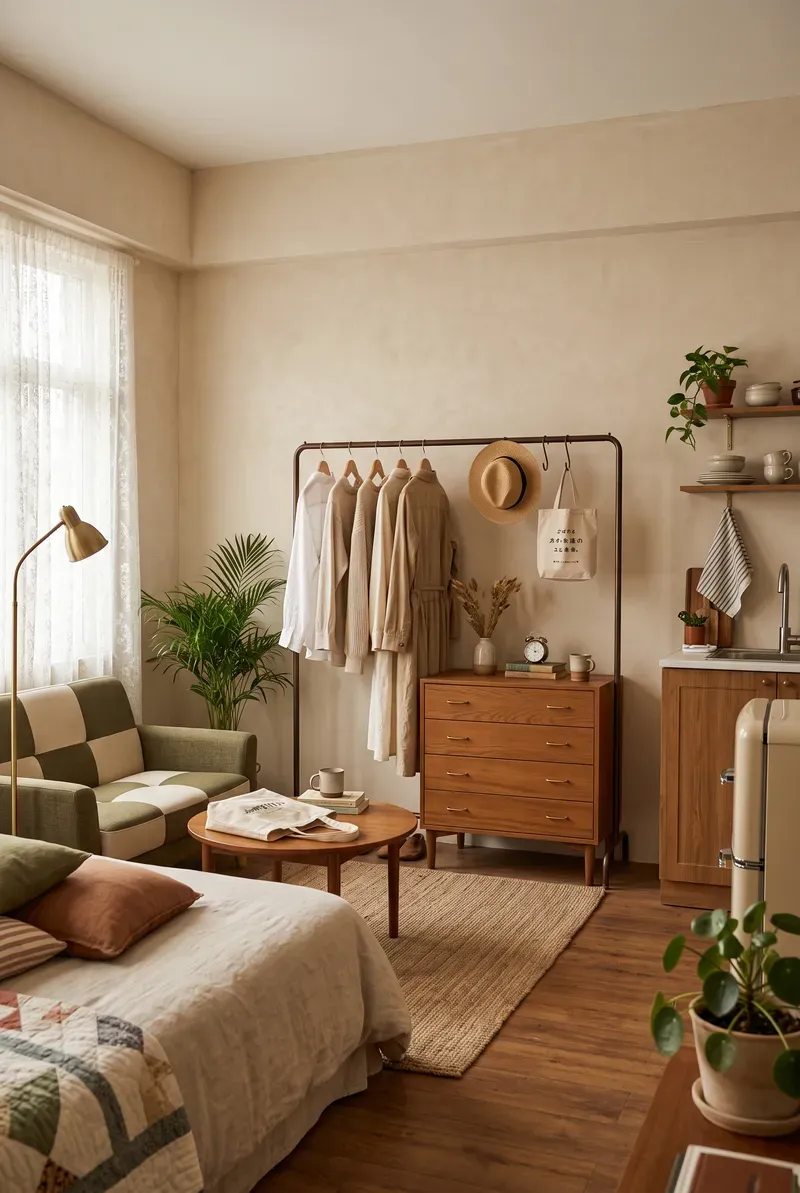
An open closet system can be a flexible alternative to a traditional wardrobe.
Combine hanging rails, shelves, drawers, and baskets along one wall to create a compact dressing zone.
Because there are no large doors, an open system can feel lighter in a small apartment.
The downside is visual clutter.
Keep hangers consistent, use baskets for smaller items, and avoid filling every shelf completely.
If the system looks organized, it can feel intentional rather than temporary.
3. Hide an Open Closet Behind a Curtain
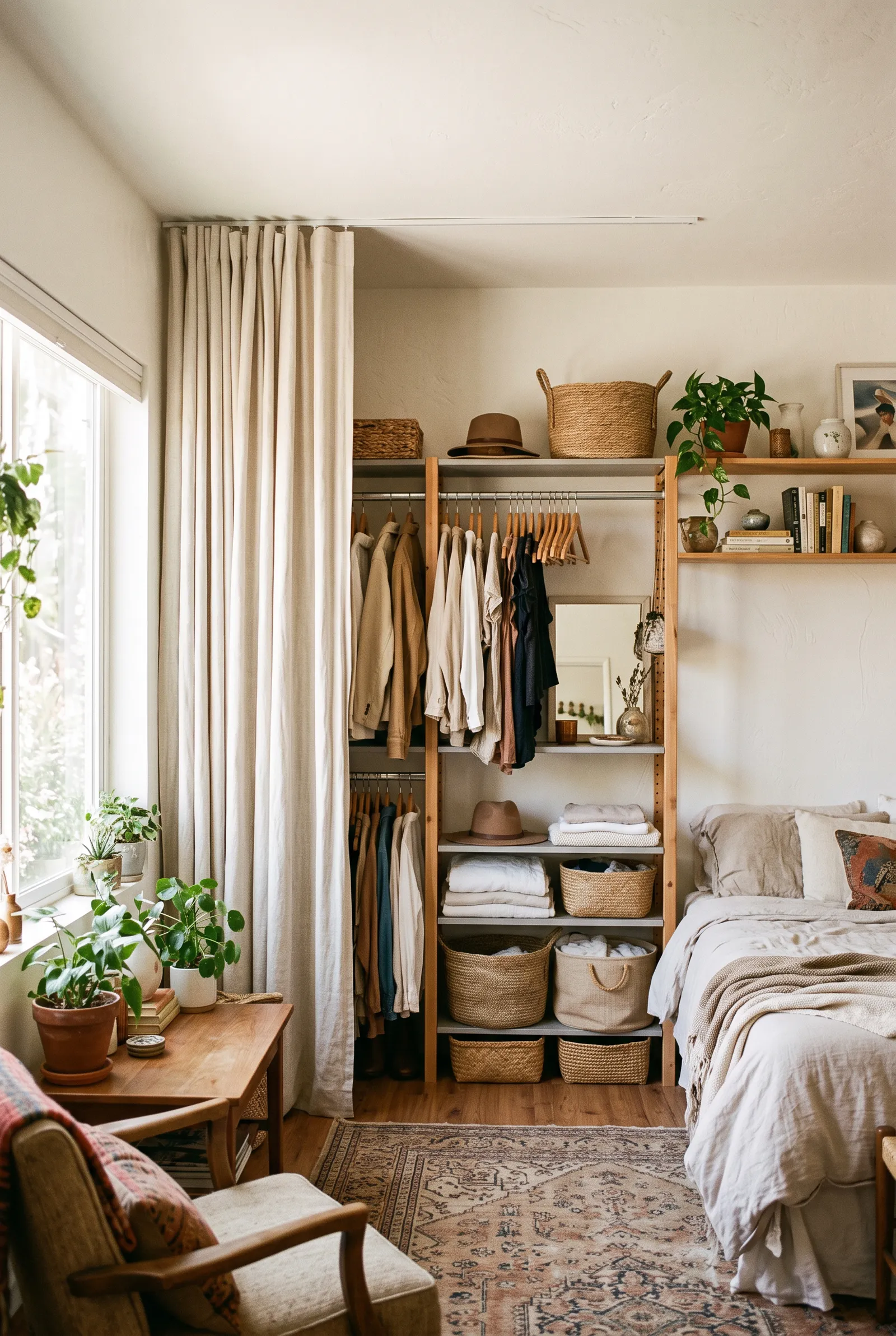
If you like the flexibility of an open closet but do not want to see your clothes all the time, add a curtain.
A ceiling-mounted curtain can hide a hanging rail, shelving system, or open wardrobe when you want the apartment to feel calmer.
During the day, open it for easy access.
At night or when guests visit, close it and the room instantly feels less busy.
Choose a curtain that works with the rest of the room so it looks like part of the design rather than a temporary screen.
4. Put the Closet Behind the Bed
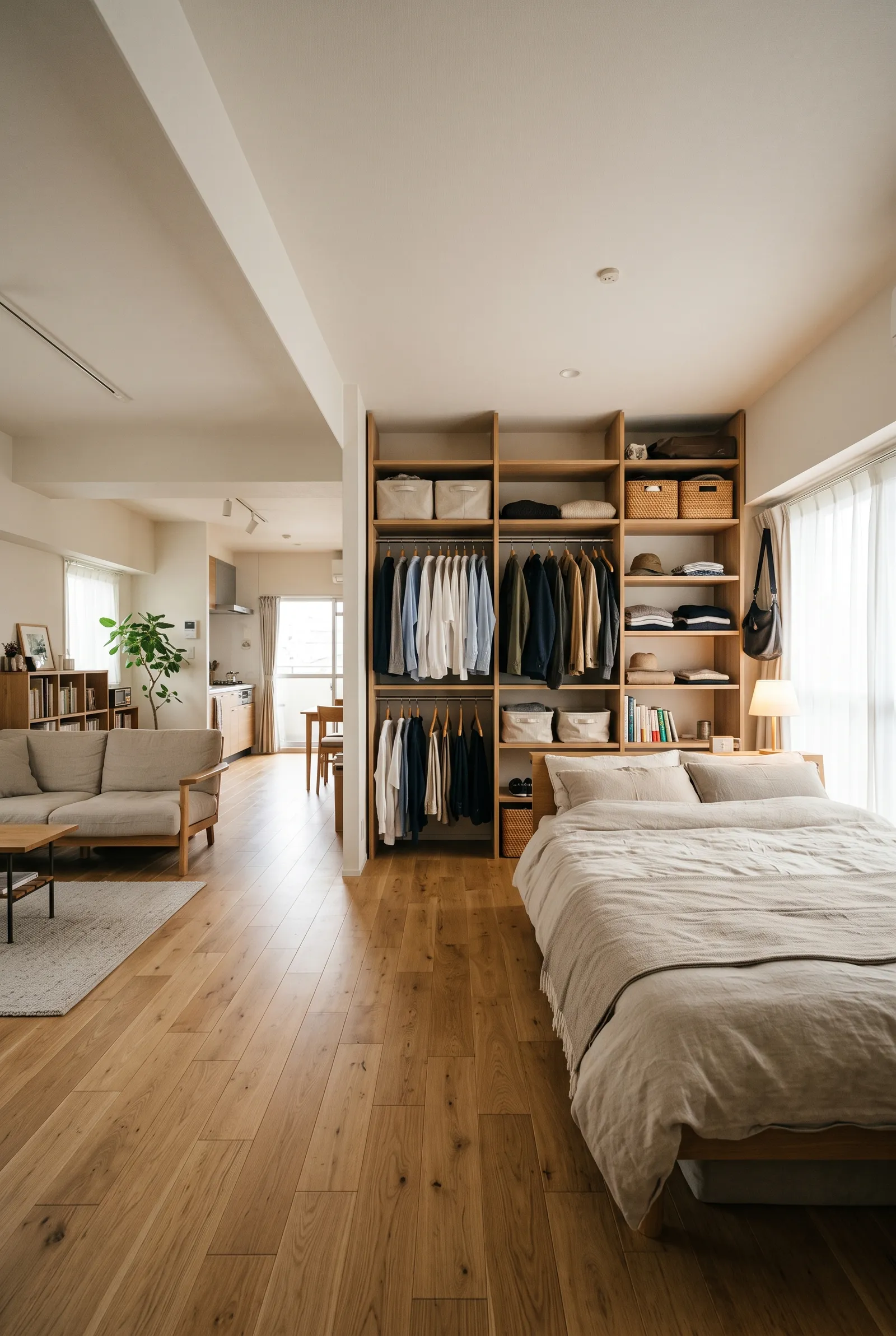
In some layouts, the wall behind or beside the bed can become a dedicated closet zone.
Place a wardrobe, hanging system, or shallow storage unit behind the sleeping area while keeping enough space to walk between them.
This arrangement helps group sleeping and dressing functions together.
It also keeps larger clothing storage pieces away from the main living area.
The important thing is circulation.
Do not create a narrow passage that makes it difficult to reach the bed or access the closet.
5. Use One Wall for the Entire Closet
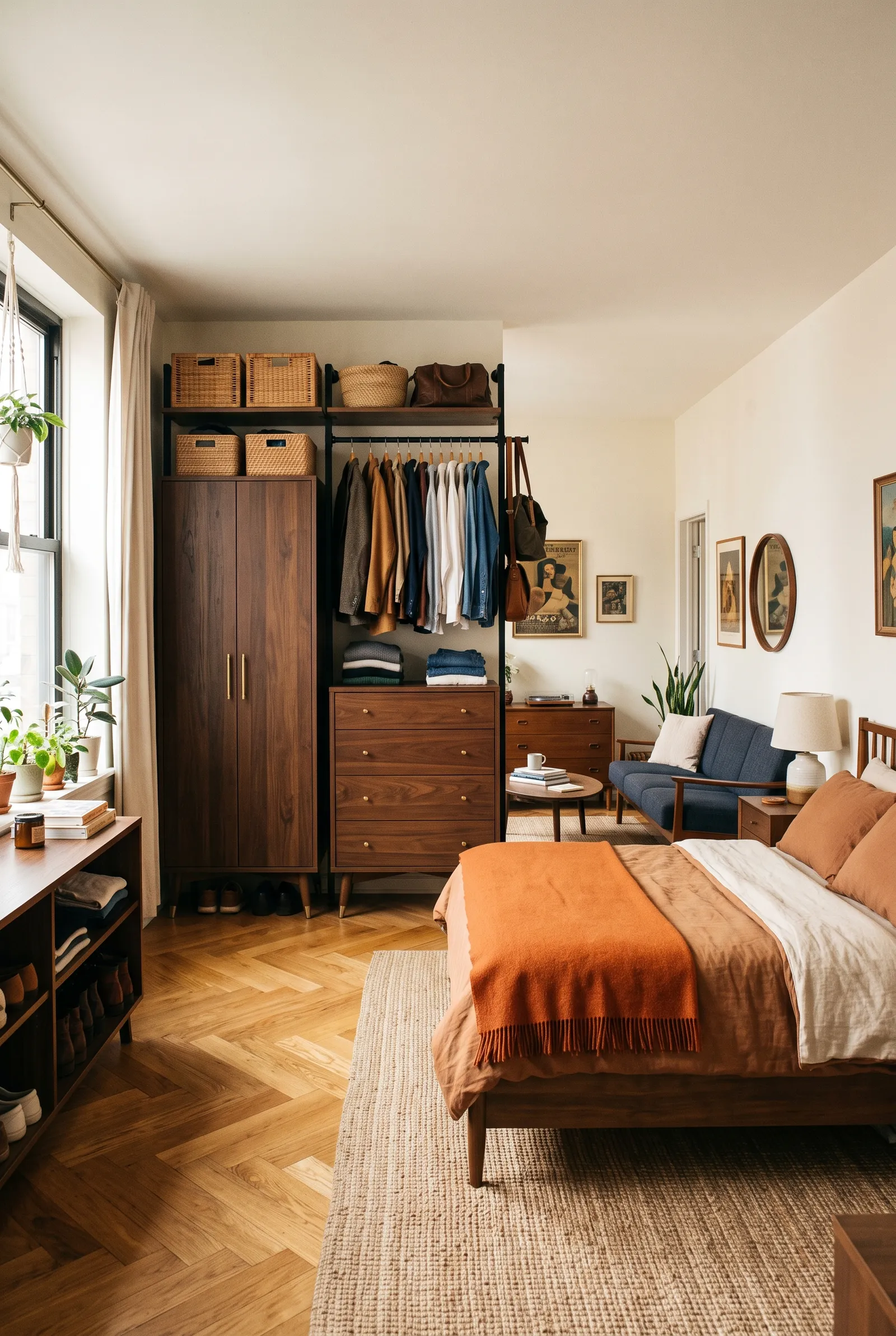
If you have one uninterrupted wall, consider concentrating most clothing storage there.
A wardrobe, drawers, hanging rail, shelves, and baskets can all work together as one closet wall.
This can be more efficient than spreading several small storage pieces around the room.
It also makes the rest of the studio feel cleaner because the clothing zone is clearly defined.
You do not need custom built-ins.
Freestanding pieces with similar proportions or finishes can still look cohesive.
6. Turn a Corner Into a Small Closet
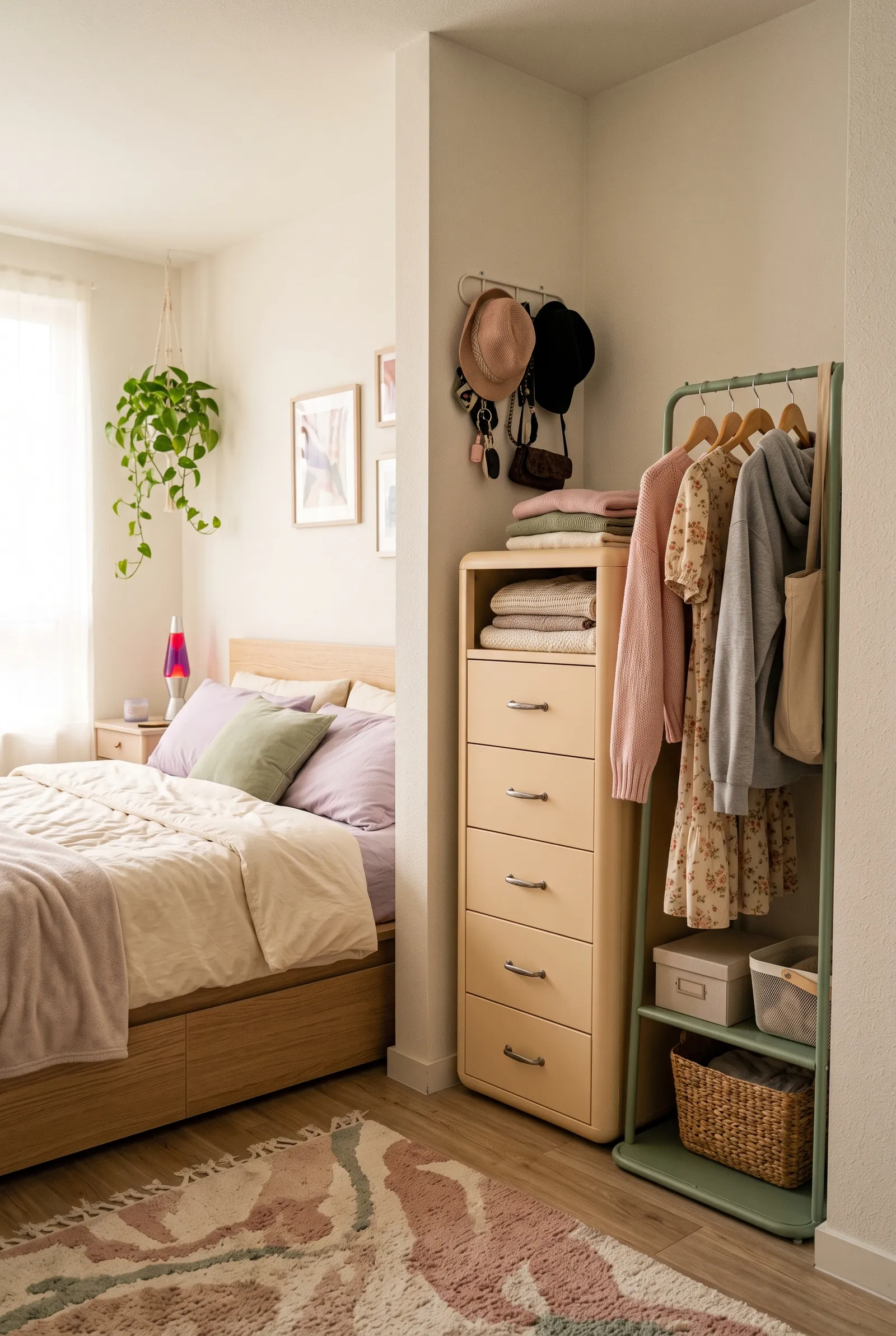
An unused corner can become a surprisingly useful clothing storage area.
A narrow wardrobe, corner rail, tall dresser, or compact shelving system can make use of a space that might otherwise stay empty.
This works especially well near the bed.
Use vertical space as much as possible, but do not crowd the corner with too many pieces.
The goal is to create a practical closet zone without making the room harder to move through.
7. Create a Closet Near the Entry
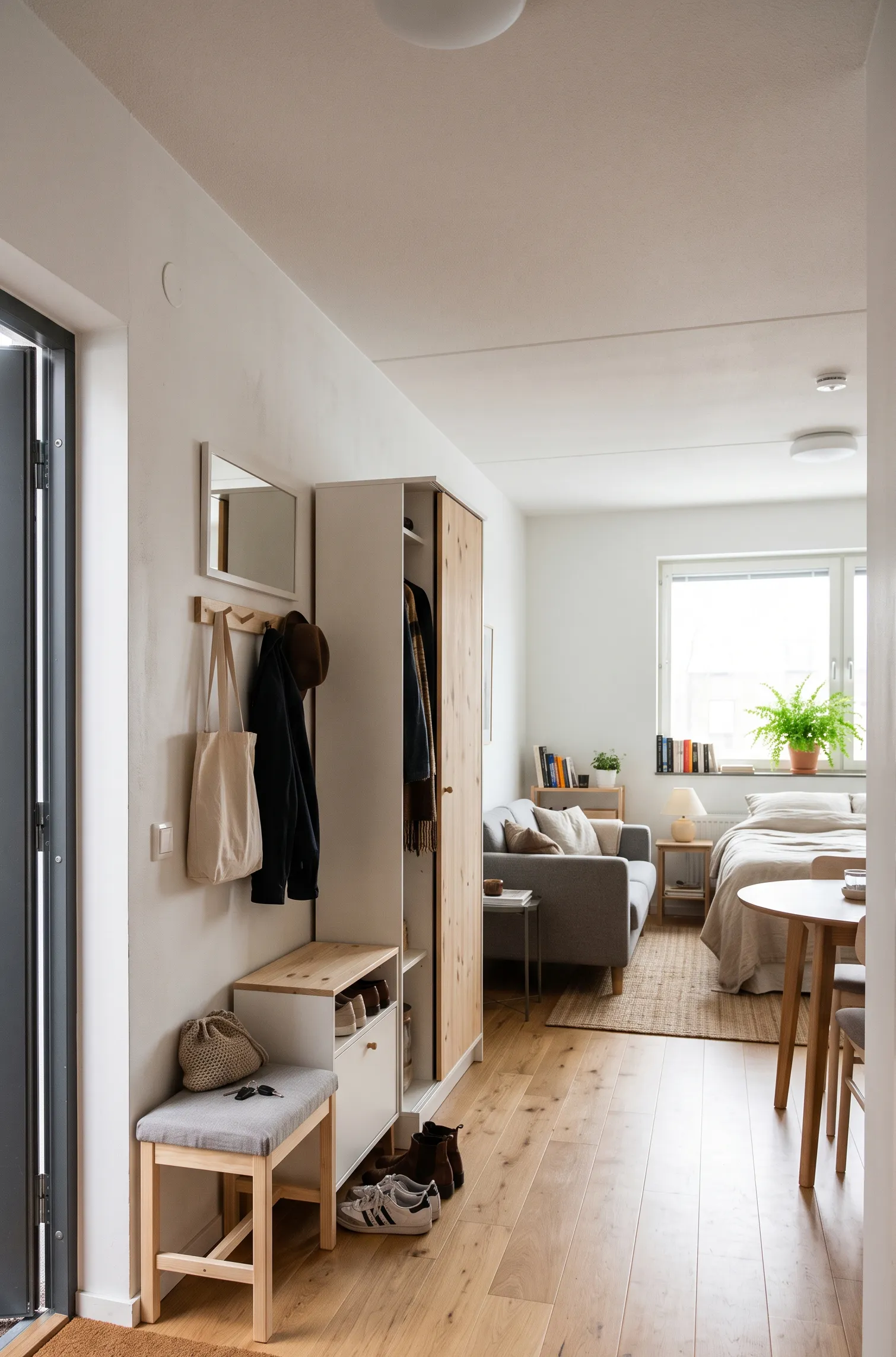
A closet near the entrance can work well if the sleeping area is already tight.
Use it for coats, shoes, bags, and everyday clothing.
This keeps items you use when entering and leaving the apartment close to the door.
A narrow wardrobe combined with hooks and a small shoe cabinet can create a compact entry closet even if the apartment does not have a formal foyer.
Just make sure the door can still open fully and the entrance stays easy to walk through.
8. Use a Wardrobe as a Room Divider
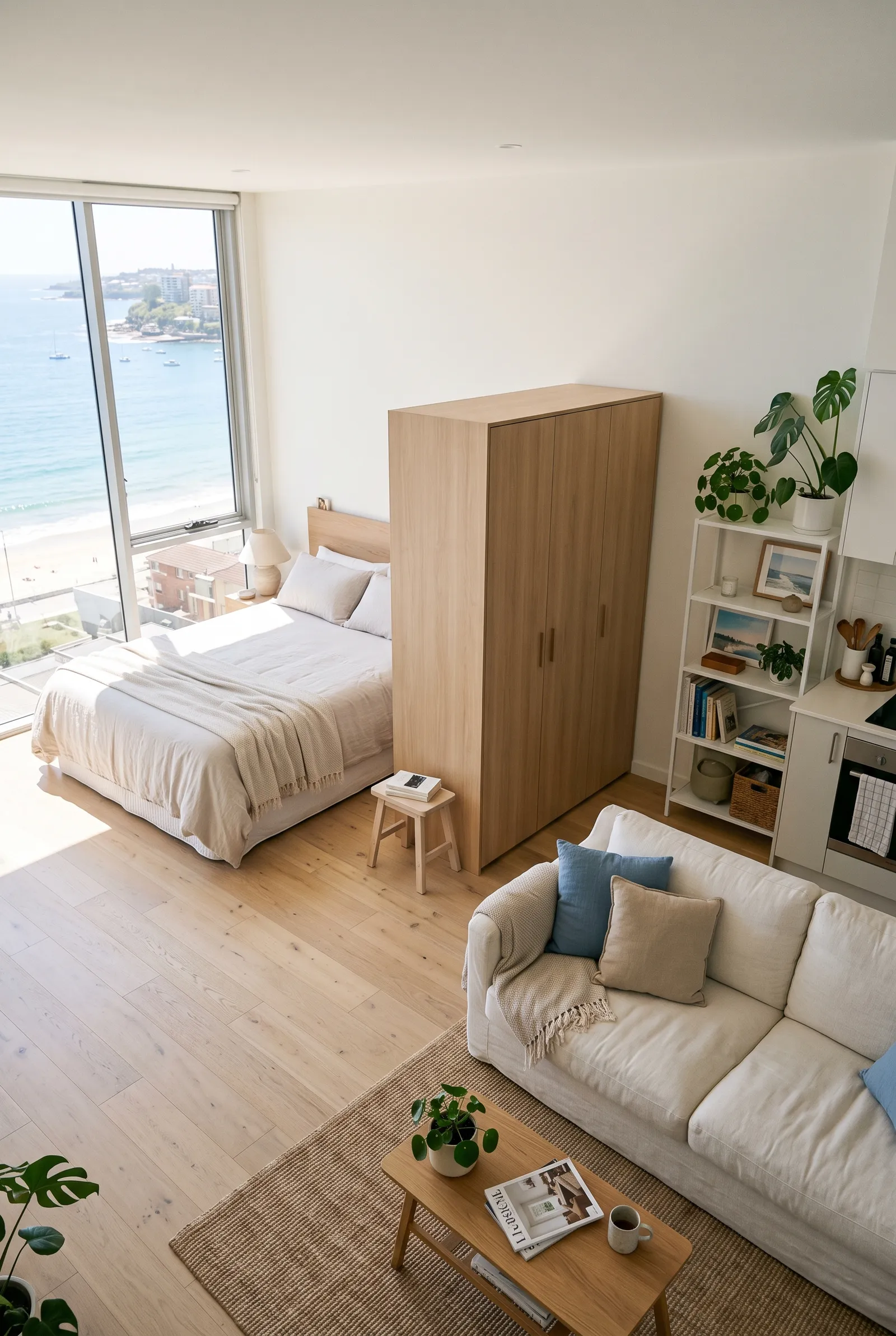
A wardrobe can store clothes and divide the room at the same time.
Place it perpendicular to the wall between the bed and living area.
This can give the sleeping zone more privacy while avoiding the need for a permanent wall.
The wardrobe should not be so large that it blocks natural light or creates a narrow passage.
If the back faces the living area, make sure it looks finished or style it with a narrow console, artwork, or another simple element.
For more zoning ideas, see these studio apartment room divider ideas.
9. Combine Hanging Space With Drawers
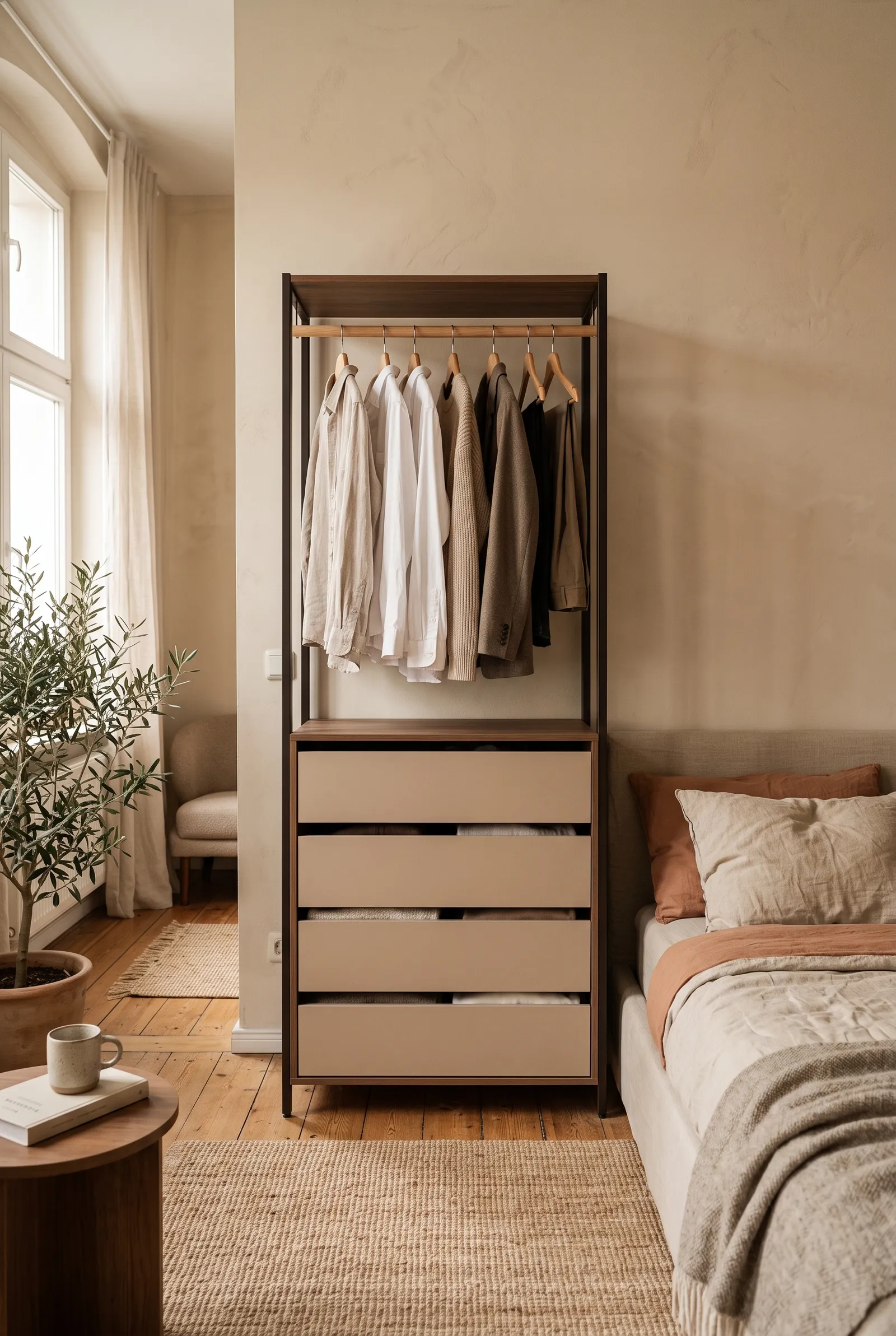
A closet works better when it can handle different types of clothing.
Not everything needs to hang.
A combination of hanging rails and drawers gives you more flexibility.
Use the rail for jackets, dresses, shirts, and trousers.
Use drawers for T-shirts, underwear, knitwear, and smaller items.
This setup can be more practical than a wardrobe with one long hanging rail and very little closed storage.
It also helps reduce visual clutter.
10. Add a Second Hanging Rail
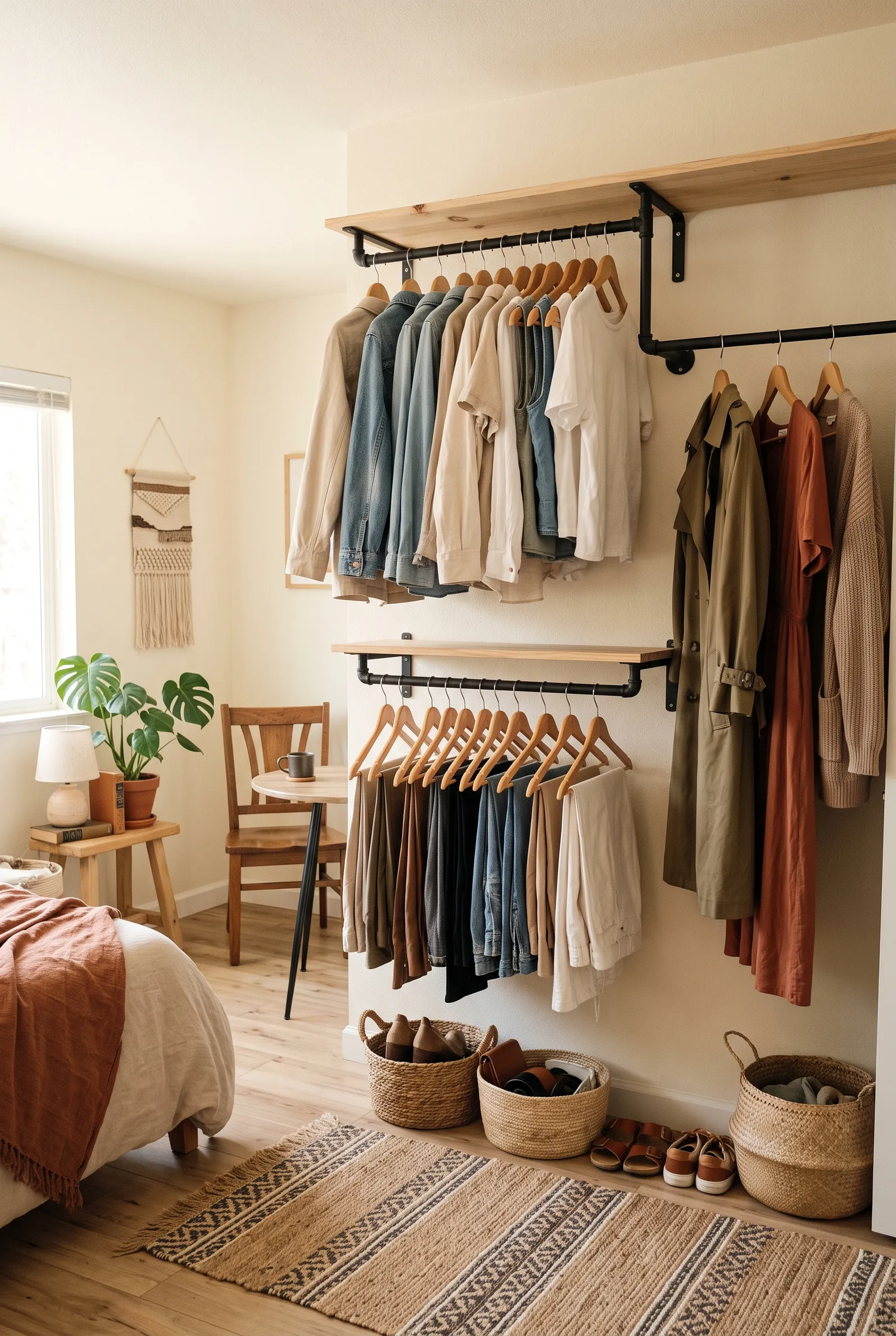
If most of your clothes are shorter pieces such as shirts, jackets, and folded trousers, double hanging rails can dramatically increase capacity.
Place one rail above the other so you can use more vertical space.
Keep longer items such as dresses or coats in a separate section.
This works especially well in open closet systems or simple wardrobe frames.
You gain more storage without increasing the closet footprint.
11. Use the Space Above the Closet
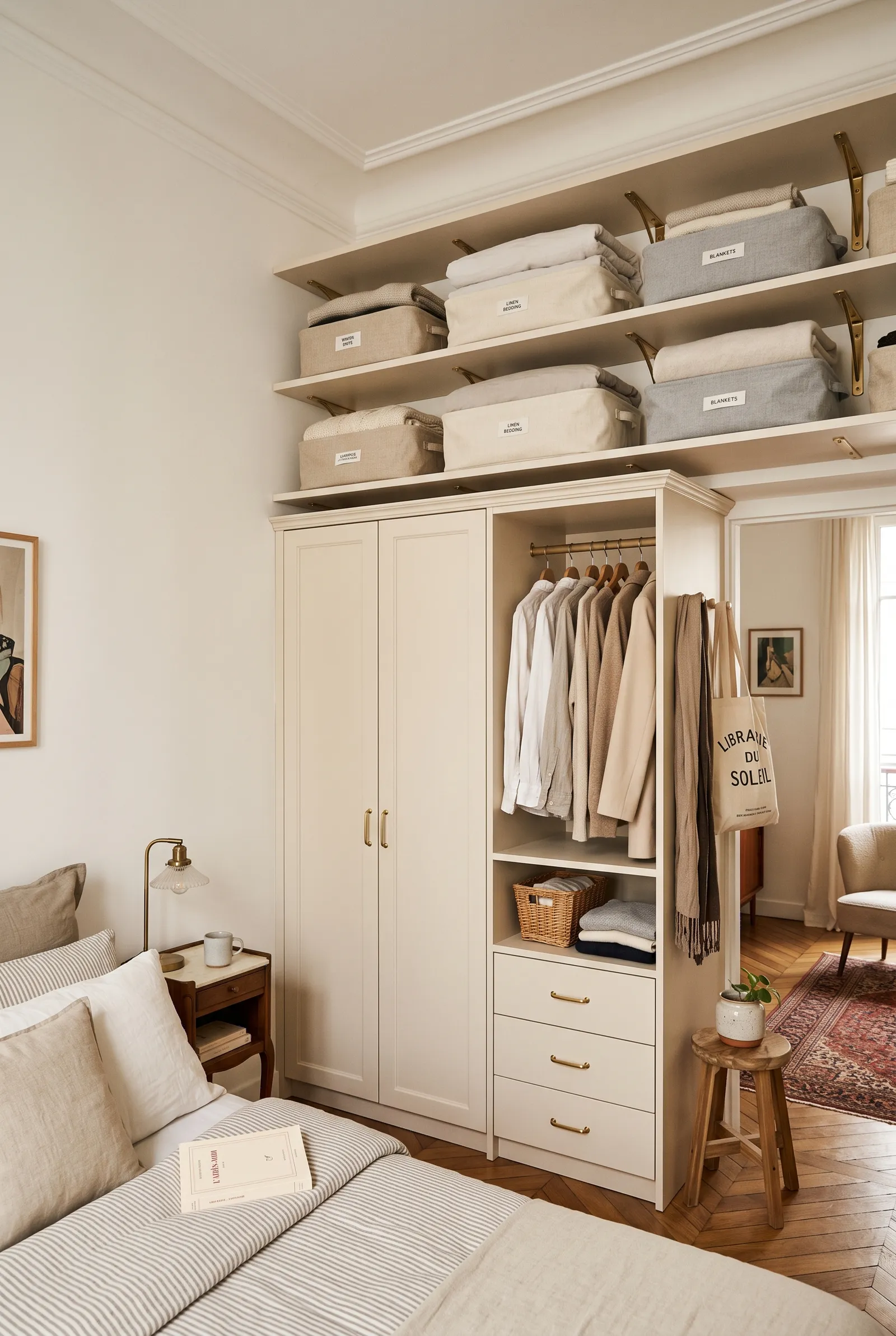
The space above a wardrobe or hanging rail often goes unused.
Add a high shelf for seasonal clothing, luggage, extra bedding, or storage boxes.
Items you do not use every day are perfect for these harder-to-reach areas.
Use similar boxes or baskets so the upper section does not look messy.
This is especially useful in a studio apartment because it increases storage without adding another piece of furniture.
12. Create a Small Dressing Corner
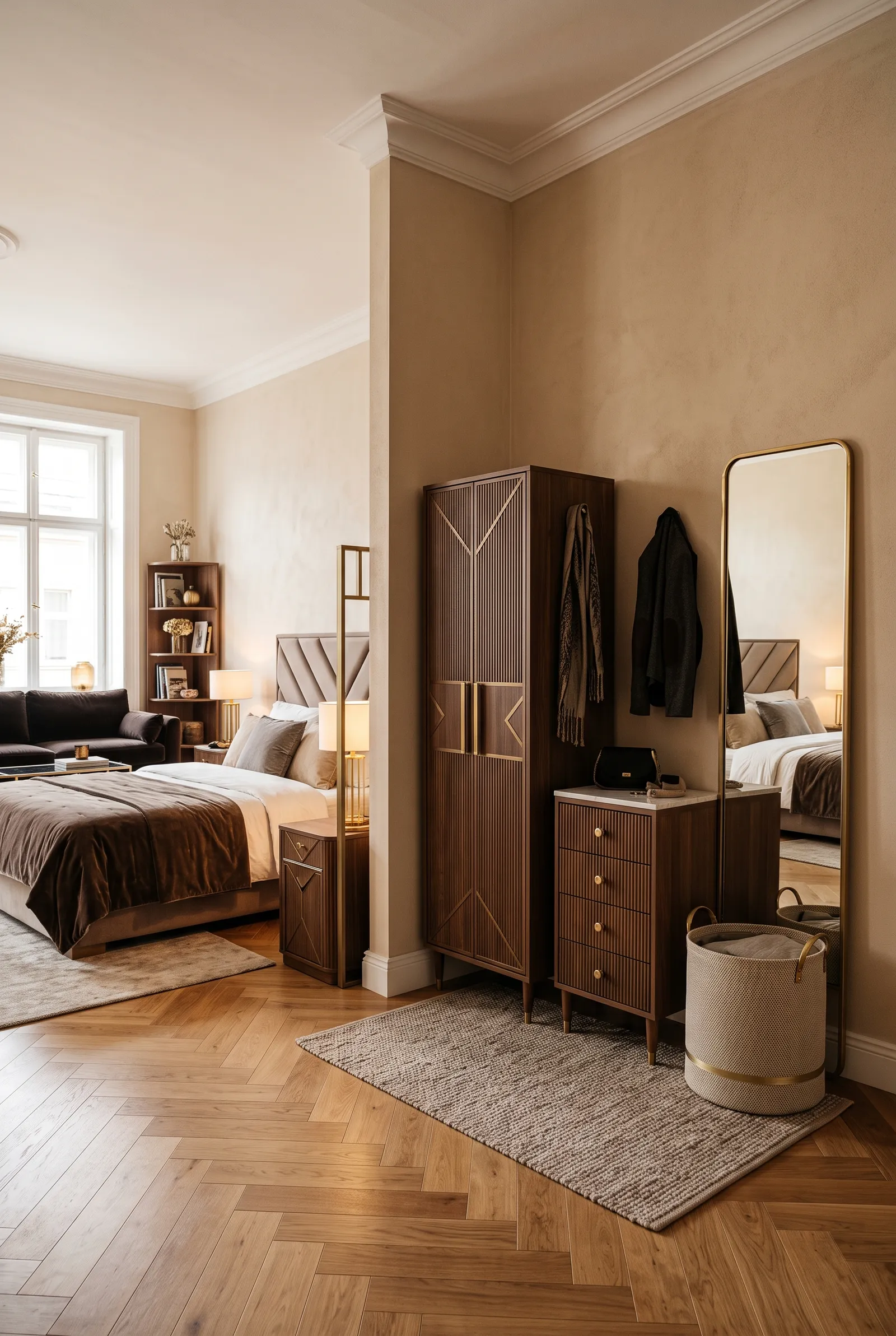
You do not need a walk-in closet to create a useful dressing area.
A slim wardrobe or garment rail, small dresser, full-length mirror, and laundry basket can be enough.
Keep these pieces close together so clothing storage feels like one intentional zone.
This also helps prevent clothes, bags, and accessories from spreading across the bed or sofa.
If possible, place the dressing corner near the sleeping area so your daily routine feels natural.
The goal is not to create a luxury dressing room.
It is simply to give your clothes a clear home inside the studio.
Final Thoughts
A studio apartment closet does not need to be large to work well.
What matters most is how efficiently the space is used.
Start by deciding what actually needs to hang, what can go in drawers, and what can be stored higher up or under the bed.
Then choose a closet solution that fits your layout.
For some apartments, a simple freestanding wardrobe may be enough.
Others may work better with an open closet wall, a curtain-covered system, or a small dressing corner.
Try to keep clothing storage concentrated rather than spreading it around the entire room.
When clothes have a clear place to go, the whole studio becomes easier to organize—and much easier to live in.
More Studio Apartment Ideas
 |  |  |
|---|---|---|
Clothing Storage  | Storage Ideas | Studio Layouts |