One of the hardest parts of living in a studio apartment is figuring out where all your clothes are supposed to go.
Without a separate bedroom or a generous closet, clothing can quickly take over the room. A large wardrobe may solve the storage problem but make the apartment feel smaller. An open rack saves space, but it can easily look cluttered. And in a studio, you usually see almost everything at once.
The best clothing storage solutions do more than simply hold clothes. They need to work with the layout, leave enough room to move around, and help the apartment feel calm rather than crowded.
Fortunately, you do not need a custom closet or expensive built-ins to make it work.
Here are 15 practical studio apartment clothing storage ideas that can fit into real small-space layouts.
1. Place a Freestanding Wardrobe Beside the Bed
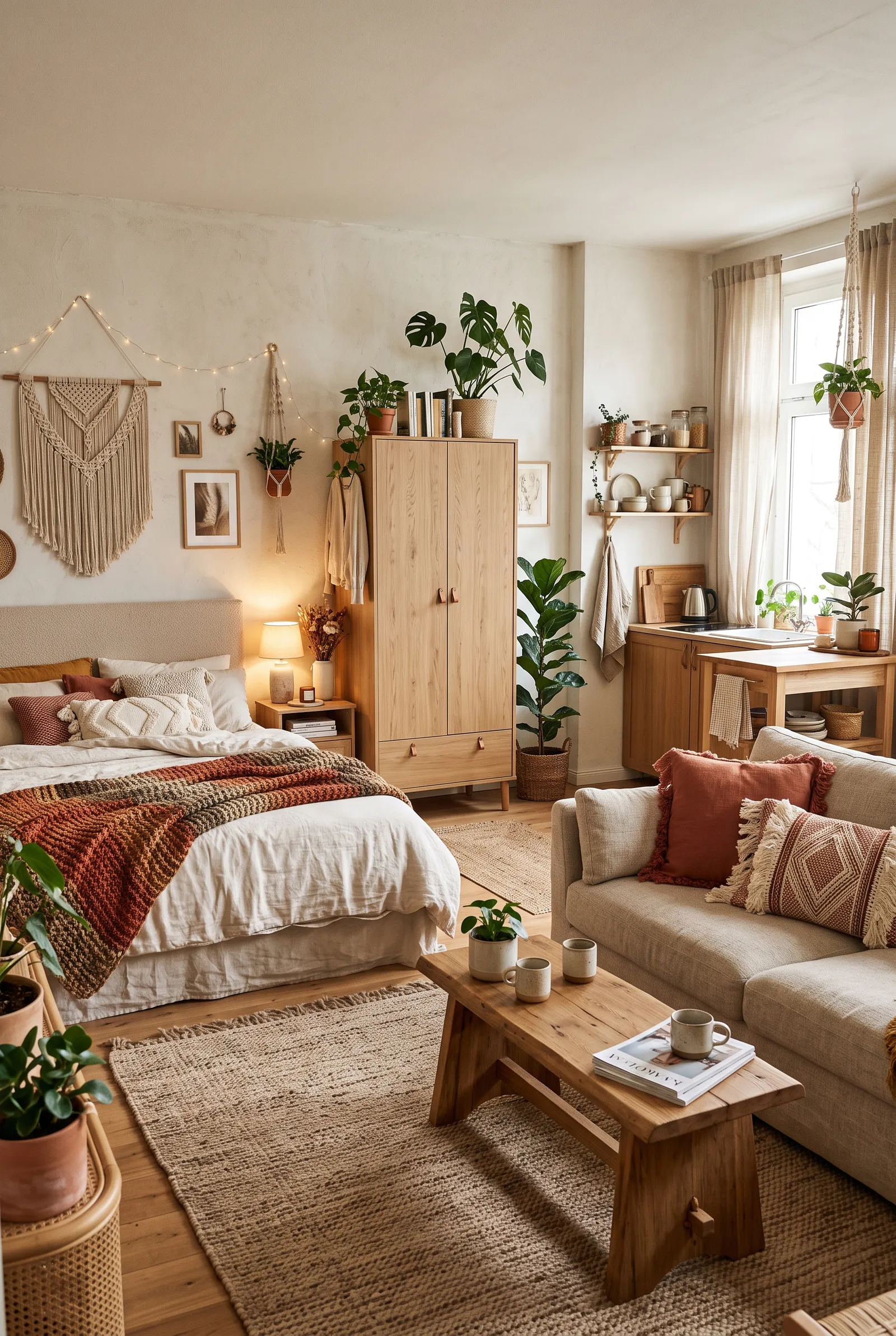
A freestanding wardrobe is one of the simplest ways to add proper clothing storage to a studio apartment.
Placing it beside the bed usually makes the most sense because it keeps the clothing zone connected to the sleeping area. Instead of having a large wardrobe dominate the living space, it becomes part of the bedroom portion of the studio.
Look for a wardrobe that is relatively slim but tall enough to make good use of vertical space. A combination of hanging space, shelves, and a drawer or two is often more useful than a wardrobe designed only for hanging clothes.
Try to leave enough space between the wardrobe and the bed so doors or drawers can open comfortably.
A wardrobe does not need to disappear into the room completely. It simply needs to feel like it belongs there.
For more ideas on arranging the entire space, you may also like these cozy studio apartment ideas.
2. Use a Wardrobe as a Room Divider
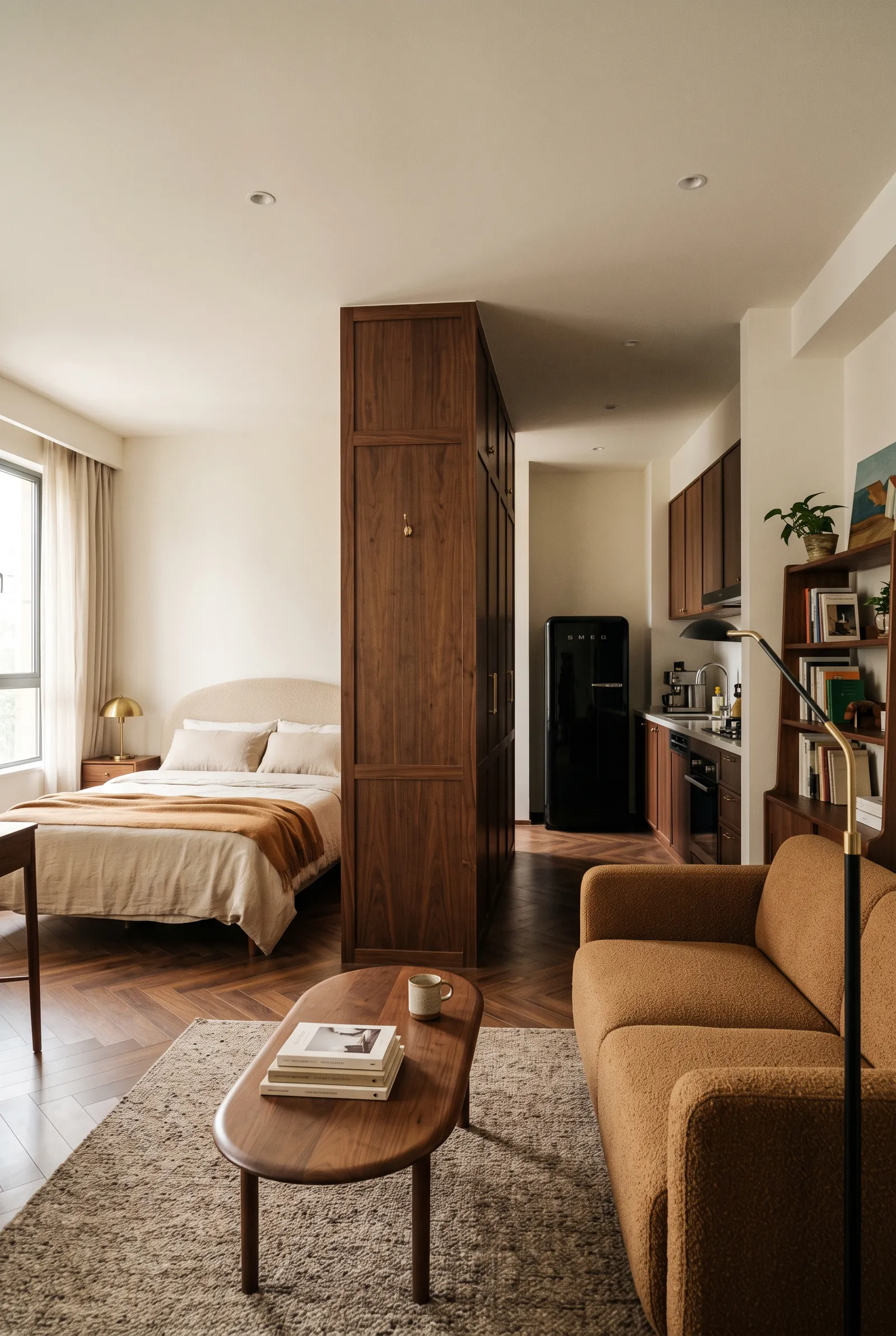
In a studio apartment, one piece of furniture can sometimes solve two problems at once.
A wardrobe positioned perpendicular to the wall can provide clothing storage while also creating a subtle boundary between the sleeping and living areas.
This works especially well in apartments where the bed feels too exposed from the sofa or entryway.
The wardrobe does not need to completely hide the bed. In fact, keeping some openness usually makes the room feel larger and allows daylight to travel through the space.
Before using this arrangement, think carefully about circulation. There should still be a comfortable route around the wardrobe, and its doors need enough clearance to open.
If separating the sleeping zone is one of your biggest challenges, these studio apartment room divider ideas offer more ways to create definition without closing off the room.
3. Add a Low Dresser at the Foot of the Bed
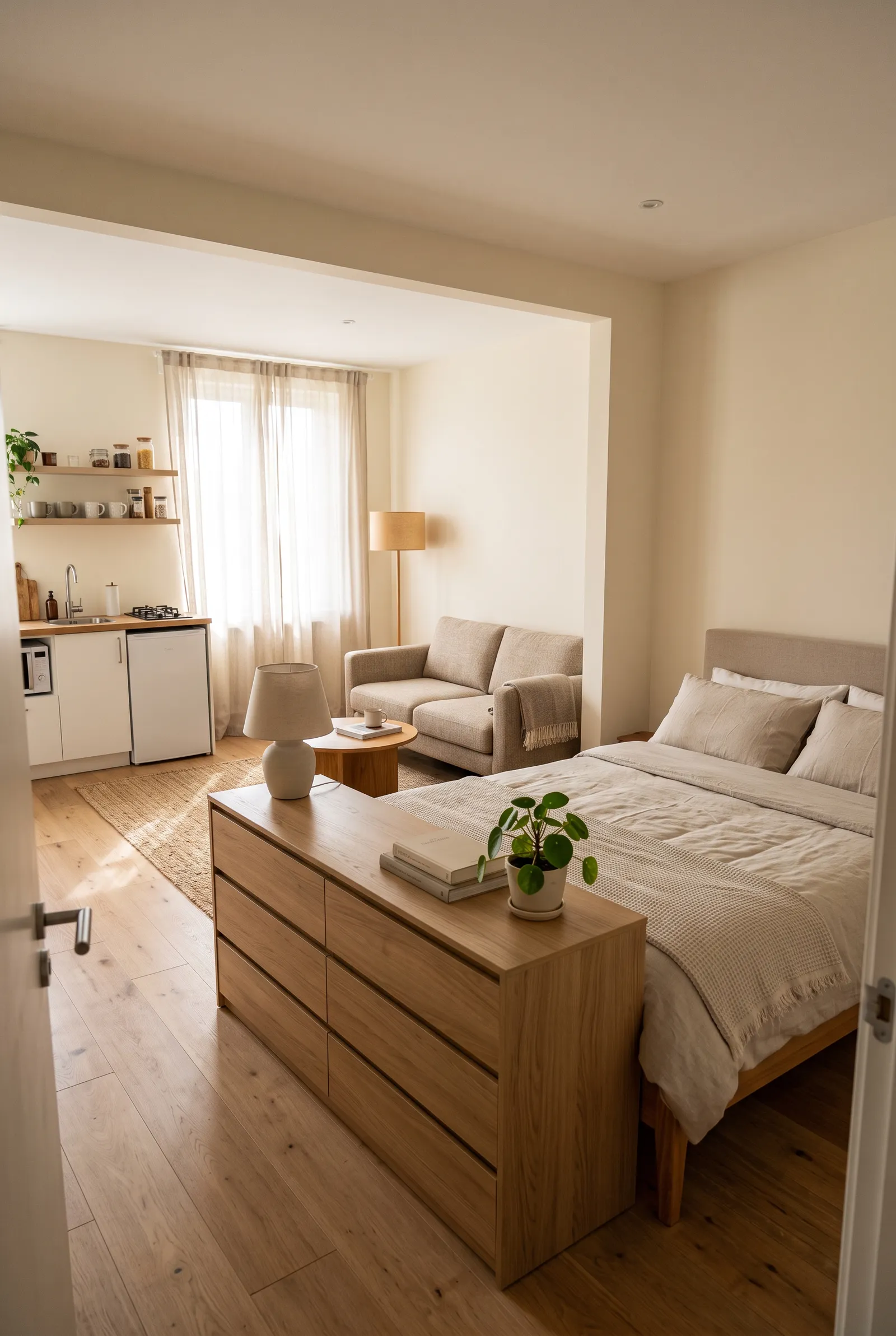
A low dresser can be a great alternative when a full-height wardrobe feels too bulky.
Placed at the foot of the bed, it provides useful drawer storage while keeping the sightline through the apartment open.
This is particularly helpful in a small studio because low furniture tends to make the room feel less crowded than tall cabinets placed in every direction.
Use the drawers for T-shirts, pajamas, jeans, knitwear, or smaller clothing items.
The top can also work as a small display surface for a lamp, books, a tray, or a few everyday objects.
Just make sure there is enough room to comfortably walk past the dresser.
4. Choose a Bed With Built-In Storage Drawers
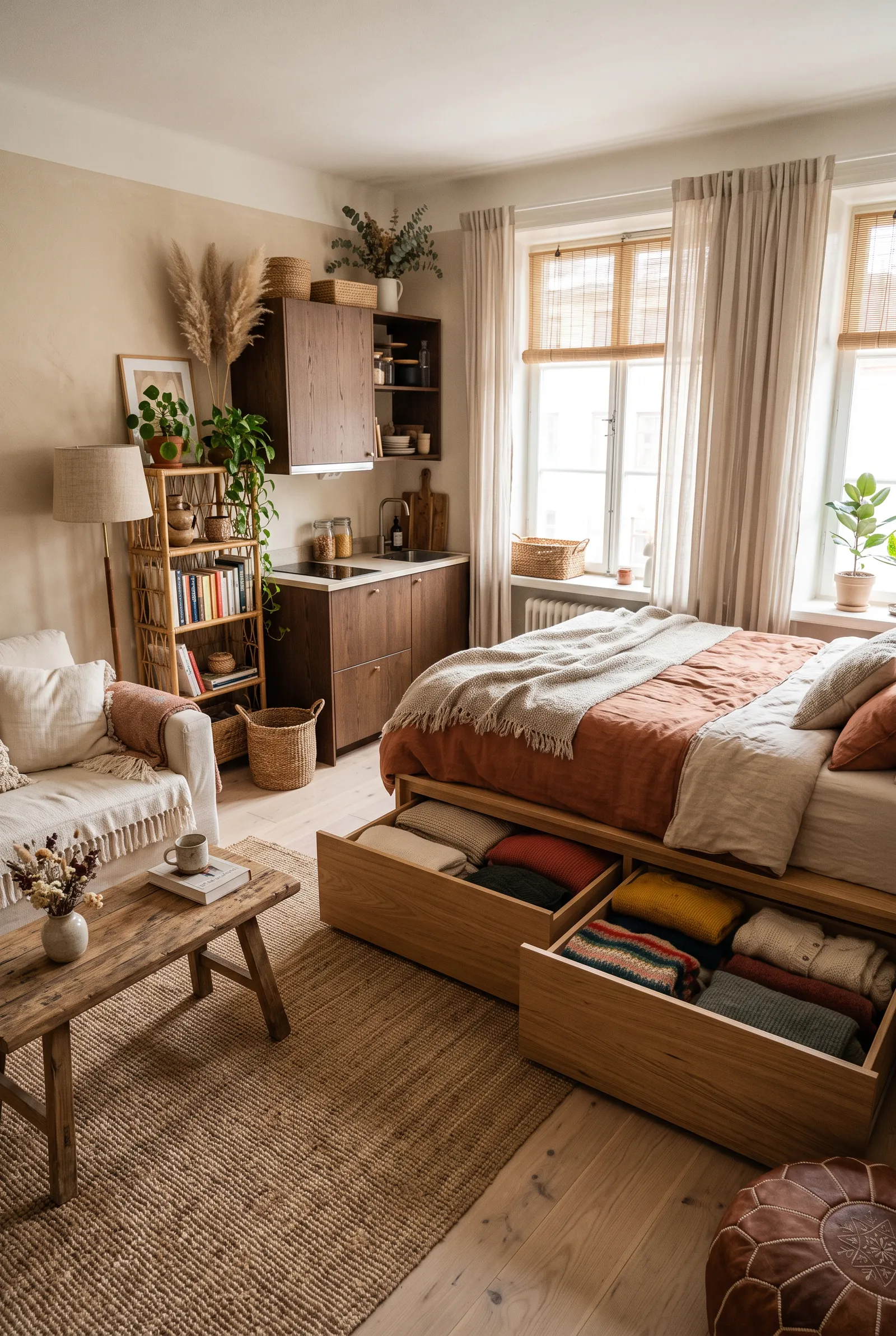
The area underneath the bed is some of the most valuable storage space in a studio apartment.
A bed with built-in drawers turns that unused area into a place for sweaters, jeans, workout clothes, seasonal pieces, or spare bedding.
This can significantly reduce the amount of additional storage furniture you need elsewhere in the room.
It is especially useful in very small studios where fitting both a large bed and a full wardrobe would leave little room for anything else.
Before buying a storage bed, check that there is enough space beside it to pull the drawers out fully.
Storage only works well when it remains easy to access.
5. Keep Everyday Clothes on a Simple Garment Rack
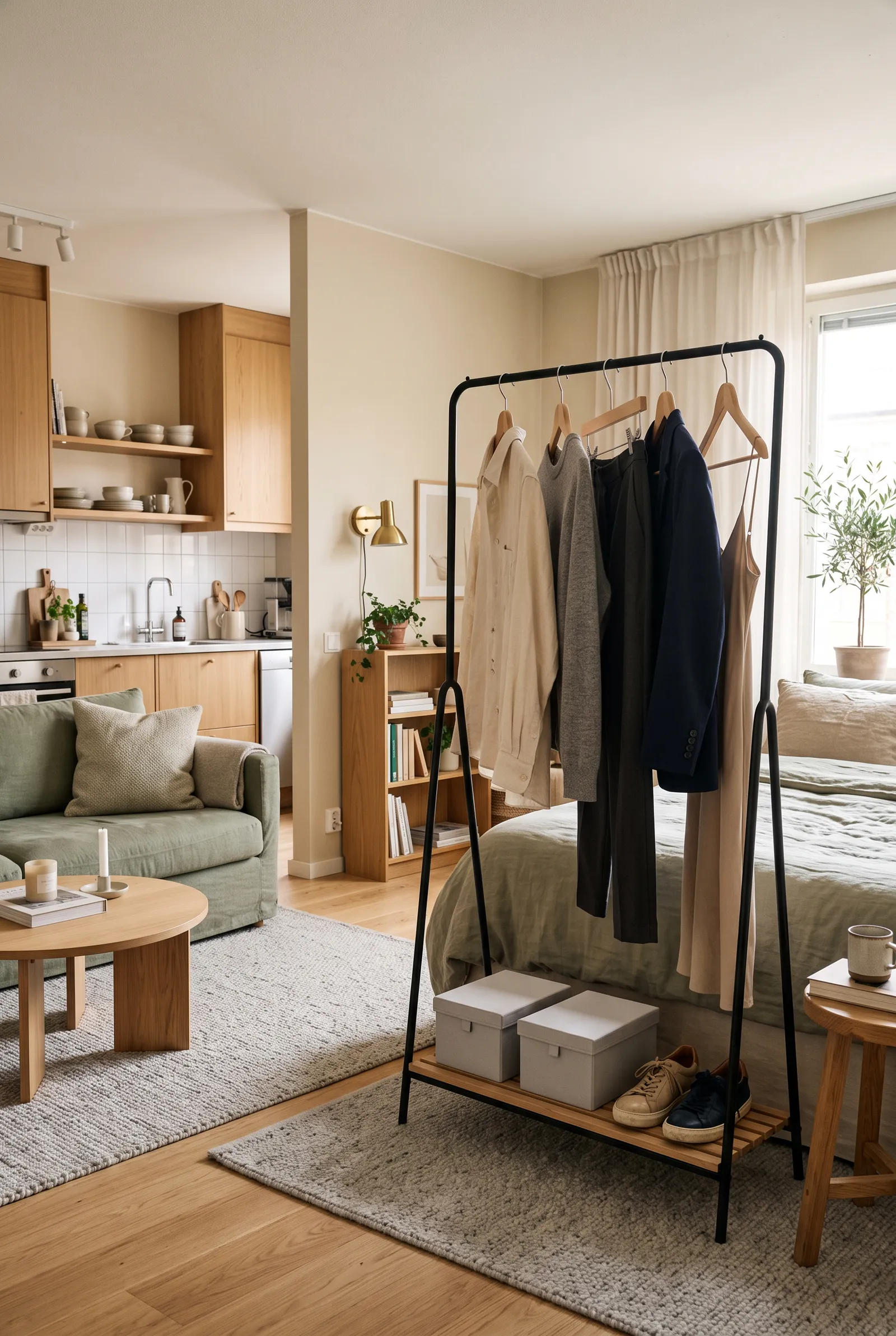
An open garment rack can be one of the most flexible clothing storage options for renters.
It is inexpensive, easy to move, and takes up less visual space than a large enclosed wardrobe.
The challenge is keeping it from becoming cluttered.
Instead of trying to store your entire wardrobe on the rack, use it for the clothing you wear most often. Jackets, shirts, trousers, and a few favorite pieces can stay visible, while less attractive items are stored elsewhere.
Matching hangers and a little empty space between garments can make even a basic clothing rack look much more intentional.
6. Pair a Garment Rack With a Dresser
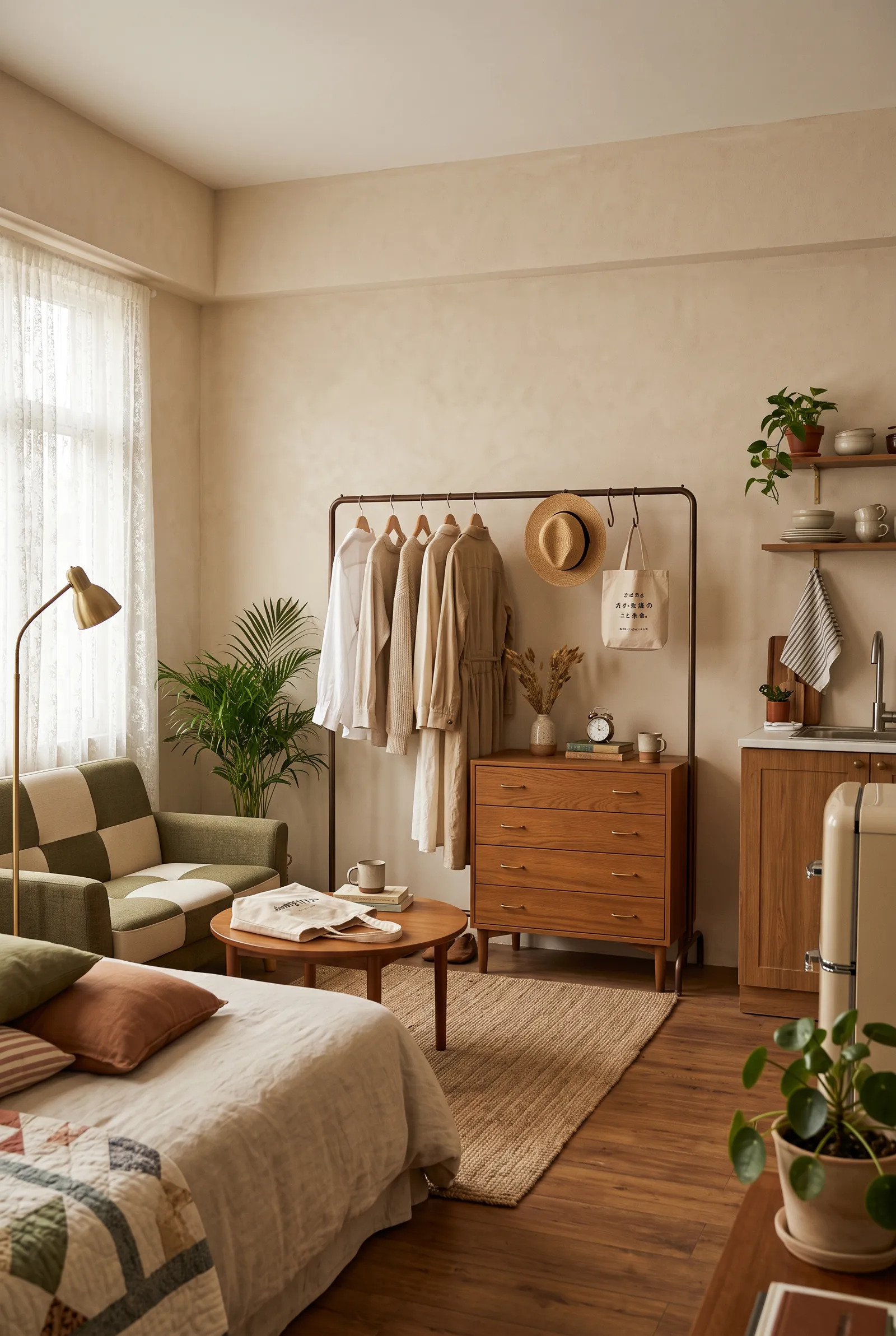
If a garment rack does not provide enough storage on its own, pair it with a small dresser.
This creates two different types of storage in one compact zone: hanging space above and drawer storage below or beside it.
Keep shirts, dresses, jackets, and trousers on the rail, while socks, underwear, T-shirts, and knitwear stay hidden in drawers.
This setup often works well for renters because neither piece needs to be permanently installed.
It can also be easier to fit into an awkward wall than one oversized wardrobe.
7. Hide Clothing Storage Behind a Curtain
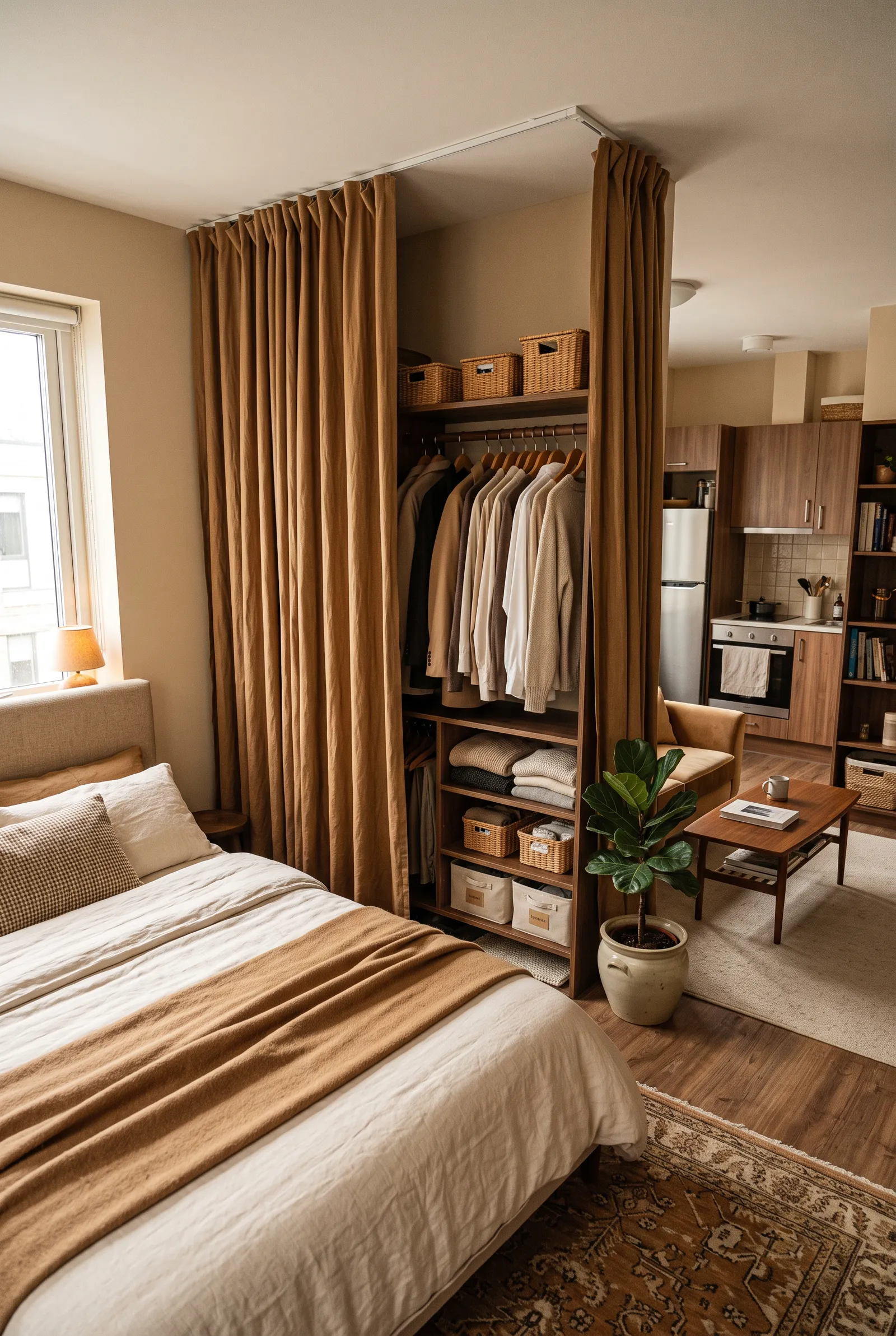
Open clothing storage can make a small room feel visually busy, even when everything is organized.
A curtain is an easy way to hide that visual clutter without building a wall.
A ceiling-mounted curtain can cover a garment rack, shelves, or a simple open wardrobe system. When you need your clothes, pull it open. When you want the apartment to feel calmer, close it.
Because fabric is much lighter visually than a solid partition, this solution can work especially well in a studio.
Choose a curtain that feels connected to the rest of the room rather than something that looks like a temporary screen.
8. Put a Narrow Wardrobe Near the Entry
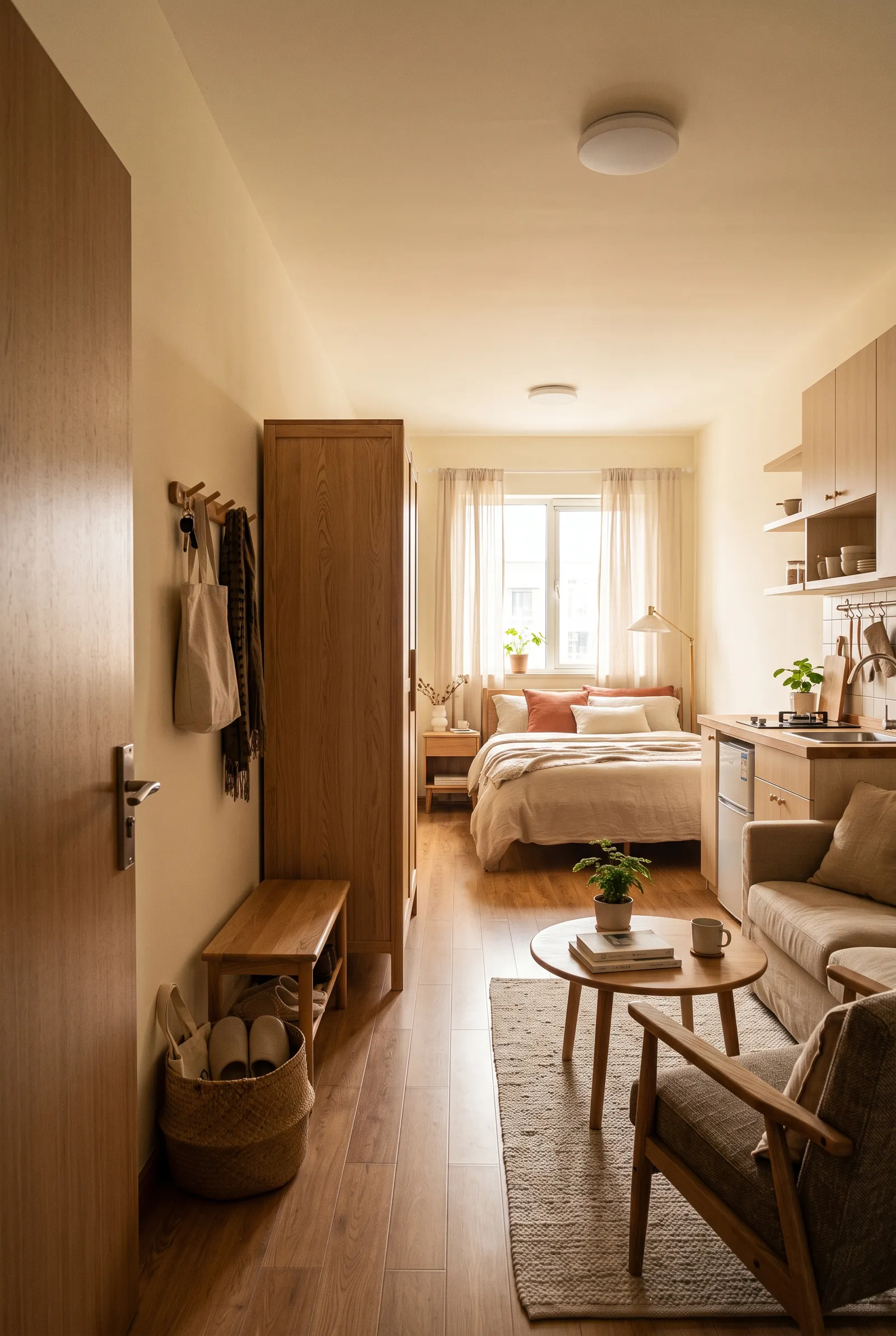
The bed area is not always the best place for clothing storage.
If the studio has a little extra wall space near the entrance, a narrow wardrobe can create a practical mini entry zone.
It can hold coats, bags, shoes, and some everyday clothing while preventing these items from spreading into the rest of the apartment.
This arrangement works particularly well when the sleeping area is already tight.
The most important thing is keeping the entry path clear. The wardrobe should never make the front door difficult to open or create an awkward bottleneck between the kitchen and living area.
9. Mount a Clothing Rail Above a Dresser
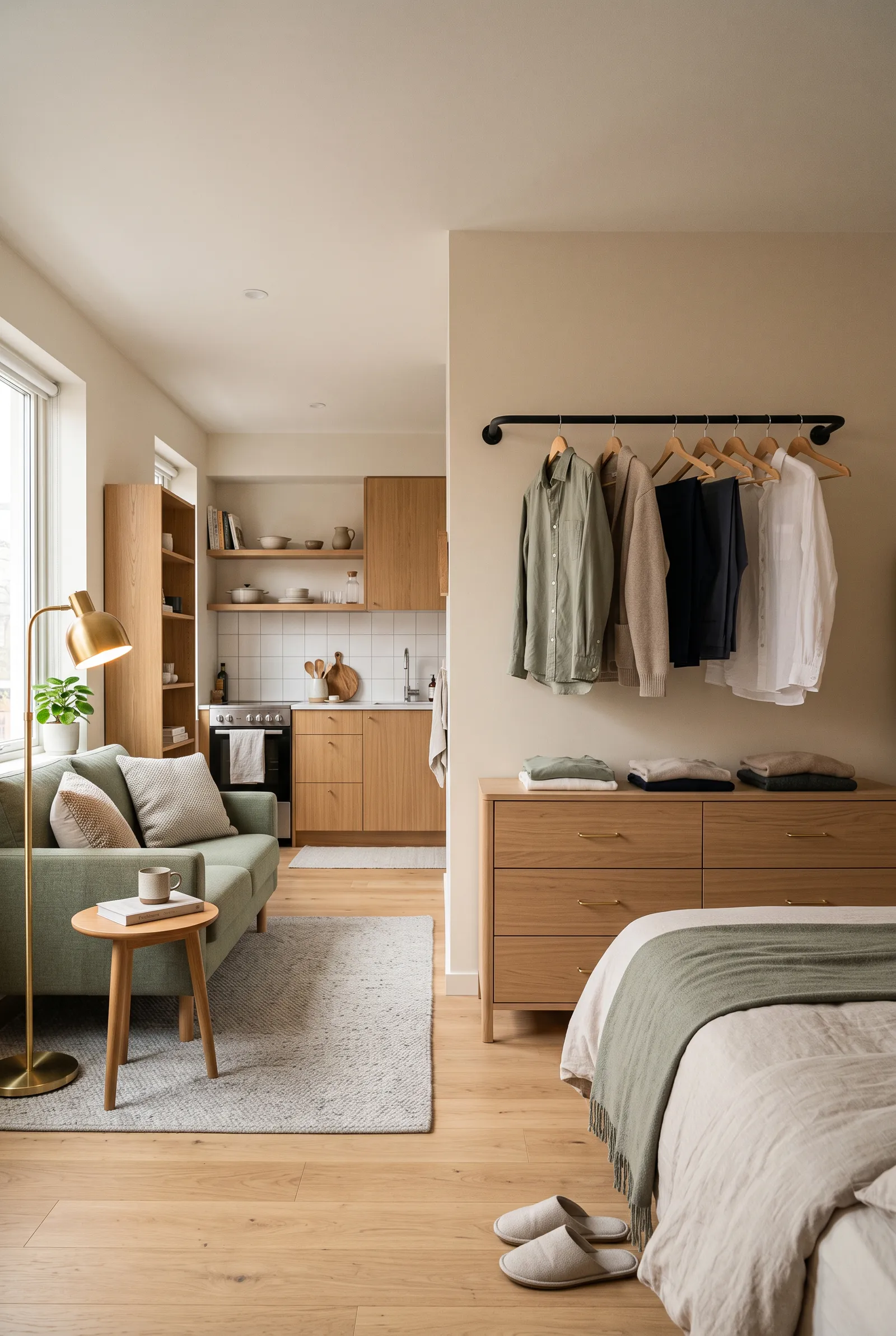
Combining a wall-mounted rail with a dresser is a clever way to use vertical space.
The dresser provides hidden storage below, while the rail above creates hanging space without requiring a full wardrobe.
This can work beautifully on a short wall beside the bed or in an otherwise unused section of the apartment.
Avoid filling the rail completely from one end to the other. A little breathing room helps open storage look intentional rather than overcrowded.
A shelf above the rail can add even more storage for baskets, hats, or items you do not use every day.
10. Slide Storage Boxes Under a Regular Bed
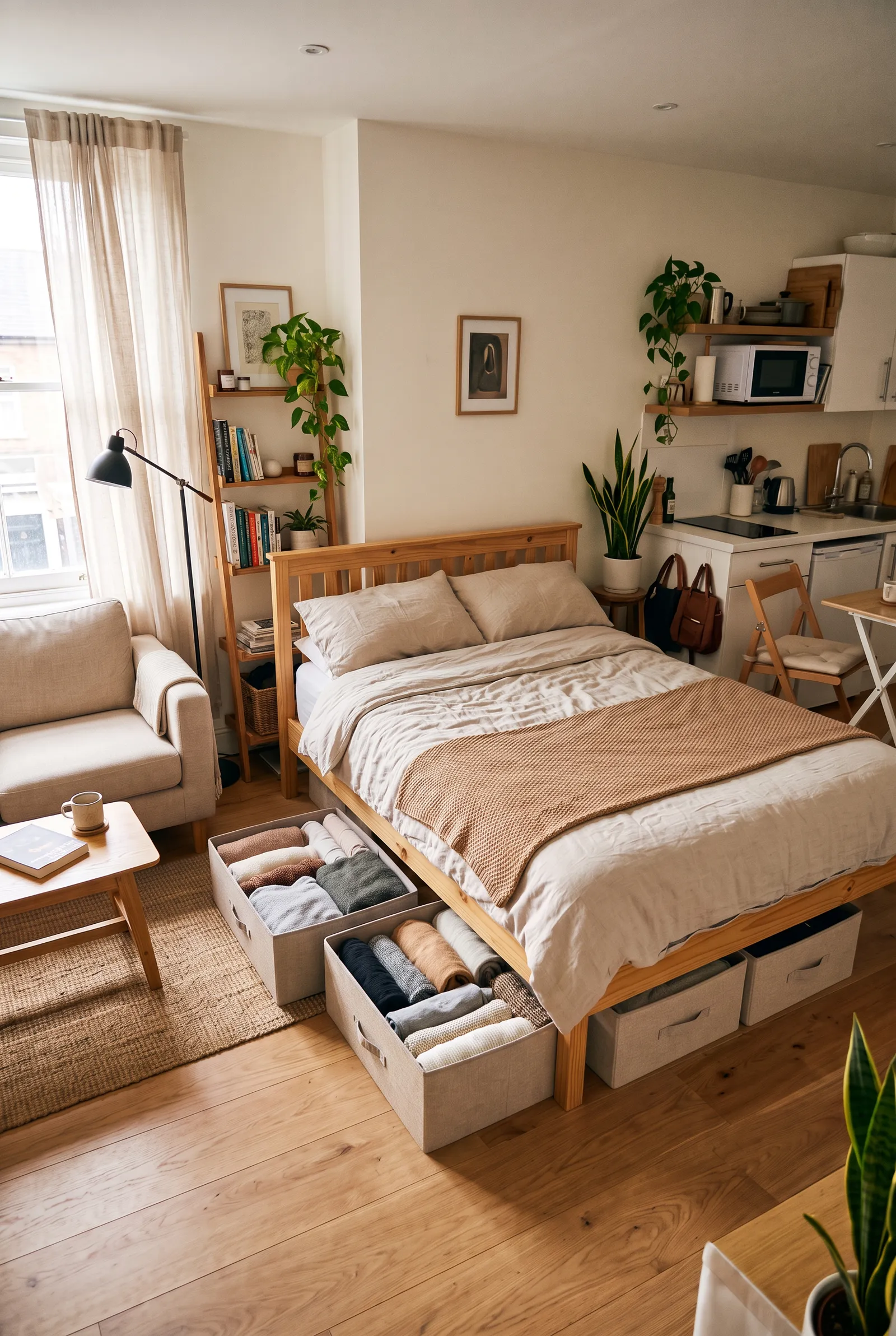
You do not need a special storage bed to make use of the space underneath it.
Low-profile boxes, fabric containers, or rolling bins can work just as well beneath a standard bed frame.
Use them for seasonal clothing, extra sweaters, shoes, or anything that does not need to be accessed every morning.
Containers with lids help protect clothing from dust, while handles or wheels make them much easier to pull out.
If the boxes are visible, choosing similar containers can make the setup feel much more organized.
It is one of the easiest renter-friendly storage upgrades you can make.
11. Fill an Awkward Corner With a Tall Dresser
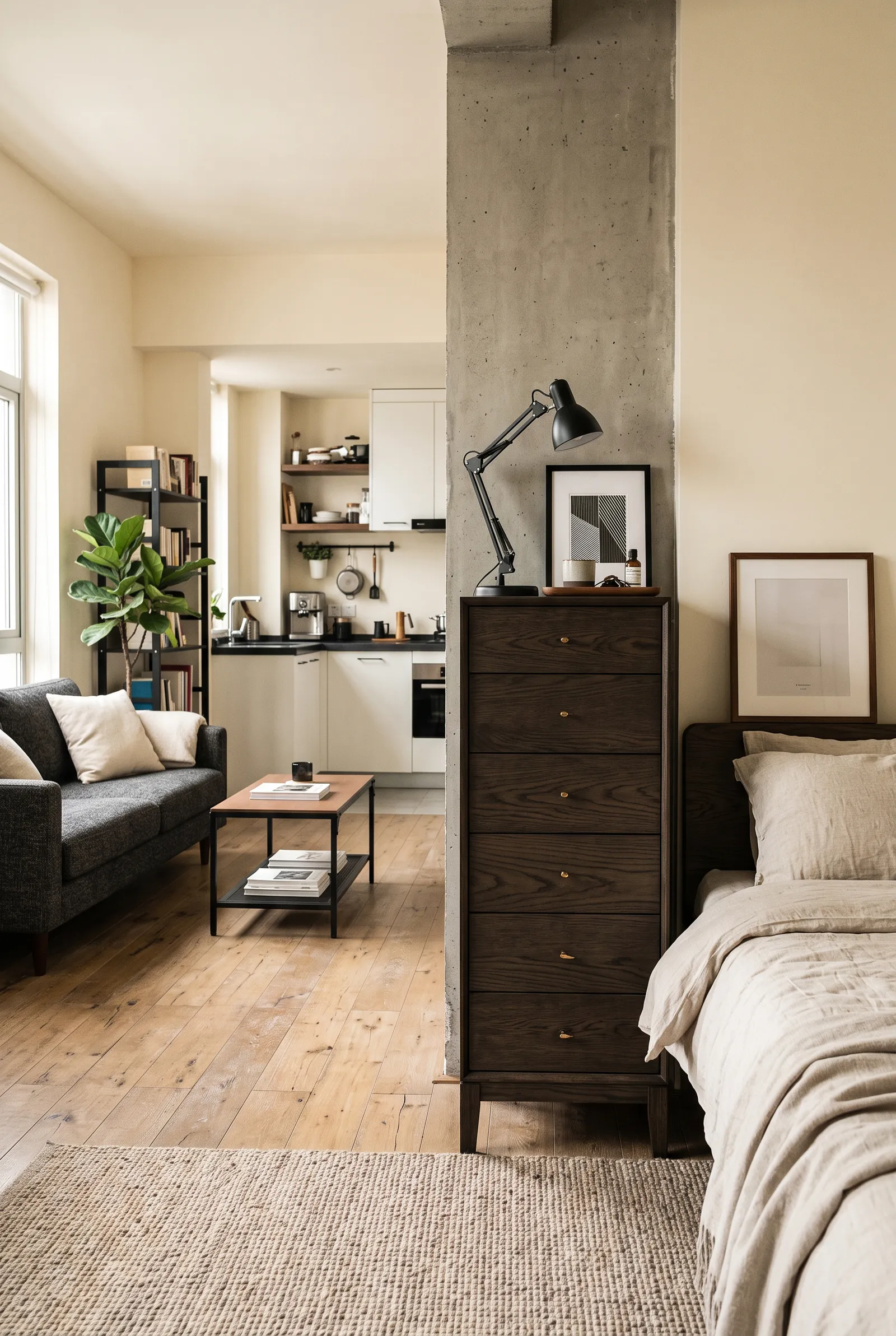
Small apartments often have narrow corners that are difficult to use.
A tall dresser can turn one of these awkward spaces into useful clothing storage.
Because it uses vertical rather than horizontal space, it can provide several drawers without taking over an entire wall.
This works well beside a window, next to the bed, or in a corner that is too narrow for a full wardrobe.
Choose a relatively shallow dresser if the space is close to a main walkway.
In a studio, even a few extra inches of circulation space can make a noticeable difference.
12. Create an Open Wardrobe Along One Wall
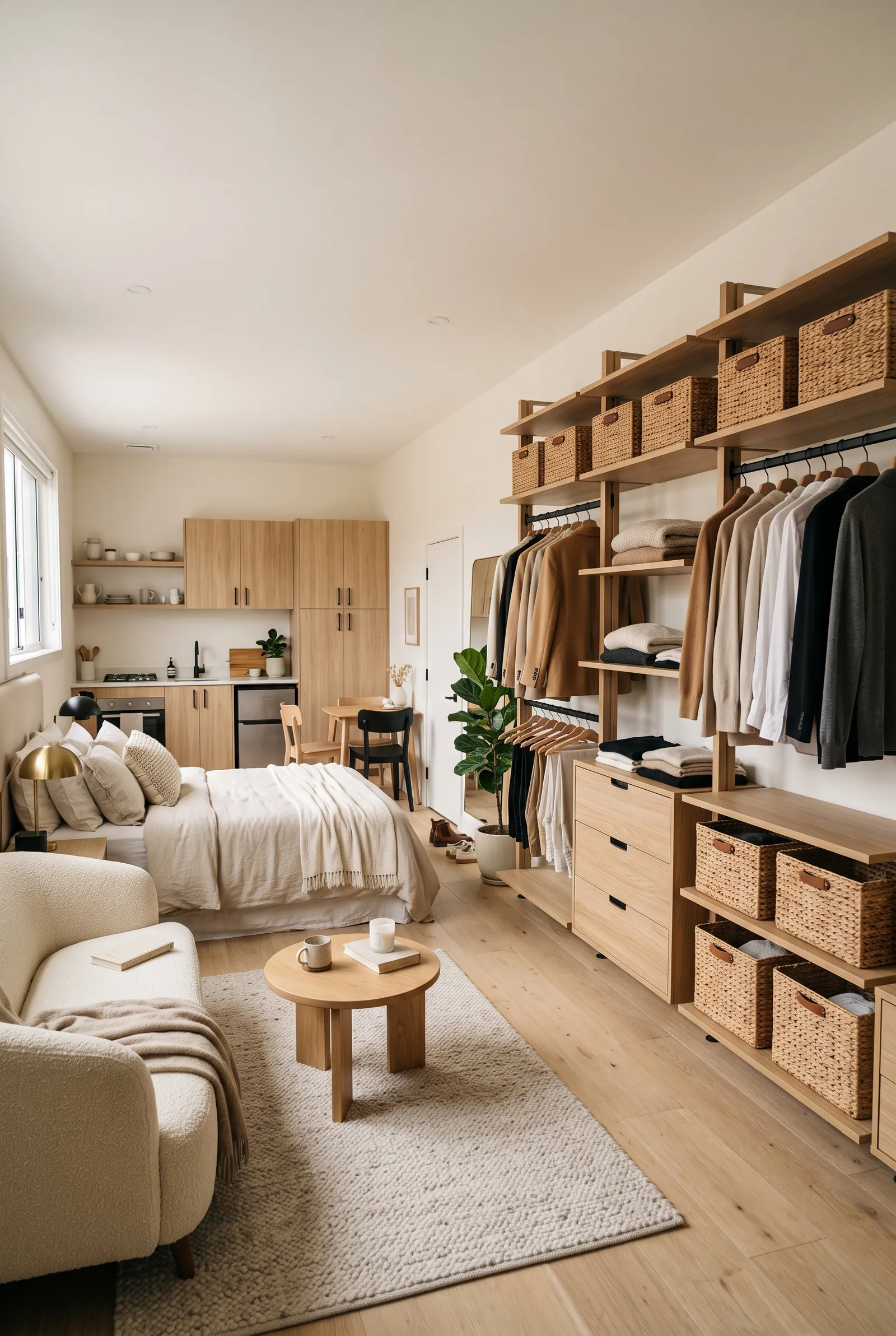
If you have one long blank wall, consider turning it into a dedicated clothing storage zone.
A modular open wardrobe system can combine hanging rails, drawers, shelves, and baskets in one place.
Keeping most clothing storage on a single wall can actually make a studio feel more organized than scattering dressers, racks, and cabinets around the apartment.
The key is visual control.
Use matching hangers, repeat similar baskets or boxes, and avoid filling every shelf completely.
An open wardrobe looks best when there is still a little negative space.
13. Use a Storage Bench at the Foot of the Bed
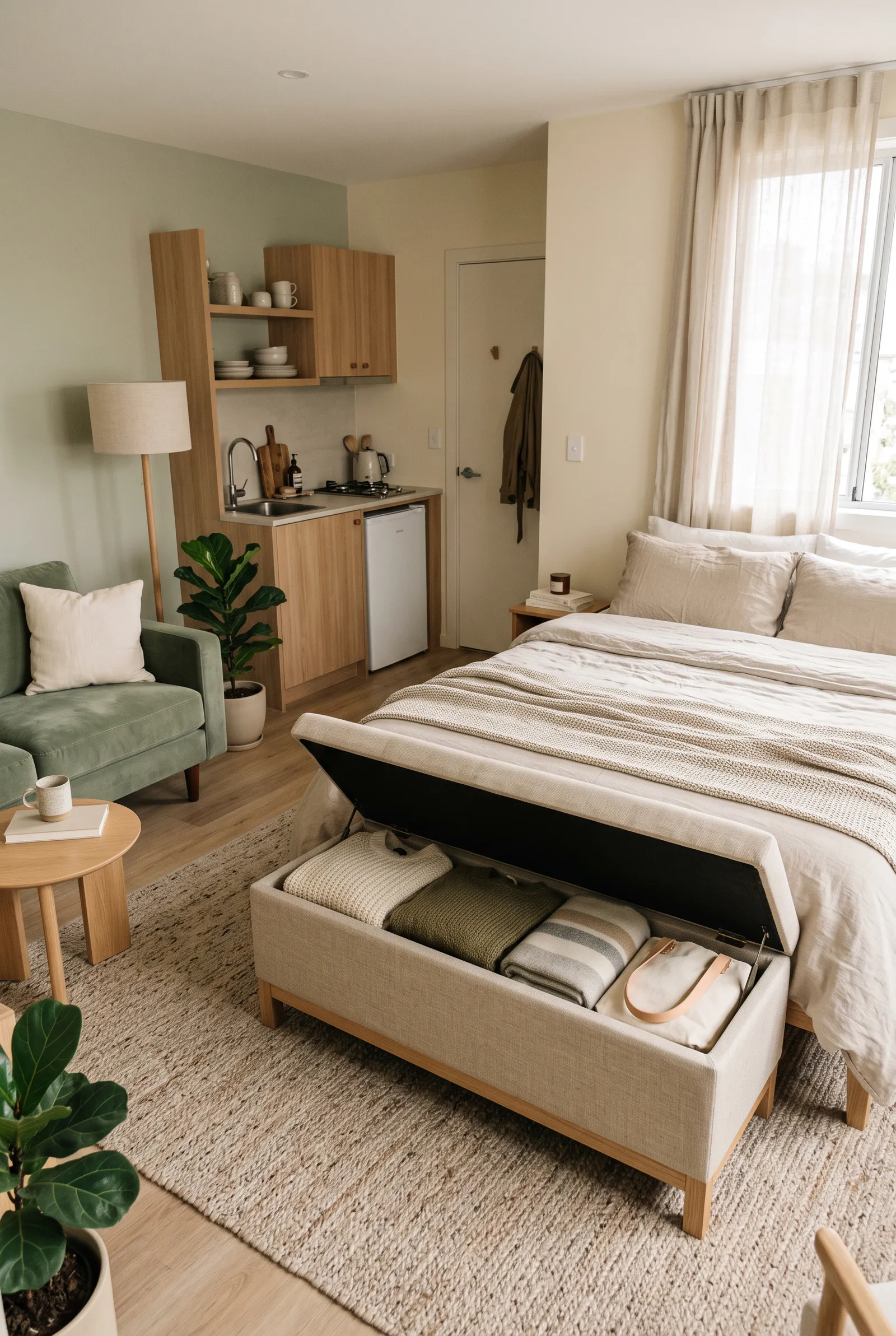
A storage bench is especially useful in a studio because it can serve several purposes at once.
Place one at the foot of the bed to create hidden storage for sweaters, bags, spare bedding, or seasonal clothes.
It also gives you somewhere to sit while getting dressed.
Choose a bench that is narrower than the bed so it does not interrupt the walkway around the sleeping area.
In very small spaces, furniture that performs two jobs is often more useful than adding another cabinet.
14. Group a Wardrobe and Bookshelf Together
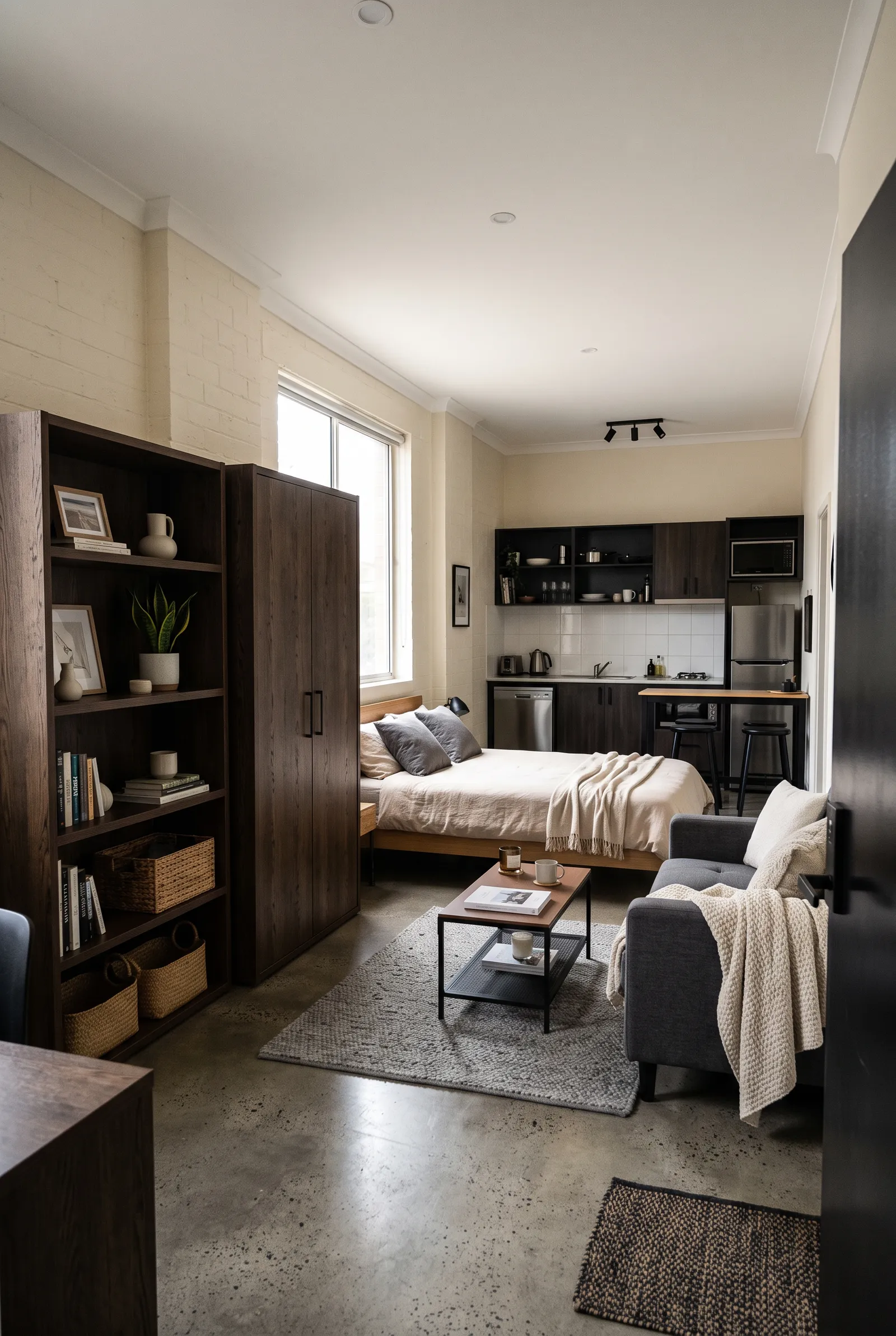
Clothing is not the only thing that needs storage in a studio apartment.
Books, baskets, electronics, decor, and everyday objects all compete for space too.
One way to make the room feel more organized is to group tall storage furniture together.
A wardrobe placed beside a bookshelf creates one dedicated storage wall instead of spreading large furniture across several parts of the room.
The wardrobe can hide clothing, while the bookshelf handles books and smaller objects.
Keeping taller pieces together often allows the rest of the apartment to feel more open.
15. Create a Small Dressing Corner
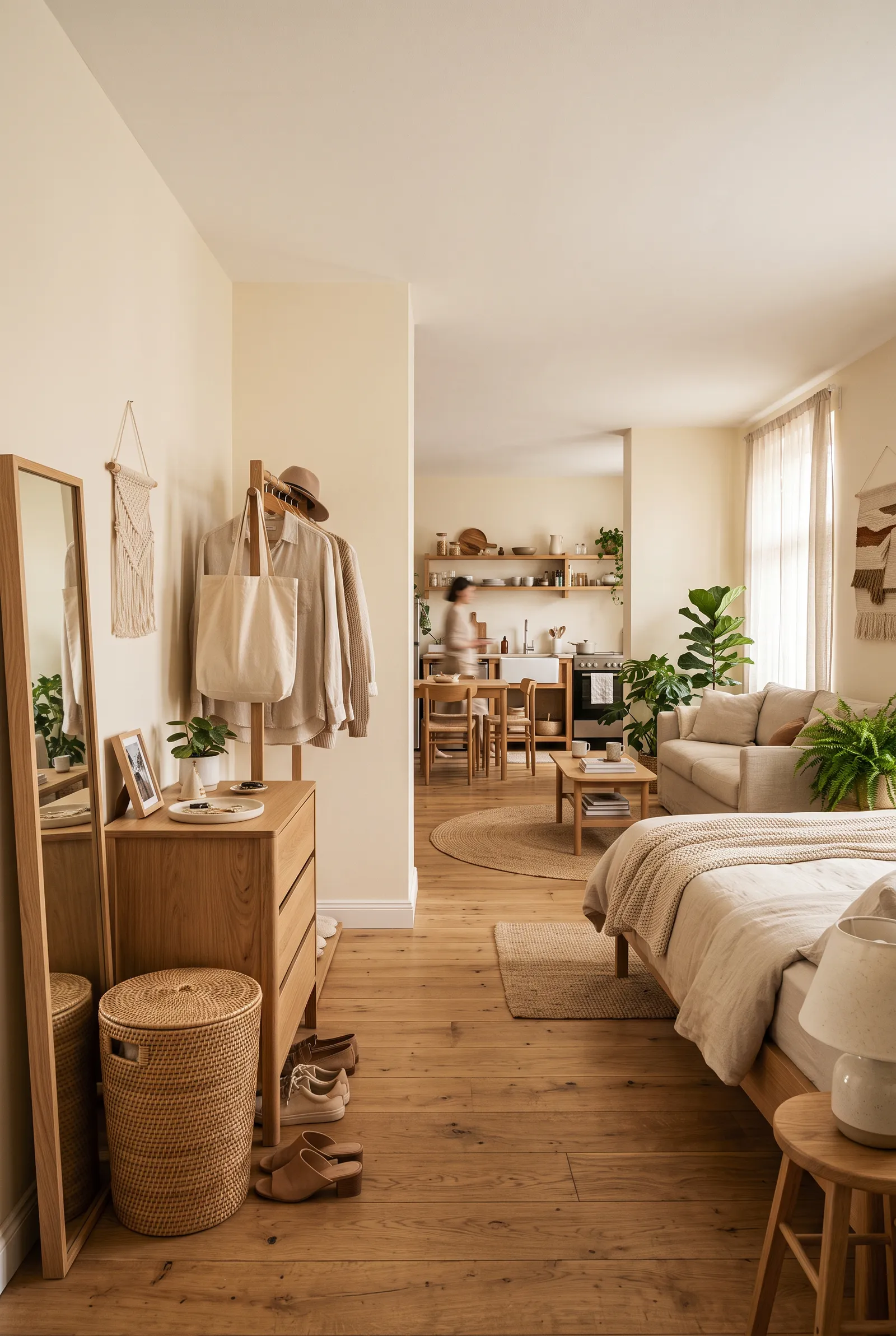
Even a studio apartment can have a small dedicated dressing area.
You do not need a separate room.
A narrow wardrobe or garment rack, a small dresser, a full-length mirror, and a laundry basket can be enough to turn an unused corner into a functional dressing zone.
Keeping these items together also helps prevent clothes from ending up on the bed, sofa, or dining chair.
Look for a corner close to where you naturally get dressed, but make sure it does not interfere with the apartment’s main circulation path.
The goal is not to recreate a walk-in closet.
It is simply to give clothing a clear and intentional place within the room.
Final Thoughts
Clothing storage in a studio apartment is really a layout problem as much as it is a storage problem.
A huge wardrobe is not automatically better if it makes the room difficult to move through. At the same time, relying entirely on open racks can make a small apartment feel visually cluttered.
The right solution depends on how much clothing you own, what needs to hang, what can be folded, and where storage can fit naturally into your layout.
For some studios, a slim wardrobe beside the bed may be enough. Others may work better with under-bed drawers, a dresser, a garment rack, or a combination of several smaller pieces.
The best storage setup is one that gives everything a place while allowing the apartment itself to still feel comfortable, open, and easy to live in.
More Studio Apartment Ideas
 |  |  |
|---|---|---|
Studio Layouts  | Elevated Studio | Open Dividers |