In a studio apartment, the space beneath the bed is tempting: it is hidden, close to where you get dressed, and already part of the room’s footprint. But a box that barely fits under the frame may be impossible to pull out beside a sofa or wardrobe. Dust, floor vents, and awkward bed supports can also turn that space into a place where things are forgotten.
Start with the bed you actually have and the objects you need to store. These ideas match different containers and access methods to different contents. For a wider look at storage throughout the studio, see the studio apartment storage guide.
1. Measure the Usable Space, Not Just the Gap
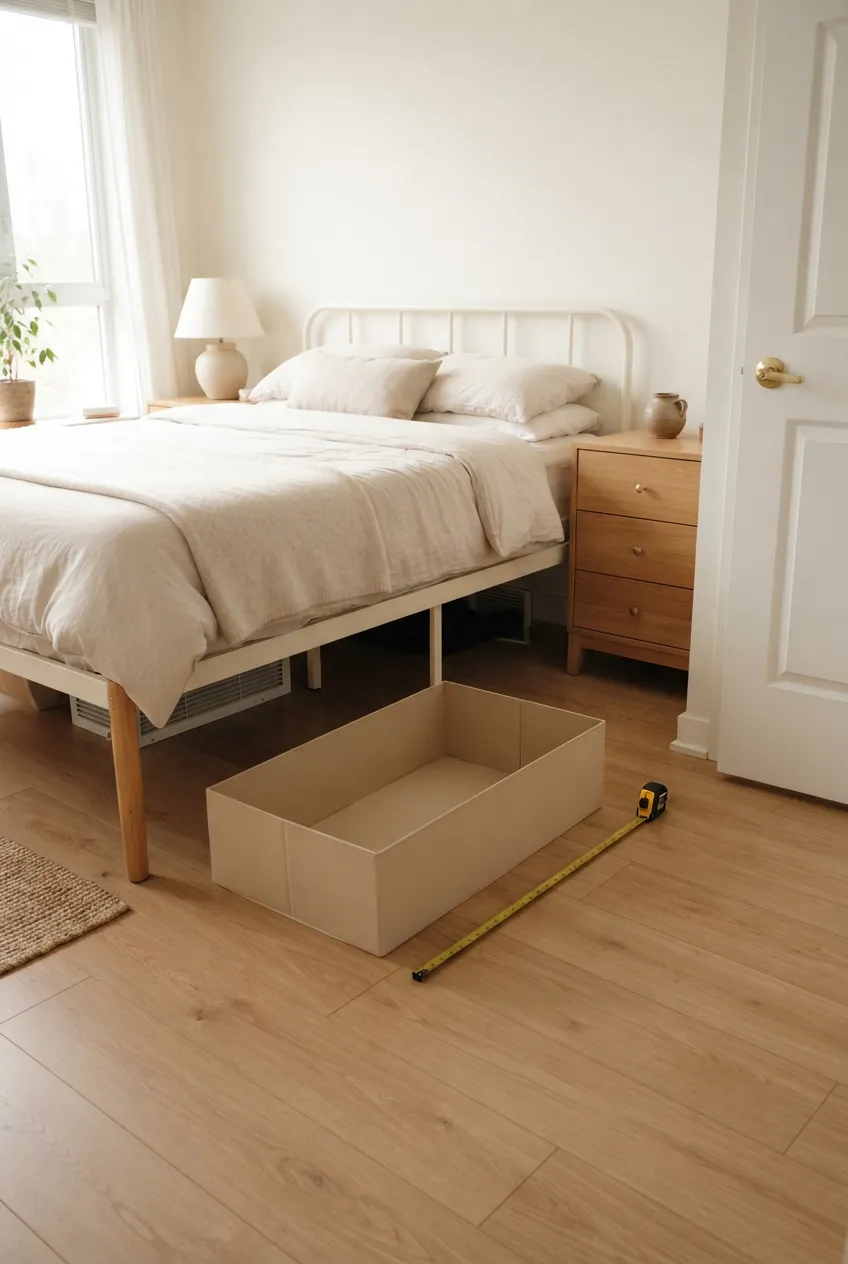
Measure from the floor to the lowest rail, support, or hanging fabric under the bed. Then measure the clear width and depth between legs and center supports. A container needs room for its lid, wheels, handles, and your hand, so leave a little clearance instead of buying one that exactly matches the gap.
Pull a suitcase or a cardboard template out from the side you can actually reach. Check that an open wardrobe door, nightstand, sofa, or the route to the bathroom does not block the move. Keep floor vents, heaters, and any manufacturer’s required clearance open. A bed pushed against a wall may offer access from only one side; plan from that side rather than counting the whole area as usable.
2. Use Shallow Lidded Bins for Off-Season Clothes
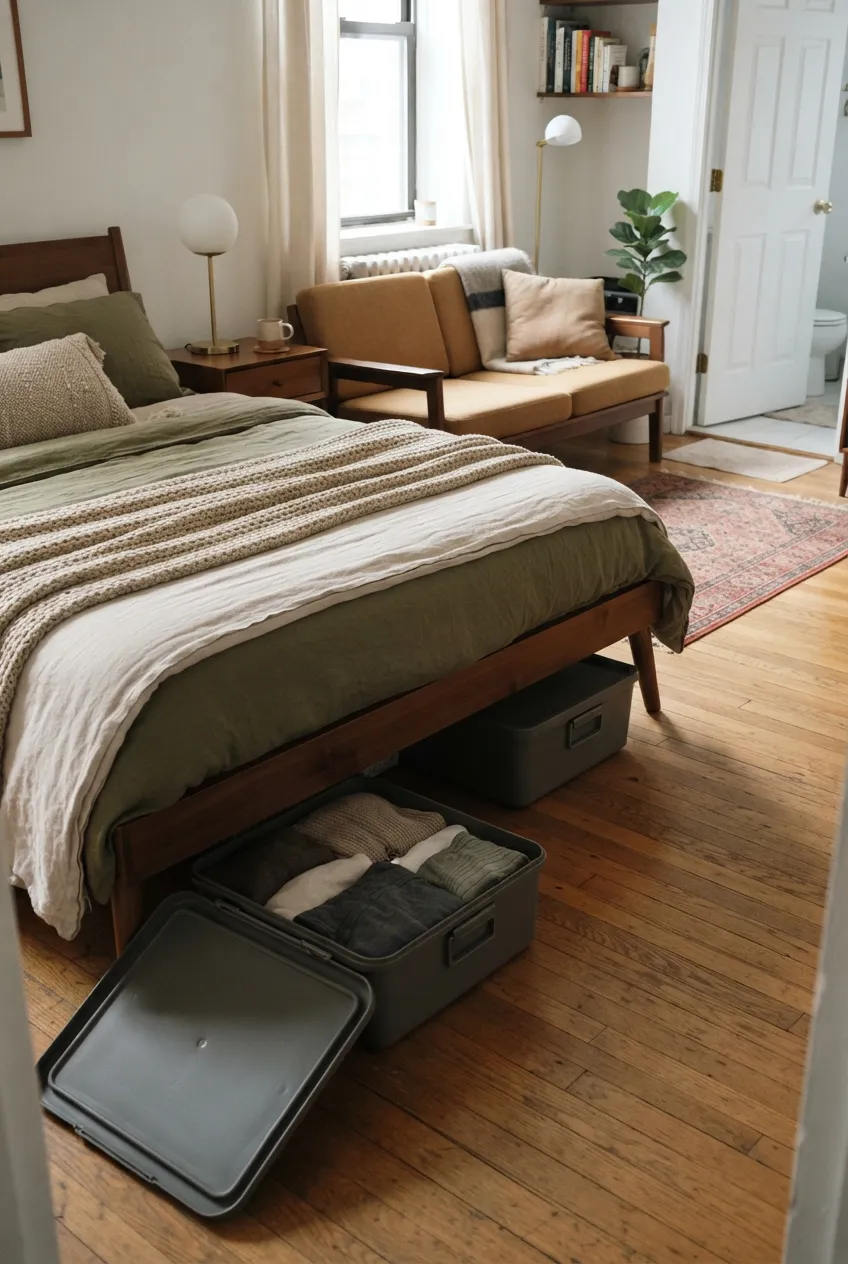
Clean, completely dry sweaters and out-of-season clothes can go in shallow bins with lids. Fold by category and avoid packing the bin so tightly that the lid bows or the bin becomes difficult to lift. A rigid container helps protect folded stacks from dust and makes it easier to slide them out without dragging fabric across the floor.
Measure the bin’s total outside height with its lid attached and check that it can be removed fully beside the bed. If this fits your frame, browse low-profile under-bed storage bins on Amazon and compare actual outside dimensions, lid style, and handles with your measurements. For other clothing locations, the studio clothing storage ideas cover wardrobes, dressers, and racks.
3. Give Spare Bedding a Soft, Zippered Case
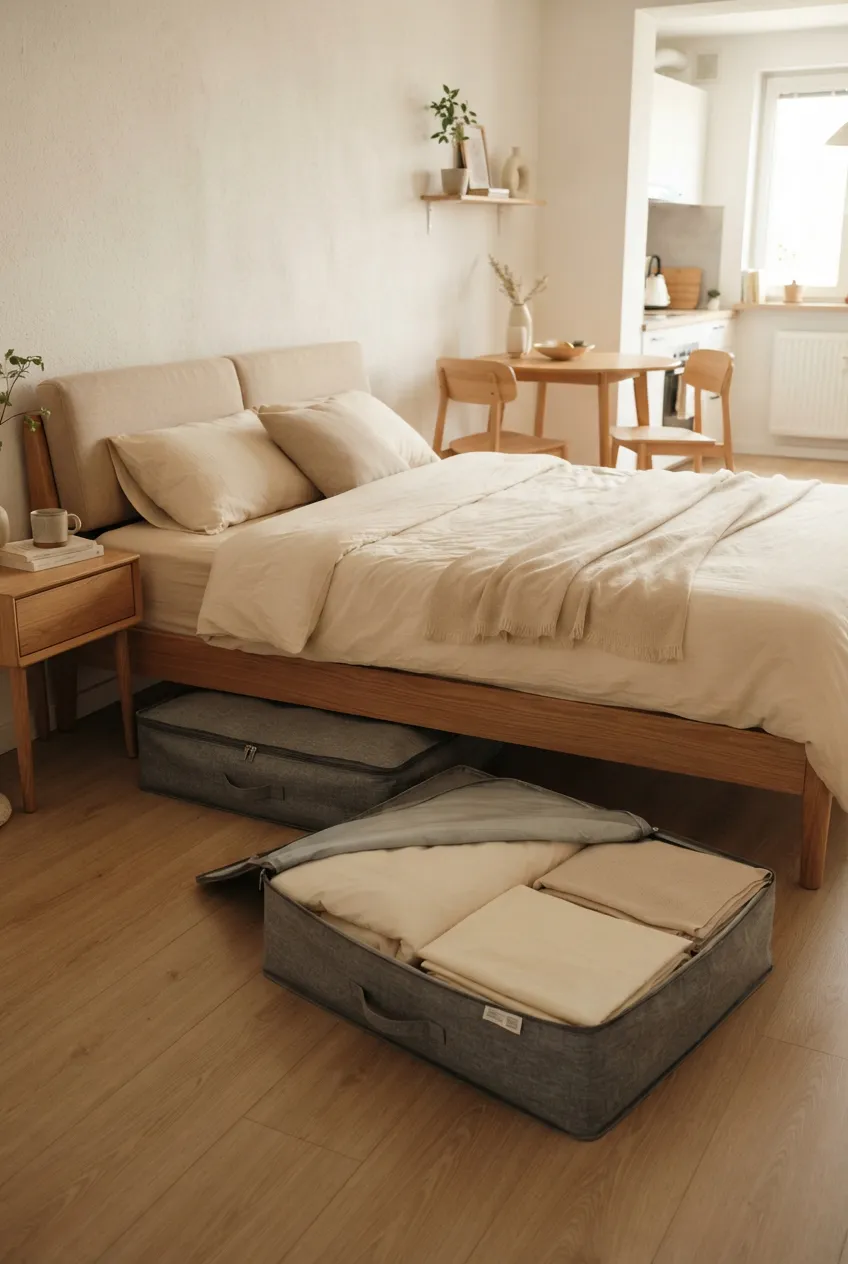
Spare sheets and lightweight blankets can fill an awkward shallow space without needing a hard plastic box. Fold the set together, place it in a zippered fabric case, and keep the opening facing the accessible side. Choose a case that closes without crushing the contents and is easy to carry to the bed.
Use only clean, fully dry bedding and follow its care label; fabric that needs loft or air circulation should not be tightly compressed for long periods. If a soft case suits your bedding and floor conditions, browse under-bed fabric storage bags on Amazon and compare filled height, zipper access, handles, and material. Do not place any soft bag against a heater or over a floor vent.
4. Separate Occasional Shoes in a Flat Case
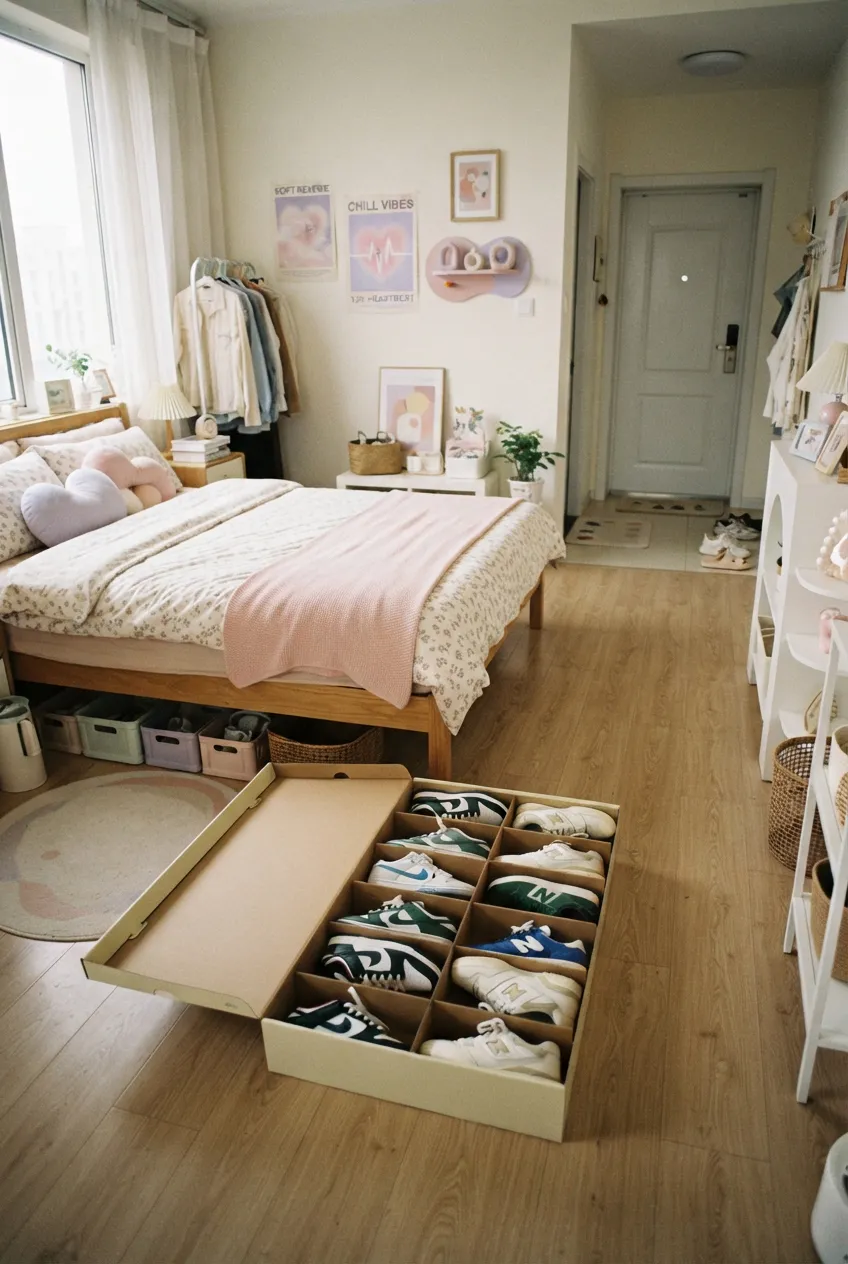
Shoes worn only for specific seasons or occasions can live under the bed if they are clean and completely dry. A shallow case with dividers keeps pairs visible and prevents them from rubbing together. Check the height of the tallest pair before buying; shoes that must be flattened to close the case belong somewhere else.
Place the case on the side with the easiest reach, not behind several clothing bins. Shoes worn every morning should stay near the entrance or closet instead. The shoe storage guide covers the full range of shoe locations; this is one under-bed option for occasional pairs.
5. Put Weekly-Use Extras in a Rolling Drawer
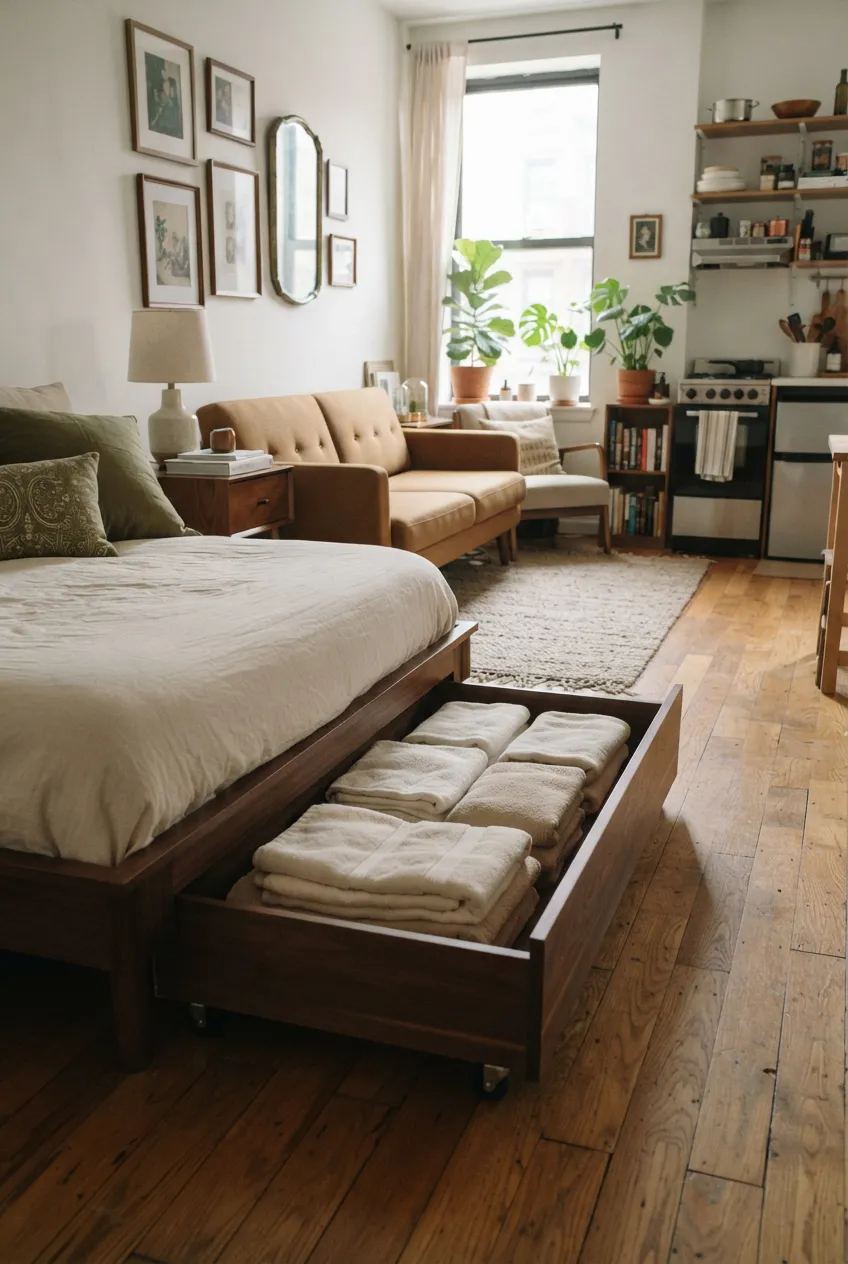
If you pull something out every week, a wheeled drawer can be less awkward than lifting a heavy box. Use it for a small, stable category such as spare workout clothes or extra towels, not a jumble of unrelated objects. The contents should remain below the rim so the drawer slides back without catching the bed frame.
Test the wheels on your actual floor or rug and check the complete drawer height, including wheels and handle. Leave space to pull it completely clear of the bed and stand beside it. Where the floor is suitable, browse rolling under-bed storage drawers on Amazon and compare wheel direction, outer height, lid or cover, and the space needed to pull one out. A drawer that rolls only straight forward may not work beside a tight sofa.
6. Assign a Job to Existing Bed Drawers
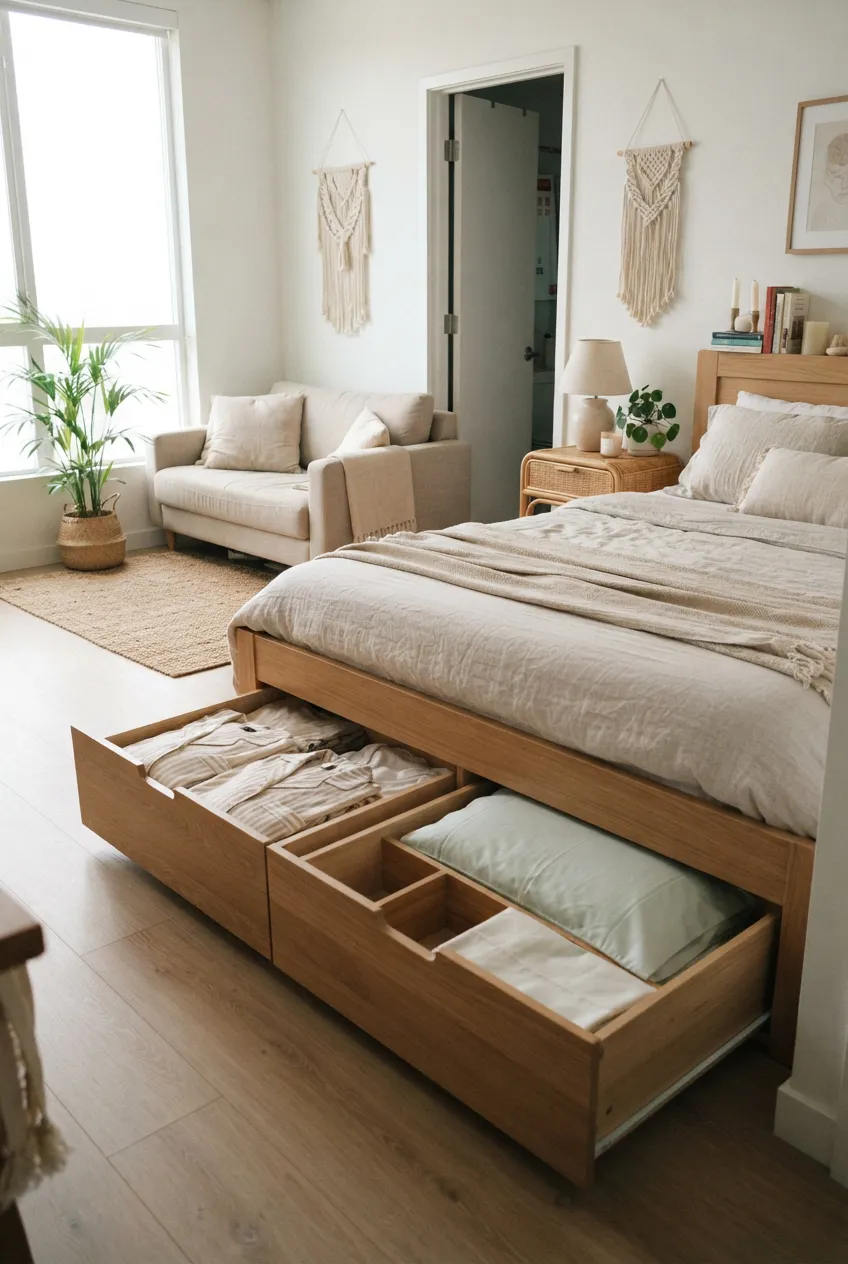
A bed frame with built-in drawers already gives you defined compartments. Give each drawer a clear job—one for sleepwear, another for spare linens, perhaps one for infrequently used accessories—so you can find things without emptying the bed. Use small internal dividers only if they do not make the drawer harder to open.
Pull every drawer fully open before assigning it. A bedside table or sofa pressed against the bed may make a drawer unusable, even though it looks fine when closed. Follow the frame’s assembly and load guidance. The bed placement guide helps you check access around the frame.
7. Reserve a Lift-Up Compartment for Rarely Needed Bulk
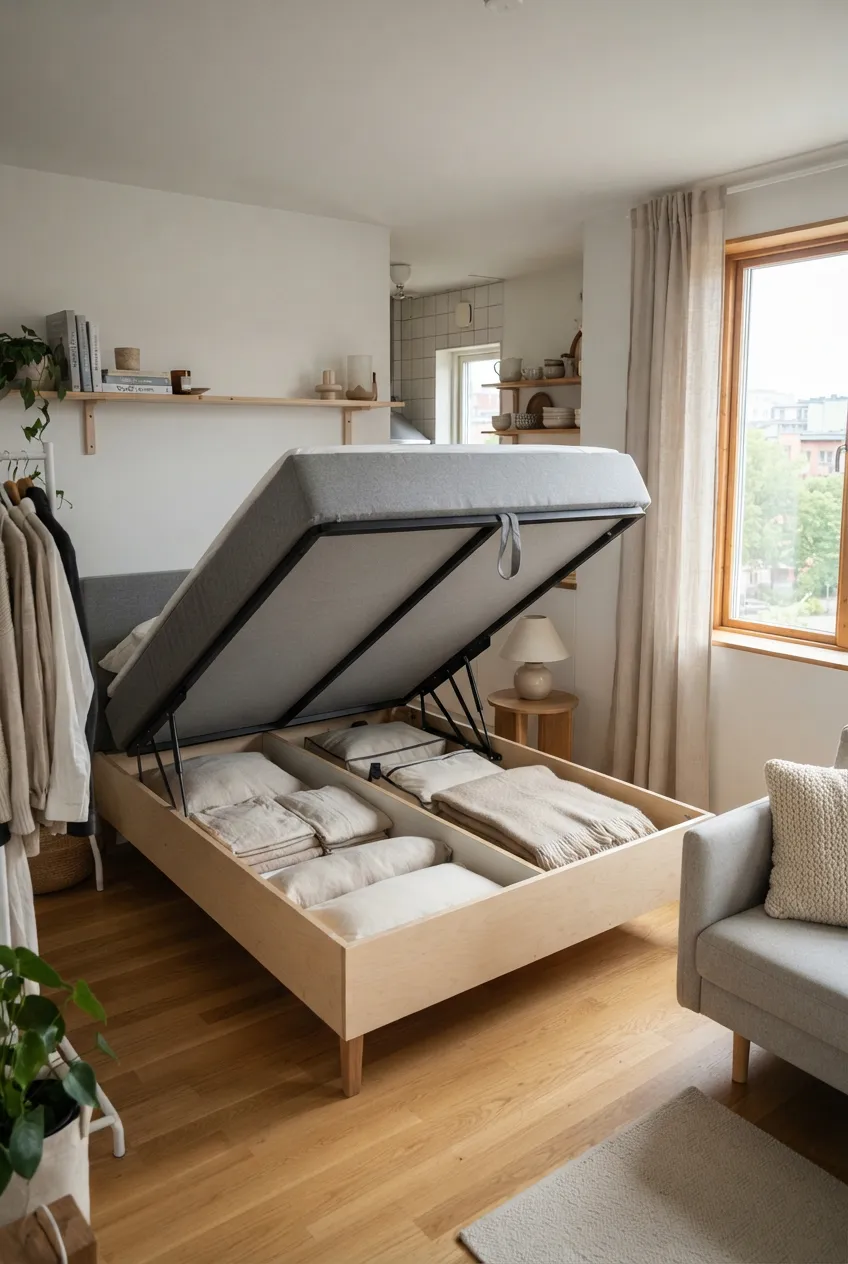
Some beds have a mattress platform that lifts to reveal a large compartment. If you already have one, use that harder-to-reach space for bulky items you need only occasionally, such as an extra duvet or seasonal textiles. Put them in manageable groups so you do not need to remove everything to reach one item.
Check the maker’s instructions for the lift mechanism, load, and safe use. The platform must open fully without hitting a shelf or wall fixture above it; you also need a place to stand. Do not rely on an unstable lift, and do not put everyday essentials inside a compartment that is tiring or unsafe to open.
8. Fit Smaller Boxes Around Legs and Crossbars
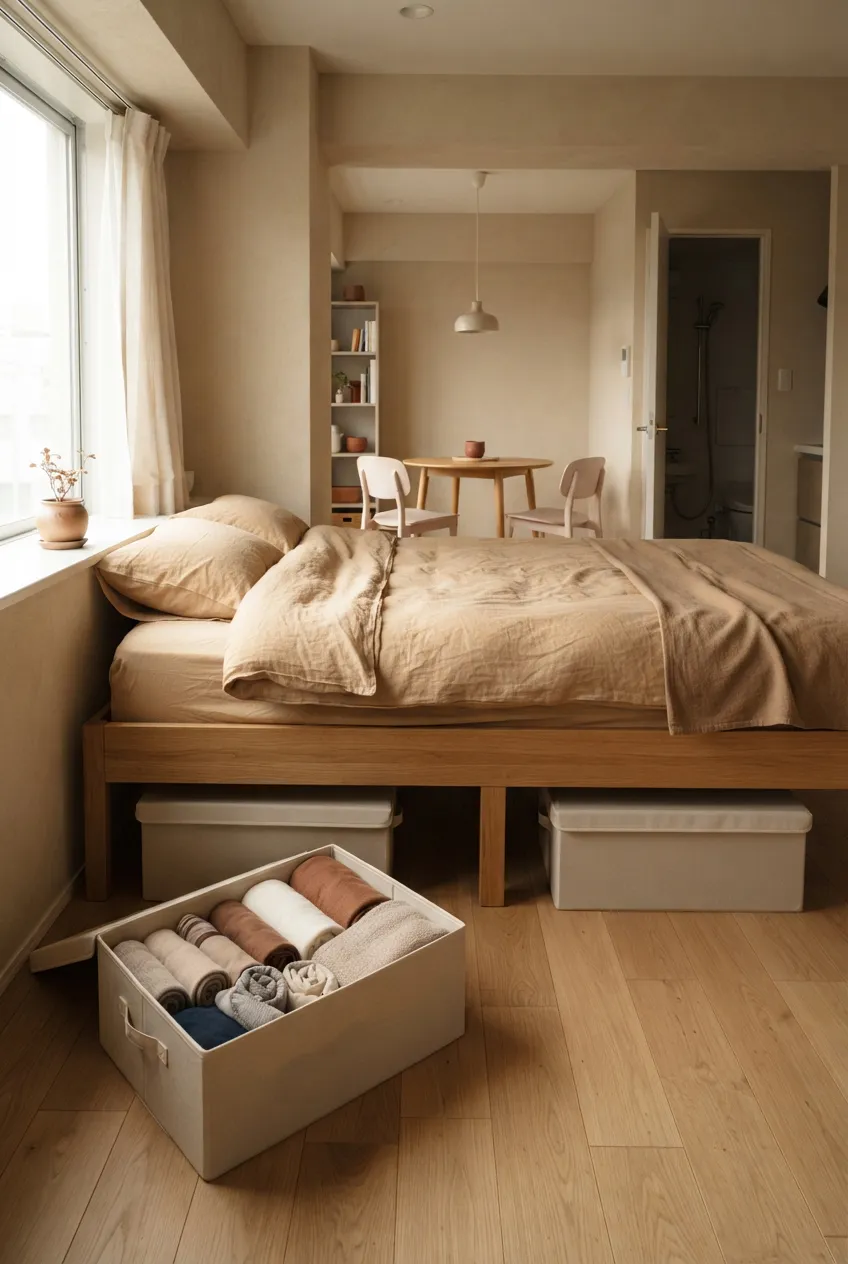
The space under a bed is rarely one perfect rectangle. A center leg or support bar can make a single large bin impossible to insert even when its measurements seem right on paper. Two or three smaller, matching-height boxes may use that fragmented space better.
Draw the supports on a simple sketch, then test cardboard outlines before ordering containers. Keep the boxes reachable from an open side and leave room to clean beneath the bed. Do not wedge anything against a structural support or block a vent to claim a little more capacity.
9. Protect Flat Supplies in a Rigid Shallow Case
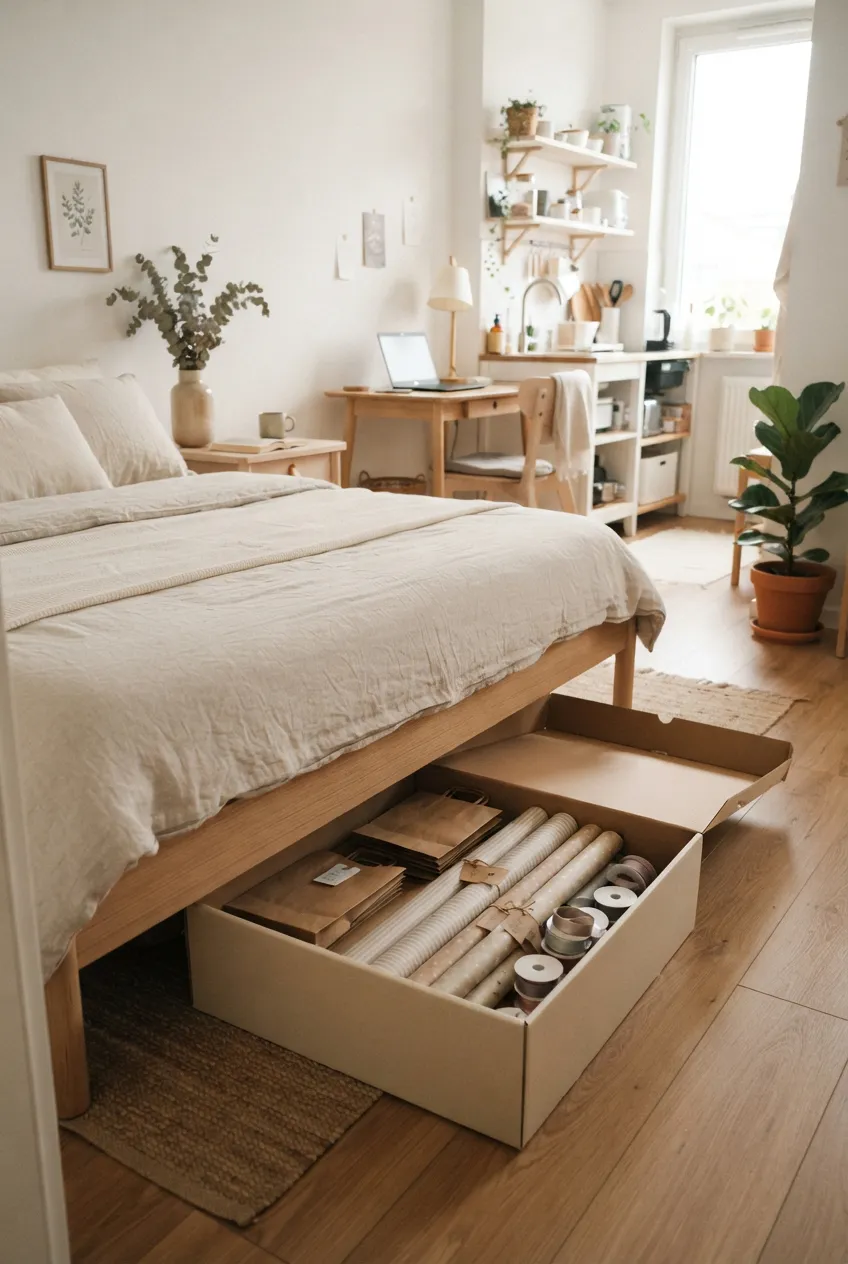
Gift wrap, craft paper, a small board game, or spare notebooks may fit beneath a bed without needing a deep bin. Put one related category in a shallow rigid case so edges do not bend and small pieces do not migrate across the floor. This works best for dry, nonfragile items you use occasionally.
Measure the longest item and the case’s full outside length, then test whether you can withdraw it without hitting the wall or nearby furniture. Avoid storing irreplaceable papers or moisture-sensitive keepsakes under a bed where a leak, damp floor, or dust could damage them. Store valuables in a safer location.
10. Give the Front and Back Different Jobs
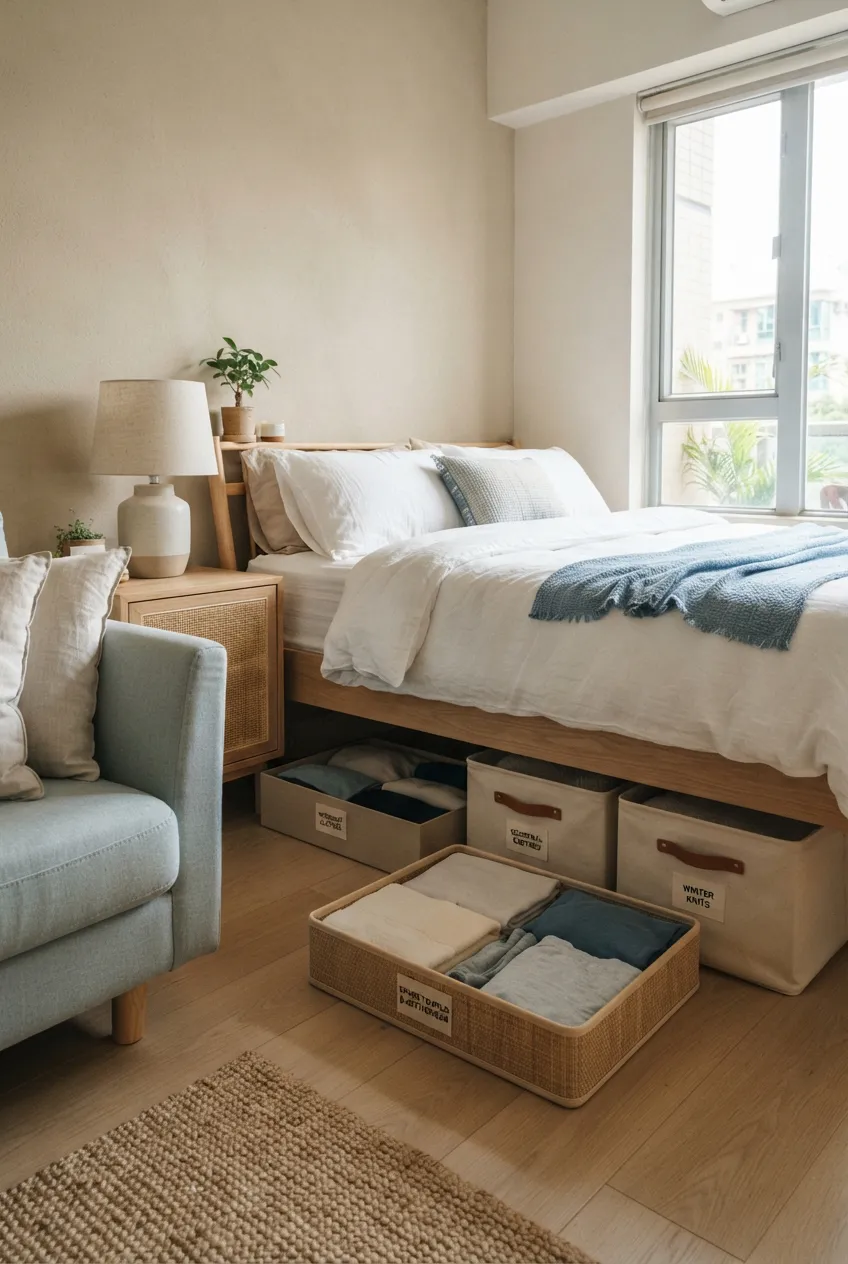
If you can access only one side of the bed, the front row should hold what you need sooner and the deeper row should hold seasonal items. Put a clear label on the outward-facing end of each container; you should be able to identify it without pulling all the boxes out. Leave a small path for your hand and for cleaning rather than packing every inch.
Revisit the arrangement when seasons change. Move frequently used contents forward, remove things you no longer need, and clean the floor before sliding containers back. Under-bed storage works best when you can retrieve one category without dismantling the entire system.
Final Thoughts
Useful under-bed storage depends on three things: the true clearance beneath the frame, the room needed to pull a container out, and how often you need what is inside. Put seasonal clothing and bedding in closed, easy-to-identify containers; give frequent items the simplest access; and keep vents, heaters, supports, and walking routes clear. The best solution is one you can still use after the bed and the rest of the studio are in place.
More Studio Apartment Ideas
 |  |  |
|---|---|---|
Storage Ideas | Clothing Storage | Studio Layouts |