A studio apartment can feel personal without putting holes in its walls. The advantage of one open room is that a few visible changes—a wall accent, softer window, or better-chosen textiles—can influence the whole space. The constraint is that every addition has to coexist with the bed, sofa, kitchen, and route through the apartment.
Start with your lease and the surfaces you actually have. “No drilling” does not guarantee that adhesive, pressure, or a heavy object will leave a finish untouched. Check the product instructions and test a small, discreet area where appropriate. These ideas focus on how to decorate without mounting hardware; the studio apartment decorating guide covers the broader question of what to display.
1. Try a Small Removable Wallpaper Accent
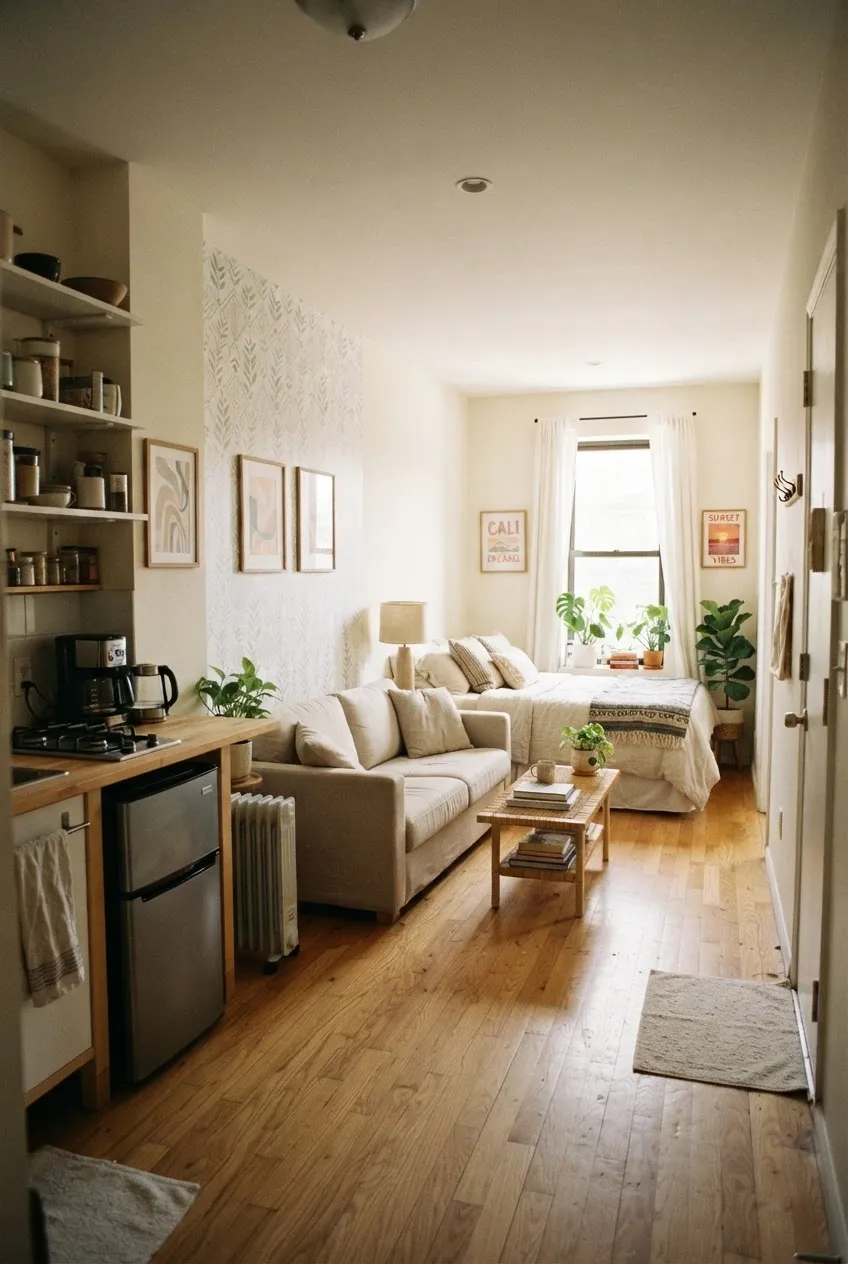
One short wall behind the sofa or dining table can bring in color without covering the whole studio. A limited area is easier to apply and makes it simpler to see whether the pattern works beside the bed, kitchen, and existing furniture. Measure the wall, including outlets and corners, before ordering.
Removable wallpaper needs a suitable surface; some products do poorly on textured walls or certain paint finishes. Check the lease, the manufacturer’s surface and paint-curing instructions, and a small test patch before applying it. If your wall qualifies, browse removable peel-and-stick wallpaper on Amazon and compare surface requirements, pattern scale, panel dimensions, and removal directions. Do not apply a strip over a vent or heat source.
2. Hang Lightweight Art With Suitable Removable Strips
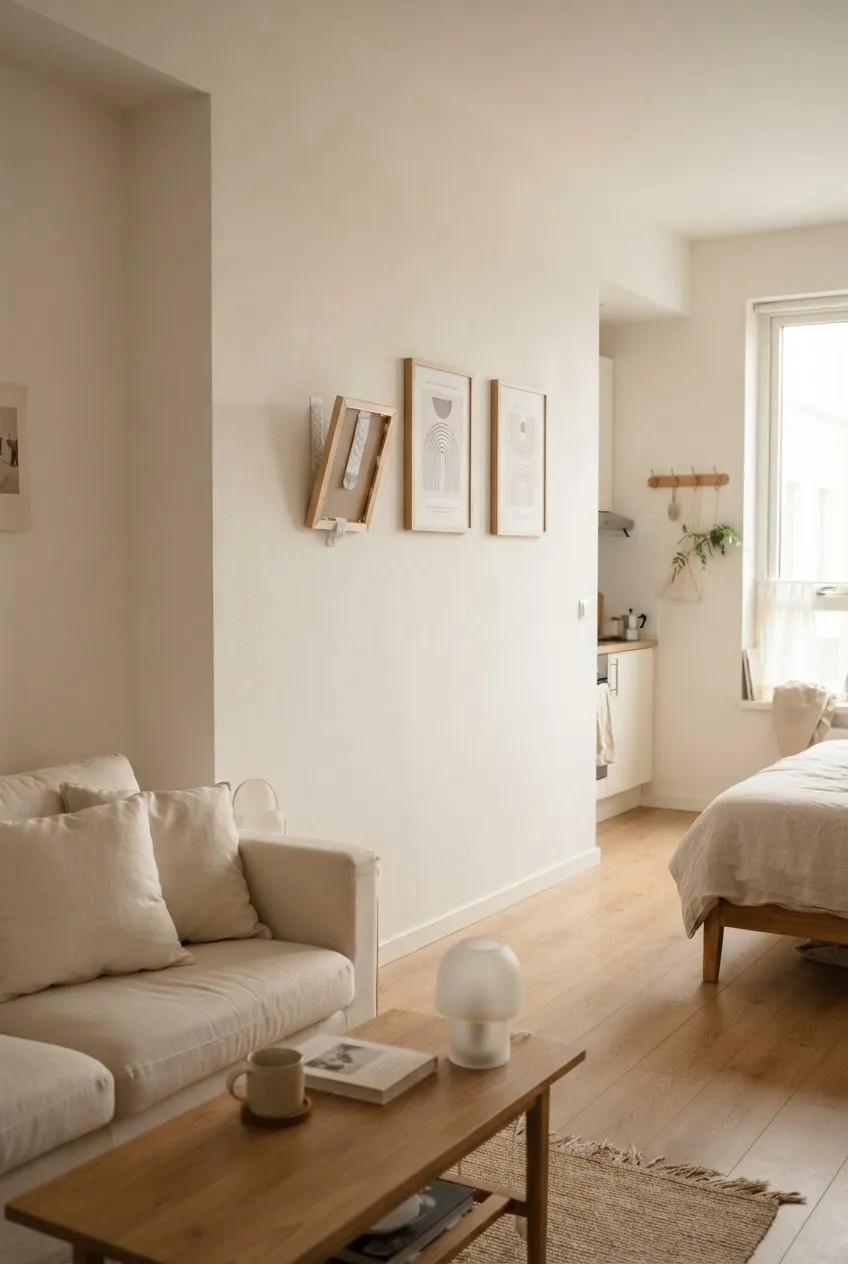
A small group of lightweight frames can give the sofa side of the studio a focal point. Lay the arrangement on the floor first, then mark its position so the frames do not spread across every wall. Choose an approved hanging strip for the frame’s actual weight and the exact wall finish.
Follow the maker’s cleaning, curing, load, and removal instructions. Do not use strips on wallpaper or unsuitable textured surfaces, and do not hang frames above the bed or valuables where a failure would matter. If your surface and frames qualify, browse removable picture-hanging strips on Amazon and compare supported surfaces, weight limits, frame size, and removal method. A removable product is still a product with limits.
3. Rest Art on Furniture You Already Own
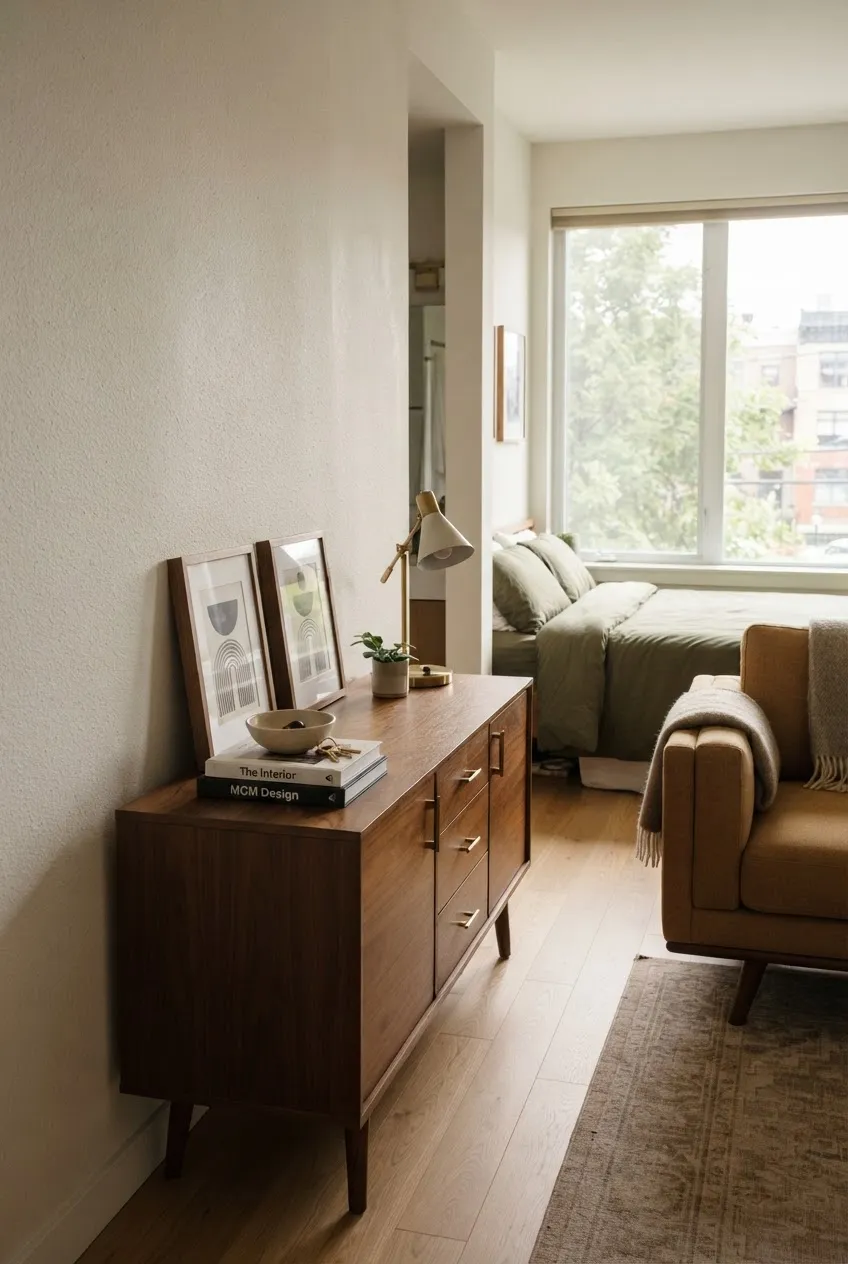
If the wall finish is uncertain, place a print or small framed piece on an existing dresser, bookcase, or sideboard. Let one piece overlap a smaller one rather than lining up many objects along the entire top. The display can move with you, and it uses a surface already in the room.
Keep the frame well back from the edge and leave the furniture’s daily-use area free. A large or heavy piece that can tip should not be casually leaned above a bed or seating area; follow its maker’s stability guidance. This approach suits light, modestly sized art on a stable surface.
4. Dress a Suitable Window With a Tension Rod
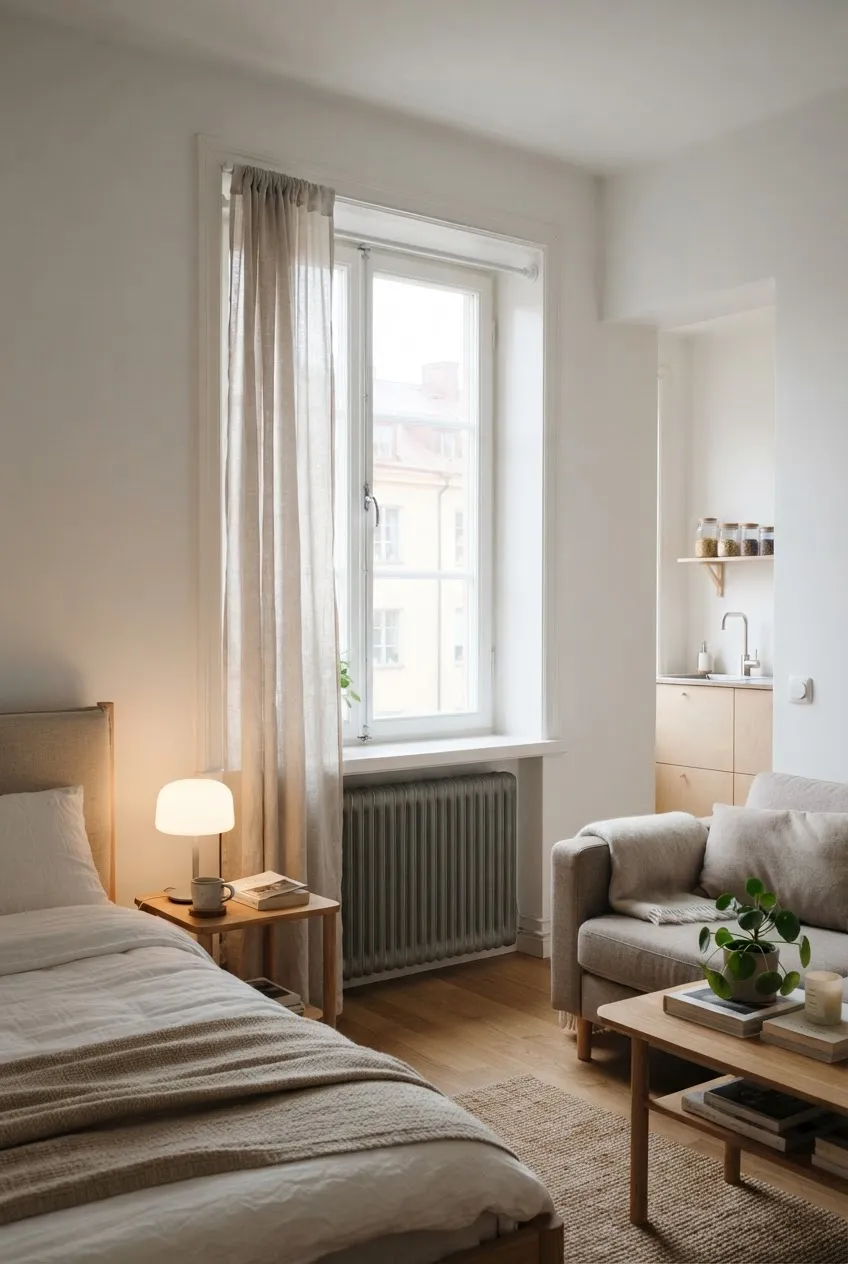
A light curtain can soften a window and add a large area of fabric color without mounting brackets. An inside-frame tension rod works only when the window recess has suitable opposing surfaces and the rod fits the opening. Measure the inside width, check the surface condition, and choose curtain fabric within the rod’s stated load.
Test that the rod stays secure when you open and close the curtain; keep fabric clear of heaters and the window handle. If this window setup is suitable, browse no-drill tension curtain rods on Amazon and compare the adjustment range, end pads, installation instructions, and load rating. The renter-friendly studio guide offers more reversible changes beyond decoration.
5. Define the Sitting Area With a Rug
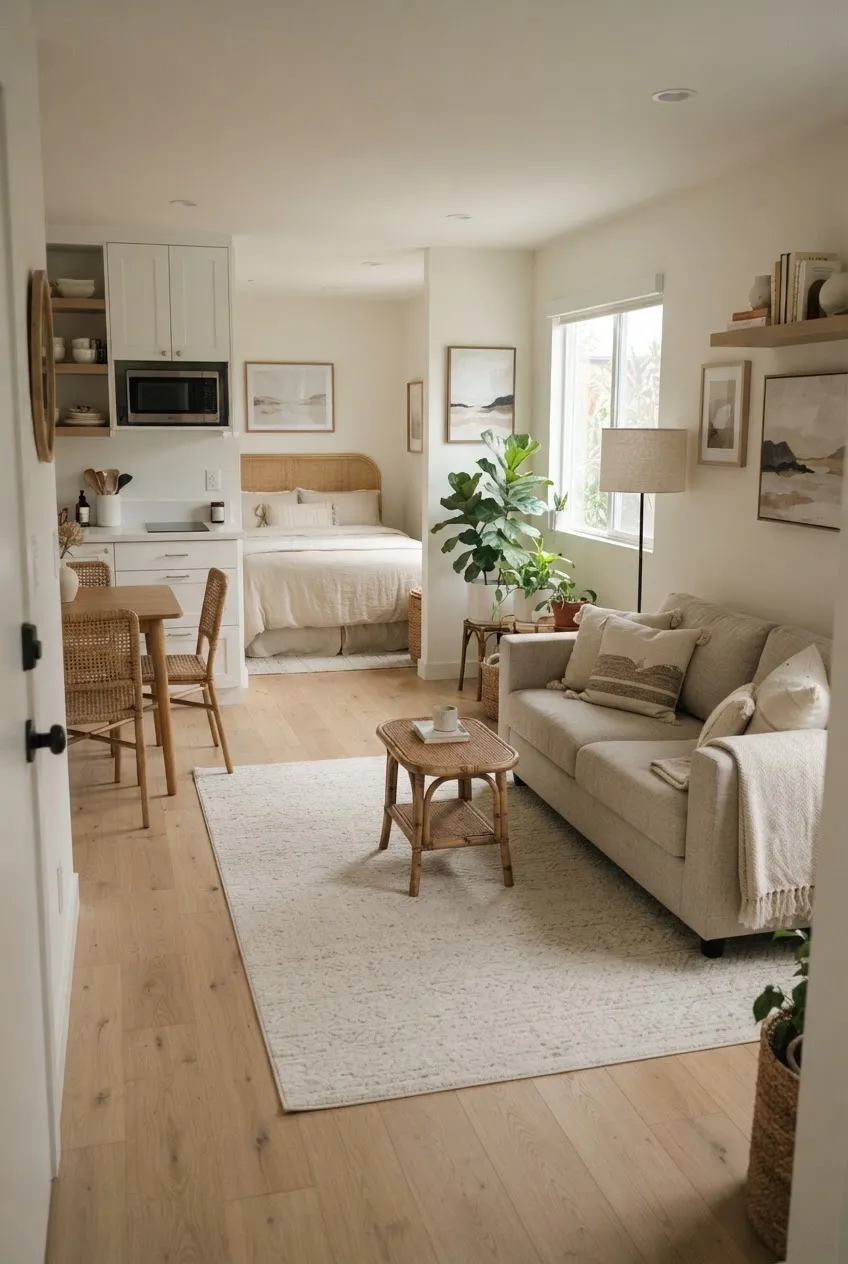
A rug beneath the front feet of the sofa and near the coffee table can give the living area a visual boundary without a partition. In a studio, one appropriately sized rug usually reads more clearly than several small mats scattered around the room. Use a color or texture that relates to the sofa and bedding.
Measure the door swing and the path to the kitchen before choosing a size. The rug and any suitable nonslip underlay should lie flat; curled edges or a loose mat can make the only route awkward. Leave enough bare floor to open nearby drawers and move chairs.
6. Refresh an Existing Sofa With a Fitted Cover
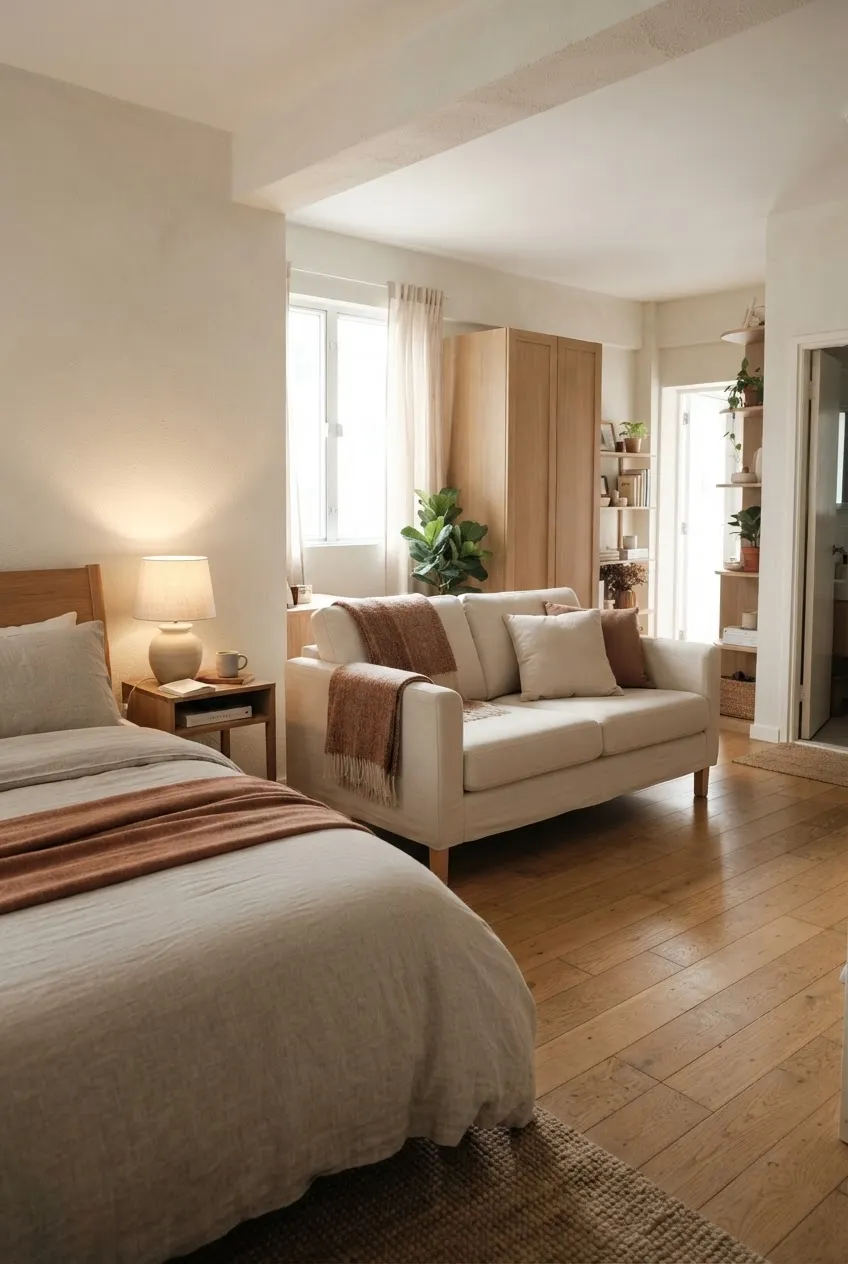
Changing the sofa’s visible fabric can shift the room’s palette without replacing its largest seating piece. Choose a cover designed for the sofa’s form, arm shape, and seat configuration. A neutral or lightly textured fabric can make the sofa feel connected to the bedding and rug.
Check that the cover stays in place when someone sits down and does not bunch around the legs or drag into the walkway. Take it off and wash it as its care label directs. The goal is a sofa you can still use comfortably, not a carefully arranged surface that needs fixing after every sit.
7. Change Cushion Covers Before Adding More Cushions
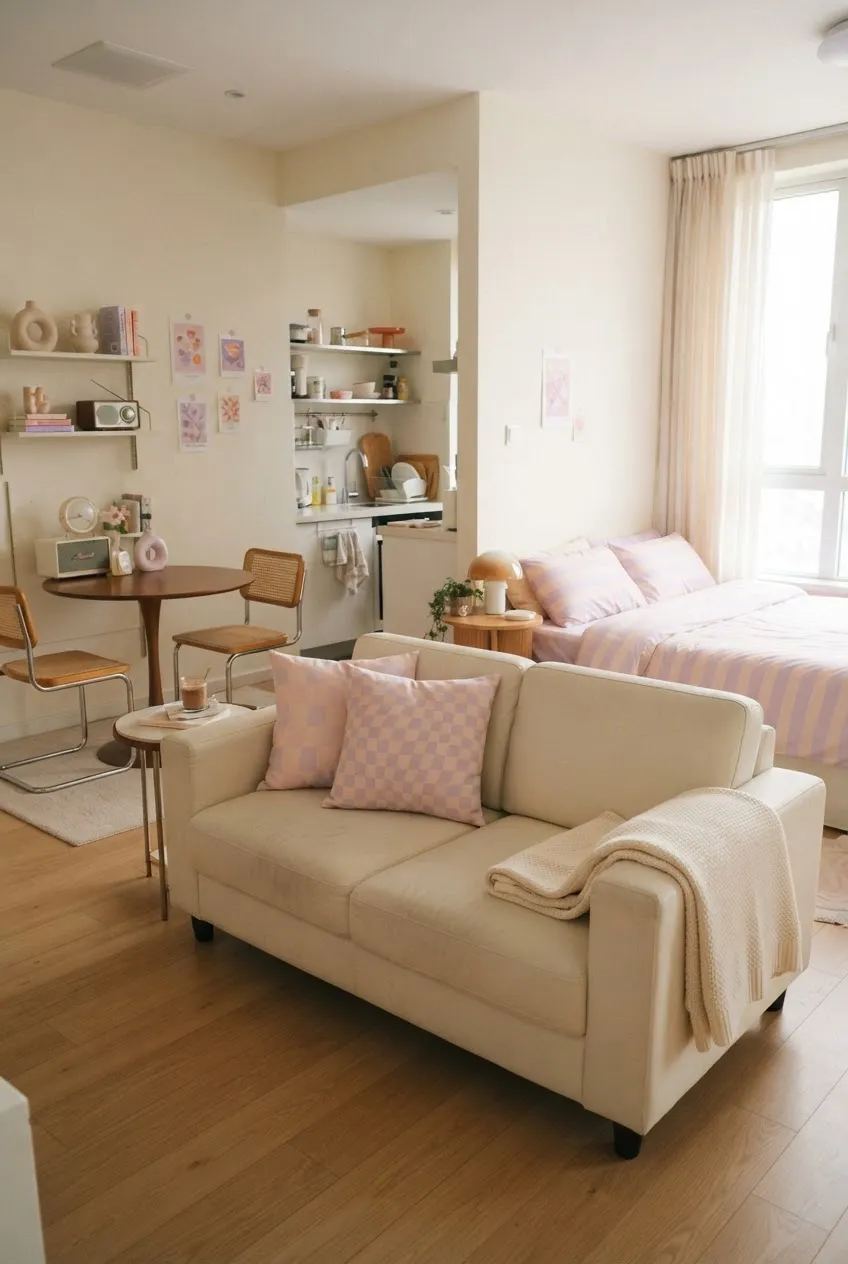
A few coordinated covers can add color to the sofa without filling the seat with extra pillows. Reuse inserts that still have shape, and choose one main fabric or color with a smaller accent. A throw can repeat that accent near the bed or reading chair.
Keep the number of cushions proportional to the seat; there should still be room to sit. Choose washable materials for pieces used daily, and store the throw where it can be reached without covering a lamp or heater. This small change is easy to revise when the rest of the room changes.
8. Treat Visible Bedding as Part of the Room
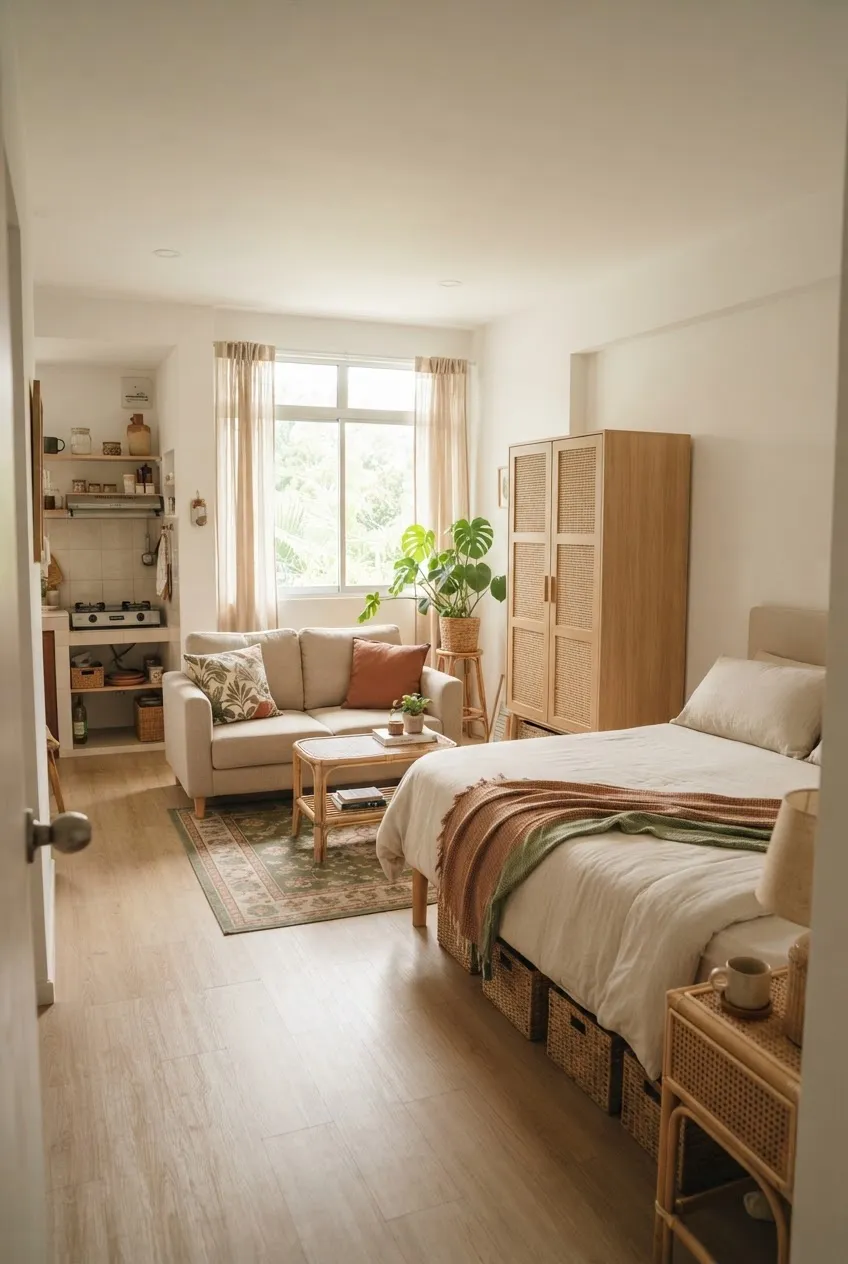
In a studio, the bed is visible from the sofa and often from the entrance. A duvet cover and a small number of pillowcases that relate to the living-area colors can bring the open room together. The colors do not need to match exactly; repeating a tone or texture is enough.
Choose bedding for comfort and care first. Make the bed in a way that still allows you to reach under-bed storage, a window, or a nearby wardrobe. An oversized pile of decorative pillows may look styled in a photo but make a small room harder to use.
9. Style One Existing Shelf or Cabinet Top
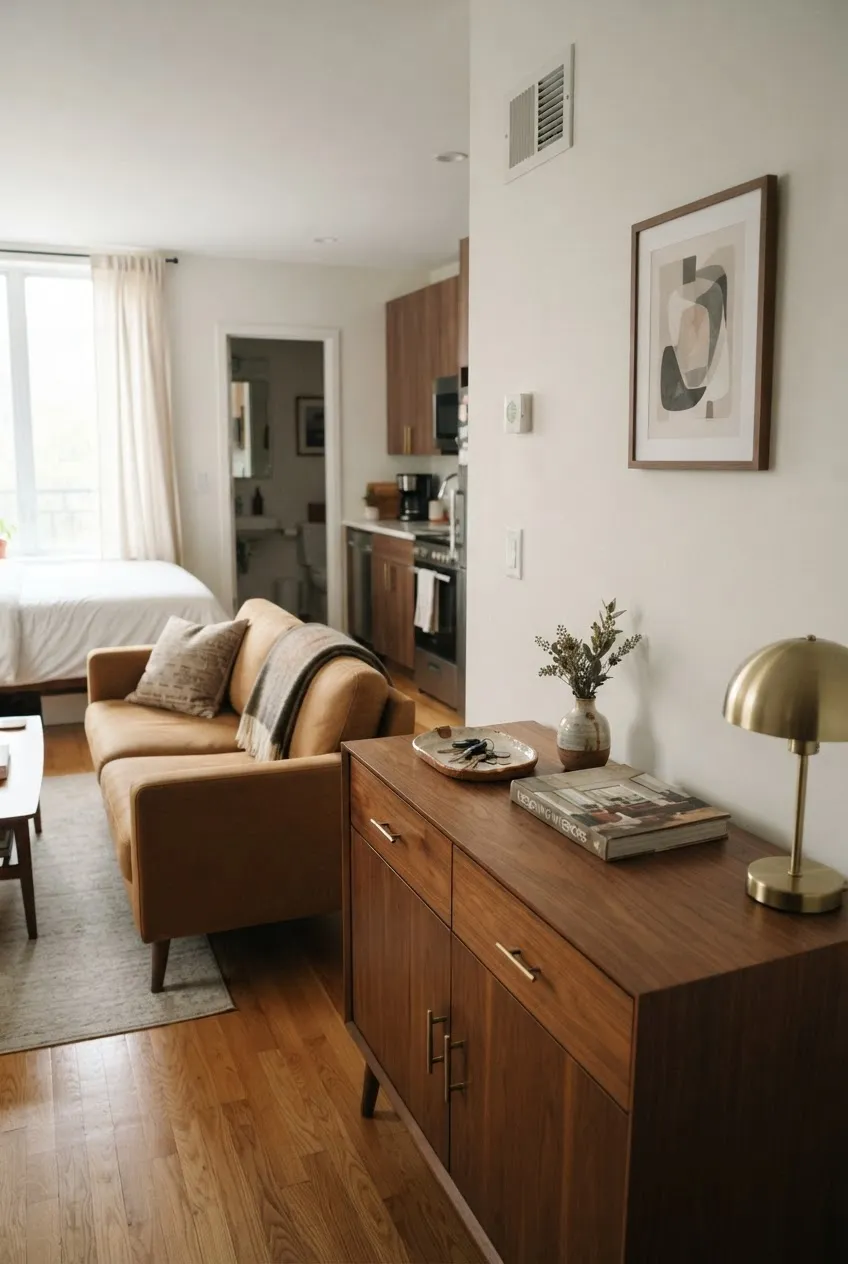
Choose one surface that is already stable and visible—perhaps a low cabinet near the sofa—and group a few objects of different heights. A small tray can hold daily items, with a book and one ceramic piece beside it. Leave empty space so the display has a clear edge and the cabinet remains useful.
Do not block a cabinet door, outlet, vent, or lamp. Keep heavy objects away from a high edge and follow the furniture maker’s anchoring guidance. If a display requires buying another cabinet merely to hold decorations, it is probably too much for this studio.
10. Place a Small Mirror on a Stable Surface
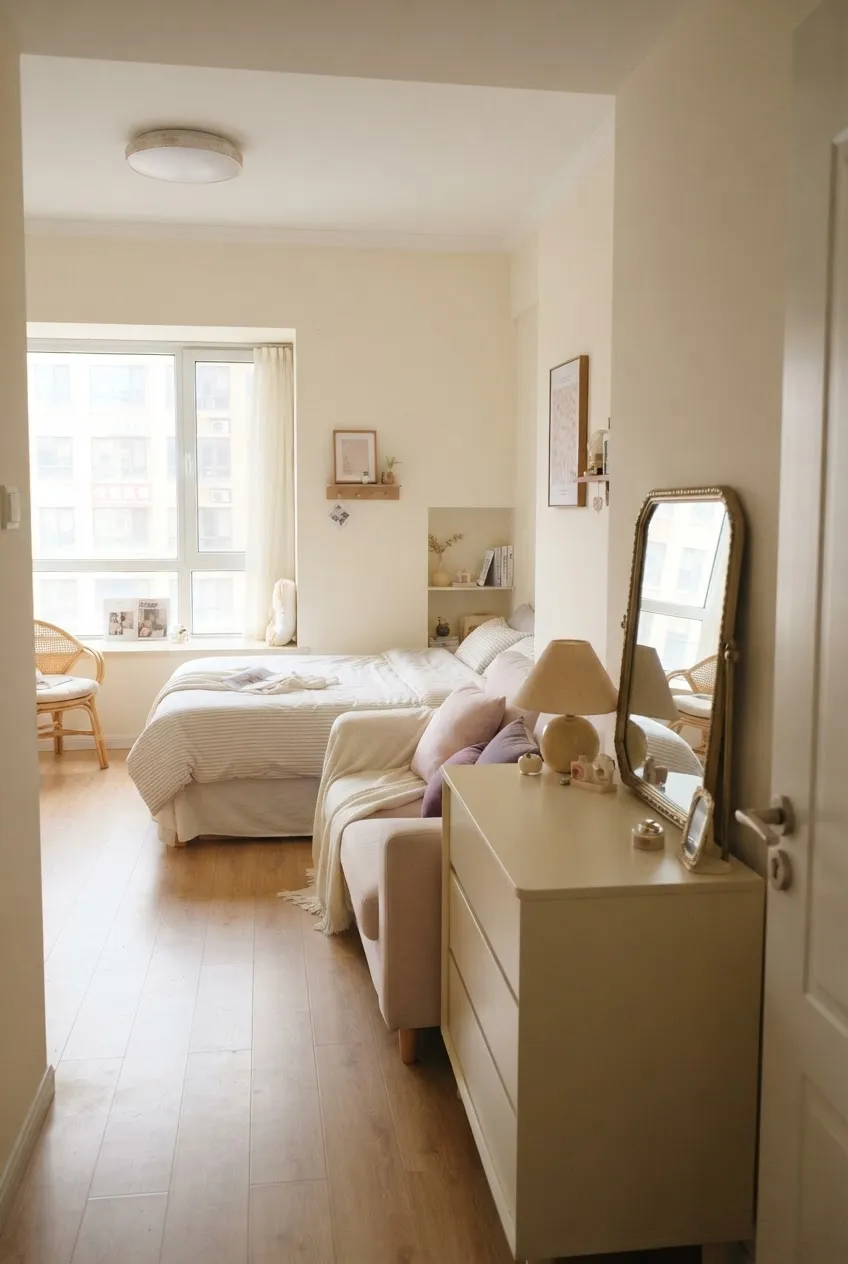
A modest mirror on a dresser can reflect a window or a pleasing part of the room without drilling into the wall. Set it on a stable, appropriately deep surface and use its built-in stand as intended. Check the reflection from the bed and sofa; a bright bulb or an untidy corner may be the wrong view.
Do not balance a heavy mirror loosely on a narrow ledge or assume adhesive can safely support it. If the mirror’s instructions require anchoring, choose a different model or location. Keep the dresser drawers and walking route usable.
11. Change an Existing Lamp Shade
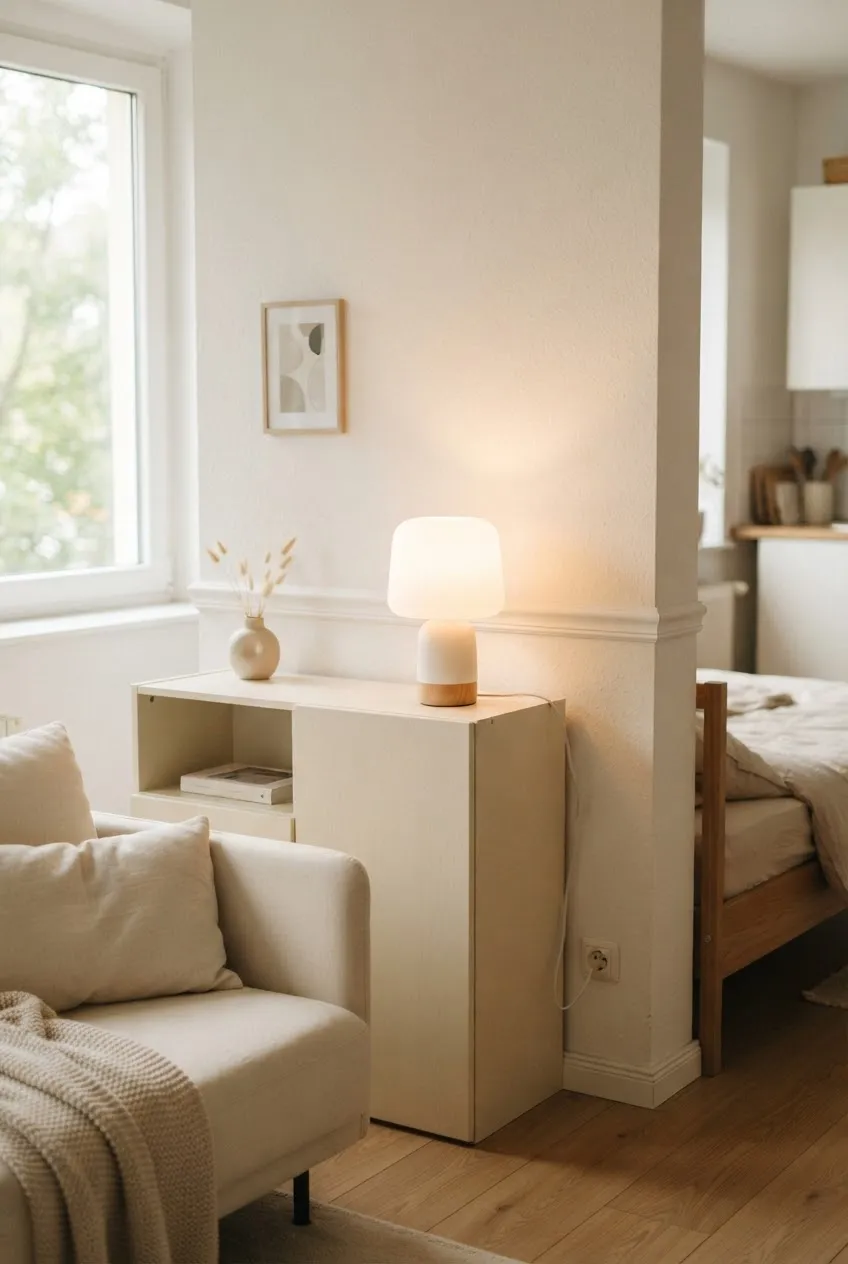
A different shade can alter the look of a lamp you already own and soften its light without adding another object to the floor. Choose a shade that fits the lamp’s socket and hardware, leaves the maker’s required clearance around the bulb, and directs light where the lamp is used.
Look at it from both the sofa and bed before deciding. A beautiful open shade that exposes the bulb in both positions may feel harsh in a shared room. The dark studio lighting ideas cover other ways to place useful light; this is a small, movable decor change.
12. Add One Plant Where the Light Supports It
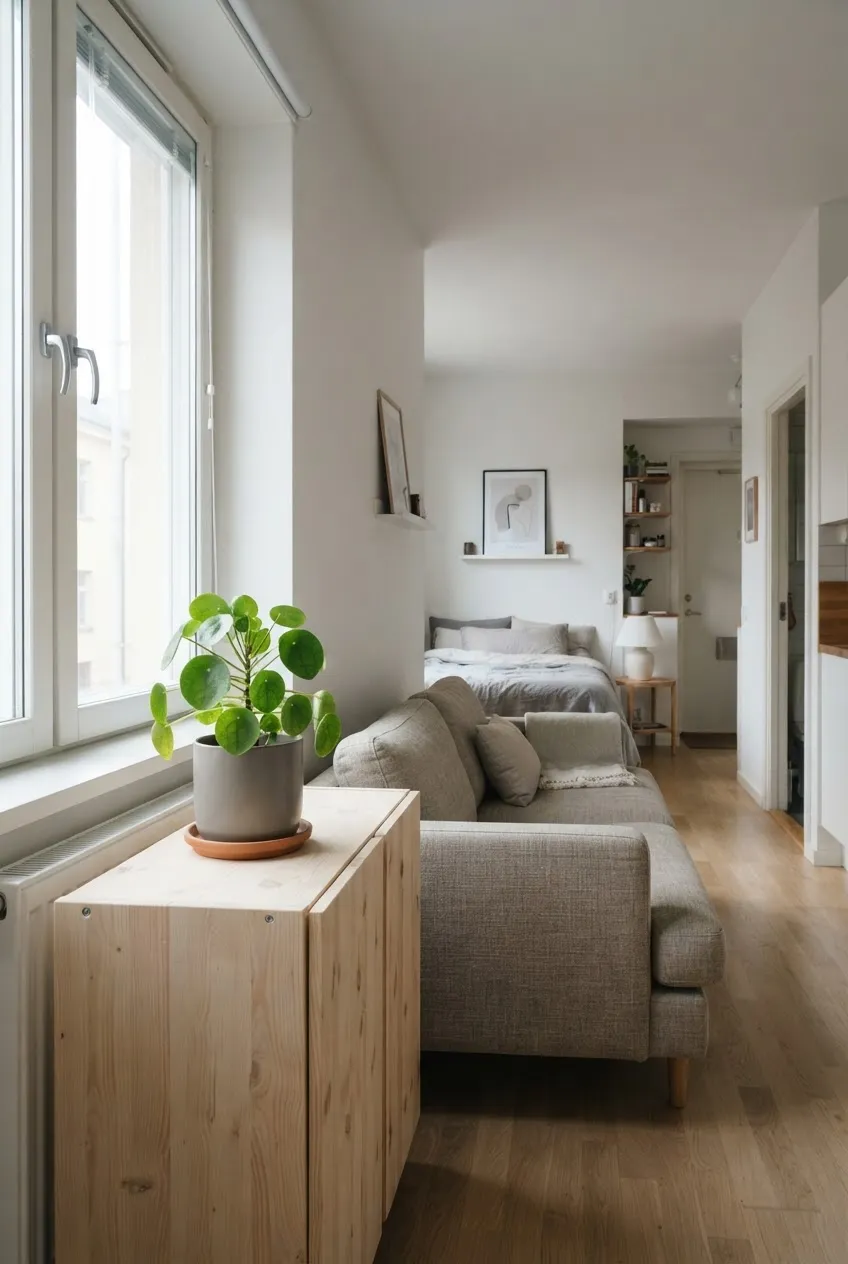
A plant can add color and shape without using a wall at all. Choose a size that fits an existing windowsill, cabinet, or clear floor corner, and check the light the plant actually receives. Use a saucer or suitable container to protect the surface beneath it.
Keep leaves and planters away from heaters, door swings, and the only walking route. If natural light is insufficient or plant care is not realistic, a small artificial plant can provide the same visual note. One well-placed plant usually does more than a row of pots that blocks the window.
Final Thoughts
Decorating without drilling works best when each change suits the surface, the room, and the way you live in it. Test adhesives before committing, respect weight and installation instructions, and use portable textiles and existing furniture where possible. In one open room, a restrained set of changes can feel complete while every door, seat, and route still works.
More Studio Apartment Ideas
 |  |  |
|---|---|---|
Clutterless Decor  | Movable Decor | Cozy Studios |