Creating a home office inside a studio apartment can be tricky.
When your bed, sofa, storage, and workspace all share one room, simply squeezing a desk into an empty corner usually isn’t enough. The goal is to create a work zone that feels functional during the day without making your entire home feel like an office.
The good news is that even a small studio can comfortably support sleeping, relaxing, and working when the layout is carefully planned.
These six cozy studio apartment ideas use warm wood, natural textures, greenery, rugs, shelving, and thoughtful furniture placement to create small homes that feel comfortable to live in—and practical enough to work from every day.
1. Surround Your Workspace With Natural Texture and Greenery
Shop Similar Pieces
 |  |  |
|---|---|---|
 | | |
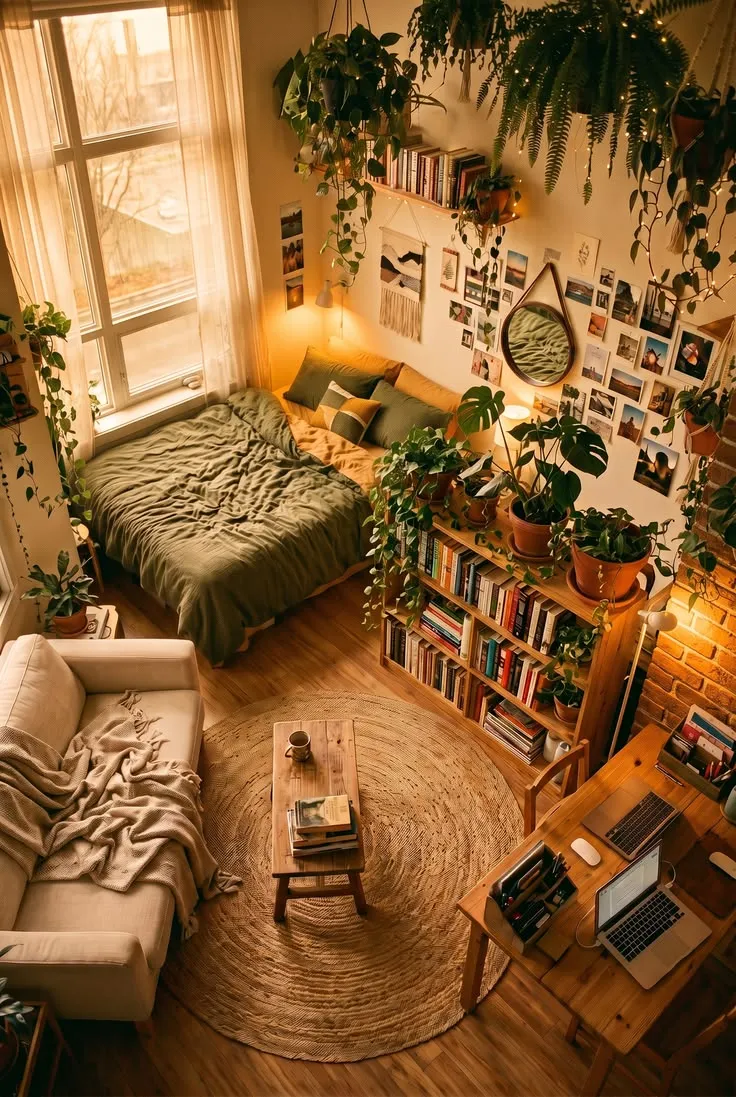
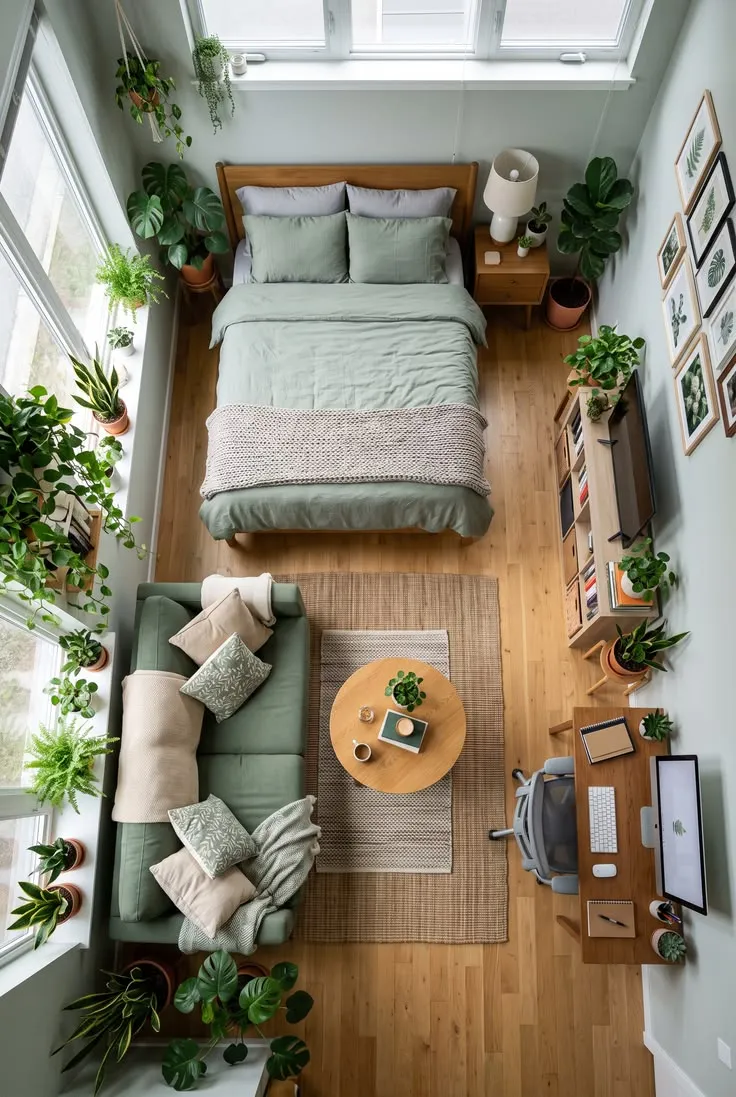
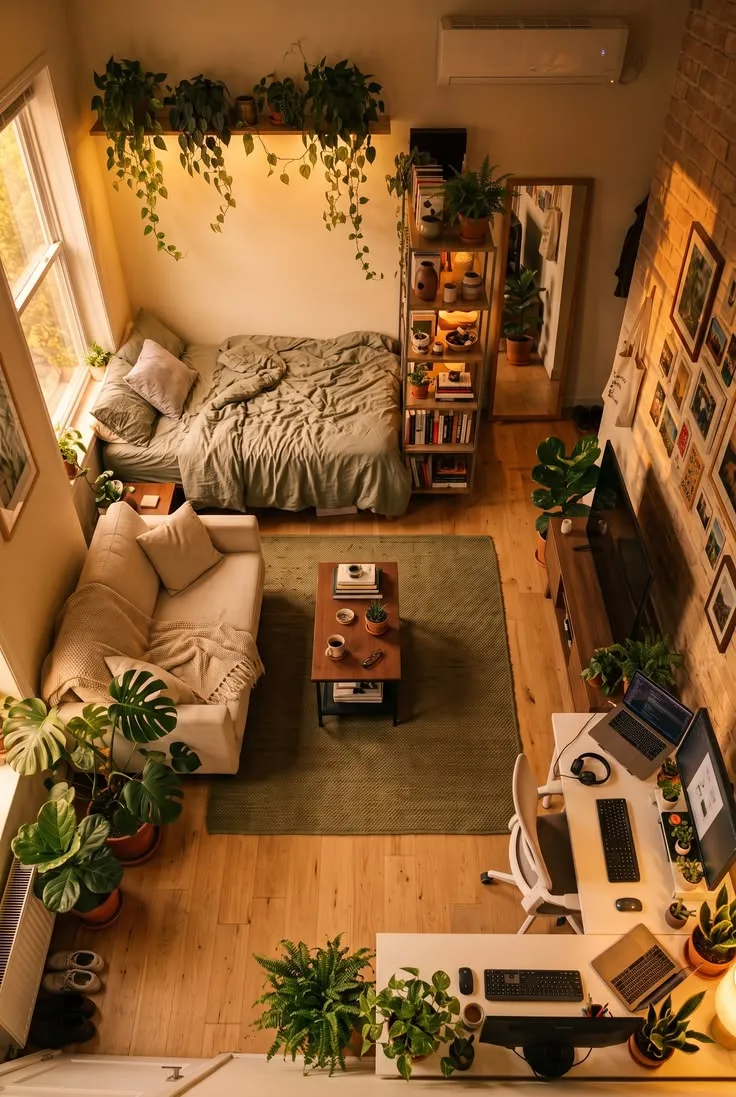
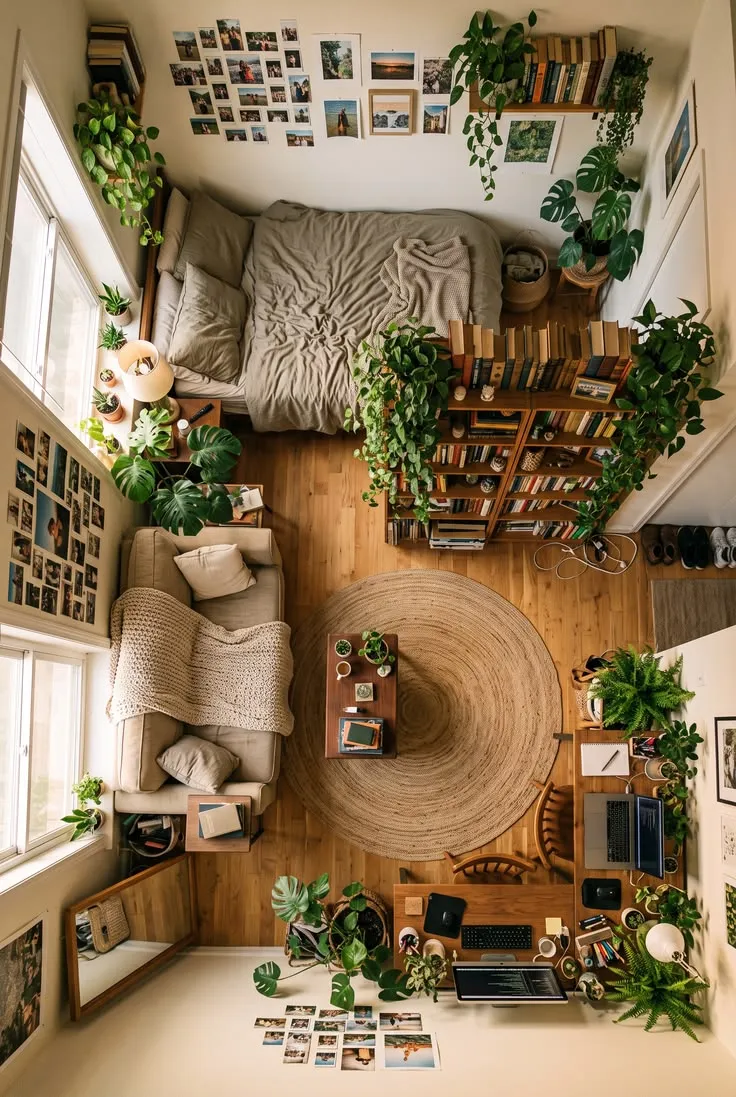
This studio proves that a workspace doesn’t have to feel separate or overly corporate to be functional.
Warm wood flooring, a simple wooden desk, bookshelves, woven textures, and an abundance of plants give the entire apartment a relaxed, organic feeling.
The desk sits along the edge of the room instead of taking over the central floor area. That leaves space for a proper sofa, coffee table, rug, and comfortable sleeping zone.
The plants also play an important visual role. Trailing greenery above the bed, larger leafy plants near the bookshelf, and smaller pots around the desk help connect different parts of the apartment.
Designer Tip
If you love a plant-filled interior, don’t place every plant at the same height. Mix:
- floor plants
- hanging plants
- shelf plants
- small desk plants This creates depth while keeping valuable surfaces from becoming overcrowded.
2. Use a Rug to Separate Work and Relaxation
Shop Similar Pieces
 |  |  |
|---|---|---|
| | |
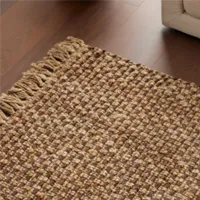
One of the simplest ways to organize a studio apartment is to create visual zones without building walls.
If you want more ways to separate sleeping, living, and working areas without closing off the room, explore these studio apartment room divider ideas.
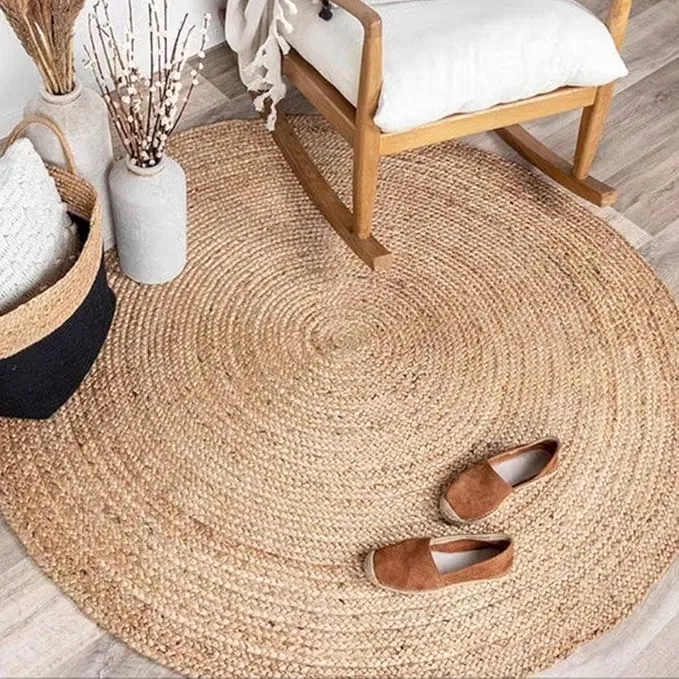
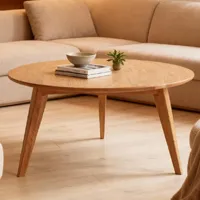
In this layout, the sofa and coffee table sit clearly within a defined rug area. The bed occupies one end of the room, while the desk runs along the opposite wall.
Nothing is physically divided, but each function still has its own place.
This is especially useful in narrow studio apartments, where adding a large room divider could interrupt light and circulation.
The muted green sofa also connects beautifully with the surrounding plants and pale green bedding, creating a consistent palette across the whole apartment.
Small-Space Strategy
Let the rug define your living room, rather than trying to place every piece of furniture against a different wall.
Once the living zone has a clear visual boundary, the desk can sit just outside it and still feel like a separate workspace.
3. Give the Home Office One Dedicated Wall
Shop Similar Pieces
 |  |  |
|---|---|---|
| | |
If you work from home regularly, a tiny laptop table may eventually become frustrating.
Instead, dedicate one wall of the studio to work.
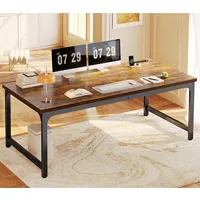
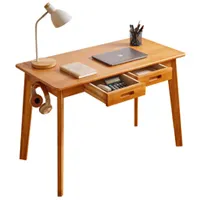
This apartment uses a longer desk area with enough room for monitors, laptops, accessories, and plants while keeping the main living space relatively open.
The important part is that the office remains visually connected to the rest of the apartment.
Wood tones, plants, and warm lighting repeat throughout the room, so the desk feels like part of the interior rather than a piece of office furniture dropped into a bedroom.
Designer Tip
For a larger desk setup inside a small apartment, keep the furniture around it relatively simple.
A visually busy workstation already contains:
- screens
- cables
- keyboards
- notebooks
- accessories
You don’t need equally busy furniture surrounding it.
Natural wood and simple storage help balance the technical equipment.
4. Let Bookshelves Do More Than Store Books
Shop Similar Pieces
 |  |  |
|---|---|---|
| | |
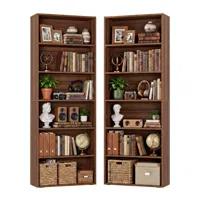
Bookshelves are especially valuable in a studio apartment because they can perform several jobs at once.
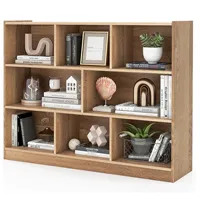
In this space, shelving adds vertical storage for books, plants, and everyday objects while also helping define the sleeping area.
That means the apartment gains storage without requiring another bulky cabinet in the center of the room.
The mix of books and greenery also makes the space feel personal rather than overly styled.
Keep the Shelves Balanced
Avoid filling every shelf completely.
Mix books with:
- plants
- baskets
- ceramics
- framed photos
- a little empty space
The negative space keeps the shelving from becoming visually heavy.
If you need to hide practical items, baskets or a bookcase with some closed storage can help keep everyday clutter out of sight.
5. Bring in Deeper Wood and Vintage-Inspired Details
Shop Similar Pieces
 |  |  |
|---|---|---|
| | |
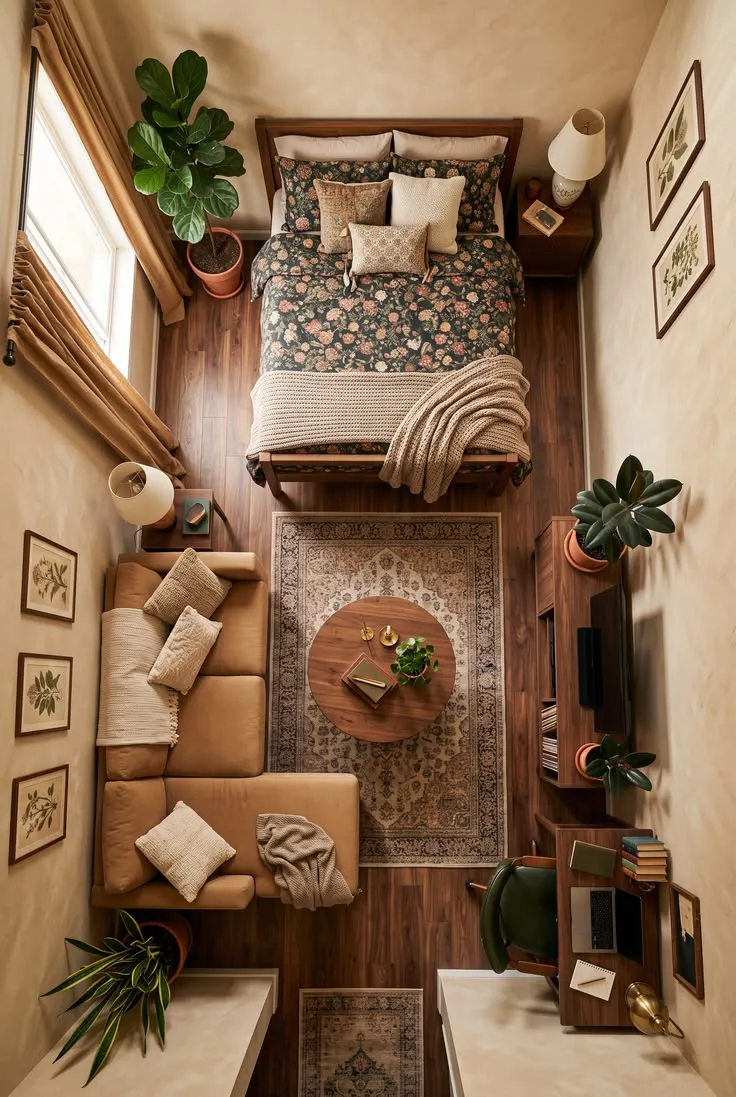
Not every cozy studio apartment needs to use pale wood and cream furniture.
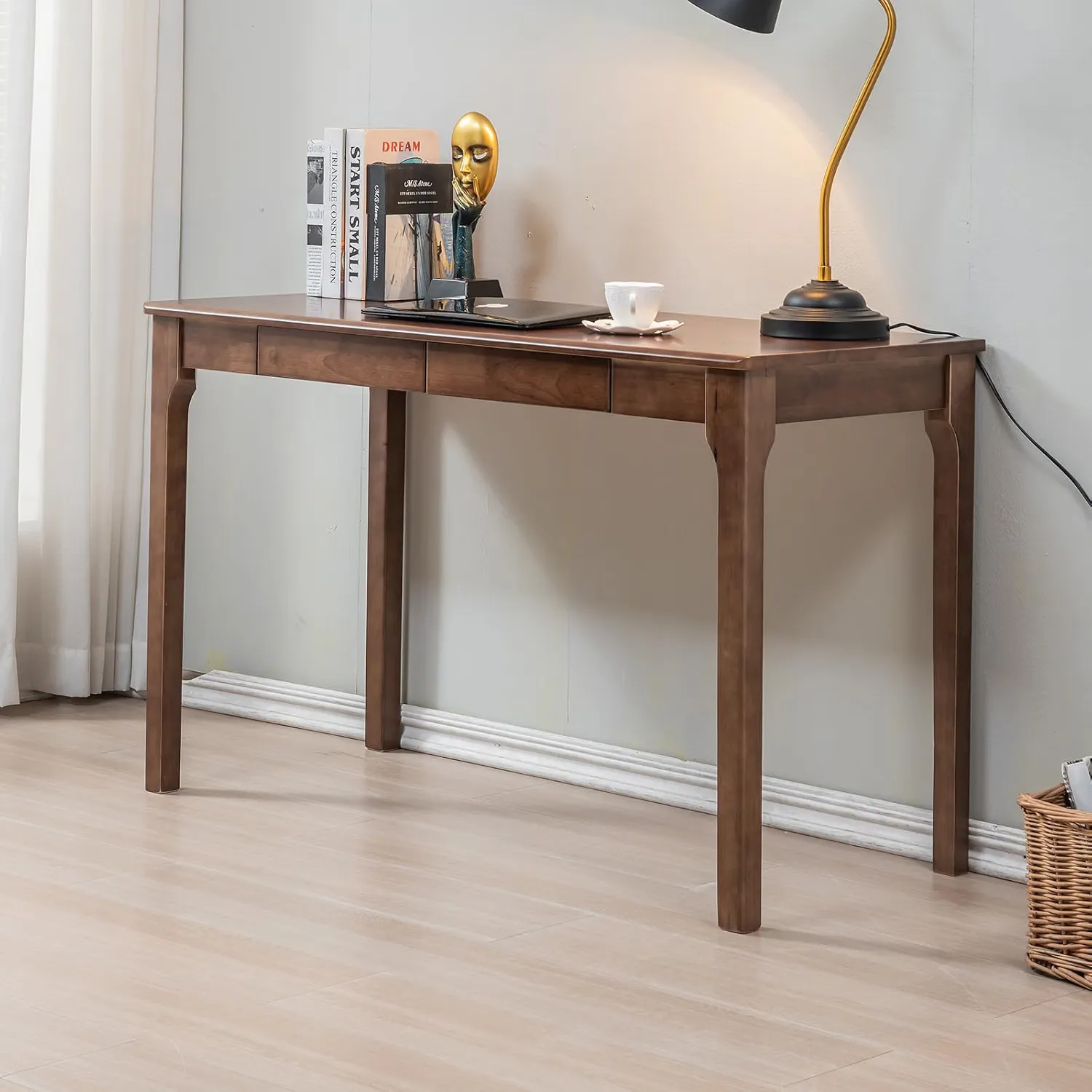
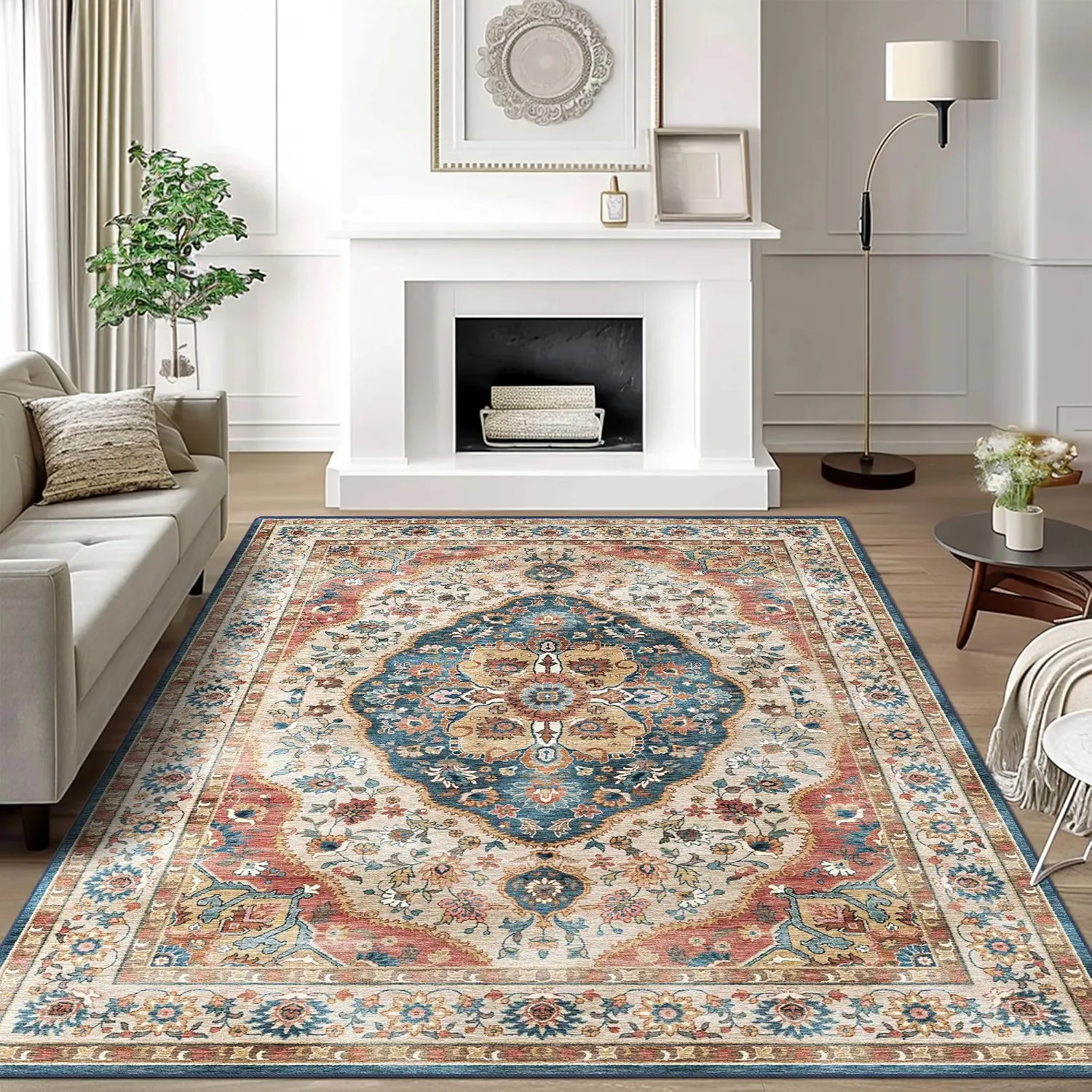
This version introduces deeper walnut tones, floral bedding, a vintage-style rug, warm beige upholstery, and botanical artwork.
The result feels slightly more collected and traditional while still keeping the layout clean.
A small desk fits naturally against the wall without competing with the bed and sofa.
This is a useful approach if you want your workspace to feel less minimalist and more personal.
Why This Palette Works
The darker furniture gives the space visual weight, while warm beige and botanical green prevent the room from becoming too dark.
A restrained mix of patterns also adds character.
Instead of using patterned fabric everywhere, let one or two pieces—such as the bedding or rug—carry most of the visual detail.
6. Create a Workspace That Still Feels Cozy After Dark
Shop Similar Pieces
 |  |  |
|---|---|---|
| | |
A home office needs to work after the sunlight disappears too.
This studio shows how dramatically lighting can change a small space.
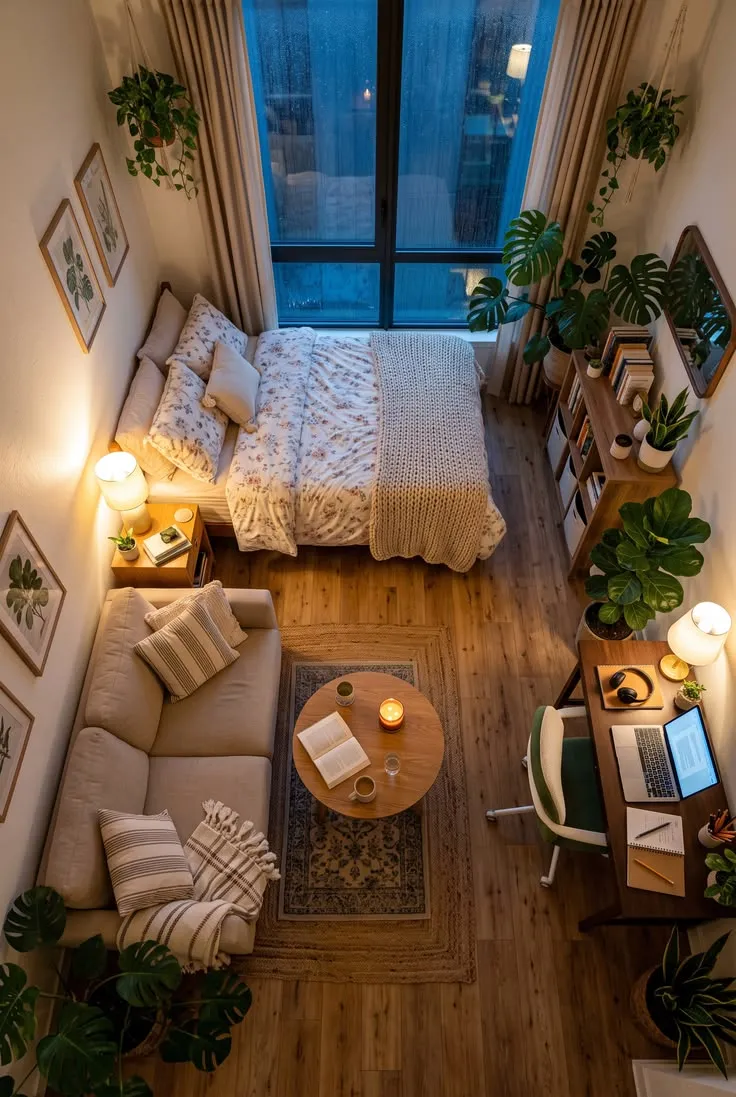
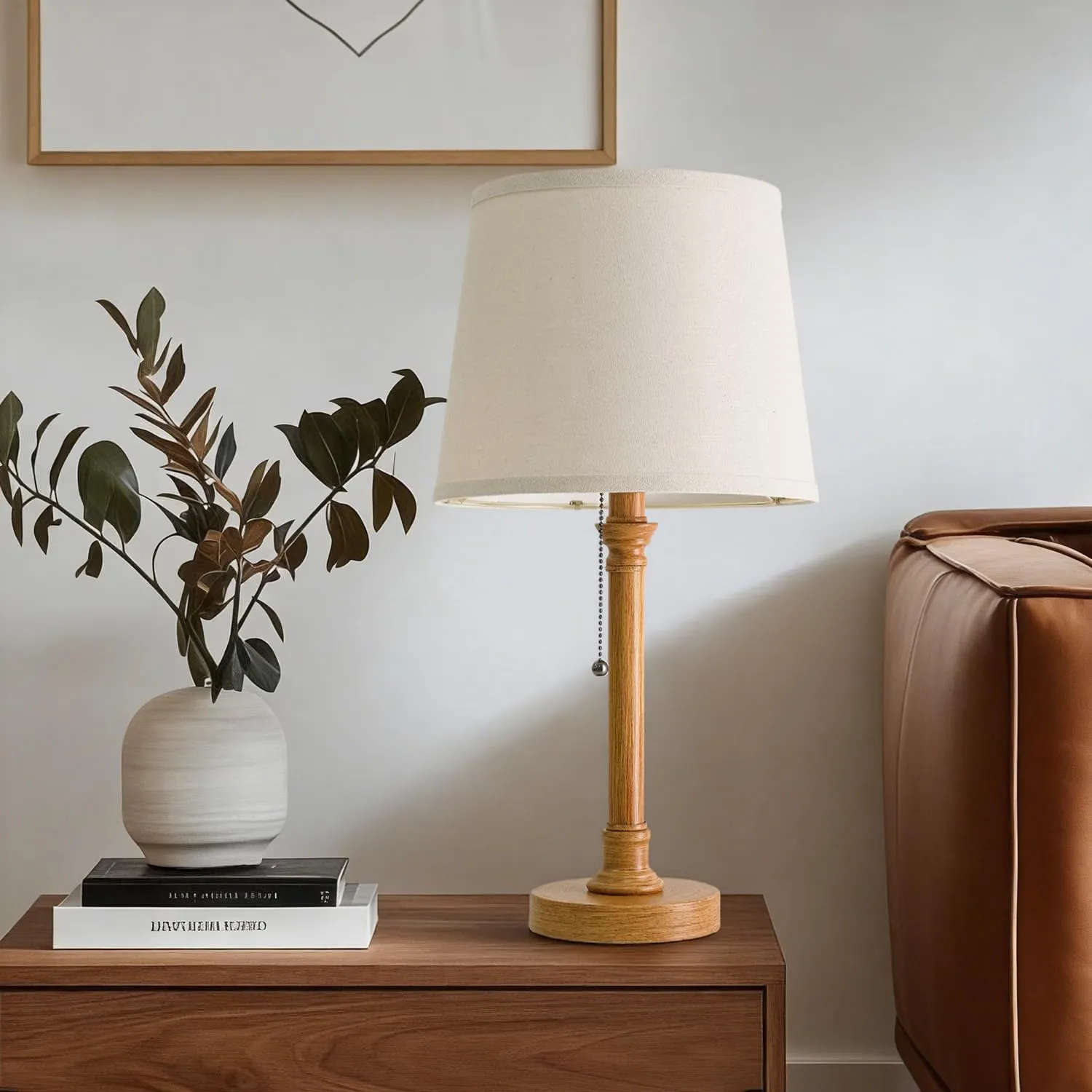
Outside the window, cool blue evening light creates contrast with the warm lamps inside. Instead of using one bright overhead fixture, several softer light sources make the apartment feel calm and comfortable.
The desk remains clearly usable for work, but the entire room transitions naturally into an evening living space.
That distinction matters in a studio apartment because you can’t simply close an office door when the workday ends.
Designer Tip
Use different lighting for different jobs.
For example:
- focused desk light for working
- bedside lamp for softer light
- floor or table lamp for ambient lighting
- warm bulbs for the evening
Being able to turn off the brightest work light at the end of the day helps the same room feel less like an office.
How to Fit a Home Office Into a Studio Apartment
A successful studio apartment workspace is less about finding the smallest possible desk and more about deciding how work should fit into the rest of your daily life.
Give Each Zone a Clear Purpose
Your bed should feel like a sleeping area.
Your sofa should feel like somewhere to relax.
And your desk should feel like somewhere to work.
Rugs, bookshelves, furniture placement, plants, and lighting can create these boundaries without permanent walls.
Use the Walls
When floor space is limited, vertical space becomes extremely valuable.
Consider:
- tall bookshelves
- floating shelves
- wall-mounted storage
- pegboards
- artwork above the desk
This gives you more storage without reducing your walking space.
If clothes are taking up more space than office supplies, these studio apartment clothing storage ideas include practical options for wardrobes, dressers, under-bed storage, and open clothing racks.
Keep the Desk Close to Natural Light
When possible, place your workspace near a window or somewhere that receives good daylight.
Natural light can make a small workspace feel much more pleasant during long working sessions.
Just be mindful of direct glare on monitors.
Choose a Desk That Matches How You Actually Work
You don’t always need the smallest desk available.
Someone who works with two monitors may be happier sacrificing a little more wall space for a longer desk.
If you only use a laptop occasionally, a smaller writing desk may be enough.
The right size depends on your actual routine.
Repeat Materials Across the Room
One of the easiest ways to stop the office area from feeling disconnected is to repeat materials elsewhere.
For example, a wood desk can relate to:
- the bed frame
- coffee table
- bookshelf
- side table
Repeating similar materials visually ties the different zones together.
Use Plants to Soften the Workspace
Monitors, keyboards, and office chairs introduce a lot of hard shapes.
Plants are an easy way to soften those elements and make a workstation feel more residential.
Even one plant on the desk and a larger floor plant nearby can make a noticeable difference.
Frequently Asked Questions
Where should a desk go in a studio apartment?
A wall, window, or corner outside the main living area usually works well. The goal is to create enough separation from the bed and sofa while maintaining a comfortable walking path through the apartment.
How do you separate a home office in a studio apartment?
You can use a rug, open bookshelf, plants, lighting, or furniture placement to visually define the workspace. A physical wall is usually unnecessary.
What size desk is best for a small studio apartment?
Choose the smallest desk that comfortably supports the way you actually work. Laptop users may only need a compact writing desk, while a dual-monitor setup usually requires more width.
How can I make a small home office feel cozy?
Warm wood, plants, soft lighting, rugs, artwork, and natural materials can make office equipment feel more integrated into the home.
Should a studio apartment desk face the wall or window?
Both can work. Facing a wall can reduce distraction and make storage easier, while working near a window provides natural light. Choose the arrangement that best suits your room and work habits.
Final Thoughts
A studio apartment doesn’t need a separate room to have a real home office.
What matters is giving work its own place without allowing it to dominate everything else.
A well-positioned desk, defined living area, vertical storage, warm lighting, and plenty of natural texture can turn one room into several comfortable zones.
And when the same materials, colors, and plants repeat throughout the apartment, the workspace stops looking like an office squeezed into a bedroom.
Instead, it simply feels like part of the home.
More Studio Apartment Ideas
 |  |  |
|---|---|---|
Cozy Studios | Studio Layouts | Storage Ideas |