A single ceiling light can make a studio apartment visible without making it pleasant to spend an evening in. Everything shares one room: the bed may catch glare from the kitchen, the sofa may be dim while the desk is bright, and the entry route may disappear when you turn off the main fixture. A cozier result comes from putting the right light at each activity and being able to turn those lights on separately.
Start by using the lamps and fixtures you already own. Walk through the studio at the hour you normally cook, relax, and get ready for bed; note the places that feel harsh or hard to see. The ideas below focus on comfortable evening layers and lamp placement. If the main problem is weak daylight, the dark studio apartment guide tackles that separately.
1. Map the Evening Activities Before Adding Lamps
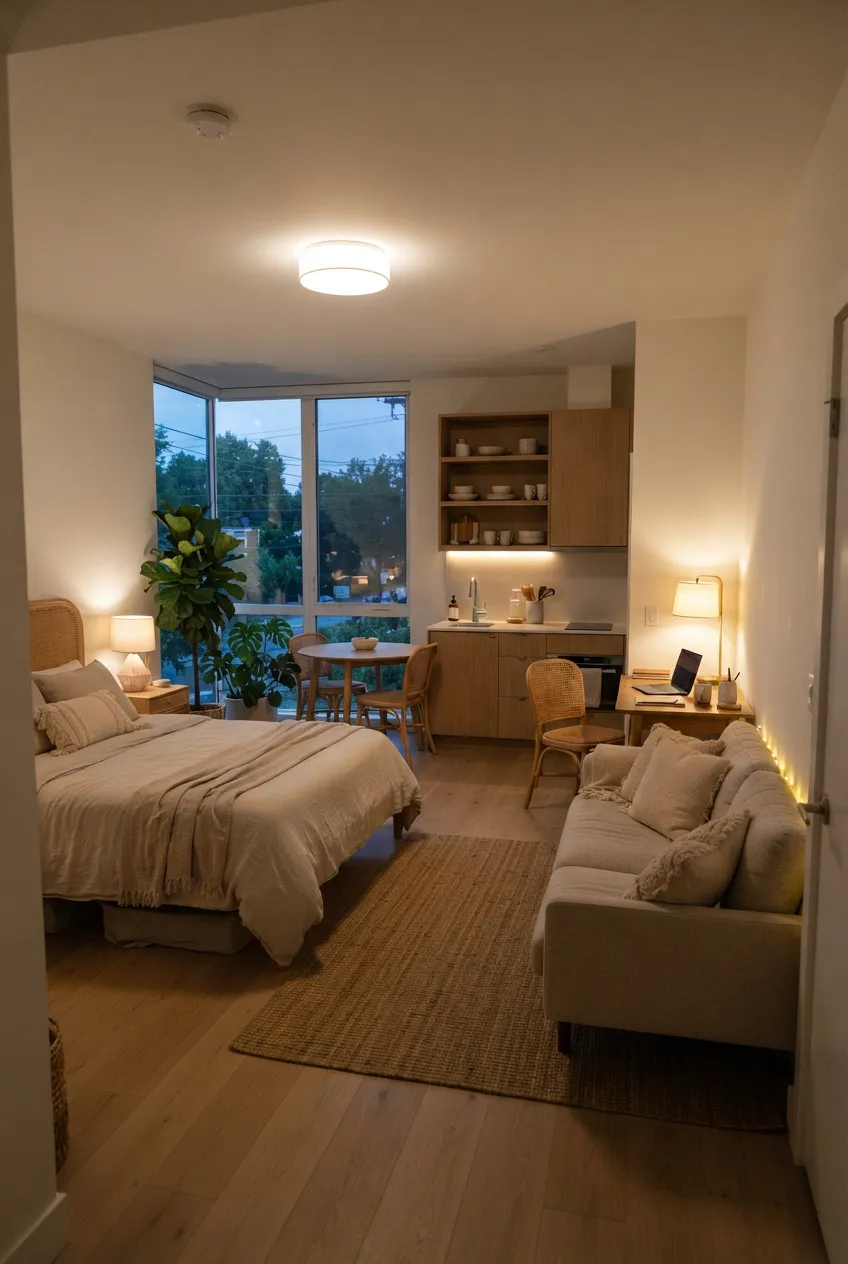
Mark where you cook, eat, read, work, get dressed, and walk between the entrance and bathroom. Then note which existing light reaches each activity, where the outlets are, and what happens when the overhead light is off. A studio needs some general light for moving around, focused light for tasks, and softer light for the room’s background—not a lamp on every surface.
Move one lamp you already have to the darkest useful place and live with it for an evening. Check its cord, switch, and shade from your normal seated or standing position. This quick test can reveal whether you need a different lamp at all.
2. Soften the Main Ceiling Light
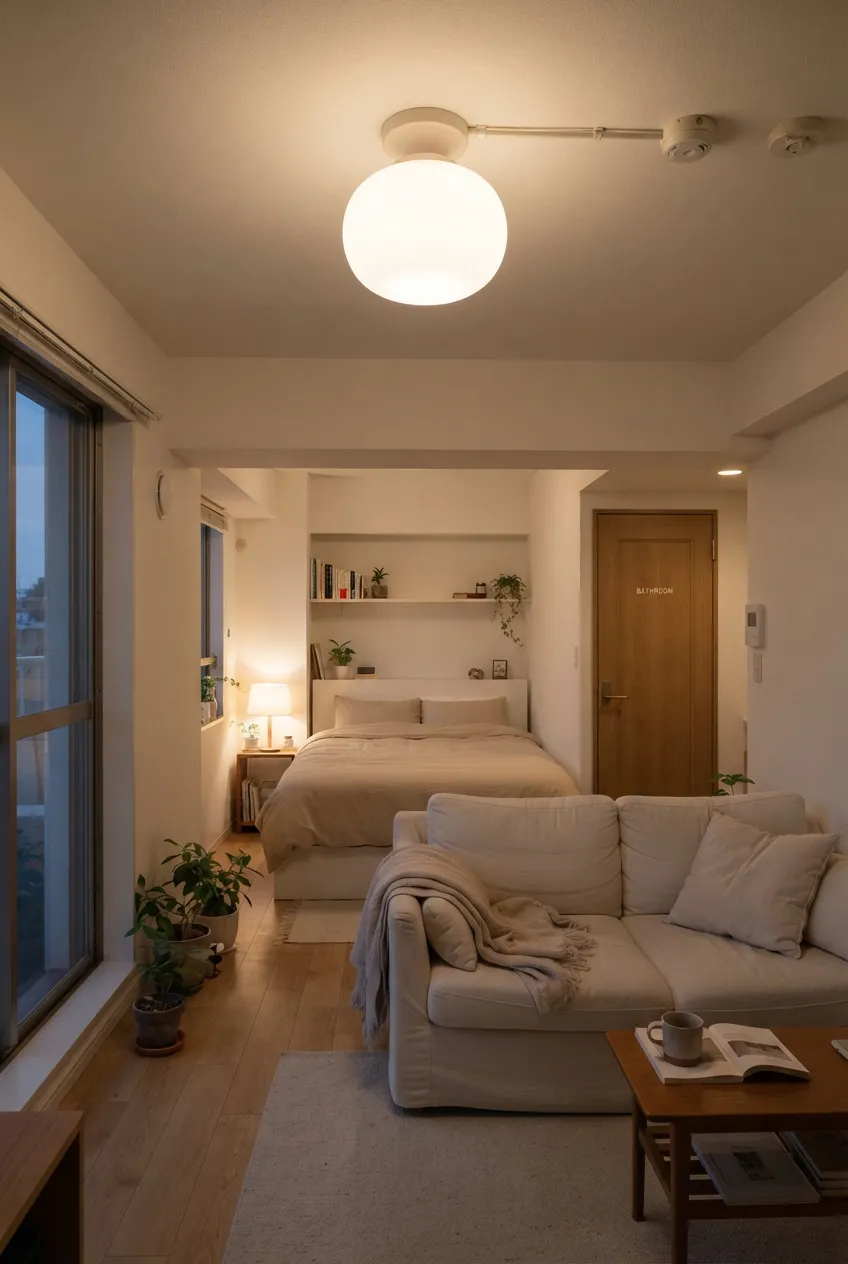
If a bare bulb or clear shade makes the whole apartment feel exposed, try a compatible diffuser or an approved shade for the existing fixture. Aim for a broader, gentler spread rather than a bright point that is visible from the bed and sofa. Keep the main light bright enough for cleaning and safe movement, even if it is not the light you use while relaxing.
Before changing a fixture or bulb, follow the manufacturer’s limits for bulb type, heat, and shade clearance. Renters should stay within what their lease permits. A softer ceiling layer gives the other lamps a useful base instead of forcing them to replace all general light.
3. Choose Warm-White Bulbs That Still Do the Job
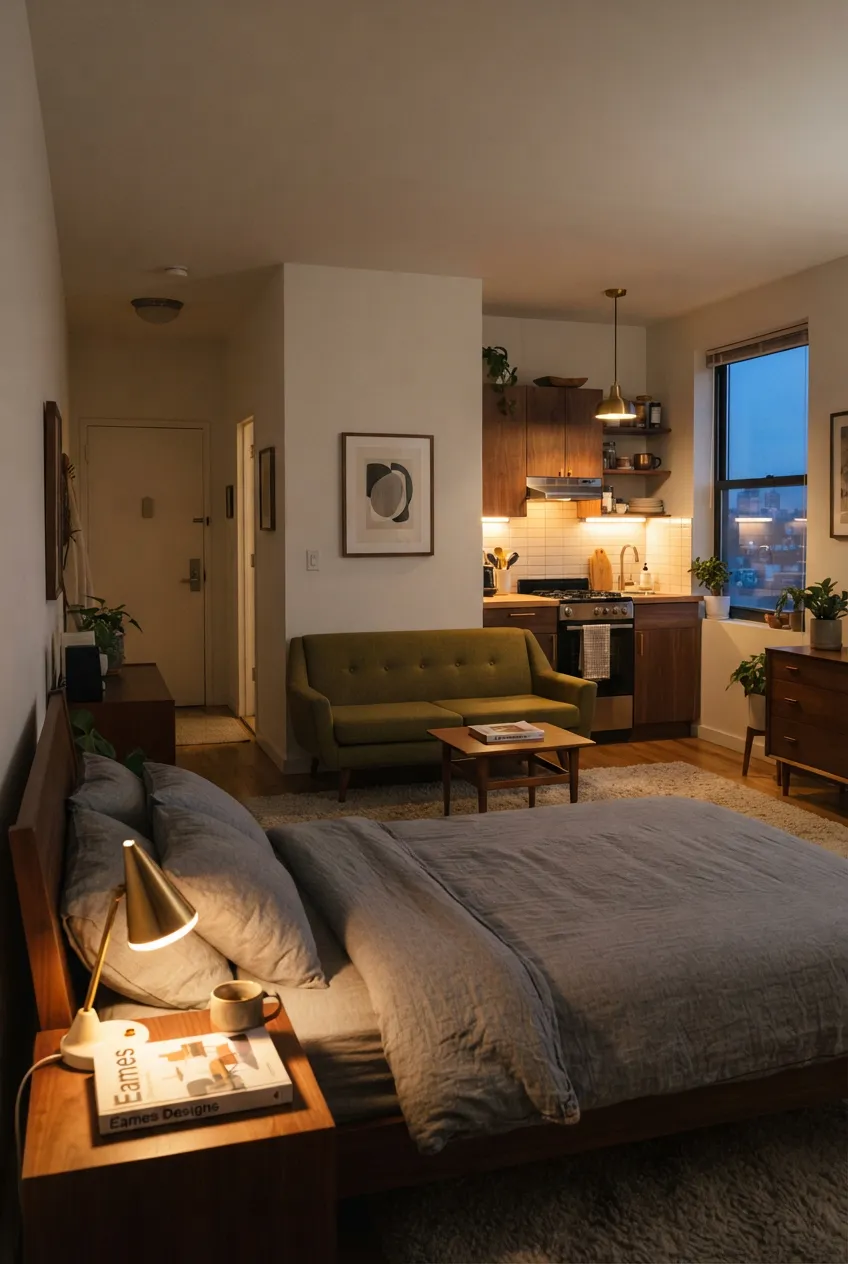
In an open studio, bulbs with very different color appearances can make the kitchen, sofa, and bed feel disconnected. Try a consistent warm-white appearance for the lights you use together in the evening, while keeping enough brightness where you prepare food or read. Compare the color description and brightness on the bulb label rather than assuming every “warm” bulb gives the same result.
Check the lamp’s socket and wattage limits; if it is on a dimmer, check the bulb and dimmer compatibility before buying. If replacements would solve the mismatch, browse warm-white LED light bulbs on Amazon and compare color appearance, brightness, fitting, and dimming information. Do not use an incompatible dimmer to create a mood.
4. Put a Shaded Floor Lamp Beside the Sofa
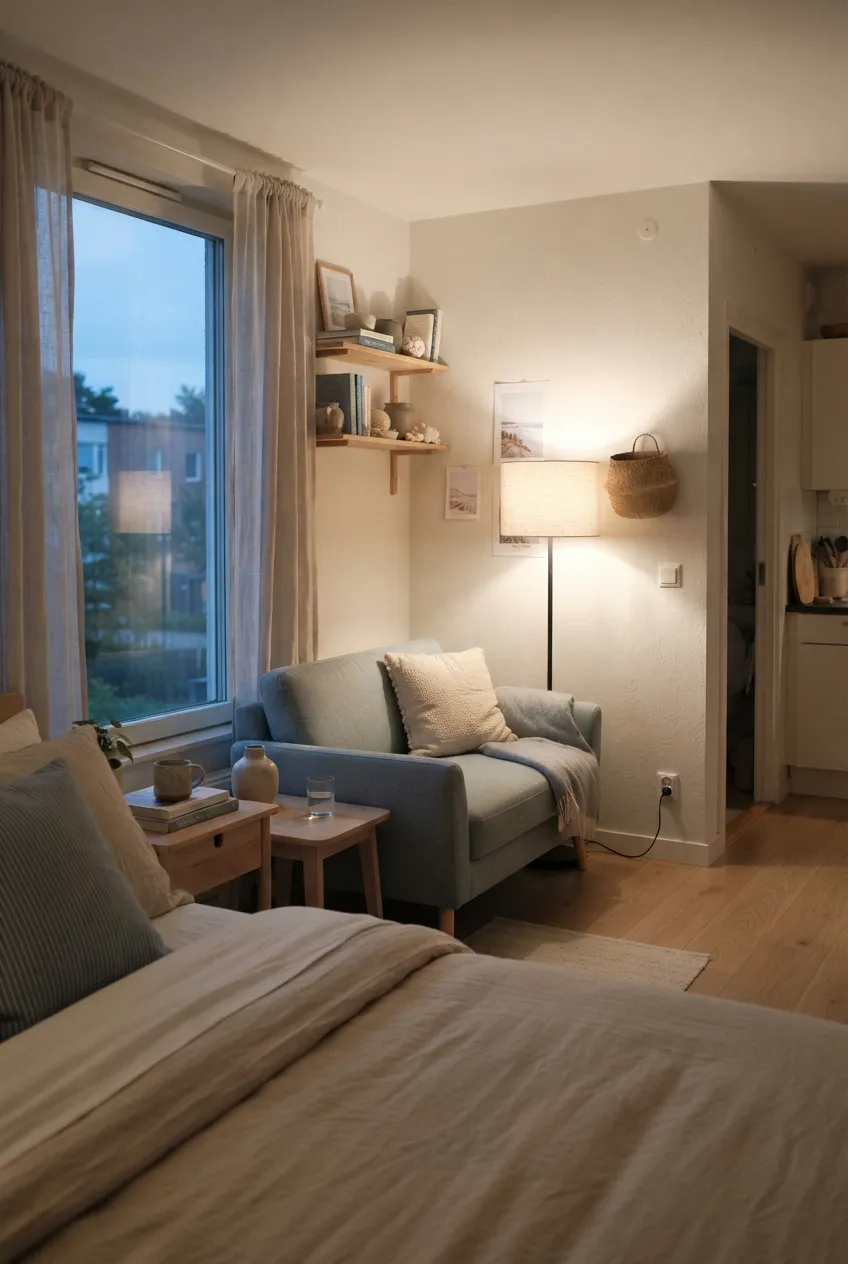
A floor lamp can give the sitting area a warm pool of light without taking the small coffee table. Set it beside or slightly behind the sofa, where the shade hides the bulb from a seated person’s eyes. The light should reach the sofa and nearby wall, while the base stays outside the entrance-to-bathroom route.
Measure the base, shade width, outlet distance, and clearance from curtains or bedding. If this solves a real gap, browse small shaded floor lamps on Amazon and compare footprint, switch access, shade direction, and cord length with the sofa location. A tall lamp that shines straight into the bed will not make the shared room feel calmer.
5. Aim a Reading Lamp at the Book, Not the Bed
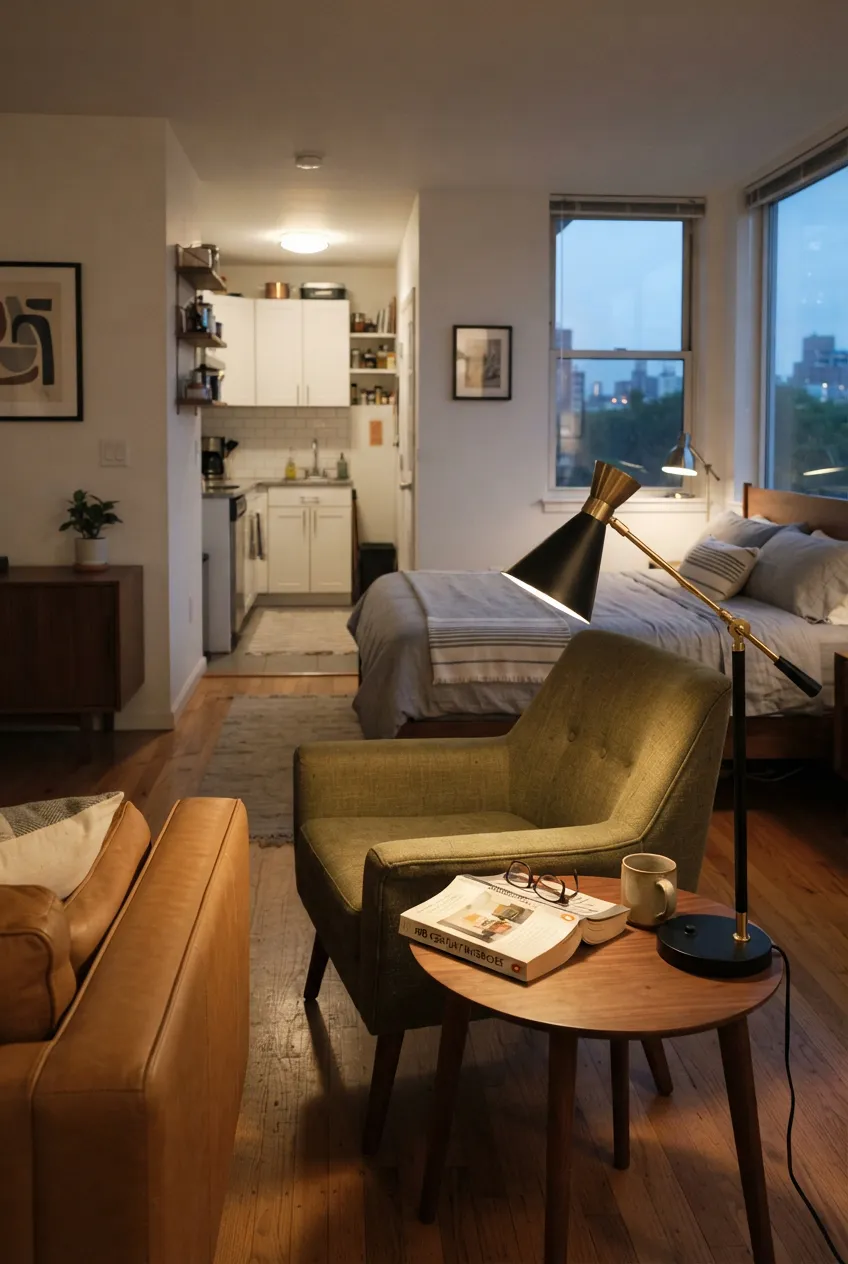
Relaxed lighting is not the same as trying to read in a dim room. Put an adjustable light near the chair or sofa seat you actually use and aim it onto the page. From the bed and across the sofa, the bulb should not sit in a direct line of sight.
Test the lamp while seated, with the book at your usual height. A small directional light may be enough when the surrounding floor lamp is already on. Keep a freestanding lamp stable and its cord away from the walking route; do not let a hot shade rest against fabric.
6. Use a Table Lamp to Light a Wall Gently
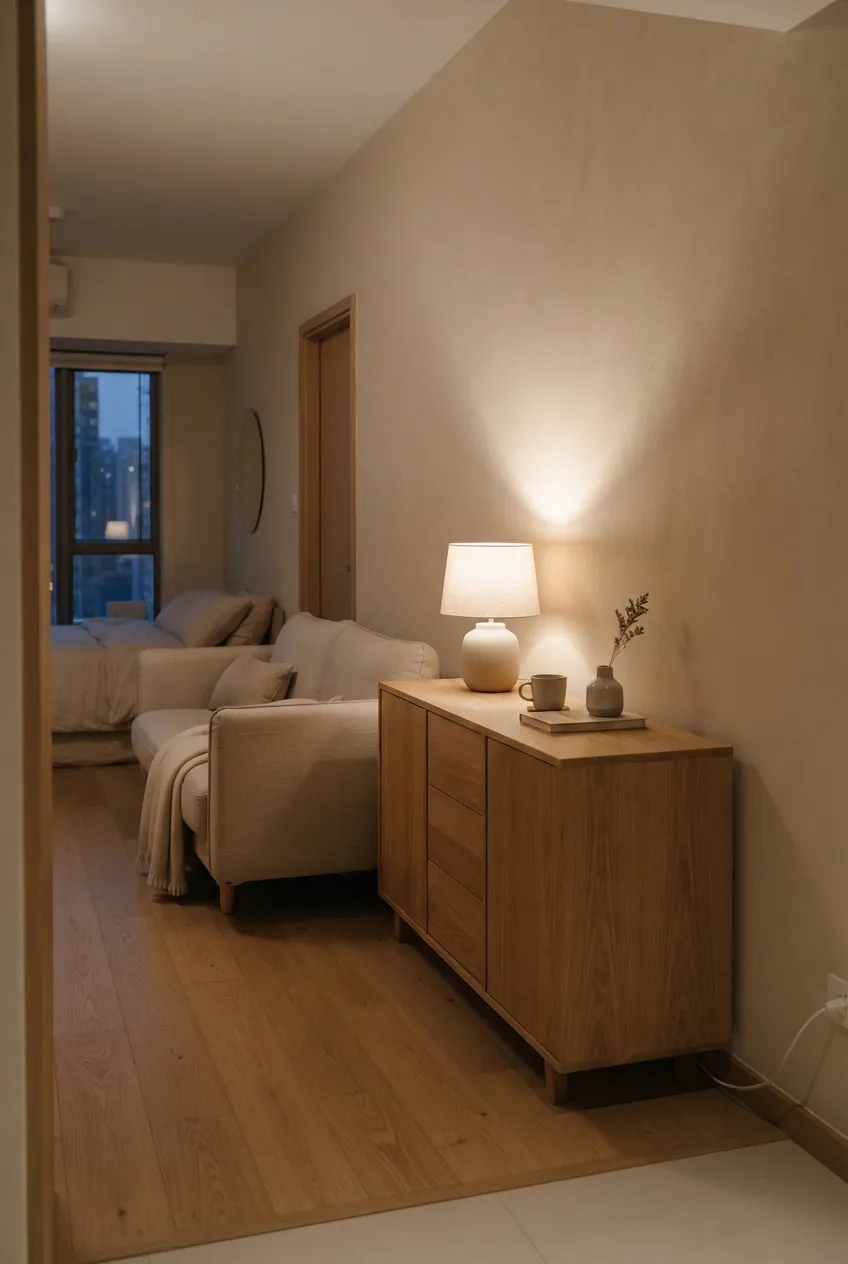
A small lamp on an existing dresser or low cabinet can illuminate a plain wall and give the whole studio a softer background. Place it where the shade does not block a mirror or cabinet door and where the top remains useful for everyday items. The goal is a little depth behind the sofa or bed, not a bright decorative object in every corner.
Look from the entrance and from the bed. If the bulb itself glares, use an opaque or diffusing shade and move the lamp farther from the edge. Keep it away from loose fabric, and do not cover a heat source.
7. Give the Dining Table Its Own Light
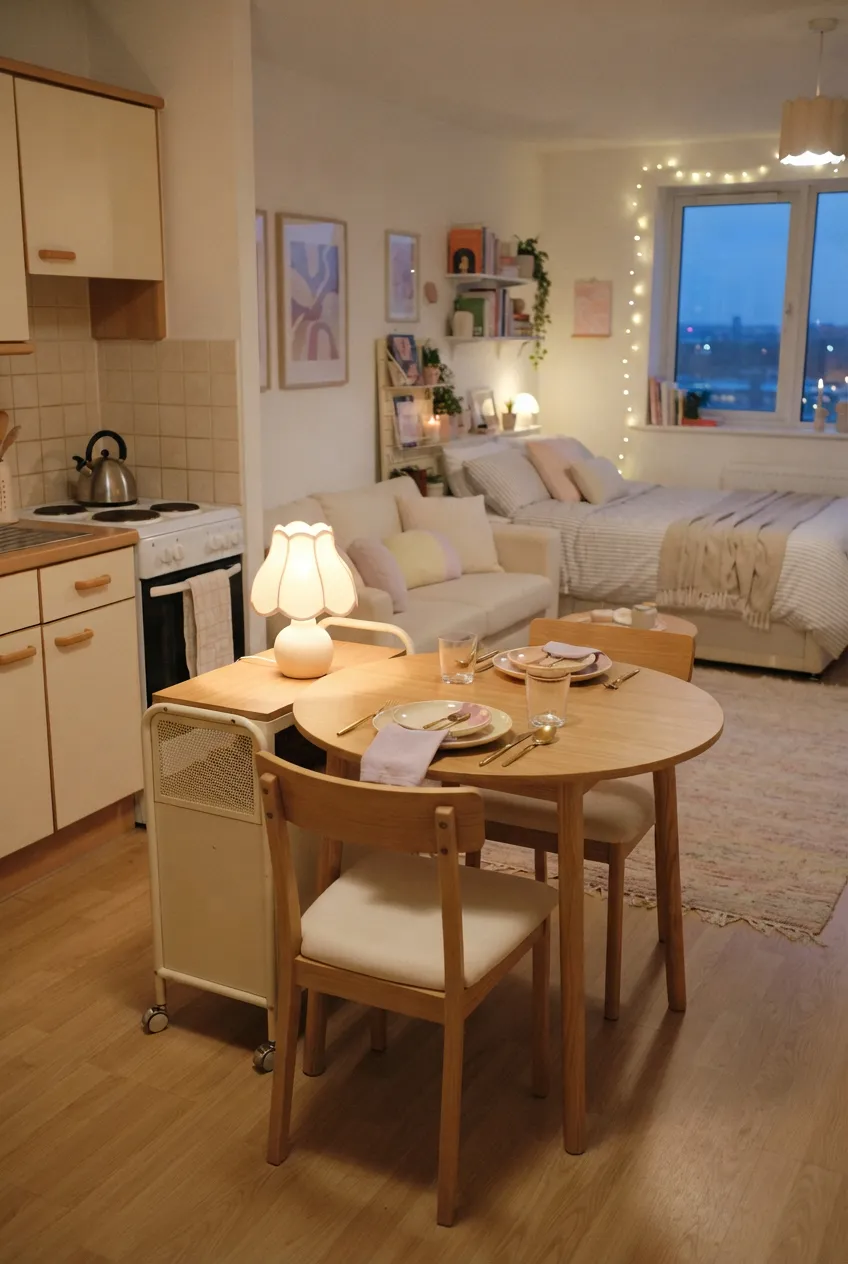
An eating area can feel forgotten when the only light is a kitchen ceiling fixture behind the diner. A compact lamp on a nearby sideboard or safe wall shelf can cast light across the tabletop without taking up the space needed for plates. Use the existing furniture and outlet if possible.
Sit in each chair and check that faces and food are visible without the shade shining in anyone’s eyes. Keep cords out of the chair pullback area and the path to the kitchen. The studio dining area guide covers the table’s location; this layer makes that place comfortable to use after dark.
8. Light the Kitchen Counter Where You Prepare Food
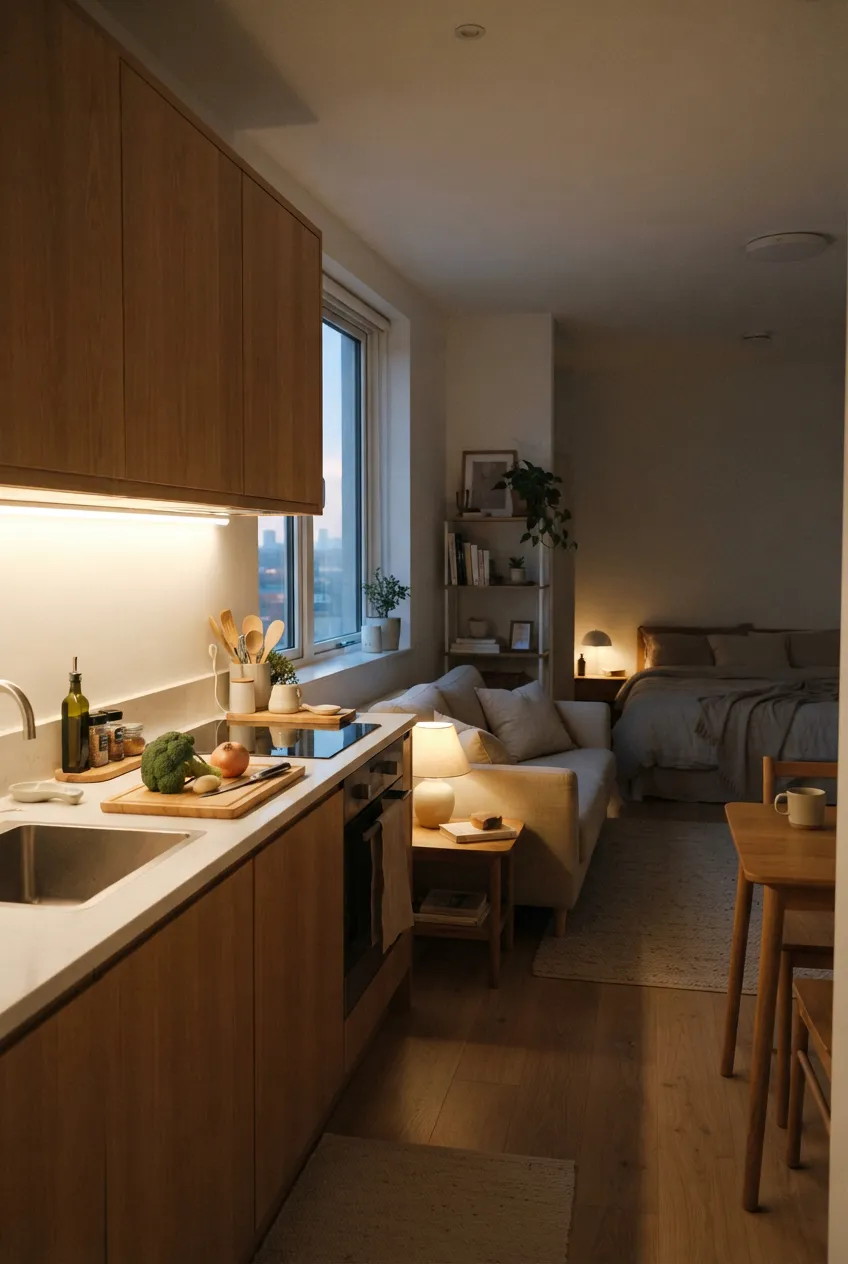
Warm ambient lamps cannot replace clear light on a cutting board. If upper cabinets shadow the counter, a suitable under-cabinet task light can put light on the work surface rather than across the bed. Choose a fixture intended for its mounting location and the nearby heat or moisture conditions.
Measure the available mounting length, outlet and cord route, and the counter area actually used for preparation. Follow the maker’s mounting and electrical instructions, and keep cords away from water and hot surfaces. If that setup works in your kitchen, browse plug-in under-cabinet LED lights on Amazon and compare dimensions, power connection, switch position, and installation requirements.
9. Keep the Work Light Local to the Desk
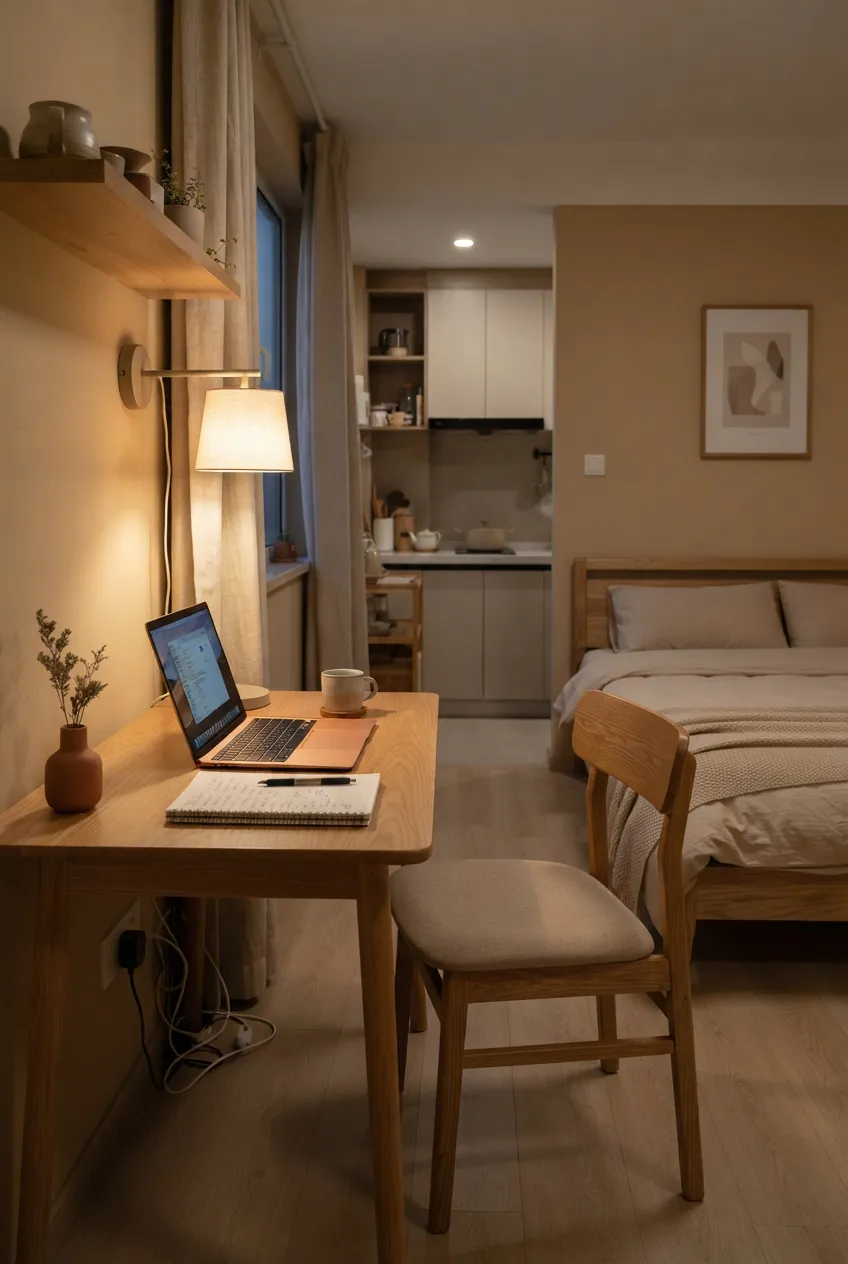
A desk lamp should light the keyboard, paper, or work surface without making the bed equally bright. Put it to the side that avoids casting your hand’s shadow across the page, and aim it away from the monitor to reduce reflections. This lets you work while another person relaxes in the same open room.
Check that the lamp base leaves enough usable desk depth and that its arm does not hit a shelf or window covering. Keep the cord behind the desk, off the only walking path. The studio workspace ideas cover the desk itself; here the focus is how it is lit.
10. Put Bedside Light Within Easy Reach
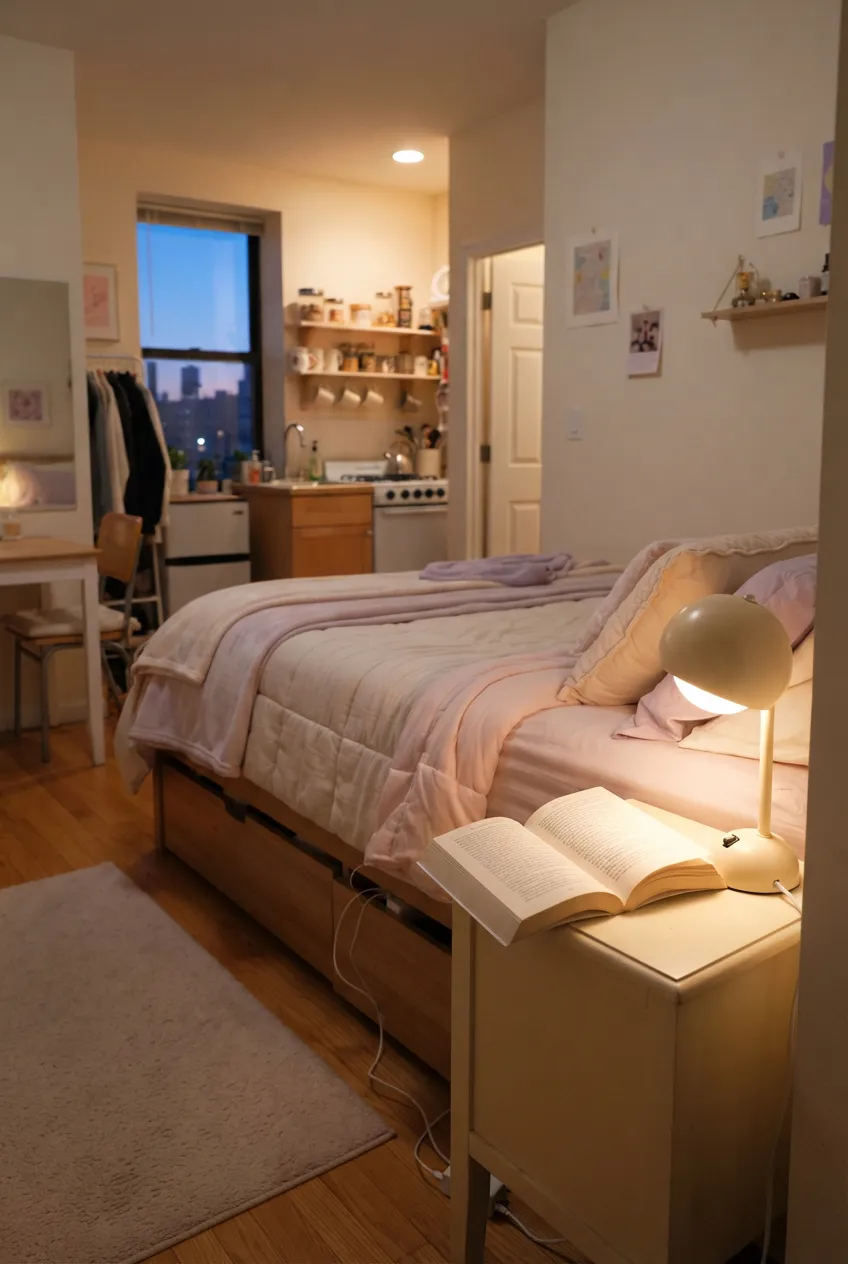
In one-room living, the bed should not have to stay bright because a kitchen or ceiling light is still on. Use a small bedside lamp where you can reach its switch without leaning across the bed. Aim the light at a book or the bedside surface, while keeping the source out of your direct sight when lying down.
Check that the lamp and cord do not crowd the bed-making space or block any bed drawer. If there is room for only one bedside surface, one useful lamp is better than a forced matching pair. This is about the lamp’s position and control, not a complete sleep routine.
11. Keep the Entry and Main Route Visible
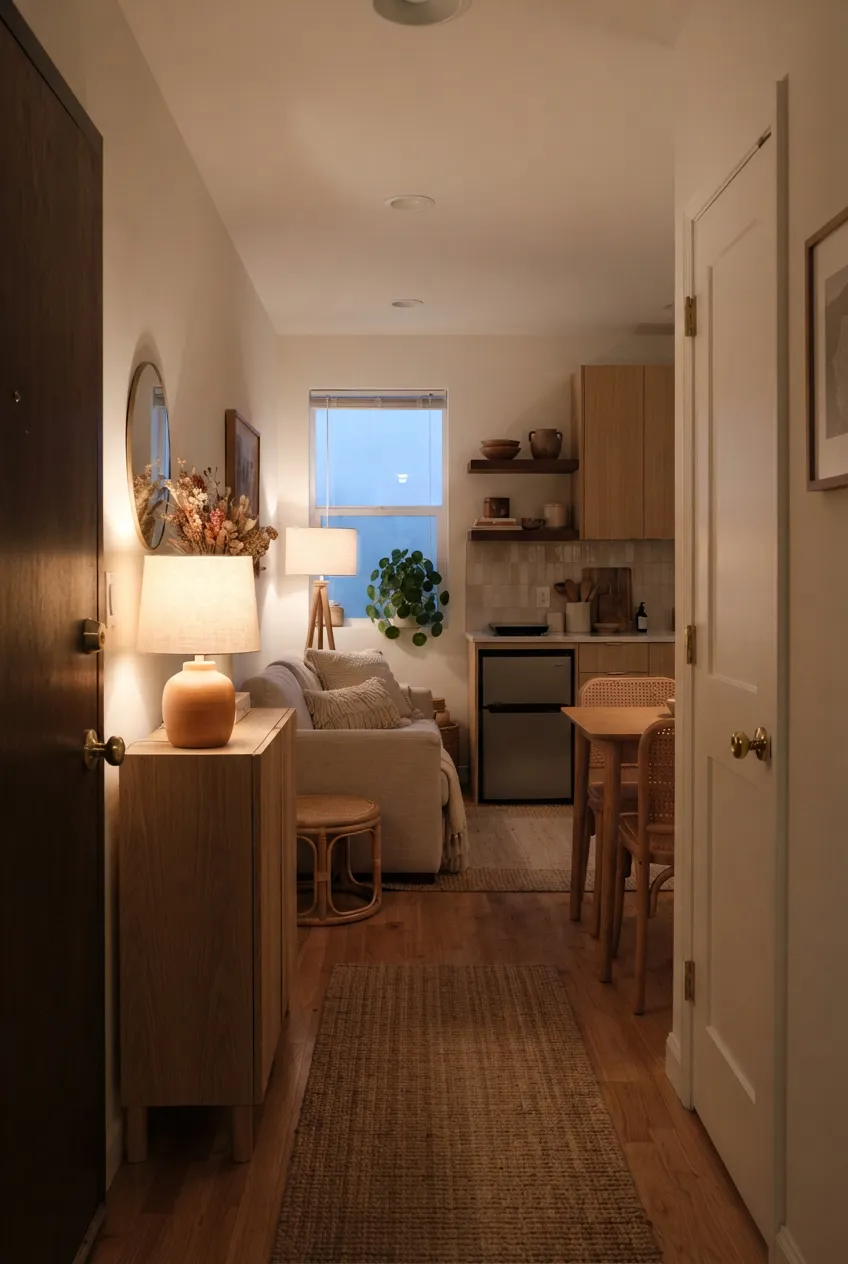
When the overhead light goes off, you should still be able to move from the door to the sofa, kitchen, and bathroom without stumbling over furniture. A small lamp near the entry or an existing fixture with a separate switch can mark that transition. Place it on a stable surface rather than on the floor in the route.
Check the apartment from the doorway with the evening lights on. You need enough light to see handles, edges, and the clear path, without making the whole room uniformly bright. The studio entryway guide has more on organizing that small arrival area.
12. Give Each Lighting Layer Its Own Control
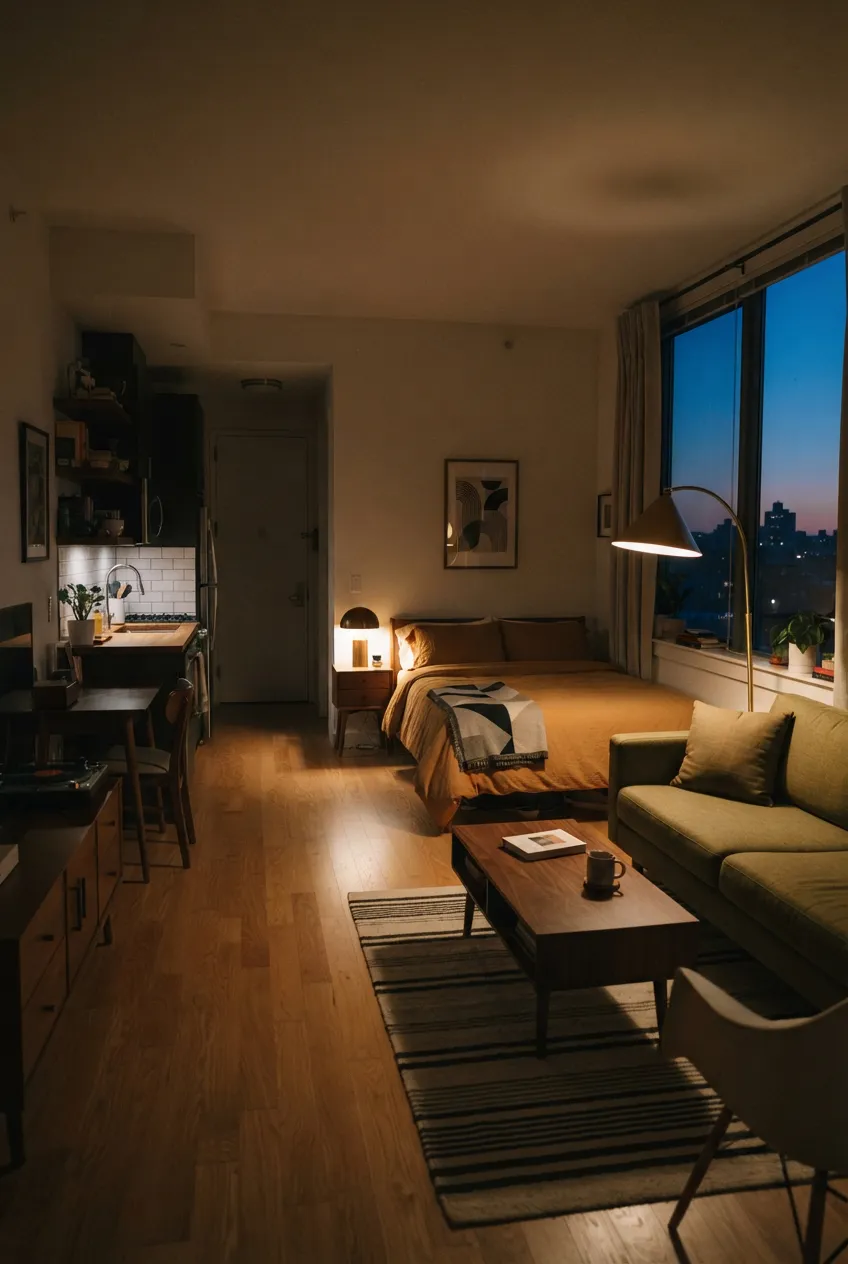
The most useful warm lighting plan can change with the evening. Keep the main light, cooking light, sofa lamp, work light, and bedside light on separate switches or maker-approved plug-in controls where practical. That way, dinner and reading do not require every lamp to be on at once.
Try three real scenes: cooking, relaxing, and getting ready for bed. Walk the main route in each, check for glare in a mirror or screen, and adjust the smallest number of lamps needed. Use controls as instructed and avoid improvised wiring or overloaded outlets. A studio feels cozier when the useful areas are lit and the rest of the room can be quieter.
Final Thoughts
Warm studio lighting is a practical arrangement of light, not a collection of decorative lamps. Make the main fixture comfortable, light tasks where they happen, and give the sofa and bed their own softer sources. Check every cord, shade, switch, and walking route at night. A few well-placed lights can make one open room support several different moments of the day.
More Studio Apartment Ideas
 |  |  |
|---|---|---|
Brighten Studios  | Compact Workspaces | Cozy Studios |