A studio with no built-in closet gives clothing nowhere obvious to go. A rack may hold shirts but not socks. A dresser may hold T-shirts but not a coat. Shoes end up by the door, and the chair becomes a landing place for clothes that are neither clean nor ready to wash. The solution is to give each type of item a specific home without turning the whole room into an open wardrobe.
Start by sorting what you own into daily folded clothes, pieces that must hang, shoes and accessories, laundry, and items used only in another season. Then match each group to a small, accessible place. These ideas focus on managing life without a closet; if you want to build a dedicated wardrobe area, the studio apartment closet ideas cover those systems.
1. Count What Needs to Hang Before Buying Storage
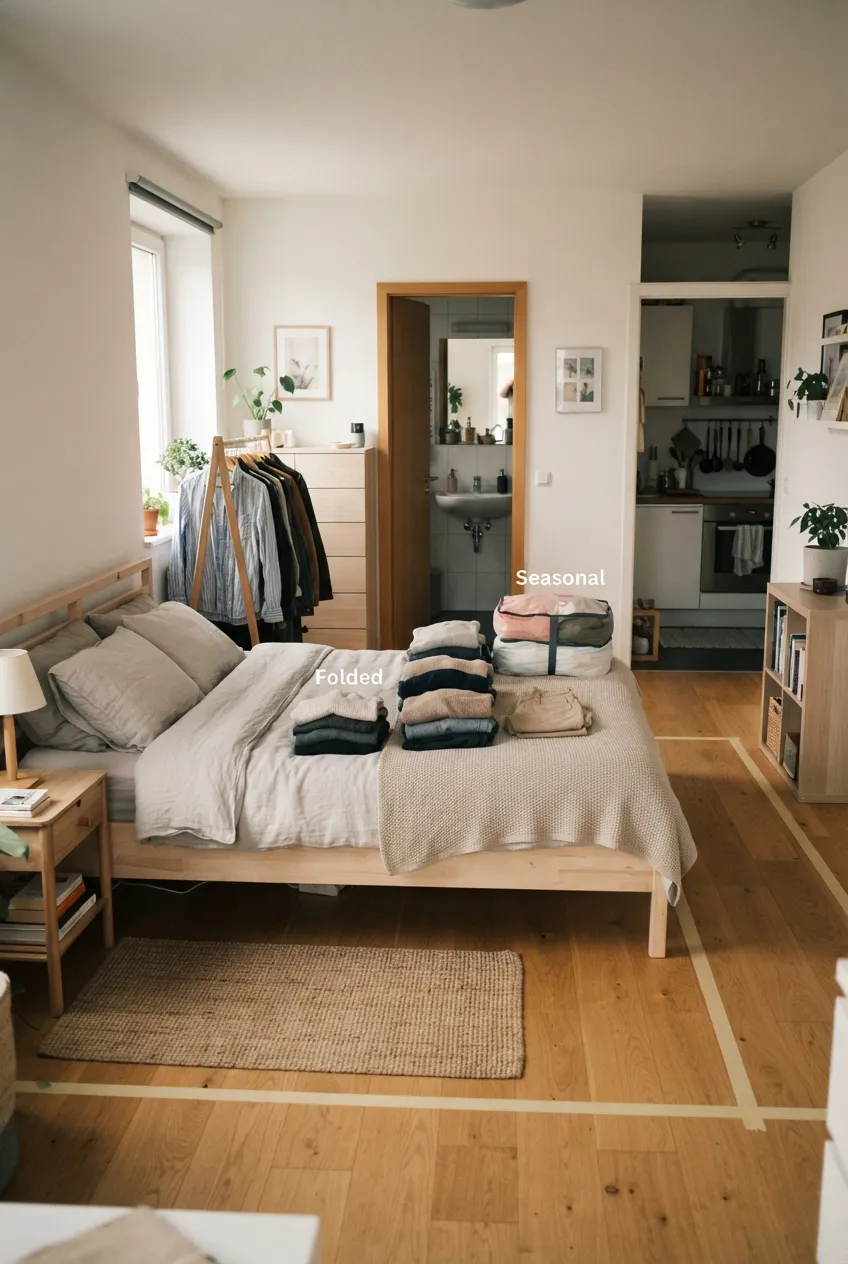
Lay out your current-season clothes and separate genuinely hang-only pieces from items that can be folded. Count jackets, dresses, and shirts that lose their shape or wrinkle badly when folded. That gives you a realistic hanging target rather than the width of a rack chosen by guesswork.
Do the same for folded clothes, shoes, and accessories. Mark the proposed storage footprints on the floor, then open nearby doors and walk the route to the bed, kitchen, and bathroom. A no-closet plan works only if it fits the room in use, not just the total number of hangers.
2. Give Everyday Folded Clothes One Dresser Near the Bed
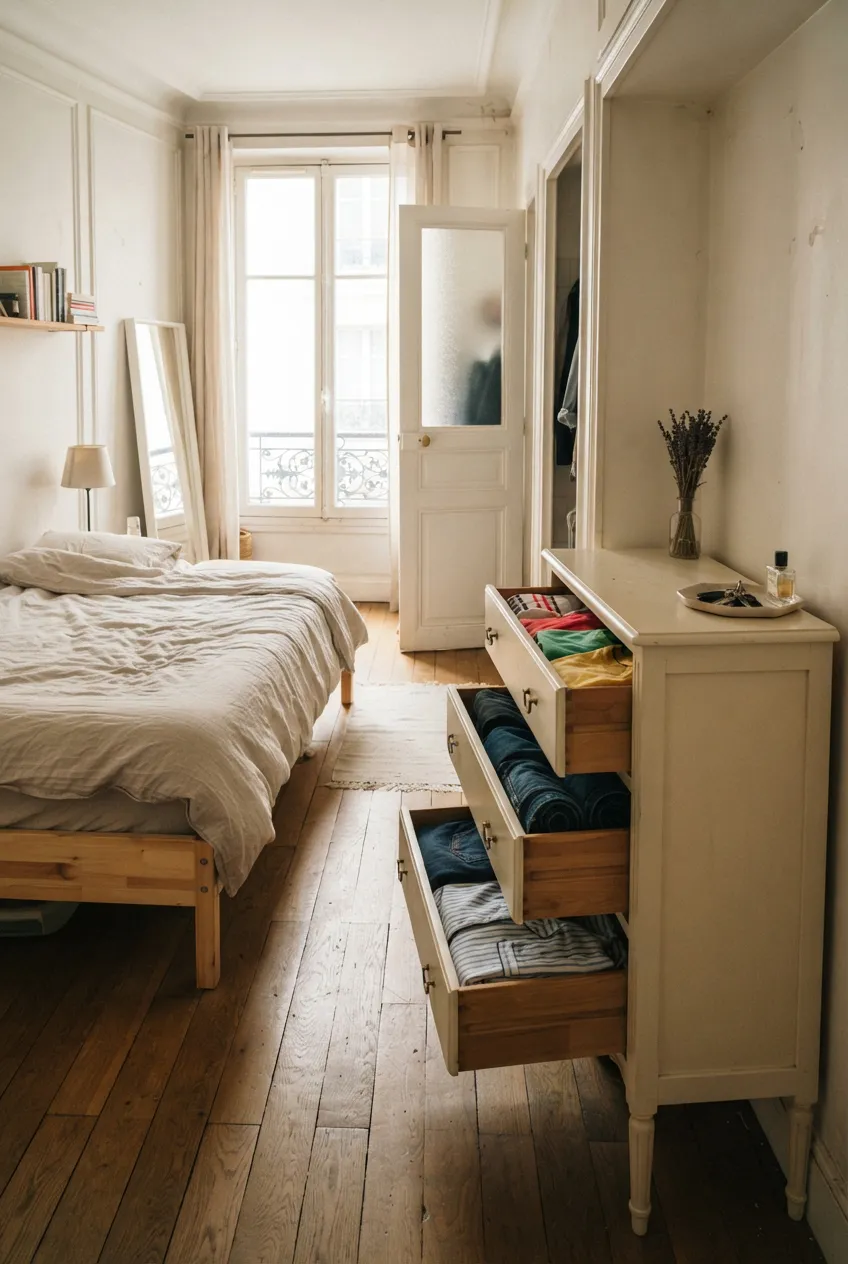
A compact dresser near the place you get dressed can hold T-shirts, jeans, pajamas, and underwear without spreading them across several pieces of furniture. Assign drawers by daily routine, with frequently worn items at an easy height. Keep the top mostly clear so it does not become a substitute shelf for everything else.
Measure drawer pull-out space, not only the dresser’s closed depth. Every drawer must open fully while the bed and main route remain usable. If there is no room for one suitably sized dresser, reduce what stays in daily circulation before buying several tiny chests.
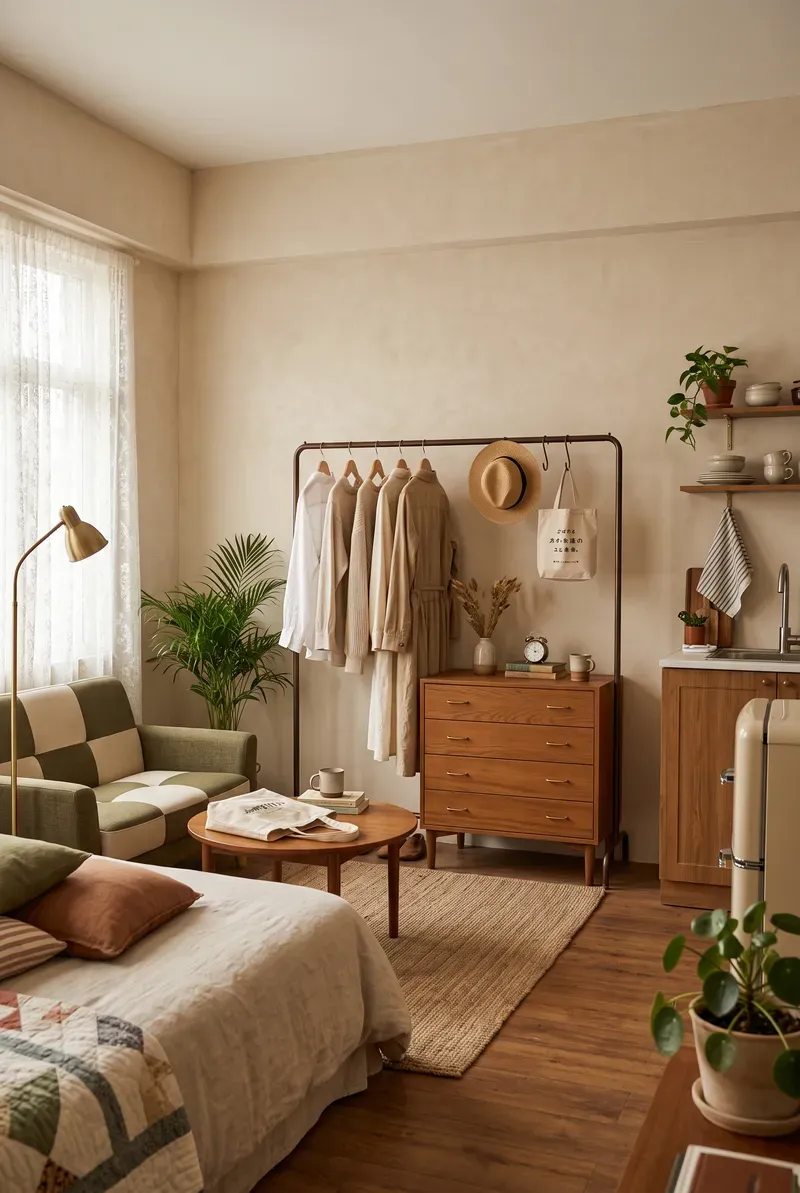
3. Reserve a Small Rack for Clothes That Truly Need Hangers
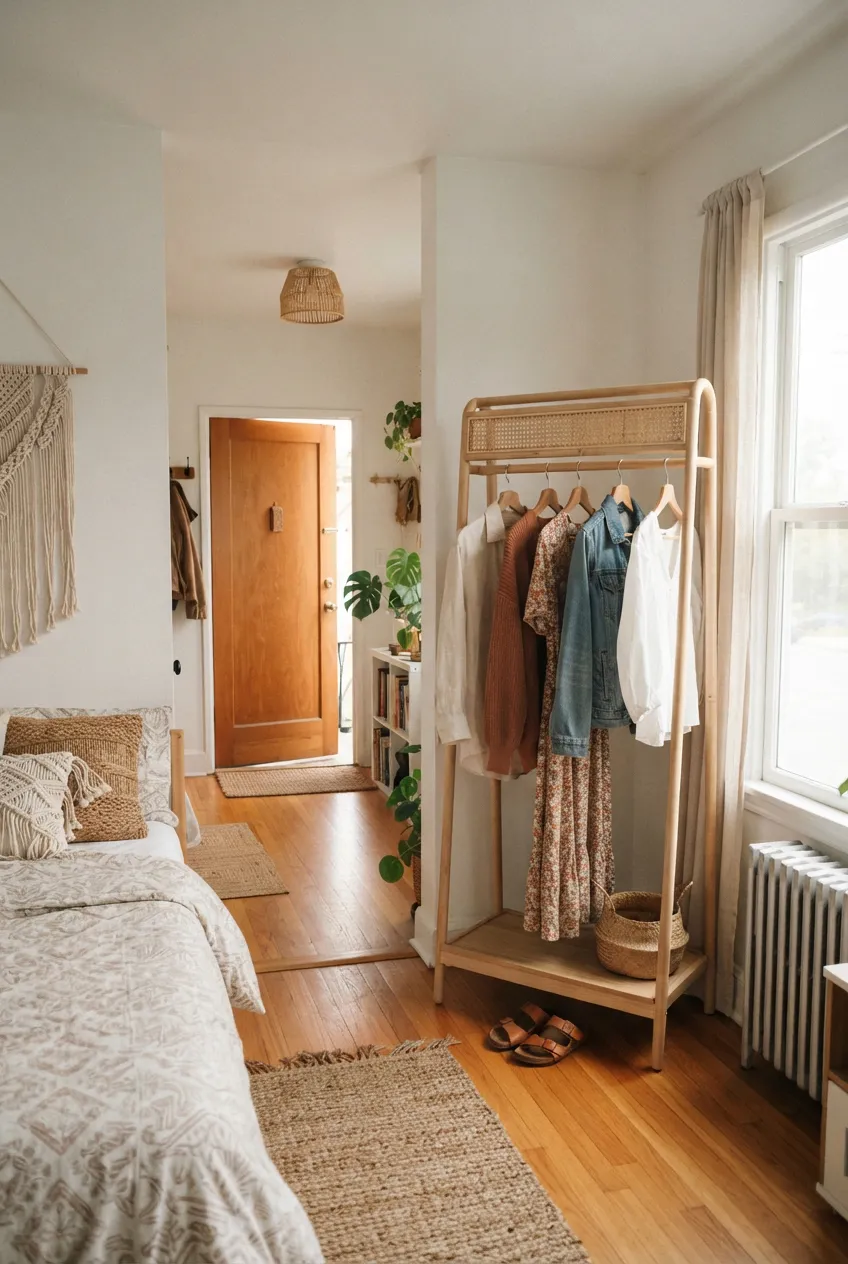
A freestanding rack can handle a limited set of current-season shirts, jackets, or dresses when there is no closet rod. Use it for the pieces that need to hang rather than making it carry every garment you own. Leave space between items so you can remove one without pulling down the others.
Place the rack near the dressing area but away from a window, heater, and the only route across the studio. Check the maker’s load guidance and keep the base stable. Folded clothes, shoes, and laundry need other homes; adding them to the rack’s lower bar can quickly make it hard to use.
4. Put Coats and Worn-Again Clothes on Separate Hooks
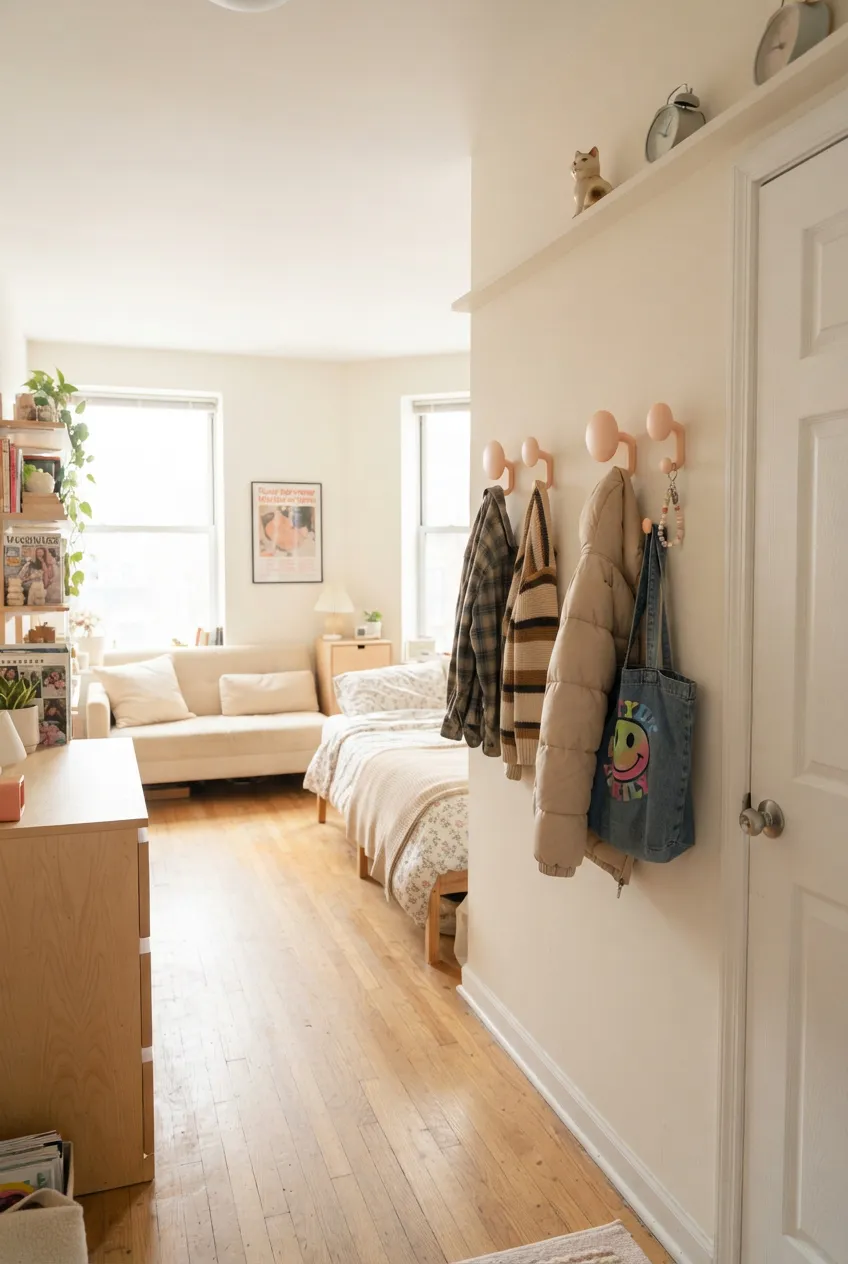
A small set of hooks near the entrance can hold the coat and bag you use most days. Another limited hook spot near the bed can hold one or two clean-enough-to-wear-again pieces. This gives those clothes an intentional place instead of leaving them on the sofa.
Keep wet clothing away from bedding and let it dry appropriately before storing it. Use suitable fixings and follow the product’s load instructions, especially in a rental. A hook must not catch a door that opens fully or let hanging clothes intrude into the only walking route.
5. Move Off-Season Clothes Under the Bed
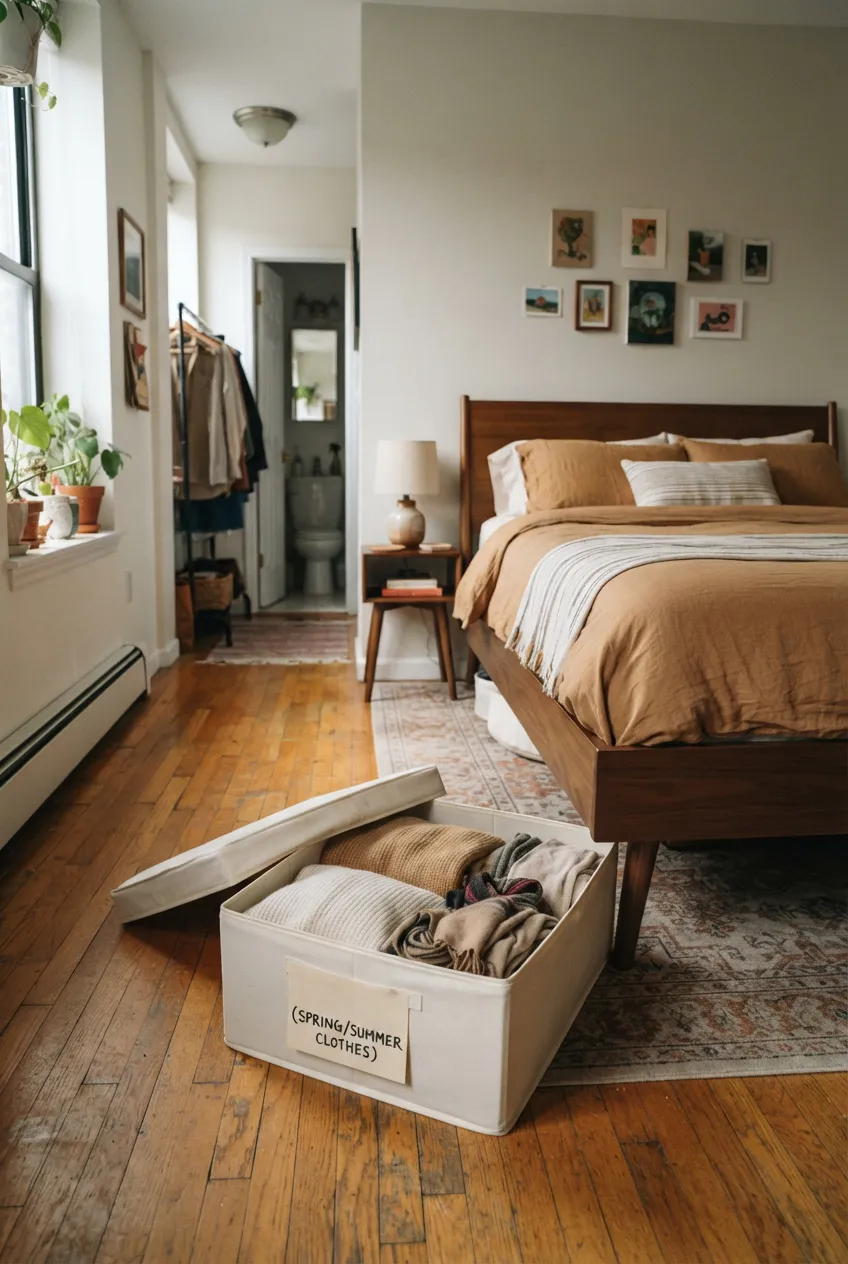
Under-bed space can hold clean, fully dry off-season clothing in shallow, closable containers. Label the front so you can find a particular group without pulling every box out. Reserve this less convenient space for items you do not need each morning.
Check the bed’s actual clearance, the floor’s condition, and the space needed to slide each box out completely. Do not block a heater or use the area if it is damp. If the bed has built-in drawers, make sure those drawers still open fully beside other furniture.
6. Keep Bulky Knits in Lidded Bins on an Existing Shelf
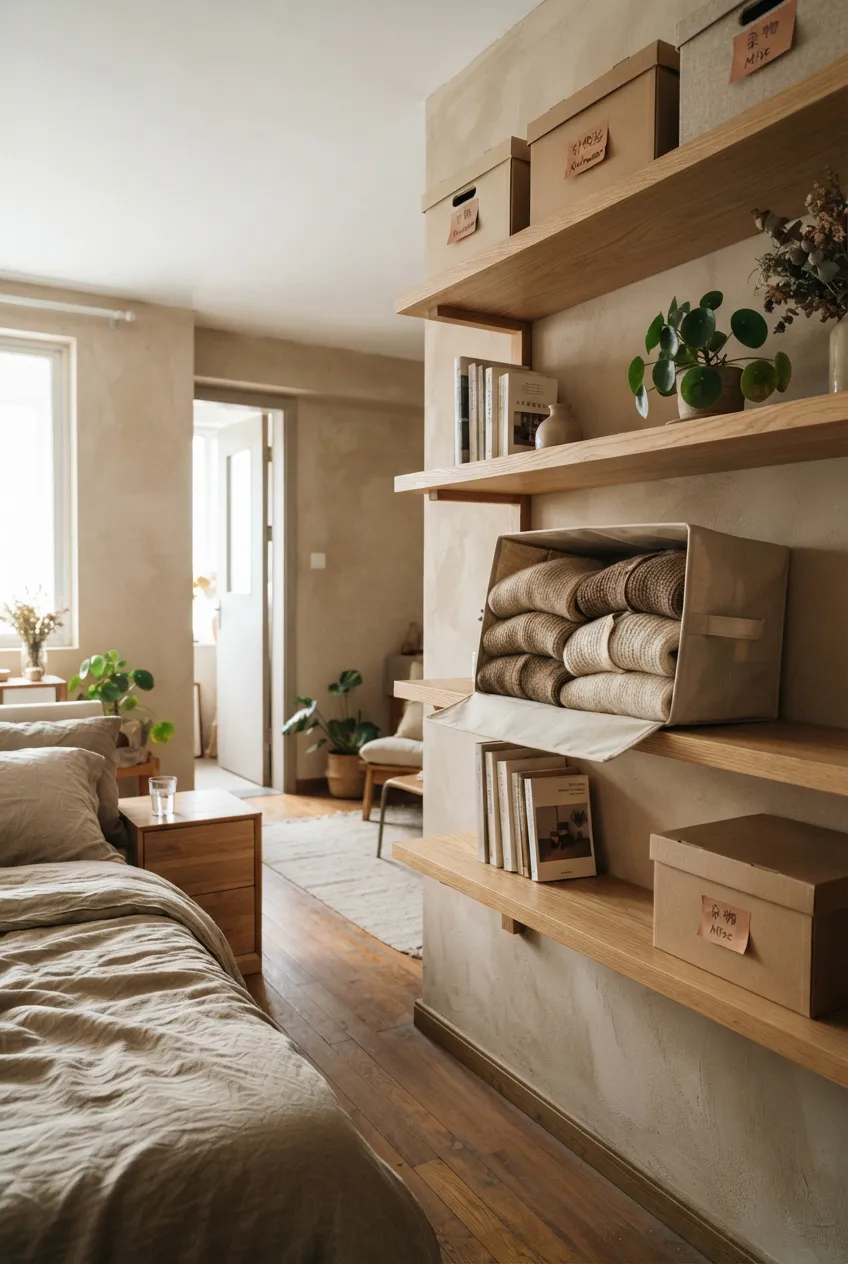
Sweaters and other foldable bulky pieces can take over a dresser. A few appropriately sized lidded bins on a stable, existing shelf can hold them by type or season. Fold garments rather than cramming them, and choose bins you can lift down safely without disturbing the rest.
Measure the shelf depth and load guidance, leaving enough space to lift the lids or remove a bin. Do not add a new shelving unit that blocks the bed or a door merely to gain theoretical capacity. For broader ideas about where storage can go, see the studio apartment storage guide.
7. Divide Small Garments Inside a Drawer
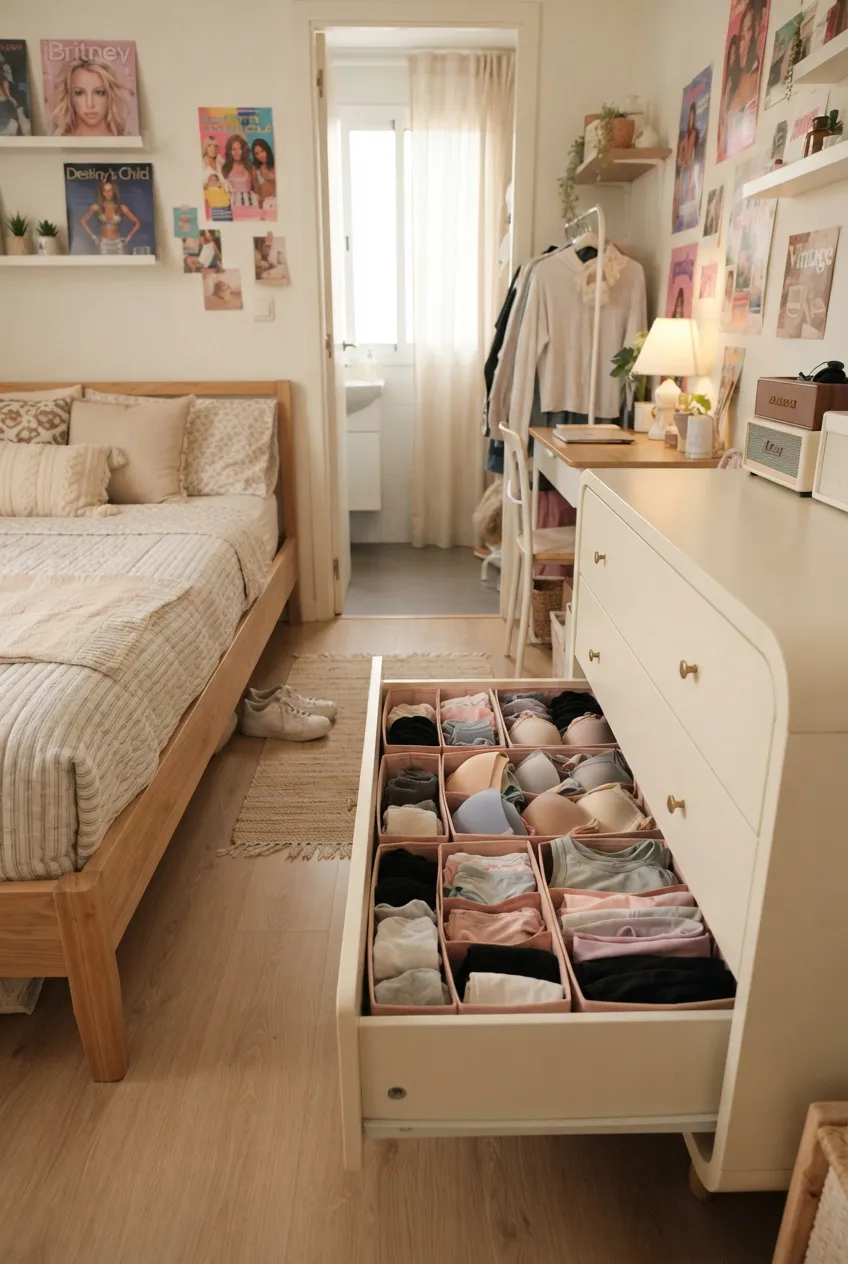
Socks, underwear, and exercise accessories disappear easily inside a deep mixed drawer. A few adjustable dividers or small boxes can give each group a defined area. The aim is to see what is clean and available before laundry day, not to create a picture-perfect display.
Measure the inside height so the drawer can still close completely. Keep the system simple enough to put clothes away quickly. If dividers are overflowing, remove duplicates or move a whole category rather than adding more compartments to the same drawer.
8. Use the Back of a Suitable Door for Light Accessories
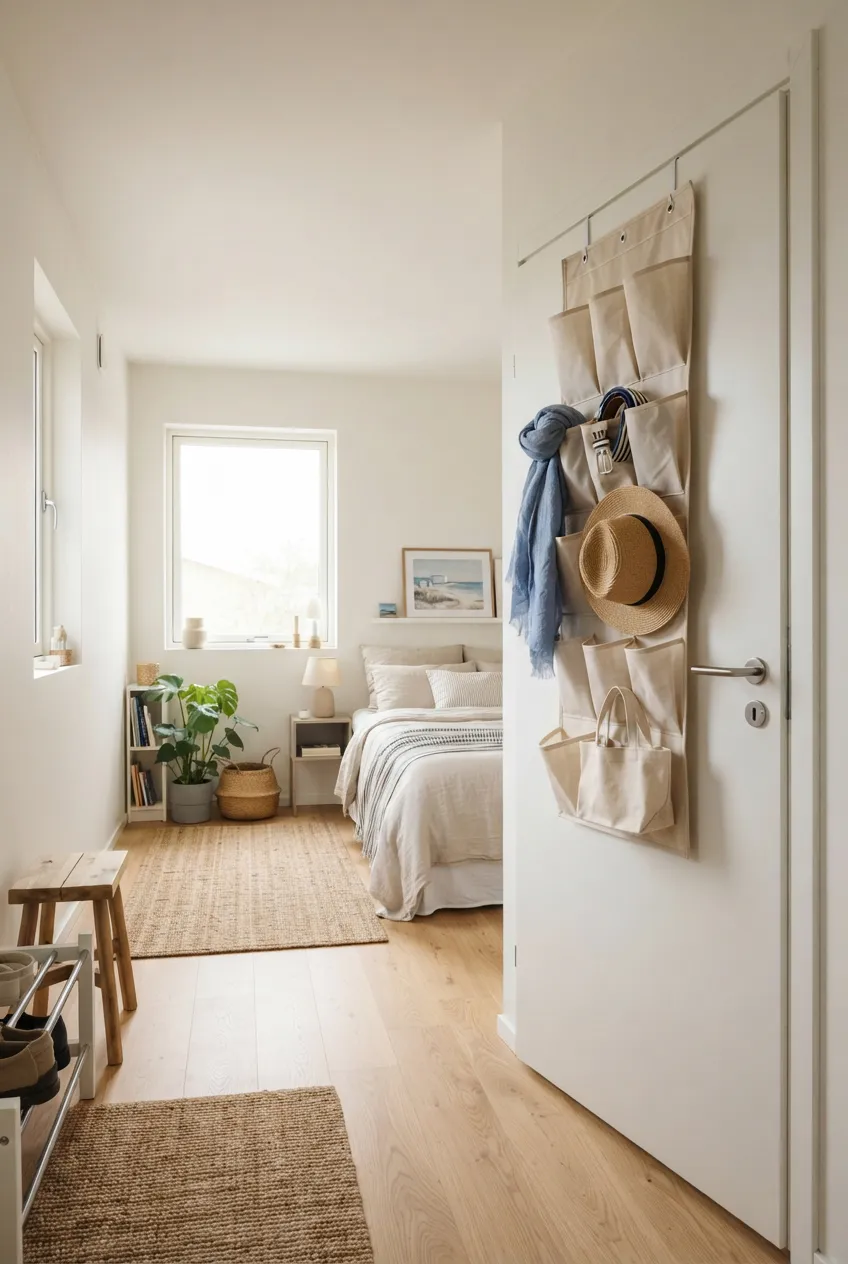
Scarves, belts, caps, and small bags may fit on an organizer behind a sturdy room door. This keeps small accessories together without using the clothes rack for everything. Choose a shallow organizer so it does not collide with the wall or items behind the door.
Open the door fully with the organizer loaded before relying on the space. The door must still latch and the organizer must not damage the door or block the main route. Keep heavy bags and sharp items on more stable storage, and check rental rules before fixing anything permanently.
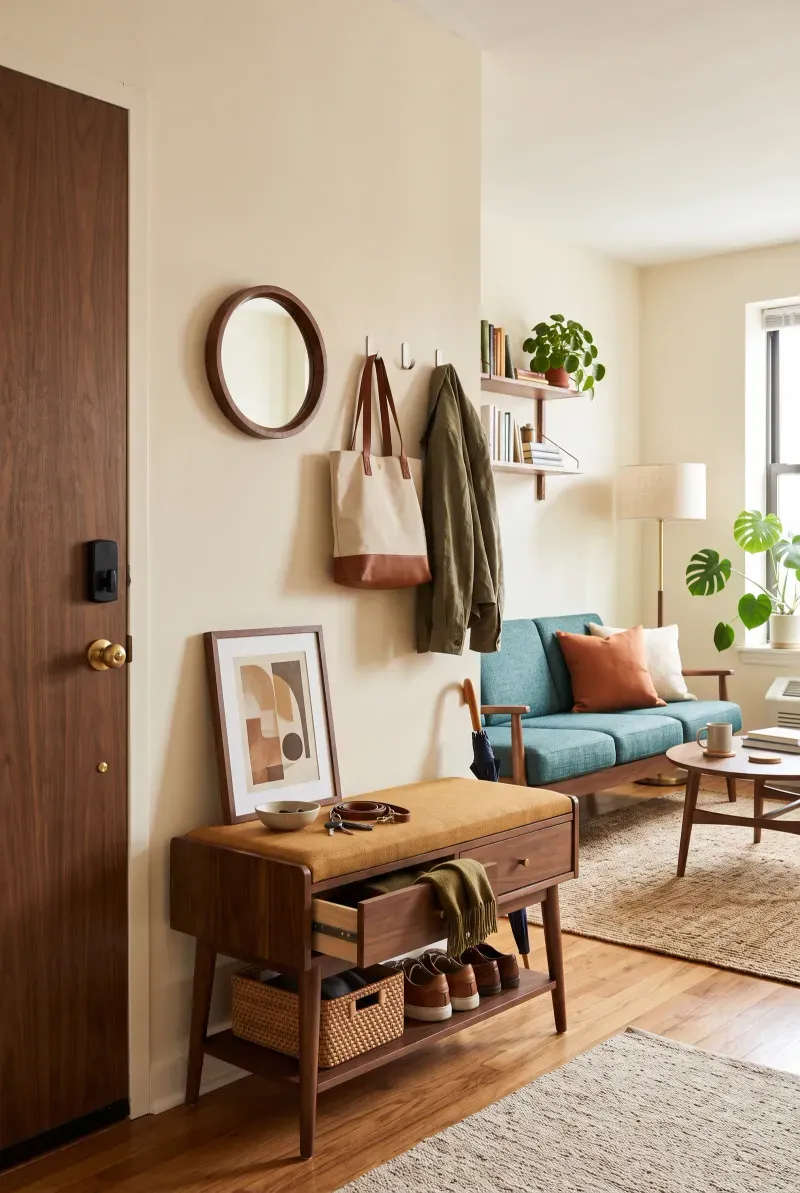
9. Give Shoes Their Own Place by the Entrance
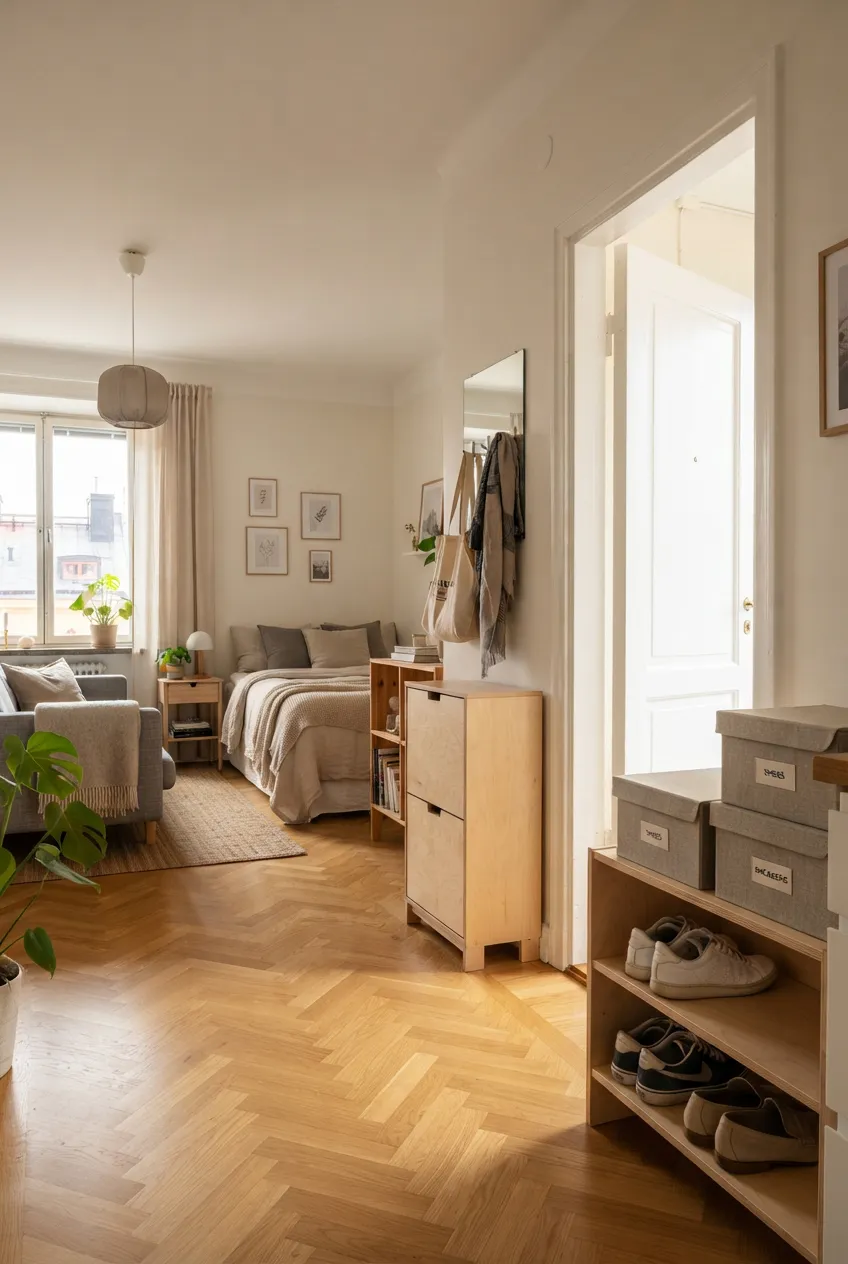
Shoes do not have to compete with clothing for a dresser drawer or rack shelf. A shallow shoe cabinet or a small, contained shoe tray near the entrance can hold the pairs you use often. Store occasional pairs elsewhere in clean boxes rather than expanding the entry collection indefinitely.
Make sure the front door opens fully and the shoe storage does not narrow the only path into the studio. For more detailed solutions at the threshold, see the studio apartment entryway ideas.
10. Put Lightweight, Rarely Used Accessories Up High
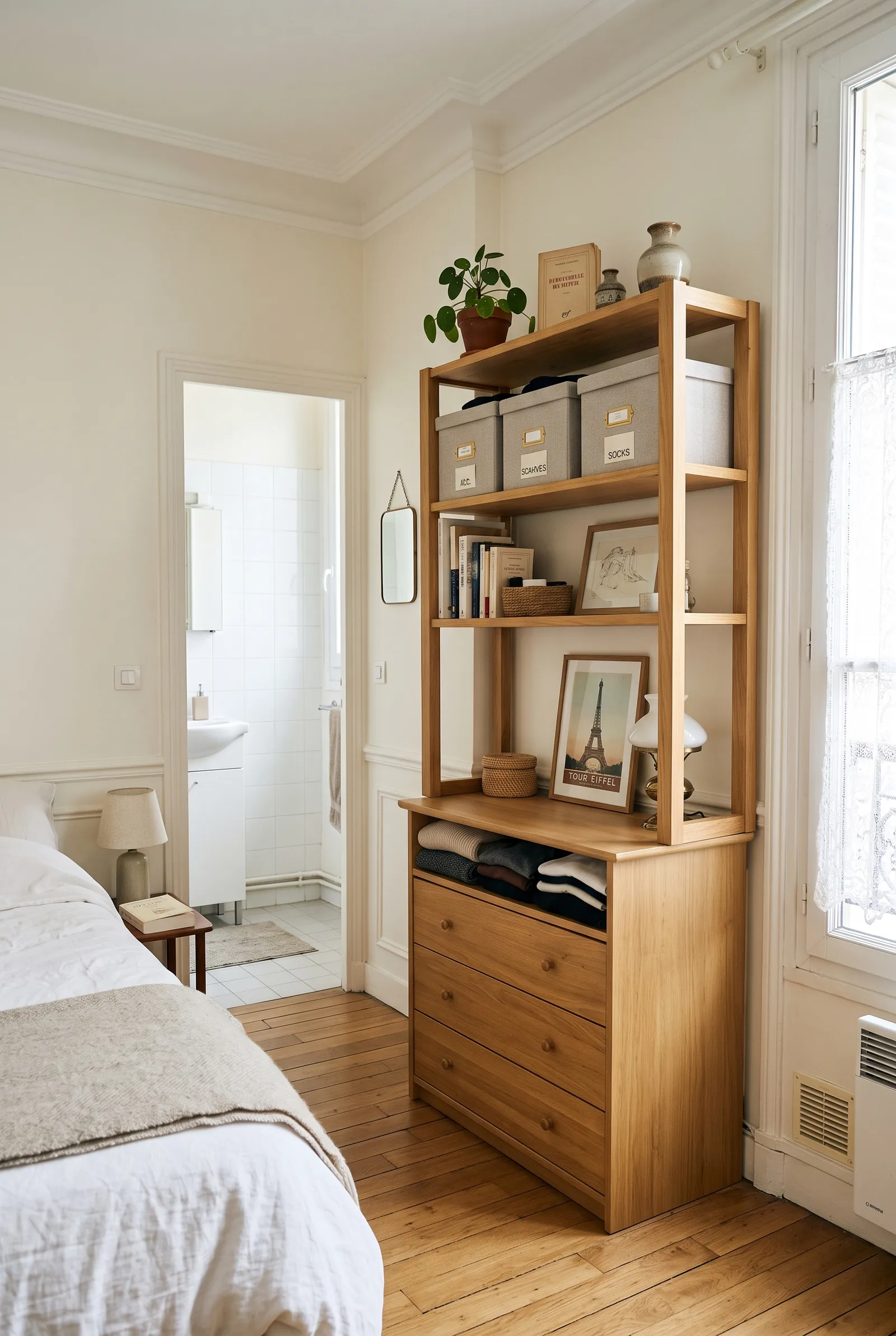
An existing high shelf can hold labeled, lightweight boxes of winter hats, summer accessories, or special-occasion items. This leaves easy-to-reach drawers and hooks for things used every week. Group items by purpose so the whole box can come down when that season returns.
Do not stack boxes where they can fall, block a vent, or cover a window. Respect shelf load limits and use a stable way to reach the shelf when needed. Daily clothes should not live somewhere that requires climbing every morning.
11. Give Laundry a Separate, Reachable Container
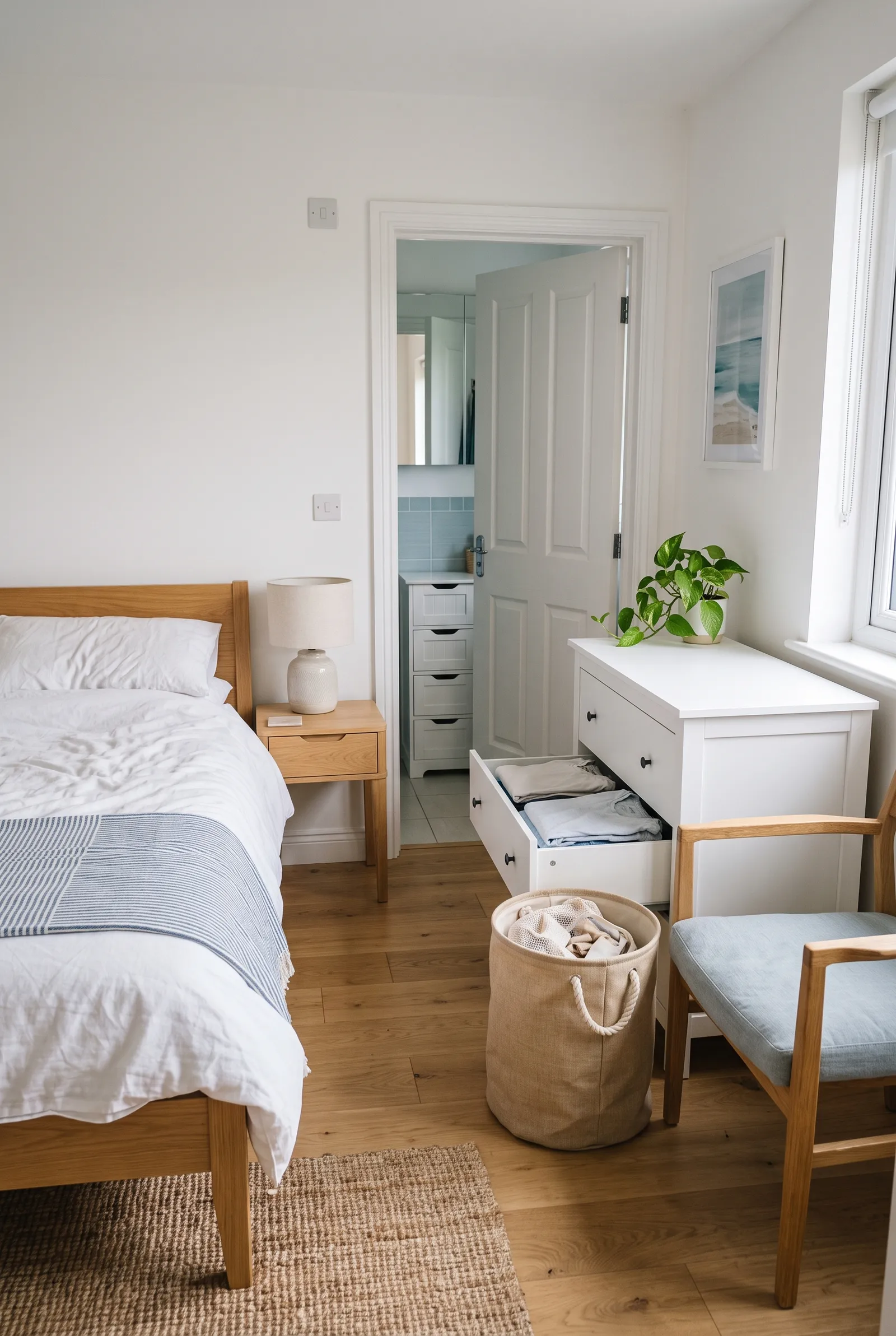
Without a closet, worn clothes can mix with clean clothes quickly. Put a hamper near the dressing area or bathroom route so laundry has an obvious destination. If you need to separate delicate items, use a divided hamper only if the extra width truly fits.
Keep the hamper away from the bed’s access space and the only route across the studio. Choose one that you can carry or empty without moving the dresser or rack. A chair covered with laundry is a sign that the container is too far away, too small, or too inconvenient to use.
12. Rotate the Daily Collection Before It Overflows
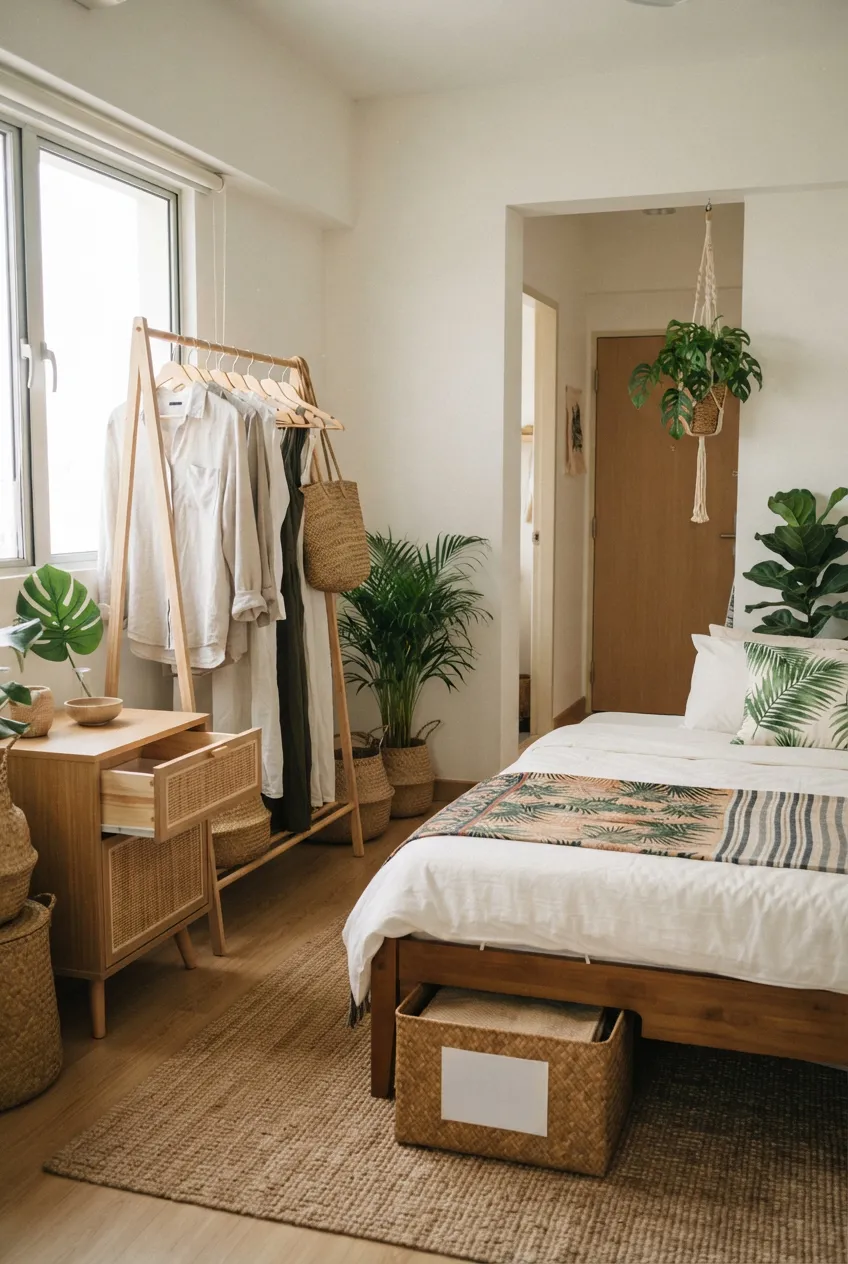
Even a well-placed dresser, rack, and bin set has a finite capacity. At each season change, bring the next set of clothes into easy reach and move the previous set to clean, dry storage. Repair, donate, or otherwise remove items you no longer use rather than making the rack denser every month.
Leave a little free space in drawers and between hangers so getting dressed stays easy. If an item needs a new place, decide which category it belongs to before adding another piece of furniture. This routine lets a no-closet setup remain usable over time.
Final Thoughts
Having no closet does not mean every garment needs a new cabinet. Give daily folded clothes, hang-only pieces, shoes, accessories, laundry, and seasonal items separate homes based on how often you use them. Keep every drawer, door, and walking route functional, then adjust the amount of clothing in easy reach as the seasons change.
More Studio Apartment Ideas
 |  |  |
|---|---|---|
Clothing Storage | Studio Entryways | Studio Layouts |