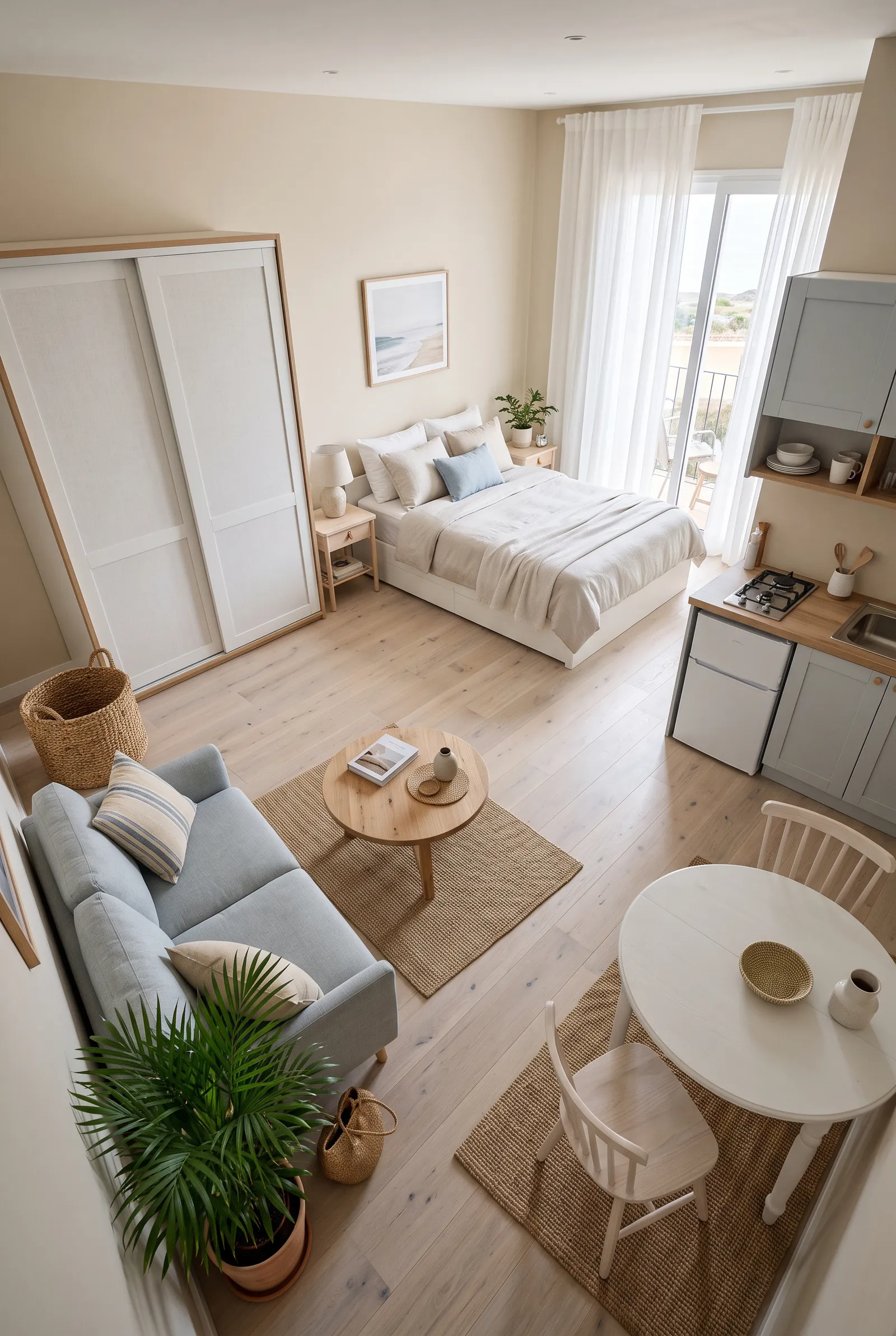
In a very small studio, the problem is rarely a lack of clever furniture alone. A bed, sofa, dining table, desk, and several storage units may each look reasonable on a shopping page, yet leave no comfortable way to cross the room once they arrive. Every choice has to account for the floor it occupies while in use.
Start with your actual routines: sleeping, getting dressed, cooking, eating, working, and having guests. Decide which need a permanent place and which can share space or happen occasionally. The 15 ideas below are about those tradeoffs. For a wider range of room arrangements, see the studio apartment layout guide.
1. Give Permanent Space to Your Daily Essentials
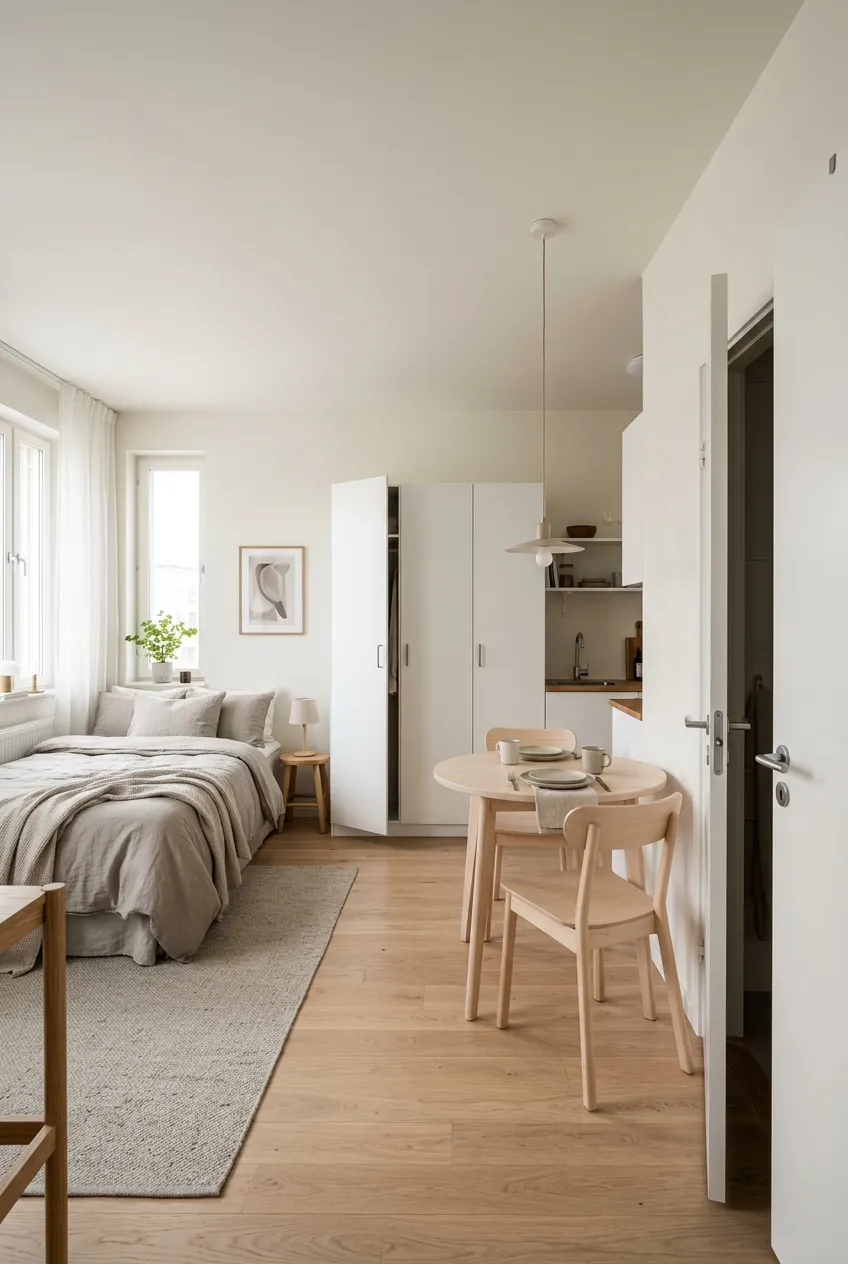
List the activities you do every day before drawing furniture onto a floor plan. Most people need an easy route between the entrance, bed, bathroom, and kitchen, plus enough space to sit, eat, and get dressed. A guest chair used twice a month should not take priority over the place you stand every morning to open a wardrobe.
Assign a permanent footprint only to the activities that truly need one. Occasional tasks can borrow a table or a clear patch of floor, provided the setup and put-away steps are realistic. This simple ranking prevents the room from being filled by furniture for an imagined routine.
2. Preserve One Continuous Walking Route
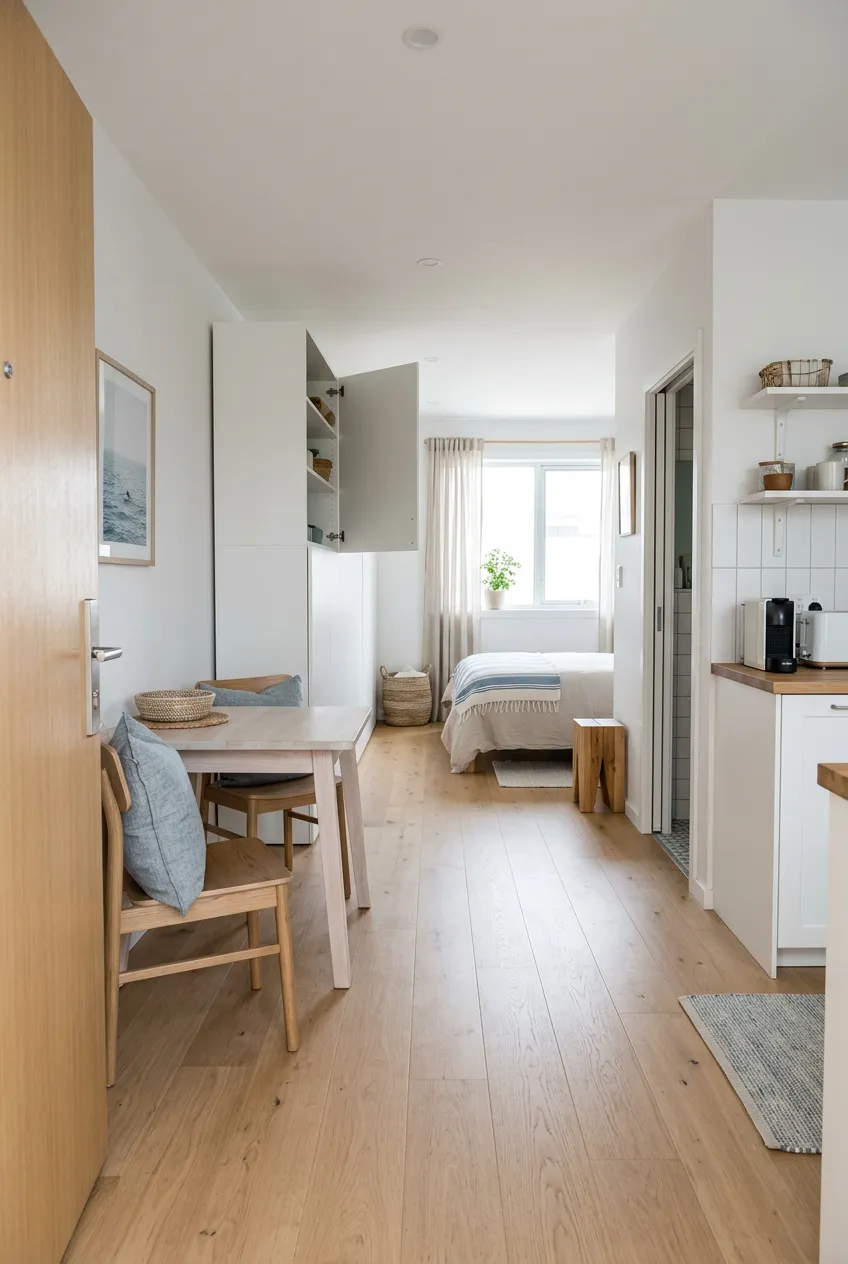
Draw the path from the entrance to the bathroom, kitchen, and bed. Keep that route connected when a chair is pulled out, cabinet doors are open, and the bed is made. A narrow-looking path on a plan can disappear once a real person uses the furniture beside it.
Move pieces toward the perimeter before buying a smaller version of everything. A single clear route often helps more than several tiny gaps between furniture. If two pieces face each other, test the space between them while one is in use, not just when both are closed.
3. Choose a Bed Size You Can Live Around
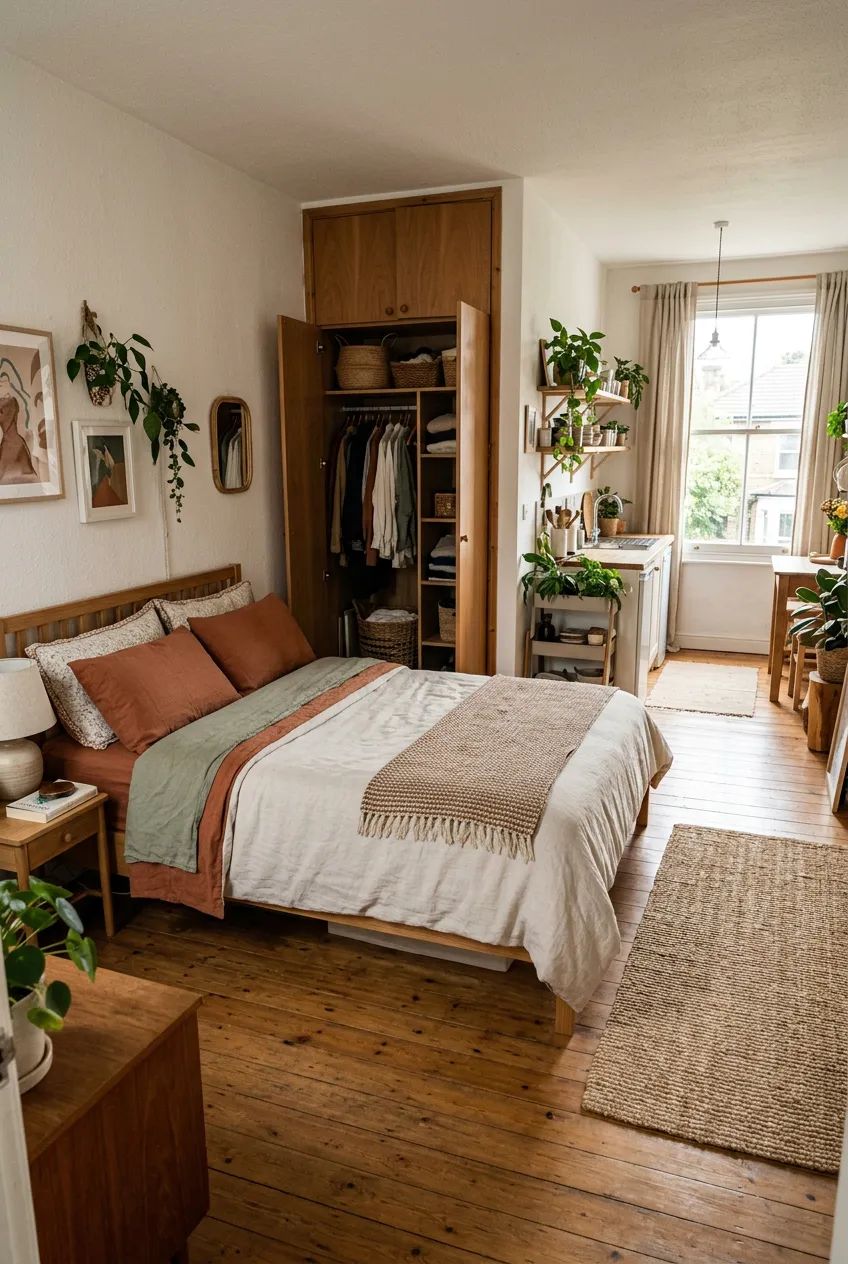
The bed usually takes the largest uninterrupted area in a studio. Choose the smallest size that genuinely suits the sleepers and the way they rest, rather than automatically choosing the biggest size that can be squeezed through the door. Leave access for making the bed and reaching everyday clothes.
If a smaller bed would compromise sleep, keep the comfortable bed and cut something less essential, such as a second lounge chair or a permanent dining table. This is a tradeoff about your life, not a rule that everyone should sleep on a narrow mattress.
4. Put the Bed on a Wall That Has Few Other Jobs
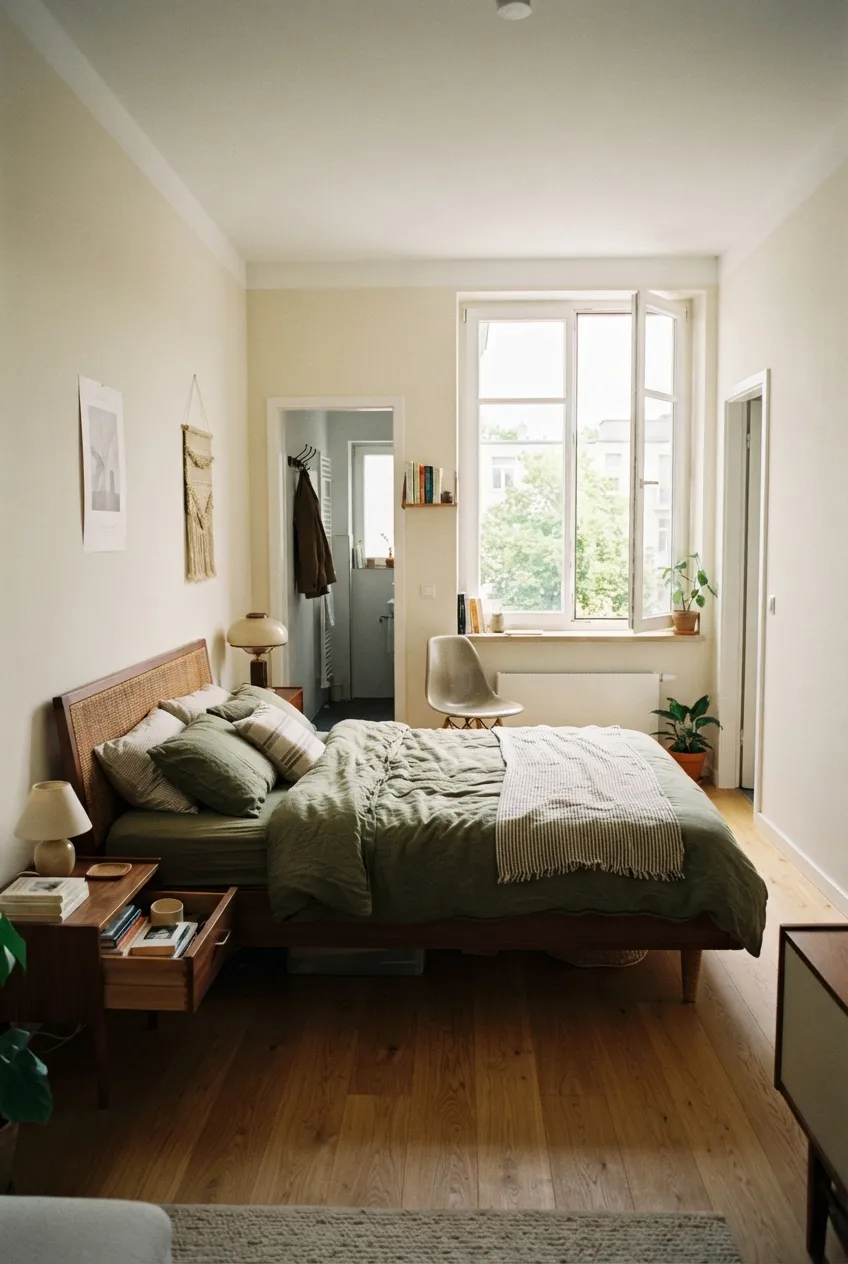
Use a wall without a main door swing, kitchen work area, or essential window access for the bed where possible. A bed against that quieter edge frees the most versatile wall for seating, a table, or storage. Check that the position still allows you to reach windows and open nearby drawers fully.
Avoid placing the bed across the only route to the bathroom or in front of a heater. If one side must sit close to a wall, test how you will change sheets and get in and out every day. For more detailed placement options, see the studio apartment bed placement ideas.
5. Pick One Main Seating Solution
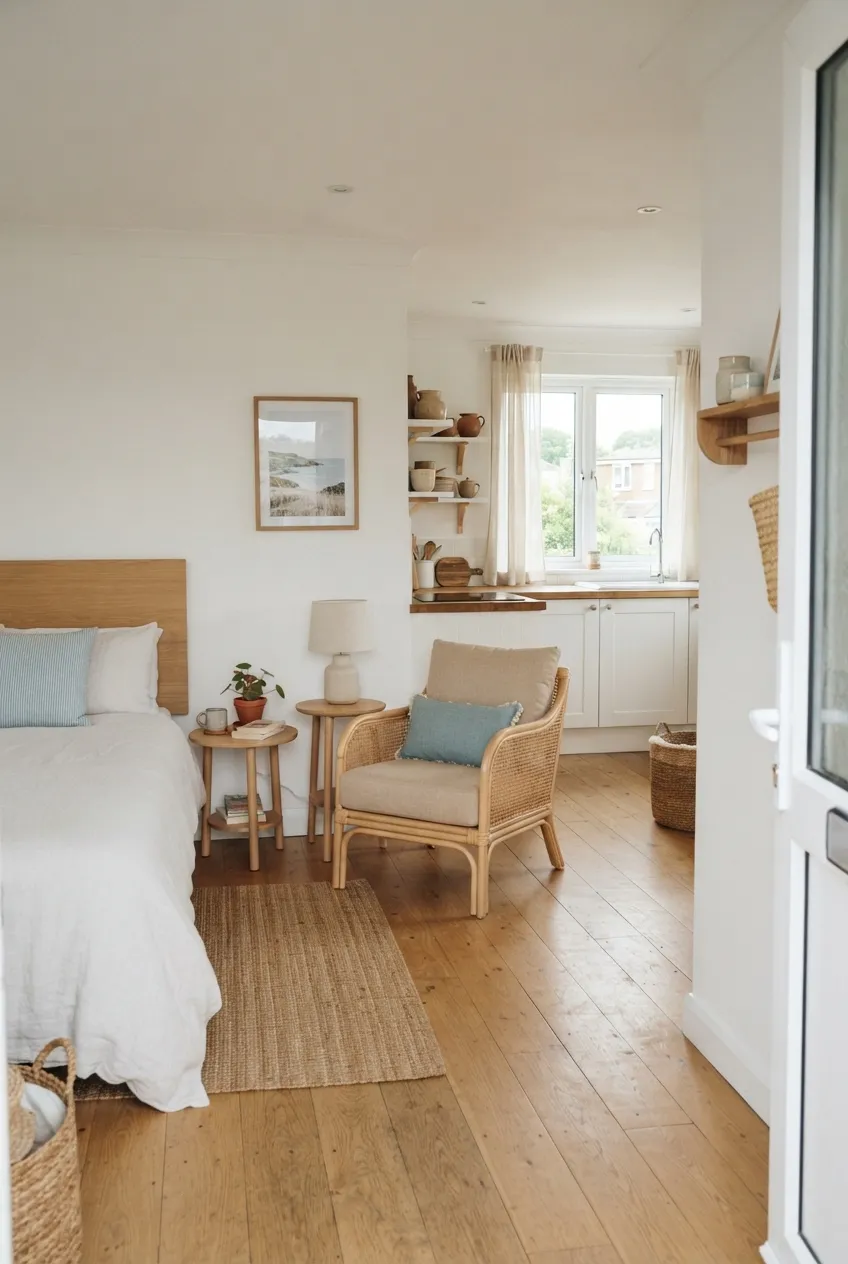
A compact sofa, a comfortable armchair, or a well-positioned bed that doubles as daytime seating can each work. In the smallest studios, trying to fit all three usually takes away the floor needed to use them. Choose according to how you actually relax and whether guests visit often.
Measure the furniture with someone seated and with any reclining or pull-out section extended. If a sofa blocks the bed or main route, a chair may serve you better. If the bed is your daytime seat, provide supportive cushions and a small reachable surface rather than pretending a mattress is automatically a good sofa.
6. Make the Dining Surface Earn Its Place
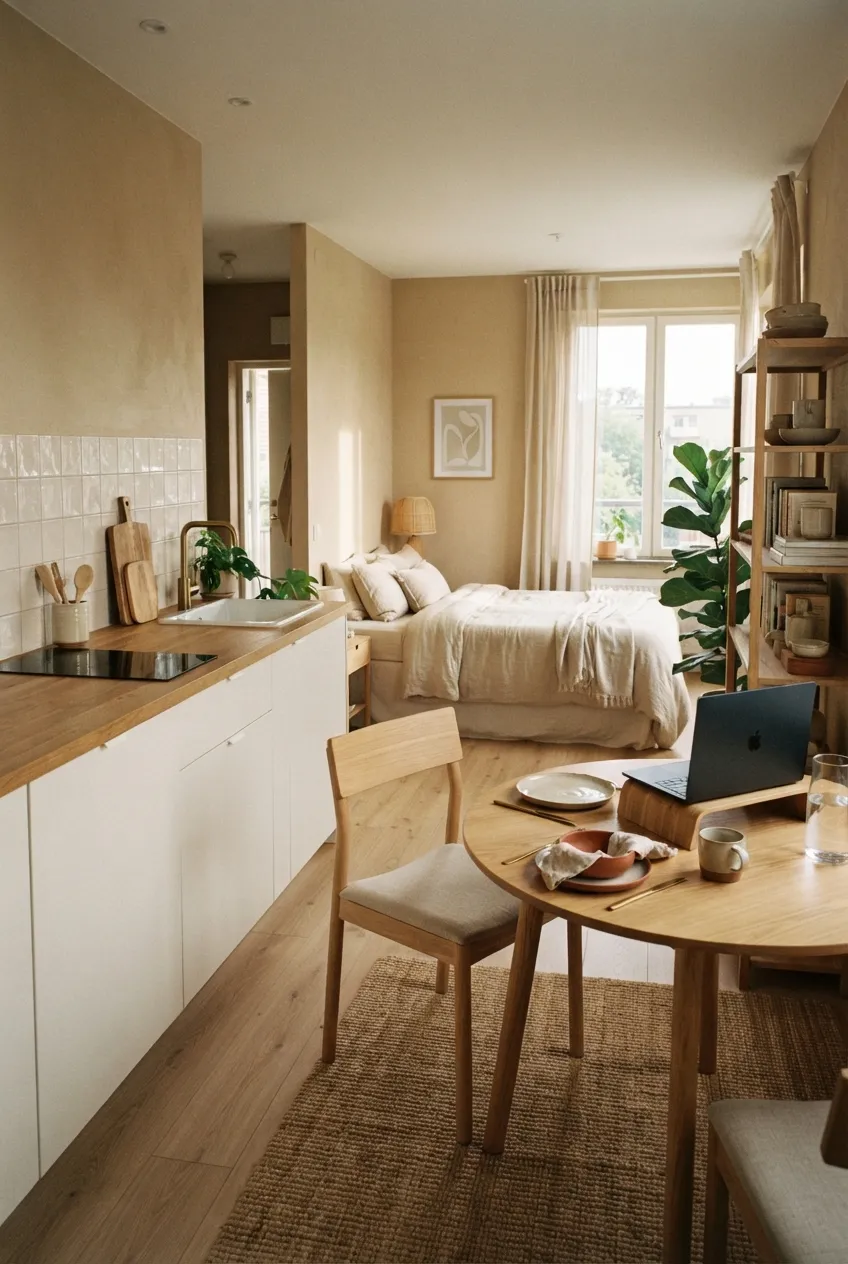
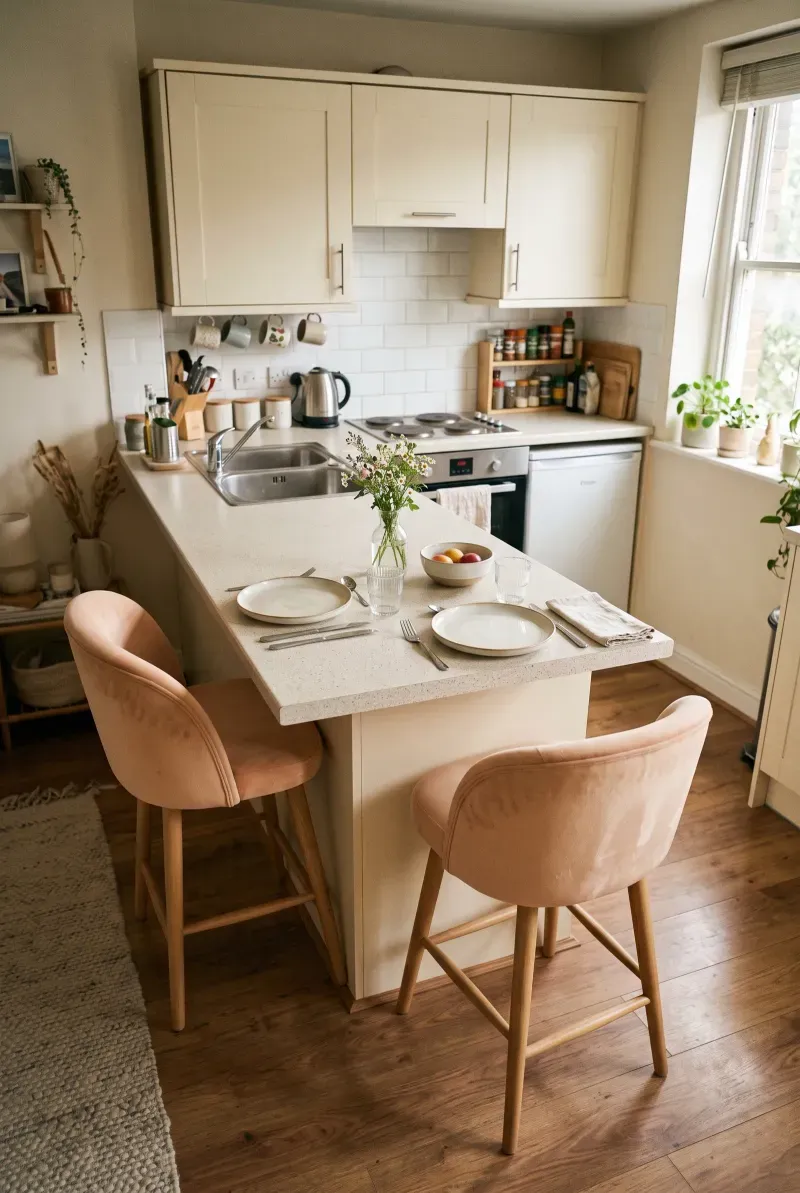
If you eat at home daily, protect a usable eating surface. A small table that also handles occasional laptop work may be more valuable than separate dining and desk furniture. Set it where a chair can move back without blocking the kitchen or exit.
If you rarely sit for meals, a drop-leaf table can return floor area when closed, but only if it has a sensible closed position and can be opened without moving half the room. Do not sacrifice the only food-preparation counter to make room for dining. The studio apartment dining area ideas go deeper into table placement.
7. Match the Workspace to Your Actual Hours
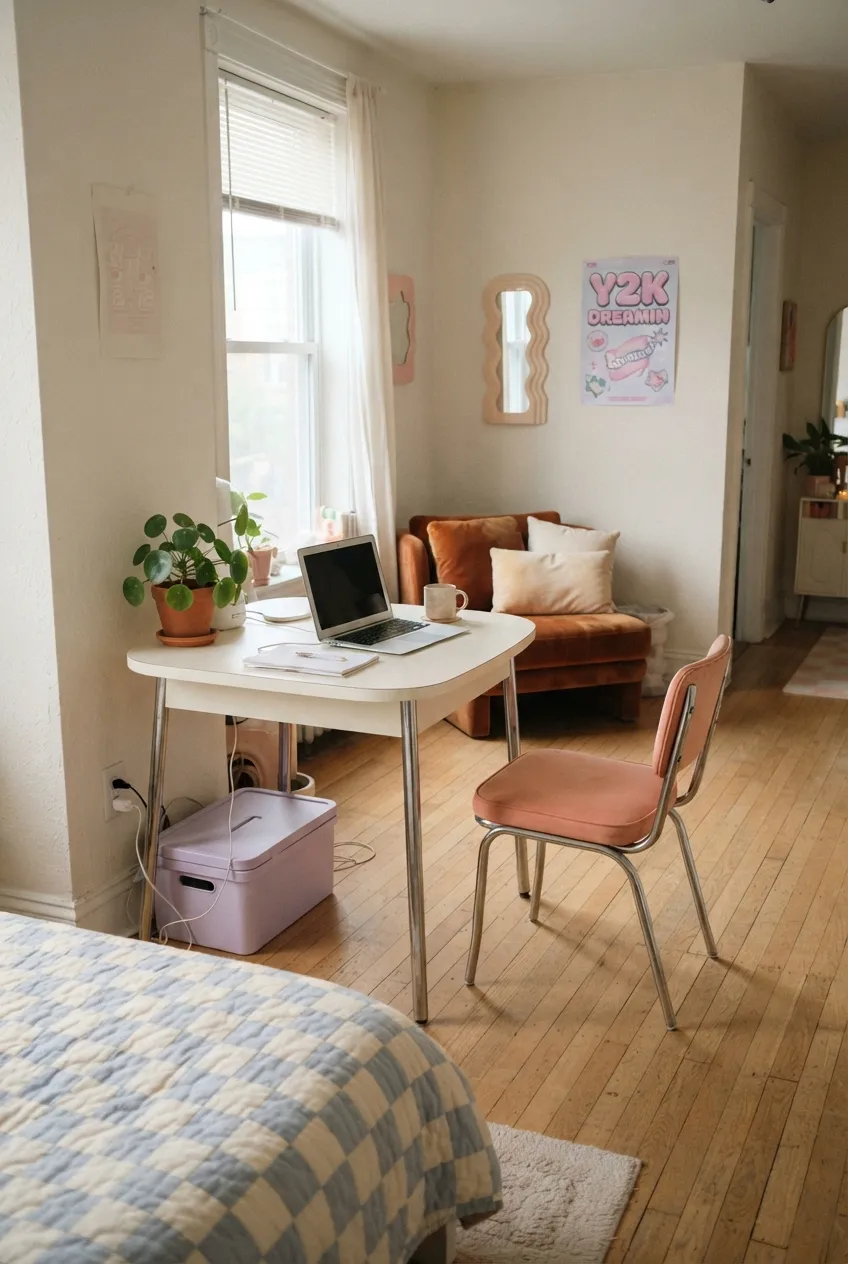
Someone who works from home every day may need a dedicated desk with enough depth for equipment and a chair that can be pulled out. Someone who opens a laptop for an hour a week may be better served by the dining table and one box for work supplies. A tiny decorative desk can be the worst of both worlds: permanent floor use and an uncomfortable work surface.
Decide by task, not by whether the furniture looks compact. Check outlet access, screen glare, and chair clearance. If a work area is essential, the studio apartment desk and workspace ideas cover specific positions.
8. Keep the Kitchen’s Working Edge Clear
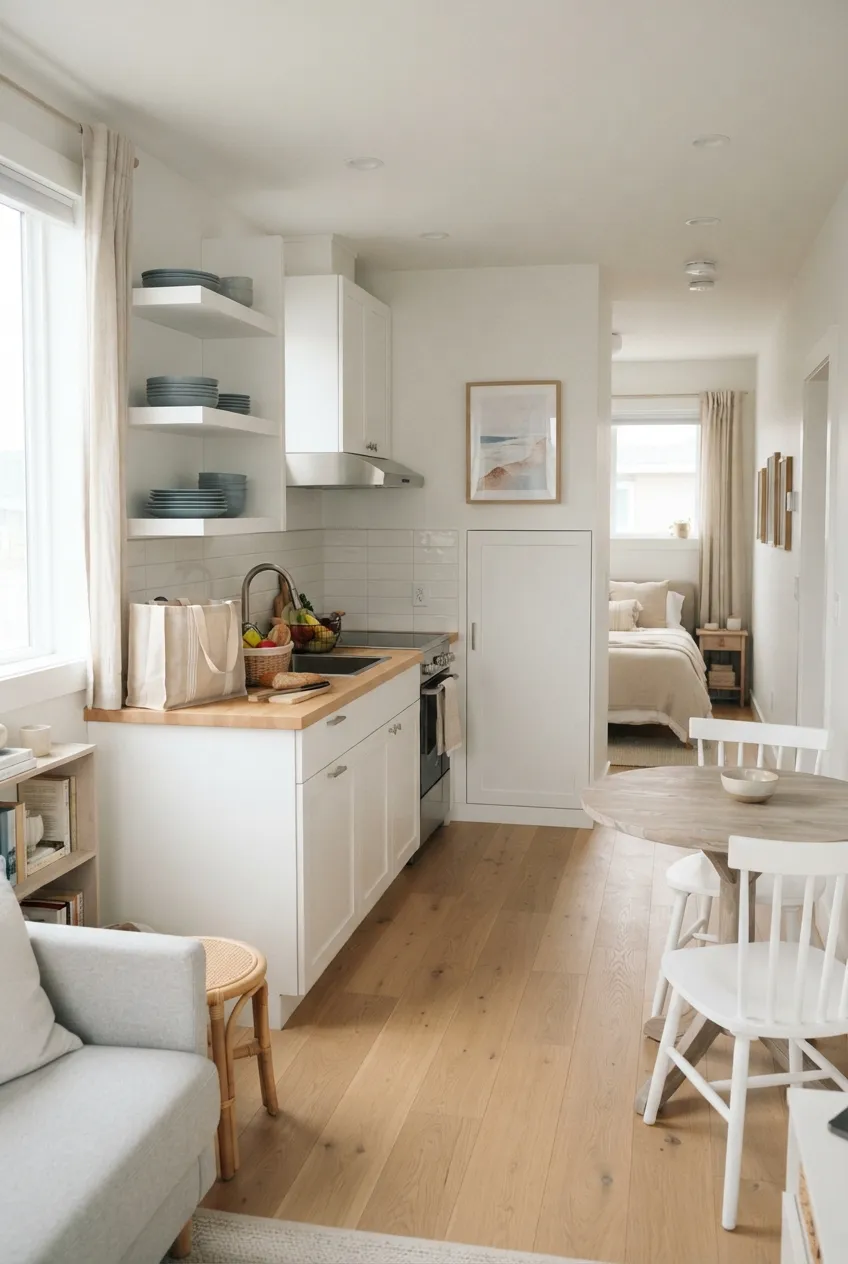
In a tiny studio, a chair or storage cart can easily drift into the kitchen. Preserve room to open the refrigerator and cabinet doors fully and to set down groceries beside the work area. The useful space in front of the counter matters as much as the counter itself.
If a dining table sits near the kitchen, leave it far enough away to cook with a chair pulled out. Do not use the sole preparation surface as permanent storage. Relocating a few objects to a nearby cabinet can make the existing kitchen more useful without adding another piece of furniture.
9. Give the Entry a Small Landing Spot
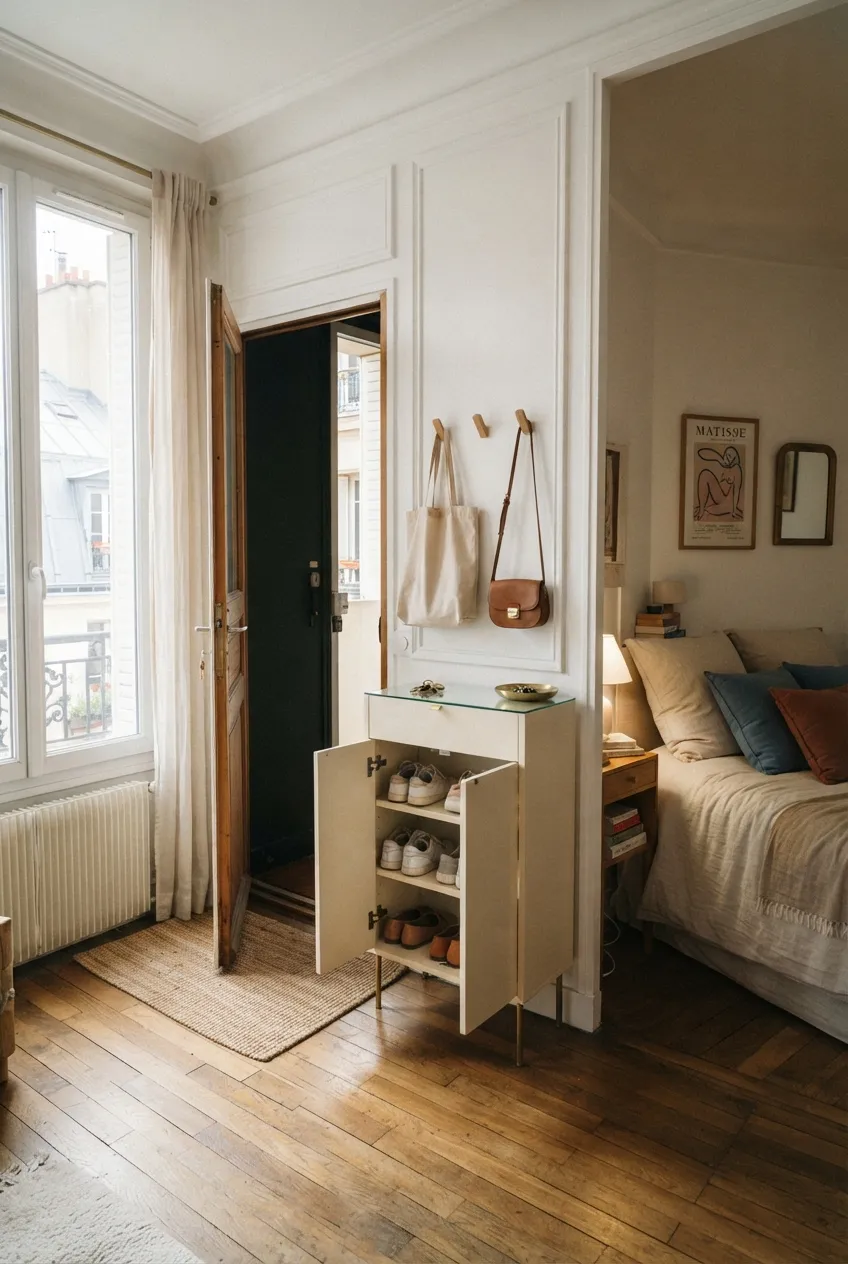
An entrance with no separate hall still needs a place for shoes, keys, and a bag. A shallow closed shoe cabinet or a few hooks on a suitable wall may prevent these items from spreading across the bed and dining area. Pick the smallest setup that holds what actually arrives with you each day.
The entry door must open fully, and the landing spot must not narrow the only route into the apartment. If there is no wall space, use a reachable compartment in furniture already near the entrance. See the studio apartment entryway ideas for more entry-specific solutions.
10. Put Storage Where the Routine Happens
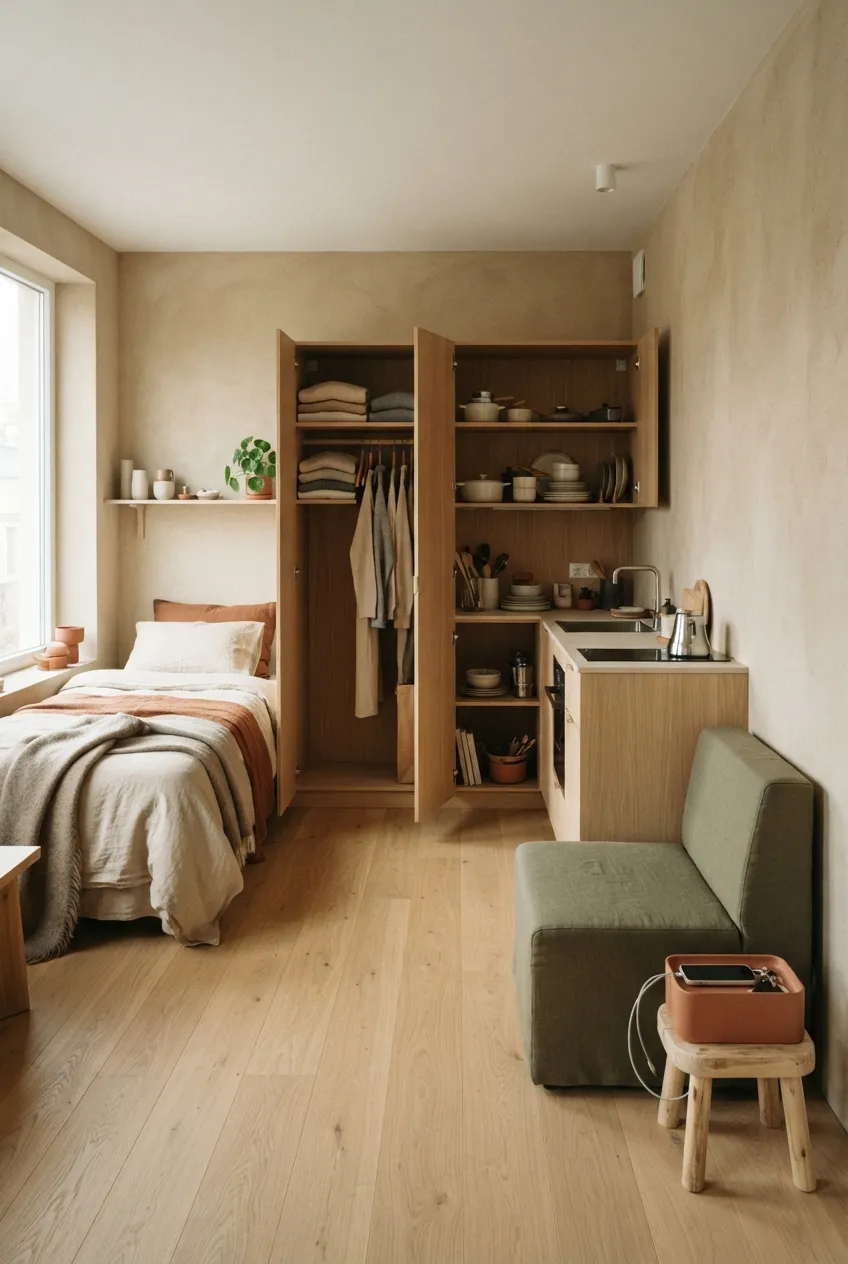
Instead of scattering small cabinets wherever a gap appears, place everyday storage next to the activity it supports. Clothes belong near dressing space, cooking tools near the kitchen, and chargers near the place you use them. The result is fewer trips across the room and fewer objects left on convenient surfaces.
Check the opening position of each drawer or door. A cabinet that fits while closed but cannot open fully has not solved a storage problem. For the broader range of storage formats, see the studio apartment storage guide.
11. Choose Enough Closed Storage Before More Display
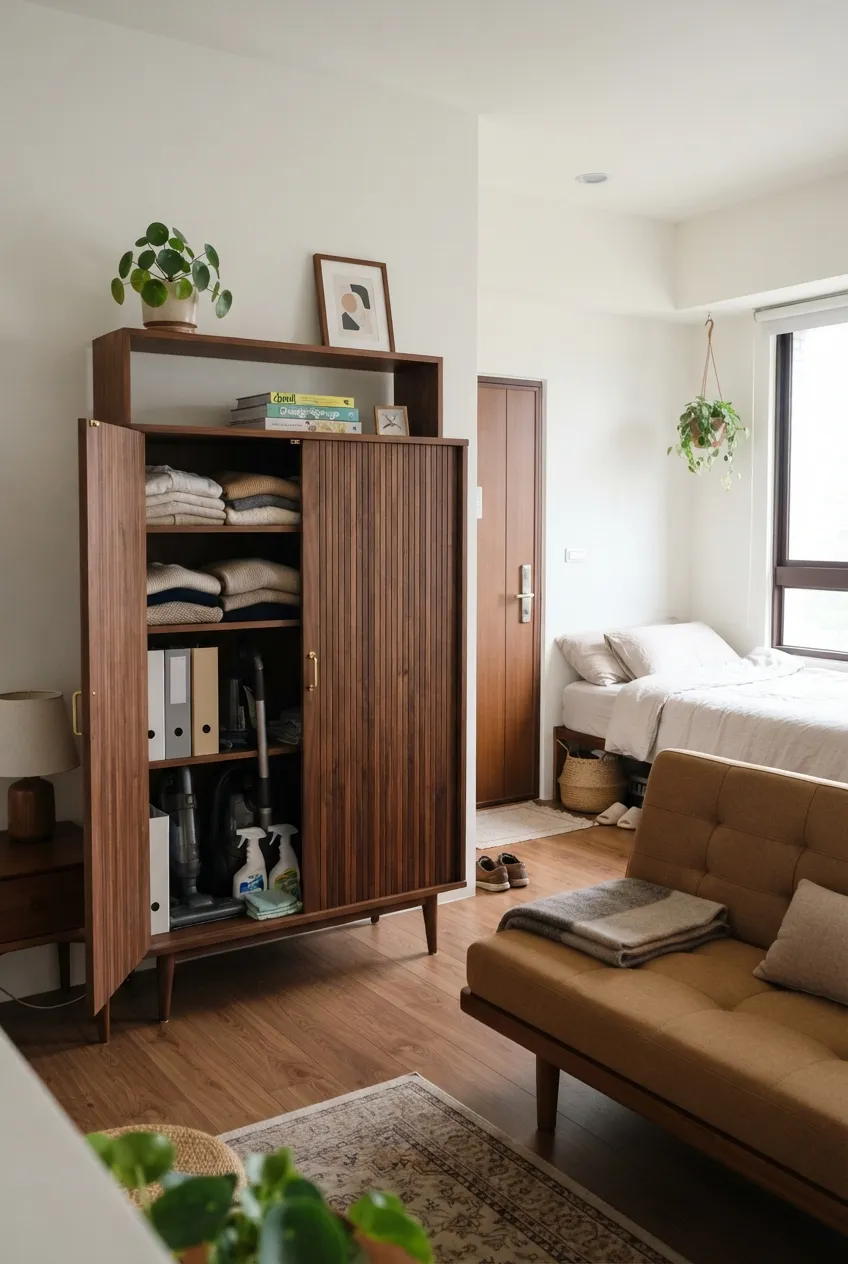
Open shelves can hold useful things, but visible objects throughout one room make it harder to keep daily life under control. First give clothing, paperwork, cleaning supplies, and loose accessories a closed home. A single appropriately sized cabinet can be more useful than several narrow decorative shelves.
Keep the cabinet within the room’s scale and make sure its doors open. Do not buy a deep unit merely for theoretical capacity if it steals the walking route. Display space is a choice to make after the everyday items have somewhere practical to go.
12. Use High Space for Things You Rarely Reach
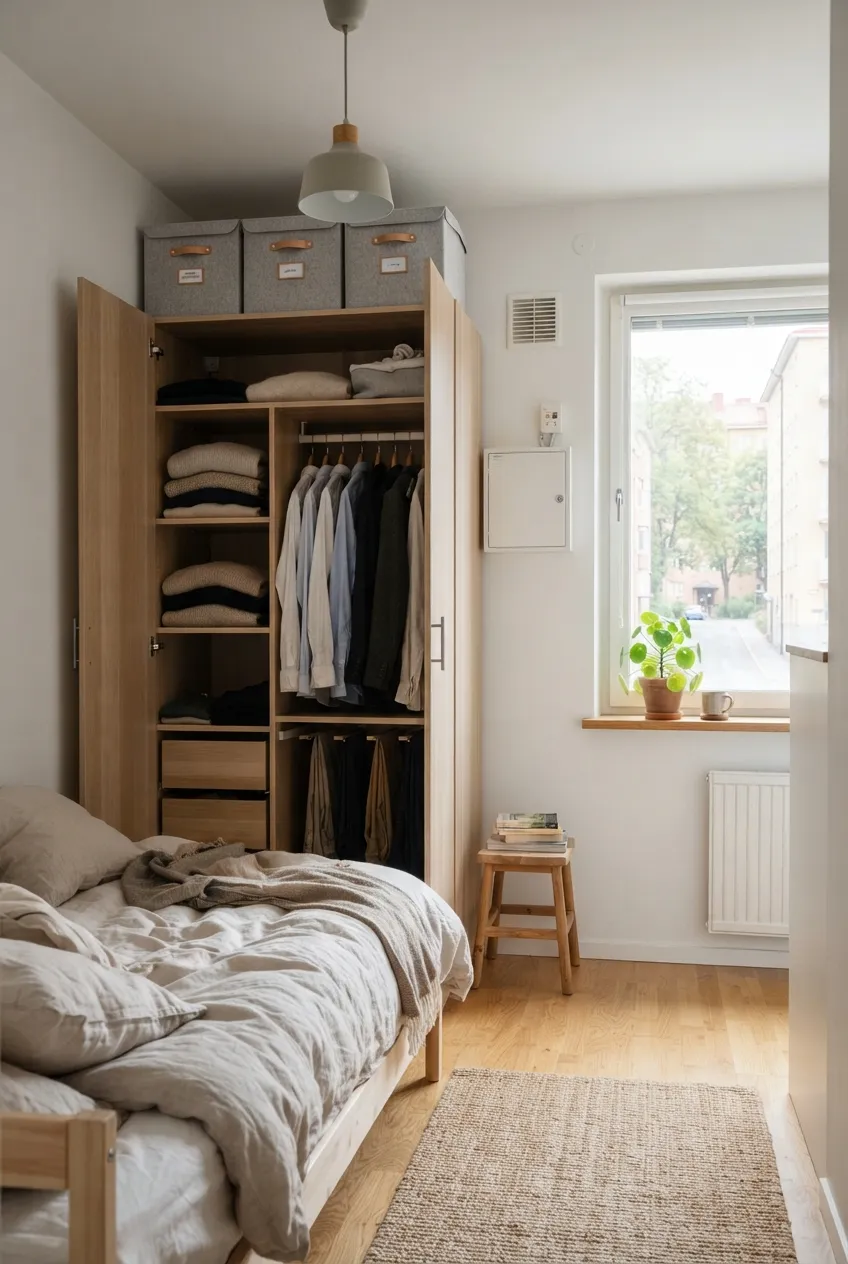
If floor space is scarce, the top of a stable wardrobe or an existing high shelf may hold lightweight, infrequently used items in labeled boxes. Daily essentials should remain within comfortable reach. Storage that requires a ladder every morning will not stay organized.
Respect the furniture’s load guidance, secure freestanding units where appropriate, and keep access to vents and electrical panels clear. Do not stack boxes so high that they fall or block a window. The goal is to move occasional belongings out of valuable daily floor space.
13. Keep Folding Furniture Only If It Has a Parking Place
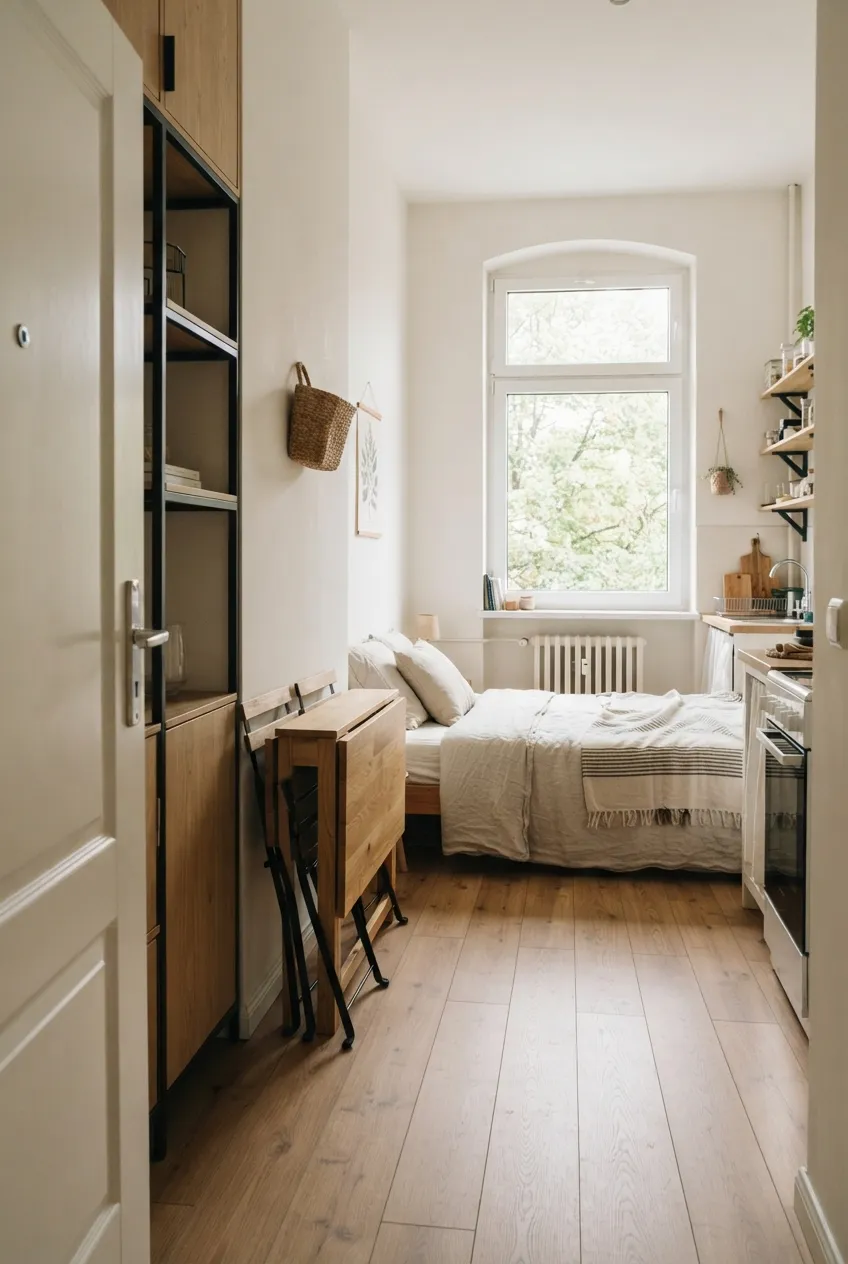
A folding chair or table saves space only when it can be stored out of the way after use. Identify the exact parking place before buying it: beside a cabinet, inside a closet, or behind a door that still opens fully. A folded item permanently leaning in the walking route has not freed any usable area.
Test both states. The table must be stable and usable when open, and the folded piece must not block the entrance, heater, or kitchen. If the fold-and-store routine feels cumbersome, a small permanent table may be the better fit.
14. Protect the Window as Working Space
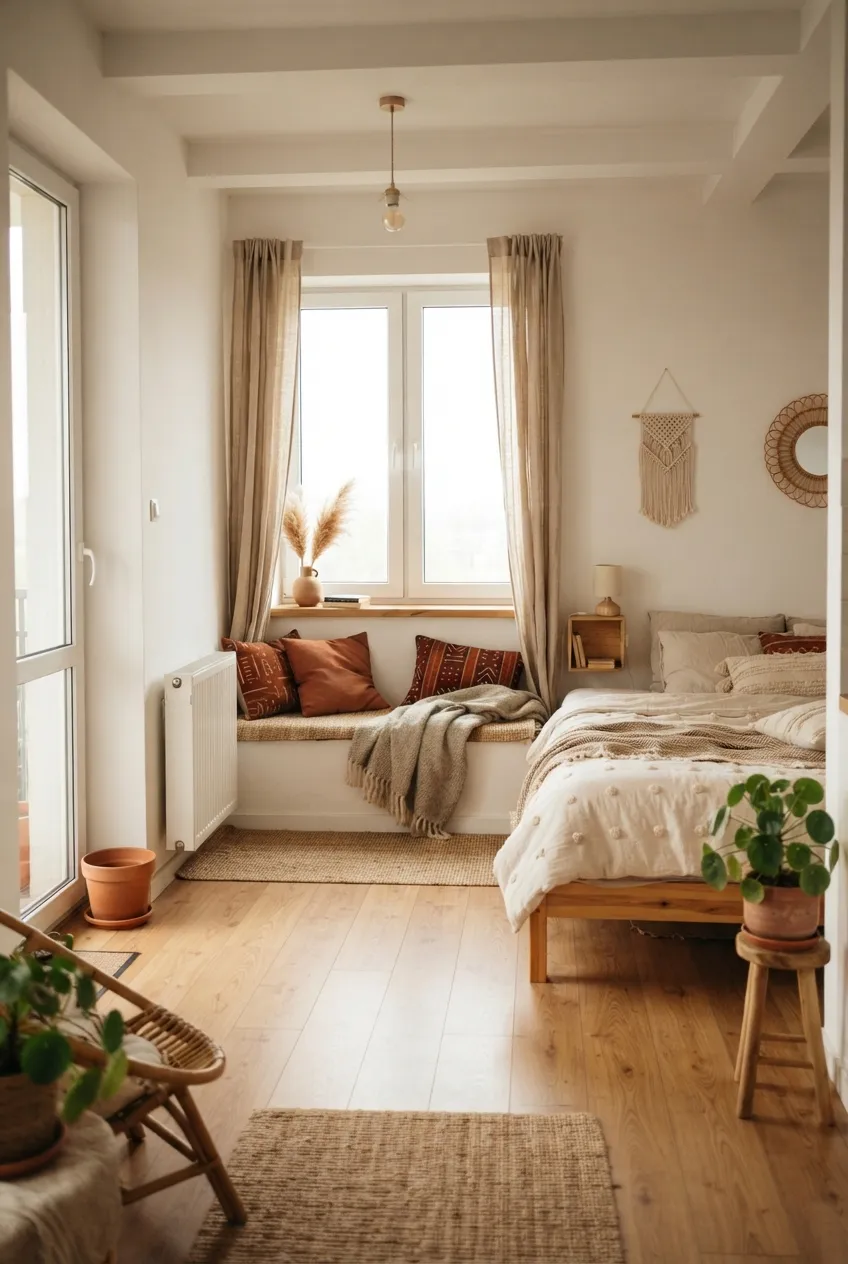
The area in front of a window is not free floor. You may need to reach a handle, open the sash, draw curtains, or access a balcony. Place low furniture nearby only if those actions still work fully. Keep radiators unobstructed and avoid a tall cabinet that cuts daylight from the rest of the room.
Think of daylight as a resource shared by the bed, seating, and work surface. A little empty space beside a window may be more useful than one more storage unit, especially in a room with a single source of natural light.
15. Mock Up Every Large Footprint Before Buying
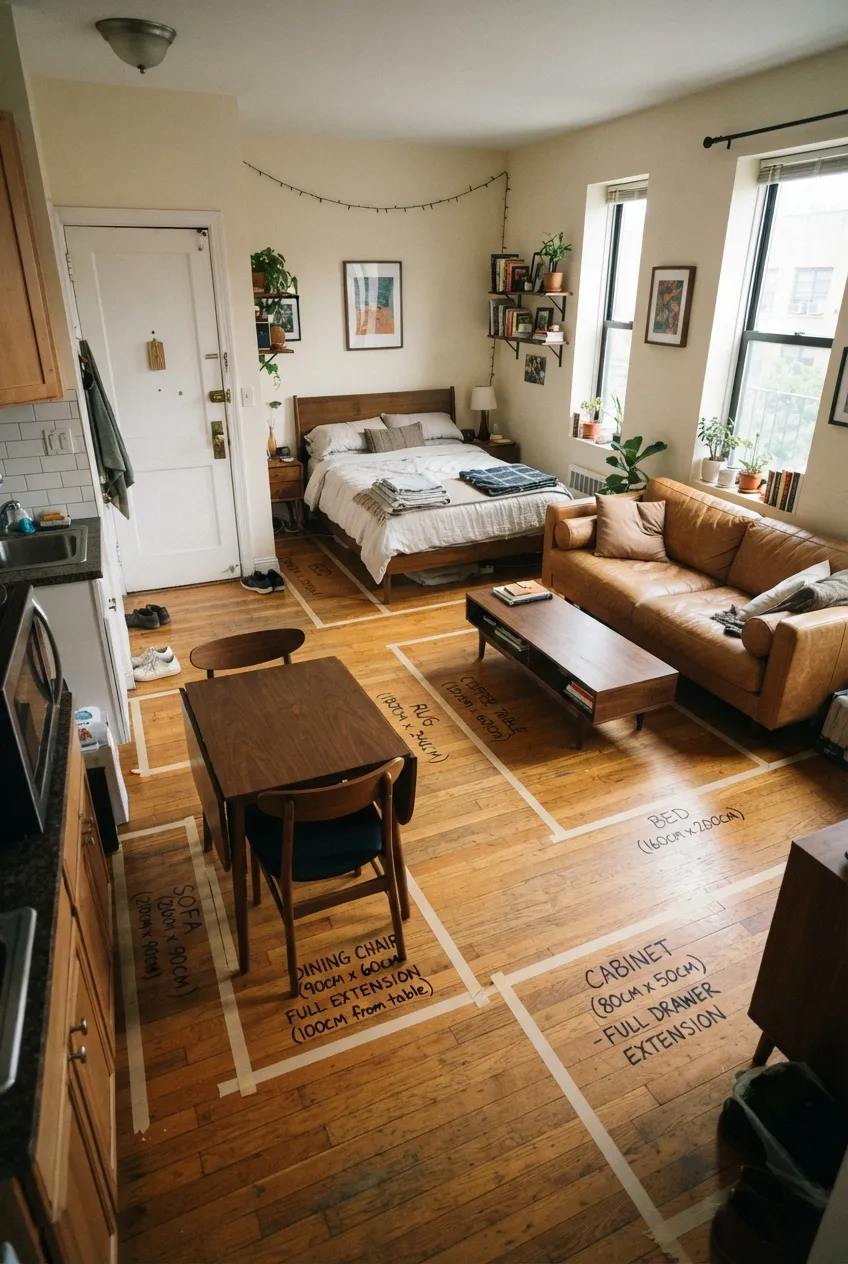
Use painter’s tape or cardboard to mark the actual width and depth of a bed, sofa, table, and cabinet on the floor. Add the space each needs while in use: a chair pulled back, a drawer fully open, a door swinging, and a person standing beside the bed. Walk the room at normal speed and try the daily routine.
If two footprints conflict, remove or change the lower-priority piece before purchasing. Product photos show an object; your taped outline reveals whether the whole studio still functions. In a very small home, that check is often the most effective way to make every inch count.
Final Thoughts
The best small studio apartment is not the one with the most furniture or the most tricks. It is the one where your essential routines have space to happen without moving obstacles every day. Give priority to sleep, cooking, a clear route, and the activities you do most; then let occasional needs share a surface or use furniture that can genuinely be put away.
More Studio Apartment Ideas
 |  |  |
|---|---|---|
Storage Ideas | Studio Dining | Studio Layouts |