A studio apartment can feel compressed when the ceiling seems close to the bed, sofa, and kitchen all at once. You may not be able to change the actual height, but you can change the lines your eye follows across the room. The most useful adjustments make the upper walls feel continuous and keep the ceiling from becoming the busiest surface in view.
Start with the real room: measure the height, locate windows, vents, sprinklers, light fixtures, and door swings, and check what your lease allows. The ideas below focus on perceived ceiling height. For a broader plan for making the whole apartment feel more spacious, see 12 Ways to Make a Studio Apartment Feel Bigger.
1. Soften the Line Where the Wall Meets the Ceiling
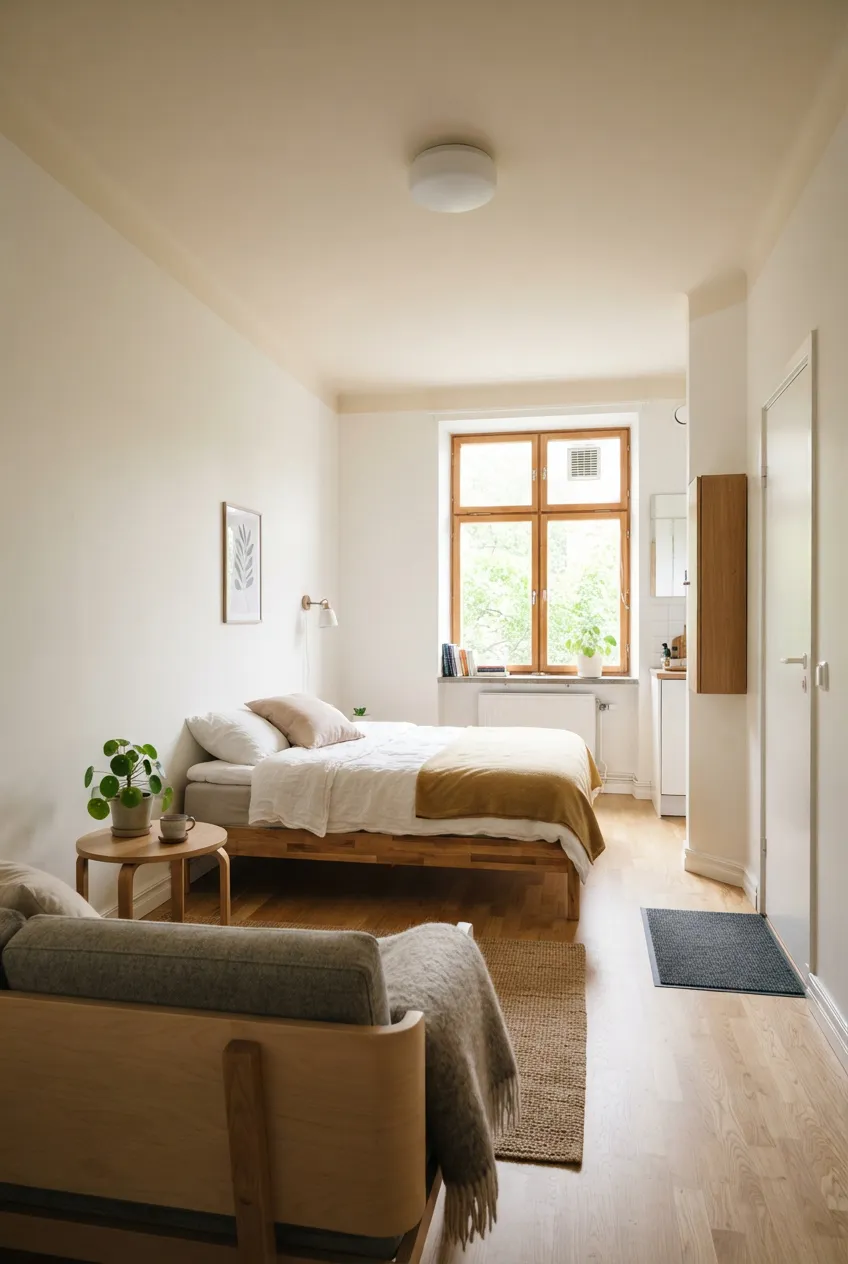
A sharp dark-to-light break can make the ceiling edge especially noticeable. If painting is allowed, test a wall color and a ceiling color that are close in tone, or a ceiling color only a little lighter than the wall. A quiet transition lets the eye continue upward. Try samples in daylight and at night before painting the whole room; the existing light and wall color will change the result.
If you cannot paint, keep that boundary simple. Avoid adding a dark border or a strip of strongly contrasting trim around the room. You do not need to cover a white ceiling to benefit from this idea: a less busy upper wall can make its existing color feel intentional.
2. Hang Window Curtains Near the Ceiling
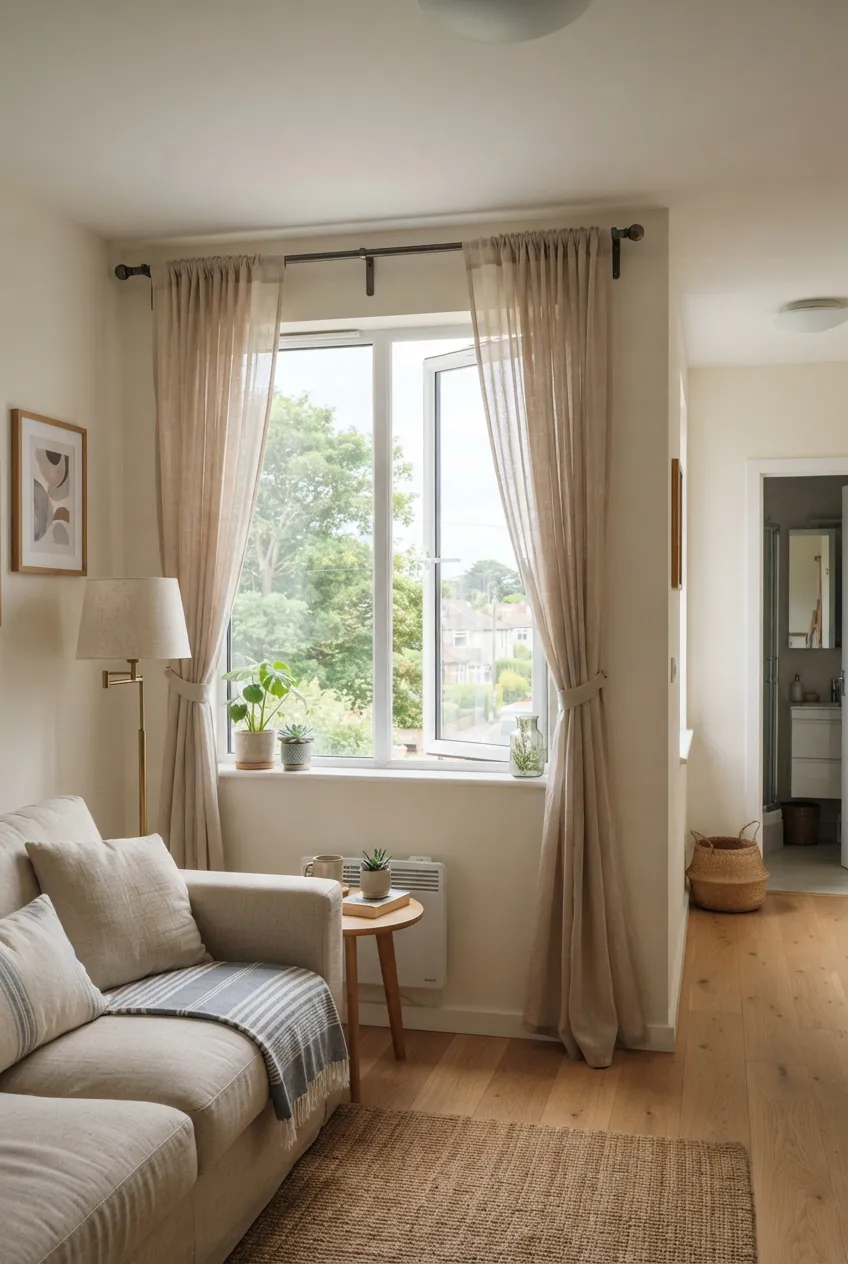
Curtains mounted only just above the window frame can emphasize the short wall above it. Where the wall, hardware, and lease permit, place the rod or track higher and choose panels that fall close to the floor. The long vertical line can make the window and the wall around it appear taller. Let the fabric stack to the sides so it does not block daylight or a window that must open.
Measure from the proposed mounting point to the floor before shopping, and include rings or hooks in the drop. Check the hardware’s mounting surface and weight guidance; keep the panel clear of heating equipment and the path to the window. A curtain that drags through the studio’s only walking route is too long.
If you want to try the taller window line, browse full-length curtains on Amazon and compare panel lengths with your measurements.
3. Keep the Main Seating and Bed Visually Low
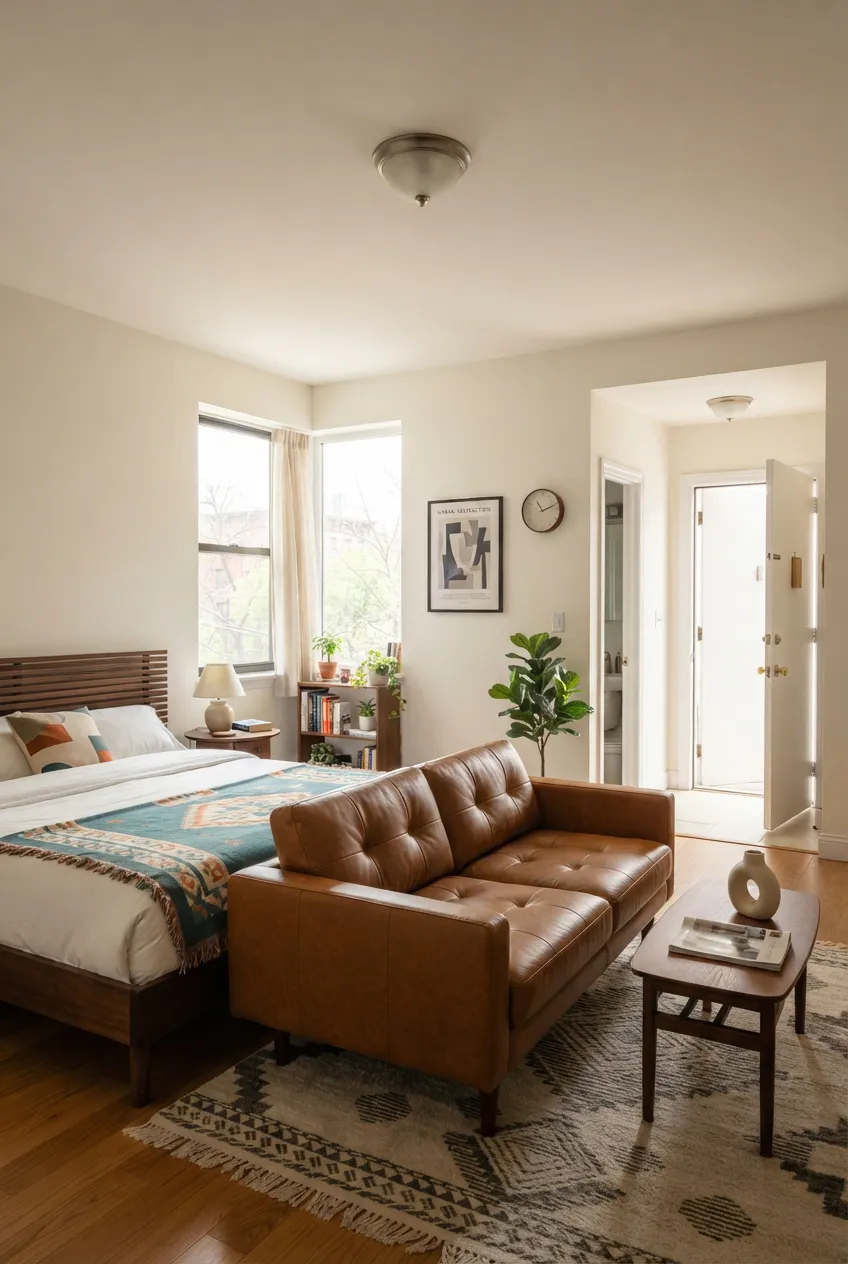
A sofa with an oversized back and a tall bed frame can use up much of the visible wall in a low room. If you are choosing furniture, compare the height of the backs and headboards, not just their footprint. A comfortable, lower-profile sofa and a bed with a modest headboard leave more open wall above them, which can make the ceiling feel less close.
Do not give up a bed height or seat height you need for comfortable daily use. Try sitting, standing, and making the bed before buying. The goal is a usable amount of wall above the furniture, not furniture so low that getting up becomes difficult. For help arranging the pieces themselves, see the studio bed and sofa layout ideas.
4. Use One Tall Mirror Where It Reflects the Room Well
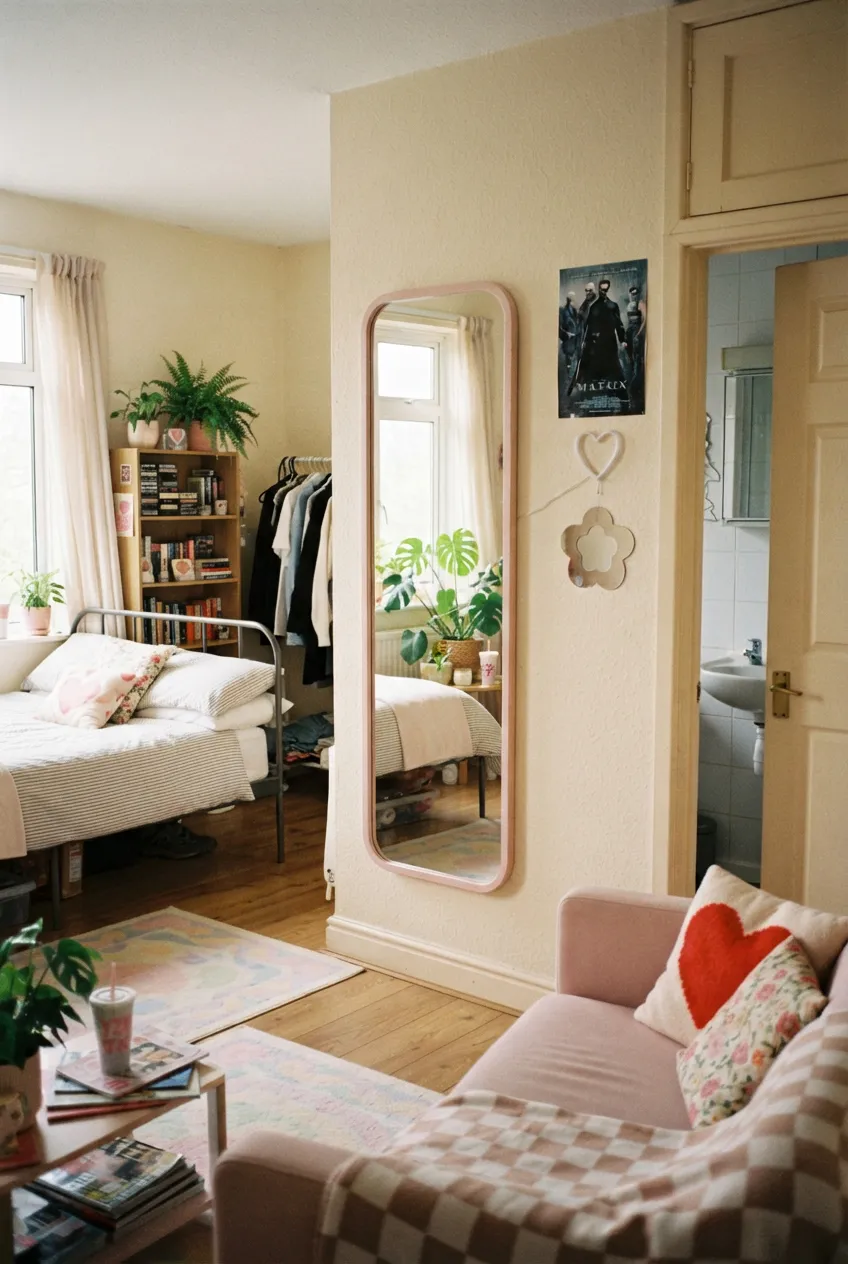
A vertically oriented mirror can extend the upward view on a short wall. A slim, full-length mirror beside the living area or near a window is often more useful than several small mirrors scattered at eye level. Position it so it reflects daylight, a calm wall, or a clear part of the room rather than a packed shelf or the bed’s most cluttered corner.
Check the complete mirror and frame dimensions before buying. Secure or mount it as the maker directs for your wall and household, and keep it outside door swings and the route to the bathroom. A mirror leaning unsecured in a narrow passage is not a good small-space solution.
If a narrow mirror fits a safe spot in your studio, browse slim full-length mirrors on Amazon and compare frame dimensions and mounting options.
5. Choose One Vertical Art Arrangement
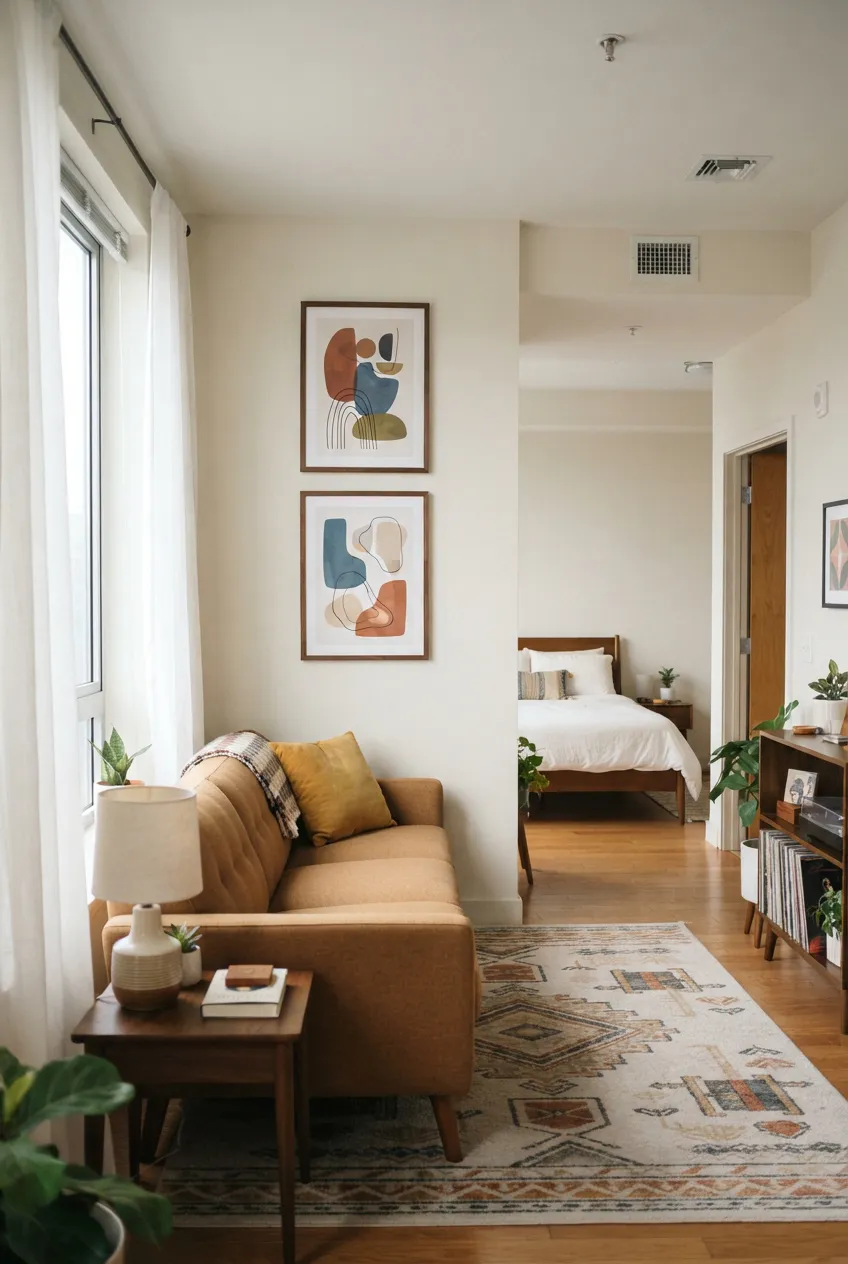
A single portrait-format print or a small stack of aligned pieces can lead the eye up a wall without taking floor space. Choose a spot above the sofa, desk, or a narrow sideboard, and leave breathing room around the art. It should read as one vertical arrangement, not as tiny frames scattered all the way to the ceiling.
Mock up the sizes with paper before mounting. Keep the bottom of the arrangement connected visually to the furniture below, while leaving a clear margin beneath the ceiling and any sprinkler or vent. Use hanging hardware appropriate for the wall and the total weight, with the landlord’s permission where needed.
6. Favor a Narrow Upright Piece Over a Broad Wall of Storage
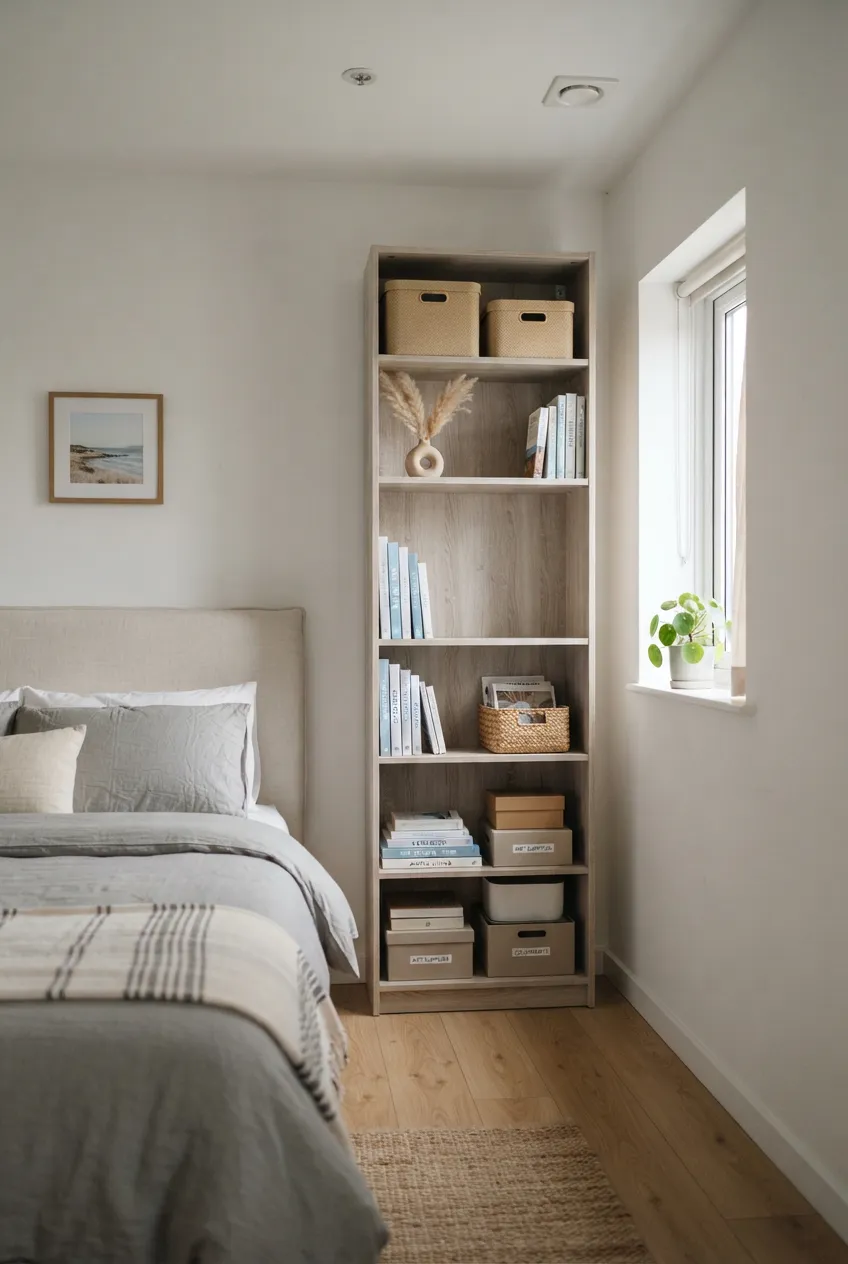
If you need storage, one slim bookcase can give the eye a vertical line without wrapping the studio in bulky cabinets. Place it against a suitable wall, preferably where it does not cut across the window. Keep its top below the ceiling and leave the upper shelves visually light; heavy and frequently used items belong lower down.
Measure the case, baseboard, door clearance, and the route around it. Follow the furniture maker’s stability and anchoring instructions and do not block a vent, sprinkler, or access panel. This is a visual choice about one vertical piece, not a reason to fill every high surface. For a fuller storage plan, see 12 Vertical Storage Ideas for Studio Apartments.
7. Skip Strong Horizontal Bands High on the Wall
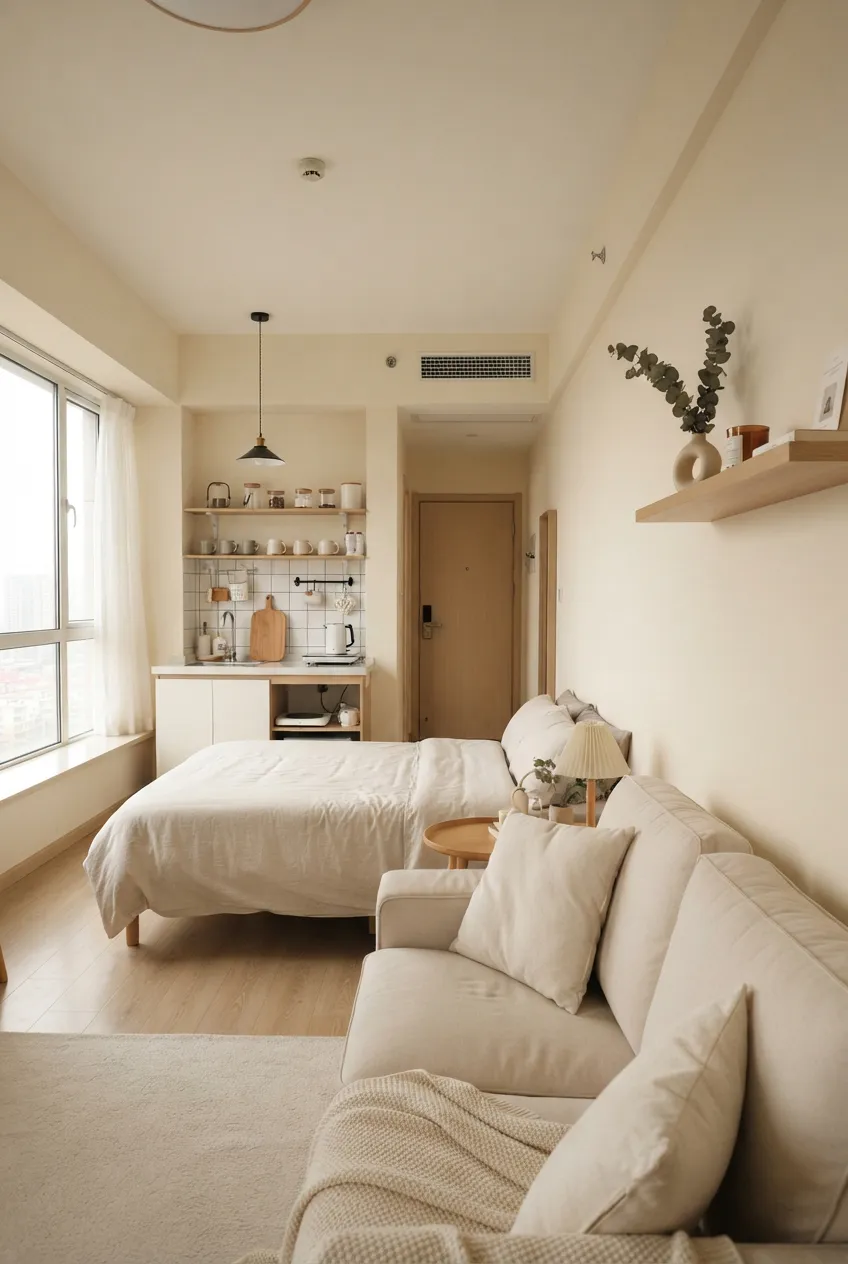
A shelf, dark paint stripe, or row of small art that runs around the room just below the ceiling creates a second, lower horizon. In a low studio, that line can call attention to the limited distance overhead. Instead, let most upper walls stay quiet and keep any wall treatment contained to one useful area.
This does not mean every shelf must be removed. If you already have one, edit what sits on it and avoid repeating the same heavy line across the bed, sofa, and kitchen walls. Check that anything remaining can be reached safely and that open doors and windows still work.
8. Keep the Ceiling Fixture Close to the Ceiling
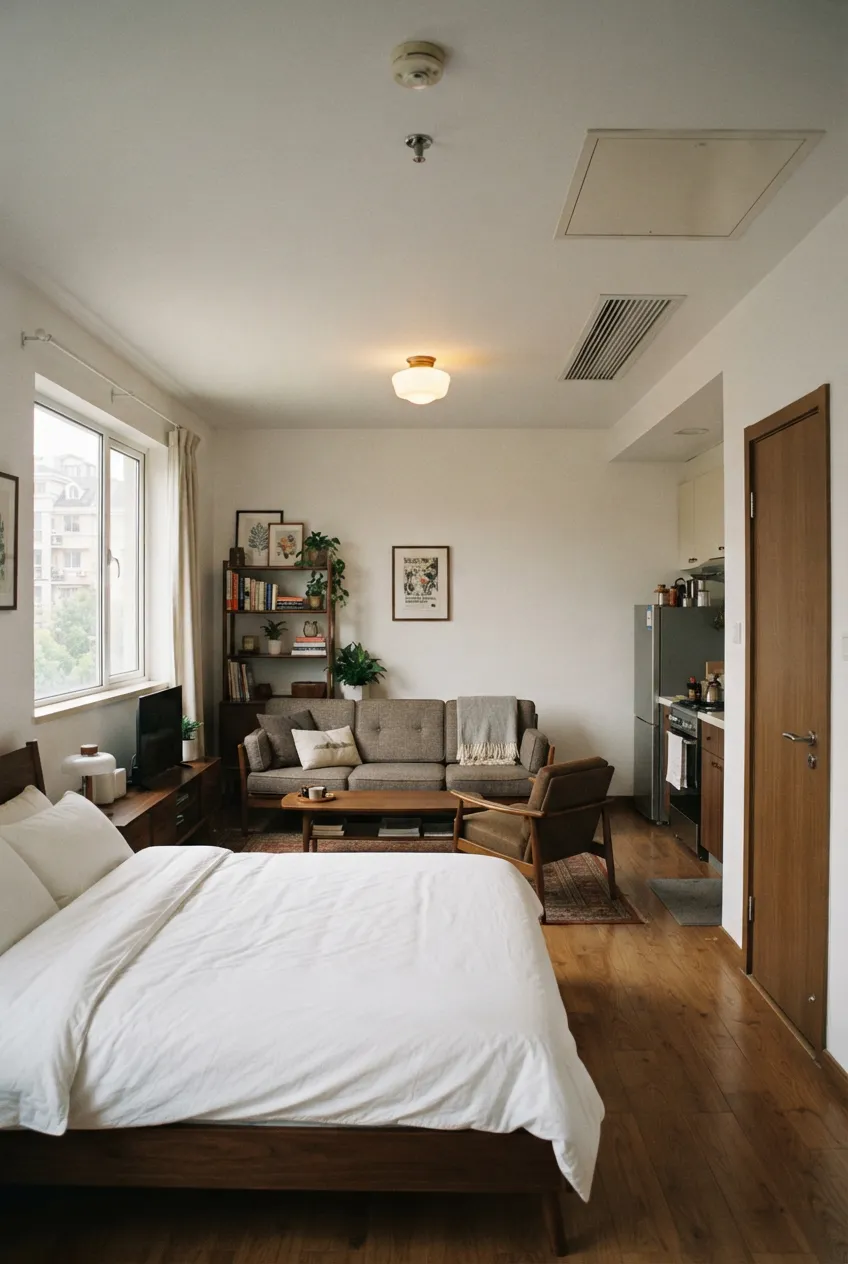
A large, low-hanging pendant can make a standard-height ceiling feel lower, especially above the main walking route. If you are permitted to change a fixture, compare low-profile or close-to-ceiling options that suit the existing electrical point and still provide the light the room needs. Check the fixture’s dimensions against the ceiling height and the furniture beneath it.
Follow the fixture maker’s instructions and use a qualified installer when required. Never cover a sprinkler, vent, smoke alarm, or access point. If replacing the fixture is not possible, focus on the other changes in this article; the room can feel taller without electrical work.
9. Bring Gentle Light to the Upper Wall
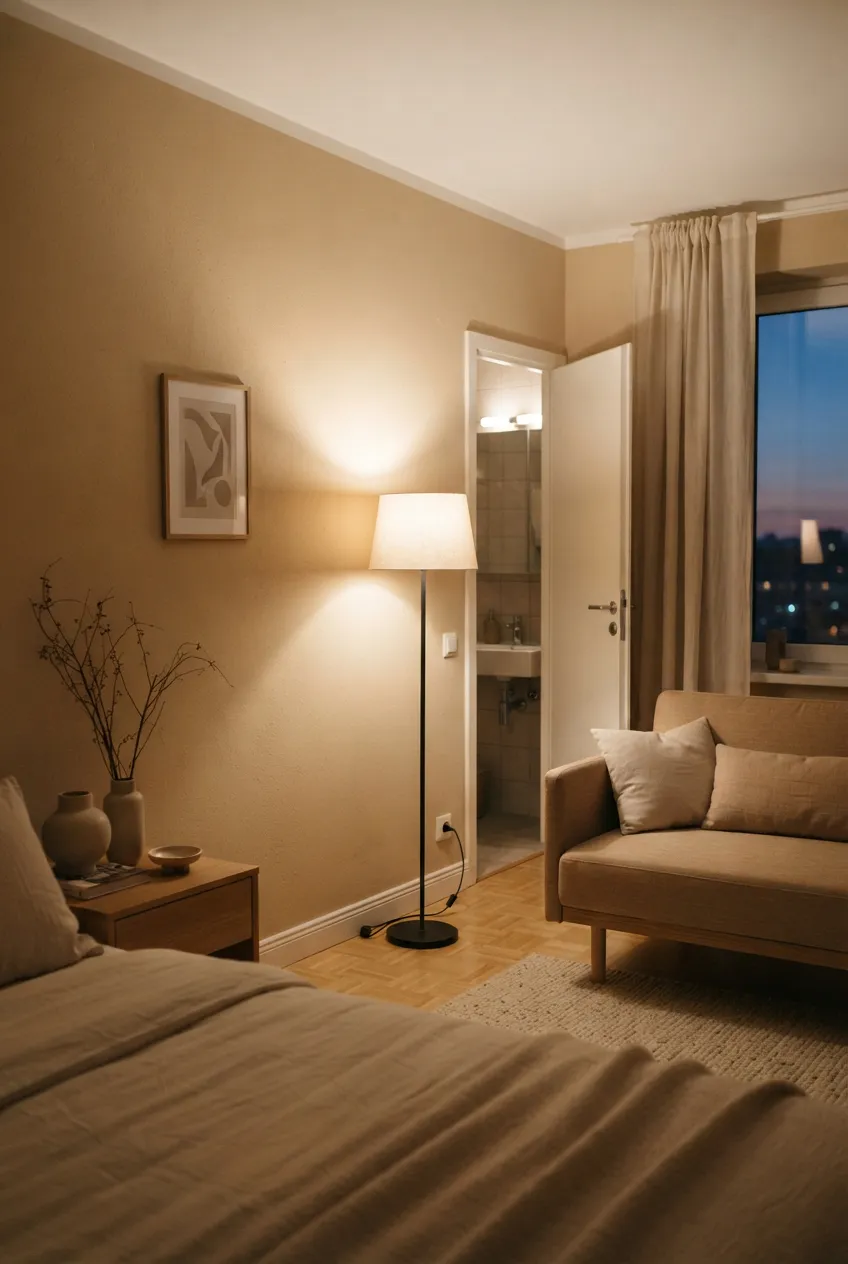
A low ceiling can feel heavier when the upper wall stays dark while one central bulb shines downward. A stable, upward-facing floor lamp or an adjustable lamp that washes a bare upper wall can soften that shadow at night. Aim the light at the wall rather than into someone’s eyes, and keep it away from curtains and other materials as the lamp maker requires.
Check the lamp’s footprint, cord route, bulb type, and the distance to the ceiling before choosing one. Its base and cable must stay clear of the route between the bed, bathroom, and entrance. This is a way to light the room’s upper edge; the dark studio lighting guide covers the wider task of brightening the apartment.
If the room has a safe corner for that light, browse upward-facing floor lamps on Amazon and compare their footprint, cord length, and light direction.
10. Leave the Ceiling Edge and Top Shelves Uncrowded
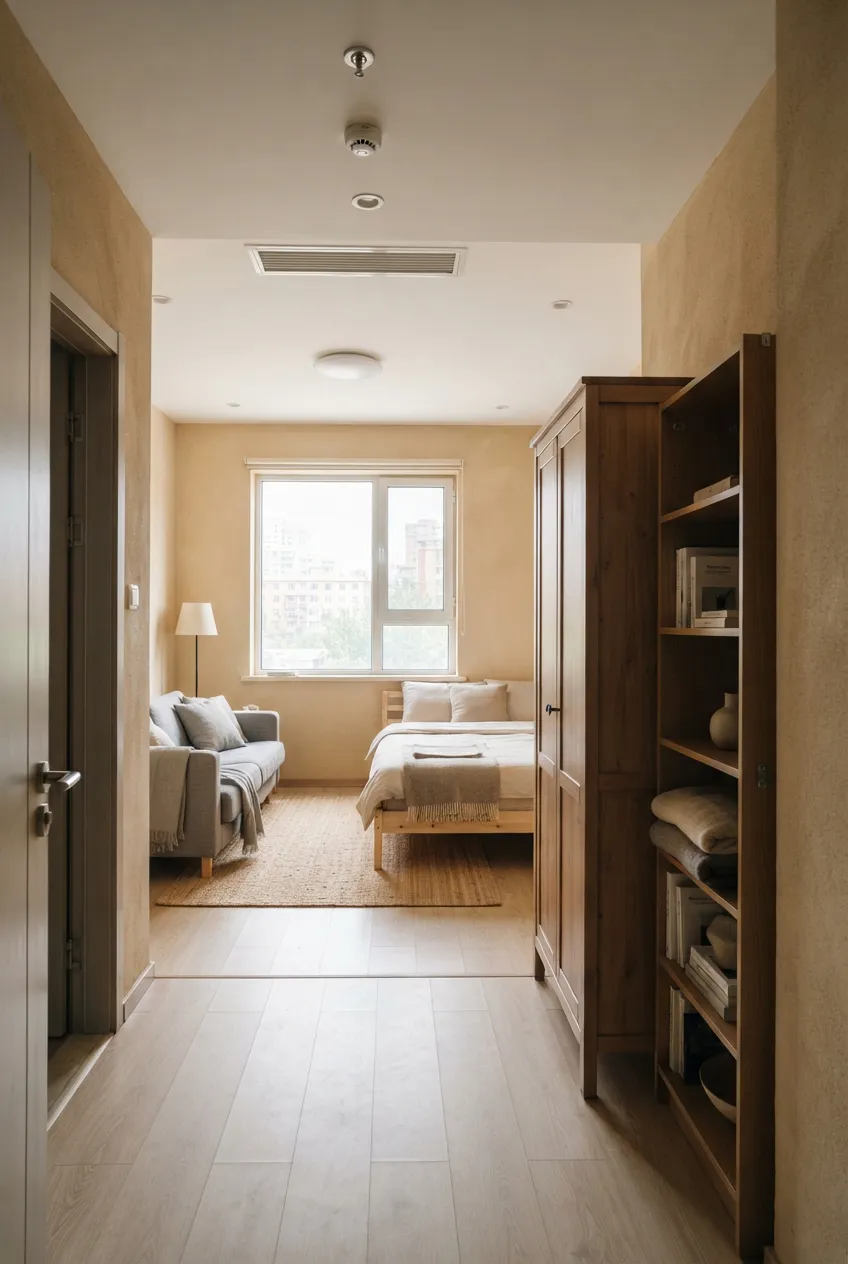
The final adjustment may be subtractive. Tall stacks of boxes, trailing decorations, and crowded top shelves draw attention to the exact point where the wall stops. Leave a visible gap below the ceiling and keep the top of a wardrobe or bookcase from becoming a second storage pile. A few clean vertical lines will do more for perceived height than filling every inch.
Keep vents, sprinklers, alarms, and access panels fully clear. Move heavy or daily items to reachable locations rather than lifting them higher for the picture. Step back from the bed and the entry to check whether your eye can travel up the wall without stopping at clutter.
Final Thoughts
A studio ceiling looks higher when the room offers long, calm vertical lines and a clear upper edge. Start with changes that suit your lease and your existing furniture: raise a curtain line, choose a well-placed mirror, edit a high shelf, or aim a lamp at a dark upper wall. Keep every door, window, fixture, and walking route usable. The aim is a room that feels less compressed while still working as a home.
More Studio Apartment Ideas
 |  |  |
|---|---|---|
Maximize Space  | Brighten Studios | Studio Layouts |