A studio apartment may only be one room, but that doesn’t mean everything has to feel squeezed into the same space.
The studios I find most inviting usually have one thing in common: you can immediately understand how someone would actually live there. There’s somewhere comfortable to sleep, a place to sit, enough storage for everyday things, and at least a small corner for eating, working, or simply putting down a cup of coffee.
You also don’t need built-in cabinetry or a major renovation to make that happen. A lot can be done with furniture placement, freestanding storage, soft textiles, lighting, and a few pieces that help give each part of the room its own purpose.
1. Start With a Warm Organic Modern Palette
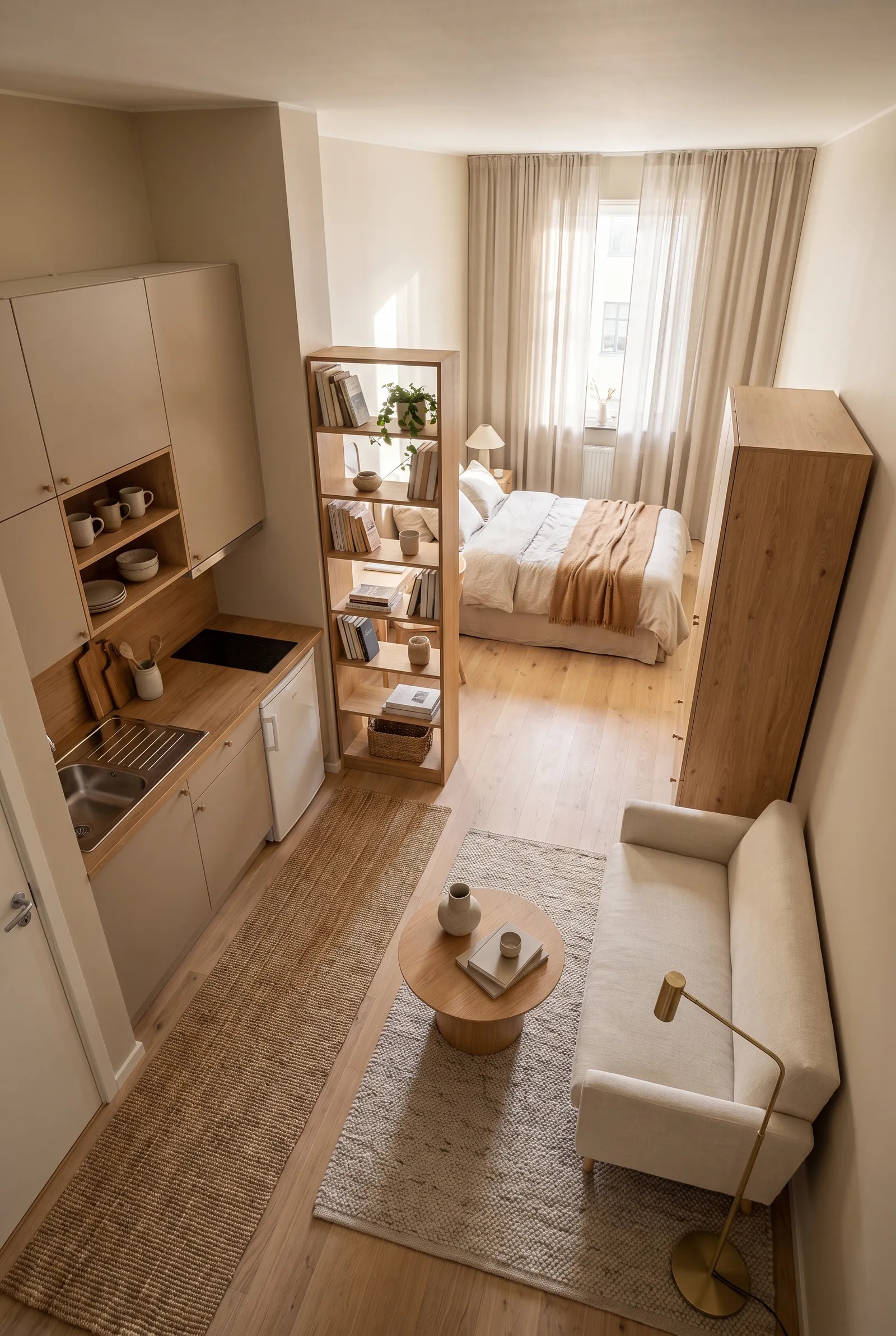
Warm organic modern works especially well in a studio because the palette is quiet enough to keep a small room from feeling visually busy.
Cream, oatmeal, warm wood, caramel, and soft brown tones can flow from the sleeping area into the living space without creating harsh breaks. Instead of adding lots of different colors, let texture do more of the work: linen bedding, a woven rug, natural wood, a chunky throw, and a few ceramics can give the room plenty of depth.
I also like this style for rentals because most of the look comes from things you can take with you later. A warm wood coffee table, neutral rug, floor lamp, and soft textiles can completely shift the mood of an otherwise basic apartment.
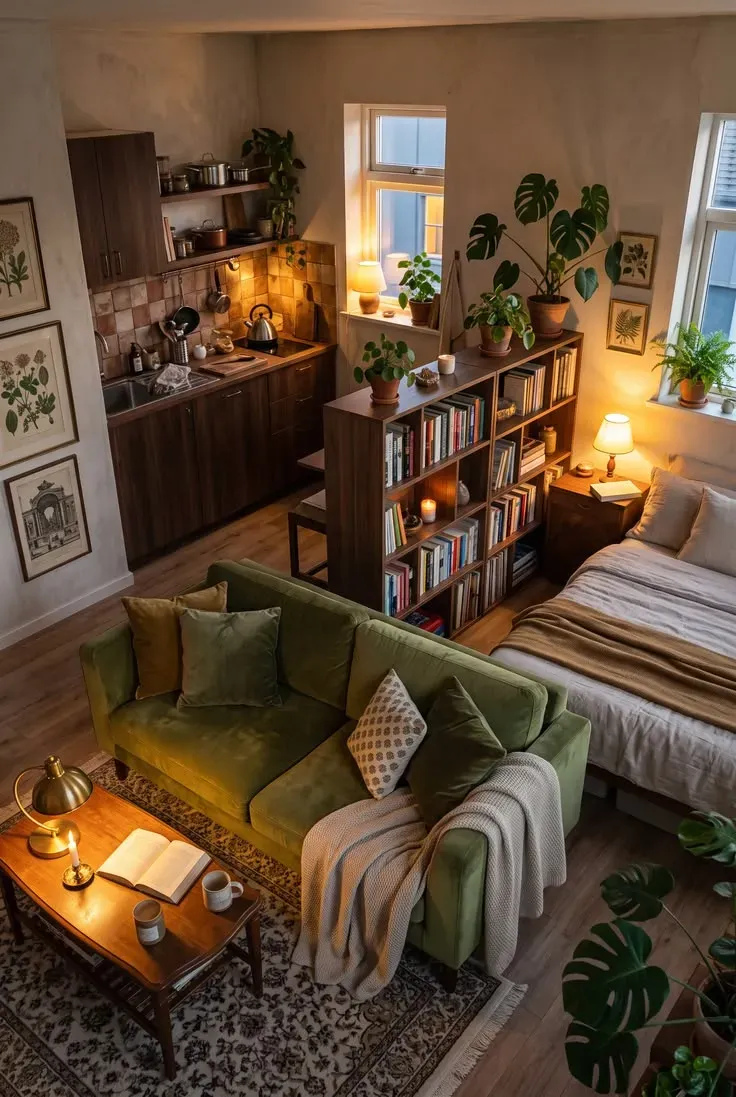
2. Use an Open Bookshelf as a Room Divider
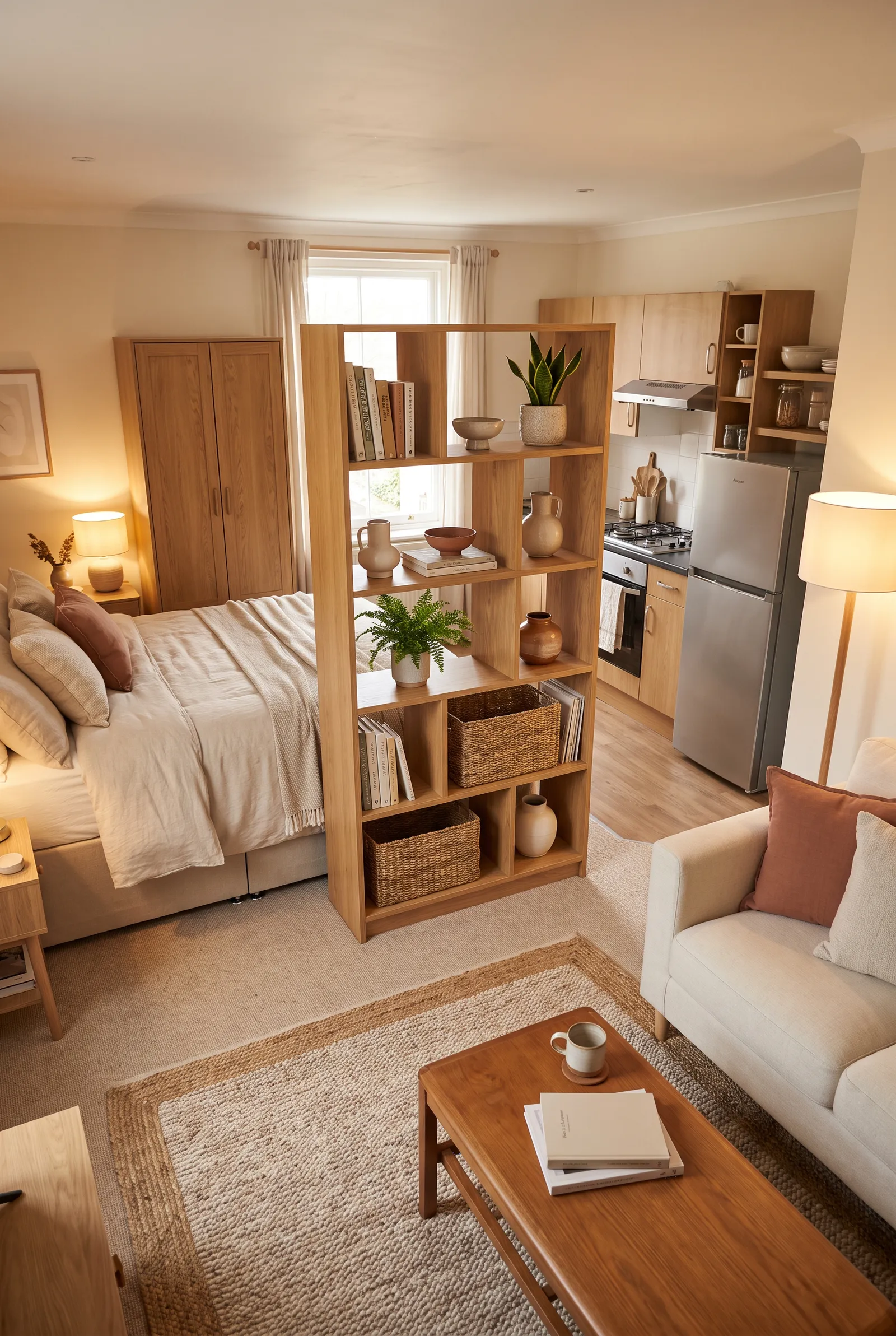
If your bed and sofa feel a little too close together, an open bookshelf can create separation without making the apartment feel boxed in.
The key is keeping it visually light. An open-back shelf lets daylight travel through the room and gives you storage at the same time. You can use the lower shelves for baskets and everyday items, then keep the upper shelves a little more open with books, ceramics, and a small plant.
This works especially well when the shelf sits perpendicular to a wall between the sleeping and living areas.
Unlike a permanent partition, it’s also completely renter-friendly and easy to move if you decide the layout isn’t working.
If you are choosing among dedicated dividers, the room divider guide covers those options in more detail.
3. Let the Sofa Create the Living Zone
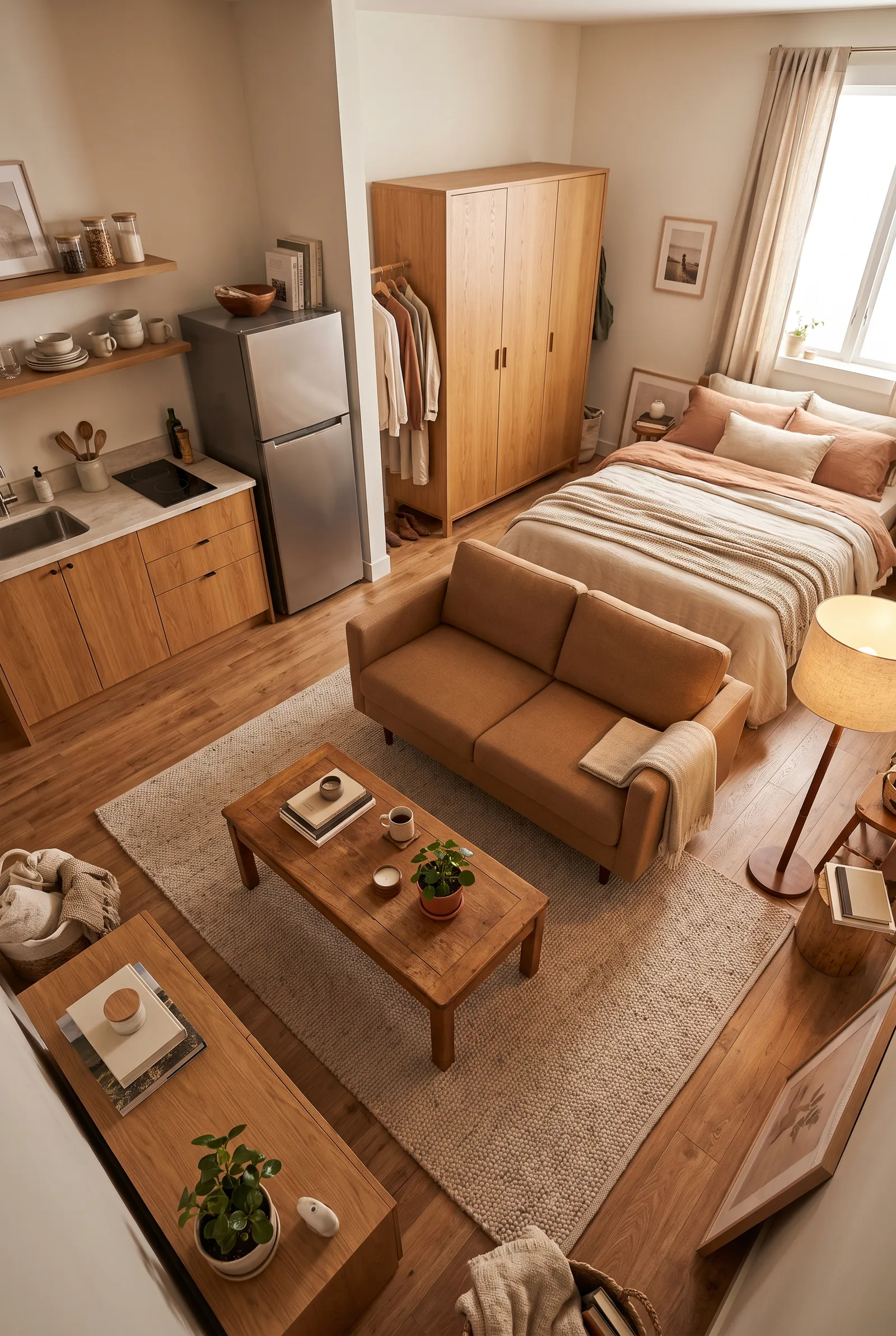
Not every sofa needs to sit against a wall.
In a studio, floating a compact sofa in the middle of the room can actually make the layout easier to understand. With its back facing the bed, the sofa becomes a soft visual boundary between the sleeping area and the living room.
A rug underneath the sofa and coffee table makes that distinction even clearer.
This kind of arrangement can feel counterintuitive in a small room because we tend to push every piece of furniture against the walls. But sometimes leaving a little breathing room around the furniture makes the whole apartment feel more intentional.
Just make sure you still have a comfortable path between the entrance, kitchen, bed, and storage.
4. Give Clothes a Real Place to Live
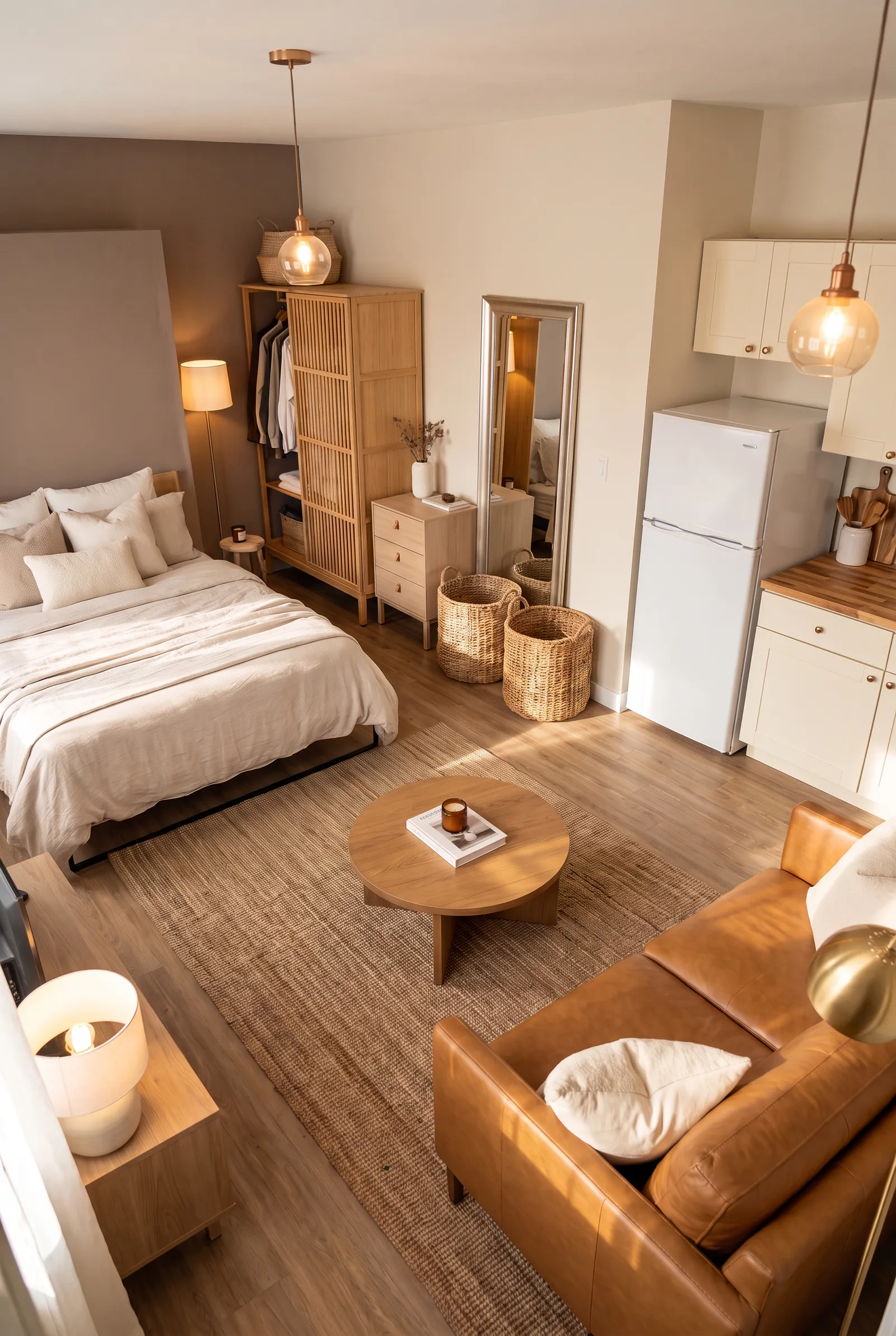
This sounds obvious, but it’s something a lot of beautiful studio apartment inspiration forgets completely.
Where do the clothes go?
If your apartment doesn’t have a useful closet, plan clothing storage as part of the room from the beginning rather than trying to hide it later.
A freestanding wardrobe can provide closed storage without requiring any permanent installation. Pairing it with a small dresser, a full-length mirror, or a couple of woven baskets can create a simple dressing zone beside the bed.
Under-bed storage can help with less frequently used items too.
I’d rather give up one decorative piece of furniture and have somewhere practical to put clothes than create a beautiful room that would be impossible to keep tidy in real life.
For broader clothing organization, see these studio apartment clothing storage ideas.
5. Make Room for a Tiny Dining Spot
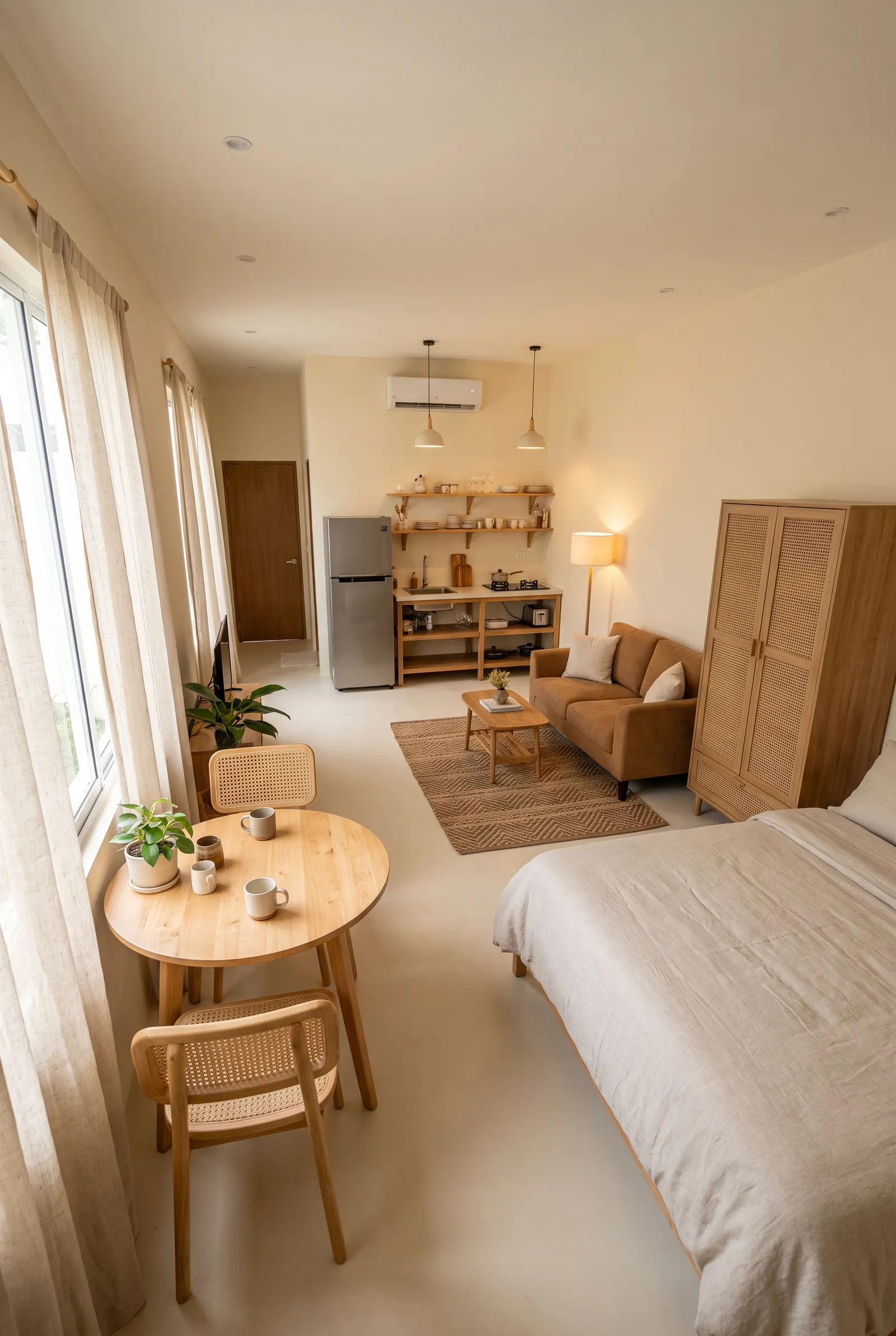
You don’t need a full dining room, but having somewhere other than the sofa or bed to eat can make a studio feel much more like a home.
A small round table is one of my favorite options. The curved edges are easier to move around in a tight space, and a light wood or pedestal-style table doesn’t feel visually heavy.
If possible, place it near a window. Even a tiny breakfast spot for one or two people can become one of the nicest parts of the apartment.
It can also work as an extra surface for coffee, reading, or casual laptop use when you’re not eating there.
6. Choose a Loveseat Instead of an Oversized Sofa
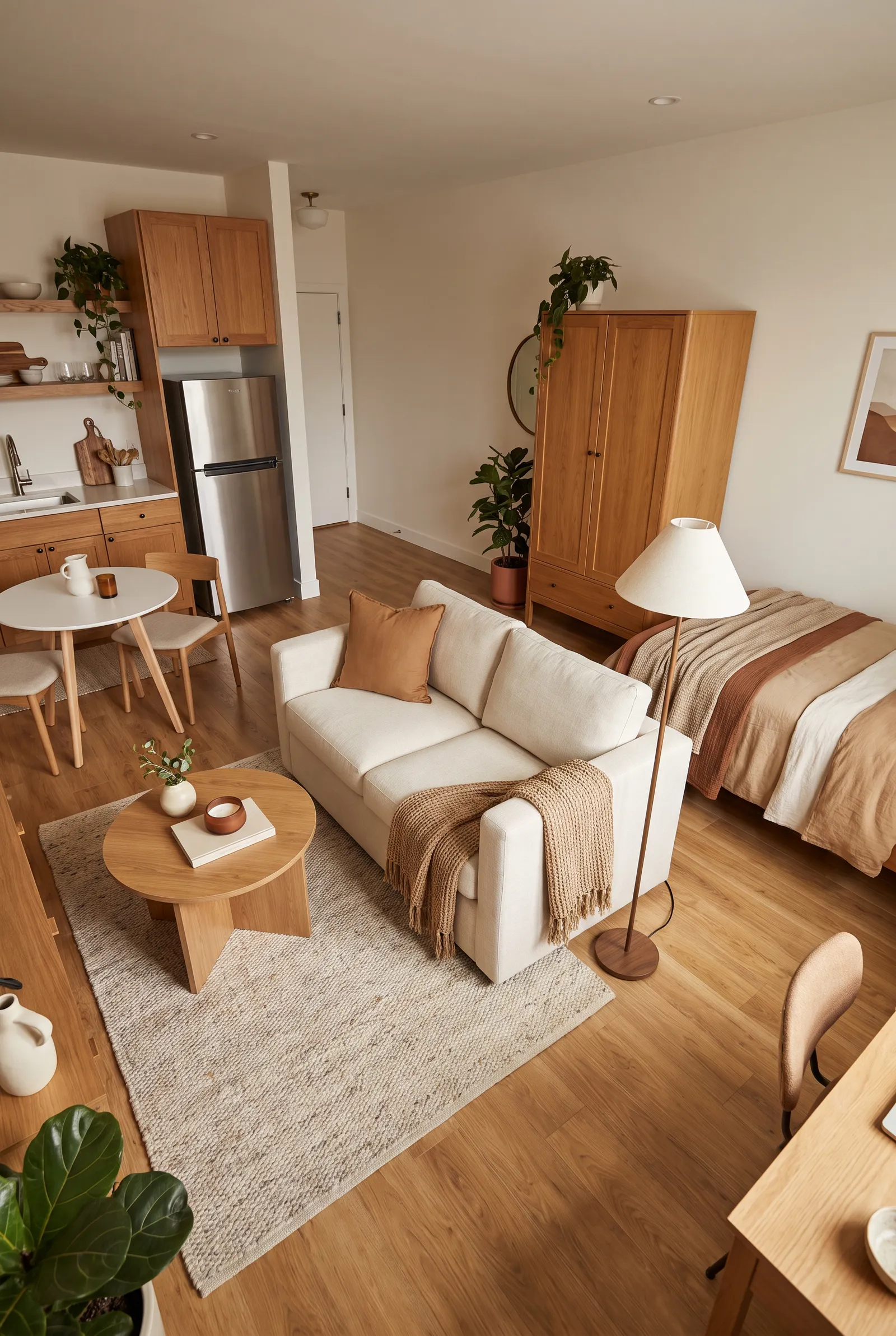
A small apartment doesn’t mean you have to give up having a proper sofa.
It usually just means scale matters more.
A compact loveseat can still give you a comfortable place to stretch out without dominating the entire room. Look for simple arms, a relatively shallow depth, and legs that lift the sofa slightly off the floor.
Furniture that shows more floor underneath often feels lighter in a small room.
I’d rather have a well-proportioned loveseat with enough space around it than squeeze in a large sectional that makes every other part of the studio difficult to use.
7. Carve Out a Tiny Work-from-Home Nook
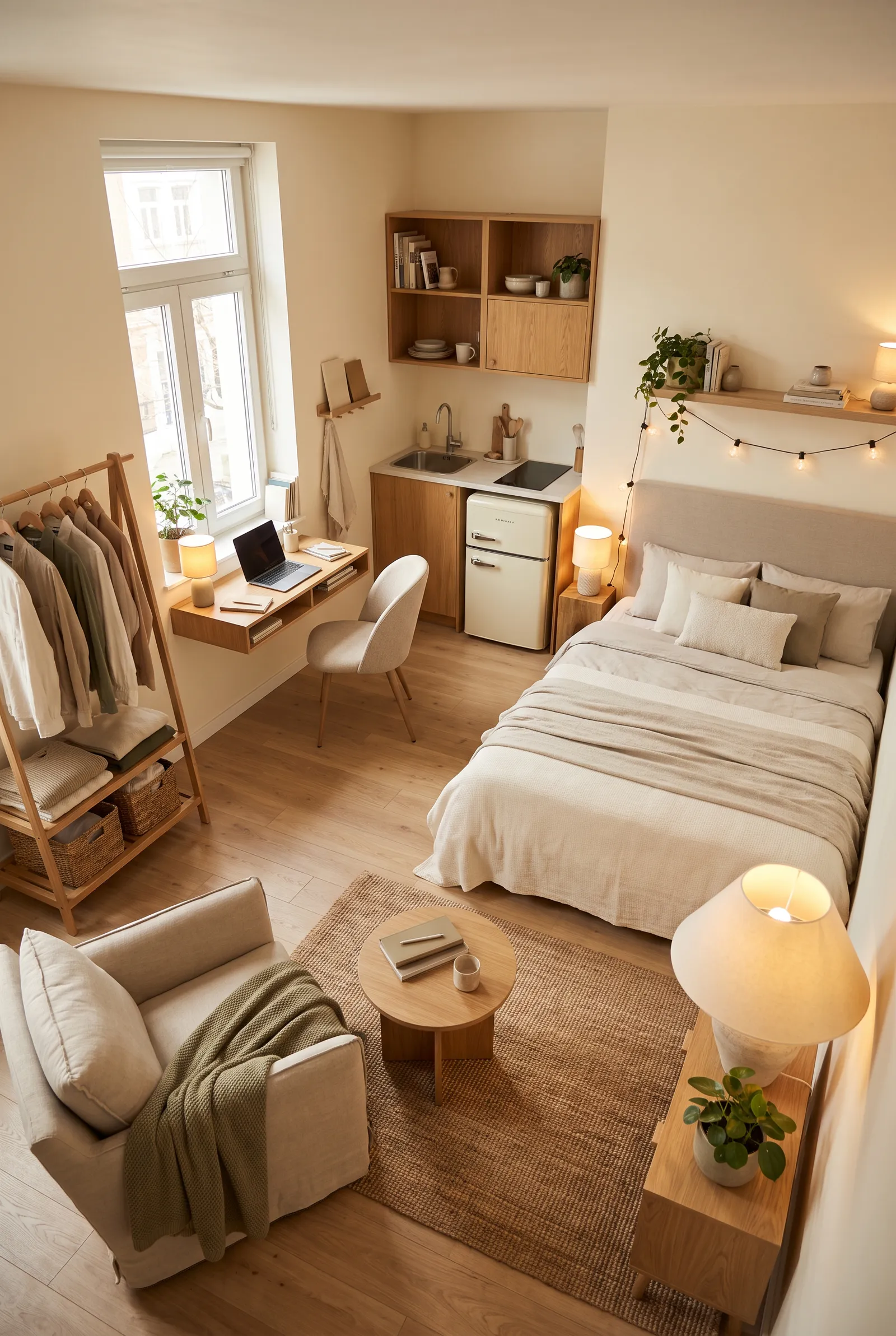
If you regularly work from home, the dining table doesn’t always have to become your office.
A slim desk against an unused wall or beside a window can create a surprisingly useful little workspace without taking over the apartment.
Keep the furniture simple. A narrow desk, compact chair, small lamp, and maybe one shelf above it are often enough.
The goal isn’t to create a full home office inside the studio. It’s simply to give work a dedicated place so laptops, chargers, and notebooks don’t permanently live on the bed or coffee table.
A small workstation can also make it easier to mentally switch off at the end of the day.
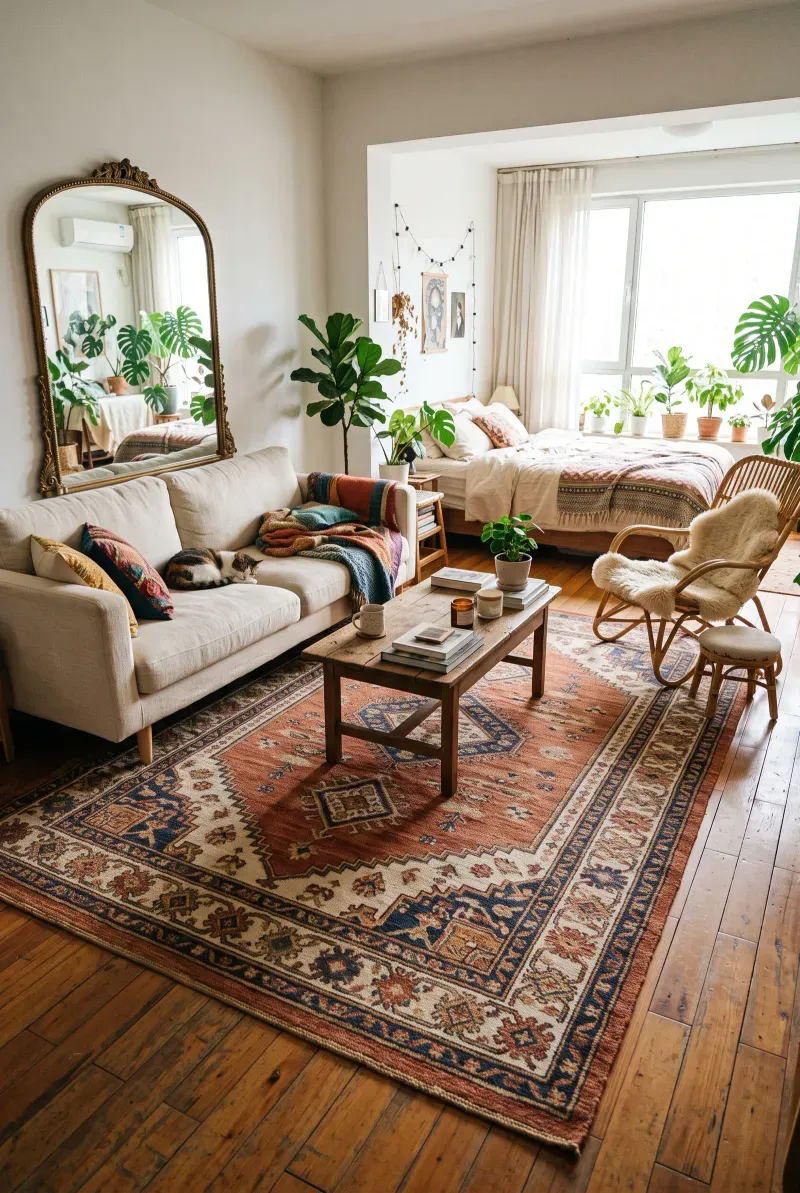
8. Use a Generous Rug to Define the Living Area
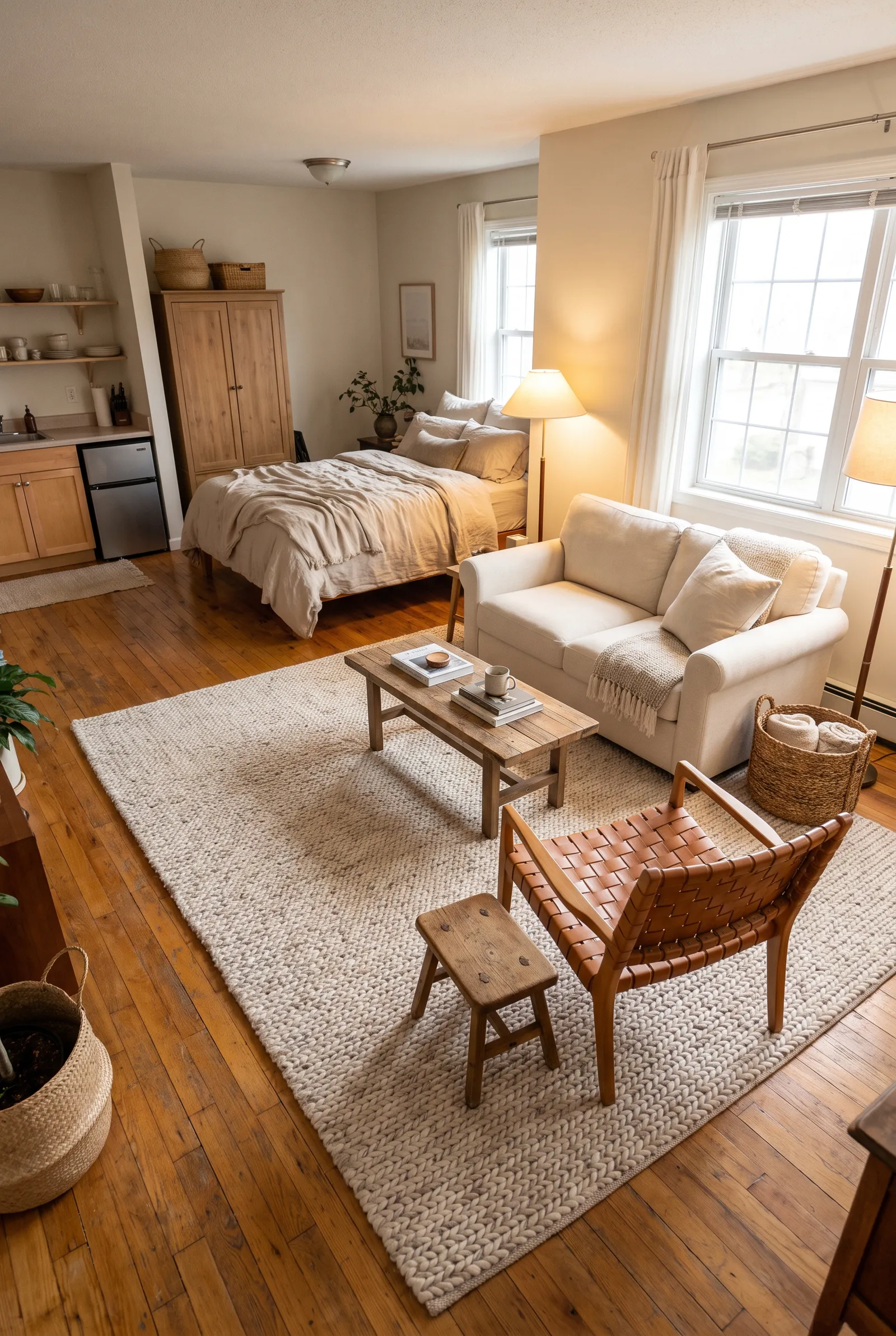
One of the easiest ways to make a studio feel organized is to use rugs to create visual zones.
For the living area, I usually prefer a rug that’s large enough to anchor at least the front legs of the sofa and the coffee table.
A tiny rug floating in the middle can make the seating area look disconnected. A slightly larger one tends to make the whole arrangement feel more complete.
In a warm neutral studio, a cream, oatmeal, faded vintage, or subtly patterned rug adds texture without making the room feel busy.
And because it doesn’t require drilling, painting, or changing anything permanent, it’s one of the easiest rental upgrades.
9. Keep the Color Palette Cohesive
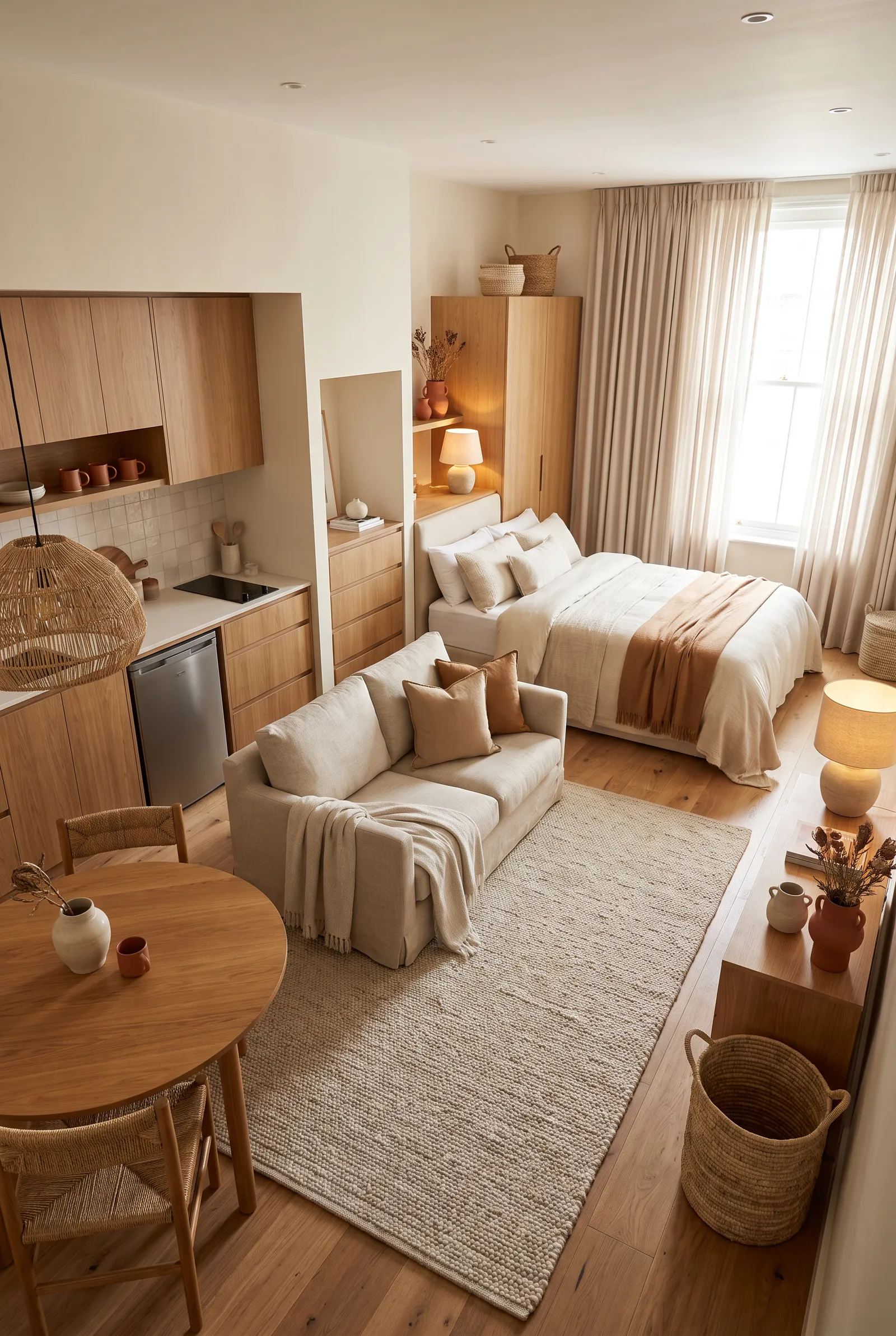
Small spaces tend to magnify every decorating decision.
That doesn’t mean your studio has to be beige, but repeating a limited palette throughout the room can help everything feel connected.
For example, you might use warm cream as the base, natural oak for furniture, caramel as the main accent, and just a little muted green or terracotta.
The same tones can appear in different places without matching perfectly: a warm wood bed frame, similar coffee table, caramel throw, neutral rug, and artwork containing the same earthy colors.
The room will still have personality, but your eye won’t be pulled in ten different directions at once.
10. Try Warm Mid-Century Modern
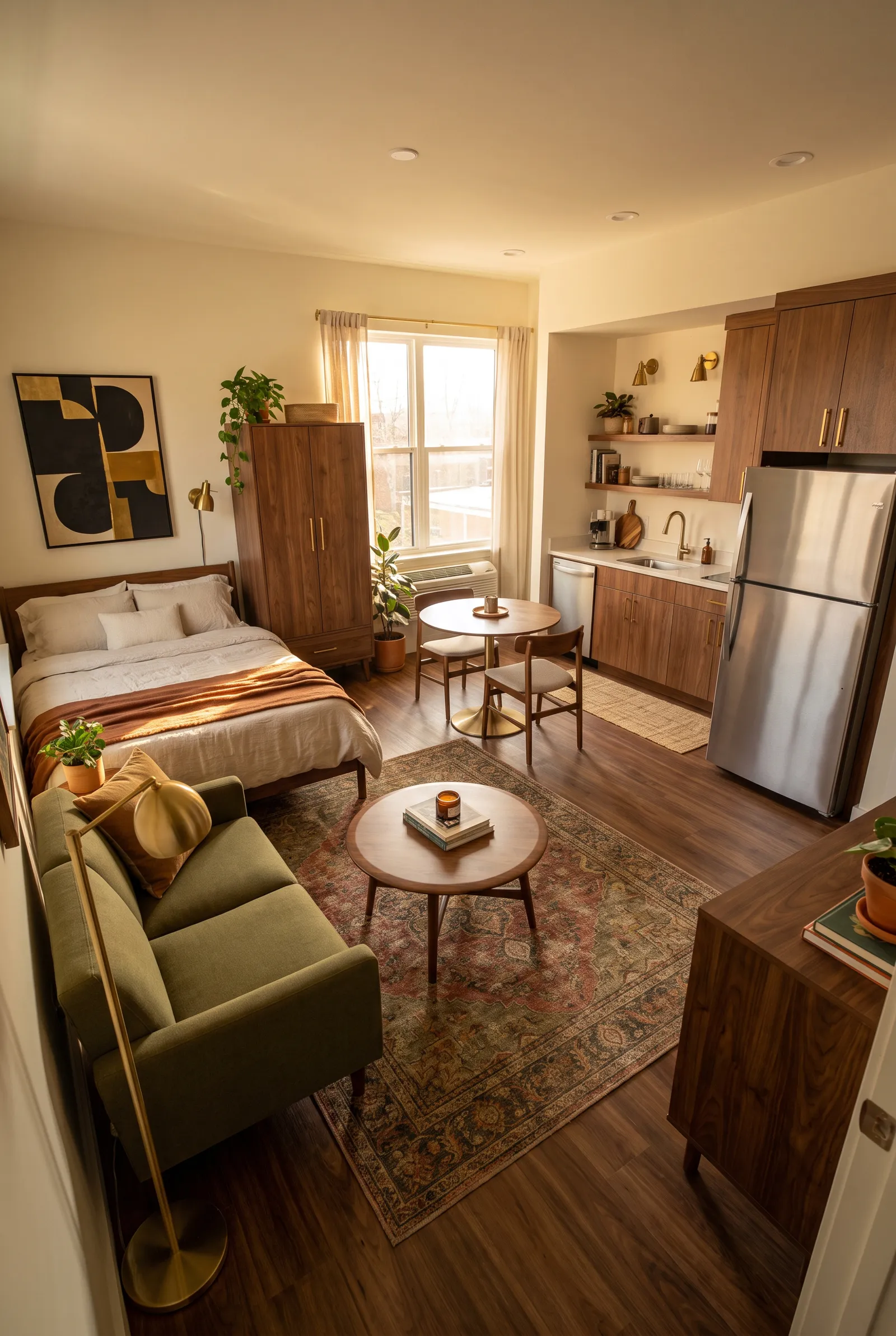
If all-neutral interiors feel a little too quiet, mid-century modern can bring more personality into a studio without making it chaotic.
Walnut wood, olive green, rust, cream, brass, and graphic artwork work beautifully together.
The trick in a small apartment is avoiding oversized vintage-style furniture. Look for slimmer silhouettes, open legs, and pieces that feel visually light.
A walnut coffee table, warm lamp, vintage-inspired rug, and one interesting accent chair can create the mood without turning the studio into a themed set.
This is also a style where a few secondhand or vintage pieces can look especially good alongside newer furniture.
11. Warm Up Sage Green With Natural Wood
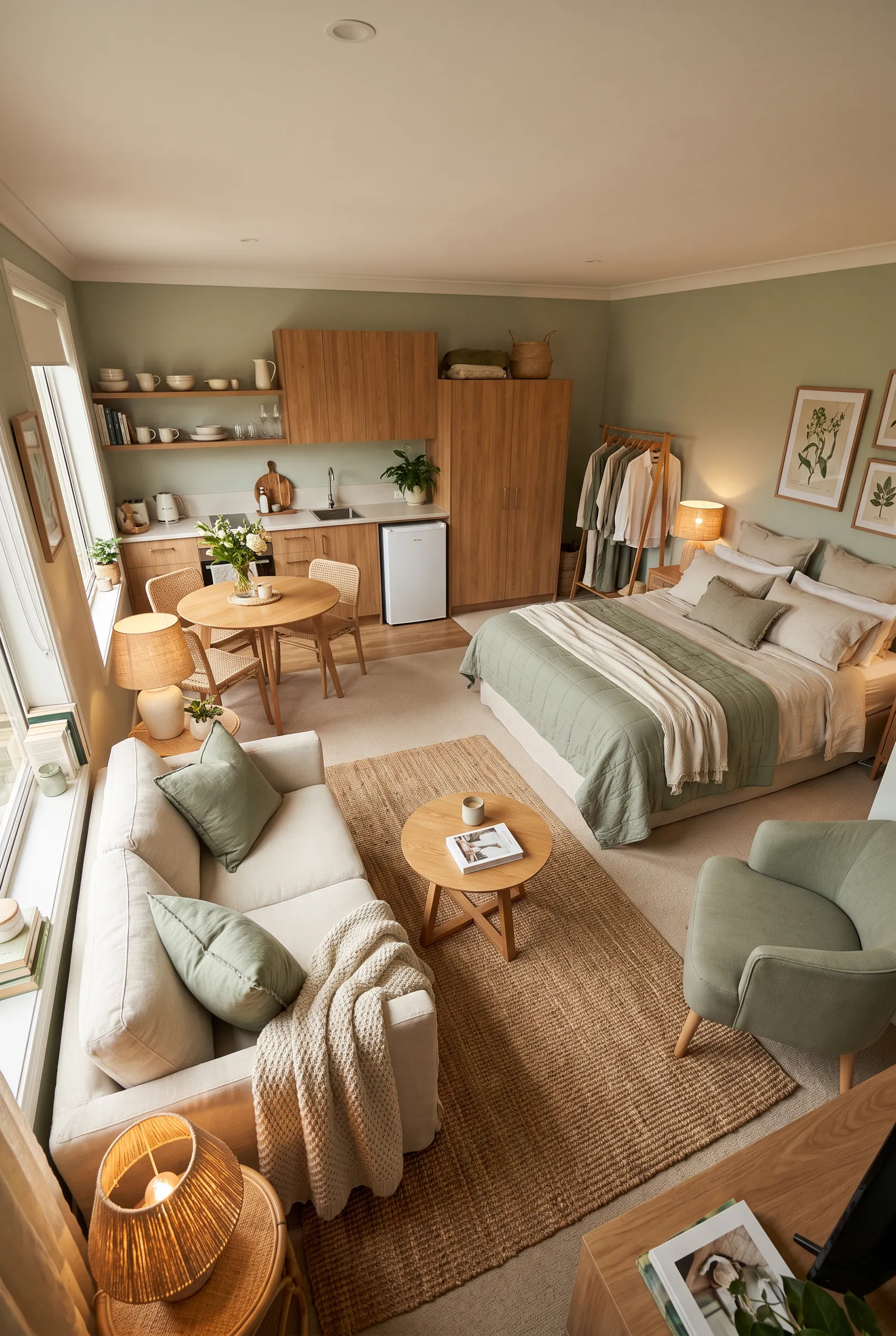
Sage green can look beautiful in a small apartment, but I prefer using it as an accent instead of covering the entire room in green.
Cream walls and warm wood furniture create a softer base. Then sage can appear through bedding, cushions, artwork, a throw, or perhaps one small furniture piece.
Caramel, brass, and natural woven textures help stop the palette from becoming too cool.
This gives you that calm sage-green look while still keeping the room warm and comfortable.
It also makes the palette much easier to change later. Replacing a few textiles is a lot easier than repainting or buying completely new furniture.
12. Layer Several Small Light Sources
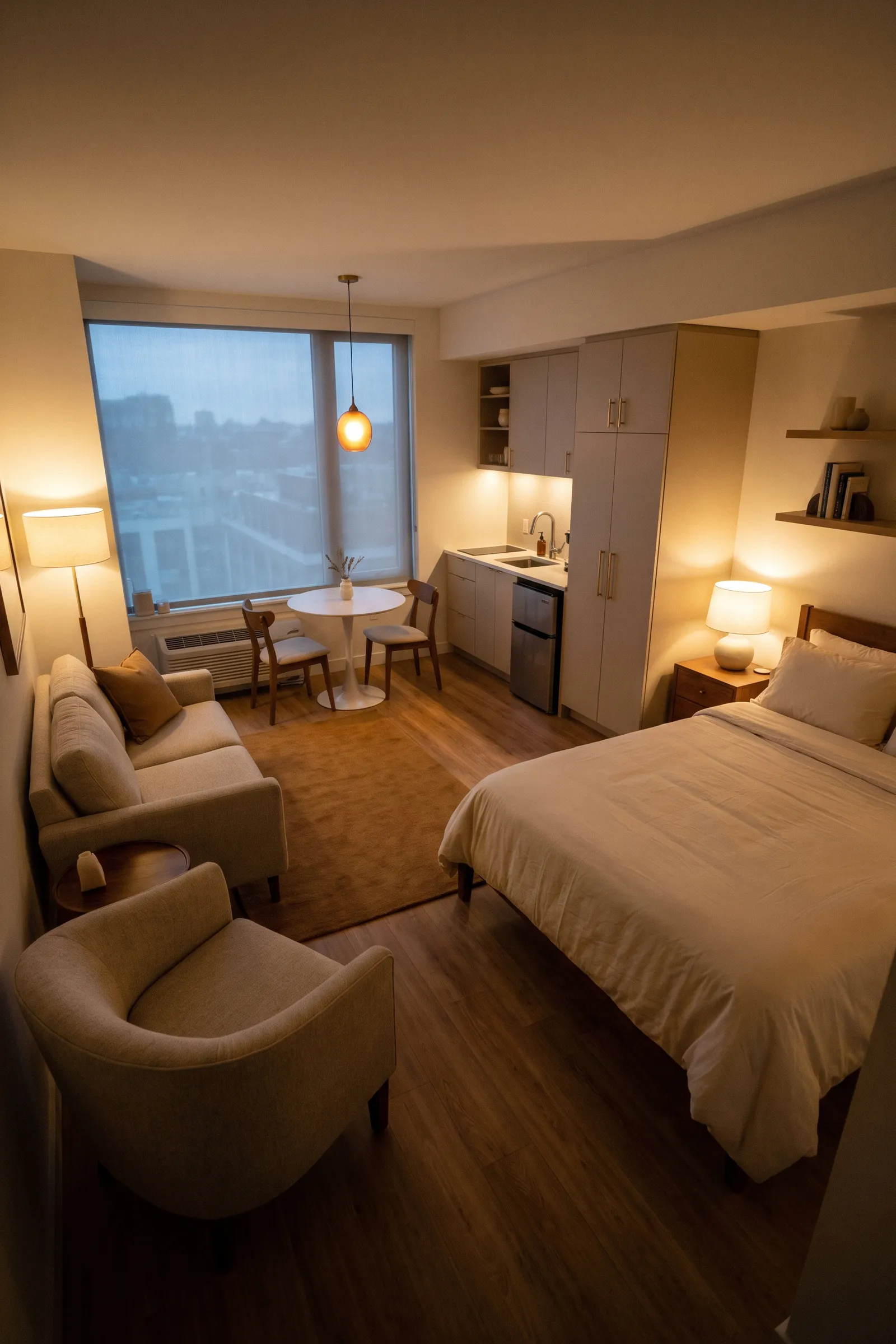
Lighting might be the single easiest way to make a basic studio apartment feel cozier.
Instead of relying on one bright ceiling light, try using several smaller light sources around the room.
A floor lamp beside the sofa, a small bedside lamp, a warm table lamp, and gentle kitchen task lighting can create little pools of light throughout the apartment.
At night, this makes the space feel much softer and gives each zone its own atmosphere.
Warm bulbs matter too. You don’t need to make the apartment orange, but slightly warm lighting usually feels much more comfortable than harsh blue-white overhead light.
13. Use Curtains to Create Optional Privacy
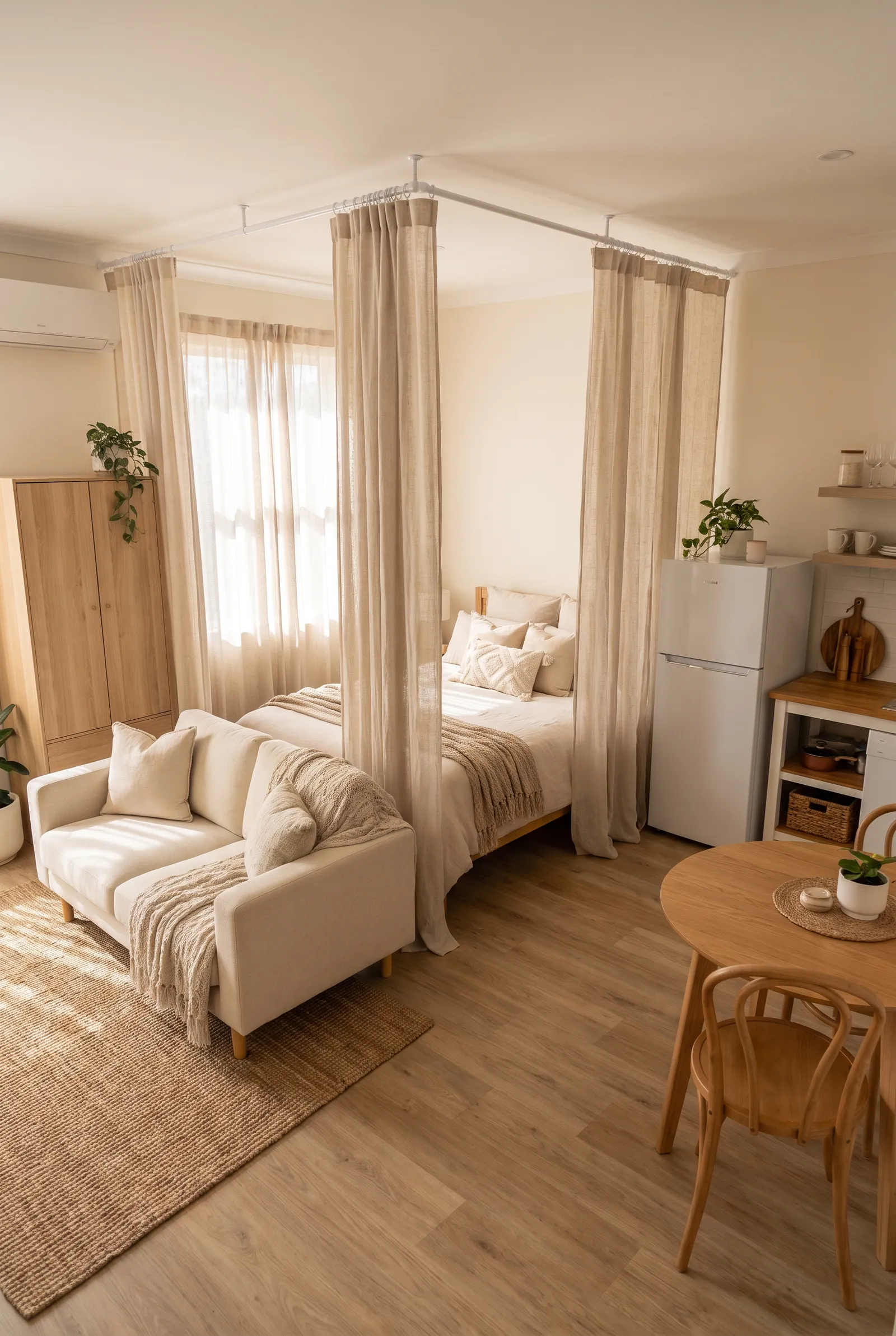
Sometimes you want your studio to feel completely open. Other times, it’s nice not to see the bed from every corner of the room.
Soft curtains can give you both.
A lightweight curtain around one side of the sleeping area can be pulled closed when you want more privacy, then opened again when you want the room to feel larger.
This works particularly well with neutral linen-look or sheer fabrics, because they soften the room without feeling like a solid wall.
For rentals, look for solutions that avoid permanent construction whenever possible, such as suitable tension systems or removable hardware where appropriate for your space.
Explore Apartment Privacy Ideas Without Building Walls for smart ways to zone your layout without construction.
14. Let Storage Become Part of the Decor
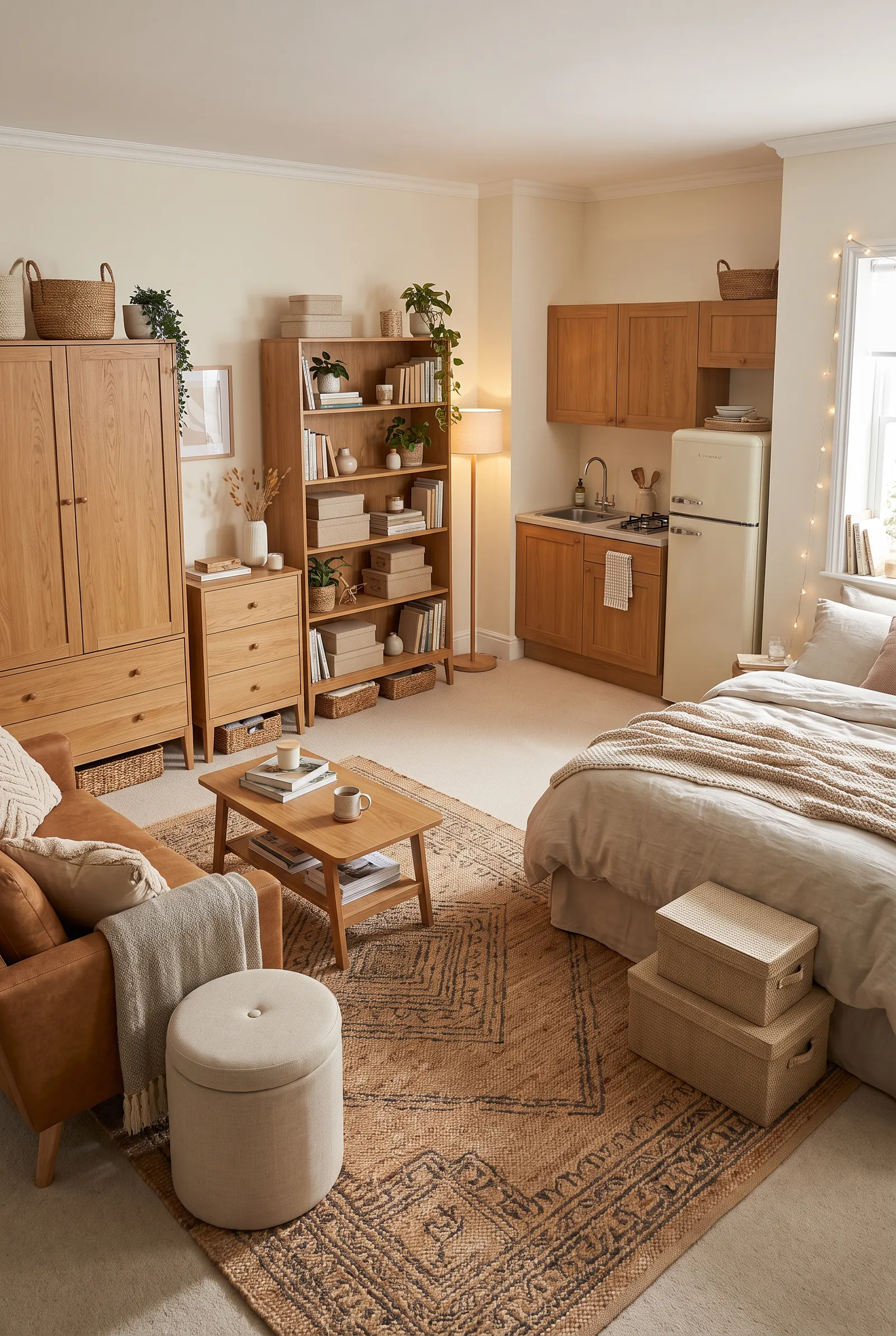
Storage doesn’t always have to disappear behind custom cabinetry.
Some of the most useful small-apartment furniture can look good enough to become part of the room.
Woven baskets on open shelves, a storage ottoman beside the sofa, a slim dresser, attractive boxes, or a freestanding wardrobe can all solve real problems while contributing to the overall style.
I like combining open and closed storage.
Keep a few attractive everyday items visible, then give the visually messy things somewhere to disappear.
That balance usually feels more realistic than either extreme: completely empty shelves or every possession on display.
For more general capacity ideas, see the studio apartment storage guide.
15. Don’t Make It Too Perfect
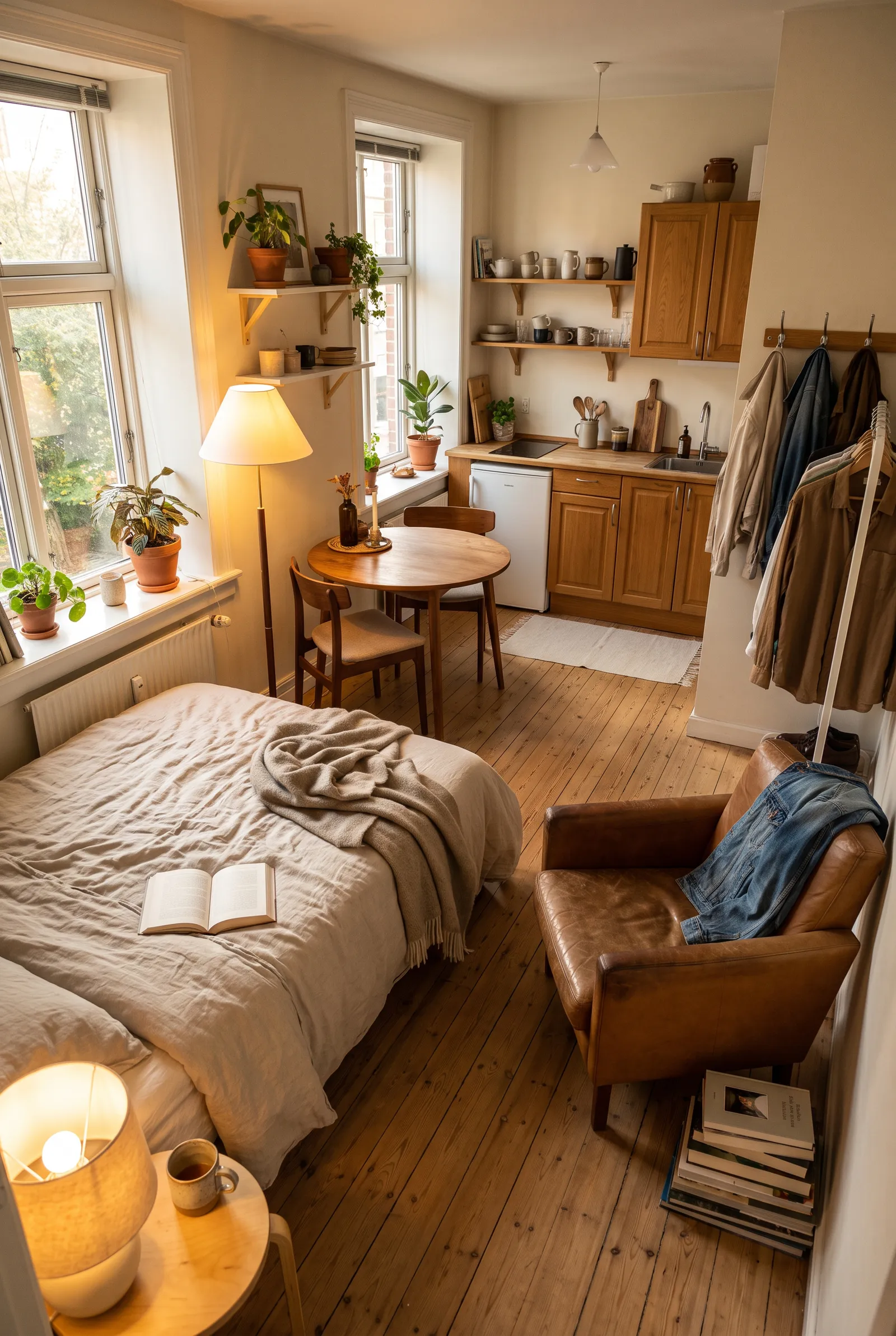
The rooms I want to spend time in usually aren’t the ones where every cushion is perfectly centered and every surface is empty.
A slightly rumpled bed, a throw left on the sofa, an open book, a mug on the table, or a jacket casually hanging nearby can make a room feel much more believable.
This doesn’t mean cluttering the apartment.
It just means leaving enough signs of everyday life that the space feels like a home rather than a showroom.
In a studio especially, comfort matters more than perfection. You’re asking one room to support a lot of different parts of daily life, so it should feel relaxed enough to actually use.
Final Thoughts
A cozy studio apartment doesn’t need to hide the fact that it’s small.
The goal is really to make the space work with you: give sleeping, relaxing, storage, eating, and everyday routines their own place, even when those places overlap.
Start with the things that affect daily life the most. A properly sized sofa, real clothing storage, a comfortable bed, good lighting, and clear walking space will do more for a studio than adding lots of decorative objects.
Then layer in the softer details — rugs, curtains, pillows, artwork, warm wood, baskets, and the little things that make the apartment feel like yours.
A small space can still feel generous when everything in it has a reason to be there.
More Studio Apartment Ideas
 |  |  |
|---|---|---|
Studio Layouts  | Maximize Space | Elevated Studio |