Storage furniture can look roomy in a product photo and disappoint as soon as you put real belongings inside. A shallow drawer may not hold folded sweaters. A tall cabinet may have plenty of volume but leave you unable to reach its upper shelves. In a studio, the cost of a poor choice is especially visible: the piece occupies precious floor while your things still sit out.
Start with a short inventory of what needs a home. Note the largest item in each group, how often you reach for it, and whether it needs hanging, a drawer, or an open shelf. Then compare usable interior space, access in the fully open position, and the route around the furniture. The twelve ideas below are alternatives for different loads, not a shopping list for one room. For broader places to store things, see the studio storage guide.
1. Use a Tall Closed Cabinet for Mixed Household Supplies
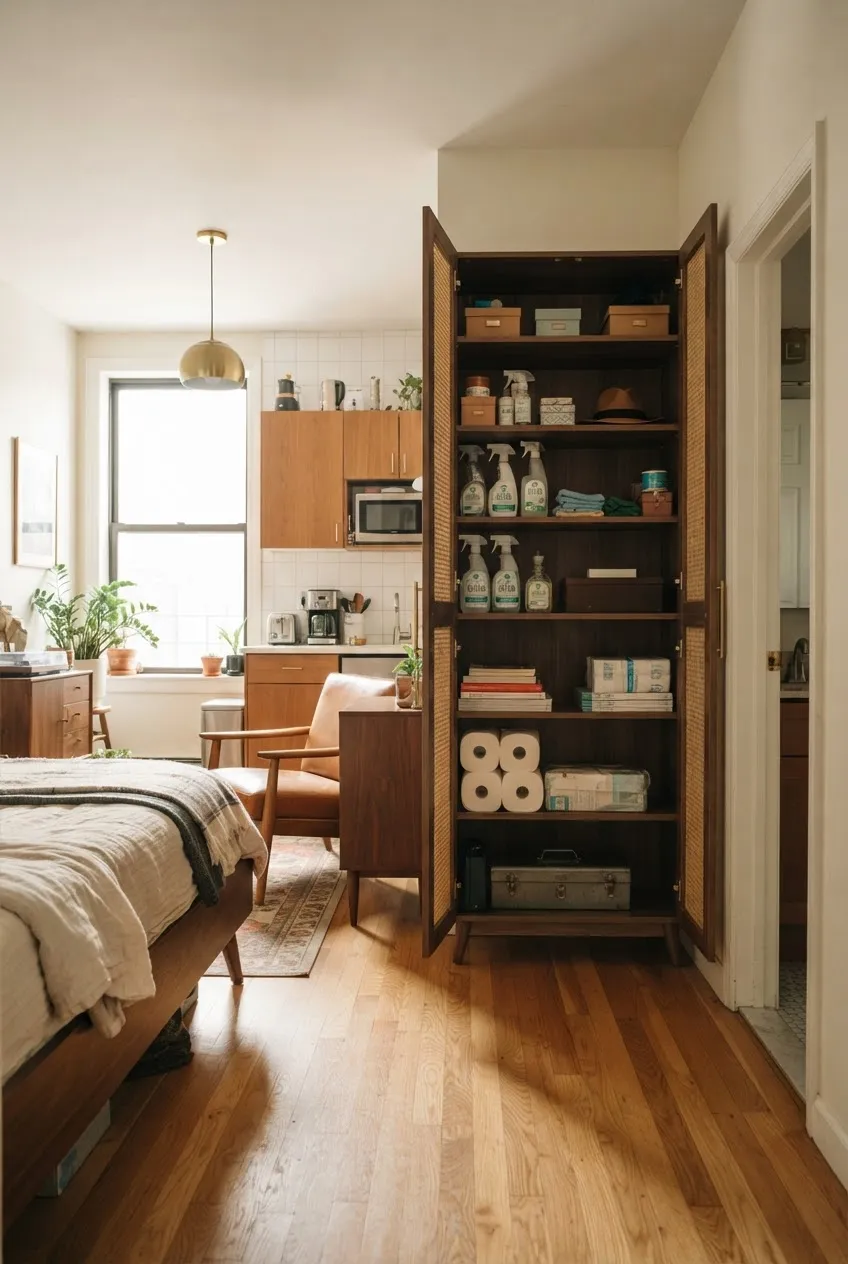
A tall cabinet can hold the things that do not belong on the bed or kitchen counter: spare paper goods, cleaning items, a tool kit, and off-season accessories. Put heavier supplies low and lighter, occasional items higher. Adjustable shelves help when the contents vary in height; one large empty cavity may waste more space than it promises.
Measure the interior shelf width and depth against your largest item, then check the door’s full swing and access to the top shelf. A tall unit must be stable and secured as its manufacturer requires. If that wall and fixing method work in your home, browse tall storage cabinets with doors on Amazon and compare usable shelf dimensions rather than exterior height alone.
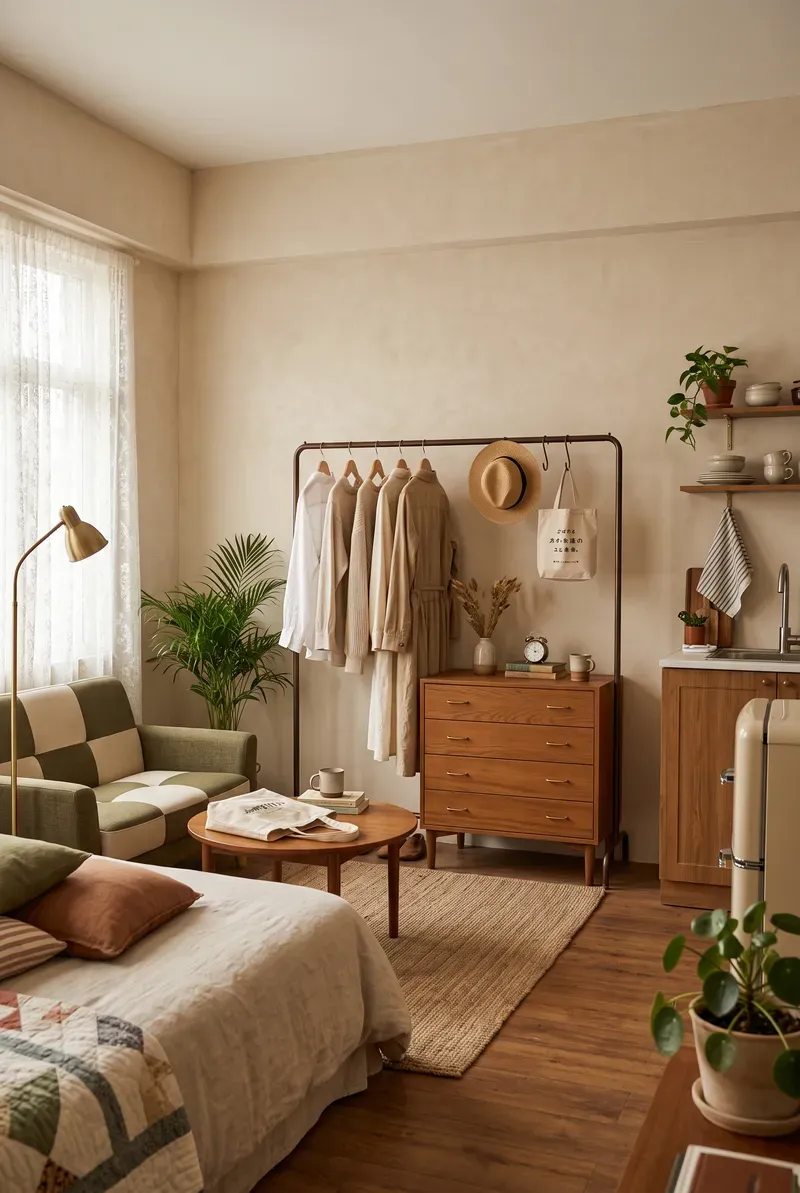
2. Give Folded Clothes Drawers That Match the Stack
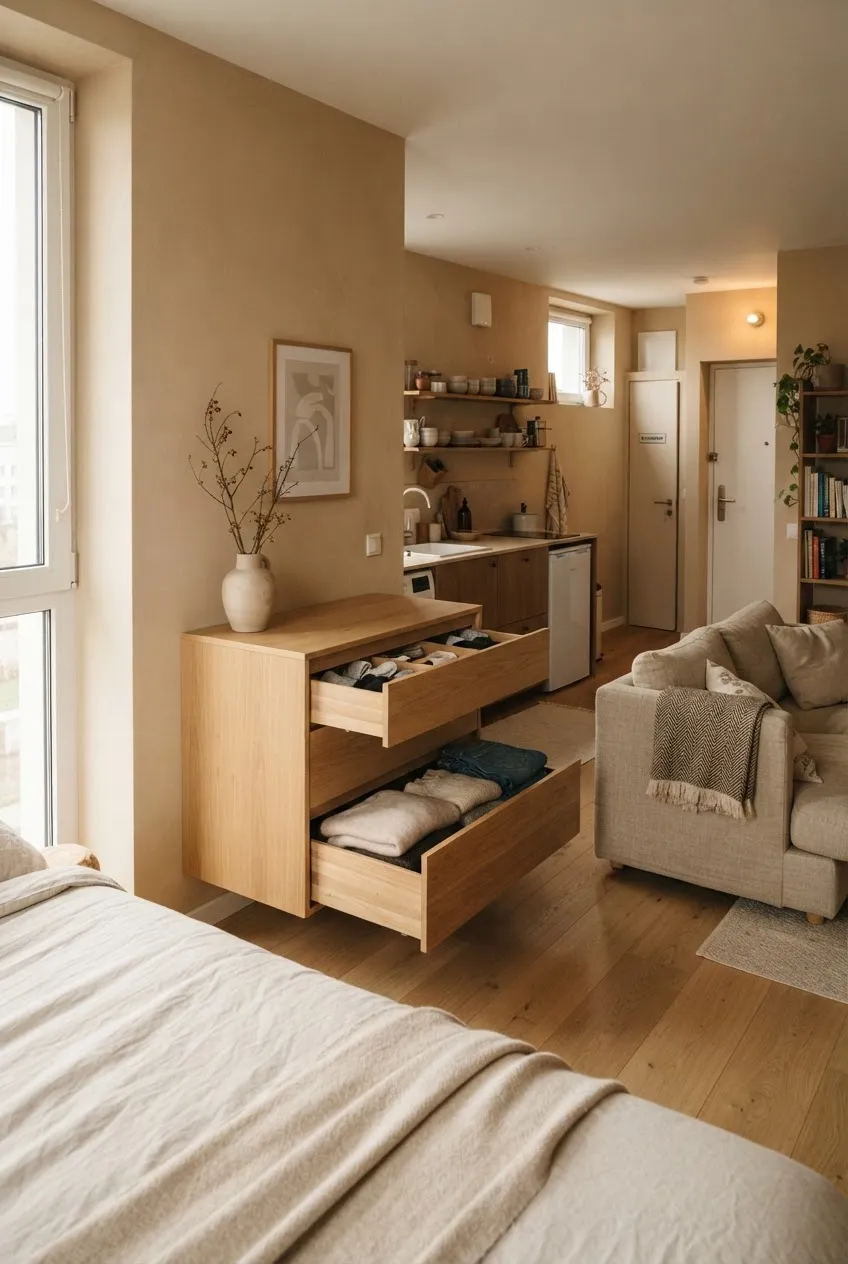
A dresser is useful for folded clothes when the drawers are deep enough for the actual stacks you own. Shallow top drawers can hold socks and small items; deeper lower drawers suit bulkier sweaters or jeans. Count what fits in one drawer without compressing everything so tightly that it is hard to take out.
Pull every drawer fully open before choosing the dresser’s position. Leave standing space and keep the route from the entrance to the bathroom clear. Follow the maker’s anti-tip instructions, especially for a tall chest. If drawers solve your main clothing overflow, browse dressers with deep drawers on Amazon and compare interior drawer dimensions, not just the overall width. The clothing storage guide helps separate folded from hanging needs.
3. Reserve a Wardrobe for Clothes That Must Hang
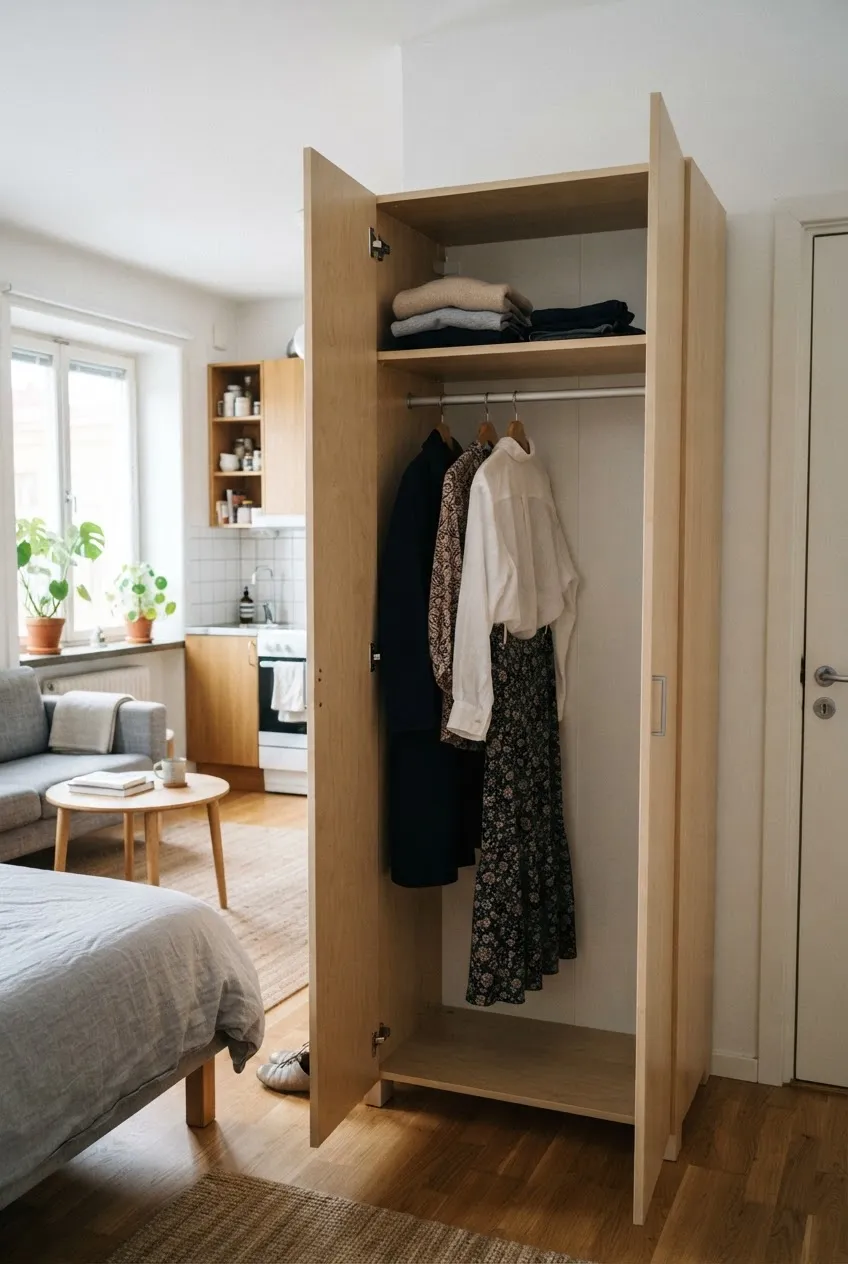
A wardrobe earns its floor space when you have coats, dresses, or shirts that wrinkle in drawers. Measure the longest garment from hanger to hem and leave enough vertical clearance below the rail. A second shelf can hold a small amount of folded clothing, but filling every part with boxes may make the hanging space unusable.
Check rail load, door opening, and the space to stand while lifting garments out. A deep wardrobe should not crowd the bed or block the only route to the bathroom. If an existing closet already handles hanging clothes, add a dresser only for a real folded-clothes shortage. See the studio closet ideas for ways to use the closet you have.
4. Choose a Storage Bed for Bulky, Infrequent Linen
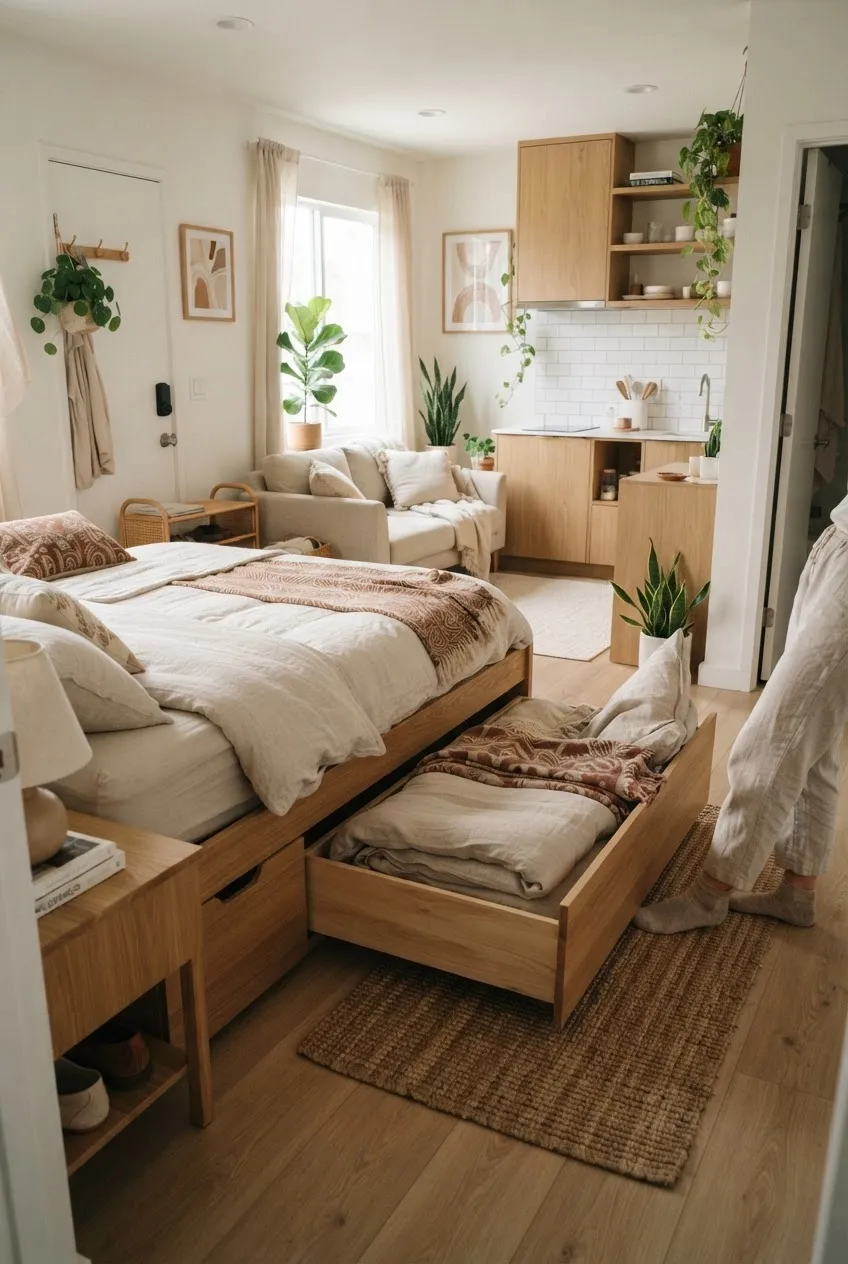
The volume beneath a bed suits spare bedding and seasonal textiles, but its usable capacity depends on the mechanism. Drawers need their full pull-out space. A lift-up base needs safe operating clearance and a clear path for lifting and lowering. Test access with the bedding on the bed and the usual bedside furniture in place.
Keep daily necessities elsewhere if opening the bed is a chore. Measure the internal compartment and what you actually intend to store, including pillows that need room rather than compression. Do not buy a storage bed simply because it promises hidden volume while its openings face a wall. The under-bed storage guide compares other ways to use that footprint.
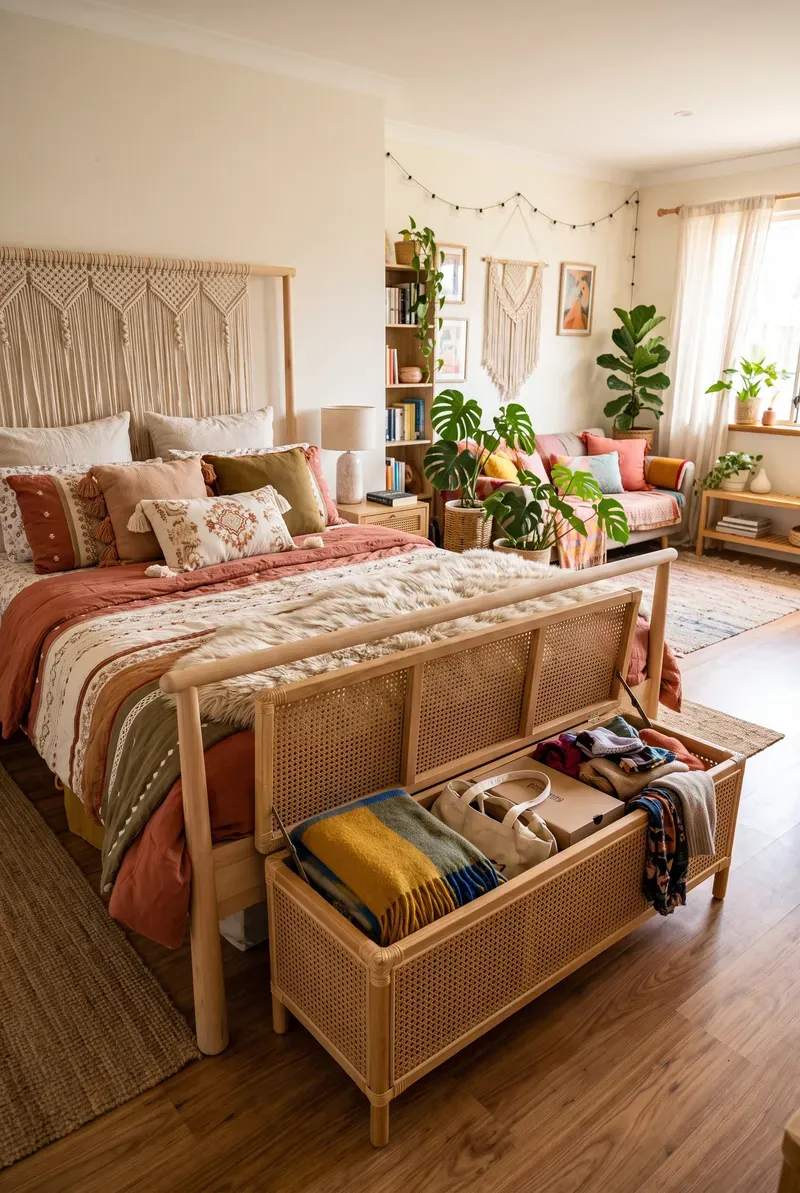
5. Put Soft Bulk in a Lidded Storage Bench
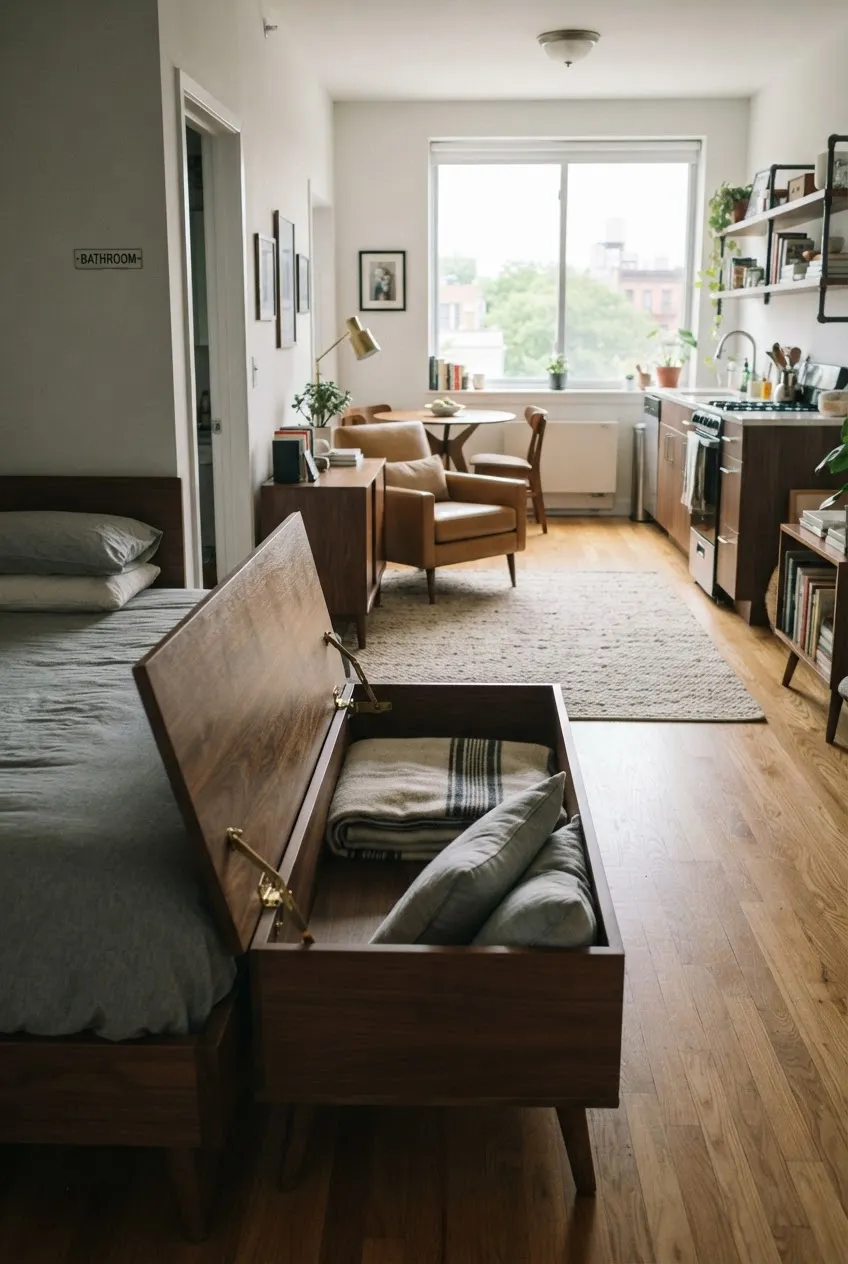
A bench can hold blankets, extra cushions, or a few bags where its interior is broad rather than finely divided. The useful capacity is the space left after hinges, supports, and the lid mechanism. Choose it for soft things that can be lifted out from above, not for small objects that disappear at the bottom.
Place the bench where its lid opens completely without touching the bed, wall, or dining chair. If it will also be sat on, verify the manufacturer’s seating rating and stability. A bench at the foot of the bed is only sensible when there is room to walk around it after it is filled and in normal use.
6. Count Real Pairs Before Buying an Entry Shoe Cabinet
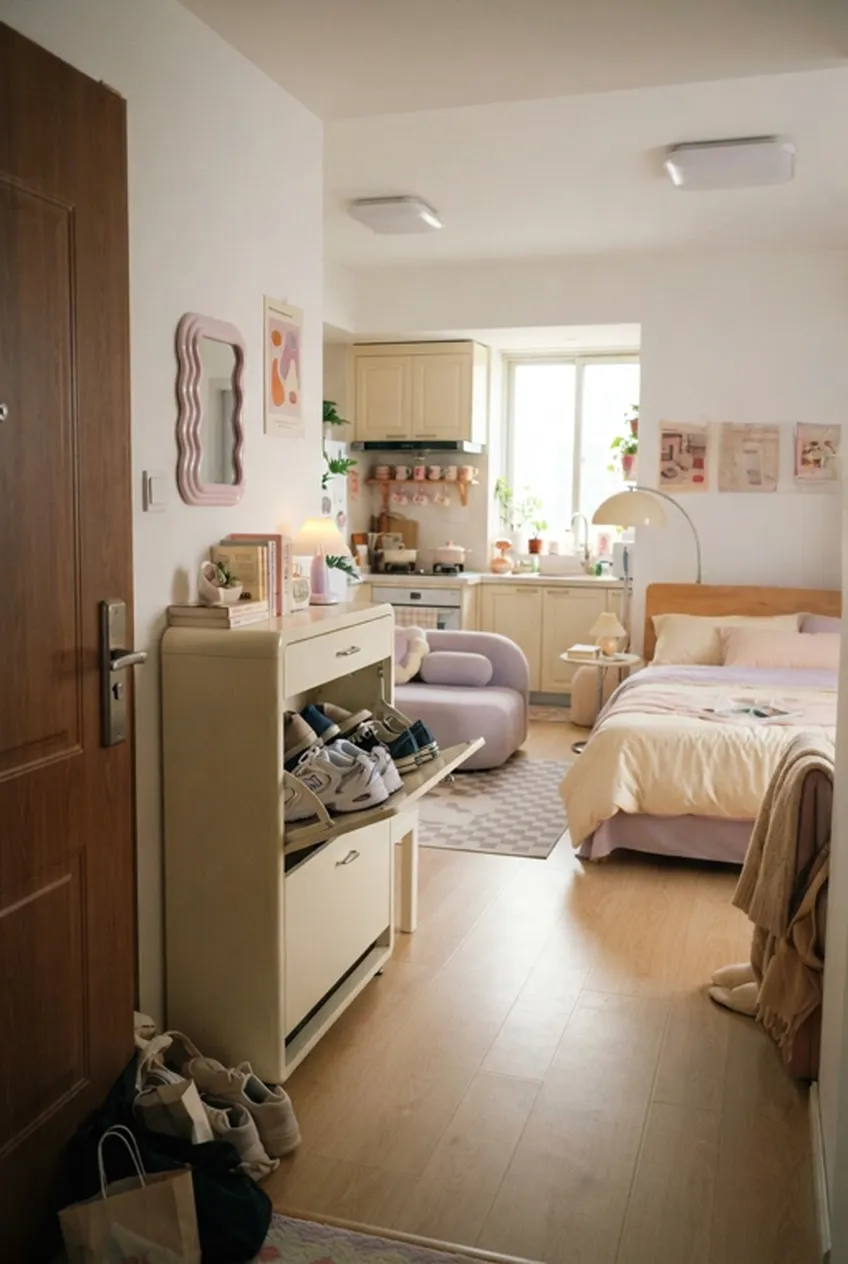
A slim shoe cabinet can clear shoes from the entrance, but its stated pair count may not reflect boots, larger sizes, or wide sneakers. Set aside the pairs you actually wear and measure the largest one. Check the compartment’s usable depth and height, not only the cabinet’s shallow outer profile.
Open every tilt-out or hinged front fully with the entry door open. Some designs require wall fixing for stability; confirm that your wall and rental rules allow it. If the compartment size suits your shoes and the doors can operate, browse slim shoe cabinets on Amazon and compare internal clearances and installation requirements. The small studio shoe storage guide covers other shoe locations.
7. Set an Adjustable Bookcase for Books and Same-Size Boxes
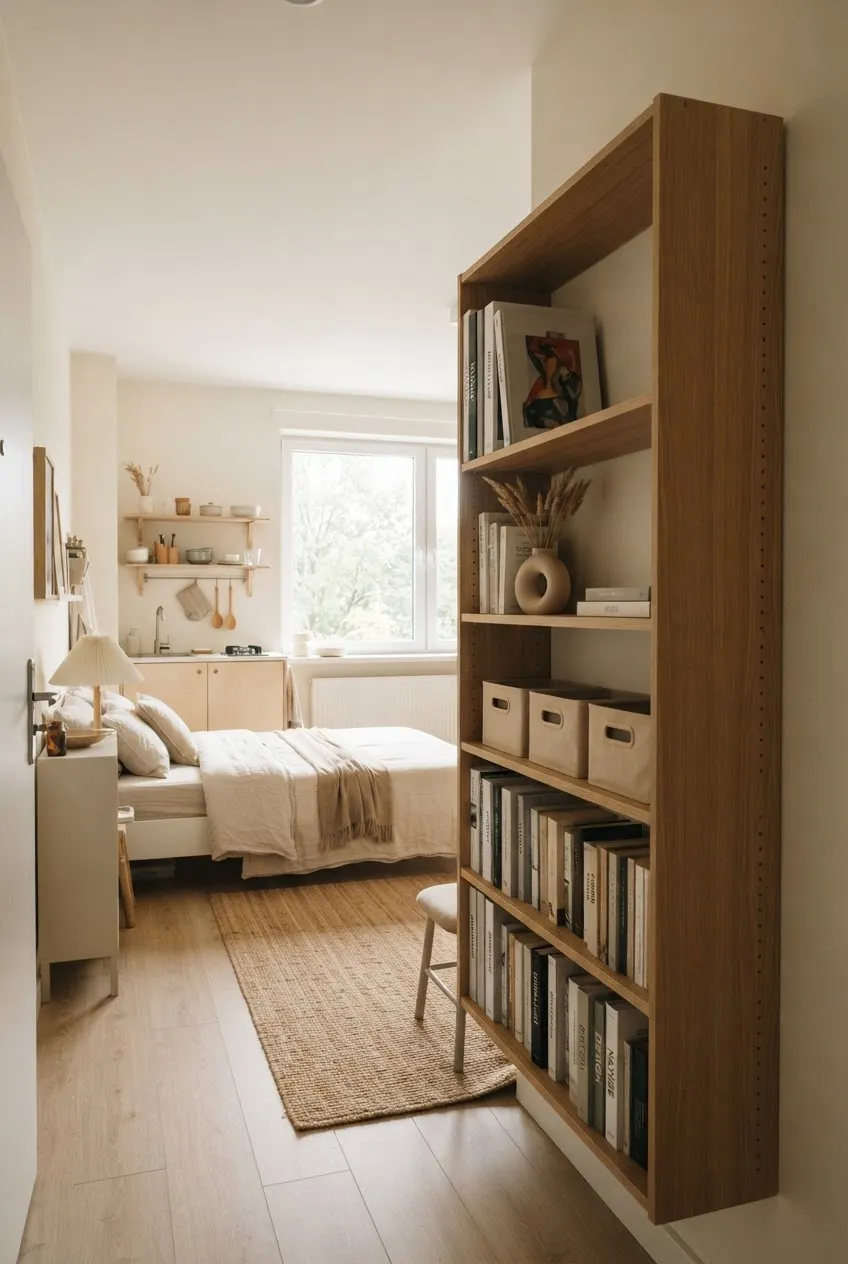
Books are heavy and vary in height, so a bookcase works best when shelf spacing can be changed and the stated load fits the planned contents. Use lower shelves for heavier books and upper shelves for lighter items in a few consistent boxes. Do not buy a towering bookcase to store three small baskets.
Measure the longest books and boxes, including the space needed to lift them off a shelf. Keep the case stable and anchor it as required; do not place it where a window or cabinet door needs to open. For more about using vertical space, see the vertical storage guide.
8. Use a Compact Drawer Unit for Desk-Sized Items
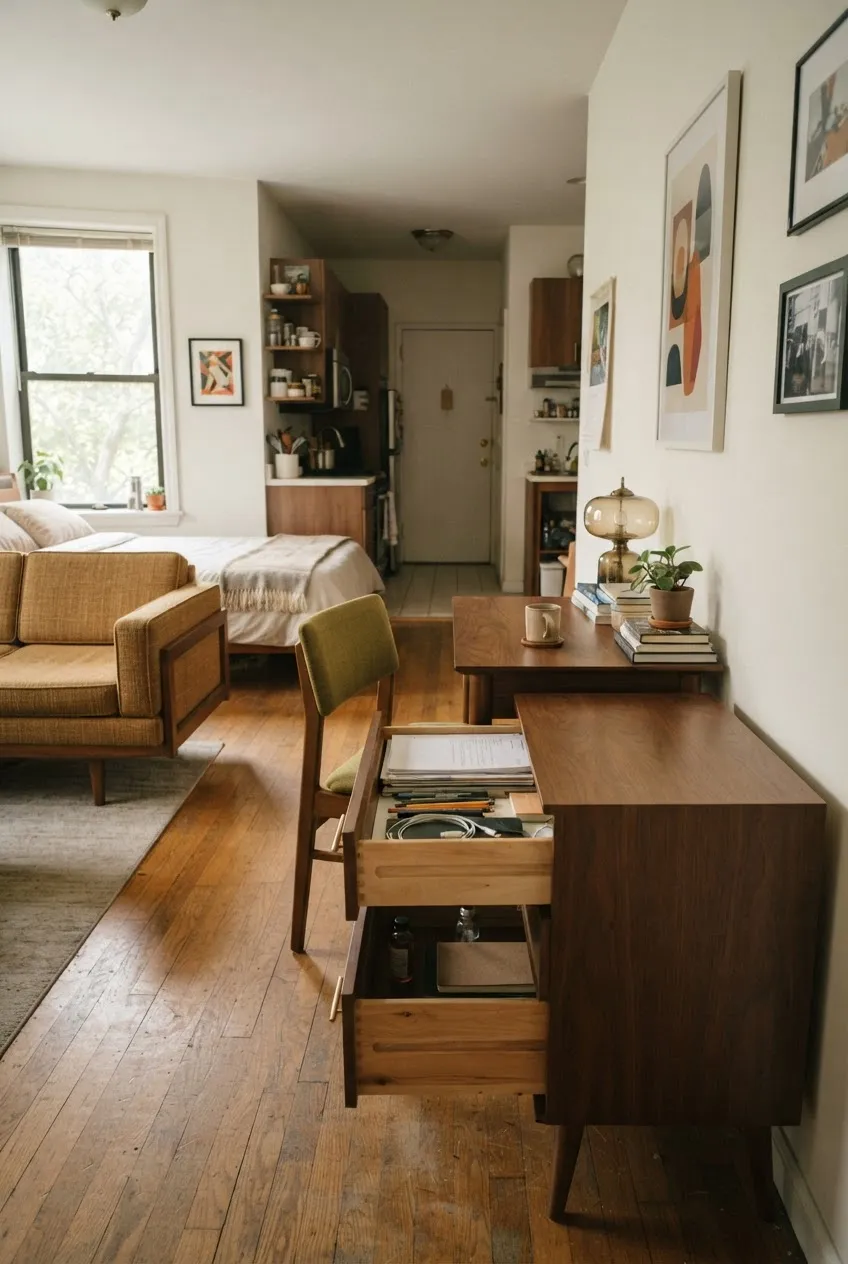
Paper, chargers, pens, and small tools are easier to retrieve from shallow drawers than from a deep mixed bin. A compact drawer unit beside an existing desk can give each category a fixed place without claiming an entire wall. Check that papers fit flat and that taller supplies fit the deepest drawer.
Test every drawer fully extended while the desk chair is pulled back. A wheeled unit should have a stable parking place and suitable locks if its design calls for them. If the drawers force the chair into the only walkway, the furniture has more nominal capacity than practical value. The studio workspace guide helps with the whole work zone.
9. Let a Low Sideboard Hold Tableware Near Dining
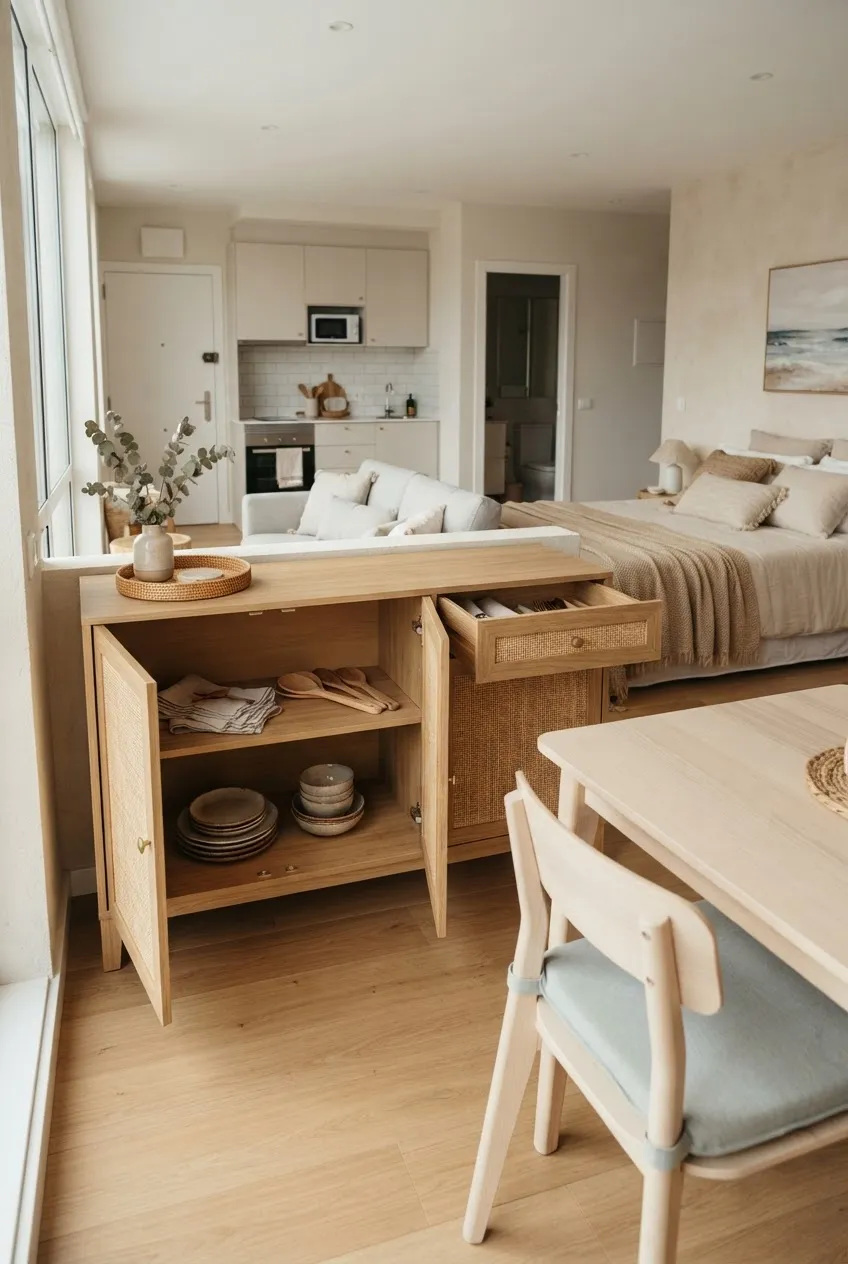
In a studio with a small kitchen, a low sideboard near the dining spot can hold plates, serving pieces, and linens used at the table. It works when the shelves fit your actual dishes and the items can be carried to the table without crossing the room. Reserve the stronger lower shelf for heavier stacks and do not load above the maker’s limits.
Check the sideboard’s depth with its doors and drawers fully open, plus a dining chair pulled back. Its top can stay mostly clear rather than becoming a second kitchen counter. If there is no dining wall that supports this clearance, use the existing kitchen cabinets more deliberately before adding furniture.
10. Use a Closed Pantry Cabinet Only for Food That Fits Safely
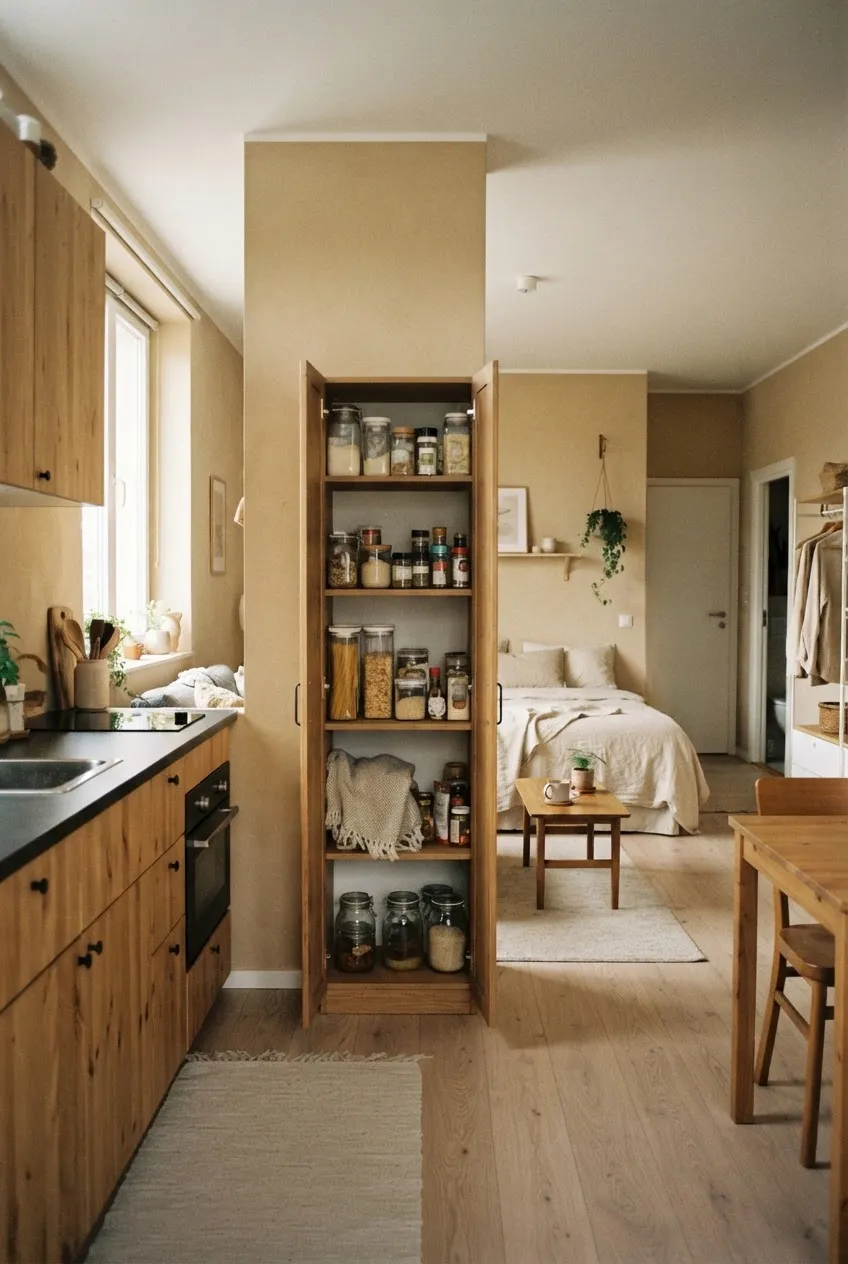
A freestanding pantry cabinet can help when kitchen cupboards cannot hold dry goods and sealed staples. Group food by package height and frequency of use; everyday items should sit within comfortable reach, with heavier containers low. Keep food away from heat and moisture and follow the product’s stated shelf loads.
The cabinet should not obstruct the refrigerator, oven, or kitchen drawers when open. Measure its internal shelves against the packages you buy regularly, and plan to rotate food rather than hiding it in a deep back row. The studio kitchen storage guide covers ways to get more from the kitchen before introducing a separate pantry piece.
11. Give Media Equipment a Cabinet With Ventilation
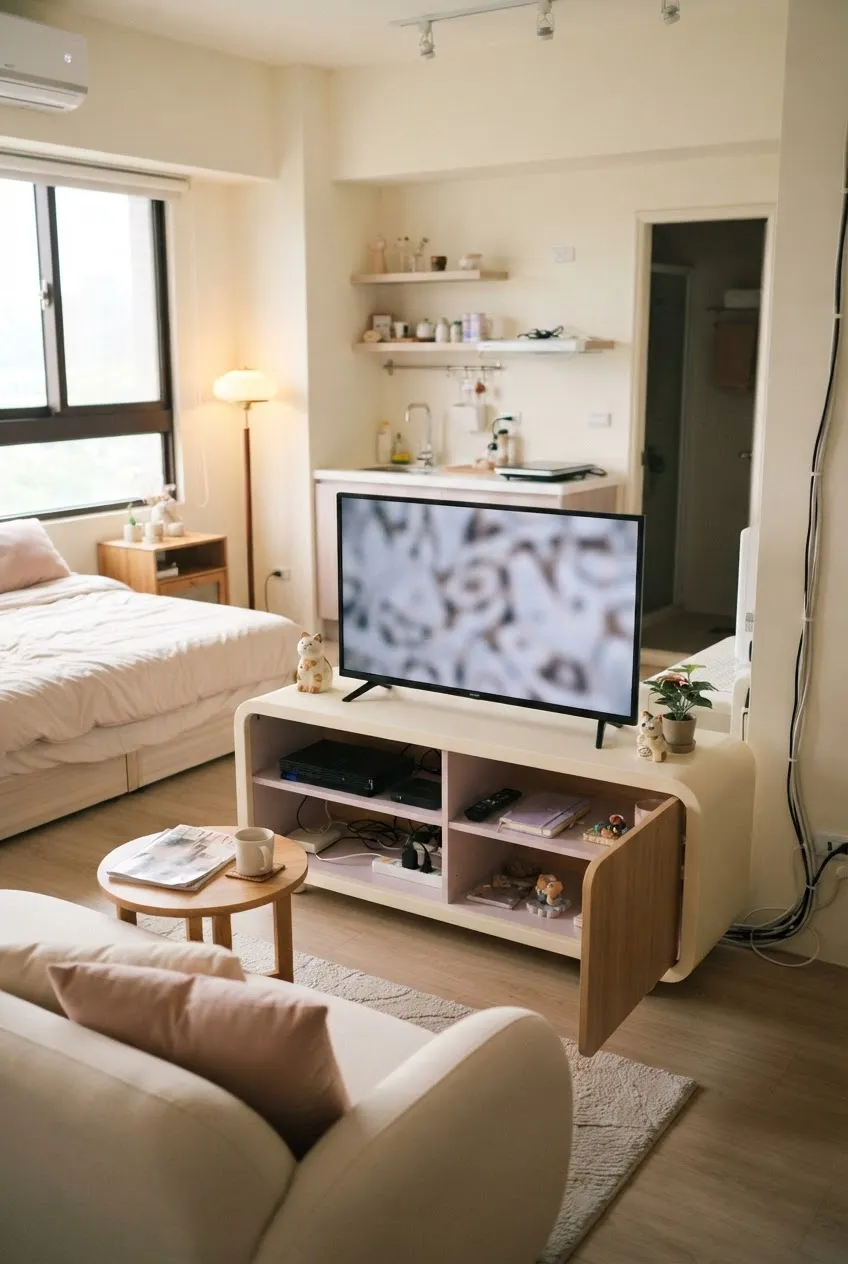
A media console can contain remotes, cables, and a small collection of devices, but electronics need accessible connections and the ventilation specified by their manufacturers. Closed shelves are useful for non-electronic items; a hot device should not be sealed behind an opaque door just to make the room look tidy.
Measure the device, its plugs, and cable bend space as one footprint. Check that console doors open fully without colliding with a coffee table and that the unit supports any television placed on it according to both makers’ instructions. If the storage is mostly empty after the equipment fits, a smaller stand may make more sense.
12. Limit a Storage Ottoman to the Small Items You Use Near the Sofa
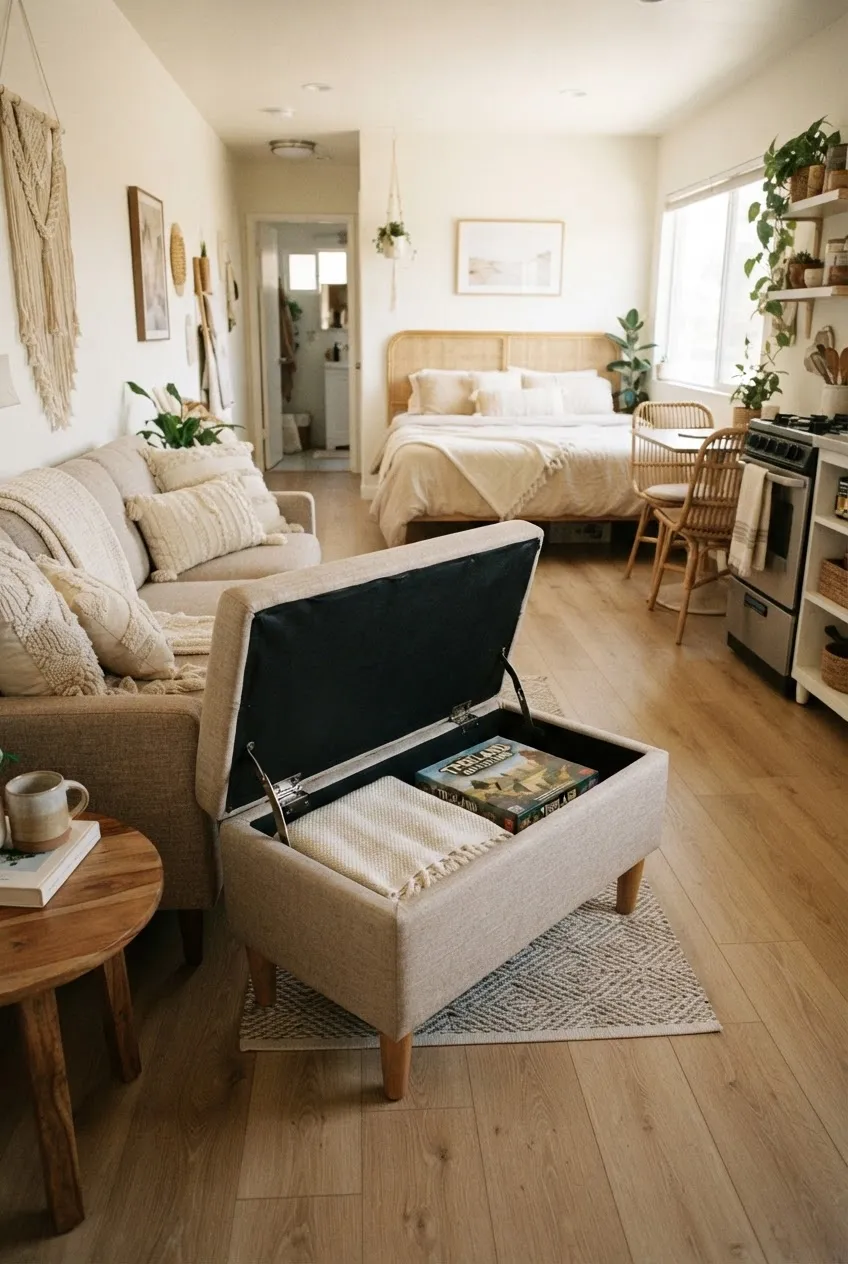
A storage ottoman is best for a modest, soft load: a throw, a game, or a few living-room items. Its interior looks larger when empty than it feels once the lid hardware and useful hand space are considered. Keep the contents few enough that you can open it and find something without unloading the whole box.
Check the lid’s full opening, the ottoman’s fixed parking spot, and any seating or footrest rating before relying on it for those purposes. It should not be pushed into the entrance-to-bathroom route whenever the sofa is in use. If the need is mainly a large quantity of storage, a proper cabinet or dresser will be more honest about its capacity.
Final Thoughts
Choose storage furniture for a measured group of belongings, then test the piece as it will be used: full drawers, open doors, weight limits, and the walking route around it. One cabinet that holds the right things and can be accessed daily does more for a studio than several pieces bought for empty-looking compartments. Start with the largest unsolved category and add only what the room can actually support.
More Studio Apartment Ideas
 |  |  |
|---|---|---|
Storage Ideas  | Clothing Storage | Compact Furniture |