In a studio apartment, a piece of furniture earns its place when it handles two real jobs without making either one awkward. A sofa that becomes a bed can be useful, but only if there is room to open it and somewhere for the bedding to go. A table that folds down is helpful only if you actually fold it and can still sit at it when open.
This guide compares how one piece changes between uses. It focuses on the second job, the transition, and the space needed in the working position. For a general guide to furniture scale and placement, see studio apartment furniture ideas.
1. Let a Sleeper Sofa Replace a Separate Guest Bed
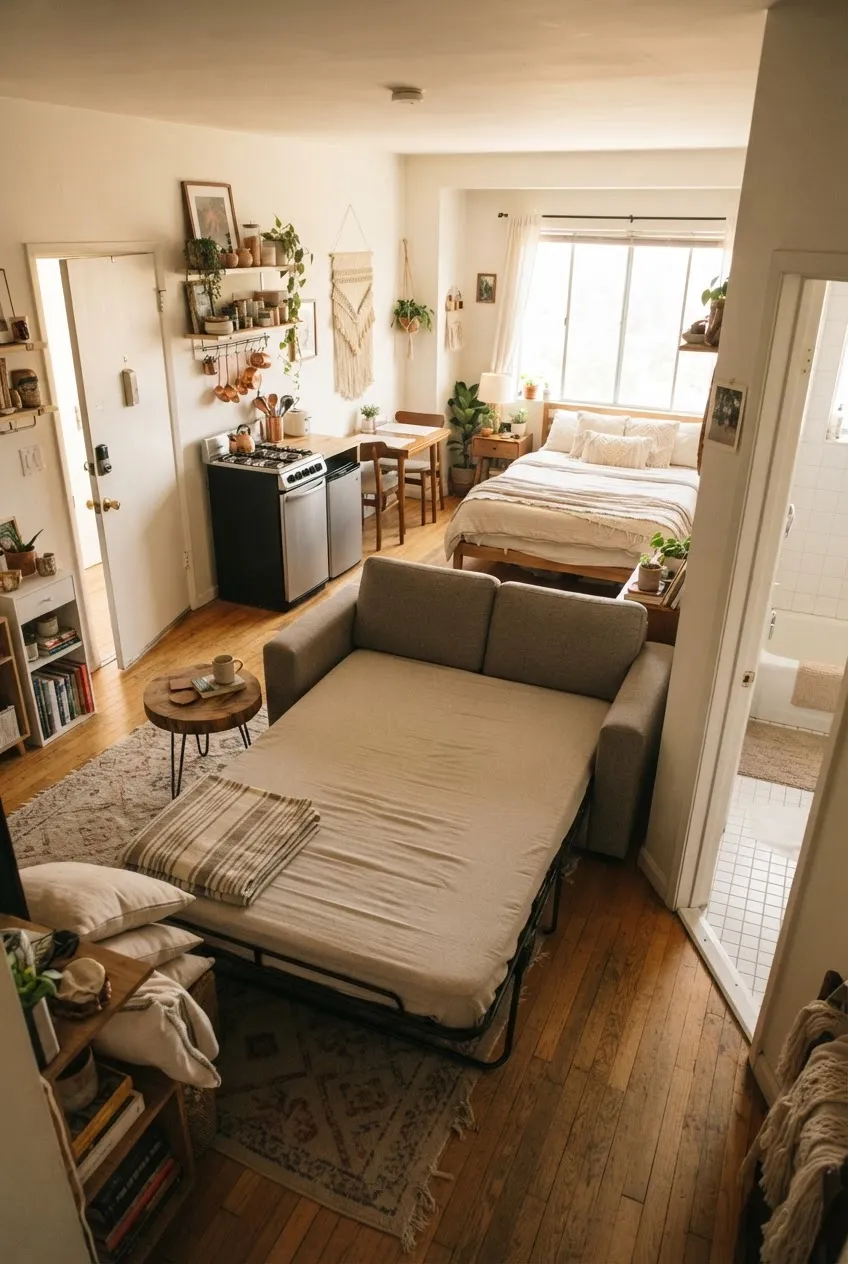
If overnight guests are occasional, a sleeper sofa can provide everyday seating and an extra bed in the same part of the room. It works best when the sofa is comfortable to sit on and the opened bed is actually suitable for the guests you expect. If it will be your own nightly bed, give mattress support and the daily conversion more weight than the sofa’s appearance.
Mark the fully opened footprint on the floor, including room to walk around it and reach the bathroom. Check how cushions move, where sheets live, and whether one person can operate the mechanism. If those steps fit your routine, browse small sleeper sofas on Amazon and compare closed and open dimensions, mattress arrangement, conversion method, and delivery access. The bed and sofa layout guide explores rooms that keep both pieces separately.
2. Use a Daybed as Daily Seating and Occasional Sleep Space
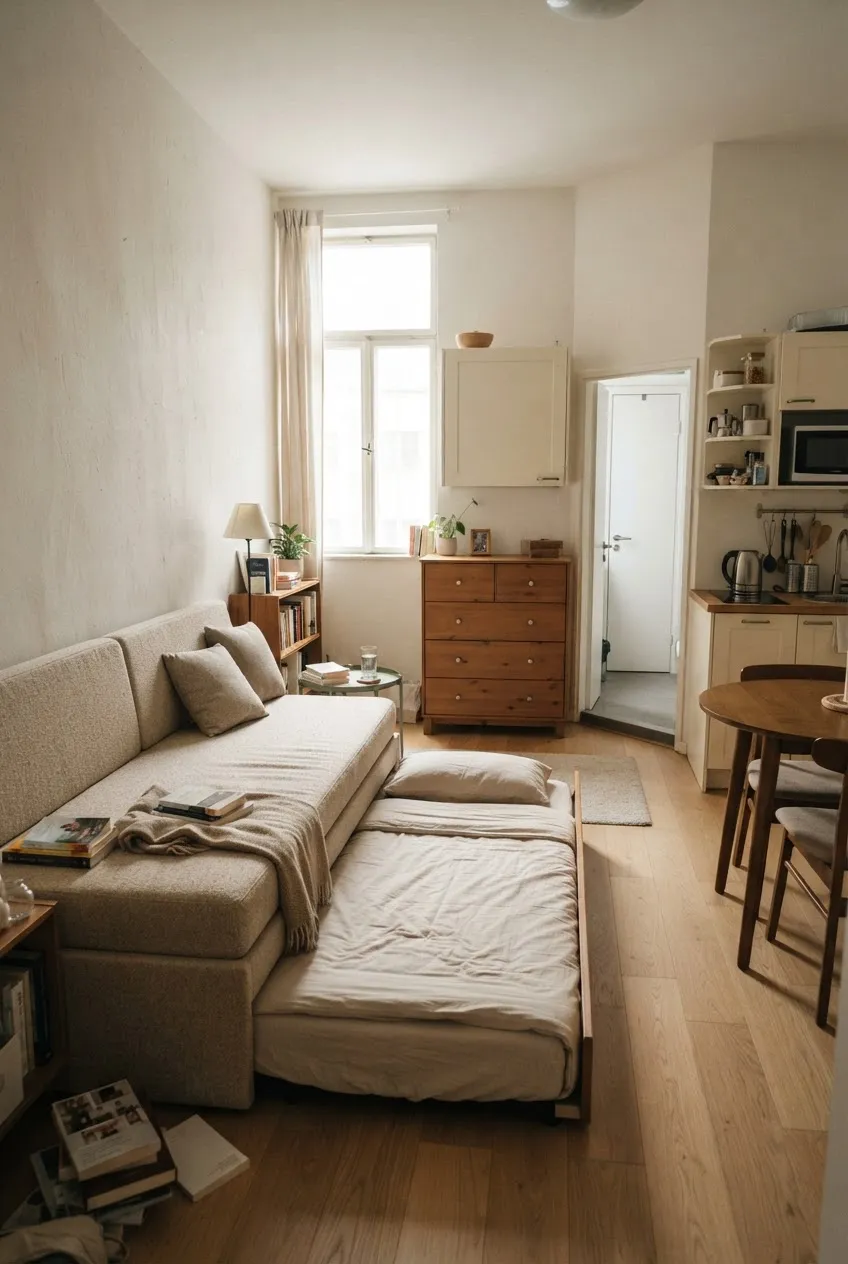
A daybed with a supportive back can read as a compact sofa during the day and serve as a single bed at night. It may suit a studio where a full sofa and separate guest bed would duplicate the same sitting footprint. Keep bedding simple enough to remove quickly rather than stacking many decorative pillows.
Check the actual sleep size, mattress guidance, and whether the seat height is comfortable for regular sitting. If the daybed has a trundle, test the trundle fully extended before counting it as another sleep spot; nearby drawers and the route to the door must still work. A daybed is a daily seat first only if people enjoy sitting on it.
3. Choose a Bed Frame Whose Storage Can Open Daily
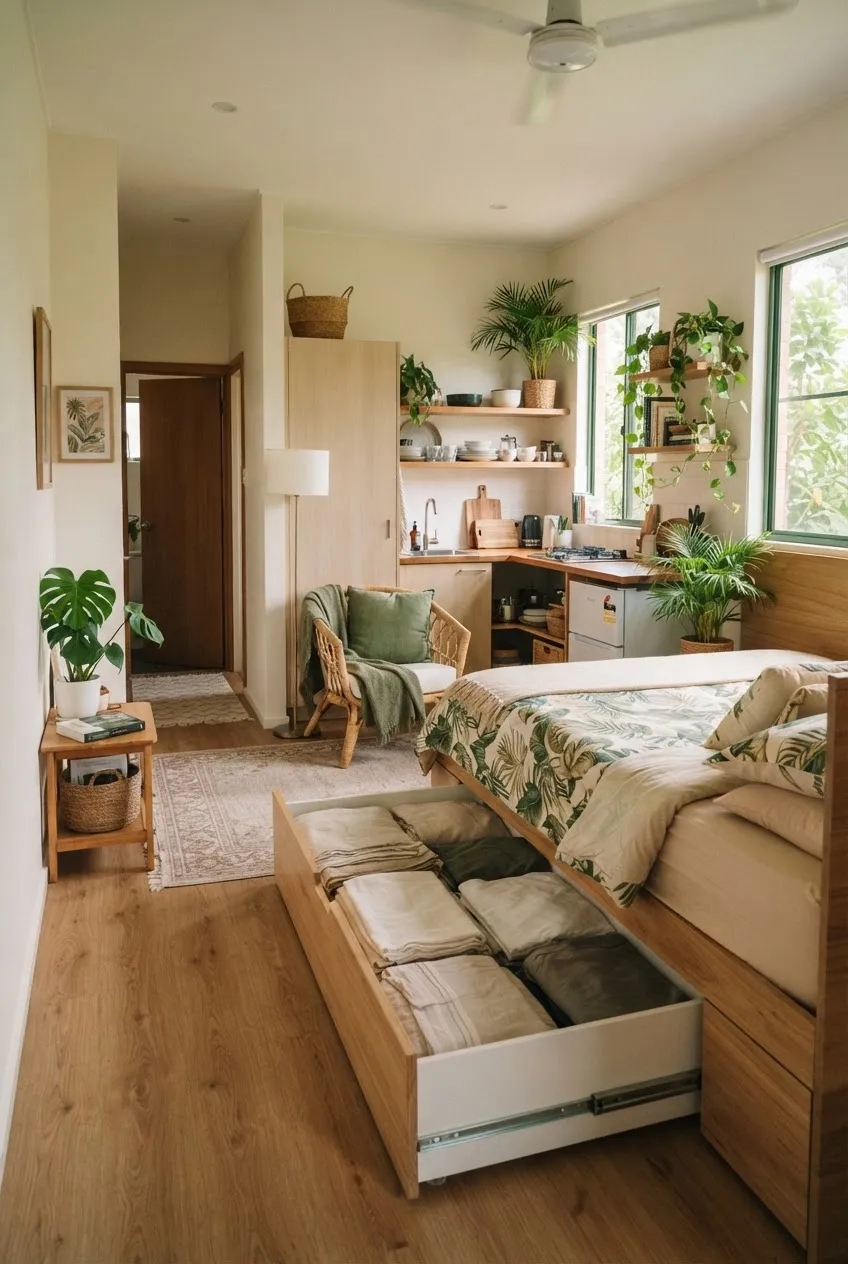
A bed with built-in drawers combines sleep and storage without a separate dresser for every category. It can hold bedding or folded clothes that are used often enough to justify the drawers. The second function fails if the bed is pushed so close to another piece that the drawer cannot fully extend.
Mock up the bed’s footprint and each drawer’s open depth. Leave a place to stand and lift items out, and keep the bed-to-bathroom path clear. If access is only from one side, plan what belongs in those drawers accordingly. The under-bed storage guide compares other ways to use the space under a bed; here the storage is built into the bed itself.
4. Raise a Coffee Table for Short Laptop Tasks
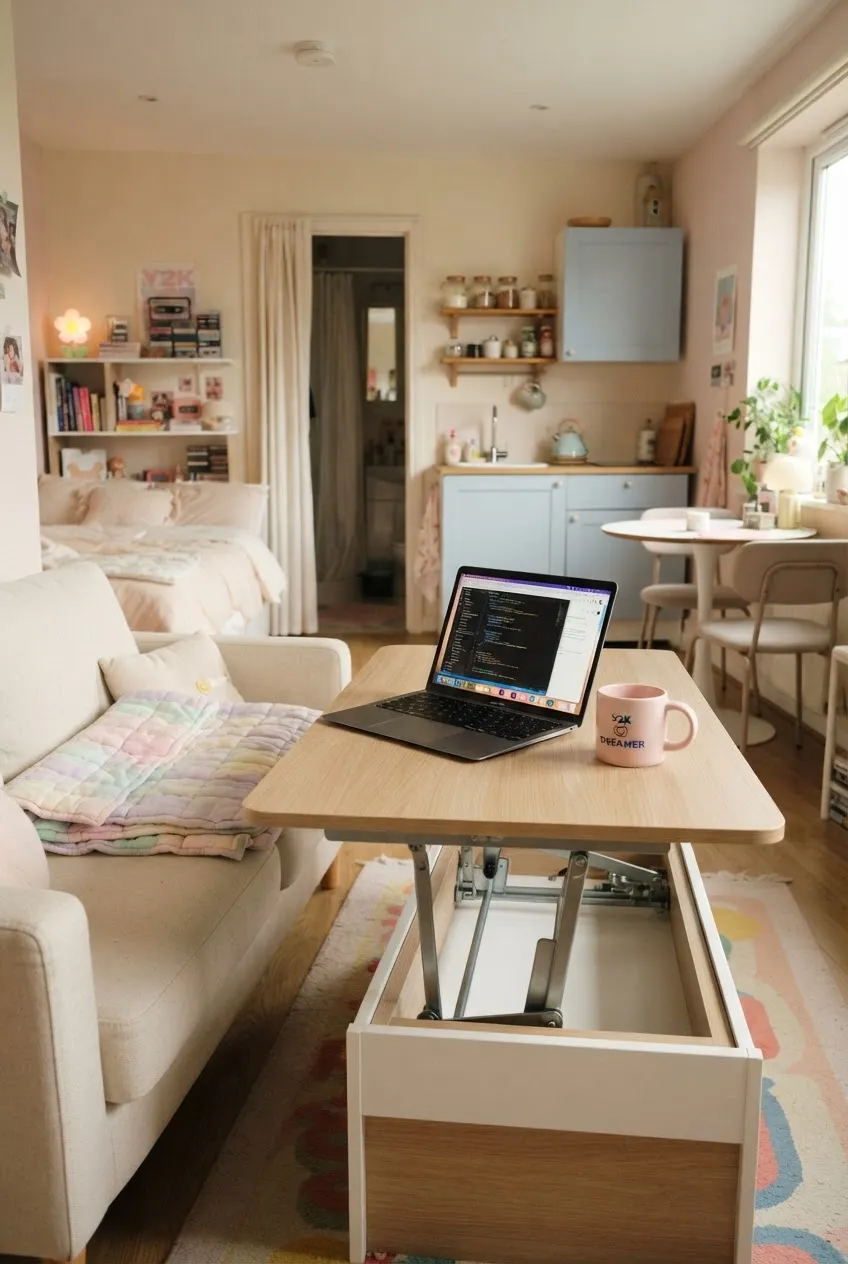
A lift-top coffee table can serve normal sofa use at its low height and a short laptop task when raised. It is not a substitute for an ergonomic desk for long work sessions, but it may keep a second table out of a studio where work is brief. Test whether the lifted top reaches you comfortably from the actual sofa.
Measure the table’s footprint at both heights and the top’s sweep while it rises. Keep cups and loose objects clear of the moving edge, and check the maker’s load guidance and locking or closing method. If the mechanism suits your space, browse lift-top coffee tables on Amazon and compare working height, open depth, stability, and how safely the top returns. The workspace guide covers a dedicated desk when you need one.
5. Use a Storage Ottoman for Feet, an Extra Seat, and Small Items
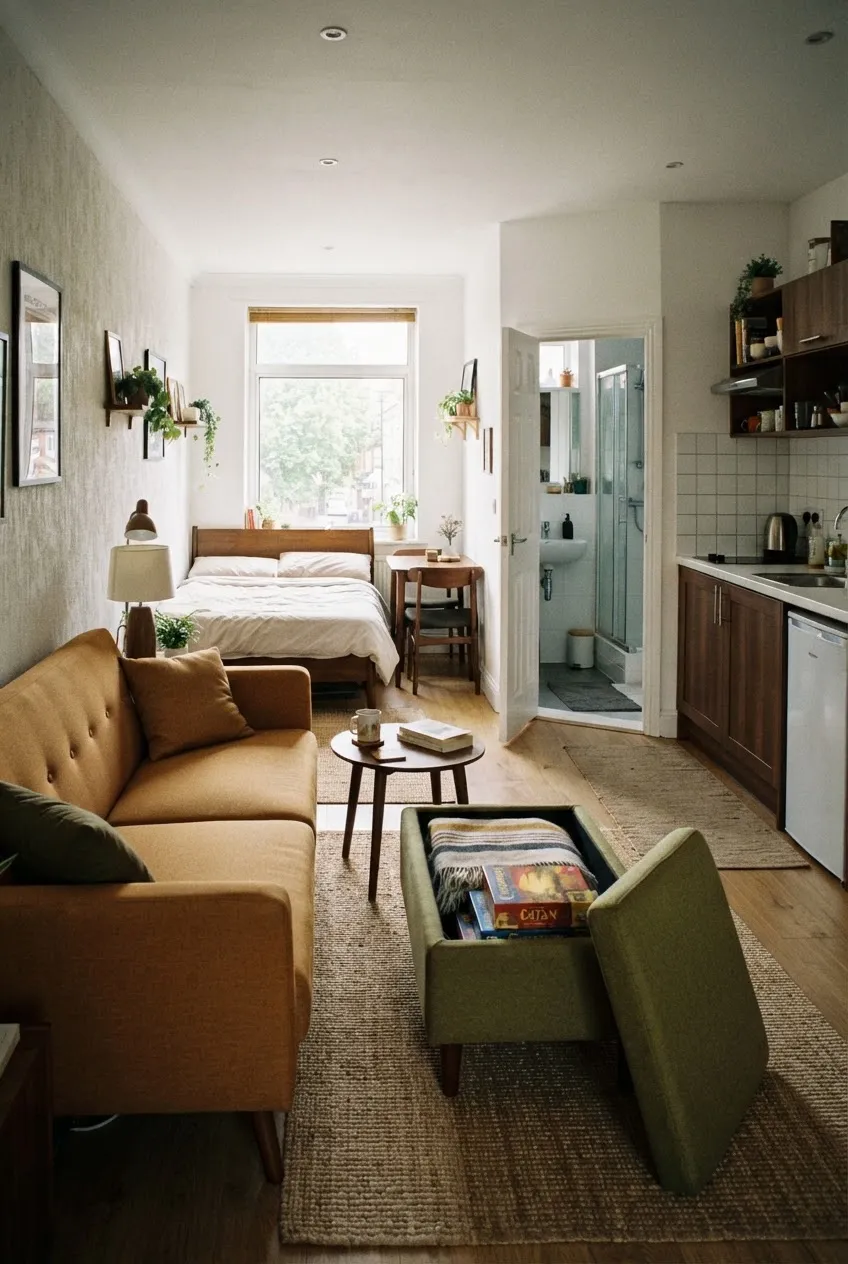
A storage ottoman can be a footrest beside the sofa, an occasional seat if its maker permits, and a home for a few throws or games. Those jobs happen in the same footprint. Give it one fixed parking place so it does not become a soft obstacle in the route through the apartment.
Check the lid’s opening direction, seat rating, internal space, and whether it can be opened without moving the coffee table. If it passes those checks, browse storage ottomans with lids on Amazon and compare exterior dimensions, supported uses, lid control, and cleanable fabric. Do not treat every padded box as a load-rated seat or let loose stored items jam the lid.
6. Make a Drop-Leaf Table Switch Between Meals and Work
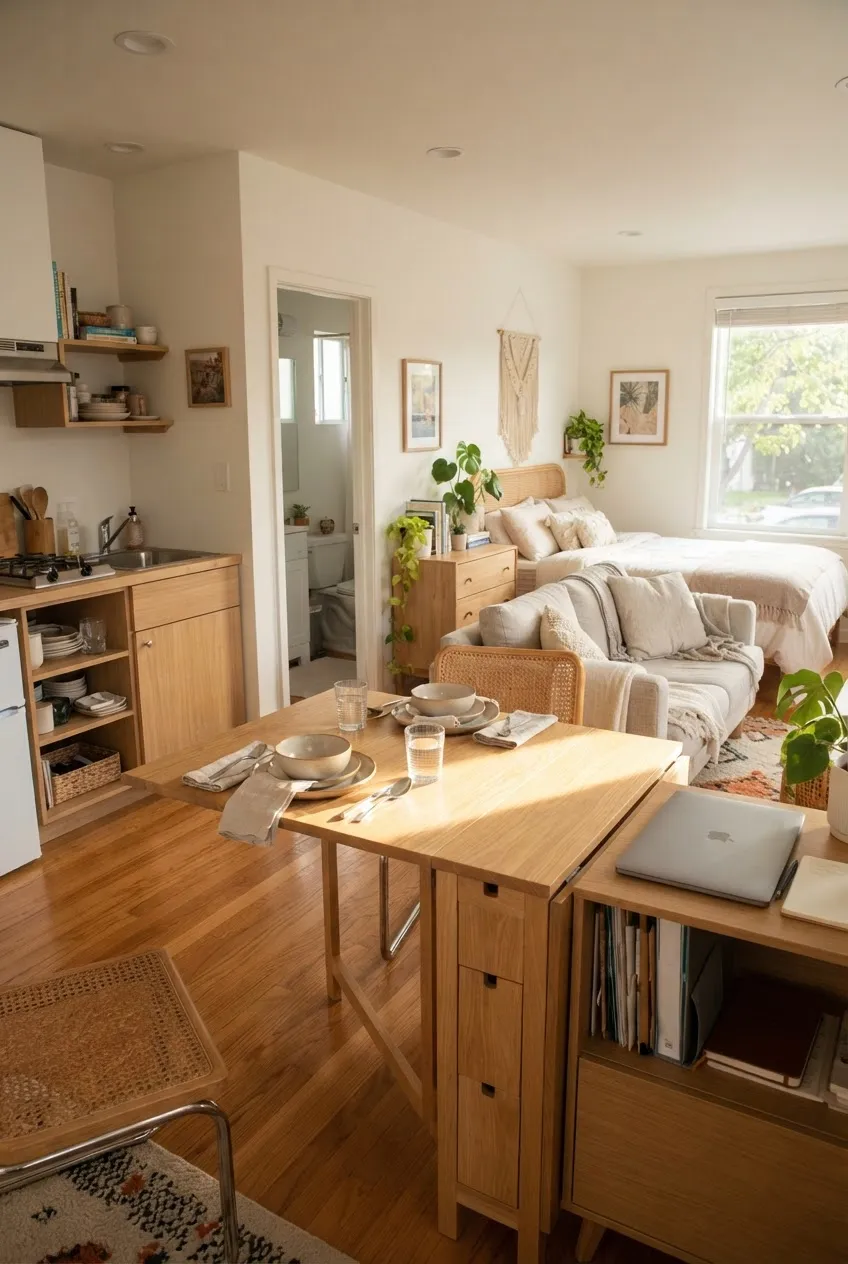
A drop-leaf table can offer a clear surface for a meal or a laptop, then close down when the task ends. The benefit is in changing the same tabletop’s role, not in permanently leaving one leaf open with work supplies on it. Keep a nearby place for papers and chargers so the table can actually become a dining spot.
Try the table with leaves up, chairs pulled out, and cabinet doors open. Check the support mechanism and leg position, not just the top dimensions; a folded leaf can leave less knee space than expected. The small studio dining guide compares more ways to place a table.
7. Let a Rolling Kitchen Cart Prep and Serve
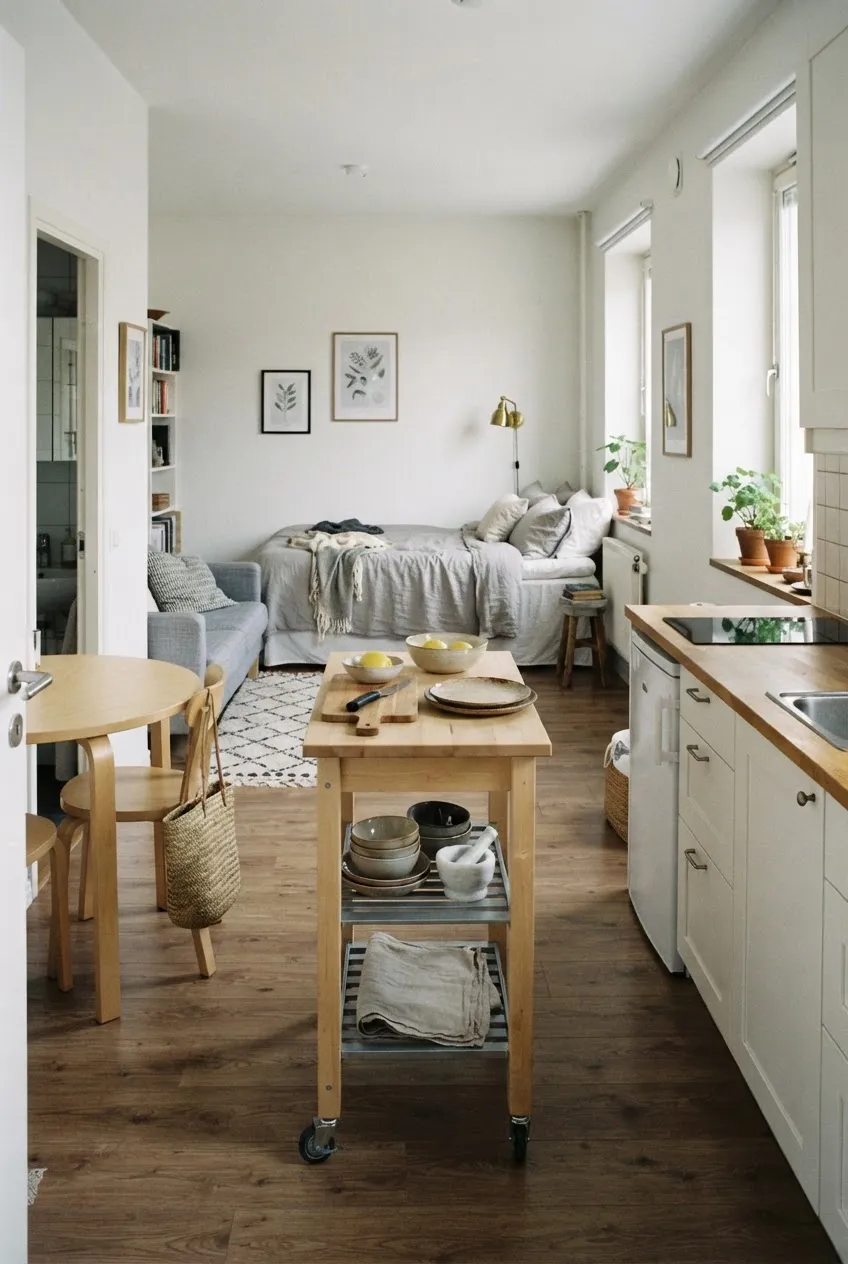
A rolling cart with a suitable work surface can add preparation space beside a one-wall kitchen, then carry dishes toward the dining table. It should have a stable parked position with wheels secured as its maker directs. Use the top only for tasks the surface material and care instructions allow.
Check the cart’s width with cabinet and refrigerator doors fully open, and rehearse its trip to the table without crossing the only path to the bathroom. Heavy items belong low and nothing hot should be placed on an unsuitable surface. A cart is useful when its movement solves a real task, not when it stays stranded in the center of the room.
8. Let One Desk Handle Work and Morning Grooming
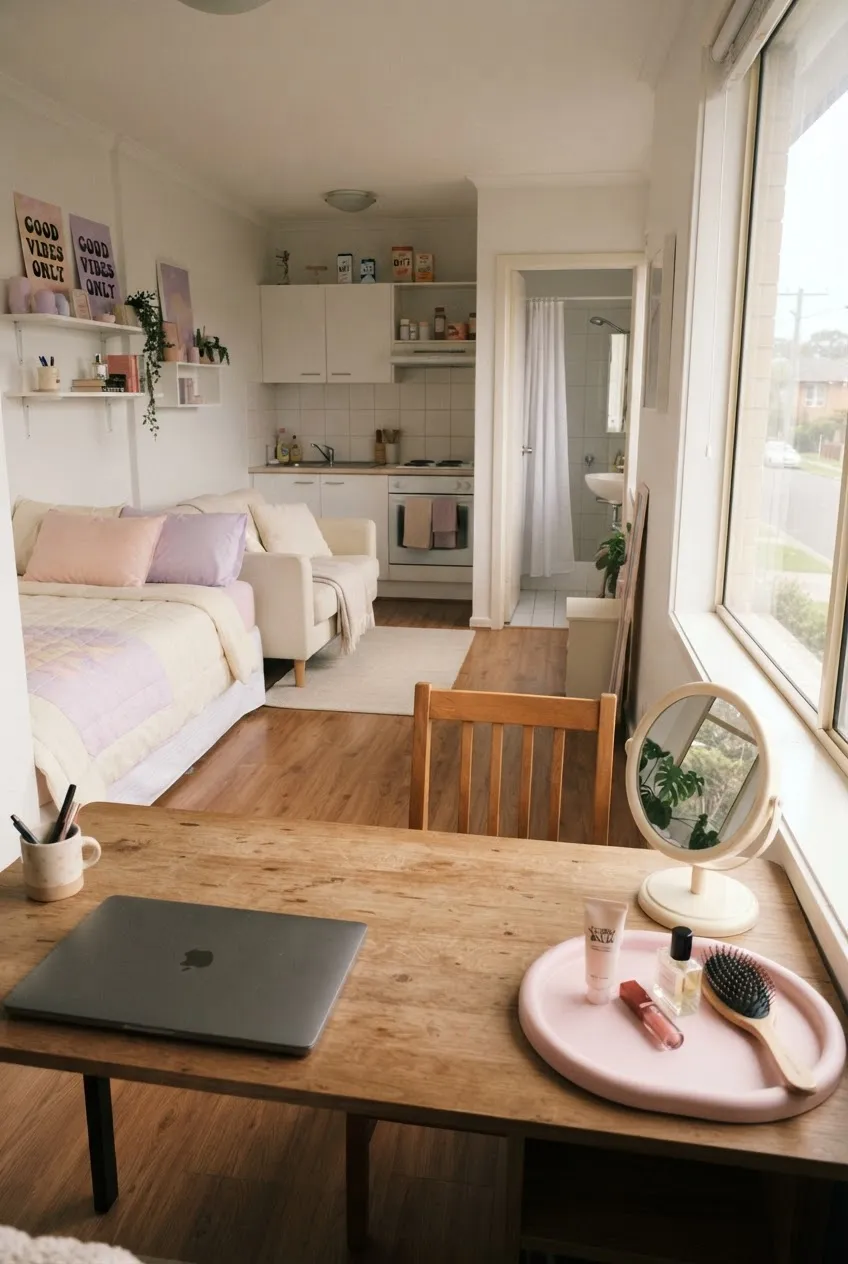
A desk can become a vanity for a short morning routine when its work surface is cleared and a small mirror can be positioned safely. The chair is already there, so a second dressing table may add little. Keep toiletries in a contained, wipeable area and away from electronics.
Check mirror reflection, the available task light, and whether the desk has enough depth for work after grooming items are removed. If a wall mirror or removable mirror is used, follow its installation and stability instructions. The desk should return to work mode without a daily pile of products on the keyboard.
9. Sit on an Entry Bench That Also Holds Shoes
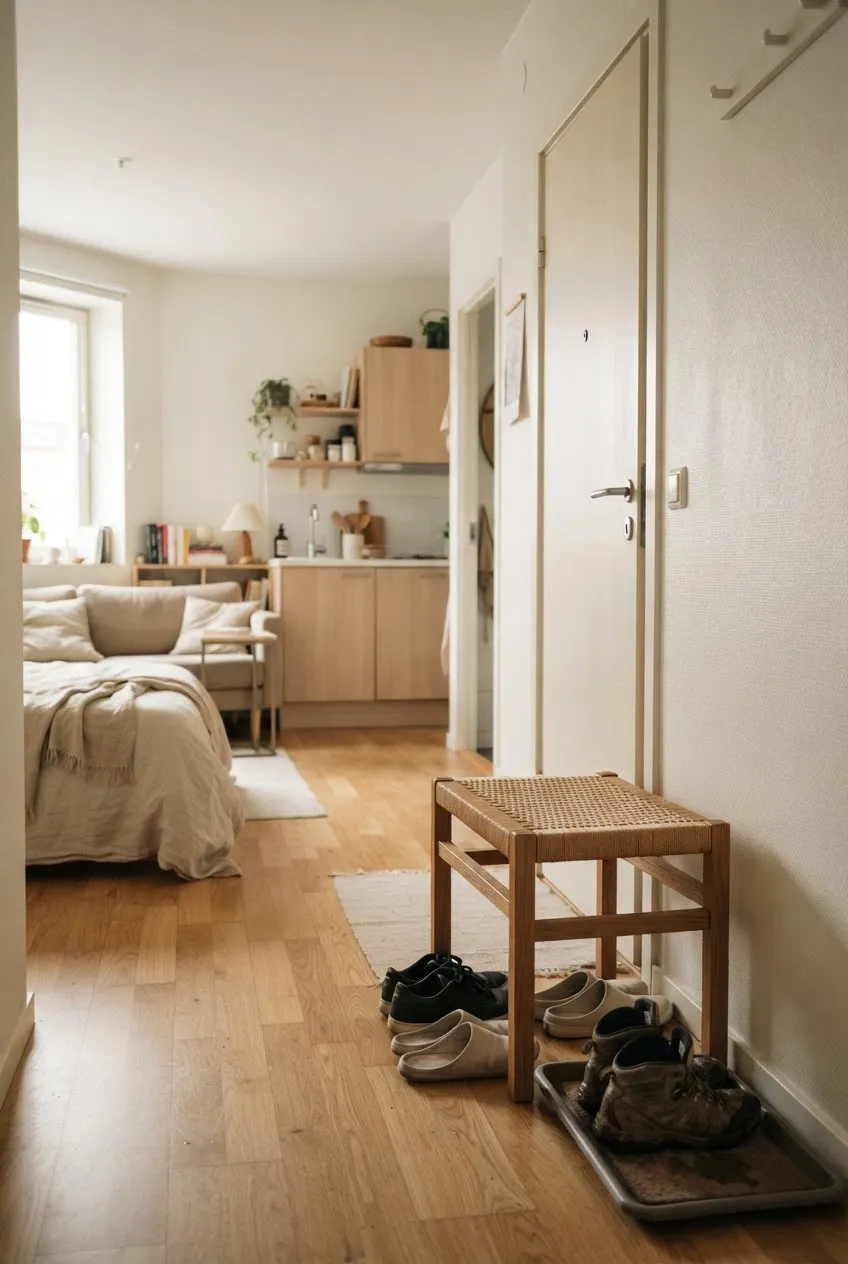
A sturdy entry bench can provide a place to put on shoes and keep the everyday pairs underneath. The seat is the first job; shoe space is the second. Choose a depth that lets the front door open and the occupant stand up without stepping into the apartment’s only route.
Check the maker’s seat load, shoe height, and whether wet footwear has a suitable surface or tray. Avoid filling the bench with backstock until the pairs needed each day become hard to reach. The entryway guide covers the rest of the arrival zone.
10. Let a Dresser Support the TV Only When It Is Rated for It
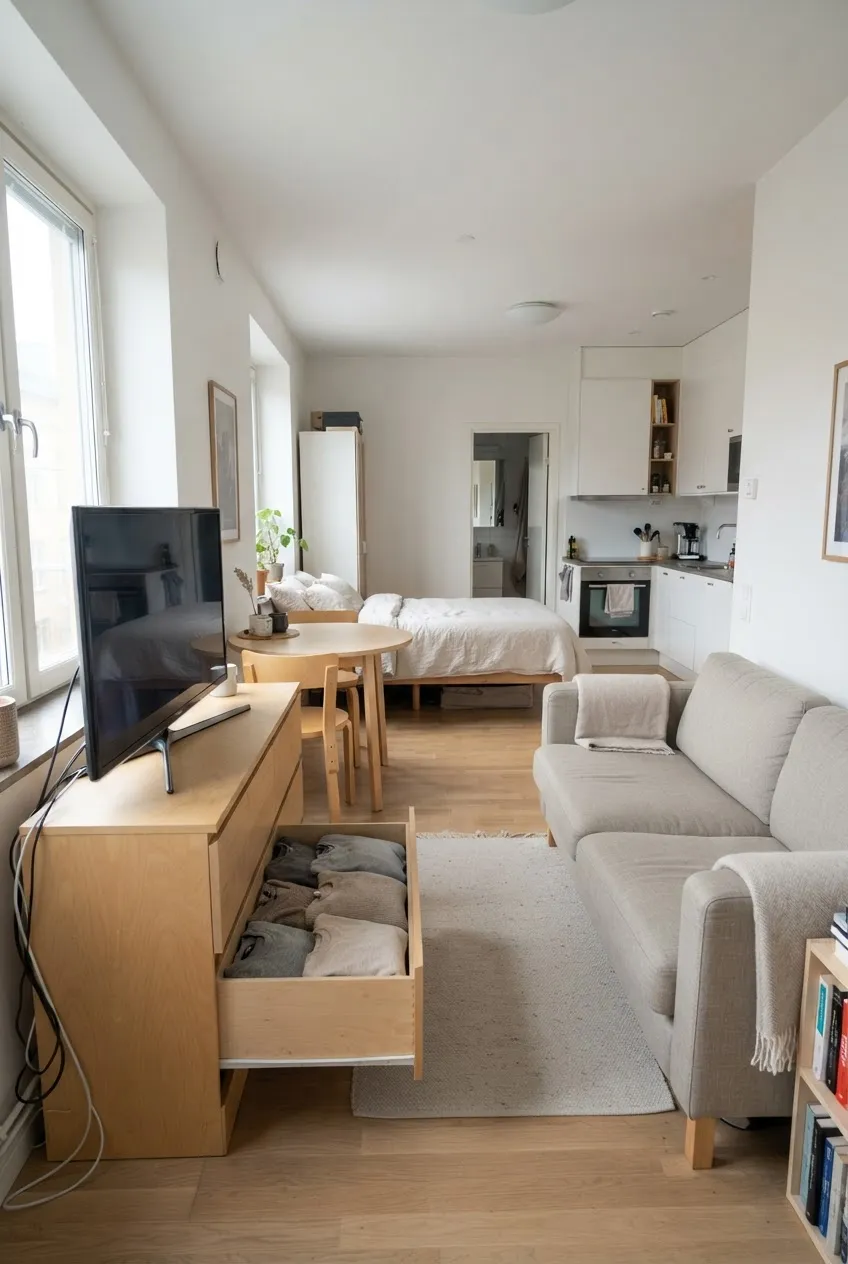
A dresser can store clothes and provide a stable TV position, removing the need for a separate media console. The top must be deep and strong enough for the television’s actual base, and the screen height should work from the seating position. Keep the television and furniture secured according to their manufacturers’ instructions.
Open the dresser drawers fully and check that the screen, cables, and any devices remain stable. Do not hide ventilation openings or trail cords across the floor. A dresser that is too tall for viewing or too light to support the equipment should remain a dresser, not be forced into a second job.
11. Use an Open Bookcase to Store and Separate
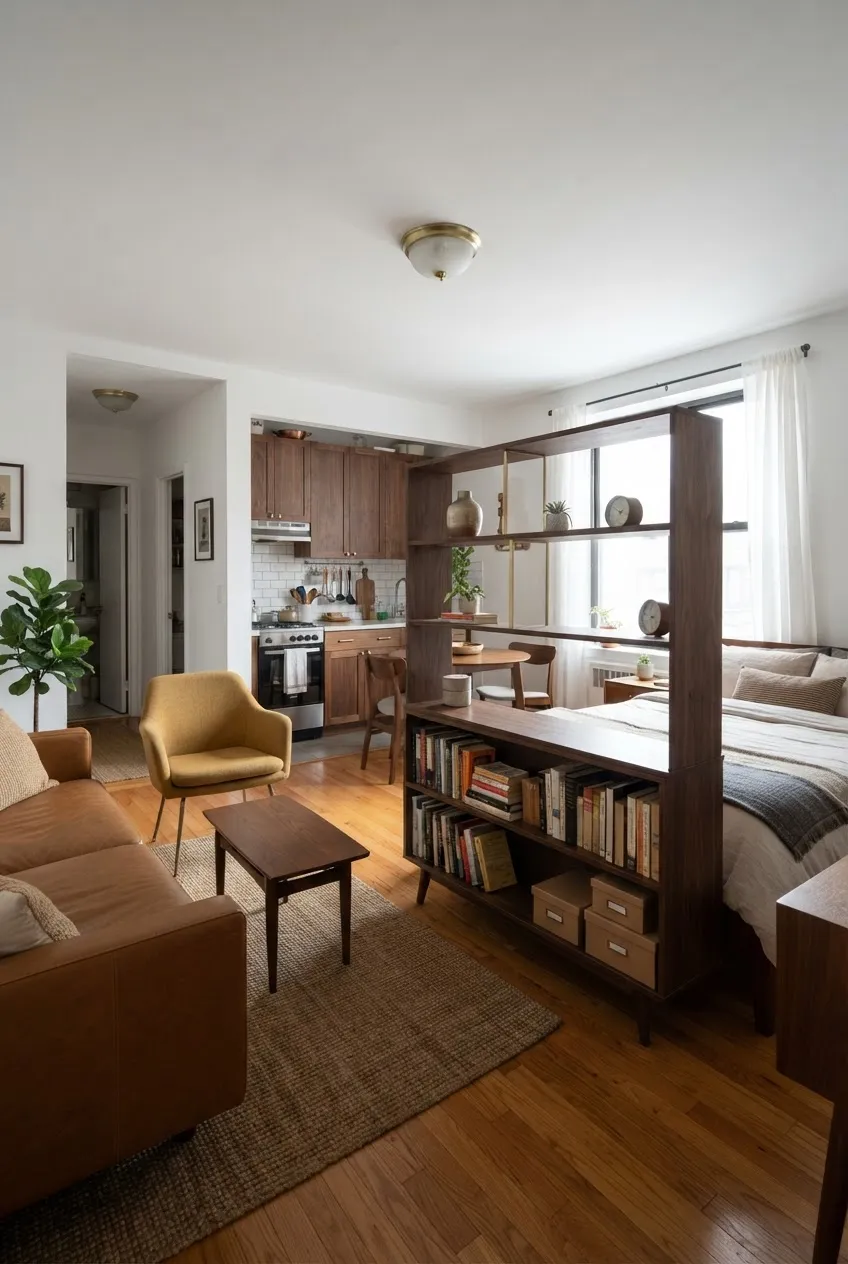
A suitable open bookcase can hold books and define the boundary between bed and sofa without building a solid wall. Leave enough openings for daylight and sightlines, and orient the shelves so the stored items can be reached from the side that needs them. This is most useful when one piece replaces both a storage unit and a divider.
Check stability, anchoring requirements, reach, and whether the bookcase blocks a window, outlet, or the route to the bathroom. Put heavier books low. The room divider ideas compare divider options; the bookcase belongs here because it must also serve as real storage.
12. Pull Out a Nesting Table Only When You Need a Second Surface
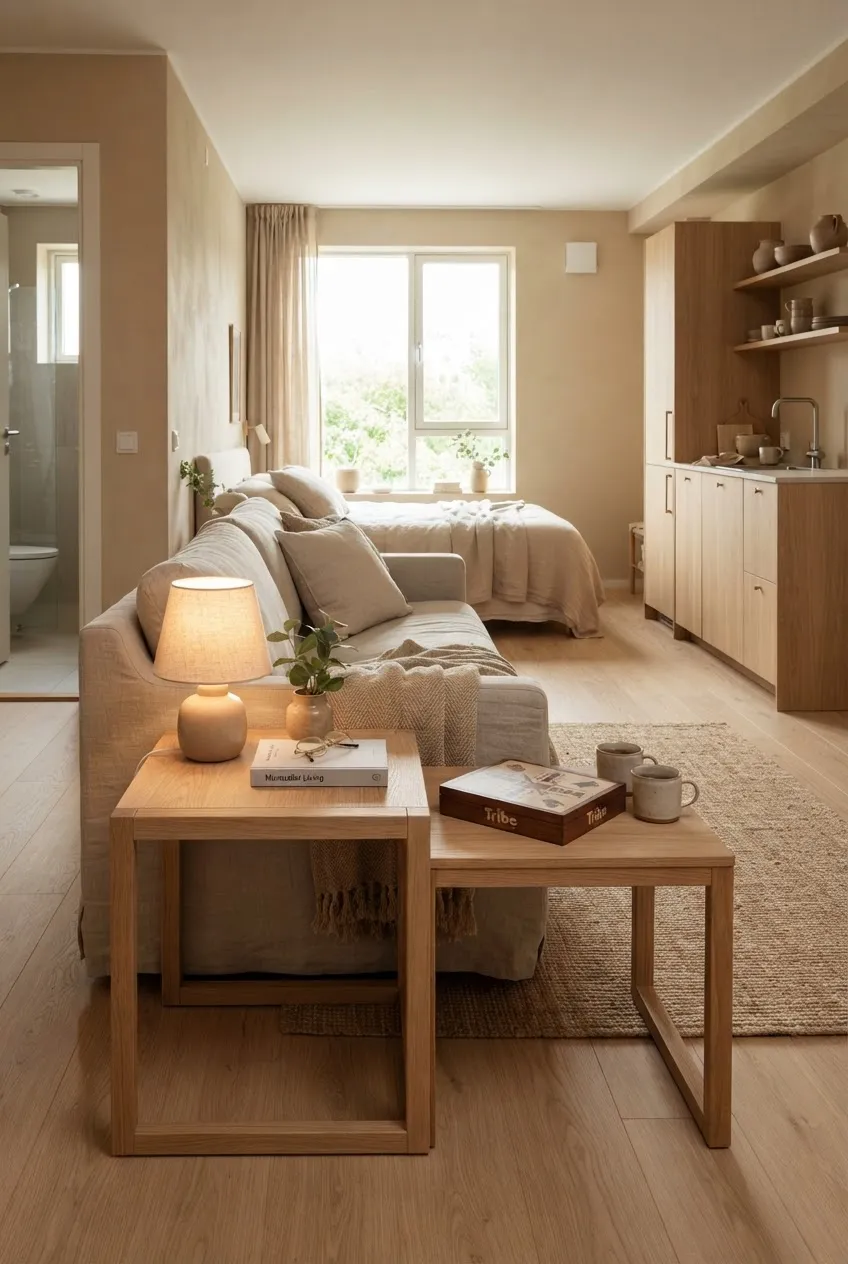
Nesting side tables can provide an everyday place beside the sofa and an extra surface for a visitor or a board game. The smaller table stores under the larger one when the second job is finished, so it does not permanently occupy another patch of floor.
Check that the nested tables slide without scraping and that the pulled-out table stands steady on your floor. Test the position with someone seated and the main route open. If the smaller table ends up holding permanent clutter, it has stopped being an occasional surface and may need a different home.
13. Fold a Wall Table Down for Work or Meals
A wall-mounted fold-down table can be a short work surface by day and a meal place when opened at the right height. Its folded position gives the floor back, but only if chairs have a storage position too. This is a good fit for a suitable wall section, not a reason to attach a loaded table to an unknown wall.
Confirm permission, wall material, mounting hardware, stated load, and clearance before installation. Open it with the chair in place and the kitchen cabinet door fully open; the only route to the bathroom must remain usable. If those conditions are not met, a freestanding table is a safer, more practical choice.
14. Use a Console for an Entry Landing and a Brief Work Spot
A narrow console behind a sofa or beside the entrance can hold keys and mail, then serve as a brief laptop spot when its top is clear and a usable seat fits. This is a second function only if the work height and knee or chair space are genuinely comfortable; a decorative ledge is not automatically a desk.
Check the console’s stability, top depth, chair pullback, and cable route. Give keys a small contained area so they do not spread across the whole surface. If the chair blocks the entry path, keep the console as a landing place and work elsewhere.
15. Choose a Wardrobe Door That Also Serves as a Dressing Mirror
A wardrobe with an appropriate full-length mirrored door can store clothes and provide a place to check an outfit without adding a separate floor mirror. It is useful when the mirror faces an open standing spot rather than a narrow gap. Test the reflection from the bed and entrance as well as the dressing position.
Confirm that the wardrobe doors can open fully, the unit is stable and anchored as required, and the mirror can be cleaned without moving another piece. Do not choose a reflective door that throws harsh light into the bed or hides the actual amount of clothing space you need. The clothing storage guide compares wardrobe alternatives.
Final Thoughts
Multifunctional furniture works when both jobs are comfortable, the switch between them is easy, and every open position fits the room. Before buying, test the ordinary state and the expanded state with doors, drawers, chairs, and the bathroom route in use. One good two-job piece is more valuable than a complicated object whose second function stays unused.
More Studio Apartment Ideas
 |  |  |
|---|---|---|
Compact Furniture  | Storage Ideas | Studio Layouts |